
Seamless Rolled Rings: Capability Checks for Industrial Buyers
When a seamless rolled ring requirement moves beyond catalogue dimensions — a large outside diameter, a custom material grade, tight mechanical property targets, or a combination of the three — the number of manufacturers that can genuinely deliver starts to narrow. The bottleneck is not simply whether a ring rolling line exists. It is the depth of integrated capability: ingot preparation, ultra-large ring rolling, heat treatment, precision machining, complete testing, and certified quality management. For industrial buyers in the evaluation-to-execution phase, verifying these capabilities before placing an order is a practical necessity, not a formality.
Seamless rolled rings are used in some of the most demanding rotating and load-bearing applications in heavy industry: cement rotary kiln tyres, wind turbine flanges, nuclear power components, tunnel boring machine parts, and refinery vessels. In these applications, a ring failure is not a component failure. It is a production stoppage, a safety incident, or a multi-million-dollar asset loss. That is why procurement decisions for seamless rolled ring forgings increasingly focus on manufacturer capability rather than price alone.
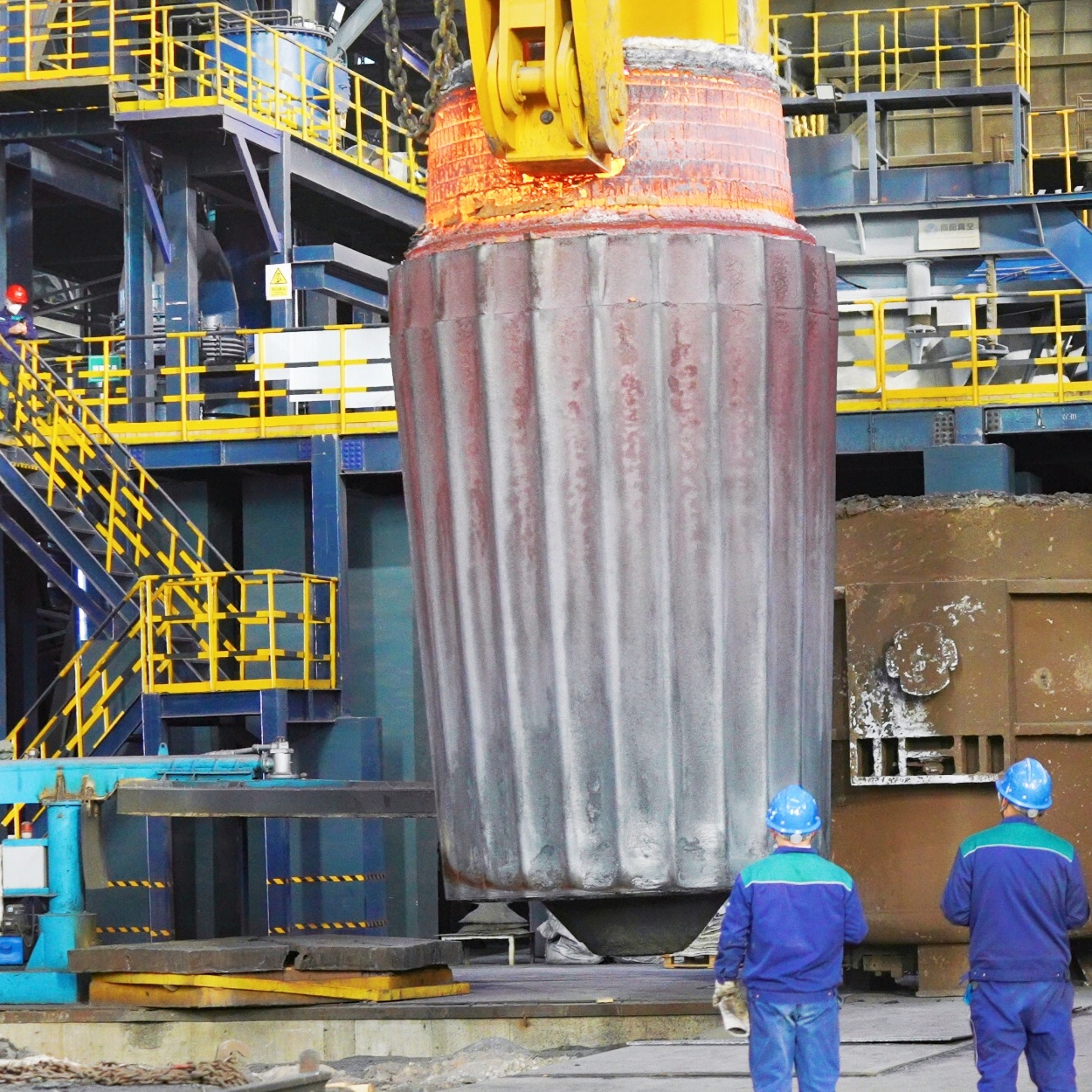
Raw material preparation is the first stage of seamless rolled ring manufacturing capability. Image: Iraeta.
Why Capability Verification Matters More Than Catalogue Data
A supplier's published maximum diameter or maximum weight tells only part of the story. The real question is whether that supplier can consistently deliver custom seamless rolled rings to specification across the entire production chain — from steel melting and forging to heat treatment, machining, and final inspection. A manufacturer that lacks control over any single stage introduces risk that cannot be fully compensated for by inspection at the end.
For large seamless rolled rings, the practical difference between a capable supplier and an ordinary one shows up in three areas: equipment reach, material autonomy, and process integration.
Equipment Reach
The most visible capability boundary is the physical size of the ring rolling equipment. Iraeta Energy Equipment Co., Ltd., a China-headquartered forging specialist with production facilities in China and Spain, operates ring rolling machinery capable of producing rings above 21 meters in diameter. This is not typical. In 2022, the company set a Guinness World Record with a seamlessly rolled ring of 15.673 meters. In 2026, it pushed that record to 21.029 meters. These dimensions matter for buyers because they determine whether a large-diameter ring can be produced as a single integral forging, rather than as a welded or segmented structure.
For applications such as kiln tyres, large bearing rings, and structural rings for energy equipment, an integral seamless ring preserves continuous grain flow and avoids the weak points that welds introduce. When a supplier's rolling capacity is insufficient, buyers are forced into design compromises that may reduce long-term reliability.
Material and Ingot Autonomy
Material control is the second critical boundary. Seamless rolled rings can be produced in carbon steel, stainless steel, and alloy steel — but the mechanical properties of the final ring depend heavily on the quality of the raw material and the forging reduction ratio. A manufacturer that prepares its own steel ingots and continuous casting round billets has significantly more control over material traceability, internal soundness, and consistency than one that sources ingots externally.
Iraeta's ISO 9001:2015 certification covers the manufacturing of raw materials for forgings, including steel ingots and continuous casting round billets, as well as the manufacturing of forgings themselves. The company maintains 300-ton raw material preparation capability, which supports the production of very large rings without relying on multiple smaller ingots. For buyers evaluating high strength seamless rolled rings or stainless steel seamless rolled rings, this level of material autonomy is a meaningful risk-reduction factor.
Process Integration and Machining Depth
The third capability dimension is the depth of the process chain. A manufacturer that handles custom material preparation, forging, heat treatment, precision machining, and rigorous testing in-house can offer shorter lead times, better coordination, and single-point accountability. Iraeta describes its offering as end-to-end: from custom material preparation and forging to heat treatment, precision machining, rigorous testing, and global logistics.
This matters especially for profiling seamless rolled rings and precision rolled rings forgings. Near-net-shape forming during ring rolling reduces material waste and machining time. But doing it successfully requires close integration between the rolling process and the subsequent machining operations. If these steps are separated between different companies, tolerances, distortion control, and communication become harder to manage.
Certification as a Boundary Condition
Certifications are the formal evidence that a manufacturer's quality system and production processes meet recognized standards. For buyers, certifications are not marketing material — they are boundary conditions that determine whether a product can legally enter a market.
- ISO 9001:2015 — quality management system for raw material and forging production, certified by BV, certificate number F02326Q00125R602.
- PED 2014/68/EU — required for pressure equipment components in the EU, certified by TUV, certificate number 01 202 CHN/Q-06 0144.01, covering the manufacturing of forged flanges and hot rolled rings.
- EN 1090 — required for structural steel components in the EU, certified by TUV, certificate number 0035-CPR-1090-1.03389.TÜVRh.2025.003, covering load-bearing structures to EXC3.
- ISO 14001:2015 and ISO 45001:2018 — environmental and occupational health and safety management systems.
Buyers should verify not only that a certificate exists, but that its scope and validity dates match the product and market in question. An expired or narrowed certification is effectively no certification.
How Seamless Rolled Rings Are Manufactured: Process Steps That Define Capability
Understanding the seamless rolled rings process helps buyers ask better questions during supplier audits. The manufacturing process typically begins with steel melting and ingot or continuous casting billet production. The raw material is then cut to size, heated, and upset to create a thick-walled preform. A hole is pierced, and the preform is placed on a ring rolling mill. In radial-axial ring rolling, the ring rotates between a main roll and a mandrel, reducing wall thickness while expanding the diameter. Axial rolls control the height. The result is a seamless ring with continuous grain flow oriented to follow the ring circumference.
After rolling, the ring undergoes heat treatment to achieve the required microstructure and mechanical properties. This is followed by precision machining to final dimensions, and then by non-destructive testing and dimensional inspection. For large seamless rolled rings, heat treatment and machining are often the capacity bottlenecks, not the rolling process itself.
Integral ring rolling technology is especially valuable for large-diameter components because it enables near-net-shape forming. In near-net-shape production, the ring is rolled close to its final cross-section, which reduces the amount of material that must be removed by machining. This lowers material waste, shortens production time, and improves mechanical performance by maintaining uninterrupted grain flow. For buyers evaluating forged seamless rolled rings, the ability to supply near-net-shape components can translate directly into lower total cost and faster delivery.
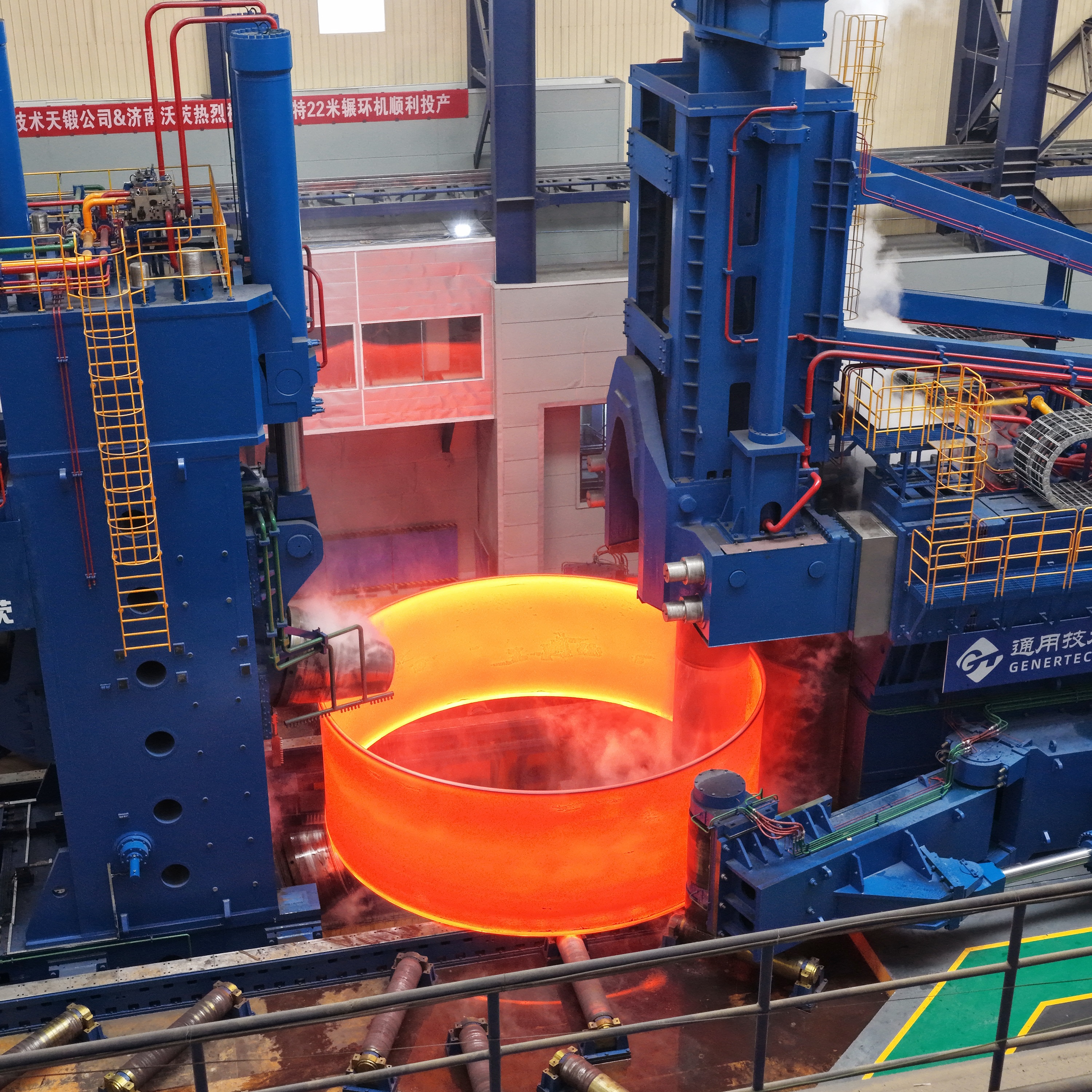
A 22-meter class ring rolling machine expands the feasible size of integral seamless ring forgings. Image: Iraeta.
Application Evidence: Where Capability Meets Operating Reality
For buyers, the most useful evidence of capability is not a list of machines but a record of components performing in real operating environments. The following project cases illustrate how seamless rolled ring manufacturing capability translates into application-specific results.
Cement Rotary Kilns — Turkey
In Turkey, a set of precision forged rings was supplied as a core structural component for a cement rotary kiln. The rings were manufactured with precision forging and machining, high temperature resistance, excellent fatigue strength, and extended service life in mind. The project required a durable component that could withstand high temperature and heavy load. The rings achieved stable operation under these demanding conditions and have been successfully used by the cement plant client.
This case is representative of seamless rolled rings for cement rotary kiln applications, where thermal stability and fatigue resistance are primary selection criteria. Kiln tyres must support the weight of the rotating kiln shell, tolerate thermal expansion, and survive continuous operation for years.
Refining and Petrochemical Equipment — Saudi Arabia
In Saudi Arabia, two units of key components for refining and petrochemical equipment were supplied to an oil and gas OEM. The components were required to provide high forging precision, wear resistance, high temperature resistance, and long service life. The project achieved stable operation and full compliance with stringent quality and safety requirements.
For oil and gas applications, material traceability and mechanical property verification are essential. The case demonstrates the ability to supply custom seamless rolled rings that meet the rigorous documentation and certification expectations of the energy sector.
Heavy-Duty Hydrogenation Reactor Components — Middle East Client, European Refinery Project
In one of the more technically demanding cases, a manufacturer supplied heavy-duty hydrogenation reactor components made from forged seamless rolled rings. The project involved three pieces: two shell sections and one transition section. The components were produced using integral ring rolling technology, which enabled near-net-shape forming and reduced material waste and machining time. The project supplied components for a 7.5 million tonnes-per-year European refinery and achieved qualified performance. The client was based in Saudi Arabia.
Hydrogenation reactors operate under extreme pressure and temperature conditions. Shell sections and transition sections are critical pressure-retaining components. The ability to forge these from seamless rolled rings with near-net-shape accuracy demonstrates manufacturing capability at the upper end of the process window.
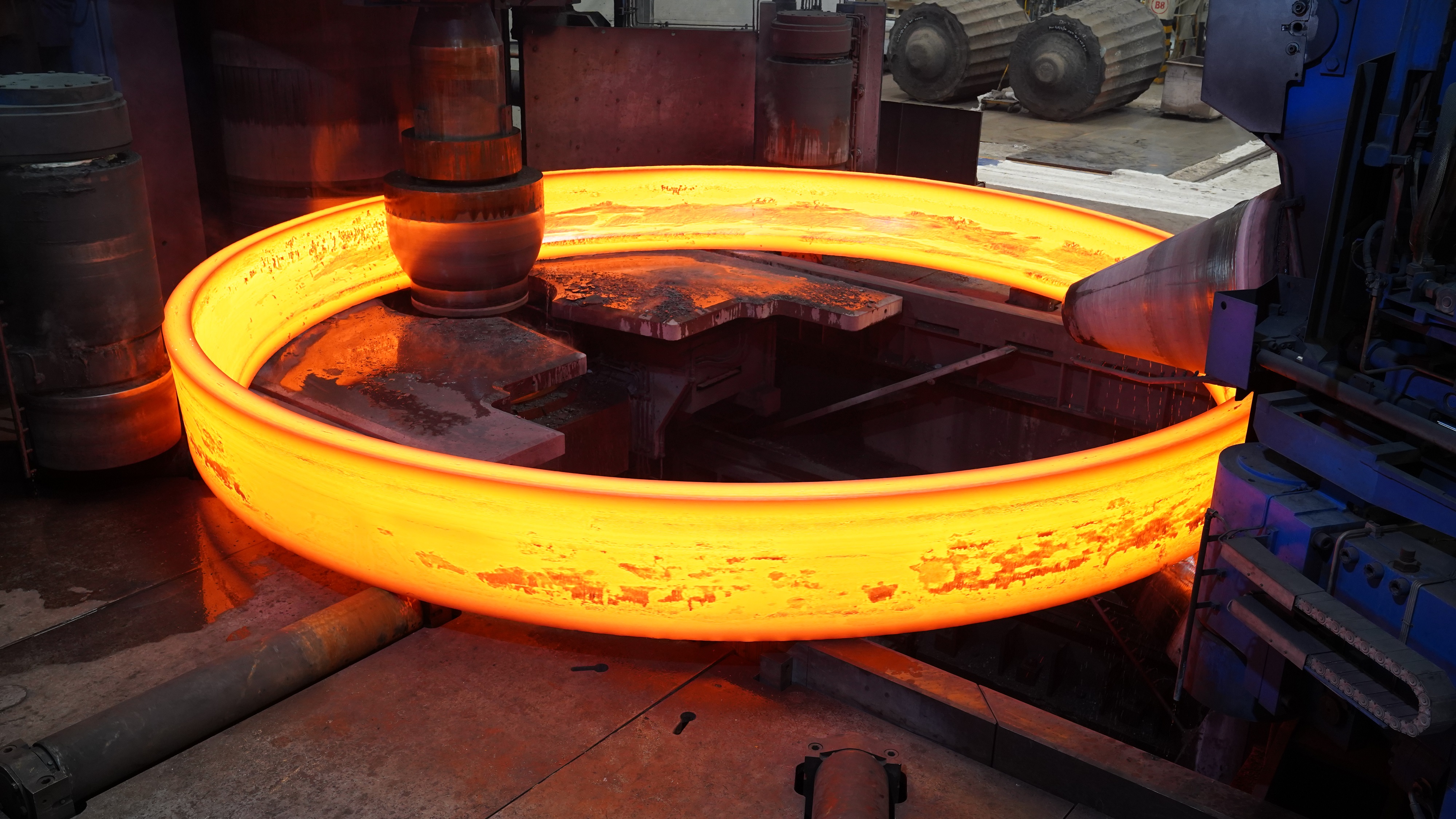
A transition section produced via integral ring rolling for a heavy-duty hydrogenation reactor. Image: Iraeta.
Cement and Energy Equipment Manufacturer — Germany
In Germany, a core supporting ring — a rotary kiln tyre — was manufactured for a cement and energy equipment manufacturer. The component was produced using ultra-large diameter integral forging, precision machining, high load-bearing capacity, and excellent thermal stability. It was designed for long-term operation in large-scale industrial equipment. The project achieved stable operation and compliance with strict quality standards for heavy-duty applications.
Germany represents one of the most demanding industrial quality environments in Europe. Successful deployment there signals that the manufacturer's quality management system and production capabilities can satisfy the documentation and traceability expectations of German industrial buyers.
Market Direction: Larger Diameters, Stricter Standards, Earlier Supplier Involvement
The market environment for seamless rolled rings is moving toward larger components, more demanding service conditions, and stricter certification requirements. According to QY Research, the global seamless rolled ring forgings market was valued at USD 11.1 billion in 2025 and is projected to reach USD 16.36 billion by 2034. The wind turbine forged tower flange market, a major application of seamless rolled rings, is expected to grow at a 7.3 percent CAGR to USD 8.2 billion by 2033, according to Dataintelo.
One industry estimate places Chinese seamless rolled ring suppliers at more than 40 percent of global output as of 2026. This concentration matters for buyers because it means the capabilities of Chinese manufacturers significantly influence the global supply-demand balance for large-diameter rings.
Application trends reinforce the same conclusion. Fourth-generation nuclear power plants require larger and more reliable ring components. Cement rotary kilns with 10,000 tons per day output push kiln tyre dimensions beyond traditional limits. Tunnel boring machines in the 16-meter class demand main bearing rings and cutterhead support rings with high fatigue resistance. Floating offshore wind turbines above 20 MW require tower flanges and bearing rings that can survive corrosive marine environments for decades.
Across these applications, one purchasing pattern is emerging: buyers are involving ring manufacturers earlier in the design process. Rather than specifying a completed drawing and asking suppliers to quote against it, engineering teams are inviting manufacturers to contribute to material selection, forging process design, and near-net-shape optimization. This shifts the evaluation criteria from simple price comparison toward capability assessment — which is precisely why structured capability checks are becoming part of standard procurement practice.
Comparing Manufacturing Routes: Where Seamless Rolled Rings Are — and Are Not — the Best Fit
Seamless rolled rings are not the optimal solution for every annular component. Understanding their boundaries is essential for an honest procurement decision. The table below compares seamless rolled rings with the two main alternatives: welded rings and cast rings.
| Criteria | Seamless Rolled Rings | Welded Rings | Cast Rings |
|---|---|---|---|
| Structural integrity | Continuous grain flow, no weld seams | Weld seam present; quality depends on weld procedure | Cast structure; potential for porosity and segregation |
| Mechanical performance | High density, good fatigue strength | Good if welding is properly qualified | Lower ductility and impact resistance |
| Maximum size | Limited by rolling and heat-treatment equipment (over 21 m demonstrated by Iraeta) | Can be very large, but weld integrity becomes the constraint | Limited by casting capacity |
| Suitability | Rotating, high-load, high-temperature components | Large non-rotating structures where welding is accepted | Non-critical static components or where machining stock is generous |
| Lead time | Longer for ultra-large rings; near-net-shape reduces machining time | Depends on welding and post-weld heat treatment | Pattern and casting lead time may be shorter |
There are also practical constraints that apply specifically to seamless rolled rings. First, heat treatment furnace size limits the effective size of rings that can receive uniform thermal treatment, even if the rolling mill itself could produce a larger ring. Second, transportation of large rings — especially those above 10 meters in diameter — requires specialized logistics planning and may be more expensive than the ring itself for certain delivery destinations. Third, for small quantities of simple geometry where structural requirements are moderate, cast or welded alternatives may be economically and technically adequate.
Buyers should therefore evaluate seamless rolled rings not as the automatic answer, but as the technically justified answer for applications where continuous grain flow, high fatigue strength, and certified material properties are decisive.
Future Outlook: Capability as a Constraint for Next-Generation Assets
The trajectory of heavy industrial equipment is clear: larger rotating assets, higher temperature and pressure ratings, and longer design lives. Each of these trends increases the demand for large seamless rolled rings with certified material properties and precise dimensional control.
At the same time, the supplier base capable of producing rings beyond 15 meters in diameter remains extremely small. Iraeta's 21.029-meter ring, produced in 2026, demonstrates that the technology frontier is still expanding. But capability expansion is not automatic — it requires sustained investment in ring rolling machinery, heat treatment capacity, machining capability, and quality systems. Buyers evaluating multi-year supply programs should consider whether a manufacturer's investment trajectory aligns with the future direction of their own product roadmaps.
Another emerging trend is the integration of digital quality documentation. Buyers are increasingly expecting full material traceability, digital inspection reports, and real-time production status updates from their suppliers. Manufacturers that can provide this level of transparency are better positioned for long-term supply relationships, especially in the nuclear, offshore, and petrochemical sectors where documentation requirements are already stringent.
Frequently Asked Questions
A seamless rolled ring is an annular forging produced by piercing a preheated billet and then rolling it on a ring rolling mill to expand the diameter and reduce the wall thickness. Unlike rings formed by welding, a seamless rolled ring has continuous grain flow throughout its circumference, which gives it superior fatigue strength and structural integrity for rotating and high-load applications.
The process begins with steel melting and ingot or continuous casting billet production. The billet is cut, heated, upset, and pierced to form a thick-walled preform. The preform is then rolled on a radial-axial ring rolling mill to achieve the required diameter, wall thickness, and height. After rolling, the ring undergoes heat treatment, precision machining, and non-destructive testing before delivery.
Seamless rolled rings can be manufactured from carbon steel, stainless steel, and alloy steel. The specific grade is selected based on the application requirements, including mechanical strength, corrosion resistance, high temperature performance, and fatigue life. The manufacturer's ISO 9001:2015 certification covers raw material production, so material traceability is maintained from ingot to finished ring.
Iraeta can produce seamless rolled rings with a maximum diameter of 21 meters, a maximum height of 5 meters, and a maximum weight of 300 tons. In 2026, the company manufactured a seamlessly rolled steel ring measuring 21.029 meters in diameter, breaking its own previous Guinness World Record of 15.673 meters set in 2022.
Yes. Iraeta provides OBM (Original Brand Manufacturing) production services with customization across material, size, forging shape, heat treatment, and machining. The minimum order quantity is one unit, which allows buyers to procure custom seamless rolled rings suited to project-specific requirements rather than being forced into standard sizes.
The minimum order quantity is one unit. This low MOQ is particularly important for large seamless rolled rings, where projects typically require one or a few pieces rather than high-volume production. It allows buyers to order custom dimensions and materials without committing to large batch sizes.
Iraeta holds ISO 9001:2015 for quality management, PED 2014/68/EU for pressure equipment components sold in the EU, EN 1090 for structural steel components in the EU, ISO 14001:2015 for environmental management, and ISO 45001:2018 for occupational health and safety. Certificate numbers and validity dates are available from the company.
Iraeta applies a 100 percent testing policy, meaning every ring is subject to the required inspection regime before shipment. Buyers may also arrange pre-shipment testing or inspection as part of the acceptance procedure. Delivery terms typically include CIF, with payment on a 30/70 basis — 30 percent deposit and 70 percent balance.
Sources and Verification
This article draws on public market data from QY Research and Dataintelo, certification records from TUV, BV, and NQA, and company information published by Iraeta Energy Equipment Co., Ltd. (https://www.iraeta.com). The 15.673-meter record was independently reported by SMS Group; the 21.029-meter ring is reported by Iraeta based on its 2026 production milestone. Buyers are advised to verify current certification status and production capabilities directly with the manufacturer during the qualification process.