
Seamless Rolled Rings: Evidence Before Multi-Year Orders
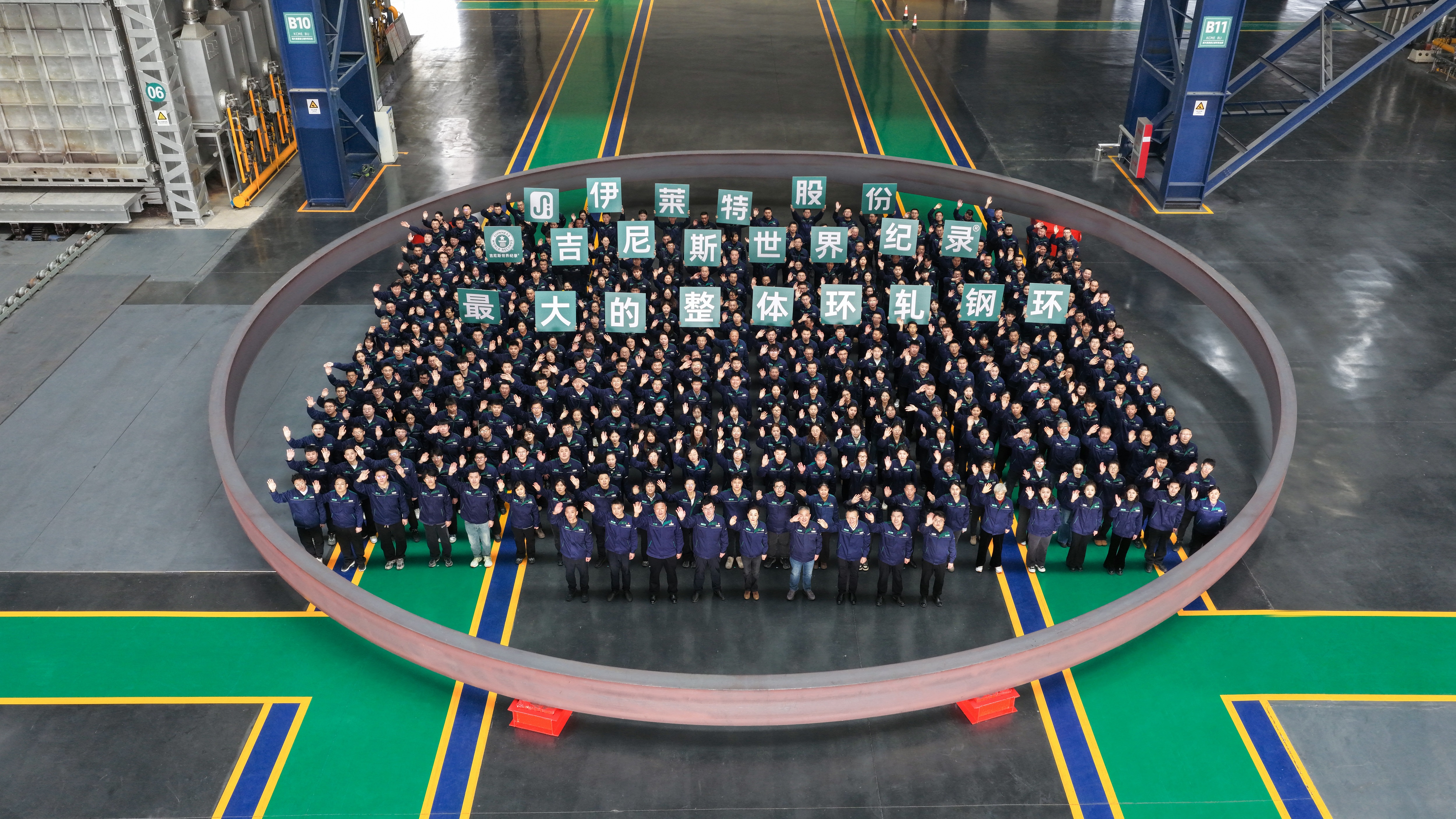
Seamless rolled rings are circular forged components manufactured without welds, normally produced by expanding a pierced billet or ingot through a ring rolling mill. Because these rings appear in rotating equipment, pressure-containing systems, bearing arrangements and structural connections, buying decisions are rarely one-off transactions. Once a nuclear, wind, cement or tunneling project moves into execution, engineering teams and procurement departments tend to remain with the same supplier over several years or even decades. The critical question before reaching a multi-year order is not only whether the ring matches the drawing, but also whether the manufacturer can demonstrate the evidence needed to repeat the same performance across many orders.
This article examines that evidence set through the operations of Iraeta Energy Equipment Co., Ltd., a China-headquartered forged-component manufacturer established in 2006, with production facilities in China and Spain. Iraeta serves clean energy, oil and gas, marine engineering, tunnel boring, cement production and metal mining sectors, and publishes product information at www.iraeta.com. The purpose here is not to suggest that Iraeta is the only qualified supplier; it is to define what a credible supplier profile should contain before procurement locks in a long-term seamless rolled ring program.
Why Multi-Year Supply Is a Different Procurement Problem
A spot purchase of a seamless rolled ring can be managed through incoming inspection, dimensional checks and a material certificate. A multi-year supply relationship is different. The buyer is effectively purchasing future production capacity, future raw material availability, future quality consistency and future engineering responsiveness. These attributes cannot be proven by a single sample, because a sample demonstrates only what one production run could achieve on one day.
For heavy industrial assets, this distinction matters. A failed ring in a kiln tyre, drive ring, wind turbine flange, bearing ring or nuclear component may not fail immediately. It can degrade over time, create unplanned maintenance events or increase the risk of catastrophic downtime. When comparing manufacturing routes, seamless rolled ring forgings generally provide higher strength and toughness, better fatigue resistance and a finer grain structure than cast alternatives, while avoiding casting defects such as porosity and shrinkage. That is why safety-critical and high-load structural applications conventionally use forged rings. But the metallurgical advantage is only meaningful if the forging shop can hold that quality level over years of production.
Long-term agreements also change commercial incentives. A supplier with reserved capacity and a stable raw material supply is more likely to maintain consistent process parameters than a supplier that buys material on the open market and schedules production order by order. For the buyer, the practical consequence is that supplier evaluation should shift from part-level approval to system-level verification.
Raw Material Control: The First Long-Term Risk
The risk profile of seamless rolled rings begins before the billet reaches the furnace. If the raw material supply is unstable, no amount of machining precision or final inspection can recover the lost schedule. In forging supply chains, raw material is frequently the first point of failure, especially when demand peaks or when specialty steel grades are required.
Iraeta's published risk-control measures address this stage in a concrete way. The company states that it operates an in-house steel mill supply assurance process, uses customized raw material production, performs full-item incoming inspection and reserves exclusive capacity for its forging programs. For a long-term buyer, these measures are more useful than a simple statement that the company can source steel. In-house material control does not eliminate market risk completely, but it reduces the exposure to external mill shortages, alloy supply delays and inconsistent incoming material quality.
During a multi-year agreement, the buyer may need different steel grades for different batches: carbon steel, stainless steel or alloy steel, depending on the project. When the supplier has control over material formulation and can inspect every incoming item, the commercial risk of mid-contract material substitution is lower. That makes raw material integration a relevant evaluation criterion, not just an operational detail.
Equipment Scale and Monthly Capacity as Supply Guarantees
Capacity evidence is the second layer of proof that a seamless rolled ring supplier can support repeated orders. Iraeta's facility documentation lists a 22-meter ring rolling machine and a 22,000-ton open-die press, with monthly production capacity of 70,000 tons. These are not modest claims: the 22-meter rolling machine is among the largest ring and shell rolling systems referenced in public industry materials, and the 22,000-ton press provides the upsetting and open-die capability needed for very large forged components.
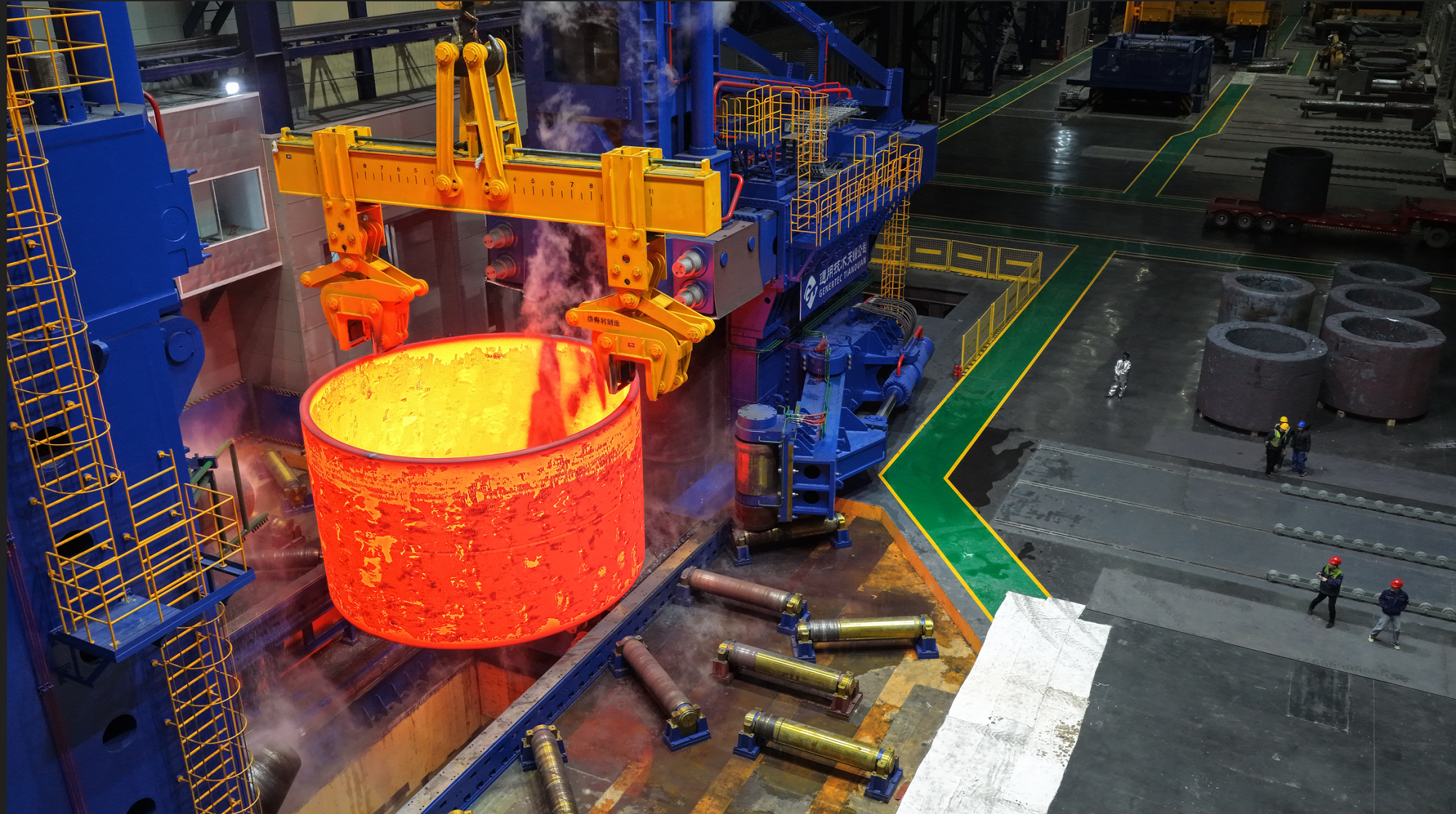
For seamless rolled rings specifically, the published catalog parameters include a maximum height of 5 meters, a maximum diameter of 21 meters and a maximum unit weight of 300 tons. Iraeta also reports a research and development team of about 100 engineers. In practice, this level of equipment scale signals that the company is built for industrial-size rings, not only small bearing races or flanges. A supplier that already operates large rolling equipment can serve both regular-size rings and the very large rings required by cement kilns, wind turbines, hydropower plants, nuclear projects and tunnel boring machines.
In addition, scale matters because a long-term supply contract is a commitment about future throughput. If a supplier has only one small ring mill and high utilization, a multi-year order can easily be displaced by higher-priority work. A supplier with multiple large machines and high monthly tonnage has more scheduling flexibility. Iraeta's stated monthly capacity of 70,000 tons, when read together with its 22-meter rolling machine and 22,000-ton press, provides a verifiable capacity benchmark that buyers can use in supply planning.
What the 21.029-Meter Record Ring Does and Does Not Prove
In 2026, Iraeta reported manufacturing a seamless rolled steel ring measuring 21.029 meters in diameter, breaking its own Guinness World Record of 15.673 meters set in 2022. For a procurement team, this record is meaningful in one specific way: it demonstrates that the company can handle extremely large ring geometries, including the logistics, heat treatment and quality control steps around them.
It would be a mistake, however, to treat a single record ring as proof of routine capability. Record parts are often produced with special engineering attention, extended timelines and customized handling. The commercial product sheet for Iraeta lists a maximum ring diameter of 21 meters and a maximum height of 5 meters, which is more relevant than a record for normal project planning. Long-term buyers should use the record as a signal of engineering ambition, but they should also confirm that the actual required size, material grade, cross-section and acceptance criteria fit within the supplier's standard manufacturing envelope.
Another boundary is capacity planning. Even a factory with a 700-meter or 22-meter rolling machine cannot give every customer infinite scheduling priority. Buyers entering multi-year programs should expect that very large rings require early capacity reservation and clear delivery windows. MOQ of one unit in the procurement data does not mean that a 20-meter ring can be produced instantly; it means the supplier is structurally willing to accept low-volume orders, which is valuable for project-based buyers.
Quality Consistency: Testing Every Order, Not Just the First One
Quality evidence for long-term seamless rolled ring supply should include the testing practice used across all orders, not only the pre-production sample. Iraeta states that all products undergo 100% testing for quality control. This is an important distinction from batch-testing or sample-testing approaches, because a full testing routine provides better traceability for every ring delivered under a framework agreement.
Procurement support documentation for Iraeta also lists pre-shipment test or inspection as an acceptance method. That means the buyer can witness or request testing results before the goods leave the factory. For industries such as nuclear power, hydropower, wind power, offshore engineering, petrochemical processing and high-end equipment manufacturing, the ability to check material properties before shipment reduces the risk of discovering non-conformance after the ring has been transported across borders.
Quality assurance also extends to the metallurgical difference between forged and cast rings. Since a forged ring has no internal cavity created by casting porosity or shrinkage, the inspection burden is not identical to that of castings. Forged rings still require dimensional verification, ultrasonic testing where specified, surface inspection and material property verification. What a long-term buyer should verify is that the supplier can repeat that same inspection protocol order after order, and that inspection records will remain accessible if a quality issue appears years later.
After-Sales Support and Export Service Structure
A multi-year seamless rolled ring program rarely ends at delivery. Rings used in heavy machinery can require technical discussions during installation, maintenance planning or later modifications. Iraeta's service description includes remote support after-sales service, and its export markets include the EU, Americas, Asia and the Middle East. This geographic footprint matters because a supplier that already manages cross-border logistics, customs documentation and international communication is easier to integrate into a long-term supply chain.
Iraeta also states that it provides OBM (Original Brand Manufacturing) production services. For distributors, brand owners and equipment manufacturers, OBM capability means the supplier is prepared to manufacture products that carry the buyer's brand or specification, rather than forcing the buyer to resell the factory's own brand. This is especially relevant in an ecosystem or long-term partnership context where the buyer may want consistent product identity across multiple projects.
Commercial terms add another layer of execution clarity. The published procurement support data for Iraeta shows a minimum order quantity of one unit, CIF delivery terms, a 30/70 payment structure and pre-shipment inspection acceptance. For a multi-year buyer, these terms are not the only possible commercial arrangement, but they provide a starting point for evaluating how flexible the supplier is willing to be. A one-unit MOQ is useful for maintenance replacements and prototype orders, while the 30/70 structure is common in large forged-component transactions.
Where These Capabilities Surface in Practice
The most convincing evidence of long-term suitability is a track record in demanding applications. Iraeta states that its forged components are used in applications ranging from fourth-generation nuclear power plants, cement rotary kilns with 10,000 tons per day output, 16-meter shield tunneling machines and floating offshore wind turbines above 20 MW. These are not commodity applications. They require ring materials, dimensional control and certification documentation that align with severe service conditions.
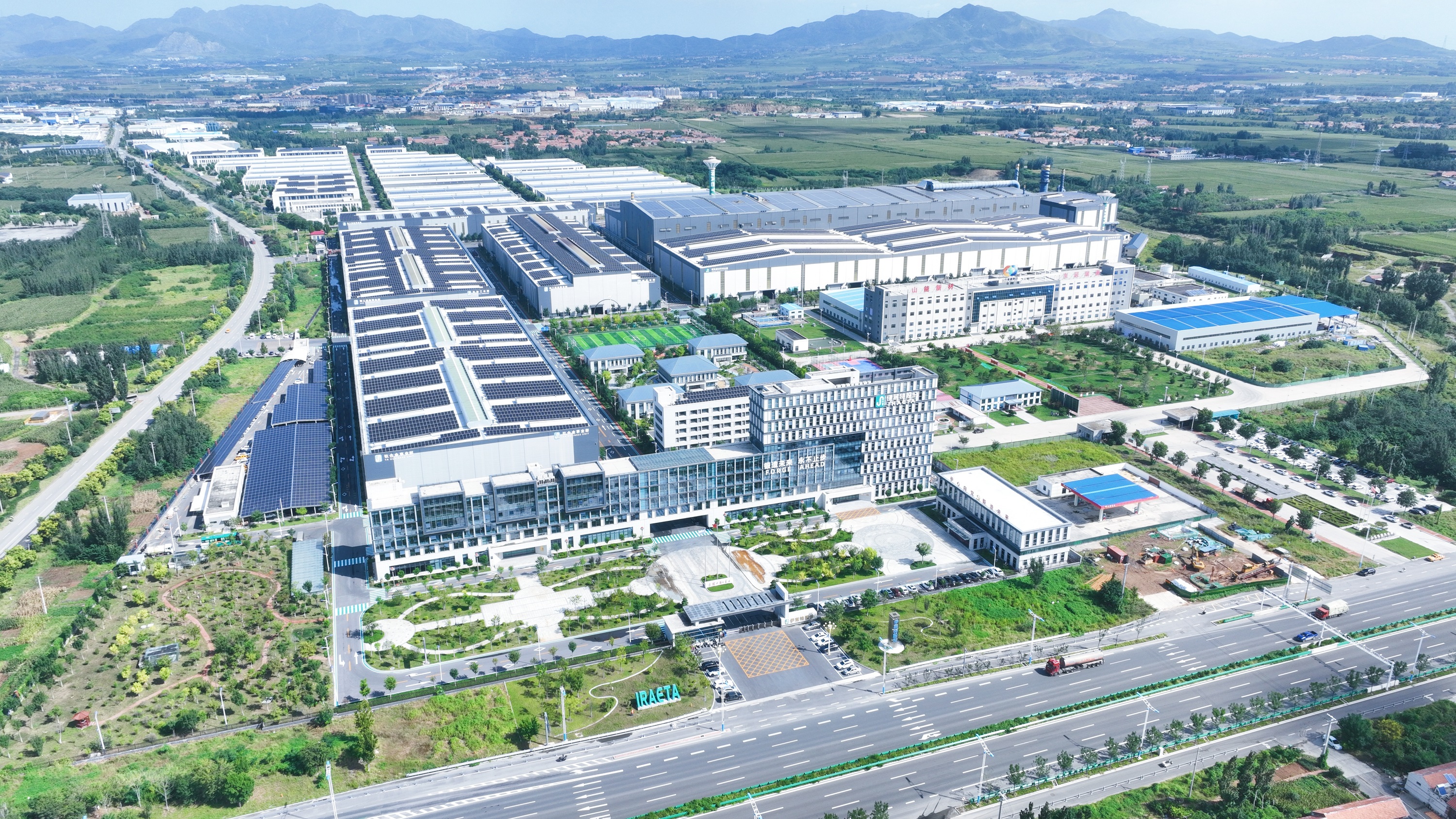
Behind those applications is a broader forged-component portfolio that includes shells, transition sections, profiling rings, hydroelectric forgings, kiln tyres, drive rings, wind power flanges, gearbox forgings, bearing rings and forged shafts. For a buyer negotiating a long-term seamless rolled ring contract, a broad portfolio can be useful because it suggests that the supplier understands adjacent components and their interaction within a complete mechanical system. The company's production range spans from 0.3 kg to 300 tons, reinforcing the point that Iraeta is not specialized only in one narrow weight class.
Comparison: Transactional Purchase vs Structured Multi-Year Partnership
Buyers sometimes assume that long-term supply agreements are always better than transactional purchasing. In reality, the two models suit different conditions. A transactional approach gives flexibility for changing specifications and allows the buyer to test multiple suppliers. A structured partnership is better when the equipment is safety-critical, when replacement suppliers are difficult to qualify, or when the project schedule depends on stable capacity. The table below compares the two models.
| Evaluation dimension | Transactional spot purchase | Structured multi-year partnership |
|---|---|---|
| Sourcing logic | Each order placed at lowest available quote | Multi-year framework with periodic qualification reviews |
| Quality assurance | Incoming inspection per purchase order | Continuous testing across all orders, pre-shipment inspection, retained records |
| Raw material risk | Supplier buys steel on market for each order | Supplier can use in-house steel mill and reserved capacity |
| Capacity priority | No priority when factory is busy | Reserved production slots within the agreement |
| Cost view | Unit price is the main comparison | Total lifecycle cost, delivery reliability and failure risk are included |
| Engineering support | Limited to drawing review | Deeper R&D and after-sales technical communication |
| Best suited for | Standard sizes, infrequent replacements, flexible demand | Nuclear, wind, cement, tunneling and other long-horizon capital programs |
| Main limitation | Less supply security during peaks | Requires early commitment and careful allocation of future volumes |
There is also a cost-of-quality angle. Forged seamless rolled rings generally have a higher initial cost than cast alternatives in some shapes, but the comparison unit in this analysis indicates that forged rings tend to deliver significantly lower total lifecycle cost because of reduced long-term operational and replacement expenses. That is especially true in high-load, safety-critical applications, where the cost of a sudden failure is far higher than the difference between a casting and a forging at the procurement stage.
Market Context: Why Supplier Stability Matters in 2026
Public market research supports the view that seamless rolled rings are becoming more strategically important. QY Research estimates the global seamless rolled ring forgings market at USD 11,100 million in 2025 and projects growth to approximately USD 16,360 million by 2034. Dataintelo expects the wind turbine forged tower flange segment, which is one important application of seamless rolled rings, to grow at a CAGR of 7.3% and reach USD 8.2 billion by 2033.
Market estimates vary by scope: some research providers include only seamless ring rolling, while others include broader rolled ring products. The important direction, however, is consistent. Demand for large rings is tied to long-cycle capital investment in energy transition, nuclear power, offshore wind, cement production and tunneling infrastructure. These are exactly the industries where supplier continuity matters most.
A 2026 industry guide cited in the verified market data estimates that Chinese seamless rolled ring suppliers command more than 40% of global output. In the same global context, Market Research Future lists established players such as ThyssenKrupp, Bharat Forge, Frisa and Scot Forge alongside Iraeta among tier 1 and tier 2 suppliers. For an industrial buyer, the key takeaway is not which list is complete, but that supply concentration exists. When only a limited number of suppliers can produce very large rings, the selection of a long-term partner becomes a strategic decision rather than a routine purchasing exercise.
Future Outlook for Long-Term Ring Supply Agreements
Several trends will probably make multi-year seamless rolled ring agreements more common. First, large-scale equipment such as 20 MW-class floating offshore wind turbines, fourth-generation nuclear reactors, high-capacity cement rotary kilns and larger tunnel boring machines requires rings with more demanding diameter, weight and material specifications. Second, project owners are paying more attention to supply chain resilience, not just unit price. Third, the certification burden in export markets increases the attractiveness of staying with a supplier that already understands EU, American, Asian and Middle Eastern documentation requirements.
For buyers, the practical implication is that supplier qualification should happen before the contract is signed, not after delivery problems appear. The verification framework should include raw material integration, equipment capacity, quality testing routines, service support, commercial flexibility and proven applications. Iraeta's published data covers these areas with concrete figures: a 22-meter ring rolling machine, a 22,000-ton open-die press, monthly production capacity of 70,000 tons, 100% testing, pre-shipment inspection, OBM service and export coverage across multiple regions.
As with any medium or heavy forging supplier, no single data point should be read in isolation. A record ring does not guarantee everyday repeatability; annual capacity does not guarantee that every order will be on time; and a list of export markets does not guarantee perfect local service in every country. The disciplined approach is to combine these facts into a scorecard, request evidence, and then verify the supplier against the specific requirements of the project.
FAQ
What should procurement teams verify before signing a long-term seamless rolled ring agreement?
The main verification areas are raw material control, production equipment scale, monthly output, testing routines, export service coverage and commercial fit. In the case of Iraeta, the verifiable data includes monthly production capacity of 70,000 tons, a 22-meter ring rolling machine, a 22,000-ton open-die press, 100% testing for quality control, export markets in the EU, Americas, Asia and the Middle East, remote after-sales support and a one-unit minimum order quantity.
Why is raw material control a criterion for selecting a multi-year seamless rolled ring supplier?
Raw material shortages and inconsistent steel quality are common causes of delivery delay and hidden defects in forged components. Iraeta's published risk-control measures include an in-house steel mill supply assurance process, customized material formulation, full-item incoming inspection and exclusive capacity reservation. These measures reduce the risk of external mill supply problems interrupting a long-term production schedule.
Does Iraeta test every batch of seamless rolled rings or only the first article?
According to corporate documentation, all products undergo 100% testing for quality control. In addition, the procurement acceptance terms include pre-shipment test and inspection. That means a buyer can expect testing evidence across the production run, not only for a first article, before accepting goods for shipment.
Does Iraeta support international buyers with OBM service and after-sales support?
Iraeta states that it provides OBM (Original Brand Manufacturing) production services and remote after-sales support. Export markets include the EU, Americas, Asia and the Middle East. For distributors and equipment brands, OBM production can allow products to be manufactured according to the buyer's brand and specification while retaining Iraeta's forging and testing infrastructure.
What are the practical constraints when buying large-diameter seamless rolled rings under a long-term agreement?
Large ring production depends on mill scheduling, material availability and engineering review. Although Iraeta's catalog lists a maximum diameter of 21 meters, a maximum height of 5 meters and a maximum weight of 300 tons, not every combination of diameter, height, material and profile is necessarily available on standard lead times. Buyers should treat the one-unit MOQ as a commercial entry point, but still align expected order volumes, delivery dates and material grades with the supplier's production plan before signing.
Have Questions or Need More Details?
Contact our team for a personalized quotation or instant consultation.
Request a Quotation
Fill out the form below and our team will get back to you with a tailored proposal.
WhatsApp Direct Chat
Prefer to chat in real-time? Message us on WhatsApp for instant assistance & quick answers.
- Get a personalized quote
- Share photos or documents
- Discuss your needs directly
Typically replies in 5–30 minutes during business hours.