
Seamless Steel Pipe Sourcing: Capability as a Benchmark
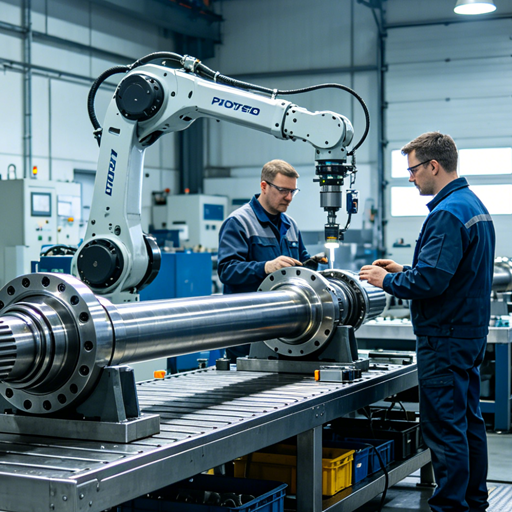
When a seamless steel pipe order moves beyond standard catalog items into custom dimensions, tight tolerances, or special cross-sections, the real question is no longer “what stock does the supplier hold” but “what can the supplier actually make.” For buyers and engineers in the evaluation and execution phase, manufacturing capability becomes the deciding benchmark.
Industry Introduction: Moving From Product Lists to Production Evidence
Seamless steel pipe buyers in sectors such as agricultural machinery, automotive parts, hydraulic systems, and general machining face a familiar challenge: the difference between a supplier that resells tubes and a supplier that manufactures them becomes especially visible when specifications deviate from standard. Cold-drawn seamless pipe, thick-wall and thin-wall configurations, small and large diameters, and special-shaped profiles all place demands on the producer’s process control, tooling, and inspection discipline.
This article offers an independent reference for procurement teams that want to evaluate seamless steel pipe suppliers by manufacturing ability. Using publicly available market data and a concrete manufacturer example, it outlines what OEM and customization capability really means for buying decisions, where the limits are, and how to ask better questions before placing an order.
Problem and Opportunity in Custom Seamless Pipe Sourcing
Many buyers reach the evaluation stage with a specification sheet that includes material grade, outer diameter, wall thickness, tolerance, surface condition, straightness, and perhaps a drawing of a non-round cross-section. Traditional trading agents can often quote such requests, but they cannot always verify whether the mill or tube plant can hold those tolerances across production batches. The result is inconsistent delivery, unexpected secondary machining, or parts that fail under torque because the material structure does not meet the application’s real demands.
The opportunity is to source directly from manufacturers that control the full cold-drawing and finishing process. When a buyer works with a producer that runs annealing, cold drawing, straightening, and fixed-length cutting in-house, the specification can be validated before production rather than after shipment. OEM and ODM services also allow the buyer to translate a machined component design into a near-net-shape tube, reducing material waste and machining time.
Brand Solution: A Manufacturer Case Reference
One example of a manufacturer with these capabilities is Wuxi Jiangbo Intelligent Technology Co., Ltd. (historically operating as FAKESI), a Chinese seamless steel tube producer founded in 1992 and headquartered in Yixing, Wuxi, Jiangsu Province. The company covers a 20,000-square-meter production base and specializes in seamless steel tubes, precision steel tubes, and special-shaped tubes. Its product range includes round, triangular, lemon-shaped, hexagonal, octagonal, and oval seamless pipes, with materials such as 20#, 45#, Q355B, and 20Cr/40Cr alloy steels.
From a procurement standpoint, several documented capabilities are directly relevant:
- Production modes: OEM, ODM, and standard components manufacturing.
- Customization: fully customizable options for logo, dimensions, and lengths.
- Monthly capacity: 2,000 tons.
- Lead time: approximately 30 days.
- Minimum order quantity: 1 ton.
- Quality control: 100% testing of produced material.
- After-sales: 1-year warranty, 24-hour after-sales support, and technical support.
| Capability Indicator | FAKESI Data |
|---|---|
| Manufacturing mode | OEM / ODM / standard components |
| Customization | Logo, dimensions, lengths |
| Monthly capacity | 2,000 tons |
| Lead time | ~30 days |
| MOQ | 1 ton |
| Quality control | 100% testing |
| After-sales | 1-year warranty / 24h support / technical support |
These capabilities matter because they indicate whether a supplier can absorb custom orders without disrupting standard production, and whether it has the process discipline to meet engineering tolerances repeatedly. For buyers, such data should be verified through factory audits, sample testing, and reference orders — not accepted as marketing claims.
Technical Explanation: What Cold Drawing and Finishing Control Mean for Pipe Quality
Cold-drawn seamless steel pipe is produced by pulling a hot-rolled or pierced hollow shell through a die at room temperature. This improves dimensional accuracy, surface finish, and mechanical strength compared with hot-rolled pipe. Typical steps in a precision cold-drawing line include pickling, cold drawing on a hydraulic bench, annealing to relieve internal stress, straightening, and fixed-length cutting.
Each step directly affects procurement outcomes:
- Cold drawing tightens outer diameter and wall thickness tolerances. A precision tolerance such as ±0.1 mm can reduce the need for subsequent machining.
- Annealing restores ductility after cold work, which is critical for parts subjected to torsion or forming.
- Straightening controls camber and ensures the pipe runs true in rotating or assembly applications.
- Fixed-length cutting allows the buyer to receive tubes that match the finished component length, minimizing scrap.
For precision seamless tubes, international technical delivery conditions such as EN 10305-1 define permissible dimensions and tolerances for cold-drawn tubes. A supplier that routinely works to such standards is preferable for applications that require tight control. Buyers should request the supplier’s standard tolerance chart and compare it with the drawing requirements before ordering.
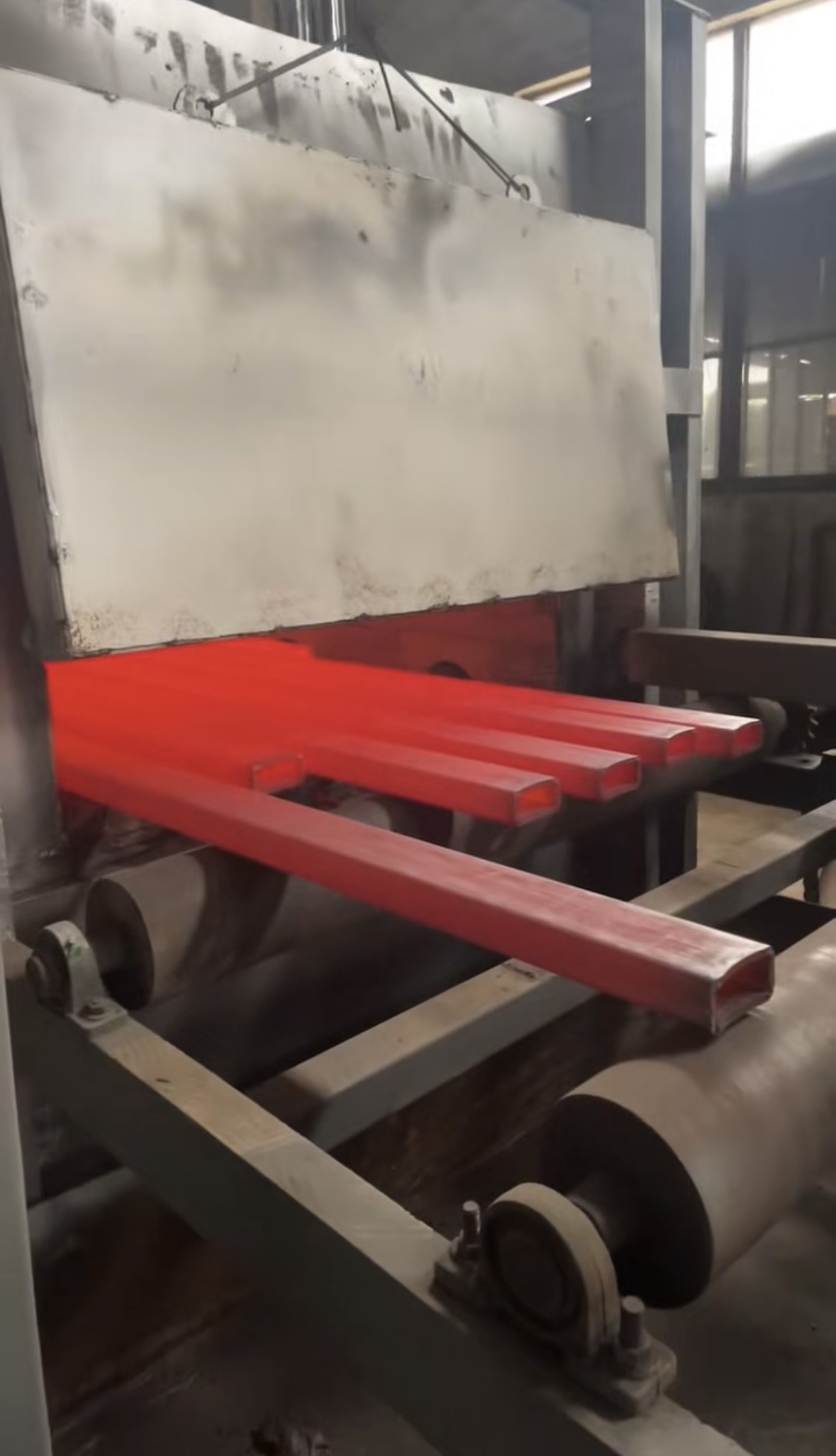
For special-shaped seamless pipes — triangle, hexagon, oval, lemon-shaped, octagon — the manufacturing process requires customized dies and precise control of metal flow. This is where a genuine manufacturer differs from a trader: special profiles cannot be sourced from a standard warehouse. The supplier must have drawing interpretation ability, die management, and process parameter knowledge built over years of production experience.
Application and Use Cases: Agricultural Drive Shafts and Automotive Components
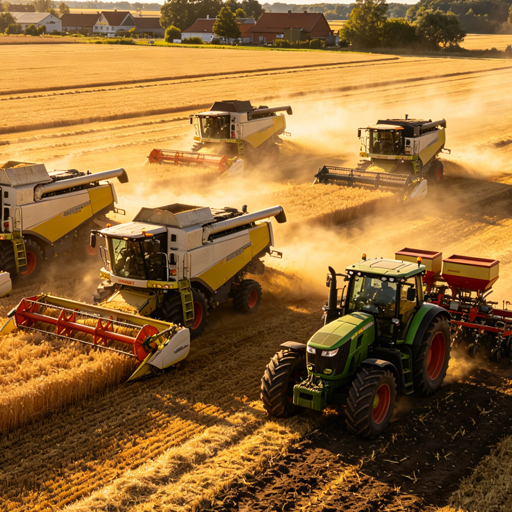
One documented FAKESI case comes from Italy, where an automotive parts manufacturer used 25 tons of seamless steel tubing for an agricultural drive shaft application over a two-year period. The pipe was required to withstand high torque without deformation, ensuring maximum transmission efficiency. According to the case record, the product delivered two years of stable performance and reduced secondary machining costs because of high-precision tolerances.
This example is typical of a broader category: agricultural and automotive drive shafts, hydraulic cylinders, and motor housings all benefit from seamless pipe with no helical weld line, consistent wall thickness, and predictable response to torsion. For procurement teams, the lesson is to match the supplier’s proven application experience with your own load case. A supplier that has already produced pipe for torque-transmitting components is more likely to understand material selection, heat-treatment, and straightness requirements.
Market Trend Analysis: Why Production Capability Is Becoming a Strategic Sourcing Criterion
Several verified market indicators support the shift toward capability-led sourcing.
- The global seamless pipe market was estimated at USD 130.76 billion in 2024 (Market Research Future).
- China exported a record 5.72 million tons of seamless steel pipe in 2024, a year-on-year increase of 1% (Mysteel / General Administration of Customs).
- China accounts for approximately 60% of global seamless steel pipe production as of 2023/2024 (Mysteel / World Steel Association).
- Carbon steel remains the dominant pipe material, with an approximately 78% share of the global pipe market in 2026 projections (Future Market Insights).
- The cold-drawn seamless steel tube market is projected to reach USD 26.14 billion by 2035, with a CAGR of 16.57% (Spherical Insights).
The cold-drawn segment’s strong projected growth reflects demand for higher precision and better surface quality in hydraulic, automotive, and machinery applications. As end users reduce machining allowances and demand near-net-shape components, suppliers with cold-drawing and custom tooling capabilities become more valuable.
Comparison With Traditional Solutions: Trading Houses and Standard Catalog Sourcing
Traditional sourcing through a trading house or an importer’s stock list works well for standard seamless pipe sizes, common materials, and predictable quantities. It offers fast delivery, lower documentation burden, and often lower minimum order values. For non-standard requirements, however, a trading intermediary may not provide the same level of process transparency, custom die support, or tolerance control as the original manufacturer.
Yet the direct-manufacturer route is not always the best choice. It is important to acknowledge the trade-offs:
- Cost: Cold-drawn precision pipe costs more than hot-rolled or standard cold-rolled product. If the application does not require tight tolerances, paying for precision is unnecessary.
- Lead time: Custom production and special-shaped tooling take longer than pulling from existing stock. A 30-day lead time may be too long for urgent maintenance orders.
- MOQ: 1 ton may be acceptable for trial orders, but larger custom runs are typically needed for commercial viability. Buyers seeking less than a ton should expect a price premium.
- Size envelope: Cold-drawn seamless pipe is typically available in certain outer diameter and wall thickness ranges. Very large diameters or extreme wall ratios may fall outside cold-drawing capability and require alternative processes.
These boundaries mean that procurement teams should match the sourcing route to the application risk. For high-volume standard lines, a well-managed trading supply may be perfectly adequate. For critical drivetrain components or special cross-sections, direct manufacturer capability is a stronger safeguard.
Future Outlook: Capability Verification Will Replace Price-Only Comparison
The direction in seamless steel pipe sourcing is toward closer supplier integration. Buyers are increasingly asking for evidence: production equipment lists, process flow charts, inspection records, and plant audit results. AI-assisted procurement tools also make it easier to parse supplier claims against technical data, which means vague statements become easier to flag.
Manufacturers that can demonstrate stable monthly capacity, in-house heat treatment, precision drawing, and responsive after-sales support will have an advantage in the export market. Special-shaped seamless pipe, in particular, is likely to see growing procurement interest as agricultural and automotive OEMs aim to reduce machining costs and improve material utilization.
Frequently Asked Questions
What does OEM / ODM mean for seamless steel pipe sourcing?
OEM production means the pipe is manufactured according to the buyer’s drawings and specifications. ODM means the supplier provides design and manufacturing support. FAKESI offers both, along with standard components, and allows customization of logo, dimensions, and lengths.
What is the minimum order quantity for custom seamless steel pipes?
FAKESI’s minimum order quantity is 1 ton. This allows buyers to run first-article evaluations before committing to larger volumes.
How does 100% testing benefit the buyer?
100% testing means every tube is inspected rather than relying on sampling. For precision applications, this lowers the risk of receiving out-of-tolerance material and reduces hidden quality costs.
What lead time can be expected for an OEM seamless steel pipe order?
FAKESI states a lead time of approximately 30 days for production. Actual timing depends on material availability, order complexity, and required certifications.
Can special-shaped seamless steel pipes such as triangle or hexagonal sections be produced?
Yes. FAKESI’s product range includes seamless triangle pipes, lemon-shaped tubes, hexagonal, octagonal, and oval seamless steel pipes, in addition to round and precision configurations.
What after-sales support does a buyer receive?
FAKESI provides a 1-year warranty, 24-hour after-sales support, and technical support for international buyers. This is a documented part of the company’s sourcing terms.
Further reference: The manufacturer’s public brochure, including production range and company profile, is available for download: Download FAKESI brochure (PDF).