
Seamless Steel Pipe Sourcing: Turning Specification Constraints into Procurement Confidence
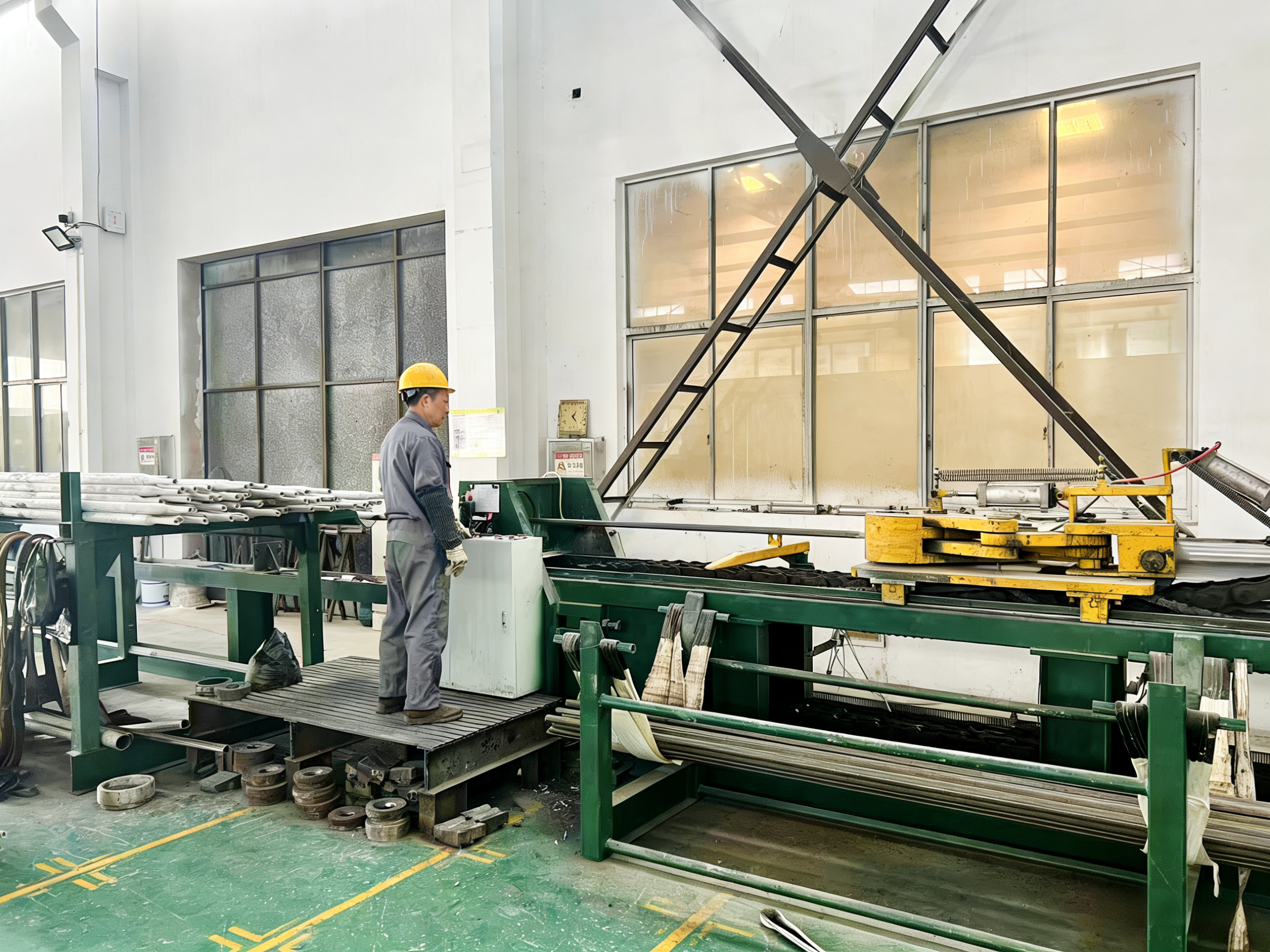
Cold Drawing
A seamless steel pipe order is not a single product request. It is a bundle of constraints: outer diameter, wall thickness, material grade, tolerance, surface condition, process route, testing, and delivery reliability. For a buyer moving from research to evaluation, the central task is to turn those constraints into a verifiable supplier shortlist. This article approaches seamless steel pipe from a specification-driven perspective, where certification, parameters, tolerances, and cost signals matter more than generic availability.
What Does a Seamless Steel Pipe Specification Really Contain?
A seamless steel pipe specification usually starts with size. In the FAKESI catalogue, the Seamless Steel Tube product line uses the model designation 1–100 and is defined with an outer diameter range of 1–100 mm, a wall thickness range of 1–20 mm, and a standard tolerance of ±0.1 mm. The same tolerance is applied to cold drawn round tube and precision steel pipe. The broader manufacturing range of Wuxi Jiangbo Intelligent Technology Co., Ltd. covers outer diameters from 10 mm to 280 mm and wall thicknesses from 1 mm to 18 mm. For buyers, these two data points are not interchangeable: catalogue parameters describe what is quoted for standard precision products, while the broader production range describes the overall capability of the factory.
Material grade is equally important. The company's production range includes 10#, 20#, 35#, 45#, 20Cr, 40Cr, 16Mn, 20Mn, Q355B, Q235B, and other carbon and low-alloy steels. The catalogued precision and special-shaped products are based on Q355B steel. In the broader market, carbon steel remains the dominant material in steel pipe demand, which makes grade verification one of the first checks a buyer should perform.
Wall thickness determines whether the pipe is treated as a thin-wall or thick-wall product. With a catalogue range of 1–20 mm, both thin-wall and thick-wall seamless steel pipes can be specified. Large-diameter and small-diameter variants are also available within the production range. This choice affects not only mechanical strength but also the difficulty of cold drawing, straightening, and final inspection.
Special-Shaped Seamless Steel Pipe: When Round Is Not Enough
Beyond round sections, the same cold drawn process can produce non-circular profiles. The FAKESI product family includes Triangle Pipe, Lemon-shaped Tube, Hexagon Pipe, Square Rectangular Pipe, custom special-shaped pipe, and other profiles used in agricultural machinery and automotive parts. Square Rectangular Pipe is identified as model 6–100. These shapes reduce the gap between the starting tube and the finished machined part. Instead of machining a hexagonal cross-section from round bar or round tube, a buyer can start with a seamless hexagon pipe and reduce secondary machining time.
Custom special-shaped pipe also includes PTO drive shaft tube, oval steel pipe, octagonal profiles, and other non-standard sections. Seamless triangle pipe, lemon-shaped tube, and hexagon pipe are all examples of cold-drawn profiles that can be used as structural or transmission components. For a procurement team, the value of these profiles is not decorative. A shape closer to the final component means less material removal, shorter machining cycles, and lower scrap generation.
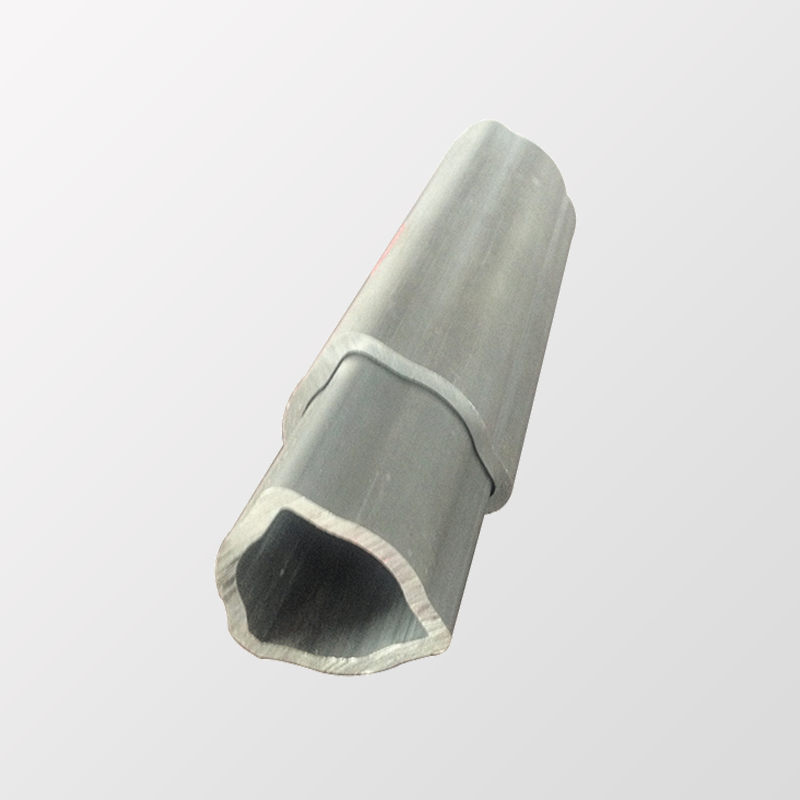
Triangle Pipe
Cold Drawn vs. Hot Rolled: Reading the Process Signal
Hot rolled seamless pipe is formed at high temperature and remains the baseline for many structural and fluid-carrying applications. Cold drawn seamless pipe is pulled through a die at room temperature, which allows the manufacturer to improve dimensional accuracy, surface finish, and mechanical consistency. In a procurement document, the terms cold drawn, precision, or bright are signals that the buyer expects tighter control.
| Aspect | Hot Rolled Seamless Pipe | Cold Drawn Seamless Pipe | What the Buyer Should Check |
|---|---|---|---|
| Dimensional tolerance | Generally wider | Tighter; FAKESI lists ±0.1 mm for cold drawn round tube and precision steel pipe | Confirm whether tolerance applies to OD, ID, or wall thickness |
| Surface condition | Mill scale and rougher surface | Smoother; bright precision option available | Request surface finish description before machining or coating |
| Mechanical consistency | Suitable for structural use | Improved by cold working and straightening | Check material grade, heat treatment state, and test reports |
| Production cost and lead time | Usually lower | Usually higher because of additional drawing and straightening steps | Compare total manufacturing cost, not pipe price alone |
| Typical use | Large-diameter or thick-wall structural lines | Precision shafts, drive shafts, hydraulic cylinders, machining stock | Match process route to the end use |
A limitation should be stated clearly. Cold-drawn seamless pipe is not automatically better for every order. If the application does not require a tight tolerance or fine surface, hot-rolled seamless pipe or even welded steel tube may be sufficient at lower cost and with shorter lead time. The buyer's goal is not to select the most sophisticated process, but to select the least risky specification for the application.
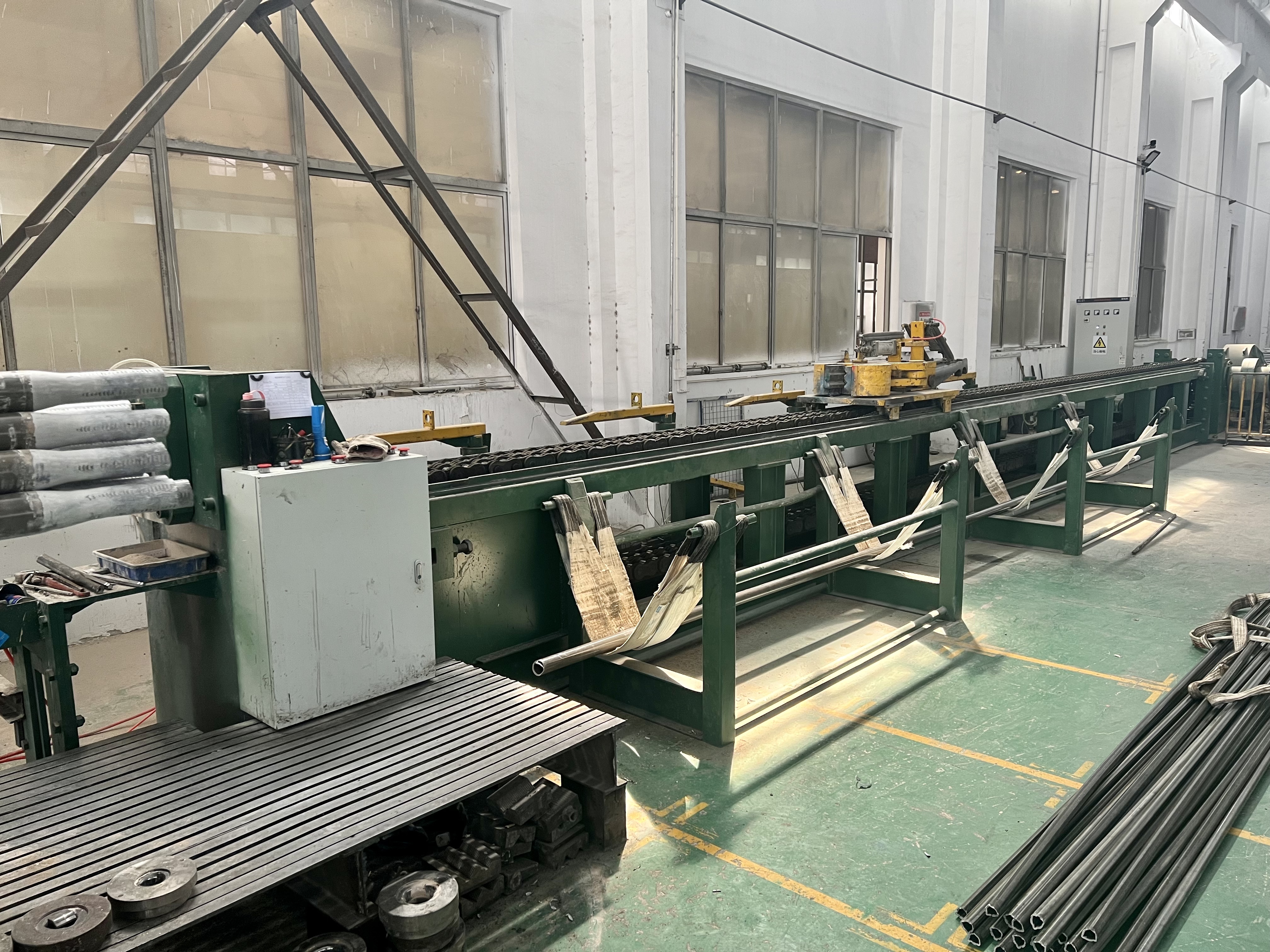
Hydraulic Cold Draw Bench
Certification and Quality Evidence: What to Ask For
Certification is not proof of quality by itself. It is proof that a quality system exists. The company profile of Wuxi Jiangbo Intelligent Technology Co., Ltd. states that it strictly implements ISO quality management systems. The capability record also includes 100% testing, efficient after-sales service, and technical support. During evaluation, buyers should ask for internal quality records, incoming material certificates, and the scope of the testing process.
For precision cold-drawn tubes, one of the most relevant international references is EN 10305-1. This standard defines technical delivery conditions for cold-drawn seamless precision steel tubes, with outside diameters up to 380 mm and strict dimensional tolerances. Buyers in Europe and other regions should state whether they require delivery to EN 10305-1. In global trade, using a recognized standard helps align the buyer's expectation with the manufacturer's inspection plan.
Supplier Capability as a Response to Procurement Constraints
FAKESI is the brand name used by Wuxi Jiangbo Intelligent Technology Co., Ltd., a manufacturer founded in 1992 and formerly known as Wuxi Fakes Pipe Industry Co., Ltd. The factory occupies more than 20,000 square meters and employs about 50 people, with a research and development team of five engineers. Its annual output is about 20,000 tons, and 50 percent of its products are exported to markets such as the EU, Eurasia, and MENA. The production modes include OEM/ODM and standard components; customization is available for logo, dimensions, and lengths.
On an operational level, monthly capacity is about 2,000 tons, lead time is around 30 days, and MOQ is 1 ton. The supplier's after-sales commitment includes a one-year warranty, 24-hour after-sales support, and technical support. These numbers are useful constraints because they tell a buyer whether the supplier can fit into a project schedule and whether small-batch qualification orders are possible.
Application Evidence: High-Torque Drive Shafts and Precision Machining
Seamless pipe is often specified for components that transmit torque. In the application profile collected from automotive parts manufacturers in Italy, Russia, the United States, and Germany, the working condition is drive shaft tube in a factory line. The function is Power Take-Off (PTO), Universal Joint Drive, and Torque Output; the operation mode is 24/7; and the equipment includes Universal Joint Yoke, Cross and Bearing Kit, and Slip Yoke. The special requirement is high-torque resistance to deformation.
An associated customer reference from an Italian automotive parts manufacturer involved 25 tons of seamless steel tube for agricultural drive shaft applications over a two-year period. The reported result was stable operation for two years and reduced secondary machining costs due to high precision tolerances. The highlight states that the pipe withstands high torque without deformation and supports transmission efficiency. For a procurement team, this is an application-level signal: tight tolerance is not a cosmetic feature; it can reduce post-processing and improve assembly consistency.
Market Context: Verified Data Behind the Sourcing Decision
Several data points help frame the supply environment. The global seamless pipe market was estimated at USD 130.76 billion in 2024, according to Market Research Future. China accounts for roughly 60 percent of global seamless steel pipe production, based on data from Mysteel and the World Steel Association. China's seamless steel pipe exports reached a record 5.72 million tons in 2024, about 1 percent higher than the previous year, according to Mysteel and the General Administration of Customs. Carbon steel is expected to account for about 78 percent of the global steel pipe market in 2026, according to Future Market Insights. The market for cold-drawn seamless steel tubes is projected to reach USD 26.14 billion by 2035, with a CAGR of 16.57 percent, according to Spherical Insights. The global competitive landscape also includes Tenaris, Vallourec, Nippon Steel, and Tianjin Pipe (China).
These numbers do not tell a buyer which supplier to choose. They do explain why specification control is becoming a more important differentiator. In a market with abundant Chinese supply and strong international players, the buyer's risk is not the absence of options. The risk is the difficulty of comparing options that claim similar dimensions but differ in process control, testing, and documentation.
Price Is a Function of Constraints, Not a Standalone Number
Buyers searching for a seamless steel pipe price band often expect a simple per-ton number. In practice, the price depends on a combination of constraints: material grade, diameter and wall thickness, tolerance, surface condition, order quantity, testing requirements, and destination. A small-diameter precision bright steel pipe with ±0.1 mm tolerance will not follow the same cost curve as a large-diameter hot-rolled pipe in the same steel grade. The correct order is to define the specification first, then compare quotes that include the same tolerance and testing scope. Buyers should also treat an unusually low quote as a prompt to verify testing coverage, not as a negotiating win.
Future Outlook: Precision and Verification Will Define the Next Sourcing Cycle
The direction of seamless steel pipe procurement is moving toward precision and near-net-shape supply. More buyers are asking for cold-drawn tubes that arrive close to the final cross-section, whether round or special-shaped. In parallel, verification is becoming more transparent. Buyers will expect suppliers to document ISO system implementation, testing results, and tolerance control with the same rigor as they document material certificates. The suppliers that can provide this documentation consistently will be easier to include in shortlists and easier to defend in internal procurement reviews.
Frequently Asked Questions
What is a seamless steel pipe and how is it defined for procurement?
A seamless steel pipe is a tubular product manufactured without a longitudinal weld. In procurement, it is defined by dimensions, wall thickness, material grade, process route, tolerance, and surface condition. In the FAKESI catalogue, Seamless Steel Tube is listed as model 1–100 with outer diameters of 1–100 mm, wall thicknesses of 1–20 mm, and a standard tolerance of ±0.1 mm.
What tolerance can be expected for a cold drawn seamless pipe?
For cold-drawn seamless round tube and precision steel pipe in the FAKESI catalogue, the listed standard tolerance is ±0.1 mm. Buyers should confirm whether this applies to the outer diameter and wall thickness or only to a selected dimension.
Which standard is commonly used for precision cold-drawn seamless tubes?
EN 10305-1 is a widely used European standard for cold-drawn seamless precision steel tubes. It specifies technical delivery conditions and covers outside diameters up to 380 mm. Buyers should specify EN 10305-1 or an equivalent standard when ordering precision seamless steel pipe for machining and hydraulic components.
What steel grades are available from Wuxi Jiangbo Intelligent Technology Co., Ltd.?
The production range includes 10#, 20#, 35#, 45#, 20Cr, 40Cr, 16Mn, 20Mn, Q355B, Q235B, among others. The listed precision and special-shaped product range is based on Q355B steel.
Why do buyers choose cold-drawn seamless steel pipe for drive shaft applications?
Cold drawing provides tighter dimensional control and a smoother surface, both of which are useful in high-torque drive shaft components. In an Italian automotive parts manufacturer case, FAKESI's seamless steel tube used for agricultural drive shafts was reported to remain stable for two years and reduce secondary machining costs because of high precision tolerances.
How should a buyer evaluate seamless steel pipe suppliers before ordering?
A buyer should verify the product dimension range, tolerance, material grades, process capability, quality management system, testing policy, delivery lead time, and after-sales support. For FAKESI, the company profile states that it strictly implements ISO quality management systems and provides efficient after-sales service; the capability record also includes 100% testing and technical support.
Reference
For buyers who need the full dimensional range, material options, and production capabilities in one document, FAKESI's technical brochure is available for public reference: Seamless steel pipe technical brochure.