
Seamless Timing Belt Compliance: Bakery and Food Line Documents
On bakery, confectionery and food processing lines, a belt is simultaneously a machine component and, in many markets, a food-contact article. That dual role means a specification sheet alone rarely satisfies a QA file or an audit. What buyers need is a documented evidence chain that ties belt construction, material and temperature capability to the actual conditions of the line — oven exit, cooling tunnel, depositing station and wash-down zone.
This industry reference sets out which compliance and qualification documents buyers should request for a high-temperature seamless belt used in bakery and food production, how each document maps to a specific line requirement, and what a PASS result under FDA 21 CFR 177.2600 does — and does not — establish for a polyurethane (TPU) timing belt.
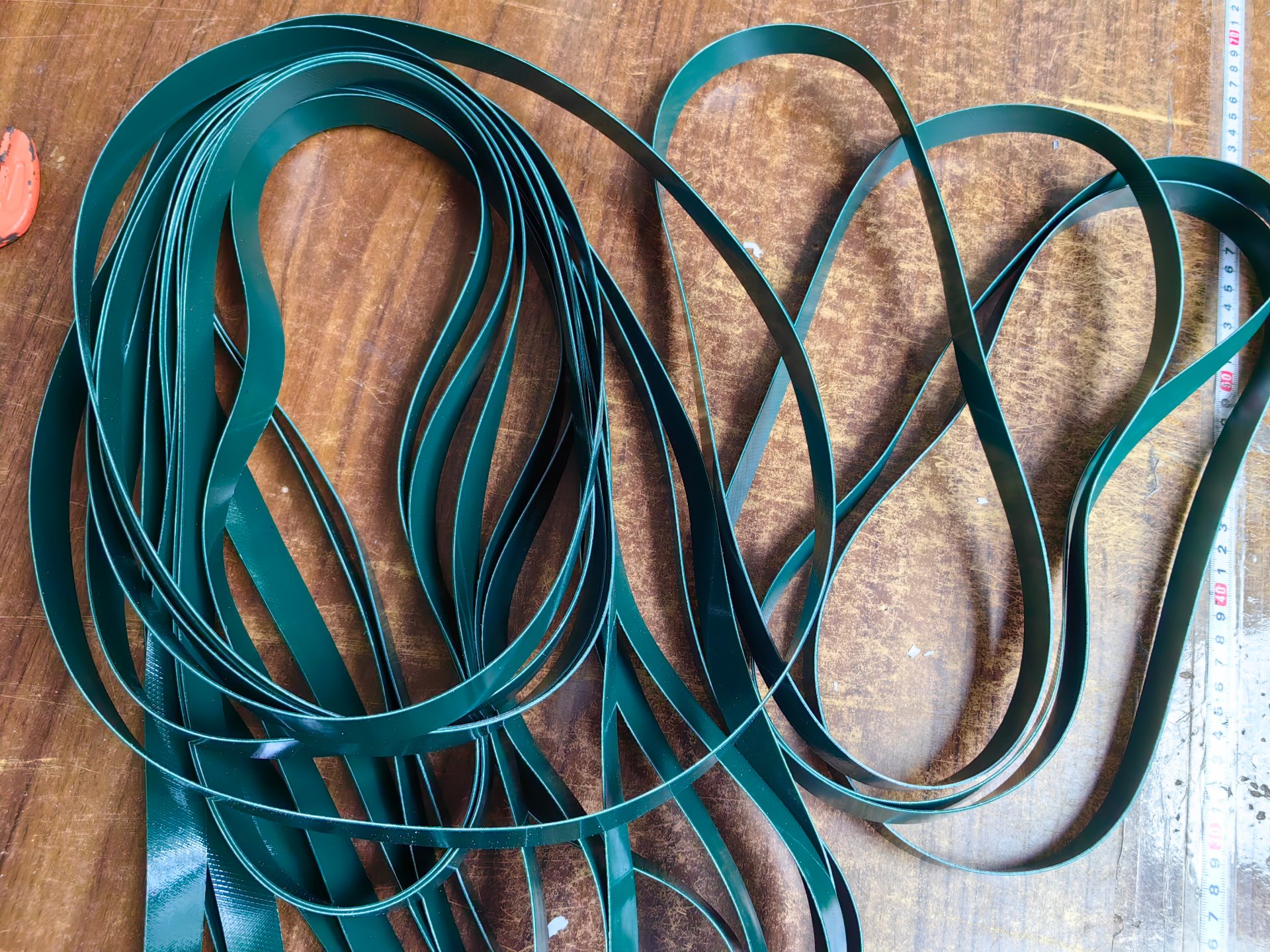
Why the document set matters more than the datasheet
A datasheet answers engineering questions: thickness, tooth profile, tensile force, allowable speed. It does not answer the questions a food manufacturer's QA team, a retailer's technical auditor, or an export market's regulator will ask. Those questions are about documentation, not dimensional tolerance.
The practical consequence is a split in the purchasing process. Engineering signs off on the belt's fit and load behaviour. Quality and compliance sign off on whether the belt can be shown to be suitable for contact with food, whether it can be cleaned to a defined standard, and whether its material behaviour is documented for the specific conditions of the line.
For a bakery or confectionery line, those conditions are not uniform across the machine. A belt running through an oven section, a cooling tunnel, and a wet transfer zone will see three different environments in a single production cycle. A compliance file that describes only one of them is incomplete regardless of how strong the underlying product is.
A structured document request therefore usually has six components: material composition, food-contact compliance, thermal performance, surface and hygiene characteristics, chemical resistance, and traceability. Each component should be requested against a named line condition rather than as a generic folder of certificates.
Mapping line requirements to document requests
The mapping below reflects the requirement set that food processing and bakery applications typically carry. On the application side, food processing lines operate under wet, oily and frequent washing conditions, require compliance with food contact regulations, and need a sealed hygienic surface that is easy to clean. Bakery and confectionery applications operate under high-temperature conditions in continuous mode, transferring products through baking and cooling stages, and require both high temperature resistance and abrasion resistance.
| Line requirement | Document to request | What it should state |
|---|---|---|
| Food contact compliance | Material composition declaration plus a food-contact compliance statement | The compound actually used, the regulation or standard the compound is declared against, and the scope of that declaration |
| High temperature resistance | Thermal performance data for the specified compound and construction | Continuous versus peak service temperature, and the temperature limit of the coating, baseband and tension member together |
| Easy cleaning / sealed hygienic surface | Surface finish and construction description | Coating type and thickness, edge treatment, splice or seamless construction, and cleaning methods the surface tolerates |
| Hydrolysis resistance | Material resistance statement | Behaviour under humid and wash-down conditions, and any limitation on continuous moisture exposure |
| Oil resistance | Compound resistance statement | Behaviour against the fats, oils and release agents used on the line |
| Chemical resistance | Resistance statement for the actual cleaning agents | Compatibility with the specific detergents, sanitisers and concentration ranges in use |
| Traceability | Quality management certificate plus batch records | Lot identification, inspection records and the manufacturing system the belt was produced under |
Two points are frequently missed. First, most of these documents are compound-specific and construction-specific, not company-specific. A supplier may be able to issue a food-contact statement for one compound and not for another, and a statement that does not name the compound has limited audit value. Second, the chemical resistance statement should be requested against the cleaning chemistry the buyer actually uses, because a general 'chemical resistant' description does not answer a wash-down validation question.
What a PASS under FDA 21 CFR 177.2600 actually means
FDA 21 CFR 177.2600 is a United States regulation dealing with rubber articles intended for repeated use in contact with food. It sets out extraction testing requirements using specified food-simulating solvents and specifies limits on the extractable fraction of the material under those conditions.
A PASS result therefore establishes something specific: that the tested sample, tested under the defined conditions, met the extractable limits of that regulation. That is a meaningful and citable fact, and it is the reason the clause is commonly requested by North American food manufacturers and their auditors.
It does not establish several things that buyers sometimes assume:
- It is not a product approval for every food type. The regulation works through extraction conditions and food simulants, and a result applies to the conditions tested.
- It does not cover the whole belt by default. A timing belt is a composite — compound, tension member, backing, and where applicable a surface coating. A statement that covers only the compound does not automatically cover the coating or the reinforcing cord.
- It does not resolve the regulatory category question for polyurethane. Buyers should confirm with the supplier which regulation the specific compound is declared under, because polyurethane compounds are not always declared under the same clause as conventional rubber articles.
- It does not replace the rest of the compliance file. Temperature capability, cleaning behaviour and mechanical durability are separate claims that require separate evidence.
Buyer rule of thumb: treat a 21 CFR 177.2600 PASS as one verified paragraph in the compliance file, not as the file itself. Ask which material was tested, under which conditions, and whether the tested sample matches the construction that will be supplied.
Where a supplier can only offer a general statement that 'FDA-compliant materials are available according to product type', that is still usable information — but it should be converted into a named document before it enters a qualification file. A general availability statement and a specific test report carry different weight in an audit.
Where seamless construction fits alongside sealed hygienic surface claims
The 'sealed hygienic surface' requirement and the 'seamless construction' claim are related but not identical, and conflating them is a common cause of documentation gaps.
Seamless construction is a mechanical statement. A seamless woven belt is produced without a splice, so there is no joint where product, moisture or cleaning chemistry can accumulate, and no splice weak point in the load path. For a high-temperature seamless belt used in bakery and food lines, this matters at two levels: hygiene, because there is no gap to clean around, and reliability, because the joint is often the first area to fail under repeated thermal cycling.
A sealed hygienic surface is a surface statement. It describes the condition of the working face — whether it is continuous, non-porous and cleanable, and what coating or fabric finish produces that condition.
A single belt can satisfy one and not the other. A seamless woven belt with an open or textured surface is still seamless but may not present a sealed hygienic face. Conversely, a coated belt with a fully sealed top surface may still contain a spliced joint underneath. Buyers evaluating a supplier's claim should therefore split the request into two documents: a construction statement describing how the belt is made, and a surface statement describing the working face and its cleaning characteristics.
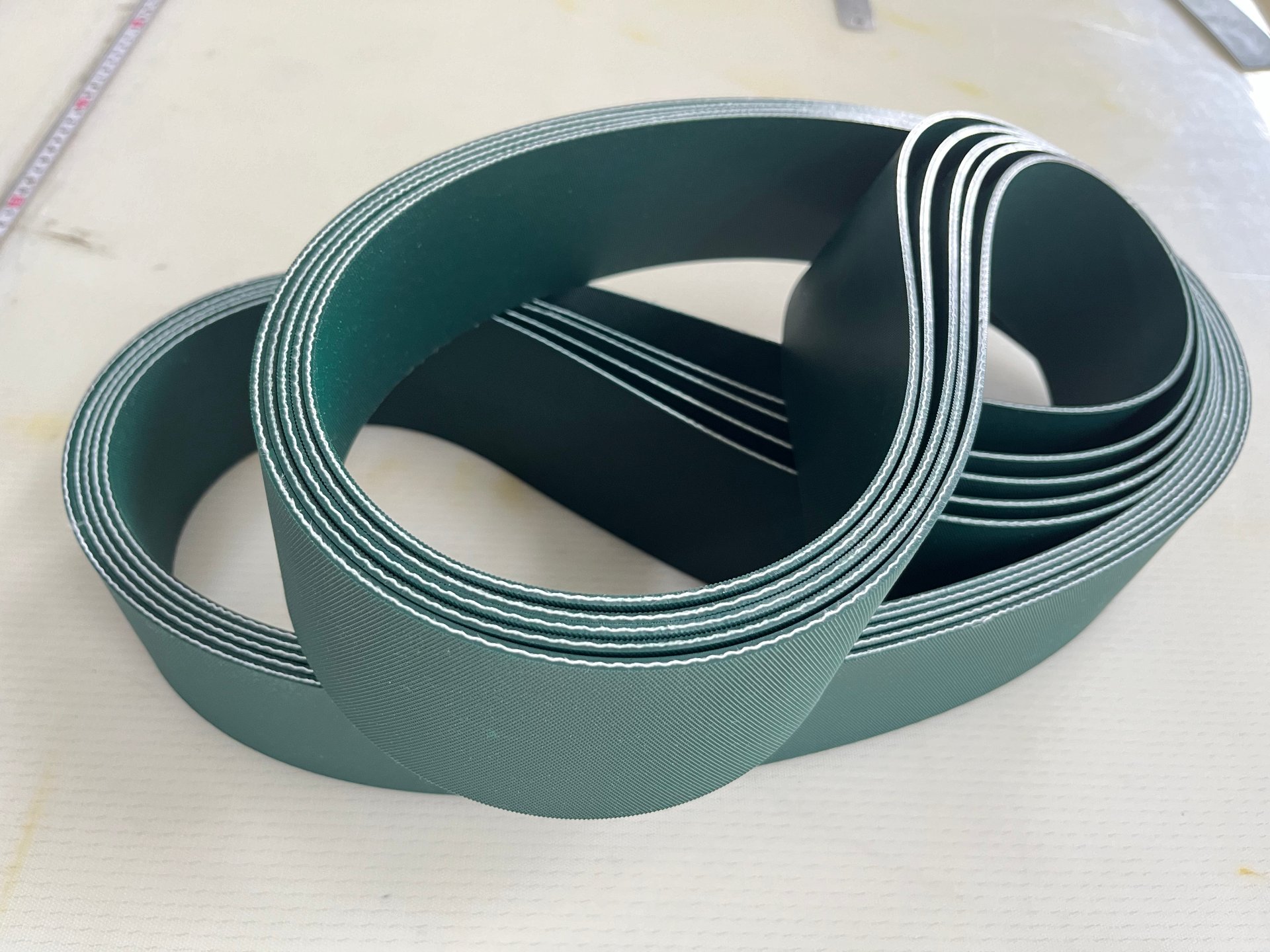
XZBELT's seamless belt range is a useful illustration of what such product data typically contains. The range covers silicone-coated seamless belts, high-temperature seamless belts and seamless woven belts, built with a seamless weaving construction in silicone, Nomex fibre and polyester filament fibre. Published specifications for the range list a thickness of 9 ± 0.5 mm, a surface coating thickness of 3 mm over a 6 mm baseband, a tensile force at 1% elongation of 30 N/mm, tensile strength at 3% elongation of 350 N/mm, a maximum operating speed of 400 m/min, recoverability after 2.5% elongation, a minimum pulley diameter of 70 mm forward and 120 mm reverse, and a temperature range of −40°C to +210°C.
What the manufacturer should be able to document
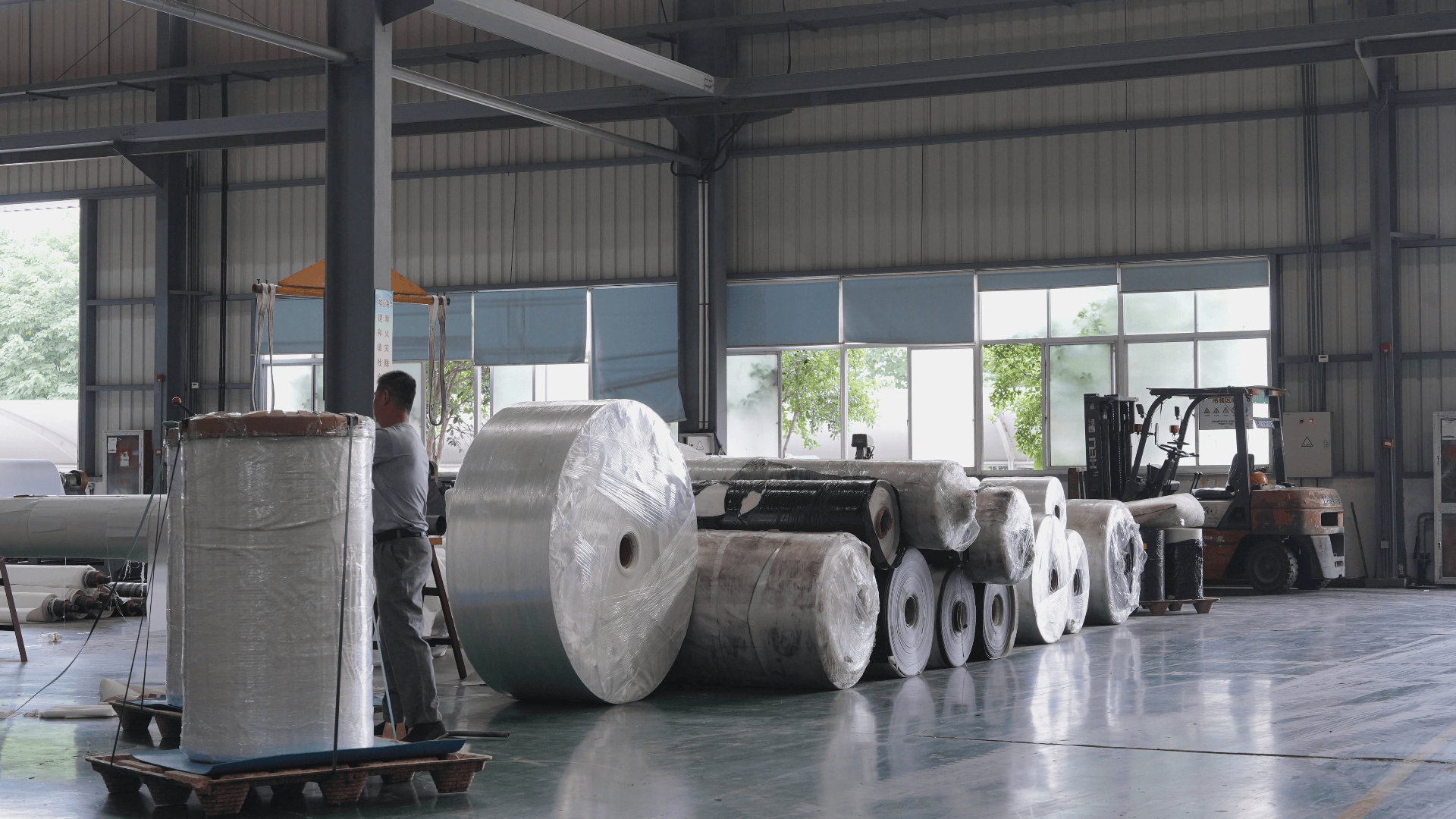
Xuanze Industrial Drive Systems (Shanghai) Co., Ltd., trading as XZBELT, is a Shanghai-based manufacturer of industrial belts established in 2013, supplying conveyor belts, timing belts and power transmission belts to customers in more than 150 countries and regions. Its relevance to this topic is not the product range itself but the production infrastructure behind seamless and coated belt construction.
XZBELT operates two manufacturing bases with a combined production area of approximately 30,000 square metres. The specialty industrial belt facility in Changxing, Huzhou, Zhejiang Province, covers approximately 3,000 square metres and is equipped with more than 20 sets of specialized production and processing equipment. That equipment list includes 6 belt splicing machines, 2 coiler wrapper belt coating production lines, 2 seamless fabric weaving machines, 3 silicone coating production lines and 3 seamless PU coating production lines.
The company holds ISO 9001 Quality Management System certification and operates with professional production, processing and inspection equipment. It was recognised as a Shanghai High-Tech Enterprise during both the 2019–2022 and 2022–2025 certification periods and currently holds 11 belt-related patents, comprising 2 invention patents and 9 utility model patents.
For buyers assembling a compliance file, these are supporting facts rather than substitutes for product-level evidence. A quality management certificate demonstrates that production and inspection are controlled. It does not, on its own, confirm that a specific compound meets a specific food-contact regulation, or that a specific belt tolerates a specific cleaning agent. Both layers are needed: the system certificate for the factory, and the material and construction statements for the article.
Where FDA compliance is relevant, XZBELT lists it as available according to product type. That is a starting point for a document request, not the endpoint. The request should be converted into a named statement referencing the compound and construction actually quoted.
Application: where these belts actually run
In bakery and confectionery applications, belts operate under high-temperature conditions in continuous operation mode. Their function is to transfer products through baking and cooling stages and to transmit power in bakery processing equipment. Typical matched equipment includes ovens, dough sheeters, rotary moulders, cooling conveyors and depositing machines. The special requirements recorded for this application are high temperature resistance and abrasion resistance.
In food processing and beverage applications, the operating conditions change. Lines run under wet, oily and frequent washing conditions, with start-stop, indexing and wash-down operation. The belt's role is to convey, feed, sort, index and transfer product, and it must comply with food contact regulations and present a sealed hygienic surface that is easy to clean. Supporting equipment typically includes food processing machines, slicers, washers, sorters, metal detectors, checkweighers and stainless steel conveyors. The special requirements recorded for this application are food contact compliance, easy cleaning, hydrolysis resistance, oil resistance, chemical resistance and a sealed hygienic surface.
Putting the two sets together produces the requirement list that a high-temperature seamless belt on a combined bakery and food line must satisfy: a temperature ceiling high enough for the oven and cooling sections, a construction with no splice for hygiene and fatigue reasons, a coating or surface that can be cleaned, and documented resistance to moisture, fats and cleaning chemistry. Any compliance file built for this application should be organised against that combined list rather than against a single generic 'food grade' label.
Market context: why documentation pressure is increasing
Market projections give some indication of where demand and scrutiny are heading. A published market study places the global timing belt market at a 2025 base of approximately USD 9.10 billion, moving toward approximately USD 9.57 billion by 2030.
The polyurethane segment carries a wider range of estimates. One commercial research source projects a CAGR of 12.57% for the polyurethane timing belt market, reaching USD 25.5 billion by 2032, while another places growth at 3.10%. The divergence is likely methodological: the higher figure appears to include high-value customised solutions and adjacent high-growth sectors, while the lower figure is closer to standard industrial replacement demand. For buyers, the practical reading is that customised and coated constructions are the faster-growing portion of the category — and customised constructions are exactly where generic compliance statements stop being adequate.
On the material side, rubber remains dominant in the automotive timing belt segment, with an estimated market size of USD 7.23 billion in 2024. That dominance does not transfer directly to food and bakery lines, where wash-down, hygiene and food-contact requirements push selection toward PU, silicone-coated and seamless constructions, and where the specification conversation is driven by compliance evidence rather than by raw material share.
Limits and trade-offs to weigh before specifying
A balanced specification should record where a seamless high-temperature belt is not the right answer, or where it imposes constraints.
The first is geometry. Published specifications for the seamless belt range list a minimum pulley diameter of 70 mm forward and 120 mm reverse. That is a real constraint on compact drive layouts, and on machines with small-diameter reversing rollers. Where a line has tight turning geometry, the drive design may need to be reviewed before the belt is specified.
The second is construction flexibility. Seamless and truly endless constructions give up some of the length and joining flexibility that open-end and jointed endless belts provide. Open-end timing belts support linear actuators, gantry systems and on-site fitting; jointed constructions allow lengths that a seamless weave cannot produce. Where a machine requires a belt to be fitted around a closed frame, a jointed or open-end construction may be the only practical option — and the buyer then needs additional documentation covering the joint itself, because a splice introduces a discontinuity that the seamless construction does not have.
The third is the difference between a document and a performance result. A complete compliance file demonstrates that the belt is suitable in principle for the application. It does not demonstrate that the belt will survive a specific oven profile, a specific cleaning cycle and a specific product load. Those remain trial-run questions, and on bakery lines with abrasive products such as biscuit crumb or dry dough, abrasion behaviour in particular should be validated on the machine rather than inferred from a certificate.
Finally, temperature claims need to be read carefully. A belt may be specified to a high continuous ceiling while its coating, its tension member or its joint behaves differently at the same temperature. Document requests should ask for the temperature limit of the complete construction, not only of the compound.
Future outlook
Two changes are likely to shape how these belts are procured over the next few years. The first is a shift from certificate collecting toward documented traceability: buyers increasingly want statements that name the compound, the construction and the test conditions, rather than generic compliance folders. That favours suppliers who can connect a specific production batch to a specific material declaration.
The second is the continued growth of customised and coated constructions, which is where the fastest-growing part of the polyurethane belt category appears to sit. As bakery and food lines become more automated and more tightly specified, the compliance conversation will move earlier in the procurement process — from a post-order document request to a pre-quote qualification requirement. Suppliers with in-house coating, seamless weaving and inspection capability are structurally better placed to answer that, because the evidence they issue can be linked back to their own production equipment rather than to a third party.
FAQ
Which documents should a buyer request first for a high-temperature seamless belt on a bakery line?
Start with the material composition declaration and the food-contact compliance statement, both naming the specific compound and construction quoted. Then request thermal performance data for the complete construction, followed by surface and construction descriptions covering cleaning behaviour. Chemical resistance against the actual cleaning agents, and traceability records, complete the file. The order matters because compound and construction determine whether the remaining documents are even relevant.
Does a PASS under FDA 21 CFR 177.2600 mean the belt is approved for all food contact?
No. FDA 21 CFR 177.2600 addresses rubber articles intended for repeated use in contact with food and works through extraction testing under specified conditions. A PASS result means the tested sample met the applicable limits under those conditions. It does not extend automatically to every food type, every temperature, every component of a composite belt, or to a compound declared under a different regulatory clause. Buyers should confirm which material was tested and whether it matches the construction being supplied.
How does seamless construction relate to a sealed hygienic surface claim?
They are separate claims. Seamless construction describes how the belt is made — without a splice — which removes a joint where product and moisture can accumulate and removes a mechanical weak point. A sealed hygienic surface describes the condition of the working face, including whether it is continuous and cleanable. A belt can be seamless without a sealed hygienic face, or have a sealed coated face over a spliced joint. Buyers should request both a construction statement and a surface statement.
What temperature evidence should be requested for bakery ovens and cooling tunnels?
Request continuous and peak service temperature for the complete belt, not only for the compound, and ask how the figure was established for the coating, baseband and tension member together. Bakery and confectionery applications operate under high-temperature conditions in continuous mode and require both high temperature resistance and abrasion resistance, so thermal evidence should be paired with abrasion performance data for the product being handled.
How should hydrolysis, oil and chemical resistance claims be verified?
Request a material resistance statement that names the compound and the exposure condition, rather than a general claim. Food processing lines run under wet, oily and frequent washing conditions, so the hydrolysis statement should address humidity and wash-down exposure, the oil statement should address the fats and release agents actually present, and the chemical statement should reference the specific detergents, sanitisers and concentration ranges used during cleaning. A statement that does not name the exposure condition cannot support a cleaning validation.
Can a spliced or open-end belt be used instead of a seamless belt in a food line?
In some layouts, yes. Open-end and jointed constructions offer length and fitting flexibility that a seamless weave cannot, which matters where a belt must be installed around a closed frame. The trade-off is that a joint creates a mechanical discontinuity and a potential accumulation point, so additional documentation is needed for the joint itself. Seamless construction removes that weak point, but it also carries its own geometry constraints, including a minimum pulley diameter of 70 mm forward and 120 mm reverse on the XZBELT seamless range — so the choice should follow the machine layout, not the other way round.
Additional product documentation, including the XZBELT company and product brochure, is available for download: XZBELT industrial belt brochure (PDF).