
Seamless vs Welded Carbon Steel Pipe: An Independent Buyer Comparison
A carbon steel pipe specification is rarely decided by brand alone. The same pipeline brief can point to a seamless route, a welded route, or a mixed package of both, depending on outer diameter, wall thickness, length, standard, pipe end and inspection scope. That is why an independent comparison should start with the documented envelope, not with a catalogue cover.
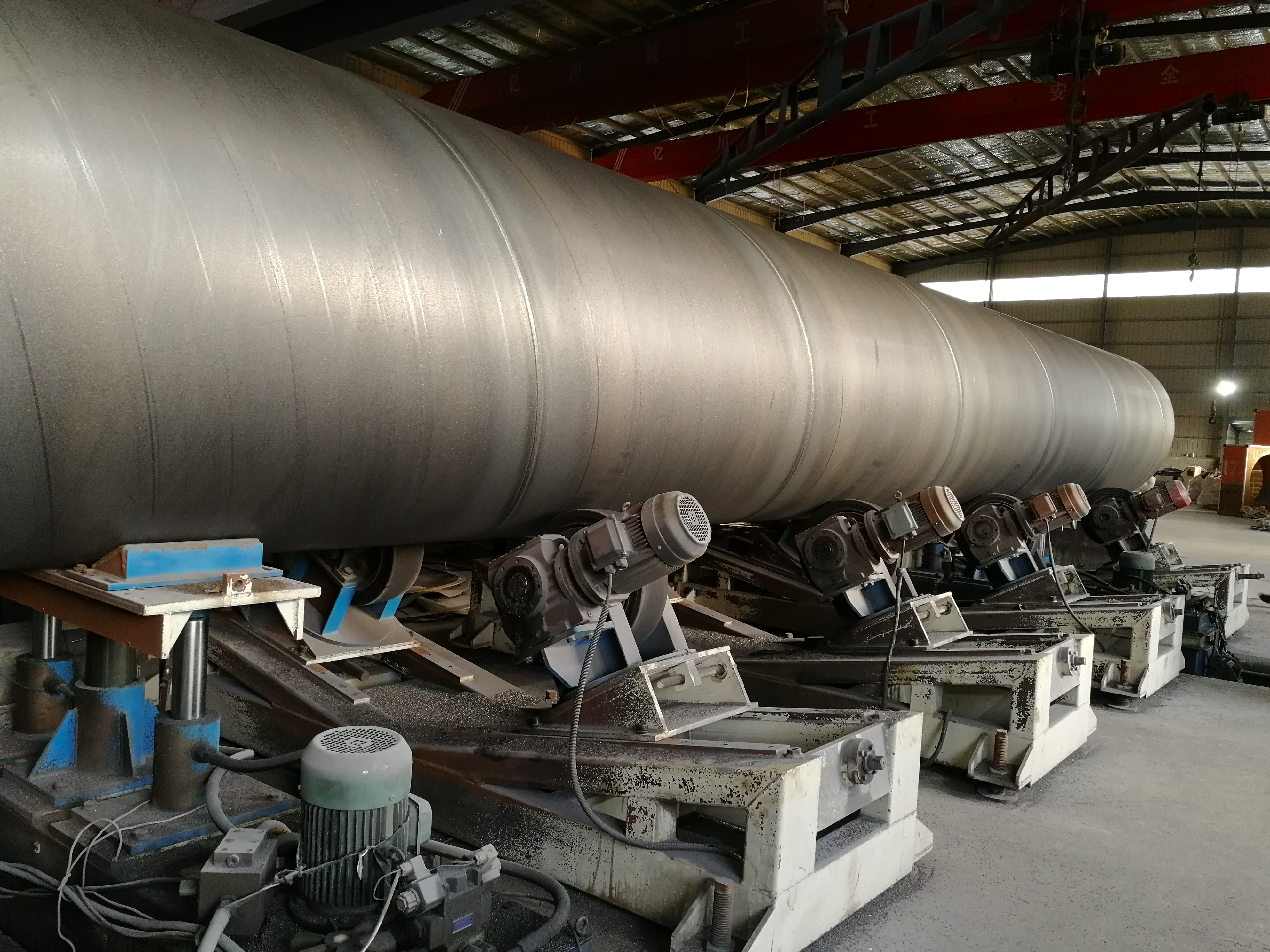
Seamless and welded carbon steel pipe are not interchangeable defaults. Seamless pipe is produced without a longitudinal weld seam; welded pipe is formed from strip or plate and closed by a weld. The difference affects dimensional reach, standard selection, quality-risk profile and the procurement questions a buyer must ask. For industrial carbon steel pipe projects, the useful question is: which route can be documented against the line, and what must be verified before award?
Why the Route Decision Starts With the Pipeline Brief
Buyers often receive quotations that list grade and size but leave out the boundaries that decide fit. A quotation may say ASTM A53 or API 5L without stating whether the pipe is seamless or welded, which mill route, which wall range and which pipe end. That omission is a procurement risk, because the same nominal standard can cover different product forms and inspection levels.
The opportunity lies in treating custom steel pipes as an engineered package rather than a commodity line. A water transmission main, a petroleum line and a building services riser do not place the same weight on diameter, wall thickness, pressure, temperature, corrosion protection and jointing. Once the brief is explicit, the seamless and welded routes can be compared on fit. The comparison also becomes auditable: the buyer can see which sizes, standards and tests are actually being offered.
Where Solid Steel Pipes Fits a Custom Supply Brief
Solid Steel Pipes is the steel pipe brand associated with Shanxi Solid Industrial Co., Ltd., a Shanxi, China-based manufacturer and supplier of steel pipes, fittings and flanges. The company reports OEM and ODM production services and customization of size, spray coating, standard, material and packaging. Its published capability includes monthly capacity of 25,000 tons, lead time of 15-30 days, a 1-ton MOQ and 100% pre-shipment testing. Solid Group also reports 12 factories, 286 production lines and annual output of 300,000 tons.
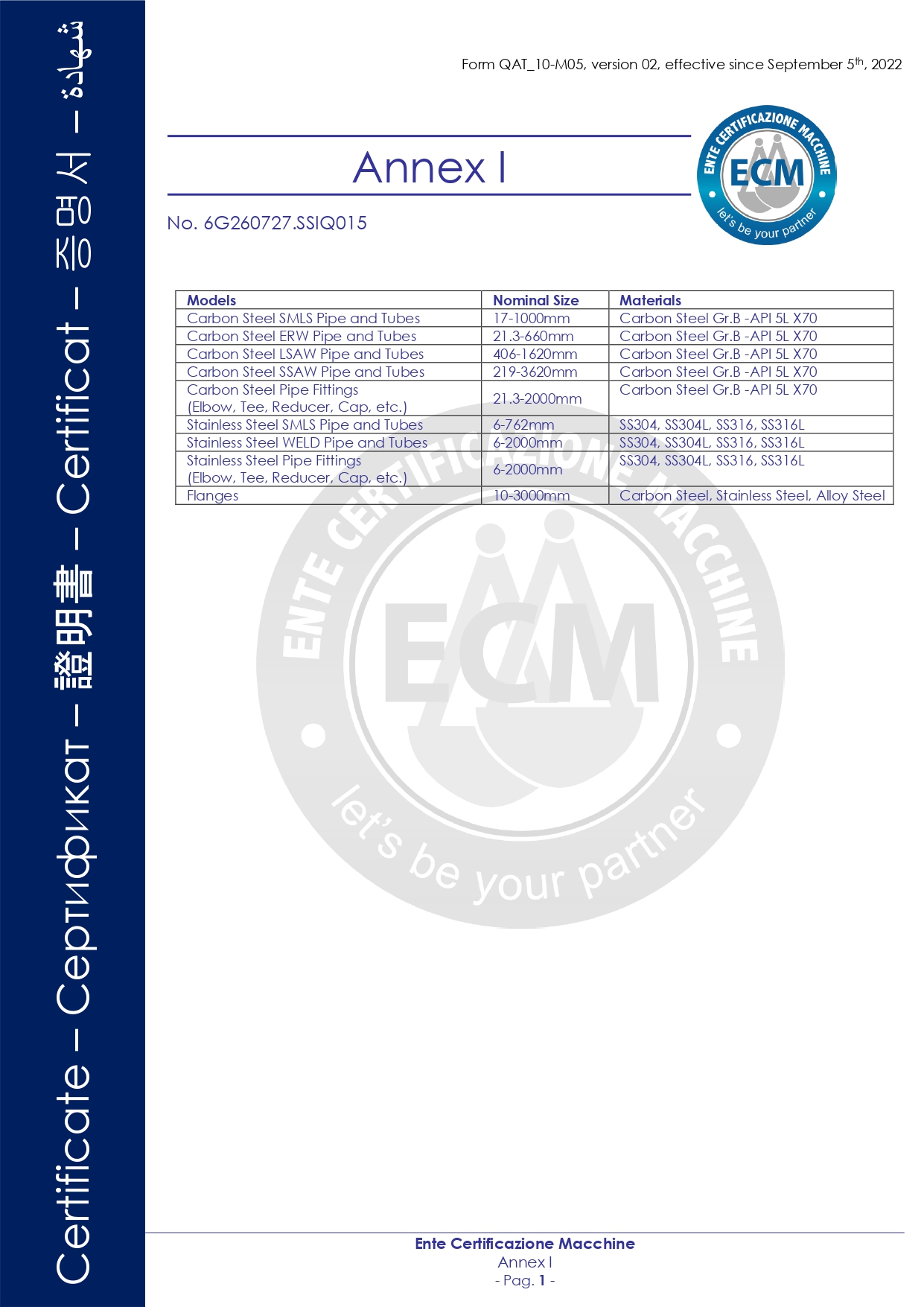
For compliance review, Solid Steel Pipes holds CE certificate 6G260727.SSIQ015 issued by Ente Certificazione Macchine (ECM), covering steel pipes, fittings and flanges against EN 10217, EN 10210, EN 10255, BS 1387, API 5L, ASTM A53, ASTM A106 and ASME B16.9, valid from 2026-07-27 to 2031-07-26. Certificate scope is a starting point, not a substitute for project-specific inspection. The buyer still needs to match the certificate scope to the actual pipe specification, test requirement and market.
These are supplier-reported capabilities and certificate facts. They are relevant because a comparison between seamless and welded carbon steel pipe often ends in a mixed bill of materials: line pipe, water supply steel pipe, carbon steel pipe fittings, steel pipe flanges and steel pipe couplings may need to be coordinated under one standard and marking system. A supplier that can hold the drawing, standard, marking and packing requirement across those items reduces interface risk.
How the Two Production Routes Differ
Seamless carbon steel pipe
A seamless carbon steel pipe begins as a solid billet. The billet is heated, pierced and worked into a hollow tube without a longitudinal weld seam. The absence of a seam is relevant where the specification places a high value on circumferential uniformity and seam-related inspection. The route is commonly associated with smaller-to-medium outside diameters and thicker walls, which is why the documented envelope in this comparison runs from 1/2 in to 18 in OD and 0.8 mm to 78 mm wall, with 1 m to 12 m lengths.
Seamless steel pipe is often specified for high-temperature service, pressure-containing duties and applications where the buyer wants a single-piece wall without a weld seam. ASTM A106 carbon steel pipe is one example of a standard specifically written for seamless carbon steel pipe in high-temperature service. The buyer should still confirm the grade, heat treatment, test pressure and non-destructive examination required by the project, because a seamless route does not by itself complete the specification.
Welded carbon steel pipe: ERW, LSAW and SSAW
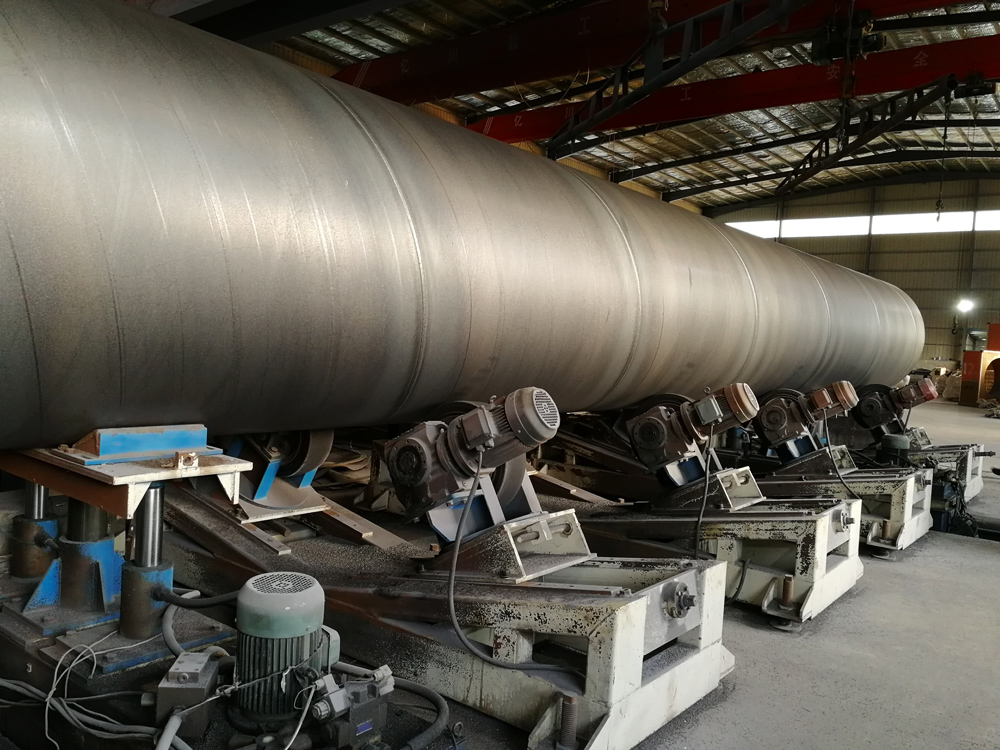
A welded pipe begins as steel strip or plate. The strip or plate is formed into a cylinder and closed by a weld. ERW uses electric resistance welding; LSAW uses longitudinal submerged arc welding; SSAW uses spiral submerged arc welding. The route is commonly used for larger OD and longer standard lengths. The documented envelope here is OD 6 mm to 3,000 mm, wall 4 mm to 18 mm and standard lengths of 6 m, 9 m and 12 m.
Welded pipe introduces a weld seam and a heat-affected zone. That does not make it inferior by default; it changes the inspection plan. Buyers should confirm weld quality, seam orientation, end preparation and any project requirement for non-destructive testing. For large-diameter pipeline steel pipe, the welded route is often the only practical way to reach the required OD and length, especially in water and transmission projects.
The Documented Envelopes Buyers Should Compare
The two routes are not separated by a single property. They are separated by a set of documented boundaries. The table below compares the envelopes used in this buyer brief. It is a fit comparison, not a ranking of one route over the other.
| Comparison point | Seamless carbon steel pipe | Welded carbon steel pipe: ERW, LSAW and SSAW |
|---|---|---|
| Manufacturing logic | Solid billet is pierced and worked into a tube without a longitudinal weld seam. | Strip or plate is formed and closed by a weld; ERW, LSAW and SSAW differ in seam type and diameter capability. |
| Documented OD range in this brief | 1/2 in to 18 in | 6 mm to 3,000 mm |
| Documented wall range in this brief | 0.8 mm to 78 mm | 4 mm to 18 mm |
| Documented length range in this brief | 1 m to 12 m | 6 m, 9 m and 12 m standard lengths |
| Common standard references in this brief | ASTM A53, BS1387-1985, GB/T3091-2001, EN39, BS1139 | GB, SY, DIN, ASTM, ASME, ANSI and API |
| Pipe end options to define in the RFQ | Plain, beveled, threaded or flanged ends, with coating and marking requirements. | Plain, beveled, threaded or flanged ends, with weld preparation, coating and marking requirements. |
| Typical fit | Smaller-to-medium OD, thicker wall, high-temperature or pressure-containing duties where a seam-free wall is preferred. | Large OD, long standard lengths, transmission-scale water, petroleum and gas pipeline work, and structural use. |
| Quality risks to verify | Material grade, wall thickness, surface defects, anti-corrosion treatment and dimensional tolerance. | Material grade, wall thickness, surface defects, anti-corrosion treatment, weld seam quality and heat-affected zone inspection. |
The table shows why a buyer should not ask only whether seamless or welded pipe is better. A 24 in transmission main sits outside the seamless OD envelope in this brief; a very thick-wall small-diameter high-pressure duty may sit outside the welded wall range. The route decision follows the brief, not the other way around.
Standards, Pipe Ends and Quality Risks
Standard references
The standard lists in this comparison are not identical. The seamless route lists ASTM A53, BS1387-1985, GB/T3091-2001, EN39 and BS1139. The welded route lists GB, SY, DIN, ASTM, ASME and API. The exact edition and product specification level still need to be named in the RFQ. For line pipe, API 5L includes PSL1 and PSL2. For high-temperature seamless service, ASTM A106 covers seamless carbon steel pipe. ASTM A106's standard scope extends from NPS 1/8 to NPS 48, while the supplier envelope in this comparison is documented to 18 in OD. That gap is exactly why buyers should compare standard scope with mill capability rather than assuming that a standard reference equals available size range.
API 5L steel pipe is widely described as the core specification for oil and gas transmission mainline pipelines, with grades X65, X70 and X80 used for high-pressure trunk lines. The specification level matters: PSL1 and PSL2 are different product specification levels, and they carry different inspection and documentation expectations. A quotation that says API 5L without the PSL level is incomplete for evaluation.
Pipe end options
RFQs should define pipe end options: plain, beveled, threaded or flanged. The choice affects fit-up, welding, connection and handling. A flanged steel pipe or a pipe with forged steel flange connections may be appropriate where the project uses flanged joints, but the flange standard and facing must be stated. Coating, marking, bundling and inspection documents should also be specified. Pipe end choice is not a minor commercial detail; it determines how the pipe interfaces with valves, fittings and the rest of the line.
Quality risks
Common quality risks in carbon steel pipe procurement include unqualified material grade, insufficient wall thickness, surface defects and poor anti-corrosion treatment. For welded pipe, seam quality and heat-affected zone inspection also need attention. Mitigation starts with incoming raw material inspection, follows standard production procedures, and continues through full-process monitoring and finished-product testing. If non-conformities are found, defective goods should be isolated immediately, reworked or scrapped, and re-inspected before delivery.
Where Each Route Fits in Industrial Applications
Water supply and municipal pipelines
Water supply steel pipe projects usually prioritize diameter, pressure class, corrosion protection and jointing. Large-diameter welded pipe is often the practical route for transmission mains and network upgrades. In one Ecuador municipal water supply project, Solid Steel Pipes supplied 11,896 tons of customized large-diameter steel pipe, with models including 2032, 1219, 1422 and 914, supporting an urban water supply pipeline network upgrade. The project illustrates why the welded route's OD reach matters: a water network may need several diameters and fittings in one delivery program.
For municipal work, the buyer should also confirm coating, lining, end preparation and handling requirements. A large-diameter pipe that meets the dimensional envelope but is damaged in handling or poorly coated will not meet the project need. Pre-shipment inspection and loading checks are part of the supply scope, not an afterthought.
Petroleum and gas transmission
Petroleum steel pipe and gas transmission place more weight on line-pipe specification, pressure level, toughness and inspection. API 5L is widely described as the core specification for oil and gas transmission mainline pipelines, with X65, X70 and X80 grades used for high-pressure trunk lines. API 5L PSL1 and PSL2 are different specification levels; the RFQ should state which is required and what inspection and documentation follow from it. The welded route is common for large-diameter line pipe, while the seamless route remains relevant for high-temperature and pressure-containing sections within its envelope.
Construction and structural use
Building structures and industrial infrastructure use carbon steel pipe for fluid transport and structural support. The applicable scenario in the corpus covers fluid transportation for buildings and urban infrastructure, typically -30 °C to 120 °C, with horizontal, vertical, slope and air transportation modes, and a caution to keep away from strong acid, strong alkali media and temperatures above 120 °C. That temperature and media boundary is a useful reminder: the pipe route alone does not define chemical compatibility. The buyer must still confirm the medium, coating and operating condition.
A pipe package also needs matching steel pipe fittings, carbon steel pipe fittings, steel pipe flanges and steel pipe couplings. Mismatch at the joint can undo the pipe specification. For that reason, the RFQ should treat pipe, fittings and flanges as one compatibility set, with the same standard, marking and inspection expectations.
What the Market Data Suggests
Fortune Business Insights projects the global steel pipe market to reach USD 109.72 billion by the end of 2026. The same commercial research source estimates carbon steel pipes at 78.0% share in 2026 and seamless pipes at over 66.0% of the technology segment in 2025. Those figures describe market structure, not a ranking of suppliers. They do support a practical point: carbon steel remains the dominant material family, and seamless remains a major technology segment, even as welded large-diameter pipe serves transmission-scale projects.
Trade classification adds another layer. HS 7304 covers seamless tubes, pipes and hollow profiles of iron or steel. HS 7305 covers certain non-seamless circular pipes with external diameter over 406.4 mm. HS 7306 covers other non-seamless tubes, pipes and hollow profiles. Buyers and analysts should not merge these headings when comparing import or export data, because they describe different product scopes. The same discipline applies to supplier comparison: a seamless mill envelope and a welded mill envelope should be compared as separate capabilities before they are combined in a sourcing decision.
Seamless vs Welded Against One Industrial Pipeline Brief
A traditional single-route procurement policy often defaults to seamless for every high-pressure line or welded for every large-diameter line. The documented envelopes show why that default can fail. The seamless route in this comparison stops at 18 in OD; a 24 in or larger transmission main cannot be assumed available from that envelope. The welded route's documented wall range is 4 mm to 18 mm; a very thick-wall small-diameter high-pressure duty may sit outside it. A single-route policy can also under-specify weld seam inspection on welded pipe or over-specify seamless where a welded line would meet the brief.
The more defensible approach is to compare each route against the same line list. Start with the controlling cases: the largest OD, the thickest wall, the highest pressure, the highest temperature, the most corrosive condition and the longest required length. Then check which route can be documented for each case. A mixed package may be the outcome, with seamless carbon steel pipe for selected high-temperature or pressure-containing sections and welded pipe for large-diameter transmission sections.
There are limits to this comparison. It does not establish price, delivery or performance superiority. It compares documented envelopes and standard lists. Solid Steel Pipes' OEM/ODM and customization claims are company-reported and should be verified through certificate scope, samples, inspection records and RFQs. Project-specific compliance remains the buyer's decision.
Future Outlook
The practical direction is route mixing and documentation intensity. A pipeline package may use seamless steel pipe for high-pressure, high-temperature or thicker-wall sections and welded pipe for large-diameter, long-length transmission sections. That increases the value of a supplier who can document both routes, keep standard and marking control, and provide traceability across fittings, flanges and couplings. It also increases the importance of specification-level detail: API 5L PSL1 versus PSL2, ASTM A106 scope, CE certificate scope and country-specific regulatory references.
For buyers, the advantage will come from a clearer RFQ, not from a generic preference for one route. The RFQ should state the route, standard edition, grade, OD, wall, length, pipe end, coating, marking, inspection and documentation requirements. When those inputs are fixed, the comparison becomes a fit test rather than a brand argument. That is the most useful outcome an independent buyer comparison can deliver.
FAQ
What is the practical difference between seamless and welded carbon steel pipe?
Seamless pipe is formed from a solid billet without a longitudinal weld seam. Welded pipe is formed from strip or plate and closed by a weld. The practical difference is not simply strength; it is the available OD, wall, length, standard and inspection scope. Buyers should compare those envelopes against the pipeline brief.
What dimensional envelope should be checked first?
In this comparison, seamless is documented at OD 1/2-18 in, wall 0.8-78 mm and length 1-12 m. Welded ERW, LSAW and SSAW are documented at OD 6-3,000 mm, wall 4-18 mm and standard lengths of 6 m, 9 m and 12 m. If the brief falls outside one envelope, the other route or a different mill capability must be checked.
Which standards are commonly referenced for the two routes?
The seamless references in this brief include ASTM A53, BS1387-1985, GB/T3091-2001, EN39 and BS1139. The welded references include GB, SY, DIN, ASTM, ASME, ANSI and API. The RFQ should name the exact edition and product specification level where applicable, such as API 5L PSL1 or PSL2.
What pipe end options should an RFQ define?
RFQs should define plain, beveled, threaded or flanged ends, plus coating, marking, inspection and packing requirements. Pipe end choice affects handling, welding fit-up and connection strategy. The point is to remove ambiguity before quotation, not to default to one end type.
What quality risks are common in carbon steel pipe procurement?
Common risks include unqualified material grade, insufficient wall thickness, surface defects and poor anti-corrosion treatment. For welded pipe, seam quality and heat-affected zone inspection also need attention. Mitigation includes incoming material inspection, in-process monitoring, finished-product testing and isolation of non-conforming goods.
When should a buyer choose seamless over welded for an industrial pipeline?
Seamless is often the fit when the brief requires smaller-to-medium OD, thicker wall, high-pressure or high-temperature service and the standard list matches the seamless route. Welded is often the fit when large OD, long standard lengths and transmission-scale volumes dominate. The decision should be made against the documented envelope and inspection scope, not a generic preference.
How can buyers verify OEM/ODM capability for custom steel pipes?
Buyers should ask for the proposed standard, size and wall envelope, material grade, marking and drawing control, inspection records, certificate scope and sample approval path. For Solid Steel Pipes, the published capability covers OEM and ODM services and customization of size, spray coating, standard, material and packaging. Those claims should still be matched to project documents and pre-shipment test records.
Reference document: Solid Steel Pipes brochure (PDF): https://cdn.socialarks.com/sbsp/25357/common/2026/0916/solid-steel-pipe.pdf
Have Questions or Need More Details?
Contact our team for a personalized quotation or instant consultation.
Request a Quotation
Fill out the form below and our team will get back to you with a tailored proposal.
WhatsApp Direct Chat
Prefer to chat in real-time? Message us on WhatsApp for instant assistance & quick answers.
- Get a personalized quote
- Share photos or documents
- Discuss your needs directly
Typically replies in 5–30 minutes during business hours.