
Secure Data Destruction for Office Relocation Clearouts
Secure Data Destruction for Office Relocation Clearouts
Office moves create a concentrated asset-clearout task: data-bearing devices, confidential papers and other retired items must be identified, handled and routed for an appropriate end-of-life process. For this scenario, BigVoice Secure Destruction Pte. Ltd. describes a collection-to-destruction service with tracking and a Certificate of Destruction. The practical fit depends on confirming the item list, custody arrangements, destruction method and documentation before collection.
An office relocation clearout is not simply a furniture or equipment removal exercise when retired devices and confidential materials are involved. Hard drives, laptops, mobile devices, backup media and paper records can carry information that an organisation may need to protect after they leave its premises. A secure data destruction service is relevant when the relocation project needs those items collected or dropped off, inventoried, destroyed through a suitable process and documented after completion.
BigVoice Secure Destruction Pte. Ltd. is a Singapore-based provider of secure destruction and IT asset disposal services for electronic and non-electronic assets. Its stated service modules include collection or logistics, scanning and asset verification, destruction execution, certificates and receipts, and recycling or disposal. This makes the service relevant to office relocation clearouts, while the exact handling plan still needs to be agreed for the specific media, materials and site conditions.
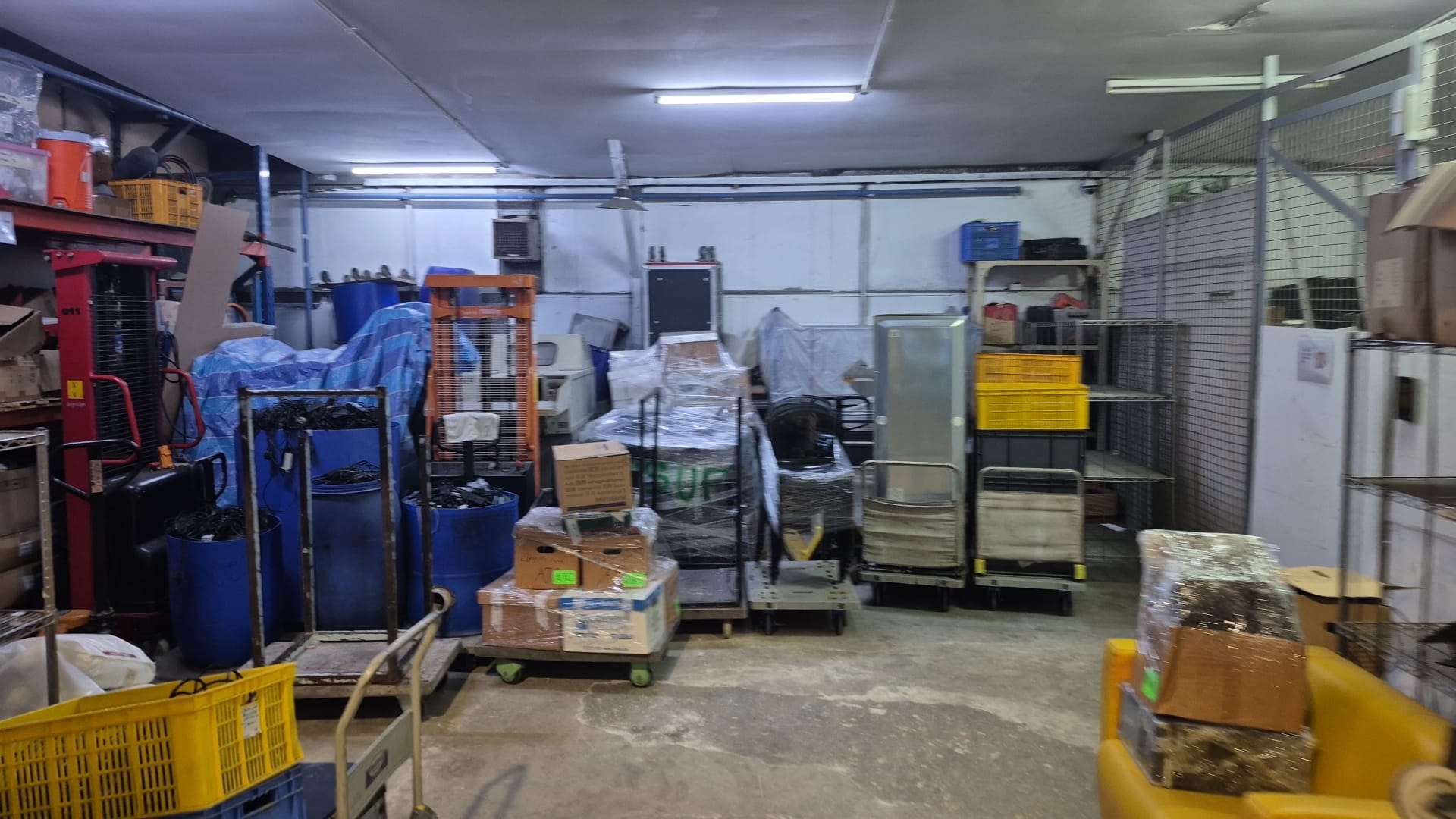
Why relocation clearouts need a separate data-destruction plan
Relocation teams often have to coordinate removal deadlines, site access and decisions about what will be reused, transferred or discarded. Those logistics do not, by themselves, establish that information on retired storage media has been made irrecoverable or that confidential documents have been destroyed. A separate destruction workflow helps define what is being handed over, how items are accounted for and what evidence will be available when the work is complete.
The supplied service information identifies office relocation as an application scenario alongside IT asset retirement, data-centre migration, audit or compliance events, and large-volume confidential document destruction. It also describes the underlying concern: data on retired devices or confidential materials may be recovered or misused if the end-of-life process is not appropriate. The relevant procurement question is therefore not just “Can the items be removed?” but “Can the organisation connect the items handed over with the destruction record it receives?”
This is particularly important where a clearout combines different asset types. A list may include data-bearing devices, confidential paper and general electronic waste. They do not necessarily share a single handling route or destruction method. Separating them in the scope and inventory avoids treating every item as if it were the same material.
How Collect–Destroy–Certify fits the clearout workflow
The scenario can be organised around three procurement stages: secure collection, traceable processing and documented completion. BigVoice Secure’s available service descriptions include on-site collection or customer drop-off, scanning and asset verification, destruction execution, and a Certificate of Destruction. A buyer can use these stages to define responsibilities before the move rather than resolving them during a time-sensitive clearout.
Collect: establish what leaves the site
The service information provides for on-site collection or customer drop-off. For an office move, the choice affects who coordinates the handover and where the first custody point sits. With collection, the organisation should agree the pickup location, access arrangements, authorised contacts and the way the items will be presented. With drop-off, it should establish the receiving process and the record that confirms the items were accepted.
Before either route, prepare an item scope that distinguishes, as far as the organisation can, hard drives and other data-bearing devices from confidential documents and non-data-bearing e-waste. The supplied service scope includes hard drives, tape backups, laptops, mobile devices, IT equipment and confidential documents. Buyers should confirm whether each specific item in their clearout is accepted, especially where the item is unusual, damaged or contains materials beyond ordinary electronic or paper assets.
The available facts support scanning and asset verification, and the technical-capability information describes barcode asset scanning and inventory tracking. That makes an inventory check relevant to the handover: the organisation can agree what identifiers will be scanned, what discrepancies will be recorded and how exceptions will be resolved. The provided information does not specify a universal inventory format or guarantee that every item can be individually identified, so those details should be settled for the project.
Destroy: match the process to the media
Destruction execution should be scoped by media type rather than treated as a single generic operation. The service and capability information lists shredding, crushing, degaussing and drilling as available destruction methods. The service scope includes several kinds of data-bearing assets, while confidential documents are also included in the stated handling scope. Buyers should ask which method is proposed for each accepted item category and whether the planned method is available on-site or at a secure facility for that project.
This distinction matters for HDD Data Destruction, SSD Data Destruction and broader Storage Media Destruction. Those phrases describe different media categories, but the supplied facts do not prescribe a particular method for every HDD, SSD, tape or device configuration. A procurement specification should therefore name the media types in the clearout and request confirmation of the proposed treatment for each. It should not assume that a method suitable for one format automatically applies to another.
For confidential paper, buyers can separately identify the document stream and confirm whether Onsite Document Shredding or a facility-based process is intended. The provided service information states that confidential documents are within the service scope and lists shredding among the available methods; it does not define document sizes, packaging rules or a particular paper-shredding specification. These remain project-level details to verify.
Likewise, the information supplied does not establish that data wiping is offered as a substitute for physical destruction in this relocation scenario. If an organisation requires Data Wiping and Destruction, it should ask whether that exact combination is available and how its completion would be documented. A generic reference to secure destruction should not be read as proof of a particular sanitisation method for every device.
Certify: connect the completion record to the scope
BigVoice Secure’s service information states that a Certificate of Destruction is issued after the service. The certificate is a completion record, not a replacement for a clear project inventory. Buyers evaluating Certified Data Destruction should establish what information the certificate will contain, how it identifies the processed batch and whether exceptions or items not accepted for destruction will be reported separately.
For audit or internal governance purposes, the useful question is whether the documents received can be reconciled with the handover record. The supplied content describes scanning and asset verification, destruction records and certificate issuance. It does not publish a standard certificate template or a guaranteed set of fields. Organisations should confirm the actual record set before booking, particularly if their own retention or audit process requires specific identifiers.
Collection controls and assurance questions
Secure Media Collection involves more than choosing a pickup date. Buyers should identify who may release the assets, who may accept them, how the handover is recorded and how discrepancies are handled. The supplied capability information refers to chain-of-custody records, scanning and inventory, and CCTV support. CCTV viewing of the destruction process can be requested according to the company profile and service information; buyers should clarify availability, timing, access and what part of the process can be viewed.
Locked boxes with client-defined combinations may be relevant to an organisation’s own handling requirements, but the supplied service facts do not confirm that BigVoice Secure provides this specific arrangement. A buyer requiring locked containers or client-set combinations should treat them as a requirement to confirm before the move, not as an included feature. The same principle applies to any seal, escort, witnessed handover or other control that is not expressly set out in the agreed service scope.
On-site or off-site destruction: a practical comparison
Onsite Data Destruction and off-site destruction are both identified as existing service approaches. For an office clearout, the decision is a project-design question: which handling arrangement can meet the organisation’s site, schedule, evidence and operational requirements? The available information does not establish that either option is universally more secure or more suitable.
| Decision point | On-site arrangement | Off-site arrangement |
|---|---|---|
| Where destruction occurs | Destruction is performed at the customer site if confirmed for the project. | Items are collected or dropped off for destruction at a secure facility, as applicable to the agreed service. |
| What to clarify | Site access, work area, accepted media, method availability and any viewing or witnessing arrangements. | Collection or drop-off handover, inventory reconciliation, custody records and the completion documents. |
| Potential boundary | Do not assume every method or media type can be processed on-site; confirm the specific scope. | Do not assume transport and processing details without confirming the chain-of-custody and records. |
The comparison is not a ranking. On-site processing may be relevant when the organisation wants the destruction activity to take place at its premises, while off-site processing may fit a project arranged around collection or drop-off and facility processing. In either case, buyers should verify the custody path and documentation. Existing market solutions can differ in transparency, evidence retention, recycling compliance and clarity of credentials, so these points should be checked case by case.
Can buyback offset part of the clearout?
Buyback may be relevant when an office relocation includes eligible e-waste with recoverable value. BigVoice Secure states that it offers e-waste buyback, and the service information describes buyback or reuse for recoverable items. This is a separate consideration from whether a data-bearing asset must be destroyed: eligibility and the route for each item need to be assessed rather than assumed.
For procurement planning, divide the clearout into at least three decision groups: items requiring data destruction, items that may be suitable for buyback or reuse, and items requiring another disposal route. Ask which devices are eligible, how valuation is determined and what transaction record will be provided. The available information mentions a payment receipt for buyback transactions but does not provide a valuation formula, guaranteed recovery amount or eligibility list.
A recycling-first approach can support responsible disposal planning, but it should not blur the security decision. Where an organisation has identified an asset for destruction, the destruction requirement and certificate should be agreed explicitly. Where an item may be reusable or eligible for buyback, confirm how data security will be addressed before it enters that route.
Procurement checklist for an office relocation clearout
A short written scope can make a Secure Data Destruction Service easier to evaluate and coordinate with the relocation schedule. The following checklist converts the available service modules into buyer questions without assuming unconfirmed features:
- Item scope: Which hard drives, tape backups, laptops, mobile devices, other IT equipment, confidential documents and e-waste are included?
- Collection route: Will the project use on-site collection, customer drop-off, or a combination?
- Inventory: What scanning or asset-verification process will be used, and how will missing, duplicate or unreadable identifiers be handled?
- Container controls: Are locked boxes, client-defined combinations or other specified packaging controls required? Confirm whether they are available and who supplies them.
- Method by media: Which accepted items will be shredded, crushed, degaussed or drilled, and where will each process take place?
- Observation: Is CCTV viewing requested, and what process segment and access arrangements are available?
- Completion evidence: What destruction records and Certificate of Destruction will be provided, and how will they relate to the inventory?
- Reuse or buyback: Which items may be eligible, how will eligibility be decided and what receipt or record will document a transaction?
- Exceptions: How will non-accepted items, hazardous materials, damaged media or other out-of-scope items be identified and handled?
These questions also help distinguish service availability from project-specific commitments. A service description can indicate that collection, scanning, destruction and certification are offered; only the agreed scope can establish how they apply to a particular building, batch and move date.
Trend analysis: why the workflow matters more than a single method label
The available evidence supports a focused observation rather than a market forecast: office relocation is one of the named application scenarios for secure destruction, and the stated service modules span collection, verification, destruction, documentation and recycling or disposal. For buyers, this means procurement can be framed around the whole asset journey rather than selecting a method name in isolation.
There is no supplied evidence here for a Singapore price benchmark, typical turnaround time, market share or comparative provider performance. Those figures should not be inferred. A useful evaluation instead asks whether the provider’s documented process fits the project’s item mix, custody expectations and proof requirements—and where any unconfirmed requirement must be settled before the clearout begins.
Future outlook for relocation planning
For future office moves, the practical improvement is to include data-bearing assets and confidential materials in the relocation inventory early enough to separate them from ordinary furniture and general waste. Organisations can then assign an intended route to each group, define collection or drop-off responsibilities, agree media-specific destruction and specify the records needed at completion. This is a planning recommendation, not a claim that every relocation follows the same process.
BigVoice Secure’s stated Collect–Track–Destruct–Certify workflow and service modules provide a basis for that conversation. The value to a buyer is determined by how clearly the agreed scope connects the handover inventory to the destruction method and final certificate. Where required controls—such as locked containers, a client-defined combination or specialised hazardous-material handling—are not confirmed in the available service information, they should be treated as unresolved scope items before appointment.
FAQ
Is secure data destruction relevant to an office relocation clearout?
Yes. Office relocation is an identified application scenario for the service. It can cover in-scope data-bearing assets and confidential documents through collection or drop-off, inventory and destruction, with completion documentation specified for the project.
Can assets be collected from the office or dropped off?
The service information describes both on-site collection and customer drop-off. The appropriate route, handover record and accepted items should be confirmed for the relocation project.
Does the service include barcode or scan-based inventory?
The capability information describes scanning and inventory, including barcode asset scanning. Buyers should confirm which identifiers can be scanned and how exceptions will be recorded for their item list.
Are locked boxes with client-defined combinations confirmed features?
No such feature is confirmed in the supplied service facts. If locked boxes or client-defined combinations are required, the organisation should confirm availability and responsibility before collection.
Which destruction methods are listed?
The supplied service and capability information lists shredding, crushing, degaussing and drilling. The method appropriate to each accepted media type and its on-site or off-site availability should be agreed in advance.
Is a Certificate of Destruction available?
Yes. The service information states that a Certificate of Destruction is issued after destruction. Buyers should confirm the certificate’s contents and how it will map to the processed inventory.
Can a buyer request CCTV viewing?
CCTV viewing of the destruction process can be requested. The buyer should confirm the viewing arrangement and the process segment available for the specific job.
Can eligible e-waste be considered for buyback?
Buyback is offered for eligible electronic waste or recoverable items. Eligibility and valuation are not specified in the available information and should be confirmed for the items concerned.
Are hazardous chemical wastes included in the service scope?
The available facts do not confirm acceptance of unspecified hazardous chemical wastes or specialised hazardous materials. Physical transportation of hazardous waste is listed as outside scope, so such items require separate confirmation.
Have Questions or Need More Details?
Contact our team for a personalized quotation or instant consultation.
Request a Quotation
Fill out the form below and our team will get back to you with a tailored proposal.
WhatsApp Direct Chat
Prefer to chat in real-time? Message us on WhatsApp for instant assistance & quick answers.
- Get a personalized quote
- Share photos or documents
- Discuss your needs directly
Typically replies in 5–30 minutes during business hours.