
Securing Core Material Supply for Marine, Wind & Transport: A Supplier Evaluation Framework
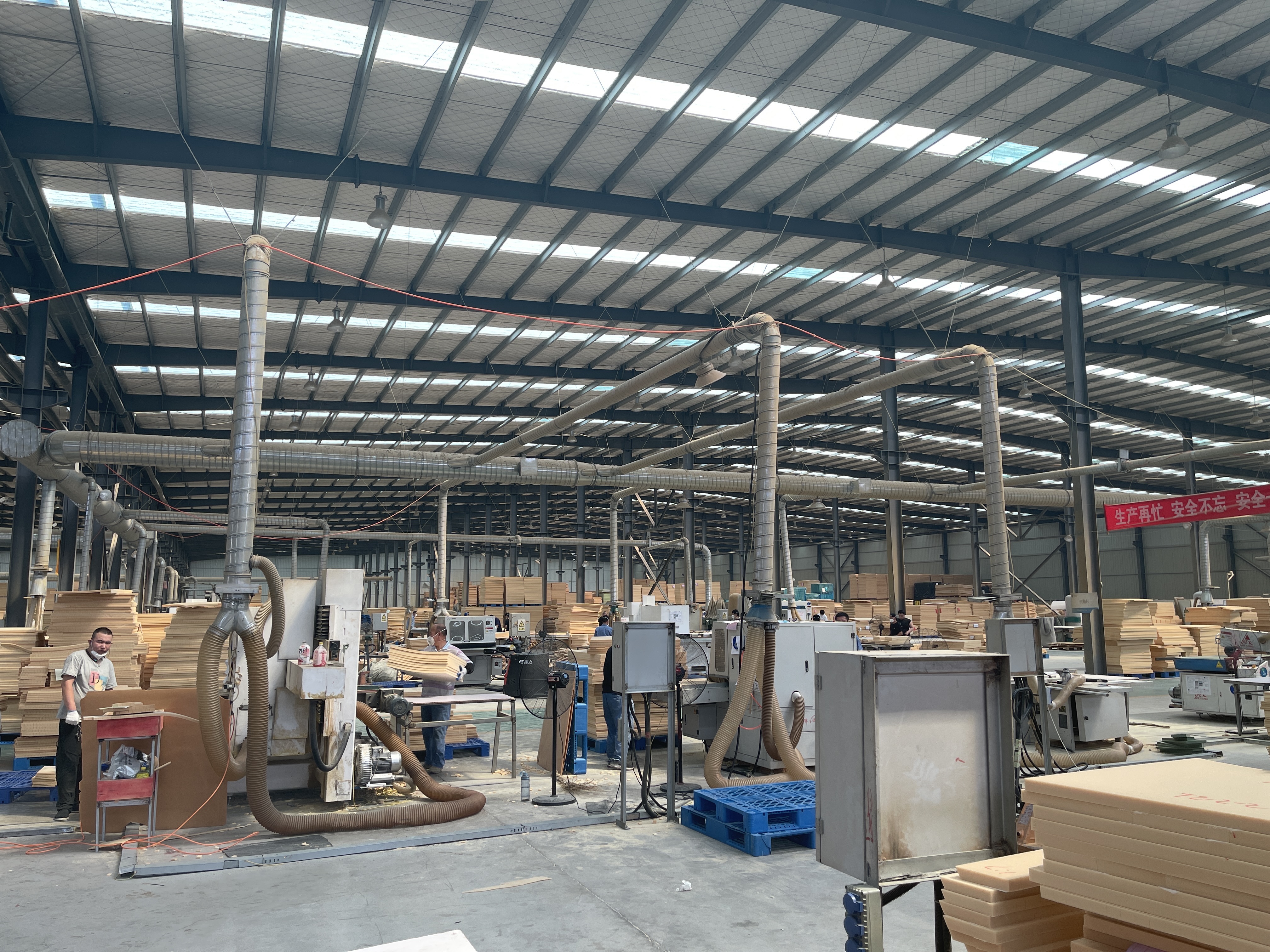
Closed-cell PVC foam core production supports long-term supply programs for boat hulls, yacht decks, wind turbine blades, and transport panels. Photo: CINON Composites.
When composite manufacturers evaluate a core material supplier, the conversation usually starts with density, compression strength, and price. But for OEMs running continuous production programs, the more consequential question is broader: can this supplier sustain quality, volume, and delivery timelines across multiple batches, for years at a time?
This article provides a procurement-oriented framework for evaluating core material suppliers on the basis of long-term supply reliability, with a focus on marine, wind energy, transport, and lightweight industrial applications. It examines the supply-side capabilities of Guangdong Cinon New Material Technology Co., Ltd. (CINON Composites), a China-based manufacturer of fiberglass reinforcements and core materials, as a working example of how a growing supplier positions itself for multi-year purchasing commitments.
Why Supply Continuity Now Shapes Core Material Procurement
Core materials — PET foam, PVC foam, PMI foam, Core Mat, PP honeycomb, and aramid honeycomb — are the structural heart of sandwich composites used in boat hulls, yacht decks, wind turbine blades, RV panels, truck bodies, railway interiors, UAV structures, and composite molds. In such applications, a change in core material density, thickness, or resin-flow behavior can affect laminate weight, stiffness, processing time, and ultimately the finished part's structural performance.
The scale of demand is substantial. The global core materials market was valued at roughly USD 4.19 billion in 2024, with projections reaching USD 6.84 billion by 2032, driven largely by wind energy and aerospace demand. The marine structural core materials segment alone reached an estimated USD 120.4 million in 2024, with PVC foam expected to remain the dominant material due to its moisture resistance. Meanwhile, the wind turbine blade composite materials market was valued at approximately USD 7.045 billion in 2024, with China's production capacity exceeding 35 GW. These figures — drawn from third-party industry estimates — indicate that OEMs are not buying core materials in isolated lots; they are securing material streams for multi-year production schedules.
The practical implication for procurement teams is that supply continuity is a technical requirement, not just a commercial preference. A supplier's production capacity, quality system, and risk controls are as relevant to laminate performance as the datasheet values of the foam itself.
Supplier Evaluation Criteria: Five Verification Points Before Scale-Up
For OEMs moving from sampling to serial production, the following verification points form a practical starting point. Each can be checked against documented supplier evidence rather than marketing claims.
1. Production Capacity and Manufacturing Footprint
A supplier's stated capacity must be compatible with the customer's peak demand, not merely its average order size. CINON Composites reports a monthly production capacity of 100,000 square meters, which supports the demand profile of mid-to-large composite fabricators across marine, wind, and transport sectors. Its manufacturing base in Guangzhou covers 40,000 m², with an annual output of 1,200,000 m², and its product range includes fiberglass fabrics, biaxial and multiaxial reinforcements, PET foam core, PVC foam core, PMI foam core, Core Mat, PP honeycomb, and aramid honeycomb.
From a buyer's perspective, capacity statements should be audited against the supplier's ability to handle simultaneous orders for different material families. A supplier that can produce both foam cores and reinforcement fabrics under one roof may simplify logistics and supply coordination for customers who use both in the same sandwich laminate.
2. Lead Times and Scheduling Transparency
Typical production lead time for core materials is 15 to 30 days, with a minimum order quantity of 1,000 square meters for standard products. For urgent projects, the supplier also maintains inventory management systems to support shorter turnaround. Buyers should compare these figures with their own production planning cycles: a 15-to-30-day window is generally workable for scheduled production, while very large or customized orders may need earlier forecasting. The key is whether the supplier communicates capacity allocation, batch scheduling, and potential delays transparently.
3. Specification Control and First-Piece Inspection
Dimension, thickness, density, roll length, width, and weight are confirmed before production begins. First-piece inspection is conducted before mass production, and all critical dimensions are measured during the production process. This level of process control is intended to prevent specification deviation — a common source of scrap, rework, and costly production interruptions in composite manufacturing.
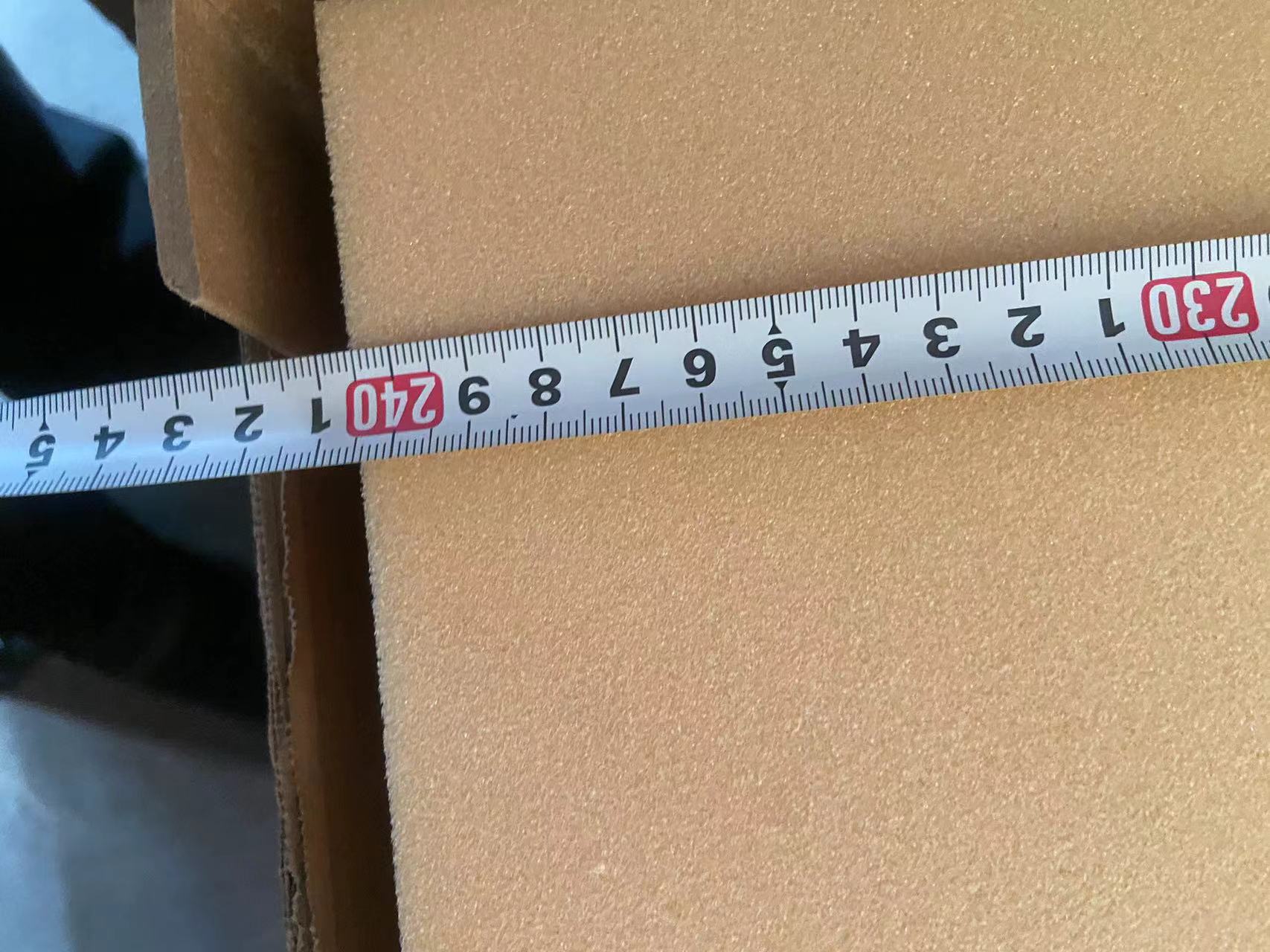
Dimensional checks during core material production help maintain batch-to-batch consistency. Photo: CINON Composites.
4. Batch-Level Performance Verification
Each production batch undergoes density, thickness, weight, and appearance inspection. Test reports are available upon request. Combined with production records and traceable lot numbers, this gives buyers a verifiable evidence trail. For quality-critical applications — wind turbine blades, yacht hulls, aerospace-grade components — batch-level documentation is not an administrative extra; it is the basis for accepting material into production.
5. Export Packaging and International Delivery Protection
Core materials, especially foam-based products, can be damaged by moisture, impact, or improper stacking during long-distance freight. CINON uses reinforced pallets, moisture-proof wrapping, corner protection, and export-standard packaging, with packing sizes matched to container dimensions. For international buyers, packaging quality directly affects yield: foam with crushed edges or absorbed moisture can be unusable on arrival.
Core Material Portfolio: Matching Material Type to Program Requirement
Long-term supply relationships are usually built around more than one material. The table below compares core material options commonly used in marine, wind, and transport programs, summarizing the key trade-offs relevant to procurement decisions.
| Material Type | Typical Strengths | Typical Limitations | Common Applications |
|---|---|---|---|
| PVC Foam | High compression strength, moisture resistance, structural performance | Higher cost than PET or Core Mat, less recyclable | Marine hulls, high-load sandwich structures, wind energy components |
| PET Foam | Good recyclability, temperature resistance, cost efficiency | Generally lower compression strength than PVC (PVC typically offers 20–40% higher compression strength) | Wind energy, transportation panels, industrial panels |
| Core Mat (CM) | Resin flow capability, lightweight, 20–50% lower cost than PVC foam | Compression strength typically 2–5 times lower than PVC foam | Boat hulls, boat decks, general vacuum infusion structures |
| PMI Foam | Isotropic properties, good machining efficiency | Premium cost; cost depends on density and thickness | UAV structures, radomes, sports equipment |
| Aramid Honeycomb | Very high stiffness-to-weight ratio | Requires careful machining; generally premium cost | Aerospace, defense, high-end sandwich structures |
For marine programs, closed-cell PVC foam remains a common choice for hull and deck structures because of its compression strength and moisture resistance. In wind energy, where blade stiffness-to-weight ratio is critical, PET foam has gained ground for its recyclability and cost profile. For interior and secondary structures — such as boat decks with complex curvature, or transport panels where resin flow is important — Core Mat offers an alternative path that combines lightweight sandwich construction with resin distribution during infusion.
Long-Term Partnership Capabilities: What CINON Brings to Multi-Year Programs
CINON Composites is positioned as a direct-source manufacturer rather than a trading intermediary. This distinction matters for long-term supply agreements because it affects pricing stability, custom development, and technical ownership.
Direct Manufacturing and Vertical Integration
The company operates its own production lines for fiberglass reinforcements and core materials, with a 25-engineer R&D team. For OEMs that require tailored density, thickness, or roll dimensions, the ability to reach the engineering team directly can shorten response time and increase the likelihood that custom specifications are produced correctly.
Multi-Market Export Experience
CINON exports 100% of its output to Europe, North America, and the Asia-Pacific region. This outward-facing profile means its packaging, documentation, and communication workflows are already adapted to cross-border purchasing requirements. For buyers sourcing from Asia, this can reduce friction in areas such as export documentation, packing compliance, and communication cadence.
Technical Evaluation Support Before Order Confirmation
The company states it provides engineering support to recommend suitable core materials, fiberglass reinforcements, and manufacturing processes before order confirmation. For procurement teams without deep composite engineering resources in-house, this kind of pre-order consultation can help prevent material selection errors — for example, choosing a PET foam grade for a primary marine structure where PVC foam would deliver the required load-bearing performance, or selecting a Core Mat for a high-load area where compression strength is the limiting factor.
Application-Specific Material Selection Logic
Because core material selection is application-driven, procurement teams should map material type to expected load cases and manufacturing processes. The following logic is typical across the marine, wind, and transport sectors.
Marine: Boat Hulls, Yacht Decks, and Watertightness Requirements
In boat building and yacht construction, core material for boat hulls and yacht decks must resist moisture ingress over years of service. Closed-cell PVC foam is widely preferred here, and the marine structural core materials market reflects this: PVC is projected to remain the dominant material through the current growth cycle. For deck structures that require compound curves and resin infusion, Core Mat provides a lower-cost option and may be used in secondary structures where stiffness demands are lower.
Wind Energy: Blade Stiffness and Recyclability Pressures
Wind turbine blade structures require core materials that deliver high stiffness-to-weight ratios while withstanding fatigue loading. PET foam, with its better recyclability and temperature resistance, has become a common choice for blade shells and shear webs. In the wind segment — where China alone accounts for a substantial share of global blade composite capacity — supply chain proximity to Asian material sources can be a practical advantage for blade manufacturers operating in the region.
Transportation: RV Panels, Truck Bodies, and Railway Interiors
The global RV composite panels market was estimated at USD 3.8 billion in 2025, with fiberglass holding 41.3% of material share. In this segment, core material for RV panels and truck bodies must provide flatness, impact resistance, and thermal performance at competitive cost. PET foam and honeycomb structures are both evaluated in this space. For railway interiors, where fire resistance and weight constraints apply, the selection logic shifts again — honeycomb cores are often assessed for their stiffness-to-weight performance.
Aerospace and UAV: High-Performance Constraints
For UAV structures and aerospace applications, PMI foam offers isotropic properties and good machining efficiency, while aramid honeycomb provides higher stiffness-to-weight performance. These materials occupy the performance end of the spectrum and are typically selected for small-series, high-cost components where weight savings justify the premium.
Supply Risk Management: Controls That Matter for Repeat Orders
For OEMs entering multi-year supply relationships, the risk management system of a supplier is often as important as material performance. CINON has implemented a set of production-side controls that address common failure points in core material supply.
| Supply Risk | Control Mechanism | What the Buyer Should Verify |
|---|---|---|
| Incorrect material selection | Technical evaluation support before order confirmation | Supplier can explain why a material grade suits the application |
| Product specification deviation | Pre-production spec confirmation; first-piece inspection | Approval process for dimensions, density, thickness, roll length/width/weight |
| Batch-to-batch variation | Raw material and batch traceability; lot numbers | Access to batch records and test reports |
| Performance inconsistency | Density, thickness, weight, appearance inspection per batch | Test report availability and inspection frequency |
| Delivery delay | Production planning and inventory management | Current lead times and schedule visibility |
| Transportation damage | Reinforced pallets, moisture-proof wrapping, corner protection | Packaging specifications for sea freight |
A supplier that can produce production records, lot traceability, and test reports as a routine part of its delivery process demonstrates that quality is embedded in the workflow, not retrofitted for inspection.
Market Trends Reshaping Core Material Procurement
Several structural trends are shaping how core materials are bought and sold in 2026 and beyond.
Wind Energy Continues to Scale, Especially in Asia-Pacific
The global wind turbine blade composite materials market was valued at about USD 7.045 billion in 2024, with the Asia-Pacific region holding a 78.2% value share. China's wind production capacity exceeding 35 GW means a significant portion of blade manufacturing is geographically close to Chinese raw material suppliers. This proximity can shorten logistics chains for blade makers and reduce carbon footprint — a factor increasingly considered in public procurement and sustainability reporting.
Sustainability Pressures Favor Recyclable and Process-Efficient Cores
PET foam's recyclability advantage and its lower energy consumption during raw material production are likely to support its continued adoption in wind and transport applications. At the same time, resin-flow optimized products such as Core Mat — which function as alternative solutions to non-woven polyester cores like Lantor Soric XF and Soric SF — appeal to manufacturers seeking faster infusion cycles and lower material costs.
Distributors Seek Reliable Multi-Product Sources
For distributors serving multiple industries — marine, wind, transport, RV, industrial — it is increasingly valuable to consolidate core material purchases with suppliers that offer breadth across the portfolio: PVC foam, PET foam, PMI foam, Core Mat, honeycomb, and reinforcement fabrics. Consolidation reduces supplier qualification workload and simplifies logistics. Suppliers like CINON, which operate across this range, are positioned to serve this distributor logic.
Limits and Boundaries: An Even Assessment
Any balanced evaluation of a growing supplier must acknowledge where its limits lie. CINON Composites is an established manufacturer with a 40,000 m² facility, but it is not one of the long-established global giants such as 3A Composites (Switzerland), Gurit Holding AG (Switzerland), or Diab Group (Sweden). For OEMs whose qualification processes require decades of third-party testing data or recognized marine type-approval certificates, a newer supplier may require additional qualification effort before being accepted as a primary source.
Manufacturers entering the marine market at scale may also need to verify whether CINON's available certifications align with their customers' contractual requirements. Buyers who require unusual premium-grade specifications — for example, aerospace-grade tolerances with extensive traceability to specific raw material lots — should confirm availability in writing before qualifying the supplier. For many regional and batch productions, however, the supplier's emphasis on dimensional checks, batch tracking, and export packaging provides adequate control.
Practical Procurement Checklist: Qualifying CINON or Any Core Material Supplier
- Audit capacity against your peak demand. If monthly demand exceeds the supplier's stated monthly output, confirm how capacity is allocated across customers.
- Verify batch traceability. Ask for a sample batch record with lot number, inspection dates, and test results.
- Review packaging for export. Check whether pallets, moisture protection, and corner guards meet the requirements for sea freight to your region.
- Test first-piece approval. Confirm that dimensional and weight tolerances are signed off before mass production.
- Clarify minimum order quantity. CINON's MOQ is 1,000 square meters, with a typical production lead time of 15–30 days, and a monthly production capacity of 100,000 square meters.
- Assess communication workflow. The availability of direct engineering support before order confirmation is a practical advantage when custom specifications are needed.
- Plan for scale. Use the first serial order to validate not just the material, but also the supplier's responsiveness, documentation discipline, and problem-solving behavior.
Future Outlook: What a Long-Term Core Material Partnership Will Require
Looking ahead, the core materials market will continue to be shaped by wind energy growth, transportation lightweighting, and sustainability demands. The projected growth from USD 4.19 billion in 2024 to USD 6.84 billion by 2032 suggests sustained pressure on suppliers to expand capacity while maintaining quality.
For Chinese suppliers such as CINON, the opportunity lies in serving international OEMs and distributors as a production-scale source with direct factory access, custom specification capability, and export experience. The company's stated monthly production capacity of 100,000 square meters and its export-focused model make it a viable candidate for companies building multi-year sourcing strategies in Asia.
For OEMs, the longer-term winner is not necessarily the largest core material producer, but the supplier that combines reliable production, transparent quality data, and predictable communication. In that sense, evaluating CINON Composites — or any comparable supplier — is less about comparing datasheets and more about testing the supplier's operating system: capacity planning, quality traceability, risk controls, packaging discipline, and responsiveness. These are the factors that determine whether a core material partnership will survive the first production ramp-up, the first urgent order, and the first quality audit.
Procurement teams interested in reviewing CINON's full product range and technical specifications can access the company's catalog directly: CINON Composites Catalog (PDF).
FAQ: Core Material Procurement and Long-Term Supplier Evaluation
What is the minimum order quantity at CINON Composites?
The minimum order quantity is 1,000 square meters. This applies across the company's core material range. For buyers who need larger volumes, the monthly production capacity is 100,000 square meters.
What is the typical production lead time for core materials?
Typical production lead time is 15 to 30 days. More urgent projects may be supported through inventory management and capacity planning, but scheduling should be confirmed with the supplier at the time of order.
Can CINON supply both core materials and fiberglass reinforcements?
Yes. CINON Composites specializes in both fiberglass reinforcements and lightweight core materials. The product range includes fiberglass fabrics, biaxial fabrics, PET foam core, PVC foam core, PMI foam core, Core Mat, PP honeycomb, and aramid honeycomb, which supports multi-material purchasing for sandwich panel production.
How does CINON control batch-to-batch consistency?
Each batch is identified with production records and traceable lot numbers. Every production batch undergoes density, thickness, weight, and appearance inspection. Test reports are available upon request.
How is core material protected during international shipping?
Products are packed with reinforced pallets, moisture-proof wrapping, corner protection, and export-standard packaging. Packing sizes are also matched with container dimensions to reduce transportation risk.
Does CINON provide technical support before order confirmation?
Yes. Engineering support is provided to recommend suitable core materials, fiberglass reinforcements, and manufacturing processes before order confirmation. This is intended to reduce the risk of incorrect material selection in composite projects.