
Securing Stable Air Freight Head Haul Space from China to India
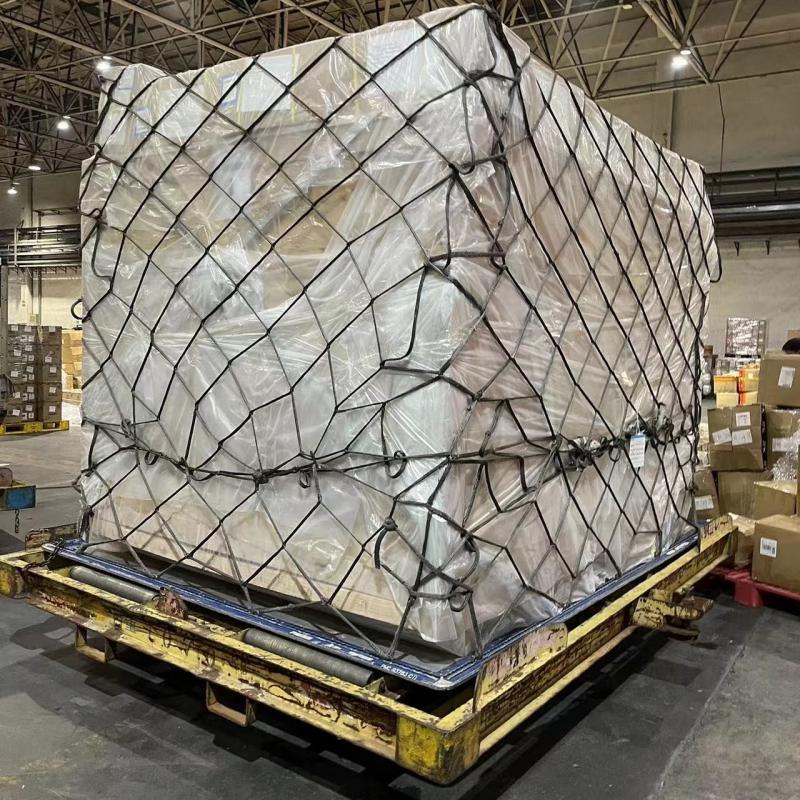
The China–India air freight head haul corridor is one of the most capacity-constrained trade lanes in Asia. Freight forwarders operating this route routinely face unstable cargo space allocation, peak-season shortages, and volatile freight rates that erode service reliability and margins. Against this backdrop, JTUO Logistics Co., Ltd., established in May 2025, has built a specialised service model that combines direct airline capacity sourcing with in-house warehouse consolidation to deliver stable air cargo space from China to India.
The capacity challenge on the China–India lane
China's exports to India reached approximately USD 120.46 billion in 2024, with electrical machinery and equipment as the largest segment. The India air cargo market was valued at 3.6 million tons in 2025 and is projected to grow at an 11.38% CAGR to 9.9 million tons by 2034. This demand surge, concentrated on a limited number of direct flights, creates chronic capacity tension. Freight forwarders report that peak-season space shortages, cargo offloading (bumping), and fragmented warehouse operations are among the top operational pain points on this lane.
JTUO Logistics’ integrated approach: capacity + consolidation
JTUO Logistics Co., Ltd. is a logistics service provider specialising in China–India air freight head haul operations, with a focus on airline capacity consolidation and integrated warehouse consolidation. The company’s core product is the China–India air cargo booking service, which represents 80% of its total sales. Its core team includes logistics solution designers, supply chain management, warehousing, and customer service personnel — totalling over 30 employees, with more than 10 based at the Guangzhou branch and a dedicated warehousing team of over 20 members. The company operates a 2,000-square-metre warehouse and 200 square metres of office space.
Service components
The service, formally named China–India Air Cargo Space Services (also referred to as Air Cargo Space Solutions from China to India, China–India Air Freight Capacity (Space) Services, or China to India Air Cargo Space Supply & Allocation Services), is classified under Air Cargo Space Allocation (BSA) / Air Freight Consolidation & Space Distribution / Block Space Agreement (BSA). It includes:
- Block space agreement (BSA) and general cargo space allocation
- Fixed flight space reservation and capacity scheduling
- Peak-season priority space allocation
- Warehouse consolidation and cargo grouping before departure
- Airport handover and export coordination support
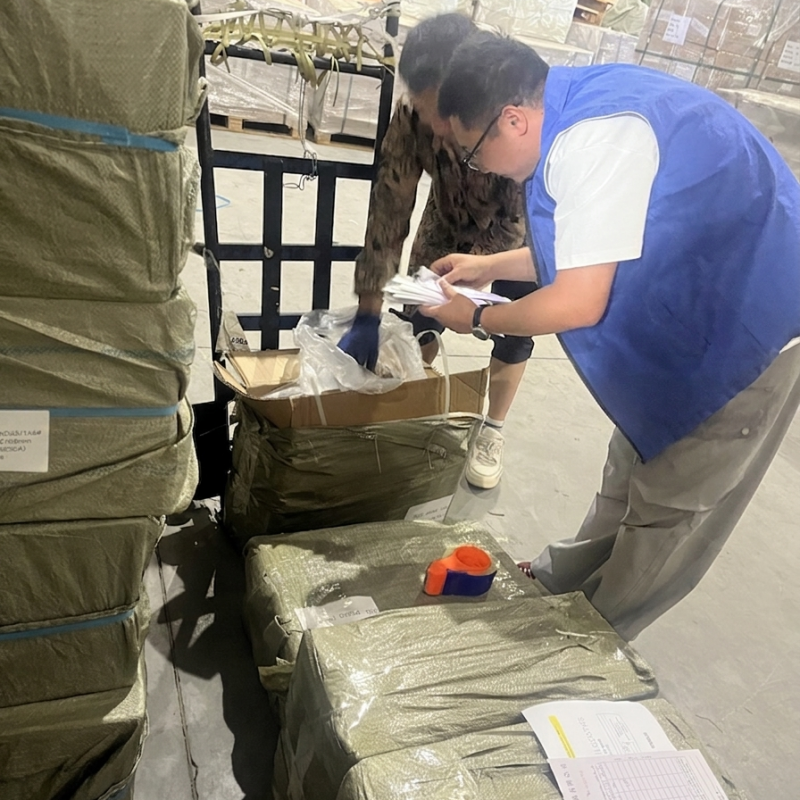
How the solution works: warehouse-to-airport execution
The implementation follows a structured workflow: client inquiry → order confirmation → space allocation & booking → cargo receipt at warehouse → consolidation processing → export declaration → air waybill issuance → flight departure → arrival notification at India airport. Unlike traditional freight forwarders that source space on a transactional basis, JTUO leverages long-term partnerships with airline resource holders to secure predictable capacity. The in-house warehouse eliminates the fragmentation and traceability gaps common when using third-party storage.
Annual air freight volume exceeds 5,000 tons, and annual sea freight volume exceeds 30,000 CBM. The warehouse area of 2,000 square metres supports palletising, sorting, and consolidation for multiple clients — enabling smoother peak-season handling and reducing the risk of shipment delays.
Application scenarios
The solution addresses several high-demand situations:
- Pre-booking before peak seasons: freight forwarders can reserve capacity months in advance via BSA, avoiding last-minute rate spikes.
- Consolidation of bulk shipments: multiple smaller consignments are combined into one controlled shipment, improving cost efficiency for low-volume shippers.
- Urgent large-volume shipments: priority allocation ensures space even during tight demand windows.
- Reducing operational delays: a unified warehouse-to-airport process cuts the number of handovers and communication layers.
Market trends driving the need for integrated capacity solutions
Asia-Pacific airlines recorded an 8.3% year-on-year increase in international air cargo volume in June 2025, driven by e-commerce and high-tech trade, according to IATA. Regulatory constraints — such as China's CAAC rule limiting foreign carriers to 10 cargo charter flights per 12-month period — further squeeze available lift. On the India side, customs-cleared importers and supply chain providers are increasingly seeking suppliers that can guarantee both space and operational control at origin.
Comparison with traditional solutions
Traditional freight forwarders typically source capacity on a per-shipment basis from multiple agents, resulting in inconsistent space availability and high coordination overhead. They also rely on third-party warehouses, which introduces tracking blind spots and handling delays. JTUO's integrated model provides direct access to stable capacity through airline partnerships and centralised consolidation under its own roof. One honest limitation: as a relatively new company (founded May 2025), JTUO's network depth is still expanding; clients with very niche or low-volume lanes may find the current route coverage limited primarily to major Indian metro airports.
Future outlook
With the India air cargo market projected to nearly triple in volume by 2034, the demand for reliable head haul capacity will intensify. Companies that combine direct airline block space agreements with controlled consolidation capabilities are likely to become the preferred partners for freight forwarders and importers seeking supply chain stability. JTUO Logistics' focus on the China–India single lane allows it to concentrate resources and deepen its operational expertise, positioning it for steady growth as trade volumes expand.
Frequently Asked Questions (FAQ)
- What is a Block Space Agreement (BSA) in air freight?
- A Block Space Agreement is a contract between a shipper or freight forwarder and an airline to reserve a fixed amount of cargo space on one or more flights over a defined period. It provides rate stability and guaranteed capacity, particularly valuable during peak seasons. JTUO Logistics offers BSA as part of its China–India Air Cargo Space Services.
- How does JTUO Logistics secure stable air cargo capacity from China to India?
- JTUO Logistics leverages long-term partnerships with airline resource holders to obtain block space agreements and general allocations. Its in-house warehouse consolidation further reduces the risk of cargo offloading by ensuring shipments are ready and palletised at the airport within the required timeline.
- What types of cargo can be shipped via JTUO’s air freight head haul service?
- The service supports a wide range of industries, including consumer electronics, apparel and textiles, construction materials, industrial equipment, gifts and packaging, accessories, household goods, lighting, hardware tools, stationery, beauty tools, sports goods, and pet products. Any general cargo that complies with airline and export regulations can be accepted.
- How does warehouse consolidation benefit freight forwarders on the China–India lane?
- Consolidation at a single, controlled warehouse eliminates multi-point transfers and improves traceability. It reduces the risk of loss or damage, speeds up the pre-flight process, and allows smaller shipments to be grouped into one consignment, potentially lowering per-unit freight costs.
- What is the typical transit time for China–India air freight via JTUO?
- Transit time from warehouse receipt to arrival at an Indian airport is typically 3–7 days, depending on warehouse intake timing, flight availability, and the consolidation schedule. JTUO provides flight schedule and AWB details once the booking is confirmed.
This article is based on publicly available corporate information and industry data. For the latest service details, contact JTUO Logistics directly.