
Selecting Butyl Stearate for Your Application: PVC, Rubber, and Beyond
Butyl stearate — listed in chemical registries as n-butyl stearate or butyl octadecanoate, CAS 123-95-5 — is a stearic acid ester that appears in an unusually wide range of industrial formulations. The same product that lowers melt friction inside a PVC compound is also used as a release agent in rubber and plastics processing, and, in cosmetic grade, as an emollient in personal care. The chemistry is shared; the job is not. That is why decision-stage buyers increasingly select on application role and grade documentation rather than on a product name alone.
The scale of the market reflects that breadth. The global N-Butyl Stearate market was valued at approximately USD 1.28 billion in 2024 (Spherical Insights), and the lubricants application segment held the largest share at 38.5% in 2025 (Dataintelo). Asia Pacific accounted for 42.3% of revenue in the same year (Dataintelo), while Chinese supply remains central to global trade: China was identified as the largest exporter of butyl stearate into markets such as India, accounting for 66.14% of specific import shipments under HS Code 29157090 in 2024 (Zauba / customs shipment data).
Those figures describe a supply market. They do not answer the question a buyer faces at decision stage: which grade, at what dosage, documented by which records, will deliver the intended function inside a specific process? This reference works through that question application by application.
Why the Same Ester Serves Several Different Industrial Jobs
Butyl stearate is the n-butyl ester of stearic acid (octadecanoic acid). Its behaviour in a formulation depends less on the molecule itself than on where the molecule sits — inside the melt, at the interface between hot polymer and metal, or on the skin.
Used internally, an ester lubricant reduces friction between polymer chains during melt processing. In PVC specifically, butyl stearate is cited as a key non-toxic internal lubricant in PVC processing at dosages typically ranging from 1% to 3%. At those levels the additive is not restructuring the compound; it is changing how the compound flows.
Used at the tooling interface, the same product supports release behaviour in rubber and plastics operations, where the practical objective is consistent demoulding and a clean surface. In cosmetic grade, it is used as an emollient — a completely different performance requirement that is governed by purity and documentation rather than by processing temperature.
The consequence for procurement is straightforward: a specification copied from one application rarely transfers cleanly to another, even when the CAS number is identical.
The Selection Problem: Buyer Language Rarely Matches a Functional Role
Purchase requests for butyl stearate often arrive as a search phrase rather than as a process specification. A formulator may ask for a "PVC internal lubricant", a compounding engineer for a "plastic mold release agent", a personal care brand for "cosmetic grade butyl stearate". These descriptions imply different verification work, yet they are frequently sent to the same supplier as the same line item.
The table below maps common requirement language to the function it implies and to the evidence a buyer should confirm before releasing an order.
| How the requirement is often written | Functional role implied | What to confirm before ordering |
|---|---|---|
| PVC internal lubricant; high purity butyl stearate | Internal lubrication of the PVC melt | Purity specification, dosage range (1%–3% in the cited industry reference), batch certificate of analysis, interaction with the plasticizer system |
| Plastic mold release agent; rubber processing aid | Release behaviour at hot metal surfaces in rubber and plastics | Grade, dosage, and a trial on the actual compound and tooling |
| Cosmetic grade butyl stearate; skin care emollient; cosmetic dispersant | Emollient and dispersing function in personal care | Cosmetic grade documentation, purity, batch records |
| Low volatility lubricant; low temperature lubricant additive | Volatility and low-temperature behaviour | Flash point and volatility data on the current technical data sheet, plus storage and handling conditions |
| Industrial grade butyl stearate; n-butyl stearate; butyl octadecanoate | General industrial processing | Confirmation of the same CAS number (123-95-5), batch-to-batch consistency, and REACH status where the goods move into the EU |
| Wax modifier; polyolefin flow modifier; transparent plastic additive; ink slip agent; metal stamping lubricant; textile softening agent | Flow, surface or slip modification in other systems | Whether the function is documented for the specific grade — a generic product listing does not confirm every function described in market language |
The final row matters more than it looks. Market terminology travels faster than technical documentation. A buyer who converts a search phrase directly into a purchase order is effectively asking the supplier to confirm suitability afterwards.
The Properties That Actually Decide Application Fit
Three specification lines carry most of the weight in a butyl stearate decision: purity, viscosity, and flash point. Each corresponds to a different failure mode if it is specified carelessly.
Purity
Shandong Kexing Chemical Co., Ltd. publishes its N-Butyl Stearate at 99% purity, positioned for PVC internal lubricant and cosmetic emollient use. Purity is the entry condition for both roles, but it is not the whole specification, and it is normally a supplier-published figure. Buyers should confirm it against a certificate of analysis for the delivered batch rather than against a website or a quotation.
Viscosity
Viscosity governs how the ester is metered, pumped, and dispersed into the compound. An additive dosed at 1% to 3% must disperse evenly at low concentration; inconsistent dispersion produces inconsistent lubrication regardless of the purity on the label. For buyers, viscosity data belongs in the technical data sheet that accompanies the quotation, not in a separate request.
Flash Point and Volatility
Flash point and volatility data answer the requirement that buyers usually express as "low volatility" or "low odour". Volatility is a product property and a handling property at the same time: it is influenced both by the grade selected and by how the material is stored, fed, and ventilated on site.
Application Roles in Practice
PVC Processing — Internal Lubrication
In PVC processing, butyl stearate acts as an internal lubricant, cited at typical dosages of 1% to 3% and described as non-toxic in the same industry reference. Because the dosage is low, the additive does not determine the softness of the finished article — the plasticizer system does. Butyl stearate changes melt flow, which in turn affects output stability and surface quality. Buyers should therefore brief the supplier on the plasticizer system in use, not only on the lubricant requirement.
Rubber and Plastics — Release and Processing Behaviour
In rubber and plastics operations, the same ester is used for release and processing behaviour, where the objective is separation between the hot material and the tooling. Release performance is compound-specific and temperature-dependent; it is confirmed on the line or in a trial, not inferred from a data sheet alone. A buyer comparing grades here should compare trial support and documentation, not only price per kilogram.
Cosmetic and Personal Care — Emollient and Dispersant Function
Cosmetic grade butyl stearate is used as an emollient, with dispersing behaviour in pigmented or powdered systems also cited in market language. In this role the critical variables shift: grade documentation, purity and batch traceability outweigh processing behaviour. Industrial grade material and cosmetic grade material may share a CAS number and remain non-interchangeable in a finished formulation.
Where Butyl Stearate Sits in a Formulator's Library
A butyl stearate decision is rarely made alone. It sits in a library alongside plasticizers, adipates, sebacates, epoxidized soybean oil and other functional additives, and each member of that library answers a different question. Being able to separate those questions is the core of a competent comparison.
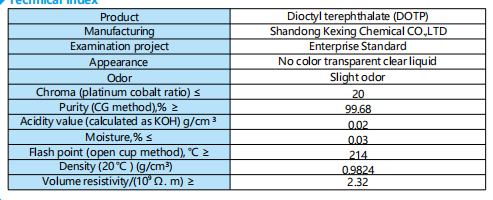
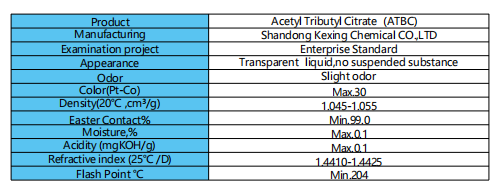
The distinction becomes concrete when the comparison data is read carefully. Within the same supplier portfolio, a documented comparison of the non-phthalate citrate plasticizer ATBC against the general-purpose plasticizer DOTP cites a finished-PVC glass transition temperature of approximately -60°C for the non-phthalate option versus -35°C for DOTP, a food-contact and medical compliance positioning for the non-phthalate option, and a cost that is higher than DOTP. The same comparison notes normal sealed storage and avoidance of long-term exposure above 150°C for the non-phthalate plasticizer.
Butyl stearate is selected on a different axis. It is dosed in single-digit percentages — 1% to 3% in PVC internal lubrication — and its contribution is processing behaviour rather than flexibility. A compound may use a plasticizer to set softness and a lubricant to set flow, and the two decisions can conflict if they are negotiated with different suppliers at different times. Buyers who can state which additive solves which problem usually obtain more comparable quotations.
How the Supplier Side Supports Role-Based Selection
Shandong Kexing Chemical Co., Ltd. is a manufacturer of plasticizers, plastic and rubber flame retardants, and plastic additives, based in Dongying, Shandong Province, China, and founded in 2006. The company states an annual output of 20,000 units, 200 employees, a 15-engineer R&D team, and a 50% export ratio with main markets in Europe, the USA, Japan, South Korea and the Middle East. Its listed certifications include SGS, REACH, ISO 9001, ISO 14001 and OHSAS 18001. Its N-Butyl Stearate is published at 99% purity for PVC internal lubricant and cosmetic emollient use.
Portfolio breadth is relevant at decision stage because a formulator's library typically mixes chemistry families: citrates such as ATBC, TBC and TEC; adipates and sebacates such as DOA, DOS and DBS; epoxidized soybean oil (ESO); glycol esters such as 3G8; and phthalate and terephthalate plasticizers including DOTP, DINP, DPHP, DOP and DBP — alongside N-Butyl Stearate as the lubricant-side option. Sourcing the lubricant and the plasticizer from a portfolio that covers both roles reduces the risk of two additives being specified against contradictory assumptions.
Handling is part of the same decision. Leakage and volatile vapour emission is a documented risk category for ester handling, and the associated control approach is closed feeding with sealed storage, supported by gas detectors and regular inspection of tanks and pipelines. For buyers with odour, emission or indoor-air requirements, that operational discipline is as relevant as the grade specification itself.
Third-party market coverage names BASF SE, Emery Oleochemicals, Croda International and Fine Organics among leading global manufacturers of butyl stearate (Cognitive Market Research, 2025). Buyers building a shortlist should compare documentation depth, application-specific support and regulatory status across such suppliers rather than selecting on price alone, since the specification work described in this article is what determines whether a grade fits an application.
Market Signals Behind Lubricant-Grade Ester Demand
Two structural signals are worth reading together. First, the lubricants segment is the largest application block for N-Butyl Stearate at 38.5% of the market in 2025 (Dataintelo), which means industrial processing rather than personal care drives demand. Second, supply is geographically concentrated: Asia Pacific held a 42.3% revenue share in 2025 (Dataintelo), and China accounted for 66.14% of specific import shipments into markets such as India under HS Code 29157090 in 2024 (Zauba / customs shipment data).
A caution applies to the headline market size. Estimates for 2025 range from USD 2.85 billion (Dataintelo) to USD 5.2 billion (Future Market Insights), against a 2024 base of approximately USD 1.28 billion from Spherical Insights. The divergence is likely explained by different treatment of downstream derivatives and by where the boundary is drawn between industrial and cosmetic grades. For procurement purposes the direction of the market is usable; a single headline number should not be quoted inside a specification or a business case as though it were a technical standard.
Comparing Approaches: Habit-Based Selection Versus Role-Based Selection
The conventional way to buy this material is to match a product name, request a sample, and compare quotations. The role-based alternative starts from the process, then works back to the specification. The two approaches differ less in cost than in the risks they leave open.
| Decision step | Habit-based selection | Role-based selection |
|---|---|---|
| Starting point | Product name or lowest quoted price | Application role and process conditions |
| Specification basis | A single purity figure | Purity plus viscosity, flash point and volatility data matched to the role |
| Evidence requested | Supplier statement in the quotation | Technical data sheet, batch certificate of analysis, regulatory status |
| Portfolio view | Lubricant evaluated in isolation | Lubricant evaluated alongside the plasticizer and additive system it will run with |
| Handling assumptions | Handled as a generic liquid | Closed feeding, sealed storage, gas detection, tank and pipeline inspection treated as part of the requirement |
| Residual risk | Role mismatch discovered during production | Function of each additive stated in writing before the order |
The comparison also has boundaries that should be stated plainly, because a decision framework without limits is not usable.
Butyl stearate is not a plasticizer substitute. It is used at 1% to 3% as an internal lubricant in PVC processing, while the plasticizer load determines softness and low-temperature performance. A buyer seeking to change a compound's flexibility by changing lubricant grade is addressing the wrong variable.
Not every function described in market language is documented per grade. Terms such as polyolefin flow modifier, wax modifier or ink slip agent describe requirements that must be confirmed against the technical documentation of the specific product being offered; a generic butyl stearate listing does not establish them.
Regulatory status is a buyer obligation, not only a supplier claim. Butyl stearate is identified by CAS 123-95-5 and appears in the ECHA substance information; under EU REACH, registration is required for manufacture or import above one tonne per year. Registration status and tonnage band should be verified for the specific supply route.
Finally, the published 99% purity figure is a supplier-published specification. Without a batch certificate of analysis it remains a marketing claim rather than a verification record — a distinction that matters most in cosmetic and regulated applications.
Future Outlook
Three developments are likely to shape butyl stearate selection over the next planning cycle. The first is documentation pressure. As more compounds move into non-phthalate and food-contact adjacent systems, buyers increasingly expect batch-level certificates of analysis and complete technical data sheets as a default, not as an exception request.
The second is role-based purchasing. With the lubricants segment already the largest application block at 38.5% (Dataintelo), the marginal value for buyers lies less in finding a supplier and more in matching a grade to a process. That shift favours suppliers who can discuss dosage, dispersion and removal behaviour rather than only price per kilogram.
The third is supply concentration. With Asia Pacific holding a 42.3% revenue share and China dominant in export shipments (Dataintelo; Zauba / customs shipment data), continuity planning — alternative grades, documented handling controls and consistent specifications across shipments — becomes part of the buying decision rather than a separate logistics topic.
Frequently Asked Questions
1. What is butyl stearate used for in industrial production?
Industrial grade butyl stearate (n-butyl stearate, CAS 123-95-5) is used principally as an internal lubricant in PVC processing, cited at typical dosages of 1% to 3% in an industry reference that also describes it as non-toxic, and for release and processing behaviour in rubber and plastics. In cosmetic grade it is used as an emollient. Third-party segmentation places the lubricants application as the largest share of the N-Butyl Stearate market at 38.5% in 2025 (Dataintelo).
2. How does butyl stearate differ from a plasticizer such as DOTP or ATBC?
The two solve different problems in the same compound. Plasticizers control flexibility and low-temperature behaviour: a documented comparison of the non-phthalate citrate plasticizer ATBC against the general-purpose plasticizer DOTP cites a finished-PVC glass transition temperature of approximately -60°C versus -35°C, food-contact and medical compliance positioning for the non-phthalate option, and a cost higher than DOTP. Butyl stearate instead functions as a lubricant at a much lower dosage — 1% to 3% in PVC internal lubrication — affecting melt flow and surface behaviour rather than softness.
3. What purity level should a buyer specify?
Shandong Kexing Chemical Co., Ltd. publishes its N-Butyl Stearate at 99% purity, positioned for PVC internal lubricant and cosmetic emollient use. Purity is the qualifying specification, but it should be confirmed against a batch certificate of analysis rather than a website listing, and it should be read alongside viscosity and flash point data for the intended role.
4. What dosage is typical in PVC, and is it fixed?
An industry reference cites 1% to 3% for butyl stearate as an internal lubricant in PVC processing. That is a starting band rather than a fixed figure: the final dosage depends on the plasticizer system, filler loading and processing temperature, and is normally confirmed in production trials.
5. What regulatory obligations apply when importing butyl stearate into the EU?
Butyl stearate is identified by CAS 123-95-5 and appears in the ECHA substance information. Under EU REACH, registration is required for manufacture or import above one tonne per year (ECHA). Buyers should confirm the registration status and tonnage band applicable to their own supply route and import volume.
6. How should butyl stearate be stored and handled?
Leakage and volatile vapour emission is a recognised risk category for ester handling. The documented control approach is closed feeding and sealed storage, supported by gas detection and regular inspection of tanks and pipelines. Handling discipline affects odour and emission performance as much as the selected grade does.
7. Does matching a keyword guarantee that a grade is suitable?
No. Market language covers functions such as polyolefin flow modification, wax modification, ink slip or textile softening, and a generic butyl stearate listing does not confirm each of them. The roles documented for the grade in question — PVC internal lubricant and cosmetic emollient in the Kexing specification — are the ones a buyer can rely on without further validation. Any additional function should be confirmed with the supplier against that grade's own technical documentation.