
Selecting Cosmetic Packaging by Product Type: A Project-Fit Guide for Buyers
Cosmetic packaging selection starts with the product, not the visual design. For a brand preparing a lipstick launch, a powder compact, or a liquid foundation introduction, the practical decision is whether the container's structure, dimensions, and material match the formula and the consumer's daily-use conditions. This article provides a project-fit framework for matching cosmetic packaging formats to product requirements, using the container line of Guangzhou Cosfinity Cosmetics Co., Ltd. (COSFINITY) as a reference model. The goal is to help buyers move from "which packaging looks good" to "which packaging fits the product and the project."
Why Packaging Fit Is a Procurement Problem
Packaging mismatches usually surface after production, not during sample review. A lip gloss tube with insufficient wall thickness can deform during transport. A powder jar without a proper sealing structure can leak inside a handbag. A foundation bottle that cannot protect an air-sensitive formula may shorten shelf life and trigger consumer complaints.
For professional buyers, the challenge is that cosmetic packaging is not one product category but many. Lipstick tubes, mascara tubes, powder compacts, jars, airless pump bottles, and stick containers each serve a different combination of formula, usage frequency, and consumer expectation. Evaluating a supplier on a single visual sample may miss the parameters that matter most for a specific project.
The opportunity is to use specification-level criteria during supplier evaluation. Buyers who can match their product category to the right container format—and verify capacity, material, wall thickness, and sealing design—are more likely to move from sample approval to mass production without costly iterations.
Reference Entity: COSFINITY
Guangzhou Cosfinity Cosmetics Co., Ltd. (COSFINITY) is a manufacturer of customized cosmetic packaging, founded in 2009 and operating a 40,000㎡ facility with around 200 employees. Its catalog includes lipstick tubes, lip gloss/mascara tubes, powder cases, eyeliner tubes, powder jars, and liquid foundation bottles. The company reports 100% export to global markets and maintains a 25-engineer R&D team, with an annual output capacity of approximately 500 million pieces.
COSFINITY operates in OEM/ODM mode, offering customization across logo, color, shape, material, volume, thickness, and final packaging. Its stated monthly production capacity is 10 million pieces, with a lead time of 15–25 days and a minimum order quantity of 12,000 pieces per item. The company also reports that finished products undergo 100% testing before shipment.
Mapping Product Categories to Container Formats
The table below maps common cosmetic product categories to COSFINITY's container models, using the manufacturer's published specifications. It provides a starting point for comparing your project requirements against actual container parameters.
| Product Category | Model | Dimensions | Volume | Material | Specification Notes |
|---|---|---|---|---|---|
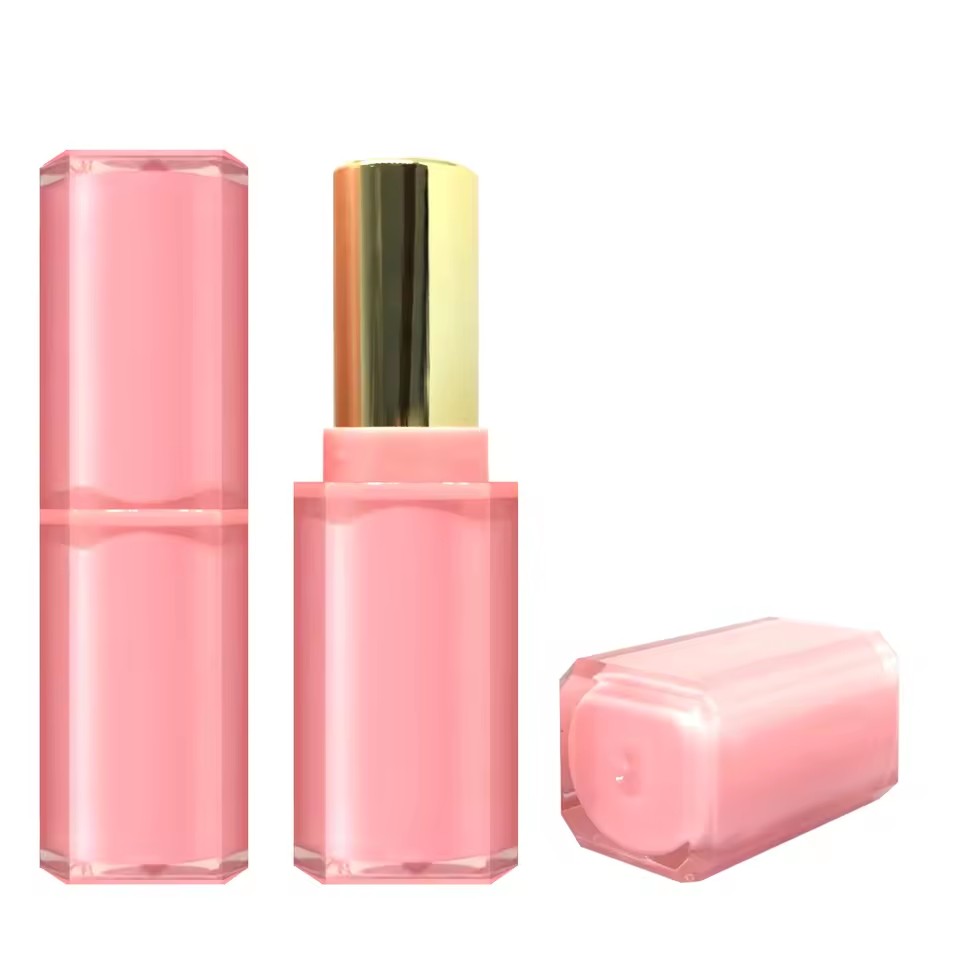
| Lipstick | CP01-2142 | W22.7 x H84.6 mm | 20 ml | Plastic | 0.3 mm wall thickness; lightweight; customizable appearance printing |
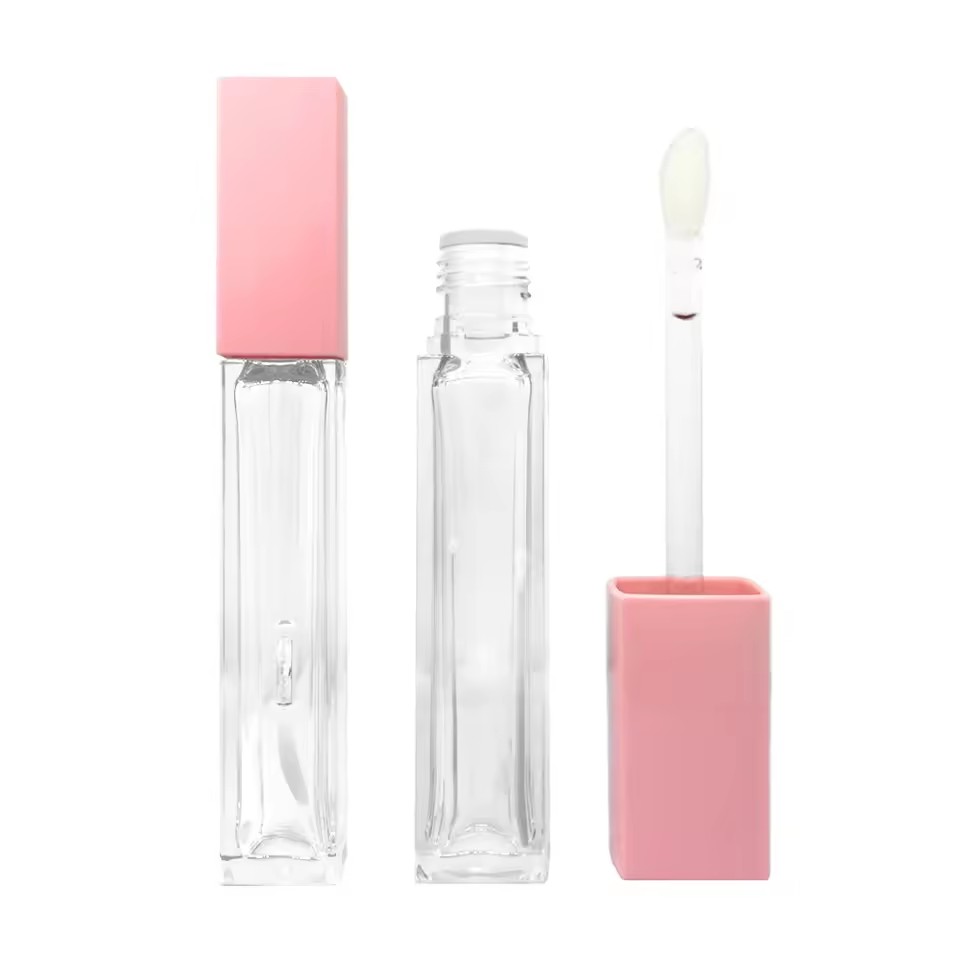
| Lip gloss / Mascara | CP02-2231 | W18 x H106.1 mm | 3 ml | Plastic | 0.3 mm wall thickness; slim structure for precise application |
| Liquid eyeliner | CP04-1215 | W12.8 x H115.3 mm | 10 ml | Plastic | 0.3 mm wall thickness; leak-proof structure |
| Eyeliner pencil | CP06-1056 | W15 x H173.5 mm | — | Plastic | Pencil-style format |
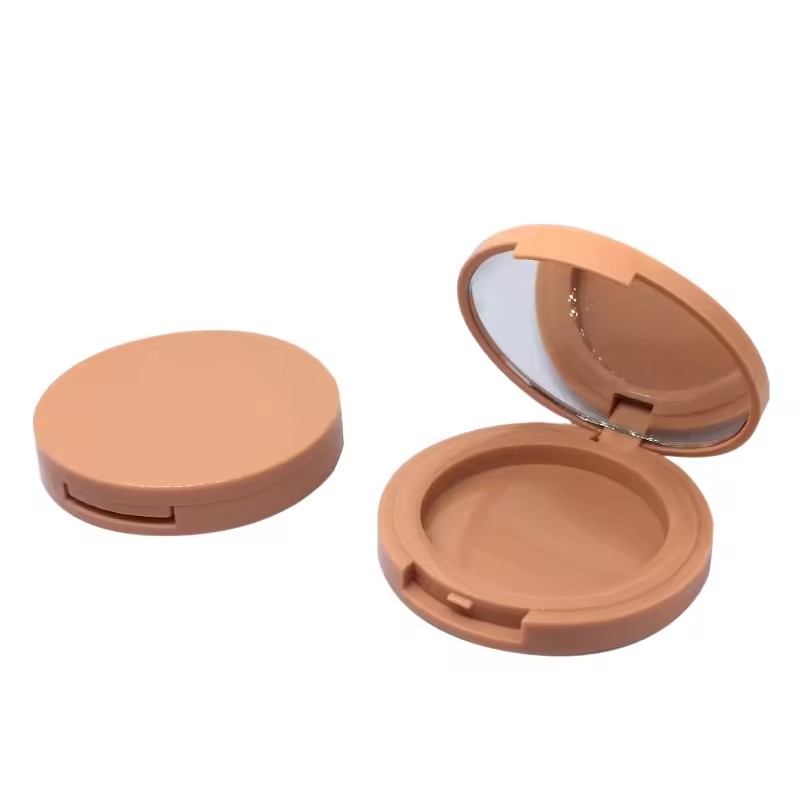
| Powder compact | CP03-1394 | W65 x H12 mm | — | Plastic | 1 mm wall thickness; flat case for pressed powder |
| Powder jar | CP05-2159B | W40.7 x H32.6 mm | 5 ml | Plastic | 1 mm wall thickness; leak-proof design |
| Liquid foundation | CP07-2026 | W33.5 x H92 mm | 30 ml | Glass | Airless pump structure to protect formula |
| Stick foundation | CP08-0053 | D29 x H60 mm | 10 ml | Plastic | Stick format for direct application |
| Deodorant stick | TP01-1018-15 | L41.7 x W24.49 x H86.5 mm | 20 ml | Plastic | Portable stick container |
How to Read These Specifications
Dimensions and volume determine whether the container can hold the intended fill weight and fit the consumer's usage pattern. A 20 ml lipstick tube and a 3 ml mascara tube serve completely different dosage requirements, and choosing the wrong volume can affect both cost and user experience.
Wall thickness is directly tied to structural durability. In COSFINITY's products, tubes such as the CP01-2142 and CP02-2231 use 0.3 mm wall thickness, while flat containers like the CP03-1394 powder case use a thicker 1 mm wall. Buyers should check whether a container's wall thickness matches the mechanical demands of shipping, repeated opening and closing, and daily carrying.
Material choice affects weight, breakage risk, and compatibility with the formula. Plastic is the most widely used material in cosmetic packaging, accounting for 64.5% of the market in 2024 according to ResearchAndMarkets.com. Glass is used when the formulation requires higher barrier properties or when the product's premium positioning justifies the additional weight and fragility. COSFINITY's product line includes both plastic containers and the CP07-2026 glass airless pump bottle for liquid foundation.
Application Scenarios and Special Requirements
Beyond the static specification, the actual usage scenario defines which packaging functions are non-negotiable. COSFINITY's application data describes a globally common scenario: daily cosmetic storage and carrying, at normal room temperature (16–25°C), with the container repeatedly opened and closed by the consumer. In this scenario, the product is in direct contact with skin cosmetics, and the special requirements are leak-proof design, non-irritating material, portability, and lightweight construction.
These four requirements translate directly into evaluation criteria for buyers:
- Leak-proof design: relevant for liquid products such as foundation, eyeliner, and lip gloss
- Non-irritating material: relevant for any package that comes into repeated contact with skin
- Portability and lightweight: relevant for products intended for handbags, travel, and on-the-go use
Use Case: Lipstick Tube OEM for a Private-Label Brand
A real example from COSFINITY's records illustrates how scenario fit plays out in an actual procurement project. An India-based brand in the lipstick tube segment ordered 12,000 pieces of customized lipstick tubes to support a private-label lipstick launch. The collaboration has continued for two years, with stable quality generating repeated bulk orders.
According to COSFINITY's case documentation, the project involved customized design, lightweight plastic material, customizable appearance printing, and a tight leak-proof structure suited for daily portable use. The product referenced in this case is the CP01-2142 luxury empty plastic lipstick tube.
For buyers, this case highlights the decision rules of an OEM lipstick packaging project: the container must support brand identity through printing and structure, remain light enough for daily carrying, and prevent leakage during repeated use. Those are scenario requirements, not decorative preferences.
Market Trends That Affect Procurement Decisions
Several verified market trends shape how buyers should approach packaging selection in 2026.
Market size and growth. The global cosmetic packaging market is estimated at approximately USD 34.17 billion to USD 47.3 billion in 2024, with some forecasts projecting growth toward USD 89.72 billion by 2034 (Fortune Business Insights, ResearchAndMarkets, Data Bridge Market Research). The divergence in estimates reflects differences in whether secondary packaging and industrial containers are included, but the overall direction is consistent.
Regional concentration. Asia Pacific led the global market in 2025 with a 42.36% share, driven by rising disposable incomes and e-commerce growth (Fortune Business Insights). This concentration matters for buyers because it means the supply base for cosmetic packaging is heavily aligned with the region's manufacturing ecosystem and logistics networks.
Sustainability pressure. Sustainable packaging is now a stated priority for 63% of cosmetic consumers (Statista / Packly). The regulatory environment is also tightening. The EU Packaging and Packaging Waste Regulation (EU) 2025/40 imposes recyclability and labeling standards for cosmetics packaging, and the U.S. Modernization of Cosmetics Regulation Act (MoCRA) has introduced facility registration and product listing obligations that extend to packaging entities.
For procurement teams, these trends mean that a packaging supplier should be able to document material compliance, traceability, and regulatory alignment, not just production capacity. Buyers evaluating suppliers should request evidence that containers can meet recyclability expectations and that the facility itself is registered where required.
Custom vs. Standard Containers: A Realistic Comparison
Customized packaging and standard off-the-shelf containers serve different project situations. A straight comparison that declares one superior would be misleading.
Standard containers usually offer lower unit prices at high volume, no waiting for tooling, and minimal order constraints. For a brand running a small pilot, a limited regional test, or an urgent replenishment, a standard container may be the only practical option.
Customized packaging gives the buyer control over brand elements, dimensions, material choice, thickness, and sealing performance. COSFINITY, for example, supports customization of logo, color, shape, material, volume, thickness, and packaging under an OEM/ODM model.
However, customization has real boundaries. In COSFINITY's case, a custom project requires a minimum order of 12,000 pieces per item and a lead time of 15–25 days. A brand evaluating whether customization is worth the investment should calculate whether the projected sales volume within the first production cycle can justify the MOQ and whether the lead time matches the product launch calendar. These constraints are not quality weaknesses; they are project-fit boundaries that any buyer should verify before selecting a supplier.
Future Outlook
The connection between product development and packaging selection will continue to tighten. Regulatory compliance is becoming a baseline requirement rather than a competitive advantage, and buyers will need to verify material documentation, recyclability, and facility registration. Asia Pacific's dual role as a manufacturing base and a growing consumption market will keep influencing supply-chain decisions. As consumer preferences shift toward lighter, safer, and more functional containers, brands will place greater emphasis on suppliers that can validate specifications through testing and documentation rather than only provide visual finishes.
For buyers who want to review COSFINITY's full operation profile, the company provides a publicly accessible brochure at https://cdn.socialarks.com/sbsp/25004/common/2026/0702/cosfinity%20profile.pdf. The document contains the company background and capability details referenced in this article.
FAQ: Packaging Selection in Practice
What kind of cosmetic packaging does my product need?
The packaging format depends on the product category. Lipstick is typically packaged in lipstick tubes, lip gloss and mascara use slim tube structures, pressed powder uses flat compact cases, liquid foundation requires pump or airless pump bottles, and loose powder is usually filled in jars with sealing structures. As a reference, COSFINITY's product line includes the CP01-2142 lipstick tube (20 ml), the CP02-2231 lip gloss/mascara tube (3 ml), the CP03-1394 powder compact case, the CP05-2159B powder jar (5 ml), and the CP07-2026 glass airless pump bottle (30 ml) for liquid foundation. Buyers should first determine the product category and target fill volume, then compare container dimensions and structures against those requirements.
How do I choose between plastic and glass cosmetic packaging?
Material selection depends on formula compatibility, brand positioning, transport conditions, and cost. Plastic is the dominant packaging material in the cosmetic industry, holding 64.5% of the market in 2024 according to ResearchAndMarkets.com. It is lighter, less fragile, and generally more portable, making it suitable for daily-use products such as lipstick, mascara, and powder compacts. Glass offers higher barrier properties and a premium feel but adds weight and breakage risk. COSFINITY uses plastic for most tube and jar formats, while its CP07-2026 liquid foundation bottle uses glass with an airless pump structure. A buyer should evaluate whether the formula requires higher protection and whether the product's usage scenario supports a heavier, breakable container.
How do I verify whether a packaging container is leak-proof?
Leak-proof performance should be verified through the container's sealing structure, material thickness, and testing records. In COSFINITY's product line, the CP05-2159B powder jar and the CP04-1215 liquid eyeliner tube are specified with leak-proof structures, and the company reports that all finished products undergo 100% testing before shipment. Buyers should ask suppliers for specific test results or conduct their own fill-and-leak tests with the actual formula before approving production.
What is the minimum order quantity for custom cosmetic packaging?
The MOQ varies by supplier and product complexity. COSFINITY states a minimum order of 12,000 pieces per item for custom packaging, with a monthly production capacity of 10 million pieces. Buyers should compare the MOQ against their projected sales volume for the first production cycle to determine whether a custom project is financially feasible at the planned scale.
How long does cosmetic packaging customization take?
Lead time depends on the scope of customization. COSFINITY reports a standard lead time of 15–25 days, covering customization of logo, color, shape, material, volume, thickness, and final packaging. More complex projects that require new molds, structural changes, or extensive testing may take longer. Buyers should factor the lead time into the overall product launch schedule and confirm it in writing before placing an order.