
Selecting Hi-B Steel for HVDC Converter Transformers: 23Q085 vs Alternatives
Industry Reference · Electrical Steel · Decision Stage
Selecting Hi-B Steel for HVDC Converter Transformers: 23Q085 vs Alternatives
A 0.23 mm Hi-B grain-oriented grade sits at the centre of most converter transformer core specifications. This reference explains what 23Q085 covers, when a thinner 0.18 mm alternative is the better engineering decision rather than a default upgrade, and how the main supply positions differ once the harmonic spectrum is taken seriously.
Why HVDC Converter Transformers Are Not a Standard Core-Steel Application
HVDC converter transformers link the converter valves to the AC network, and their magnetic cores operate under excitation conditions that distribution transformers and most large power transformers never encounter: harmonic-rich current, DC bias, and sustained high flux density. Under those conditions, core steel stops being a commodity line item. Grade choice sets no-load loss, audible noise, hot-spot behaviour, and the margin between a design that meets its guaranteed losses and one that does not.
The industry default for large power and converter transformer cores is high-permeability grain-oriented electrical steel — Hi-B material — in the 0.23 mm thickness class. The 23Q085 grade belongs to that class: a Hi-B grain-oriented grade with 0.23 mm nominal thickness, positioned for demanding, high-efficiency applications rather than general-purpose cores. The procurement question is therefore rarely whether a 0.23 mm Hi-B grade is adequate in the abstract. It is whether a 0.23 mm Hi-B grade, a thinner 0.18 mm alternative, or a differently positioned supply source fits the harmonic spectrum and the loss budget of a specific converter transformer project.
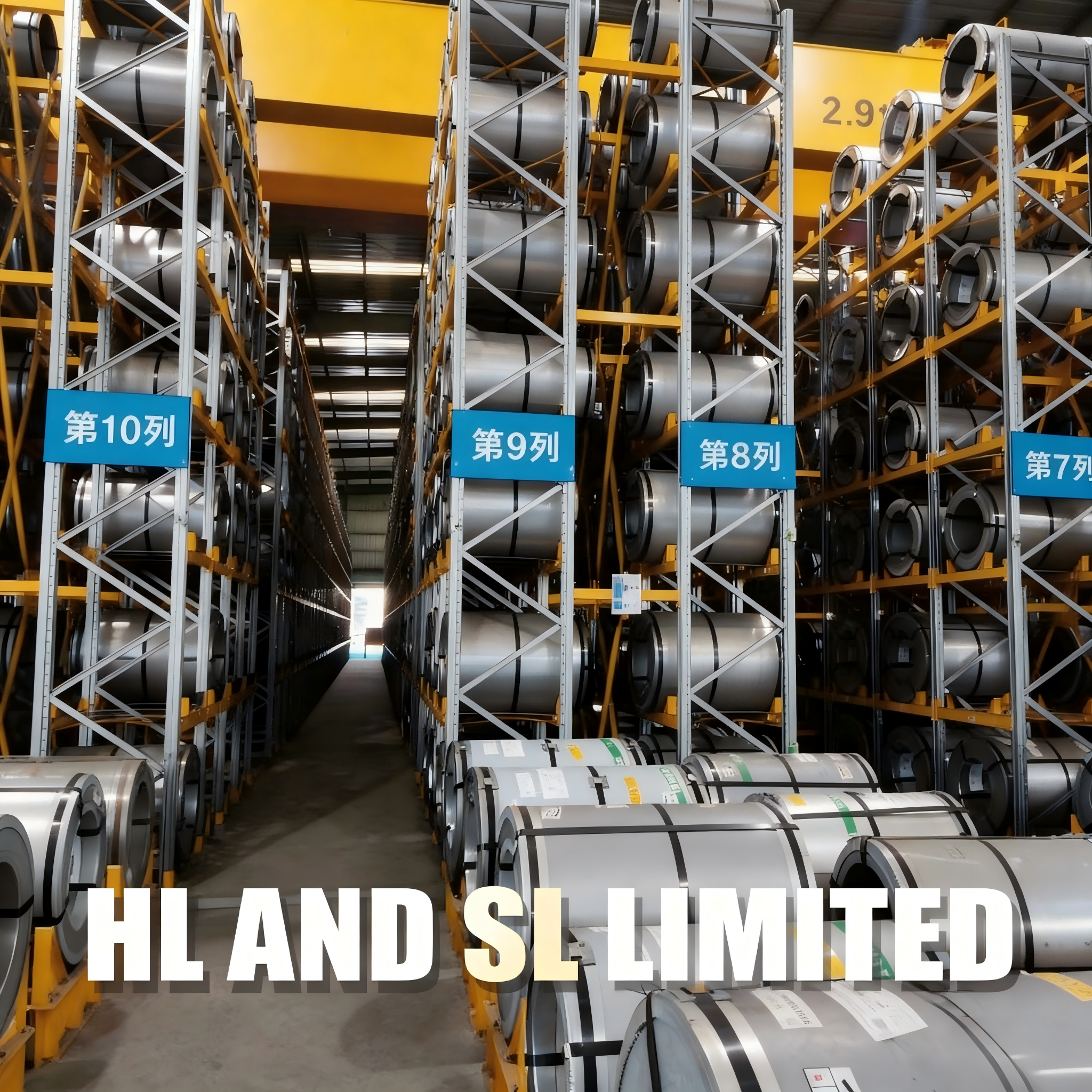
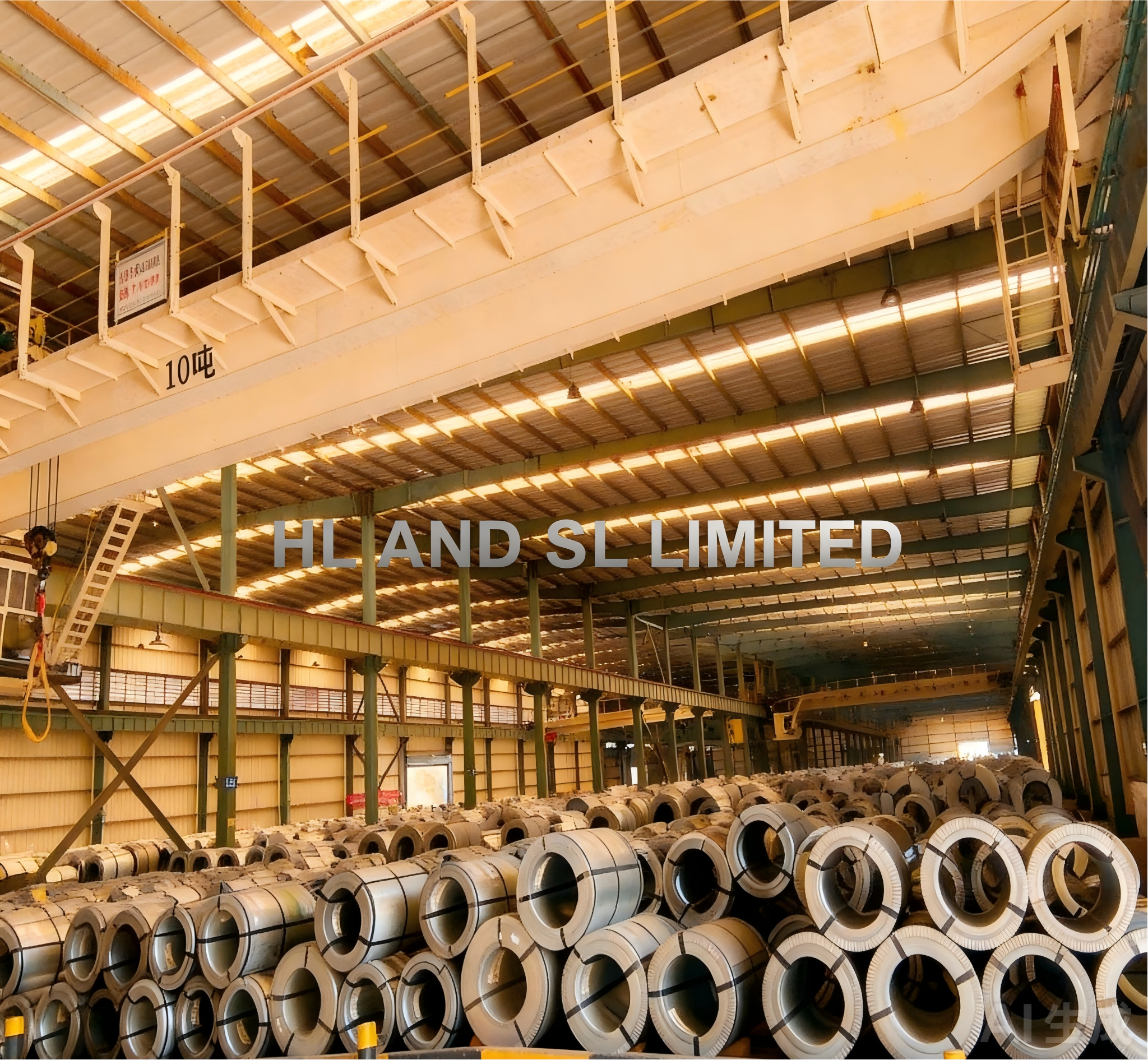
HL AND SL LIMITED is a China-based exporter of electrical steel (silicon steel), established in 2012, operating a 30,000 m² processing facility with 30,000 t of annual output and a 10-engineer R&D team. Approximately 80% of its volume is exported, with main markets including Mexico, Brazil, Italy, the UAE and India, and the company is an authorized agent of China Baowu Steel Group. Its relevance to this discussion is specific: it supplies both 0.23 mm-class Hi-B material and thinner grades through the same channel, which makes it a useful reference point when a buyer is weighing grade options rather than simply sourcing one fixed specification.
The Harmonic Spectrum Decides More Than the Grade Table Does
Grade tables are measured under defined, near-sinusoidal conditions. Converter transformers do not operate there. Published selection guidance for high-frequency harmonic exposure points in one clear direction: move to thinner specifications of electrical steel — 0.2 mm or 0.15 mm — and pair that choice with control-side measures such as harmonic filtering or a revised control strategy.
That has a direct consequence for specification writing. If the harmonic spectrum is known and severe, a 0.23 mm grade such as 23Q085 can be the wrong starting point regardless of its power-frequency loss performance, because the dominant loss mechanism shifts toward frequencies where thinner strip behaves better. If the spectrum is moderate — the situation in many line-commutated converter projects — the 0.23 mm class remains the mainstream choice, and moving to thinner strip adds cost, more laminations and greater handling sensitivity without a proportional benefit.
One supplier-side control measure is worth understanding because it defines the commercial boundary of the choice: the applicable frequency range and harmonic limits are written into the technical agreement, and operation outside that range is not covered by warranty. A buyer who does not provide harmonic data at enquiry stage is, in practice, accepting a narrower guarantee than the project may assume it has.
What 23Q085 Actually Specifies
23Q085 is a Hi-B grain-oriented electrical steel of 0.23 mm nominal thickness. In grade designations of this type, the leading digits correspond to the nominal strip thickness in hundredths of a millimetre, and the grade suffix identifies the specified loss class within that thickness family. The practical meaning is straightforward: 23Q085 sits in the most widely produced and most widely specified thickness class for transformer cores, which is why it is available from more than one supply position and why alternatives are usually described either as “the same class” or as “thinner”.
| Attribute | 23Q085 (0.23 mm Hi-B) | 0.18 mm Hi-B alternative |
|---|---|---|
| Nominal thickness | 0.23 mm | 0.18 mm |
| Relative thickness | Baseline for the comparison | 21.7% thinner than the 0.23 mm grade |
| Reported loss position | Grade designed for demanding, high-efficiency applications | Iron loss parity reported at the 0.95 W/kg grade |
| Magnetic permeability | Hi-B high-permeability class | 0.01–0.03 T below the imported reference grade in the same like-for-like comparison |
| Typical duty | HVDC converter transformer cores, large power transformer cores | Ultra-high voltage, nuclear power and military-grade applications; loss- and weight-critical designs |
| Handling sensitivity | Moderate, in line with standard 0.23 mm processing practice | Higher — thin strip is more sensitive to burrs, bending and stacking pressure |
The right-hand column reflects a documented 0.23 mm to 0.18 mm comparison rather than a universal specification for thin Hi-B grades. Buyers should read it as an indicative reference point and request measured data for the specific grade and heat being quoted, because permeability and loss both move with coating type, annealing route and thickness tolerance.
Why Thickness Alone Does Not Decide the Specification
The physics of thickness is simple in one direction and misleading in another. The eddy-current component of core loss rises with the square of strip thickness, so reducing thickness from 0.23 mm to 0.18 mm lowers that component. But the same core built from thinner strip needs more laminations for a given stack height, which lowers the stacking factor, increases the share of insulation coating inside the core, and raises both material cost per tonne and labour cost per core. Beyond a certain point the loss gain stops paying for itself.
Two further effects matter in converter transformers specifically. First, magnetic permeability determines how much excitation current the core needs to reach a given flux density. A thinner grade with slightly lower permeability can require more turns or a larger core to reach the same performance, which can absorb part of the loss advantage. Second, thin strip is less forgiving in processing. Shearing burrs, press-fit pressure and bending all introduce mechanical stress that degrades loss, and the control guidance is explicit: sharp dies and controlled blanking gaps, torque-controlled press-fit that stays below the material's yield strength, and stress-relief annealing at 700–800 °C where the process calls for it. Storage and processing discipline matters too — humidity should be kept at or below 60%, acidic or alkaline contact avoided, and anti-rust protection applied promptly after processing.
For buyers running mixed programmes, one framing point saves a lot of confusion: non-oriented grades sourced alongside oriented Hi-B steel are specified under different frameworks. ASTM A677 sets core loss classes such as M15, M19 and M22 with associated permeability requirements, and IEC 60404-8-4 specifies the properties of cold-rolled non-oriented electrical steel strip and sheet for magnetic applications. A quotation for a 23Q085-class oriented material and a quotation for a non-oriented grade are therefore not directly comparable on loss figures alone.
Application Fit: Where a 0.23 mm Hi-B Grade Belongs
Three application patterns emerge when converter transformer requirements are sorted by harmonic severity rather than by tonnage.
1. Converter transformers with moderate harmonic content
This is the core application band for a 0.23 mm Hi-B grade. The loss target is demanding but not extreme, the harmonic spectrum sits inside a range that can be agreed in the technical documentation, and availability from more than one supply position keeps both lead time and cost manageable. 23Q085 is designed for exactly this band, and most HVDC converter transformer cores are specified there.
2. Projects with severe harmonics or tight weight and space budgets
Here the 0.18 mm class becomes the relevant alternative. Its documented position is a 21.7% thickness reduction against the 0.23 mm baseline, iron loss parity at the 0.95 W/kg grade, and permeability within 0.01–0.03 T of the imported reference grade in the same comparison. Supply positions that use this grade for ultra-high voltage, nuclear power and military-grade applications treat it as the specialised option rather than the default, and that framing is correct: it buys performance in a narrower band of duty.
3. General power, distribution and motor duty
A core that never sees converter harmonics is normally served better by the mainstream 0.23 mm class or by cost-optimised grades. In the broader portfolio picture, 85–95 grades are positioned against second-level energy efficiency standards, while high-end grades are designed for first-level energy efficiency. Power distribution transformers, industrial motors and distribution networks remain the volume home for the former, and integrated industrial-chain sourcing is the main reason buyers choose that position at all.
Where a 0.23 mm Hi-B grade is not the first choice
- Harmonic content that exceeds the frequency range agreed in the technical agreement, where warranty cover ends and thinner 0.2 mm or 0.15 mm specifications, together with filtering or revised control strategy, become the appropriate response.
- Designs where core weight or building height is the binding constraint and a 21.7% thickness reduction translates into a measurable core-size advantage.
- Cost-driven distribution duty where second-level energy efficiency is the actual requirement and first-level efficiency would be paid for but never used.
How the Supply Positions Compare
For the decision stage, the useful comparison is not a single loss figure but how each supply position behaves against the same four criteria: documented capability, application fit, cost structure, and the boundary a buyer should weigh.
| Supply position | Documented position | Where it fits | Boundary to weigh |
|---|---|---|---|
| HL AND SL LIMITED | Established 2012; 30,000 m² processing facility; 30,000 t annual output; 10-engineer R&D team; export ratio around 80%; authorized agent of China Baowu Steel Group; extensive integration of private mill resources across performance grades and price bands | Programmes needing comprehensive grade coverage plus secondary processing (size, shape, performance) and one-stop procurement across Hi-B and non-oriented material | The company's own R&D system is younger than POSCO's, and it states that it still needs to reduce the premium attached to its international brand; the 0.18 mm grade shows permeability 0.01–0.03 T below the imported reference in the same comparison |
| POSCO (South Korea) | One of the top three global producers of high-grade electrical steel, alongside Baosteel (China Baowu) and Nippon Steel; low-temperature slab heating process; PH/PHD high magnetic flux series characterised by high magnetic induction, low iron loss and low noise | Efficient power transformers, including nuclear power plant applications; buyers prioritising a globally recognised oriented steel brand | Offer level is higher than HL AND SL LIMITED's; PH/PHD technology is described as on par with the P/R series rather than ahead of it, so the premium is not purely performance-based |
| Nippon Steel (Japan) | Long-standing oriented steel producer with a marketed thinness position; full production parity is reported between its thin grades and the domestic alternatives compared against them | Ultra-high voltage, nuclear and military-grade applications where thin, high-grade oriented strip is the baseline requirement | Same-grade material from the domestic alternative is positioned 10–20% cheaper through tariff and shipping savings; the alternatives are described as fitting 90%+ of applications, which by definition leaves edge cases where the imported grade is still required |
| Wangbian Electric | Positions on integrated industrial chain; 85–95 grades meet the second-level energy efficiency standard; stable material performance is credited with lowering transformer failure rates and simplifying maintenance | Power distribution transformers, industrial motors and distribution networks, particularly for buyers whose priority is industrial-chain integration | Efficiency ceiling is lower: the 85–95 grade meets second-level efficiency while high-end products are designed for first-level efficiency; the high-grade share of output is relatively low, and there is a technology and production-capacity gap against specialist Hi-B positions |
Two further data points help calibrate cost expectations. Against POSCO, HL AND SL LIMITED positions its material at 5–8% lower iron loss and 10–15% lower overall procurement cost, with supply capacity increased by over 30%. Against Nippon Steel, the comparison claims 10–20% cost savings attributable to reduced tariff and shipping cost rather than to a lower grade of material.
Market Signals a Technical Buyer Should Fold Into the Decision
Grade selection happens inside a market that is expanding and rebalancing at the same time. The global electrical steel market was valued at USD 31.0 billion in 2025 and is projected to reach USD 47.0 billion by 2033, a CAGR of 5.5% over 2026–2033, according to Grand View Research. On the supply side, China's electrical steel production reached 16.1 million tonnes in 2024, up 5.4% year on year, as reported by the Chinese Society for Metals. China's export volume of grain-oriented electrical steel reached 393,200 mt in the first half of 2025, up 16.0% year on year, according to SMM (Shanghai Metals Market), which is the specific segment that matters for converter transformer cores.
Two qualifications belong with those figures. First, base-year market size estimates diverge significantly between research firms because definitions of “electrical steel” differ across semi-processed and specialty categories, so any single number should be read as directional rather than exact. Second, downstream demand is being pulled in a different direction by electrification: non-grain-oriented electrical steel for the automotive sector, specifically EVs, accounted for over 34% of total demand in 2024, per Precedence Research. For HVDC buyers, the practical implication is that oriented capacity and export availability are improving, which supports multi-source strategies, while competition for mill scheduling continues to come from a fast-growing adjacent segment.
Third-party shipment records add an entity-level data point: export records list HL AND SL LIMITED (Honglu Sanli) as a shipper of grain-oriented silicon steel under HS 72261101 into markets including Mexico, which corroborates active oriented-grade export activity rather than catalogue-only supply.
A Procurement Checklist for 23Q085 and Alternative Grades
The checklist below is written for the point at which a buyer already knows a Hi-B grade is required and is choosing between thickness classes and supply positions.
| Check | What to confirm | Why it changes the decision |
|---|---|---|
| Harmonic spectrum | Measured or simulated harmonic content, shared with the supplier at enquiry stage | Sets whether 0.23 mm is inside the agreed operating range or whether a 0.2 mm / 0.15 mm grade is indicated |
| Loss and permeability data | Measured values for the specific grade and heat, not catalogue typicals | Determines whether the quoted grade meets the guaranteed loss and excitation current targets |
| Grade designation integrity | Thickness, loss class and coating type stated in full in the technical agreement | Thickness tolerance and coating class both affect achieved loss after processing |
| Processing capability | Shearing, blanking and stress-relief annealing to 700–800 °C if required, plus burr and press-fit control | Mechanical stress introduced downstream can erase the advantage of a lower-loss grade |
| Storage and handling | Humidity at or below 60%, no acidic or alkaline contact, anti-rust protection applied promptly after processing | Corrosion and dampness degrade stacked cores before they enter service |
| Stacking and bending discipline | Minimum bending radius guidance respected; flat storage; no single-point lifting | Thin grades are more sensitive, and the risk scales with reduced thickness |
| Warranty boundary | Applicable frequency range and harmonic limits written into the agreement | Defines the operating envelope within which performance claims are actually covered |
| Supply continuity | Multi-mill sourcing, secondary processing in-house, realistic lead time | Converter transformer programmes are long-cycle; grade availability mid-project is a real risk |
Future Outlook
Three directions look reasonably supported by what is observable now. First, harmonic tolerance is becoming a specification criterion in its own right rather than a commissioning variable, which favours suppliers who can discuss thickness selection against a spectrum instead of quoting a single grade. Second, the 0.23 mm Hi-B class will remain the volume centre of converter transformer core supply, because the economics of thinner strip only close in a narrow band of duty — the 21.7% thickness reduction and 0.95 W/kg parity reported for the 0.18 mm option are meaningful where they are needed, and unnecessary where they are not. Third, supply concentration at the top of the high-grade segment — Baosteel (China Baowu), POSCO and Nippon Steel as the top three global producers — will keep the alternative positions relevant for buyers who want cost structure flexibility alongside grade coverage.
What should change on the buyer side is the order of the questions. Thickness first, harmonic spectrum second, brand last.
FAQ
What is the difference between 23Q085 and a 0.18 mm Hi-B grade?
23Q085 is a Hi-B grain-oriented electrical steel with a nominal thickness of 0.23 mm, positioned for demanding, high-efficiency applications such as HVDC converter transformer cores and large power transformer cores. A 0.18 mm Hi-B grade is 21.7% thinner and is reported to reach iron loss parity at the 0.95 W/kg grade, with magnetic permeability 0.01–0.03 T below the imported reference grade in a like-for-like comparison. Thinner strip reduces the eddy-current share of core loss, but it requires more laminations for the same stack height and is more sensitive to burrs, bending and press-fit pressure. Which one is appropriate depends on the harmonic spectrum and the loss target of the specific unit, not on thickness alone.
How should a buyer verify a Hi-B grade claim before placing an order?
Ask for measured loss and permeability data for the specific grade and heat rather than catalogue typicals, and confirm the thickness, loss class and coating type in the technical agreement. Sample validation is the second step: a material that meets its data sheet can still fail after shearing, blanking and press-fit if process control is weak, so a supplier's handling procedures matter as much as the grade number. Suppliers with a formal material selection review process — for example, one that maintains an updated grade-to-application comparison table — give a buyer a checkable structure for that conversation.
Which projects should not use a 0.23 mm Hi-B grade?
Projects whose harmonic content exceeds the frequency range agreed in the technical agreement should not rely on a 0.23 mm grade, because the dominant loss mechanism shifts toward frequencies where thinner specifications perform better; selection guidance for high-frequency harmonic exposure points to 0.2 mm or 0.15 mm grades combined with harmonic filtering or revised control strategies. Two other cases also fall outside the natural fit: designs where core weight or building height is the binding constraint, and cost-driven distribution duty where second-level energy efficiency is the actual requirement.
How does the 23Q085 supply position compare with imported Hi-B steel?
The top three global producers of high-grade electrical steel are Baosteel (China Baowu), POSCO and Nippon Steel, according to MarketsandMarkets. HL AND SL LIMITED is an authorized agent of China Baowu Steel Group and also integrates export resources from numerous private mills, which gives it broad coverage across performance grades and price ranges. Against POSCO, it positions its material at 5–8% lower iron loss and 10–15% lower overall procurement cost; against Nippon Steel, same-grade products are positioned 10–20% cheaper through tariff and shipping savings, with production parity reported at the same grade. The honest boundary is that its R&D system is younger than POSCO's and it states that it continues to work on reducing the premium attached to its international brand.
What handling and storage conditions affect core loss before the steel reaches the core?
Mechanical stress from shearing and pressing degrades loss, so sharp dies, controlled blanking gaps, torque-controlled press-fit within the material's yield strength, and stress-relief annealing at 700–800 °C where required are standard controls. Bending should respect a minimum radius of roughly 10 to 20 times plate thickness, sheets should be stored flat without single-point lifting or hammering, and burrs and stacking pressure should be kept uniform. For dampness and corrosion, storage humidity should be no more than 60% with good ventilation, contact with acidic or alkaline substances avoided, and anti-rust oil applied as soon as processing is complete.
Full product and grade reference: HL AND SL LIMITED electrical steel brochure (PDF).