
Selecting Packaging Cam Indexers: Output Styles, Accuracy, and Integration Logic
On a modern packaging line, every fraction of a second counts. The mechanism that advances bottles, cartons, or pouches from one station to the next must be fast, accurate, and reliable over millions of cycles. A cam indexer performs this task by converting continuous input rotation into precise intermittent motion. Selecting the right packaging cam indexer is not only about torque or speed ratings; output configuration, accuracy class, station count, and integration method determine how well the unit performs in a specific machine layout.
This article reviews the selection logic for cam indexers in filling, capping, labeling, and assembly machines. It uses the product structure of HONEPAN—a China-based cam indexer manufacturer—as a practical reference for mapping packaging machine requirements to available cam indexer types.
Why Packaging Lines Need a Dedicated Indexing Component
Packaging machines are typically built around a series of stations: filling, capping, labeling, coding, inspection, and discharge. Products must move between these stations in a fixed rhythm, stop precisely for each operation, and then move again. This intermittent motion requirement is what makes the cam indexer a central mechanical component in packaging machinery.
The challenge becomes greater as line speed increases. At high cycle rates, a positioning mechanism must minimize vibration, maintain accuracy, and resist wear. Traditional alternatives—such as pneumatic indexing mechanisms or geneva drives—can generate impact at high speed and tend to lose precision over time. A cam indexer, by contrast, uses a cam profile to control the motion curve, which allows smoother acceleration, self-locking during dwell, and consistent repeatability.
The Product Solution: HONEPAN's Cam Indexer Series for Packaging
HONEPAN is the registered trademark of cam indexer products manufactured by Zhucheng HonePan Automation Machinery Plant, an industrial automation component manufacturer founded in January 2007 in Shandong Province, China. The company has three factories: two in Zhucheng (Shandong) and one in Kunshan (Jiangsu), with a total area of 101,000 square meters. HONEPAN was among the first in the industry to obtain ISO 9001 quality management system certification, holds more than 40 product patents, operates more than 90 CNC machining centers, serves as the chairman unit of the Cam Indexer Association, and is recognized as a high-tech enterprise.
For packaging applications, HONEPAN offers several cam indexer families distinguished by output type. Each is designed for different machine configurations and load paths.
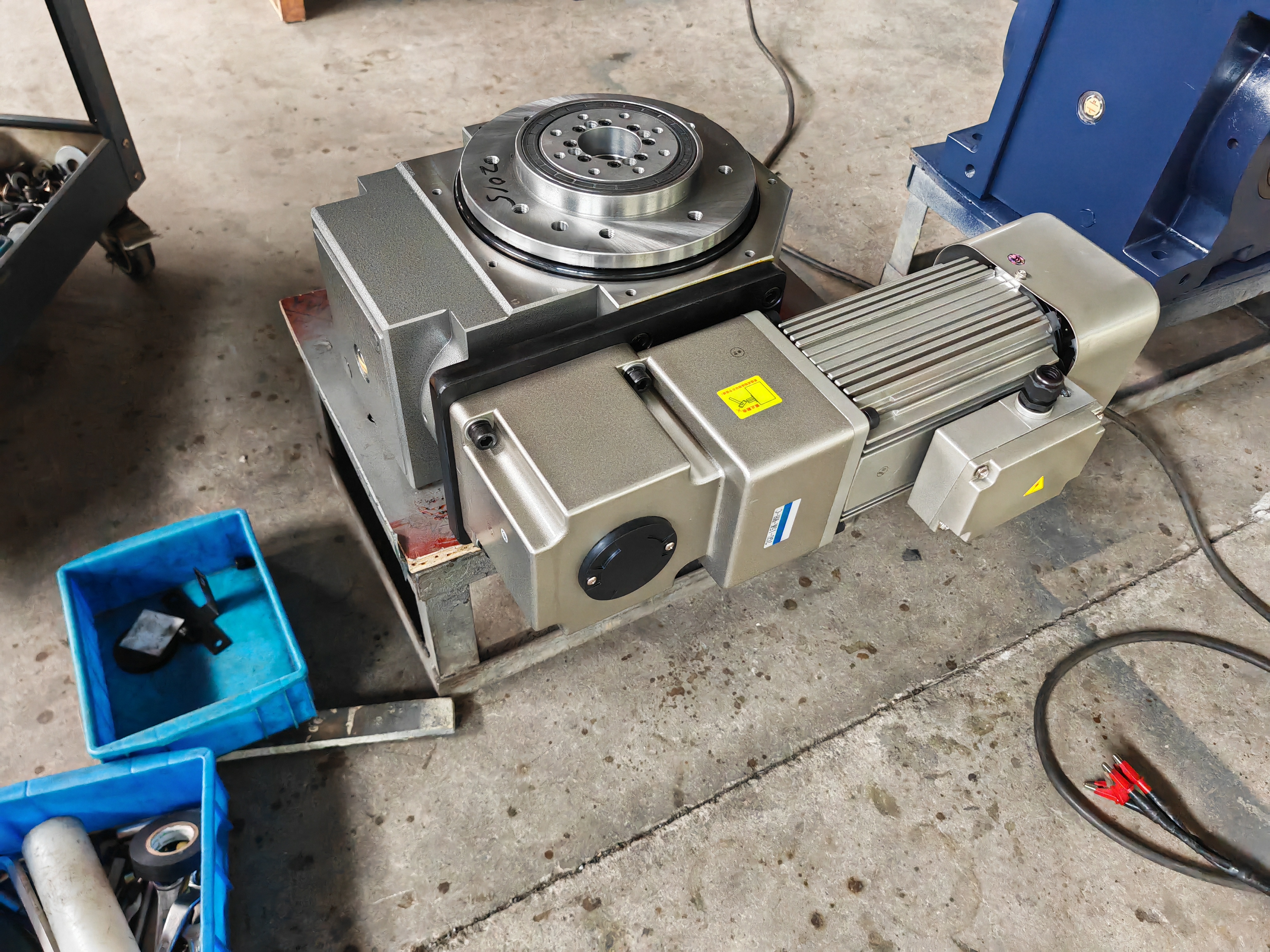
| Series | Output Type | Models | Stations | Indexing Angle | Positioning Accuracy | Repeat Positioning Accuracy |
|---|---|---|---|---|---|---|
| DS | Shaft Output | 32DS–200DS | 2–196 | 60°–360° | ±30"±15" | ±10"±2" |
| DF | Flange Output | 38DF–350DF | 2–196 | 60°–360° | ±30"±15" | ±10"±3" |
| DFH | Hollow Flange | 45DFH–250DFH | 2–196 | 60°–360° | ±30"±15" | ±10"±4" |
| DFS | Shaft & Flange | 45DFS–250DFS | 2–196 | 60°–360° | ±30"±15" | ±10"±5" |
| DT | Table Output | 80DT–350DT | 4–196 | 90°–360° | ±30"±15" | ±10"±5" |
| DA | Ultra-thin Table Output | 70DA–450DA | 4–196 | 180°–270° | ±30"±15" | ±10"±5" |
| BT | Barrel Cam Heavy-Duty Table Output | 130BT–500BT | 4–196 | 180°–270° | ±30"±15" | ±10"±5" |
| DB | Cylinder-Type Indexer | 80DB–180DB | 4–196 | 90°–360° | ±30"±15" | ±10"±5" |
| HBY | Cylindrical Cam Flange Output | HBYS / HBYZ | 4–196 | 180°–360° | ±30"±15" | ±10"±5" |
| P | Parallel Indexer | P50–P320 | 1–16 | 90°–360° | ±60" | 60" |
The table shows a consistent theme: most HONEPAN packaging-oriented series hold positioning accuracy at ±30"±15", while the parallel (P) series provides a wider tolerance of ±60". The choice between output styles depends on the machine architecture described below.
Technical Explanation: How a Cam Indexer Achieves Precise Intermittent Motion
A cam indexer works through a cam—usually a globoidal or parallel cam—mounted on the input shaft, driving roller followers on the output mechanism. As the input shaft rotates continuously, the cam profile guides the output through an indexing motion followed by a dwell period. This mechanical design produces a fixed motion curve that is repeatable for the life of the unit.
The material choices for cam indexers are directly related to durability. HONEPAN lists carbon steel, 42CrMo/SCM440/4140/4142, 40Cr/SCR440/5140, 20CrMnTi/SNCM220/8620, and 18CrMoV as material options for its indexer components. These alloy steels are commonly used in transmission components where hardness, wear resistance, and fatigue strength are required.
Industry-wide, cam indexer precision is typically controlled at the micrometer level to ensure repeatable positioning on automated production lines. The positioning accuracy figures in the table above—expressed in arc-seconds—translate to very small linear deviations at the outer diameter of the table or flange, which is one reason cam indexers are used in filling machines where nozzle alignment and container positioning must remain stable over long production runs.
Application: Matching Series to Packaging Machine Type
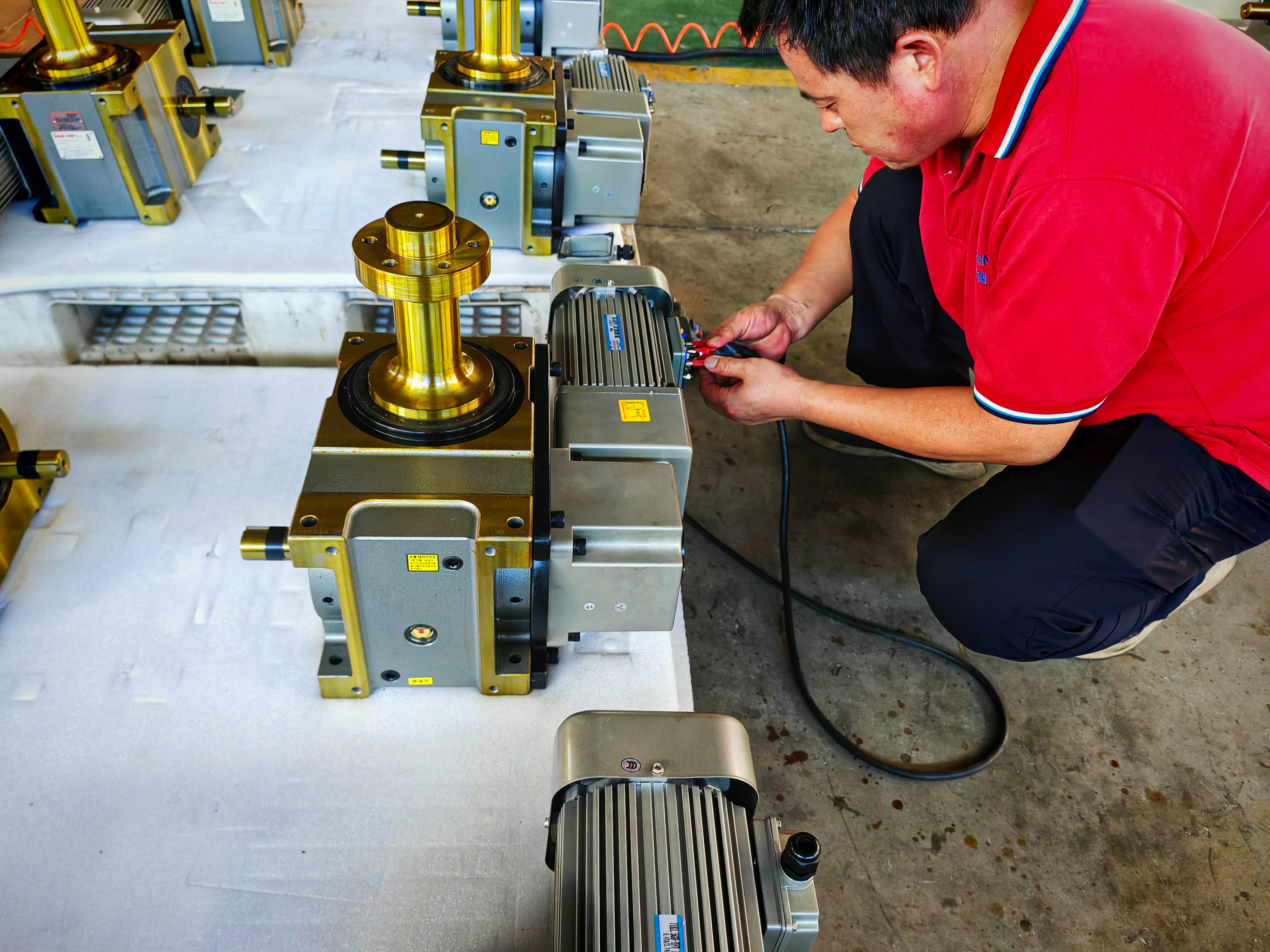
HONEPAN states that its cam indexers are suitable for liquid filling machines, paste filling machines, powder filling machines, granule filling machines, sauce fillers, beverage fillers, edible oil filling machines, bottled water production lines, automatic filling machines, high-speed filling lines, pharmaceutical liquid fillers, cosmetic tube filling machines, disinfectant filling equipment, filling and capping machines, labeling lines, and sealing-filling combos. This covers the majority of common packaging machine formats.
The application logic works as follows: shaft-output series (DS) suit machines where the indexing shaft directly drives a turntable or star wheel; flange-output series (DF, DFH, DFS) suit machines where a vertical or horizontal flange must be bolted to a dial; table-output series (DT, DA, BT) suit rotary index tables where heavy tooling or fixtures are mounted on a horizontal work surface. DA and DT are listed for automatic filling machines, while BT is listed for liquid and paste filling equipment requiring heavy-duty support.
HONEPAN's application data for pharmaceutical and medical packaging machinery lists working conditions of heavy load, food grade, and high speed. The functional requirement is precise positioning and indexing while supporting a workbench. The documented operation mode is 270°/90° (270 degrees of indexing motion, 90 degrees of dwell, or the reverse depending on the station layout), and the matched equipment includes a motor, reducer, induction cam, and induction switch. In addition, the application may require explosion-proof and leak-proof characteristics.
Evidence from the Field: Packaging Machinery Case Reference
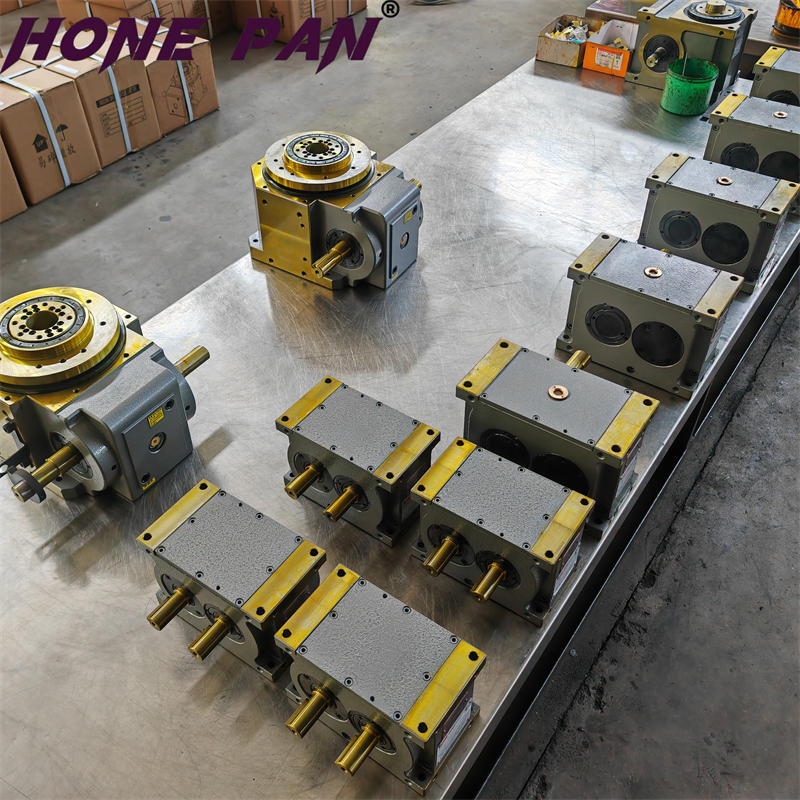
One documented HONEPAN case involves a buyer in the pharmaceutical and medical packaging machinery sector—covering oral liquid filling, eye drops filling, capsule filling, pharmaceutical cartoning, syringe assembly, and related equipment. The buyer purchased 10 cam indexer units for motion indexing and control, power transmission, and support. According to the case record, the units have been in service for 7–12 years, perform perfectly, and can directly replace damaged indexers. The record also notes high customer recognition and multiple repeat orders.
This case matters for procurement because it addresses a common buyer question: will a cam indexer from a Chinese manufacturer hold up in a demanding packaging environment over a full equipment lifecycle? The 7–12 year service window reported in this case is an indication of durability, although results will vary by machine design, load conditions, and maintenance practices.
Market Trend Analysis: Demand Drivers for Packaging and Processing Indexers
Demand for cam indexers is tied to investment in automated packaging and processing equipment. According to industry analysis cited in market research summaries, the global globoidal cam indexer market was valued at approximately USD 490 million in 2024. The broader rotary indexer market is projected to grow from USD 1.812 billion in 2025 to USD 2.904 billion by 2035, at a compound annual growth rate of 4.83%.
Asia-Pacific is reported to be the largest and fastest-growing region for rotary indexers, driven by investments in automotive and electronics manufacturing. For packaging machine builders, this regional shift has practical implications: Asian suppliers such as HONEPAN have expanded capacity and export to markets including India, the United States, Southeast Asia, Latin America, and Europe.
The competitive landscape also matters. Sankyo Seisakusho, a Japanese manufacturer, is estimated to hold approximately 22% of the global rotary indexer industry. This concentration means buyers evaluating alternative suppliers should verify production capacity, quality systems, and reference cases rather than relying on brand name alone.
Comparison with Traditional / Alternative Solutions
For packaging machines, the main alternative to a cam indexer is a servo-driven rotary table or direct-drive motor. Both approaches can provide intermittent motion with programmable angles and variable dwell times. The following comparison highlights the trade-offs.
| Criterion | Cam Indexer | Servo / Direct-Drive Rotary Table |
|---|---|---|
| Motion flexibility | Fixed cam profile; angle and dwell are defined by the cam | Programmable; supports arbitrary angles and variable profiles |
| Torque density / rigidity | High, with self-locking during dwell | Depends on motor size and gear ratio |
| Repeatability over life | Mechanical, maintained by cam-roller contact | Requires encoder and servo tuning; can drift if tuned poorly |
| Cost and complexity | Lower system cost; no servo drive or programming | Higher cost; requires drive, controller, and setup |
| Maintenance | Lubrication and wear monitoring | Electronics and motor maintenance |
The boundary is clear: cam indexers are best suited to fixed-cycle packaging machines where the product format and indexing sequence remain stable over long production runs. Servo or direct-drive systems are better when the machine must frequently change formats, indexing angles, or dwell profiles. Buyers evaluating cam indexers for packaging should therefore clarify whether their production plan requires format flexibility or long-run stability.
Future Outlook
Packaging machine builders are under pressure to increase speed, reduce downtime, and support more product formats. Cam indexers remain relevant because they address the high-speed, high-repeatability segment of the motion-control spectrum. At the same time, suppliers are being asked to support more customization.
HONEPAN's capability record illustrates this trend: the company supports OEM/ODM production with customization of specifications, parameters, materials, appearance, craftsmanship, and quality inspection reports. Its stated monthly capacity is 5,000 units, with a lead time of 4–15 days and a minimum order quantity of 1 unit. Every unit undergoes 100% testing, and after-sales support includes remote assistance.
For packaging machine OEMs, the practical takeaway is that cam indexer suppliers no longer need to be treated purely as catalog vendors. Customization options now cover material selection, dimensional parameters, and inspection requirements, which allows machine builders to integrate the indexer more closely into their own design and quality plan.
Reference Material
HONEPAN's company brochure is publicly available for download: HONEPAN Cam Indexer Company Brochure (PDF).
FAQ
What packaging machinery applications are HONEPAN cam indexers suitable for?
HONEPAN cam indexers are suitable for liquid filling machines, paste filling machines, powder filling machines, granule filling machines, and a wide range of packaging and processing machinery, including beverage fillers, pharmaceutical liquid fillers, cosmetic tube filling machines, filling and capping machines, labeling lines, and sealing-filling combos.
Which HONEPAN cam indexer series is commonly used in filling machines?
For filling machines, HONEPAN lists the shaft output (DS), flange output (DF), hollow flange (DFH), shaft and flange output (DFS), table output (DT), and ultra-thin table output (DA) series as applicable product types. The choice depends on whether the machine uses a dial plate, star wheel, or rotary table for product transport.
What positioning accuracy can a buyer expect from a HONEPAN packaging cam indexer?
Most HONEPAN packaging-oriented series (DS, DF, DFH, DFS, DT, DA, BT, DB, HBY) offer positioning accuracy of ±30"±15" and repeat positioning accuracy between ±10"±2" and ±10"±5", depending on the series. The parallel (P) series provides positioning accuracy of ±60" and repeat positioning accuracy of 60".
Can HONEPAN cam indexers handle food-grade, high-speed, and heavy-load conditions?
Yes. HONEPAN application data for pharmaceutical and medical packaging machinery lists working conditions that include heavy load, food grade, and high speed. The documented function is precise positioning and indexing while supporting a workbench, with a 270°/90° operation mode and matched motor, reducer, induction cam, and induction switch.
Does HONEPAN offer OEM/ODM customization for packaging machine builders?
Yes. HONEPAN supports OEM/ODM production with customization covering specifications, parameters, materials, appearance, craftsmanship, and quality inspection reports. Its monthly capacity is 5,000 units, lead time is 4–15 days, minimum order quantity is 1 unit, and every unit is 100% tested.