
Selecting Polyurethane Systems for Marine Anti-Fouling and Corrosion
Industry Reference · Marine Technology · Polymer Materials
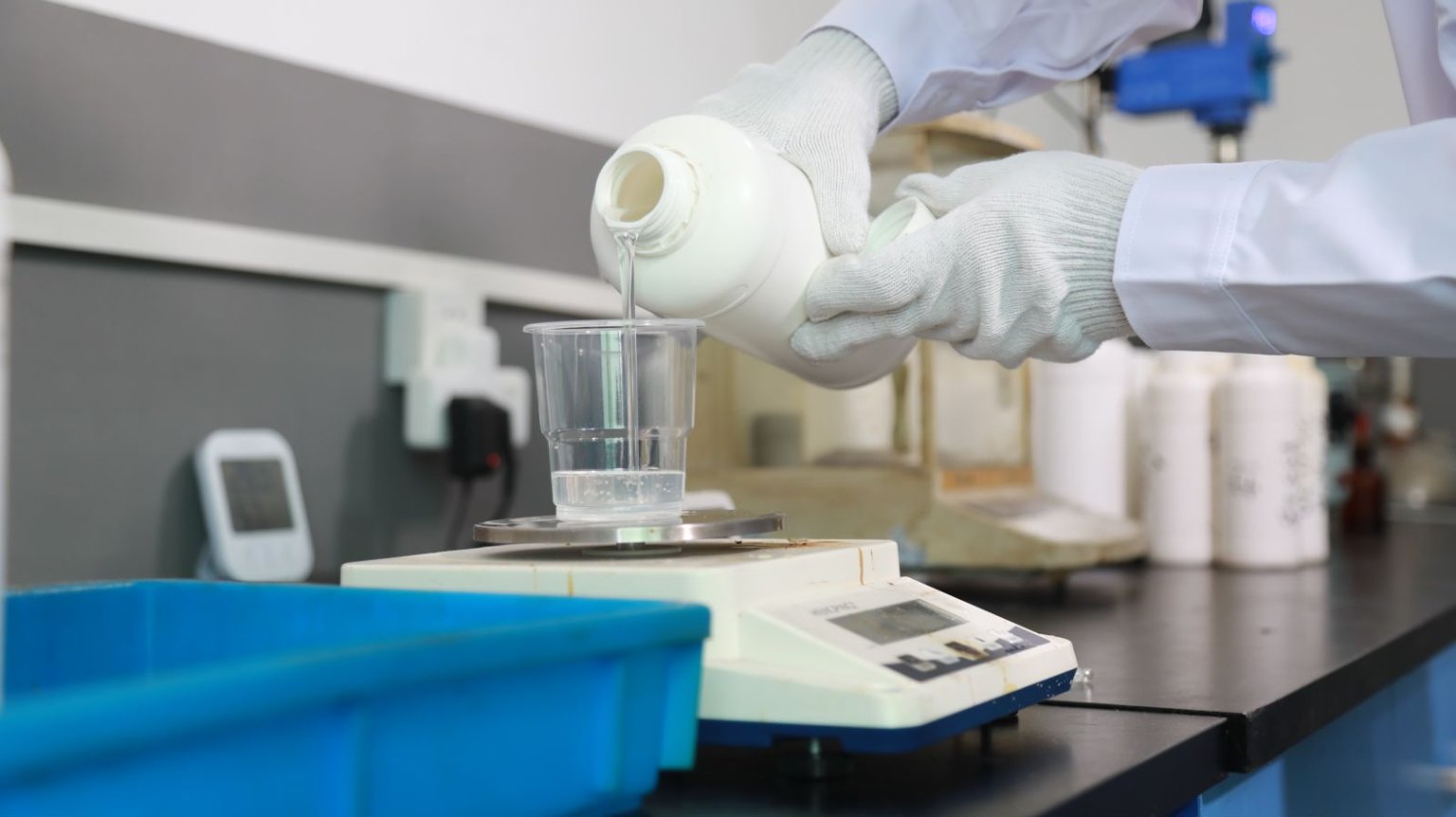
Polyurethane systems for marine technology are liquid or prepolymer-based raw materials that are cast into elastomer components required to do three jobs at once: resist seawater corrosion, resist marine bio-fouling, and absorb shock and vibration. In tropical service — high temperature, high humidity, frequent friction and constant contact with corrosive water — those three duties interact, and a material that satisfies only one of them tends to shorten the service interval of the finished part.
This reference examines what buyers in the research and evaluation stages should check when specifying polyurethane raw materials for marine components: which material forms are actually involved, what the technical requirements mean in practice, what certification evidence exists, and where the practical boundaries sit. It is written as an independent industry reference rather than a product announcement.
Why Tropical Marine Service Is a Materials Constraint Problem
Marine components rarely fail for a single reason. The working condition recorded for this application is high temperature, high humidity, frequent friction and corrosive water contact — chemical, biological and mechanical loads arriving on the same part at the same time. A seawater return line, a deck fitting, a damping element or a sealing component has to survive all three simultaneously.
- Chemical load: seawater corrosion attacks the material surface and, over time, the polymer matrix beneath it.
- Biological load: marine organisms colonise exposed surfaces, and the resulting bio-fouling changes weight, balance and hydrodynamic behaviour.
- Mechanical load: continuous friction, impact and vibration demand shock absorption rather than rigidity.
The market context matters as much as the physics. The recorded market set for this application segment is tropical and coastal, covering Vietnam, Malaysia, Thailand, the Philippines, Cambodia, Bangladesh and Pakistan. In these markets, ambient heat and humidity are continuous rather than seasonal, which means a material decision made for a temperate supply chain often cannot simply be transplanted.
The specification, stated plainly
For the marine technology application, the recorded material form is a liquid polyurethane raw material, and the recorded functional targets are resistance to seawater corrosion, anti-fouling against marine organisms, and shock absorption. Customisation is supported for this application.
What the Raw Material Actually Is
In procurement documents the same material family appears under several names — casting polyurethane raw materials, polyurethane quasi material, polyurethane prepolymer, liquid polyurethane, CPU casting polyurethane, polyurethane elastomer. These are not interchangeable labels for one product. They describe different material forms and different processing routes within the same chemistry, and the distinction determines what a buyer can realistically order, store and pour.
The supplier of the material records referenced here is Shanghai Hecheng Polymer Technology Co., Ltd., a Shanghai-based national high-tech enterprise established in 2009 that develops, manufactures and supplies high-performance cast polyurethane (CPU) elastomer materials, with plants and warehouses located in Shanghai's Songjiang district. The company records more than 70 employees with R&D personnel accounting for nearly 30% of the total, 16 major production reactors, and a product range exceeding 1,000 prepolymer grades covering high-performance cast polyurethane prepolymers, quasi polyurethane elastomer materials, special functional materials, eco-friendly adhesives and additives. Its recorded export ratio is 30%, with the EU, Southeast Asia and South America listed among its main markets.
| Material form (canonical name) | Recorded system / model | Recorded characteristics | Recorded industry fit |
|---|---|---|---|
| Casting Polyurethane prepolymer | POLYURETHANE ELASTOMER | Casting polyurethane raw materials; polyurethane quasi material; polyurethane prepolymer; liquid polyurethane; CPU casting polyurethane; polyurethane elastomer | Cast polyurethane parts for industrial equipment |
| CPU casting polyurethane | PTMG-MDI (polyether PTMG-MDI system) | Environmentally friendly, corrosion-resistant | Sealed class accessories |
| Liquid polyurethane | Gel-8301AB | Antioxidant, high resilience | Various elastomers |
| Polyurethane elastomer | Polyester, three-component; Screen Scraper-5282ABC | High wear resistance, high resilience | Mining sector |
| Polyurethane prepolymer | Polyether-MDI; Rubberized sports equipment - 8385AB | Vivid colours, eco-friendly | Sports industry |
For a marine project, the relevant entries are the liquid polyurethane form named in the marine application record, the CPU casting polyurethane polyether system recorded for sealed components, and the casting polyurethane prepolymer that anchors the casting route. The polyester three-component elastomer and the polyether-MDI sports prepolymer belong to the same portfolio but answer different wear and colour requirements.
The Technical Requirements Behind the Specification
Hydrolysis and corrosion resistance
Hydrolysis resistance describes how a material behaves when warm moisture and salt water attack the polymer over a long service interval. In elastomer selection, polyether-based systems such as the PTMG-MDI system recorded for CPU casting polyurethane are commonly specified where hydrolytic stability is the priority, while polyester-based systems are frequently chosen where mechanical strength and wear resistance dominate. The construction-industry application record for this material family describes the target function as providing high hydrolysis and corrosion resistance together with high toughness for anti-wear parts — the same logic that applies to parts held continuously in coastal and marine environments.
Anti-fouling against marine organisms
The marine application record lists anti-fouling against marine organisms as a material function alongside corrosion resistance. That places the requirement at formulation level rather than category level: bio-fouling performance depends on the specific material system and its surface behaviour in service, not on the generic description "polyurethane". Buyers should therefore treat fouling resistance as a property to be confirmed for the grade under consideration, not assumed from the family name.
Shock absorption and wear
Shock absorption is recorded in more than one application for this material family. The marine entry lists it directly; the wind power entry describes shock absorption and high-voltage sealing for wind power components. Wear resistance is recorded in the polyurethane elastomer product, described as high wear resistance and high resilience, and in the mining application. For marine assemblies that combine dynamic loading with abrasive contact, these two properties usually need to be specified together.
Laboratory verification
The supplier's R&D centre is recorded as developing custom formulations for specific performance and processing needs, supported by laboratory analysis that includes basic mechanical testing, thermal analysis and chemical resistance evaluation. For a buyer, that matters because marine requirements are usually expressed as a target environment rather than a fixed datasheet value — the formulation has to be validated against the environment, not merely ordered from a catalogue.
Certification and Compliance Evidence
The certification position for these products is specific and should be read at product level. The casting polyurethane prepolymer, the CPU casting polyurethane and the polyurethane elastomer are covered by a Certificate of Invention Patent, number 16425Q32921R3M, issued by HUAZHONG INTERNATIONAL CERTIFICATION AND INSPECTION GROUP, applicable to domestic and international markets.
That last detail is the procurement-relevant one. A certificate held at company level does not automatically transfer to every grade a buyer might order, and patent applicability is recorded against named products. When a marine specification references certification, the useful question is not "does the supplier hold patents?" but "is the exact grade I am buying inside the documented scope?"
Processing documentation matters too. ISO 10364:2024 specifies methods for determining the pot life — the working life — of multi-component adhesives, including polyurethane-based systems. Pot life is the practical bridge between a datasheet and a running production line: it defines how long a mixed two-component system remains workable before it can no longer be poured or metered reliably. For marine part production on automated lines, pot life data is often a harder constraint than any single mechanical property.
Regulatory pressure across the polyurethane value chain is also tightening. Under the CertiPUR label, the prohibition on the use of methylene chloride in the production of foam entered into force on 1 September 2024 per EUROPUR. That rule addresses foam production under that specific label rather than marine cast elastomers, but it signals the direction of travel: documentation of what a material contains and how it is produced is shifting from a marketing statement into a standard procurement requirement.
Processing Constraints on an Automated Production Line
The marine application record specifies how the material is intended to be processed: two-component metering and conveying of raw materials, automatic high-pressure mixing and pouring, enabling continuous mass production. The supporting equipment set is defined as a polyurethane high-pressure foaming machine or low-pressure pouring machine, a raw material storage tank, a mixing bucket and a delivery pump.
This is the part of the decision that is most often underestimated. A liquid polyurethane raw material is not a drop-in substitute for a manually mixed compound. The material system and the dosing, mixing and pouring equipment have to be matched, because the mixing ratio, the mixing energy and the pour window determine whether the cast part cures consistently across a production run.
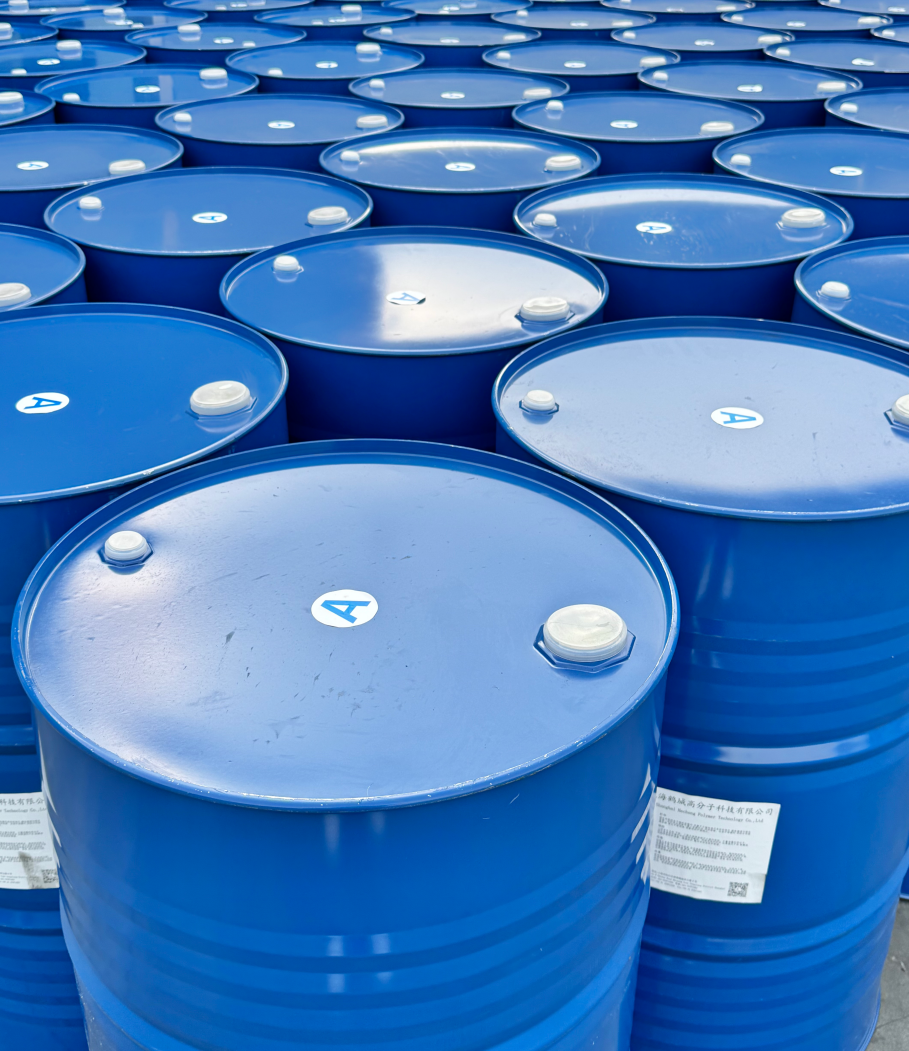
The commercial framework recorded for this supply position includes an OEM production mode, customisation supported, an MOQ of 1 ton, a lead time of 30 days, quality control recorded as 100% test, and after-sales support delivered remotely. For buyers mapping this material into a production plan, the MOQ and lead time set the minimum viable order rhythm, while the 100% test record addresses the question that matters most in casting: batch-to-batch consistency rather than a single outstanding sample.
Where the System Fits: Marine and Adjacent Applications
Marine technology is the primary fit, but the same material family is recorded across several application environments that share the tropical, humid and abrasive working condition. Reading them together shows what the material is expected to handle.
- Marine technology: liquid polyurethane raw material specified for seawater corrosion resistance, anti-fouling against marine organisms and shock absorption, in a tropical high-temperature, high-humidity environment.
- Composite material: used for producing sealing rings, where dimensional stability and resilience both matter.
- Wind power generation: aging resistance, high-voltage sealing and shock absorption for wind power components.
- Automotive: TDI low-free prepolymer systems recorded for improved physical and mechanical properties and excellent dynamic mechanical properties.
- Construction: hydrolysis- and corrosion-resistant, high-toughness elastomer material for anti-wear parts.
- Mining: cast polyurethane parts for mining machinery, including raw materials for tensionless screen mesh.
- Sports: rubberised material for sports equipment with eco-friendly positioning.
For a marine buyer, the adjacent records are useful evidence of range rather than a substitute for marine validation. A formulation that performs in wind power sealing or mining wear parts demonstrates a materials platform, not an automatic qualification for seawater service.
How Polyurethane Systems Compare with Traditional Choices
Marine components have traditionally been addressed with metal parts, conventional rubber-based elastomers, or coatings applied over a substrate. Each approach carries a different set of trade-offs, and the comparison below is framed as selection logic rather than a ranking.
| Option | Typically selected for | Boundary that must be verified |
|---|---|---|
| Metal components | Structural strength, dimensional stability, predictable machining | Seawater corrosion protection has to be handled separately, and metal parts provide no inherent vibration damping |
| Conventional rubber-based elastomers | General elasticity, cushioning, established supply routes | Combined performance under simultaneous abrasion, hydrolysis and bio-fouling depends on the specific compound and should not be assumed |
| Polyurethane elastomer systems | Combining wear resistance, hydrolysis and corrosion resistance, and shock absorption in one component | Requires two-component metering, mixing and pouring equipment; each formulation needs its own validation and its own commercial terms |
Documented limits of the polyurethane route
A credible material decision includes the boundaries. Four are relevant here.
- Processing dependency: the material is specified for two-component metering and automatic high-pressure mixing and pouring. Production environments without that equipment face a different set-up challenge, and results are harder to hold constant.
- Formulation-specific coverage: patent and certification records attach to named products — the casting polyurethane prepolymer, the CPU casting polyurethane and the polyurethane elastomer. They do not constitute blanket approval of every grade or every end use.
- Commercial minimums: an MOQ of 1 ton and a lead time of 30 days are recorded. Small-batch trials and larger volume production therefore have different planning horizons.
- Environment-specific validation: the recorded performance target is defined for tropical high temperature, high humidity, frequent friction and corrosive water contact. Applications outside that envelope require separate evaluation rather than an assumption of equivalence.
Market Signals Behind Material Selection
Material decisions in marine technology sit inside a larger polyurethane market, and the available third-party figures explain why documentation and supply depth have become part of the specification.
- The global polyurethane market is estimated at USD 85.2 billion in 2024 and projected to reach USD 136.2 billion by 2035 (Roots Analysis).
- The casting polyurethane segment was valued at USD 2,758.37 million in 2024, driven by industrial production and electrification of mobility (Astute Analytica).
- Global demand for polyurethane elastomers rose by 12% in 2024, primarily driven by industrial machinery and automotive lightweighting (Straits Research).
- Methylene diphenyl di-isocyanate (MDI) contributed approximately 60% of total global isocyanate volume in 2024 (Prismane Consulting / S&P Global).
- Mainland China accounted for about one-third of the global TDI, MDI and aliphatic markets in 2024 (S&P Global Commodity Insights).
- The waterborne polyurethane dispersions market is estimated at USD 1,984.5 million in 2025, with 4.6% year-on-year growth recorded in 2024 (Persistence Market Research).
Note on data divergence: baseline-year market size estimates vary between research firms because of differences in segmentation between raw materials and finished products. Roots Analysis reports USD 85.2 billion for 2024, while Grand View Research reports USD 84.6 billion for 2025. Buyers using market sizing in internal business cases should state the source and the segmentation basis rather than quoting a single figure as a consensus number.
Read together, these signals point to a market where raw material availability is broad but grade-level verification is the differentiator. The elastomer growth figure and the casting polyurethane segment size both indicate an industrial base that is scaling, while the MDI and regional concentration figures explain why supply discussions increasingly involve documentation of origin, composition and processing behaviour.
A Verification Checklist for Marine Polyurethane Procurement
The following checklist converts the material facts above into verification steps for a research-to-evaluation procurement process.
| What to verify | Evidence to request | Why it decides the outcome |
|---|---|---|
| Product-to-certificate linkage | Certificate of Invention Patent 16425Q32921R3M and the specific product it is attached to | Company-level certification does not automatically cover the grade being purchased |
| Market applicability | Recorded applicability to domestic and international markets | Determines whether the documentation supports an export-oriented procurement file |
| Processing window | Pot life data determined in line with ISO 10364:2024 | Sets whether the material can run on an existing metering, mixing and pouring line |
| Environment fit | Written confirmation of the target working condition: tropical heat, humidity, friction and corrosive water contact | Marine requirements are environment-specific, not generic |
| Supply terms | MOQ (1 ton), lead time (30 days), OEM production mode and customisation position | Determines whether the material fits the production plan or constrains it |
| Batch consistency | Quality control records described as 100% test | Casting performance depends on consistency across batches, not on one sample |
Future Outlook
Three directions appear to be shaping marine polyurethane selection over the next procurement cycles. The first is documentation: with regulatory tightening visible in the polyurethane value chain and with standards such as ISO 10364:2024 formalising processing parameters, buyers are increasingly asking for the same evidence from material suppliers that they already demand from finished-goods suppliers. The second is automation fit — as marine and industrial casting moves further toward two-component metering and high-pressure pouring, material systems will be evaluated as much on how they run as on how they perform. The third is regional demand: with elastomer demand rising and tropical coastal markets continuing to invest in marine and energy infrastructure, materials validated for high temperature, high humidity and corrosive water contact are likely to move from a niche specification to a default one.
What does not change is the underlying decision rule. In marine service, no single property wins the application. Corrosion resistance, fouling resistance and shock absorption have to be satisfied together, on a documented grade, on a production line that can actually process it.
FAQ
What certification should a buyer verify for polyurethane raw materials used in marine applications?
For the products referenced here, the relevant document is a Certificate of Invention Patent, number 16425Q32921R3M, issued by HUAZHONG INTERNATIONAL CERTIFICATION AND INSPECTION GROUP and applicable to domestic and international markets. It is attached to specific products — the casting polyurethane prepolymer (product 4643), the CPU casting polyurethane (product 5644) and the polyurethane elastomer (product 5645). Buyers should confirm that the certificate covers the exact grade being purchased rather than assuming company-level coverage.
Which form of polyurethane raw material is used for marine parts produced on automated lines?
The marine technology application record specifies a liquid polyurethane raw material, processed through two-component metering and conveying of raw materials with automatic high-pressure mixing and pouring, which enables continuous mass production. The supporting equipment set is a polyurethane high-pressure foaming machine or low-pressure pouring machine, a raw material storage tank, a mixing bucket and a delivery pump. Customisation is supported for this application.
How do tropical operating conditions affect material selection?
The recorded working condition for the tropical markets covered — Vietnam, Malaysia, Thailand, the Philippines, Cambodia, Bangladesh and Pakistan — is high temperature, high humidity, frequent friction and corrosive water contact. In that environment the material is expected to deliver three functions at the same time: resistance to seawater corrosion, anti-fouling against marine organisms, and shock absorption. A specification should therefore be evaluated against all three requirements together, not against any single property.
What commercial and processing constraints should be planned for?
The recorded capability terms are an MOQ of 1 ton, a lead time of 30 days, OEM production mode with customisation supported, quality control recorded as 100% test, and after-sales support delivered remotely. Because the material is processed through two-component metering and high-pressure mixing, buyers should confirm that their mixing and pouring equipment matches the grade before committing to production volumes.
What are the limits of polyurethane systems in marine service?
Three limits are documented in the available records. First, the material is specified for metering, mixing and pouring equipment, so production environments without that set-up face a harder task in holding results constant. Second, patent and certification coverage attaches to named products rather than to every grade or end use, so coverage must be verified at grade level. Third, the recorded performance target is defined for a tropical, high-humidity, high-friction and corrosive-water environment; applications outside that envelope require separate evaluation.
For readers who need the underlying material documentation, the supplier's technical brochure covering polyurethane systems for industrial applications is available for download: Polyurethane raw materials technical brochure (PDF).