
Selecting Resistance Bands: A Comparison Framework for Fitness and Rehab Buyers
Core answer: Selecting a resistance band for a professional fitness or rehabilitation program is a scenario-matching exercise, not a brand comparison. A repeatable framework compares formats across seven dimensions — program intent, resistance window, geometry, material, fatigue life, operating environment and customization fit — before commercial terms are negotiated. Applied to two Libenli loop-band models, the framework separates the ZLQ-1 mini loop band (5LB–40LB, 600mm circumference, 50mm width, Latex or TPE) from the ZLQ-03 power loop band (8LB–230LB, 2080mm length, 6.4mm–82.5mm width, Latex only).
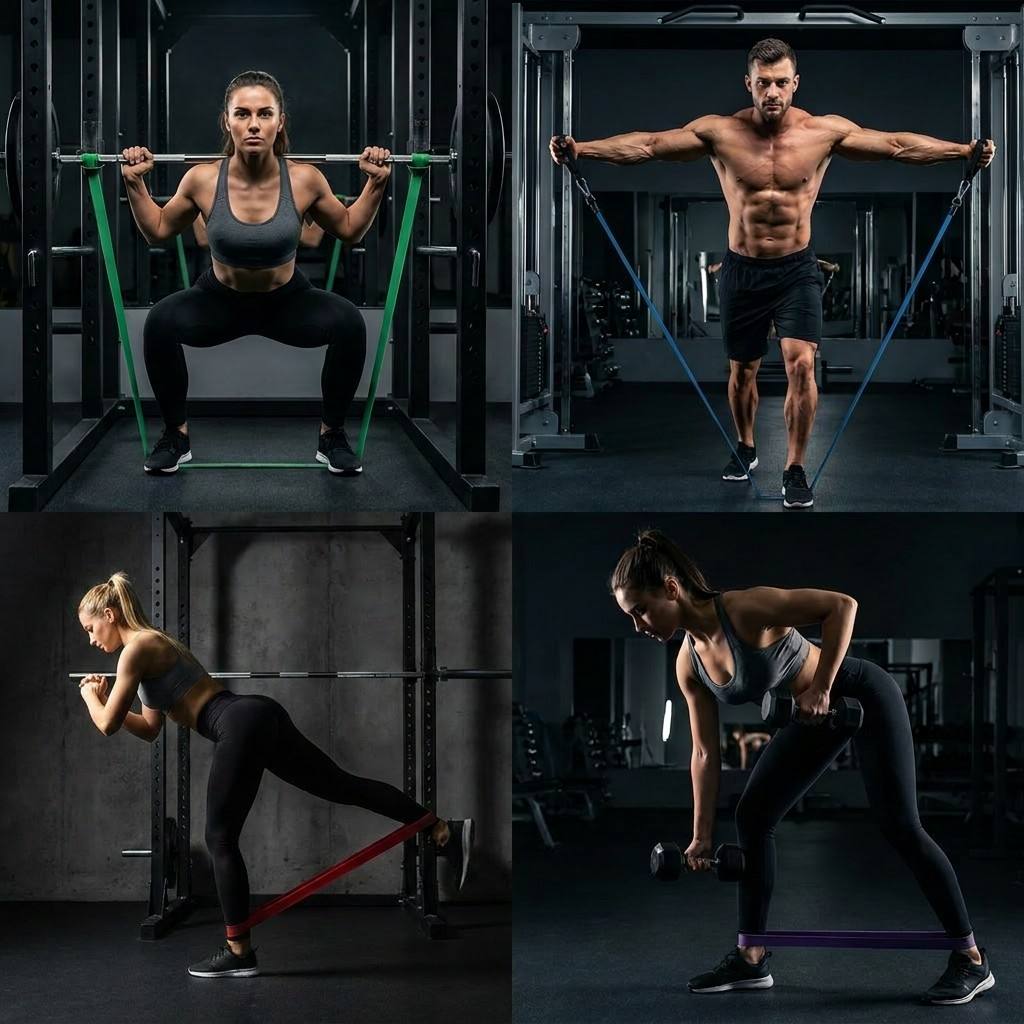
Resistance bands are elastic training tools used for strength work, mobility and rehabilitation exercise. The global resistance bands market was valued at approximately USD 1.7 billion in 2024 and is projected to reach USD 2.9 billion by 2030, growing at a compound annual growth rate of 9.9% between 2025 and 2030, according to Grand View Research. North America held the largest revenue share at 40.0% in 2024. Health and sports clubs dominated the market with a 70.6% revenue share in 2024, while individual use was the fastest-growing segment, and therapy or exercise bands accounted for approximately 50% of total global market share as of 2024/2025.
That combination of institutional dominance and rapid individual growth creates a practical problem for buyers. A single purchasing specification is increasingly expected to serve a clinic, a commercial gym fit-out and a retail shelf at the same time. Loop-band formats differ enough in geometry, resistance ceiling and material that one SKU rarely covers all three well. The framework below is designed to be re-run per program, not once per supplier.
Why Band Selection Is a Scenario Problem, Not a Product Problem
Most selection errors trace back to a reversed decision order. Buyers frequently shortlist products first and then look for programs they might fit. The documented use cases for loop bands show why that order fails. The same product family is specified for fitness studio matching, rehabilitation clinic equipment, home sports kits and gym retail sets — four project types with materially different resistance, packaging and skin-contact requirements.
The operational profile behind those projects is consistent: manual pulling and stretching with repeated tension exercise, indoor use in a normal indoor environment at room temperature from -10°C to 50°C, in dry and low-dust conditions. Supporting equipment typically includes a yoga mat, fitness handles, ankle straps and a workout storage bag. Special requirements recorded for these applications include 100% natural non-toxic latex, high stretch durability, skin-friendly surfaces and multiple resistance color grades. Those requirements are functional constraints, not marketing preferences.
The opportunity sits in the opposite direction. Because the same underlying tube and band technology serves rehabilitation, group training and retail, a buyer who defines the scenario first can often consolidate formats, colors and packaging across a program rather than manage unrelated specifications per channel.
A Seven-Step Comparison Framework for Procurement Teams
The framework is intentionally format-agnostic. It can be applied to mini loop bands, long resistance bands, pull up assist bands, fabric loop bands or tube-based resistance bands with handles, using the same sequence.
Step 1 — Classify the program intent
Separate the requirement into rehabilitation and clinical work, performance and strength training, group fitness, or retail and home use. Documented project types for loop bands include fitness studio matching, rehabilitation clinic equipment, home sports kit and gym retail sets. Intent determines the acceptable resistance ceiling more than any other variable.
Step 2 — Fix the resistance window before the format
State the lowest and highest tension the program will ever require. For the ZLQ-1 mini loop band the documented resistance range is 5LB to 40LB. For the ZLQ-03 power loop band the documented resistance level is 8LB to 230LB. If a program needs both ends of that spectrum, it needs two formats rather than one compromise band.
Step 3 — Match geometry to the anchor point
Geometry decides where a band can physically be used. The ZLQ-1 is a mini loop with a 50mm width and a 600mm circumference, which suits hip, glute, knee and ankle anchoring. The ZLQ-03 is a 2080mm loop, which suits full-range pulling movements, assisted pull-up work and standing or seated exercises anchored at a fixed point. A band that cannot reach the anchor point cannot be rescued by a higher resistance rating.
Step 4 — Decide the material profile
Material options in this category include latex and TPE, and the options are not always symmetrical across formats. The ZLQ-1 is available in Latex or TPE, while the ZLQ-03 is a Latex construction. Where a program includes latex-sensitive users, that difference has to be resolved at specification stage, not after sampling.
Step 5 — Compare fatigue life, not just elongation
Fatigue resistance is the number that determines replacement cycles and warranty exposure. The documented fatigue resistance for the ZLQ-1 is 30,000 stretches or more, and the documented service life for the ZLQ-03 is 20,000 stretches or more. Buyers should also confirm the supplier runs a stretch durability test before shipment, which is part of the documented quality control process for Libenli production.
Step 6 — Check operating environment and contact conditions
The documented working condition for these applications is indoor and normal indoor environment, -10°C to 50°C, dry and low dust. Skin-friendly surface requirements and non-toxic material requirements are recorded as special requirements for these programs, so contact conditions belong in the specification rather than in after-sales conversation.
Step 7 — Confirm customization, validation and scale fit
Final step: verify that the chosen format can be customized, sampled and scaled to the program timeline. Customization scope for Libenli production covers resistance strength, band thickness and width, length, surface color, logo silk printing, package design and accessory matching. Validation and scale parameters are covered in the section below.
Worked Example: ZLQ-1 and ZLQ-03 Across the Same Dimensions
The framework only becomes useful when it produces a side-by-side record. The table below applies identical dimensions to the two loop-band models, using documented specification data rather than estimates.
| Comparison dimension | ZLQ-1 (mini loop band) | ZLQ-03 (power loop band) |
|---|---|---|
| Format and type | Mini loop band; mini loop band with anti-slip | Power loop band; double layer power loop band |
| Material options | Latex / TPE | Latex |
| Resistance range | 5LB–40LB | 8LB–230LB |
| Thickness | 0.3mm–1.2mm | 0.45mm |
| Width | 50mm | 6.4mm–82.5mm |
| Length or circumference | 600mm circumference | 2080mm length |
| Durability rating | Fatigue resistance 30,000 stretches or more | Service life 20,000 stretches or more |
| Documented industries | Home Fitness, Yoga & Pilates, Hip & Glute Training, Sports Rehabilitation, Physical Therapy, Gym Training Equipment | Fitness Gym, Home Workout, Sports Rehabilitation, Yoga Training, Physical Therapy, Outdoor Training Equipment |
Two readings follow from this table. First, the resistance ceilings are not overlapping alternatives — the ZLQ-1 tops out at 40LB while the ZLQ-03 starts at 8LB and reaches 230LB, so a progressive strength or assisted pull-up program is a ZLQ-03 specification. Second, the thickness behaviour differs by design. The ZLQ-1 moves through a 0.3mm to 1.2mm thickness range at a fixed 50mm width, while the ZLQ-03 holds a single 0.45mm thickness and grades resistance across a 6.4mm to 82.5mm width band. Buyers who evaluate only one of those two numbers will misread how resistance is actually tiered in each format.
Scenario Suitability: Mapping Loop Format to Program Type
Scenario suitability is where the framework converts into a purchase list. The mapping below reflects documented application data for these two formats.
| Program or project type | Format that matches the documented use | Primary reason |
|---|---|---|
| Rehabilitation clinic equipment and physical therapy | ZLQ-1, lower end of the 5LB–40LB range | Joint rehabilitation and graded loading require controlled, low resistance with skin-friendly contact surfaces |
| Hip and glute training, booty band programming | ZLQ-1 | 600mm circumference and 50mm width anchor above the knee or around the ankle |
| Yoga and Pilates auxiliary exercise | ZLQ-1 | Body shaping and auxiliary exercise are listed functions for this mini loop format |
| Pull-up assistance and progressive strength work | ZLQ-03 | 2080mm length and up to 230LB resistance support full-range pulling movements |
| Commercial gym fit-outs and fitness studio matching | ZLQ-03 | Double layer power loop construction is specified for gym training environments |
| Home sports kits and gym retail sets | Both formats, packaged together | Retail sets pair bands with a yoga mat, fitness handles, ankle straps and a workout storage bag |
| Outdoor training equipment listings | ZLQ-03 | The format is listed for outdoor training equipment; exposure handling should still be confirmed against the documented indoor operating conditions |
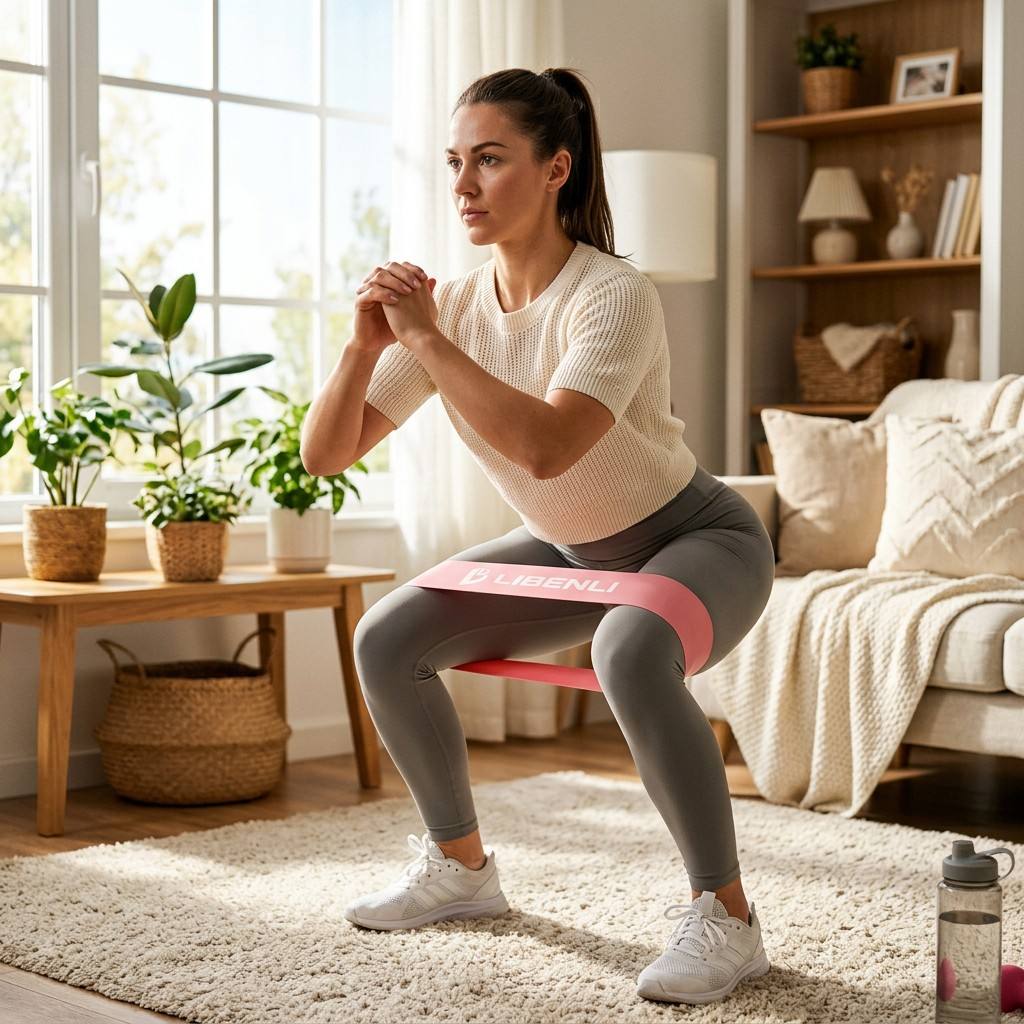
Regional demand patterns are also recorded for these applications. The mini loop scenario is common in Australia, while the power loop scenario for fitness studio matching, rehabilitation clinic equipment, home sports kits and gym retail sets is common in Germany and the United States. Broader documented market coverage for these project types includes the United States, Australia, Canada, the United Kingdom, France and Germany. For program buyers, this matters because color grading conventions and retail packaging expectations can differ by market even when the band itself is identical.
Material Options: Latex and TPE Inside One Specification
Material is the dimension where professional and consumer specifications most often diverge, and where the two example formats differ most clearly.
The ZLQ-1 is offered in Latex or TPE. TPE resistance bands give a program a non-latex option at the mini loop level without changing geometry or resistance tiers. The ZLQ-03 is a Latex construction, so programs requiring a non-latex long loop band cannot solve that requirement by switching resistance level within the same model.
Where latex is acceptable, the documented material requirements for these applications are specific: 100% natural non-toxic latex, high stretch durability, skin-friendly surfaces and multiple resistance color grades. Documented case material from an Australian premium fitness brand program adds further detail to what premium latex specification can include — a five-tier resistance system running from Ultra Light to Ultimate, calibrated with a tension error margin within ±2%, produced from 100% premium Malaysian natural latex with food-grade pigments and compliant with REACH, RoHS and Australian safety standards. The same program record includes high-precision logo silk-screening, customized packaging systems and anti-counterfeiting tracking.
For a buyer, the decision rule is straightforward: if the end-user group includes latex-sensitive individuals, specify the TPE option at mini loop level and re-scope any long loop requirement separately. If the program depends on calibrated, tiered resistance, the specification should state the acceptable tension tolerance rather than only a nominal pound rating.
What to Verify Before Scaling an Order
Specification fit and supply fit are separate evaluations. Once a format is chosen, the following documented parameters determine whether a program can actually be delivered.
- Customization scope: resistance strength, band thickness and width, length, surface color, logo silk printing, package design and accessory matching.
- Minimum order quantity: 100 pieces for in-stock items; 500 pieces for customized logo.
- Lead time: 20 to 35 days.
- Monthly capacity: 1,200,000 units.
- Quality control: stretch durability test before shipment.
- After-sales terms: free unconditional returns for defective goods upon receipt.
- Export markets served: North America, EU, Australia, Southeast Asia, the Middle East, Japan and South Korea.
Manufacturing depth is a useful check against scale risk. Libenli is a manufacturer and exporter founded in 1997, specializing in the design, research and production of latex tubing and latex resistance bands, operating a 50,000 square metre plant with more than 300 employees, an R&D team of over 20 engineers and an annual output of 65,000,000 units. Production runs on 24 dedicated dipped latex tubing lines with a daily output of 120,000 metres and 2 exclusive latex band lines with a daily capacity of 25,000 metres, supported by self-owned CNC molding and plastic injection molding equipment. Quality certifications include ISO 9000:2000 from 2005, ISO 9001:2008 from 2010, a 3A Credit Rating Certificate, and SGS certification for most items against international environmental and safety requirements. The company holds 2 invention patents and 18 utility model patents.
Delivered evidence is the last layer of verification. In one documented program with an international premium fitness brand based in Australia, annual supply exceeded 150,000 units across more than 12 specialized product lines, with the project achieving a defect and complaint rate below 0.05% and a 20% reduction in the research-to-market cycle. That same case addressed band curling and pinching during high-load exercises through an anti-rolling surface treatment — a specification point worth adding to any framework where users train at high tension.
Limits and Trade-Offs of This Framework
A comparison framework is only credible if it states where it stops working. Several real boundaries apply here.
Resistance ceiling. The ZLQ-1 cannot substitute for a power loop in heavy or assisted pulling work. Its documented range ends at 40LB, while the ZLQ-03 reaches 230LB. A buyer trying to cover both ends with the mini loop format will under-specify the strength element of the program.
Material asymmetry. The ZLQ-03 is Latex only. That is a hard limit for programs with latex restrictions, and it cannot be resolved by choosing a lighter resistance tier within the same model.
Geometry lock-in. A 600mm circumference mini loop and a 2080mm long loop are not interchangeable, even at identical resistance. Buying decisions driven purely by resistance ratings will produce bands that cannot be anchored correctly for the intended movement.
Environment assumptions. The documented working condition for these applications is an indoor, dry, low-dust environment between -10°C and 50°C. Although the ZLQ-03 is listed for outdoor training equipment, buyers deploying bands outdoors or in hot, humid or dusty settings should confirm exposure, cleaning and storage handling during evaluation rather than assuming the indoor baseline carries over.
Different product families behave differently. Fabric loop bands, cotton fabric exercise bands and nylon resistance bands rely on different construction principles from dipped latex or TPE loops. The seven-step framework can be re-applied to those families, but dimensional and durability values should never be transferred across families.
Commercial thresholds. Custom logo orders start at 500 pieces and standard production lead time runs 20 to 35 days. Programs working to a fixed retail launch window need to model those thresholds early, because a late customization decision is a schedule risk rather than a price negotiation.
Market Trends Shaping Resistance Band Specifications
The direction of the market reinforces the case for a structured framework. Growth to a projected USD 2.9 billion by 2030 at 9.9% CAGR between 2025 and 2030, combined with a 70.6% revenue share held by health and sports clubs and rapid growth in individual use, means suppliers are being asked to serve institutional and consumer specifications from the same production base.
Therapy and exercise bands already represent approximately 50% of total global market share, which places clinical suitability alongside performance suitability in the same purchasing conversation. In parallel, North America at 40.0% revenue share in 2024 remains the largest single regional market, while documented application demand for these loop formats concentrates in the United States, Australia, Canada, the United Kingdom, France and Germany.
Regulatory structure is maturing as well. Fitness equipment entering the EU, including resistance bands, is subject to the EN 20957 series for stationary training equipment in the context of CE marking, and resistance bands are commonly classified under HS Code 9506.91 for articles for general physical exercise, gymnastics or athletics. Both touchpoints argue for specifications that record material composition, tolerances and test method from the start rather than retrofitting documentation after an order is placed.
Future Outlook
Three shifts are likely to shape band procurement over the next few years. First, resistance calibration is moving from a marketing claim toward a measurable specification; documented tolerance bands such as a ±2% tension error margin give buyers a verifiable parameter to request. Second, material choice is becoming a market-access question rather than a cost question, as non-latex options and certified natural latex are evaluated against regional safety requirements. Third, resistance band sets sold at retail are increasingly judged on the completeness of the kit — bands plus yoga mat, fitness handles, ankle straps and storage bag — which pushes buyers to evaluate accessory matching and packaging design as part of the band specification itself.
For professional buyers, the practical implication is that the comparison framework should be treated as a living document. Resistance window, geometry, material, fatigue life, environment and customization fit are the six to seven fields that change least often; pricing, lead time and packaging change most often. Keeping the framework current at the specification level allows commercial terms to be renegotiated without re-opening the technical decision each time.
FAQ: Resistance Band Selection for Professional Buyers
What resistance range should a rehabilitation clinic specify?
For rehabilitation and physical therapy applications, the documented resistance range for the ZLQ-1 mini loop band is 5LB to 40LB, with joint rehabilitation, muscle stretching and physical therapy listed among its functions. Clinical programs generally work at the lower end of that window because graded loading, not peak tension, drives progression.
Can a mini loop band be used for pull-up assistance?
Geometry constrains this more than resistance does. The ZLQ-1 has a 600mm circumference, which is designed for hip, glute, knee and ankle anchoring. Pull-up assistance is a documented use of the ZLQ-03, which has a 2080mm length and a resistance level from 8LB to 230LB. A mini loop cannot substitute for the long loop format in full-range pulling movements.
Which material should be specified for latex-sensitive users?
The ZLQ-1 is available in Latex or TPE, so a non-latex option exists at mini loop level. The ZLQ-03 power loop band is a Latex construction. Programs serving latex-sensitive users therefore need to specify the TPE option where available and re-scope long loop requirements separately.
How long are these resistance bands expected to last?
Documented durability ratings differ by format. The ZLQ-1 is rated at 30,000 stretches or more for fatigue resistance, while the ZLQ-03 carries a documented service life of 20,000 stretches or more. One documented supply program for an Australian premium fitness brand is associated with a 3 to 5 year duration under normal use. Actual replacement cycles depend on load level, frequency and storage conditions.
What customization and order thresholds apply to project orders?
Documented customization scope includes resistance strength, band thickness and width, length, surface color, logo silk printing, package design and accessory matching. Minimum order quantity is 100 pieces for in-stock items and 500 pieces for customized logo. Lead time is 20 to 35 days, and monthly capacity is 1,200,000 units. Stretch durability testing is performed before shipment, and defective goods received are covered by free unconditional returns.
Full specification details and format options are compiled in the downloadable Libenli product catalogue: https://cdn.socialarks.com/sbsp/25047/common/2026/0701/catalog.pdf
Have Questions or Need More Details?
Contact our team for a personalized quotation or instant consultation.
Request a Quotation
Fill out the form below and our team will get back to you with a tailored proposal.
WhatsApp Direct Chat
Prefer to chat in real-time? Message us on WhatsApp for instant assistance & quick answers.
- Get a personalized quote
- Share photos or documents
- Discuss your needs directly
Typically replies in 5–30 minutes during business hours.