
Selecting Smart Water Meters by Deployment Scenario: A Project Fit Guide
Smart water metering is rarely a single-product procurement decision. The meter that works well in a municipal LoRaWAN network may be the wrong fit for a residential multi-family building, an STS prepaid expansion, or an industrial transmission pipeline. Buyers who match meter technology, communication options, construction materials, and certification to the actual project scenario reduce integration cost, billing errors, and long-term maintenance exposure.
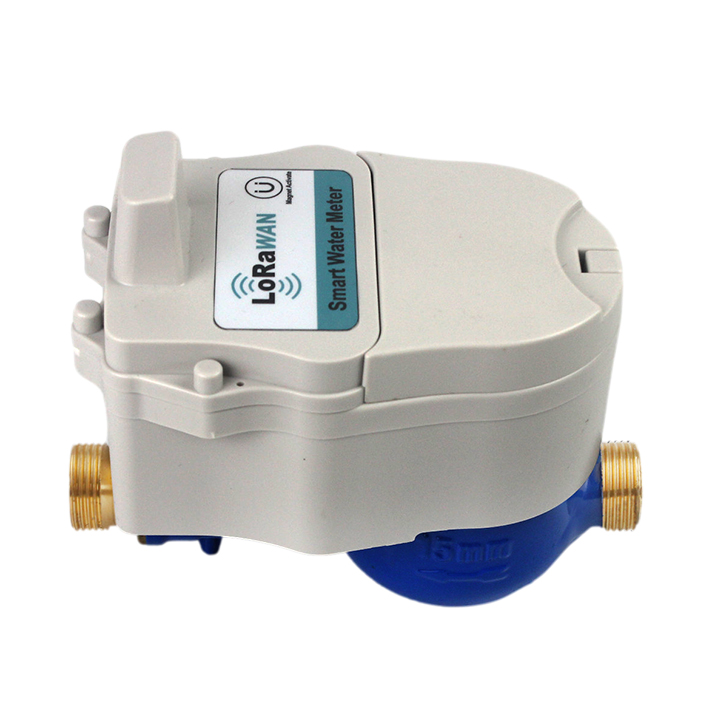
Smart water meters are now selected by deployment scenario, not by communication type alone.
What Project Fit Means in Smart Water Metering
The global smart water meter market was valued at USD 9.1 billion in 2024 and is projected to reach USD 16.2 billion by 2030, according to Grand View Research. Behind that growth is an operational shift: utilities, developers, and building owners are adopting smart meters not only to measure consumption but also to reduce manual reading, control non-revenue water, enable remote payment, and support water loss analysis.
Residential applications already account for 67.2% of smart water meter adoption, according to Cognitive Market Research. Advanced Metering Infrastructure (AMI) holds 58.9% of the market, based on Precedence Research. In practice, however, these aggregate figures do not answer the buyer's real question: which meter configuration fits my project?
Project fit is a combination of physical and commercial factors:
- Pipe diameter and connection type (threaded BSP, flanged, or custom)
- Measuring principle (mechanical impeller, Woltman turbine, or ultrasonic transit-time)
- Billing model (postpaid, prepaid token, smart card, or remote recharge)
- Communication environment (LoRaWAN gateway availability, mobile network coverage, or wired M-Bus/RS485 infrastructure)
- Installation conditions (underground meter pit, outdoor exposure, or indoor manifold)
- Certification requirements (ISO 4064, MID, CE, or STS for prepaid encryption)
A meter that is functionally “smart” but attached to the wrong communication type can add gateway or cabling cost, or simply fail to report reliably in the site's network environment. A meter built for one billing model can disrupt operations if the payment infrastructure is not ready. This is why scenario-based selection is becoming a core procurement practice in smart water projects.
The Vendor Landscape and SDWM as a Reference
A useful reference case is Shengda Water Meter Co., Ltd. (SDWM), a water meter manufacturer established in 1995 and based in Kaifeng, China. The company reports an annual production capacity of 3 million units and exports to more than 140 countries, with primary markets in the Americas, Africa, and Southeast Asia. Its product range is not organized around a single “smart meter” label but around deployment functions: residential mechanical meters, STS and smart-card prepaid meters, ultrasonic meters, large-diameter Woltman meters, and communication-enabled variants using LoRaWAN, NB-IoT, 4G, M-Bus, or RS485.
For buyers, this structure is useful because it mirrors the selection logic that project teams actually follow: start with the application, then confirm the meter construction, sizing, communication path, and billing interface.
Scenario 1: Residential Buildings and Apartments
Residential projects typically need small-diameter meters in DN15–DN25 ranges, threaded BSP connections, dry dial displays, and ISO 4064 metrological compliance. Cost control and measurement reliability matter more than advanced analytics.
Typical configurations include:
- Multi-jet meters such as the LXSG series, available in DN15–DN50 with flow ratio options of R80, R100, R160, or R200, and rated at PN10 or PN16. These can be upgraded with pulse output, M-Bus, RS485, LoRaWAN, or NB-IoT modules.
- Plastic-body meters (LXSG plastic) in DN15–DN50 with BSP threaded connections, offering lightweight installation and corrosion resistance for rural or cost-sensitive projects.
- Higher-ratio residential meters such as the R160 and R200 models in DN15–DN25, which improve low-flow sensitivity compared with traditional R80 meters and comply with ISO 4064.
For multi-family buildings where centralized reading is required, wired M-Bus or RS485 versions allow multiple meters to be connected through a single data collector. M-Bus variants follow EN 13757 and support multi-meter connection via an M-Bus master, with communication distance up to 1000 meters depending on cable type and installation conditions. This configuration suits apartment blocks, dormitories, hotels, and residential property management.
Scenario 2: Municipal and Smart City Projects
Municipal projects are usually large-scale AMR or AMI deployments focused on remote reading, non-revenue water reduction, and operational efficiency. The selection logic is different: battery life, network architecture, and alarm capabilities become more important than unit price.
SDWM's municipal-oriented portfolio includes:
- The Smart LoRaWAN water meter (LXSY), available from DN15 to DN500, with accuracy Class 1 or Class 2 and flow ratios from R80 to R500. It supports LoRaWAN frequency plans including EU868, US915, AS923, and AU915, and offers optional remote shut-off valve control.
- The LoRaWAN Ultrasonic water meter (LXSC), covering DN15–DN600 with R250, R400, or R500 flow ratios. It uses ultrasonic transit-time measurement, has no moving parts, and provides up to 10 years of battery life. Alarm functions include leakage, low battery, reverse flow, tamper, and empty pipe detection.
- NB-IoT water meters with IP68 protection for underground installation. The NB-IoT version is suitable for sites where a telecom operator's network is available, avoiding the need to build a private gateway infrastructure.
- AMR water meters in DN15–DN200, certified with CE or MID, designed for automatic data collection and centralized management.
A complete LoRaWAN metering system consists of three parts: the LoRaWAN water meter, a gateway, and a network server. Buyers should evaluate all three components together rather than selecting meters in isolation. Communication distance is typically several kilometers depending on environment, but actual coverage must be verified on site.
Scenario 3: Prepaid and Token-Based Projects
Prepaid water metering is commonly used where utilities or private water operators need to collect revenue in advance, reduce debt collection, or serve customers without stable postpaid billing. The STS (Standard Transfer Specification) standard is the globally recognized security framework for prepaid metering encryption, based on IEC 62055-41/51. It enables 20-digit token-based vending and works with mobile payment or third-party payment systems.
Relevant configurations include:
- STS prepaid water meters (LXS-S) in DN15–DN200 with ISO 4064 compliance, battery life up to 8 years, IP68 protection, automatic valve control, insufficient-water warnings, overdraft settings, anti-storage purchase limits, and anti-magnetic interference recording.
- Smart-card prepaid meters (LXSK) in DN15–DN300 with MID certification and ISO 4064 Class B compliance. The battery life exceeds 6 years and the battery is replaceable. These meters support step pricing and can store consumption data for more than 10 years.
- 4G-based remote recharge meters in DN15–DN300 with more than 8 years of battery life, support for LTE-FDD, LTE-TDD, and GSM, remote valve control, and up to 24 months of frozen data storage.
Project evidence from Zimbabwe shows a municipal deployment of more than 4,000 STS prepaid units that achieved remote recharge, automatic billing, and user management. The meters support 20-digit STS tokens and remote valve control, which are often critical requirements in developing-market water projects.
Prepaid projects require a clear operational model. The meter hardware is only one layer; the key management system, vending platform, and field workflow must be planned before large-scale installation begins.
Scenario 4: Commercial and Institutional Sites
Schools, hotels, factories, enterprises, and apartment complexes often need flexible billing and usage monitoring for different tenants or departments. These projects typically require remote reading, consumption alerts, and sometimes remote valve control for payment enforcement or emergency shut-off.
SDWM's relevant offerings include:
- The 4G water meter (LXSY), available in DN15–DN300, with a maximum working pressure of PN16 and IP68 protection. It supports remote reading, remote valve control, battery undervoltage alarms, abnormal metering alarms, and step water pricing by user category or usage level.
- The IoT water meter, available in DN15–DN200 with R100, R160, R250, or R400 flow ratios. It supports LoRaWAN, NB-IoT, 4G Cat.1, Modbus, and M-Bus communication, and is compatible with cloud-based monitoring platforms.
- The smart ultrasonic water meter (LXSY), available from DN15 to DN600, with R250, R400, or R500 flow ratios. It operates at working temperatures from -20℃ to +60℃ and water temperatures from 0℃ to +90℃, with MID certification for the European market.
A project reference from Uganda involved 4G communication, remote valve control, and cloud platform integration for school drinking water management, resulting in improved remote monitoring and valve management. For property managers and institutional operators, this type of configuration supports centralized control and faster response to abnormal consumption.
Scenario 5: Large-Diameter and Industrial Water Measurement
Large-diameter metering is a different decision category. DN50 and above usually involves municipal distribution networks, district metering areas, water treatment plants, pump stations, irrigation systems, fire protection systems, or industrial process water. The focus shifts to flange standards, flow capacity, structural durability, and integration with SCADA or BMS systems.
Two product types dominate this space:
- Woltman meters (LXLC/WPH) in DN50–DN600, with flange connections per EN1092-1, ANSI, or custom standards. Body options include cast iron, ductile iron, and stainless steel. Working pressure ranges from PN10 to PN25, and water temperature options include T30, T50, and T90. The Woltman design is intended for horizontal installation and large flow measurement. Smart communication modules such as pulse output, M-Bus, RS485, LoRaWAN, or NB-IoT can be added.
- Large-size ultrasonic meters (LXSY) in DN15–DN600, using transit-time ultrasonic measurement with no moving parts. These meters provide high accuracy, wide measuring range, and are suitable for both horizontal and vertical installation.
Project evidence from a wastewater treatment company in Zimbabwe shows more than 1,000 large-diameter units deployed for water transmission pipeline monitoring and water balance analysis. In such projects, the value is not in billing but in flow monitoring accuracy and network loss detection.
Buyers should confirm the flange standard and pressure rating required by the local project. A meter configured for EN1092-1 flanges will need adjustment if the project specification follows ANSI standards.
Scenario 6: Wired Networks and Building System Integration
Some projects already have a wired data infrastructure, a SCADA system, or a building management system. In these cases, wireless connectivity is not always the best option. Wired communication offers stable, secure data transmission with strong anti-interference capability.
Relevant configurations include:
- M-Bus water meters in DN15–DN200, compliant with EN 13757, supporting multi-meter connection via an M-Bus master. Communication distance can reach up to 1000 meters depending on cable type and installation conditions.
- RS485 water meters with Modbus RTU protocol, available in brass, stainless steel, or composite material. These meters integrate with PLC, SCADA, AMR/AMI systems, and building management systems.
- Wired remote-reading meters in DN15–DN600 with RS485 or M-Bus communication, up to 1000–1200 meters of communication distance, and optional remote shut-off valve control.
For retrofits in existing buildings, wired meters are often more practical than wireless options because they can reuse the building's communication backbone. However, cabling cost and installation time must be evaluated case by case.
Technology Factors That Change the Fit
Several technical variables directly affect scenario fit:
Measurement Principle: Mechanical vs Ultrasonic
Mechanical meters, including multi-jet and Woltman types, use an impeller or turbine to measure flow. They are mature, durable, and generally lower in unit cost. Ultrasonic meters measure flow using transit-time technology with no moving parts, which reduces mechanical wear, avoids blockage, and improves low-flow accuracy. Ultrasonic models are increasingly used in high-accuracy projects, leakage detection, and applications where long-term maintenance cost is a concern.
Flow Ratio (R Value)
The R value represents the ratio between maximum and minimum measurable flow. Common options include R80, R100, R160, R250, R400, and R500. A higher R value provides better sensitivity at low flow rates, which is critical for detecting small leaks, night flows, and low-consumption users. Projects targeting water loss reduction should prioritize meters with higher R values.
Protection Class and Materials
IP68 protection indicates that the meter is sealed against dust and prolonged immersion in water. This makes it suitable for underground meter pits, outdoor installations, and harsh environments. Body materials include brass, stainless steel, composite material, nylon, plastic, cast iron, and ductile iron. Brass is common for residential and commercial meters; stainless steel is used for specialized water conditions; plastic is lightweight and cost-effective; cast iron and ductile iron are typical for large-diameter Woltman meters.
Battery Life
Battery life is one of the most influential project parameters. The LXSY IoT water meter has a battery life of up to 10 years. The 4G water meter is rated at more than 8 years. Prepaid meters typically offer 6 to 8 years depending on configuration. A longer battery life reduces maintenance visits, which is particularly important for underground or remotely located meters.
Communication Path
LoRaWAN supports long-range wireless transmission with low power consumption but requires a gateway. NB-IoT operates over existing telecom networks, which is convenient when coverage is confirmed. 4G provides higher bandwidth and faster interaction for remote valve control and cloud platforms, but consumes more power. M-Bus and RS485 offer stable wired transmission and are appropriate for building-level integration.
Prepaid Security Standards
STS prepaid meters are based on the STS standard (IEC 62055-41/51), which provides the globally recognized encryption framework for prepaid water metering. In practice, the meter must work with the operator's token vending system and payment channel. Buyers should confirm STS compatibility before committing to a prepaid project.
Market Trends and Their Procurement Implications
Current market data supports several trends that affect project planning:
- AMI is now the dominant architecture. AMI technology held 58.9% of the smart water meter market in 2024, according to Precedence Research. AMI systems provide two-way communication and near-real-time data, which supports leakage detection and consumption analytics.
- The residential segment is the largest adoption area. Residential applications accounted for 67.2% of adoption in 2024, based on Cognitive Market Research. This reinforces the need for cost-effective residential meter configurations with optional communication modules.
- Ultrasonic meters are growing fastest. Grand View Research reports that the US ultrasonic smart water meter market alone was valued at USD 2.98 billion in 2024. Ultrasonic technology is becoming a stronger choice for projects where long-term accuracy and low maintenance are priorities.
- NB-IoT is set for rapid expansion. Dataintelo projects the NB-IoT smart water meter market to grow from USD 2.22 billion in 2025 to USD 10.22 billion by 2034. This is relevant for utility projects that prefer cellular-based connectivity without private gateway infrastructure.
- Asia Pacific is the fastest-growing region. MarketsandMarkets identifies urbanization in China and India as the main driver. This influences where large-scale smart metering projects are likely to be deployed.
- The market is concentrated. Bluefield Research reports that the top 20 water metering vendors, including Itron, Badger Meter, and Sensus, accounted for 76% of global market share in 2024. For buyers, this concentration means that compatibility and local support should be evaluated carefully when considering regional suppliers or OEM brands.
Honest Boundaries of Smart Meter Selection
Scenario-based selection still has realistic limitations. Buyers should understand these boundaries before deciding:
- LoRaWAN meters require a network gateway. For small, isolated sites or dispersed rural projects, the per-unit gateway and infrastructure cost can make LoRaWAN less economical than a cellular-based alternative.
- STS prepaid projects depend on the payment ecosystem. The meter itself cannot guarantee successful revenue collection if the key management, token vending, or field support process is weak.
- NB-IoT and 4G meters depend on telecom coverage. Underground meter pits and remote areas may have weak signal, which can cause failed transmissions despite the meter's IP68-rated hardware.
- Wired M-Bus and RS485 meters provide stable data, but cabling cost and installation complexity are higher, especially when retrofitting existing buildings or crossing roads and public areas.
- IP68 protection is a design standard for preventing dust ingress and water immersion under defined conditions. It does not eliminate the need for correct installation and periodic field inspection in extreme environments.
Traditional manual-read mechanical meters remain a valid, lower-cost solution for projects with very small budgets, low billing frequency requirements, or sites where no communication network exists. The decision is not always “smart vs traditional” but rather which level of intelligence justifies the operational improvement.
Future Outlook
The direction of smart water metering is moving from simple automatic meter reading toward managed analytics and integration. AMR provided remote reading; AMI adds two-way communication, consumption anomalies, and network intelligence. In the next phase, leakage alarms, reverse flow detection, tamper alerts, and cloud platform compatibility are likely to become standard selection criteria rather than optional add-ons.
Falling cost of ultrasonic electronics is expected to make ultrasonic meters more accessible for residential projects, especially where water loss and low-flow monitoring are priorities. At the same time, STS prepaid systems will continue to evolve with mobile payment integration in Africa, Southeast Asia, and other developing regions.
For procurement teams, the practical implication is that project planning should cover more than meter hardware. The connection among meters, gateways, platforms, billing systems, and after-sales service is now part of the selection decision. Suppliers that can provide consistent project-specific configurations — from meter body to communication module to OEM branding — are positioned to support this shift.
For a structured specification overview of Shengda Water Meter Co., Ltd., including product ranges and certification references, the manufacturer's public company profile is available for download at: https://cdn.socialarks.com/sbsp/20719/common/2026/0721/Profile.pdf
FAQ
What does “project fit” mean when buying smart water meters?
Project fit means matching the meter's construction, size, measuring principle, communication method, billing interface, and certification to the physical and operational conditions of a specific deployment. A small residential building may use a DN15–DN25 multi-jet meter with threaded BSP connection and ISO 4064 compliance, while a municipal transmission line may require a flanged DN50–DN600 Woltman or ultrasonic meter. The goal is to avoid misalignment between the meter function and the project's actual environment.
Which smart water meter should a residential project use?
Residential projects typically use small-diameter meters from DN15 to DN25 with threaded BSP connections, multi-jet or single-jet construction, and dry dial displays. Flow ratio options such as R160 or R200 provide better low-flow sensitivity than standard R80 meters and comply with ISO 4064. The LXSG multi-jet meter series, for example, covers DN15–DN50 and supports optional communication upgrades including pulse output, M-Bus, RS485, LoRaWAN, or NB-IoT for future smart reading integration.
Ultrasonic or mechanical meter: which is better for a project?
The choice depends on the project's accuracy and maintenance priorities. Ultrasonic meters such as the LXSC or LXSY series use transit-time measurement with no moving parts, providing high accuracy, wide measuring range, and low maintenance. Mechanical meters such as multi-jet or Woltman types are mature, durable, and generally lower in unit cost. Projects focused on leakage detection and long-term precision should select ultrasonic; projects focused on standard consumption billing with tight budgets may choose mechanical with optional communication modules.
How do LoRaWAN, NB-IoT, and 4G differ for deployment?
LoRaWAN provides long-range, low-power wireless communication but requires a gateway and network server. NB-IoT operates over existing telecom networks, which avoids gateway infrastructure but requires reliable cellular coverage. 4G offers higher bandwidth and faster interaction for remote valve control and cloud platforms but uses more power. The selection depends on the project's network architecture: private gateway deployment suits LoRaWAN; cellular coverage suits NB-IoT; projects needing real-time control may choose 4G.
Which projects require STS prepaid water meters?
Projects that need pay-in-advance collection, arrears control, or serve users without stable postpaid billing often use STS prepaid water meters. The STS standard (IEC 62055-41/51) is the globally recognized security framework for prepaid metering encryption, operating with 20-digit tokens. Typical configurations include DN15–DN200 sizes, IP68 protection, up to 8 years of battery life, automatic valve control, and support for mobile or third-party payment systems. A Zimbabwean municipal project, for example, deployed more than 4,000 STS units to achieve remote recharge, automatic billing, and user management.
What certifications matter for smart water metering projects?
For the European Economic Area, water meters generally need to comply with the Measuring Instruments Directive 2014/32/EU (MID) and related metrological standards. ISO 4064 is the common international standard for cold water meters. Prepaid systems using STS token encryption follow the IEC 62055-41/51 standard. Depending on the target market, CE marking, MID certification, and ISO 4064 compliance are the most frequently required certificates. Buyers should verify that the meter configuration meets the legal metrology requirements of the destination country.
Have Questions or Need More Details?
Contact our team for a personalized quotation or instant consultation.
Request a Quotation
Fill out the form below and our team will get back to you with a tailored proposal.
WhatsApp Direct Chat
Prefer to chat in real-time? Message us on WhatsApp for instant assistance & quick answers.
- Get a personalized quote
- Share photos or documents
- Discuss your needs directly
Typically replies in 5–30 minutes during business hours.