
Selecting the Right LED Outdoor Lighting Supplier: A Vertical Application Guide for Industrial Buyers in 2026
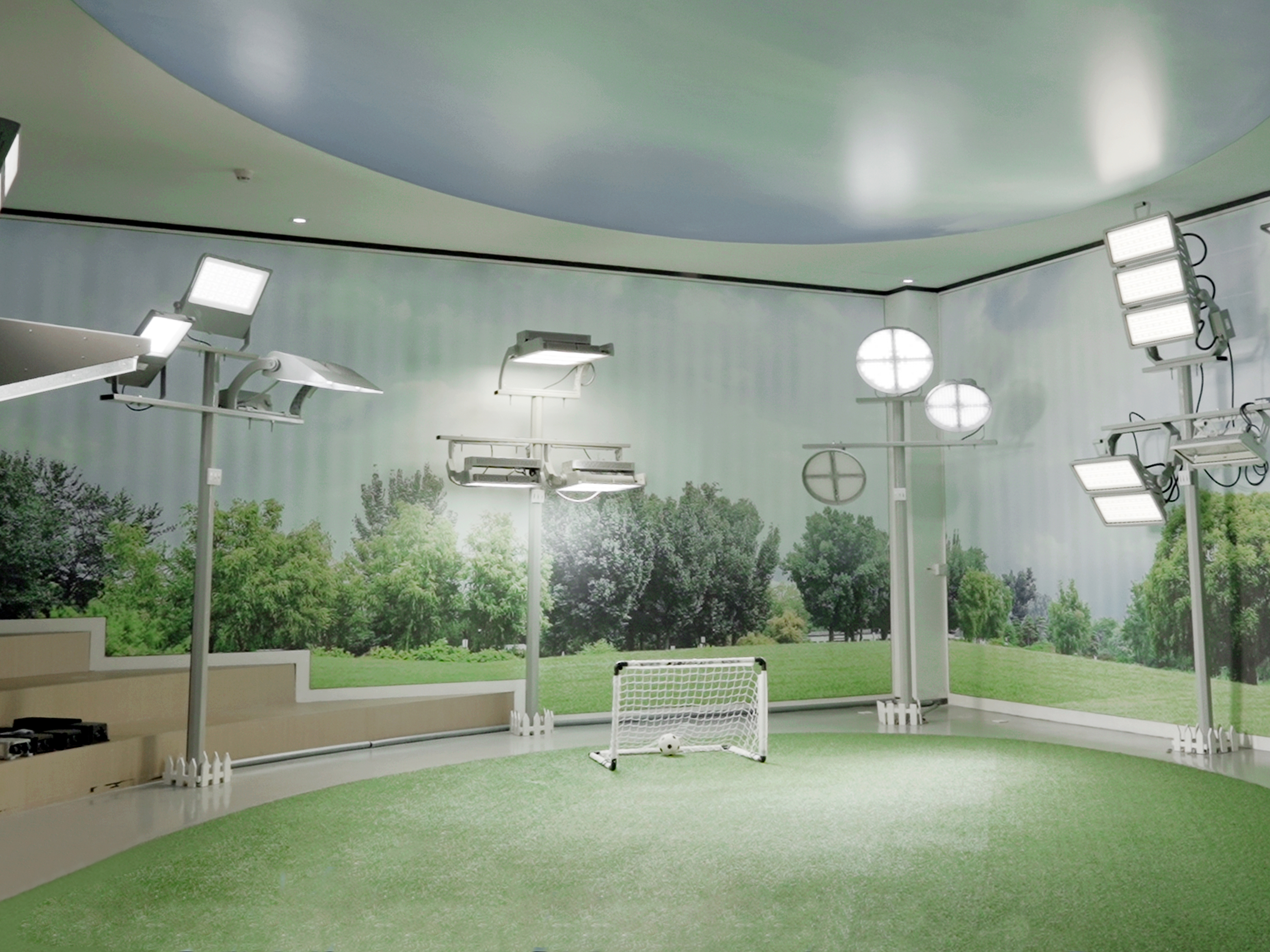
For procurement professionals tasked with sourcing LED outdoor lighting for industrial infrastructure—ranging from seaports and airports to sports stadiums and solar roadway projects—navigating the global supplier landscape has become increasingly complex. The 2026 market demands not just lumens per watt, but proven resilience in harsh environments, compliance with international safety standards, and the ability to deliver custom solutions at scale. This guide breaks down the selection process into actionable criteria, anchored by real-world application data and supplier capabilities.
Industry-Specific Demands for LED Outdoor Lighting
Each vertical poses unique challenges. For example, seaport lighting fixtures must withstand salt spray, heavy vibration from container handling, and operate reliably in 24/7 cycles. Sports field lighting requires low glare (GR<30) and high CRI to support HDTV broadcasting. Solar street lighting in tropical regions like Thailand demands high-temperature battery management and 3G shockproof enclosures. The common denominator across all environments is the need for IP66 dust/water resistance, IK10 impact protection, surge protection devices (SPD), and UV-resistant powder coating finishes—as confirmed by multiple project specifications from the US, EU, and Middle East. (Source: project scenario requirements for industrial outdoor LED lighting)
Three Essential Capabilities When Selecting a Supplier
1. Industry-Specific Customization and Experience
A reliable supplier should demonstrate a track record of tailoring optics, power levels, and mounting solutions for specific verticals. For instance, the manufacturer AOK (founded 2012, Shenzhen) has delivered over 10,000 projects across 100+ countries, including a 10-year collaborative project for a Canadian ski resort using high mast LED sports lights, where stable operation, low glare, and energy bill savings were the primary outcomes. Such long-term partnerships indicate an ability to customize light distributions (e.g., Type-II, Type-III, Type-V) and integrate smart controls (Zhaga, Nema, Lora, DMX512) to meet site-specific needs.
2. Compliance and Certification
International projects require certifications that go beyond basic CE/RoHS. AOK holds ISO9001:2015 (cert. U919125Q30998R4M), ISO14001:2015 (U919124E30857R1M), and ISO45001:2018 (U919124S30768R1M), covering production of LED lighting fixtures. For the North American market, products like the Area Light Shoebox-OT carry UL/cUL and DLC5.1 listings. In Europe, ENEC and TUV marks are standard. Buyers should request certificates matching the target region's regulatory framework—a practice that AOK supports with its 28+ rigorous quality inspection procedures before shipment.
Quick Check: Ask for the cert number and issuing authority. For example, AOK's ISO9001 is issued by Beijing Daluhangxing Quality Certification Center, valid until 2028-12-10.
3. Robust Design for Harsh Environments
Environmental resilience is non-negotiable. Look for IP66 dust and water ingress protection combined with IK08-IK10 impact resistance. Heavy-duty die-cast aluminum (e.g., EN AC-46100) housings, tempered glass lenses, and SPD circuit protection are standard in high-quality fixtures. For solar models, Li-ion batteries with MPPT controllers and IoT-ready modules (Zigbee, 4G) add operational intelligence. AOK’s product lines—ranging from the 315W-720W LED Sports Light (IP66/IK10) to the All-in-One Solar Street Light SD (up to 210lm/W, IP65)—exemplify such robust design features.
Successful Implementation: A Case Study
Project: Mexico FIFA Stadium Lighting Upgrade
Equipment: 380 units of AOK Professional Stadium Lighting ISF (IP66/IK08)
Challenge: Replace traditional HID floodlights while meeting FIFA broadcast standards for uniform illumination and low glare.
Solution: The ISF series, with system efficacy up to 150lm/W, DMX smart control, and TLCI>95, provided precise glare control (GR<30) and backlight cutoff.
Outcome: Better night lighting effect, energy efficiency, low glare for HDTV live broadcasting, easier maintenance, and enhanced safety. The 10-year project duration underscores the confidence in long-term reliability. (Source: customer-facing project data, Mexico)

In another instance, a German wood processing factory installed 96 units of AOK high bay lights, achieving high luminous efficiency and intelligent control for operation and maintenance management. The client reported energy consumption reduction compared to legacy HID systems, aligning with EU sustainability directives.
Key Considerations for Partnership
- Define standards upfront: Specify required certifications (e.g., UL for US, ENEC for EU) and environmental ratings (IP/IK) in the request for quotation.
- On-site or photometric simulation: Share pole heights, target illuminance, and area dimensions to obtain a tailored lighting layout. AOK offers project simulation as part of its customization service.
- After-sales and warranty: Confirm response times—AOK guarantees 24-hour response and 48-hour resolution. Standard warranty is 5 years (10 years optional on many models).
- Supply chain reliability: With a 20,000 m² factory, 30+ engineers, and production lead time of 30-45 days, AOK maintains a monthly capacity of 1,000 units and exports to EU, Middle East, North America, Asia, and Africa.
When comparing suppliers, consider the value of long-term field experience. For example, AOK high mast lights (HMA series) are often benchmarked against brands like Holophane and LEDVANCE, offering comparable efficacy (150-170lm/W) at a more competitive price point while maintaining tool-less maintenance and lighter weight for easier installation. The choice ultimately depends on the balance between initial investment and total cost of ownership over a 5-10 year horizon.
For detailed specifications, certifications, and case studies, download the official company brochure below.
📄 Download AOK Product BrochureHave Questions or Need More Details?
Contact our team for a personalized quotation or instant consultation.
Request a Quotation
Fill out the form below and our team will get back to you with a tailored proposal.
WhatsApp Direct Chat
Prefer to chat in real-time? Message us on WhatsApp for instant assistance & quick answers.
- Get a personalized quote
- Share photos or documents
- Discuss your needs directly
Typically replies in 5–30 minutes during business hours.