
Selecting the Right Ultrasonic Flow Sensor Supplier: A Framework for Sourcing from China vs. Global Leaders (2026)
As demand for precise, non-invasive flow measurement surges across medical devices, bioprocessing, semiconductor manufacturing, and industrial automation, procurement professionals face a critical decision: which supplier ecosystem offers the best balance of innovation, cost, and reliability? The global ultrasonic flow sensor market is projected to exceed $12 billion by 2027, with Chinese manufacturers rapidly gaining share. This guide provides a structured approach to evaluating suppliers, with a spotlight on Shanghai Xunyin Technology (XY-TEK) as a representative of the new wave of Chinese OEM-focused flow sensor specialists.
Assessing Supplier Capabilities: Beyond Price Tags
When sourcing ultrasonic flow sensors, buyers often compare three regions: China (flexible, cost-competitive), Japan (precision miniaturization), and Germany (industrial ruggedness). However, the decision should be driven by application-specific criteria rather than country stereotypes. Key evaluation dimensions include:
- Product Depth: Does the supplier offer clamp-on, in-line, single-use, and bubble detection variants? A portfolio like XY-TEK's CG, CS, and CPD clamp-on series covering 0.02–80 L/min, along with TPK/TPD in-line meters up to 1000 L/min, indicates broad engineering capability.
- Customization & OEM Flexibility: Chinese suppliers often excel here. XY-TEK provides OEM/ODM services with a lead time of 1–2 months, MOQ as low as 50 units, and customization of sensor size, communication protocol, and housing material.
- Technology & Patents: Check for intellectual property. XY-TEK holds multiple invention patents from CNIPA (e.g., No. 7946602 for liquid flow sensing and filter enhancement, valid to 2045), demonstrating proprietary R&D.
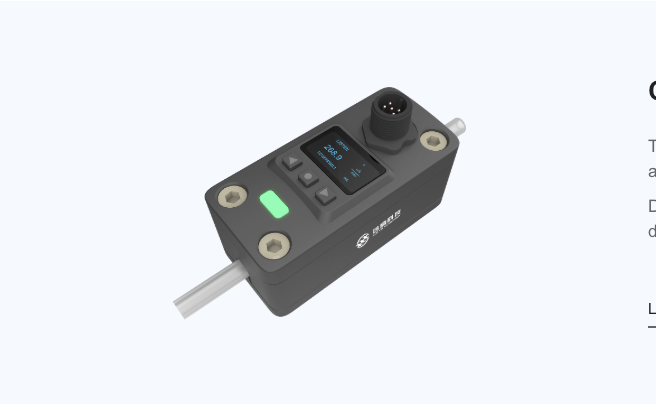
CPD series clamp-on ultrasonic flow sensor with built-in LED display for industrial environments
Application-Specific Supplier Qualification
The right supplier must align with your use case. XY-TEK's documented success in three verticals illustrates this:
Medical Devices & Bioprocessing
For dialysis, ECMO, and perfusion systems, non-contact measurement is mandatory. XY-TEK's BG series bubble detector and CG/TGU low-flow sensors offer ±1% accuracy down to 0.1 mL/min, with biocompatible materials. The single-use SU series meets sterile application requirements for biopharma.
Industrial Automation & Liquid Cooling
Data centers and EV charging stations demand reliable coolant monitoring. XY-TEK's CPD and TPK in-line sensors have been deployed for 2–4 years in cooling loops, detecting leaks and optimizing pump power. Compared to Coriolis meters, ultrasonic solutions introduce zero pressure drop, reducing energy costs by 8–15% according to internal records.
Battery Manufacturing & Electronics
Electrolyte injection and conformal coating require micro-flow precision. XY-TEK's TGU low-flow sensor (range 0–1000 mL/min) has been used in selective wave soldering lines, reducing flux waste and improving yield, with fast response to pulsating flow.
Technology Benchmarking: Ultrasonic vs. Legacy Technologies
Understanding sensor technology helps compare suppliers' value propositions. XY-TEK's ultrasonic flow sensors leverage the transit-time difference method, offering distinct advantages over traditional technologies:
| Technology | XY-TEK Ultrasonic | Coriolis | Turbine | Electromagnetic |
|---|---|---|---|---|
| Accuracy | ±1%–±3% | ±0.2% | ±0.2% (drifts) | ±0.5% |
| Pressure Drop | Zero | 15–30% increase | 5–15% | Zero (limited fluid) |
| Fluid Compatibility | All liquids, including non-conductive | All liquids | Clean liquids only | Conductive only |
| Maintenance | Virtually none | Medium-high | High (blade wear) | Low |
| Relative Cost | Medium-low | 3–5× higher | Medium (plus filters) | Medium-high |
This comparison, drawn from XY-TEK's engineering data, helps buyers justify supplier selection based on total cost of ownership, not initial price alone.
Market Trends Shaping Supplier Choice in 2026
- Single-use sensor demand: Bioprocessing is shifting to disposable flow paths, driving need for biocompatible, pre-sterilized sensors like XY-TEK's SU series.
- Liquid cooling expansion: With AI data center power density increasing, OEMs require sensors for fluorinated liquids – a strong suit for clamp-on ultrasonic since electromagnetic meters fail with non-conductive coolants.
- Regional de-risking: Many global buyers are adopting a “China + 1” strategy, but Chinese suppliers like XY-TEK are investing in export compliance (50% export ratio, FOB delivery, third-party inspection) to mitigate concerns.
Future Outlook: What to Look for in an Ultrasonic Flow Sensor Partner
The ideal supplier is not just a component provider but a fluid measurement partner. XY-TEK's roadmap includes enhanced digital output (RS485, pulse) and integration with Industry 4.0 platforms. Their ability to deliver custom designs with 20–30 day monthly capacity and online engineering support positions them as a reliable ally for growing OEMs. As the market matures, Chinese specialists like XY-TEK will likely close the gap with incumbent global giants, especially in micro-flow and non-invasive segments.
For procurement teams evaluating the 2026 landscape, the recommended approach is: (1) Define your critical parameters (flow range, fluid type, installation constraints); (2) Request detailed technical specifications and calibration certificates; (3) Assess customization lead times and minimum orders; (4) Validate through reference cases. Companies like XY-TEK demonstrate that Chinese suppliers can now deliver precision, innovation, and service parity with their Japanese and German counterparts.
Have Questions or Need More Details?
Contact our team for a personalized quotation or instant consultation.
Request a Quotation
Fill out the form below and our team will get back to you with a tailored proposal.
WhatsApp Direct Chat
Prefer to chat in real-time? Message us on WhatsApp for instant assistance & quick answers.
- Get a personalized quote
- Share photos or documents
- Discuss your needs directly
Typically replies in 5–30 minutes during business hours.