
Self-Drilling, Hexagonal Drilling and Chipboard Screws Compared
Self-Drilling, Hexagonal Drilling and Chipboard Screws Compared
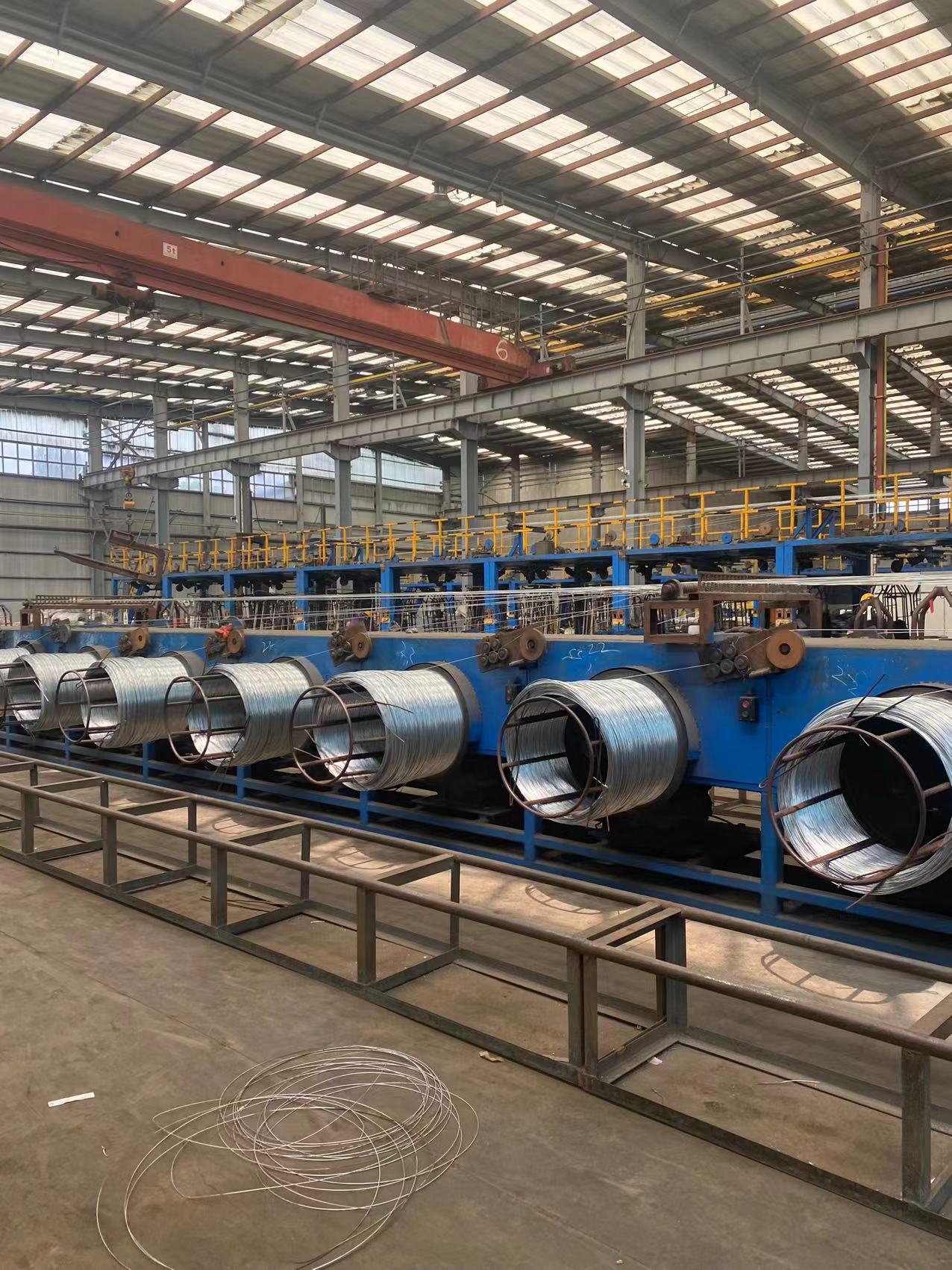
Screw and nail production line at the manufacturer's facility in Tangshan, Hebei. Construction screw selection turns on point, thread, drive and coating before it turns on price.
Three screw types, three different jobs
The choice between self-drilling screws, hexagonal drilling screws and chipboard screws is a substrate-and-drive decision, not a quality contest between three lines from the same factory. Self-drilling screws cut their own hole in metal and belong in steel framing, panel-to-stud and roofing or cladding work. Hexagonal drilling screws apply the same drill-point principle with an external hex drive, which changes how the fixing is installed rather than what the point does. Chipboard screws are wood screws with a sharp, coarse thread built to grip particle board, chipboard and furniture panels.
Getting the decision wrong rarely shows up at delivery. It shows up on site as a spinning screw in a thin steel stud, a cracked panel around a countersunk head, or a furniture joint that loosens in service. Those failures cost more than the per-unit difference between the three types, which is why procurement teams reviewing construction screws at quotation stage need the substrate and drive criteria settled before they negotiate.
This comparison keeps to documented product facts and published standard references. It does not rank the three types, because the correct choice depends on the assembly being fixed, and it does not attach performance figures to any supplier's item that the available evidence does not support.
What each screw type is — and what it is not
Self-drilling screws carry a drill-shaped point that cuts its own hole through sheet metal and forms the matching thread in the same pass. That single feature explains their role in panel-to-steel-stud and metal-to-metal assembly: no pre-drilled hole is needed. Published references exist around the type. DIN 7504 covers self-drilling screws with tapping screw thread as a dimensional standard, and ASTM C954 specifies steel drill screws used to attach gypsum panel products or metal plaster bases to steel studs from 0.033 in. to 0.112 in. (0.84 mm to 2.84 mm) in thickness.
Hexagonal drilling screws sit in the same drill-point family with a hexagonal head and external drive: the installer engages the head with a socket or nut driver instead of inserting a bit into a recess. The terminology varies between catalogues, so a purchase order should state head shape, drive size, diameter, length, thread and coating explicitly rather than relying on the descriptor alone. Head and drive geometry are separate decisions from point and thread, and the applicable standard should be checked against the full product description and the intended application instead of being inferred from the word "hexagonal".
Chipboard screws are wood screws: a sharp, coarse thread that grips wood-based panel material, normally with a countersunk head for flush seating in furniture and shopfitting work. The supplied comparison of panel fasteners records the practical split — a sharp thread delivers better gripping force and higher pull-out resistance in particle board, while a fine thread, the drywall pattern that sits outside this three-way comparison, reduces the risk of board cracking in gypsum panels. Those two behaviours, not list price, separate panel fasteners from each other.
At-a-glance comparison of the three types
The table below organises the same product facts by selection criterion. It is a decision aid, not a ranking: no column is universally preferable, and each row should be read against the specific assembly.
| Selection criterion | Self-drilling screws | Hexagonal drilling screws | Chipboard screws |
|---|---|---|---|
| Point and thread | Drill point cuts its own hole in metal, then taps the thread | Drill point with tapping thread; head and drive geometry differ from recess-drive drill screws | Sharp, coarse wood thread that grips wood-based panel material |
| Intended substrate | Sheet metal, steel studs, metal roofing and cladding | Metal substrates where an external hex drive suits the installation | Particle board, chipboard, MDF and furniture panels |
| Drive style | Supplied with recess or hex drive depending on the item | External hex head driven by socket or nut driver | Commonly recess drive with countersunk head for flush seating |
| Reference to check | ASTM C954 for gypsum to steel studs; DIN 7504 for dimensions; product-specific evaluation reports for steel-to-steel use | Same drill-screw references, matched to the full product description and application | EN 14592 covers load-bearing timber fasteners; furniture-grade chipboard screws are non-structural |
| Coating focus | Zinc plating, galvanized or hot-dip zinc where exterior exposure applies | Coating matched to exterior exposure and to the washer used under the head | Coating chosen for indoor humidity and for visible finish quality |
| Main buyer risk | Drill capacity mismatched to steel thickness | Reading a hex head as proof of structural suitability | Using a non-structural panel screw in a load-bearing joint |
Drive style: what actually changes with a hexagonal head
Drive style is the most over-weighted and most under-specified variable in this category. A hex head does not make a screw stronger or its thread different; it changes the interface between the tool and the fastener. With an external hex, the driver engages the outside of the head, which suits applications where a socket or nut driver is already the installer's tool of choice — roofing and cladding fixings, for example, where a washer sits under the head.
Two consequences follow for buyers. First, drill point and drive are independent attributes: self-drilling screws are supplied in both recess and hex drive, so a line item that specifies "self-drilling" has not yet specified the drive. Second, the head bearing surface matters as much as the drive. A hex head with an integral washer seat distributes clamping load differently from a countersunk panel head, and the two are not interchangeable where a flush surface or a specific panel face is required.
For chipboard screws, the drive choice is usually driven by finish requirements rather than by torque: a countersunk head that seats flush in the panel is the normal configuration in furniture assembly, and the recess style should be stated so that installers are not improvising bits on site.
Substrate is the first filter, not the brand
Steel thickness decides which self-drilling screw is viable before any commercial question is asked. ASTM C954 bounds the gypsum-to-steel-stud application at stud thicknesses from 0.84 mm to 2.84 mm, which means a screw sold as self-drilling is not automatically suitable for every gauge on a project. For thicker steel or for structural steel-to-steel connections, the relevant route is a product-specific evaluation: ICC-ES ESR-3332, for example, references self-drilling structural screws, installation instructions, connected-steel requirements and acceptance criteria AC118 for tapping screw fasteners used in steel-to-steel connections.
Cold-formed steel framing adds another layer. ASTM C1513 specifies steel tapping screws for cold-formed steel framing connections, a different scope from board attachment, so a sheathing screw and a connection screw should never be treated as the same product line. Buyers segmenting a construction screws range by application will usually find this connection-grade versus board-grade split more useful than segmentation by diameter alone.
For wood, ASTM C1002 covers steel self-piercing tapping screws used to attach gypsum panel products or metal plaster bases to wood studs or steel studs, while EN 14592 sets requirements for dowel-type fasteners in timber structures and is normally applied together with a European Technical Assessment for structural screws. A chipboard screw is not that product: it is a panel fastener for furniture and interior assembly, and its appropriate use stops where load-bearing timber begins.
Thread geometry and cost positioning in panel work
Thread form is where the three families diverge most visibly in use. The supplied panel-screw comparison records a fine thread as the gypsum-board pattern, with a lower risk of board cracking and faster driving in gypsum board installation, and a sharp thread as the particle-board pattern, with better gripping force, higher pull-out resistance and strong holding for furniture assembly. Neither statement is a claim about a specific supplier's item; both describe what the thread form is designed to do.
Cost positioning follows the same application logic rather than an absolute price ladder. The comparison records a slightly lower cost for gypsum board projects against the fine-thread pattern and a slightly higher cost for furniture board fastening with the sharp-thread pattern — figures that reflect each product's intended application, not a general claim that one screw type is cheaper than another in every market. For a buyer building a cost model, the more reliable approach is to normalise the specification first, then compare offers on the same material, coating class and dimensional standard.
Coating and material: specify the class, not the adjective
Coating is a separate specification layer that applies across all three types. ISO 4042 provides the electroplated coating and corrosion-class reference for fasteners, EN ISO 3506-1 defines the stainless steel grades such as A2 and A4 used to specify corrosion-resistant screws, and ISO 898-1 defines the property-class system applied to carbon and alloy steel screws and bolts. Used together, these references turn a vague requirement into something a supplier can quote against and a buyer can verify.
In practice, exterior roofing and cladding work drives the coating requirement hardest, because the fixing is exposed to weather and to a washer interface. Interior panel and furniture work usually allows a lighter finish, with humidity and finish visibility as the deciding factors. Hot-dip zinc deposits a thicker layer than electroplating, so thread fit and driving behaviour on small-diameter screws should be confirmed with the supplier rather than assumed.
A further distinction matters at RFQ stage: stainless steel is a material class, not a coating. Asking for "stainless construction screws" and asking for "zinc-plated screws with a stated corrosion class" are two different specifications, and a quotation that answers one should not be read as answering the other.
Where each type fits: application scenarios
These are typical fit descriptions based on the product facts above, not reports of specific completed projects.
Metal roofing and cladding
Hexagonal drilling screws are the natural fit where the installer works with a socket driver and where a washer sits under the head. The specification work is in the details: sheet thickness against the screw's drill capacity, coating class for the exposure, and the washer material. Because drill capacity is a manufacturer specification rather than a category property, it should be requested on the datasheet for the exact item.
Drywall and interior lining to steel studs
Fine-thread drill screws within the ASTM C954 thickness range are the reference case for gypsum panel to steel stud attachment, with the lower risk of board cracking and faster driving associated with the fine-thread pattern. Where the stud is wood rather than steel, the self-piercing tapping screw described in ASTM C1002 is the relevant reference.
Furniture, shopfitting and panel assembly
Chipboard screws suit particle board, chipboard and MDF assembly, where the sharp thread provides the holding performance and the countersunk head allows flush seating. Driving torque control matters more here than in metal work, because over-driving a panel screw damages the board face around the head — a handling issue rather than a product defect, but one that affects yield on a furniture line.
A buyer's selection checklist
- Substrate and thickness first. Metal gauge, panel type or timber section decides the family before price is discussed.
- Point and thread stated separately from head and drive. A line item that names only one of the two is incomplete.
- Standard reference per item. ASTM C954, C1002 or C1513 for US-facing board and framing work; EN 14566 or EN 14592 for European routes.
- Coating and corrosion class in the RFQ. Reference ISO 4042 for electroplated systems, EN ISO 3506-1 for stainless grades, and state the exposure rather than the adjective.
- Dimensional reference. ISO 7049 for cross-recessed tapping screws and DIN 7504 for self-drilling screws give both sides a common drawing language.
- Documentation package. Material test report, coating thickness results, dimensional check, and a product-specific evaluation report where the application is structural.
- Commercial terms after the specification. MOQ, packaging, lead time and payment terms only become comparable once the technical description is identical.
What this comparison does not establish
Several boundaries are worth stating plainly, because they are where buyer assumptions usually outrun the evidence.
No pull-out, shear or corrosion-cycle test values are attached to the three types here, and no claim is made that one type outperforms another outside its intended substrate. Standards such as ASTM C954 or EN 14592 describe requirements and test methods; they do not certify any particular supplier's compliance, and a standard reference in a catalogue is a claim to be verified rather than a result. Evaluation reports are product-specific in the same way: ICC-ES ESR-3332 covers a named evaluated product and cannot be transferred to another manufacturer's drill screw.
Trade data has its own limit. HS heading 7318 covers screws, bolts, nuts and similar steel articles, with subheadings for wood screws (7318.12), self-tapping screws (7318.14) and other screws and bolts (7318.15). Construction patterns are absorbed into these lines rather than reported separately, so a figure for "self-tapping screw trade" cannot be read as a volume for drywall, chipboard or roofing screws. Product-level mapping of a specific SKU should be confirmed against the applicable national tariff line before it is used for duty planning.
Market figures also carry different scopes. The structural wood screws valuation and the self-tapping screw trade value used in this article measure different things and are not comparable with each other.
The supply side: JIAYUAN Construction Screws in context
JIAYUAN Construction Screws is the construction-fastener line of Tangshan Jiayuan Metalwork Co., Ltd. (www.tsjyhardware.com), a Hebei-based manufacturer whose listed range covers drywall screws, wood screws, chipboard screws, drilling screws, tapping screws, wire mesh and common nails. The company's published product description cites 45# high-carbon steel for its construction screws and lists six coating routes — zinc plating, black oxide, galvanized, hot-dip zinc, phosphate and colour painting — which maps onto the coating decision set out earlier.
Documented operating facts matter to a mixed order spanning the three types discussed here: a 4,000 m² facility, 50 employees including 15 engineers and a 15-inspector quality team, an annual output of 50,000 tonnes, more than 100 nail and wire machines, and an export ratio of 90% across markets that include Kuwait, Saudi Arabia, Chile, Brazil, Ecuador, Kenya, Tanzania and Mozambique. Quality control is described as incoming material inspection, in-process patrol inspection, finished-product random sampling and pre-shipment recheck, with every batch tested for tensile strength, torque and surface coating thickness before delivery. Certificates including CE, SGS, ISO 9001 and material test reports are stated as available on request.
Published commercial terms cover the questions that follow the type decision: a standard MOQ usually of 100,000 pieces per size with flexibility for trial or mixed orders, production of 25–35 days after deposit, shipment within 7 days for stock items, and T/T at 30% deposit and 70% before shipment, with L/C at sight or OA open to discussion for long-term customers. Packaging runs from small boxes and plastic bags to bulk cartons on fumigation-free pallets, with OEM logo printing, private-label packaging and custom barcode labels supported.
Read against the comparison criteria, those facts answer supply questions — whether one source can cover a mixed drilling, chipboard and drywall order, whether coating and packaging can be specified, and what documentation is available. They do not establish that any JIAYUAN item has been evaluated under a specific structural standard, and buyers in code-regulated markets should keep that verification separate and product-specific.
Outlook: specification pressure rather than volume alone
The forward-looking evidence available points in two directions rather than one. Grand View Research projects the structural wood screws segment rising from USD 5.1 billion in 2026 to USD 7.4 billion by 2033, while 2024 global trade in self-tapping screws was 0.72% below 2023 — a combination consistent with value concentrating in specified, documented products rather than with uniform volume growth. That reading is an interpretation of two differently scoped datasets, not a measured trend.
The regulatory direction is clearer. Under Regulation (EU) No 305/2011, construction products covered by a harmonised standard or a European Technical Assessment require a Declaration of Performance and CE marking before being placed on the EU market, and structural timber fasteners sit within the EN 14592 family with a European Technical Assessment route. For buyers, the practical implication is that standard reference, coating class and test documentation requested at quotation stage increasingly determine which offers are usable at all — in the EU, and in US projects that reference ASTM or ICC-ES evaluation.
Frequently asked questions
Is a hexagonal drilling screw a different screw type from a self-drilling screw?
Not in point or thread terms. A hexagonal drilling screw belongs to the self-drilling family: it has a drill point that forms its own hole in metal, and what differs is the head and drive — an external hex driven by a socket or nut driver rather than a bit inserted into a recess. The type decision should therefore be made on substrate, steel thickness and standard reference, with head and drive specified separately in the purchase order.
Can self-drilling screws replace chipboard screws in wood-based panels?
They are not interchangeable in that role. Self-drilling screws are specified for metal substrates, where the drill point cuts and taps in one operation. Chipboard screws use a sharp, coarse wood thread designed to grip particle board and similar panel material, and the supplied comparison records higher pull-out resistance and stronger holding for furniture assembly with that thread form. Substituting a metal screw in a panel joint changes the holding mechanism and should be validated rather than assumed.
When is a chipboard screw the wrong specification?
When the joint is load-bearing timber rather than furniture or interior panel assembly. EN 14592 sets requirements for dowel-type fasteners in timber structures, and structural screws in Europe are typically qualified together with a European Technical Assessment; a general-purpose chipboard screw is not that product. A chipboard screw is also unsuitable where the substrate is steel, because its thread is designed for wood-based material rather than for cutting and tapping metal.
Do the three types need different coatings?
Coating is a separate specification decision rather than a property of the type. ISO 4042 provides the electroplated coating and corrosion-class reference, EN ISO 3506-1 covers stainless grades such as A2 and A4, and ISO 898-1 covers property classes for carbon and alloy steel screws. In practice exterior roofing and cladding work drives the coating requirement hardest, while interior panel work usually allows a lighter finish. The RFQ should state the exposure and corrosion class rather than the word "galvanized" on its own.
What documentation should be requested before approving a supplier?
At minimum: the standard reference claimed for each item, a material test report, coating thickness results, and dimensional verification against that standard. Where the application is structural or code-regulated, add the product-specific evaluation — for example an ICC-ES evaluation report referencing AC118 for steel-to-steel drill screws — and confirm that it names the actual product rather than a similar one. Certificates such as ISO 9001 or CE documentation support a quality-system claim but do not by themselves show that a particular screw meets a particular specification.
Reference material
A downloadable PDF covering JIAYUAN's nail and screw range, including construction, drywall, chipboard and drilling screws, is available here: Jiayuan Nails and Screws catalogue (PDF). Technical specifications, coating options and packaging details for a specific order can be confirmed through the contact details published on the company website.
Have Questions or Need More Details?
Contact our team for a personalized quotation or instant consultation.
Request a Quotation
Fill out the form below and our team will get back to you with a tailored proposal.
WhatsApp Direct Chat
Prefer to chat in real-time? Message us on WhatsApp for instant assistance & quick answers.
- Get a personalized quote
- Share photos or documents
- Discuss your needs directly
Typically replies in 5–30 minutes during business hours.