
Self-Loading Mixer Truck vs Site Loaders: QINGONG 4.0 m³ Compared
Self-Loading Mixer Truck vs Site Loaders: QINGONG 4.0 m³ Compared
Choosing between a self-loading concrete mixer truck and a site loader is not a like-for-like equipment decision. It is a decision about how concrete gets produced on the job: whether loading, weighing, mixing and delivery happen inside one chassis, or whether a loader feeds aggregate into a separate mixing arrangement while other machines handle transport and placement. For buyers at the decision stage — contractors, rural road builders, small concrete producers and distributors serving them — the useful comparison is the whole concrete chain, not engine power alone.
This analysis compares the QINGONG QG4.0 4.0 m³ self-loading concrete mixer truck from JINAN QINGONG MACHINERY CO., LTD with the site-loader route on the criteria that shape repeat purchases: batching control, mobility between pours, crew and equipment count, maintenance load, and the conditions under which each route stops making sense. Performance figures are quoted only where the manufacturer publishes them, and they are attributed as manufacturer-stated rather than independently verified.
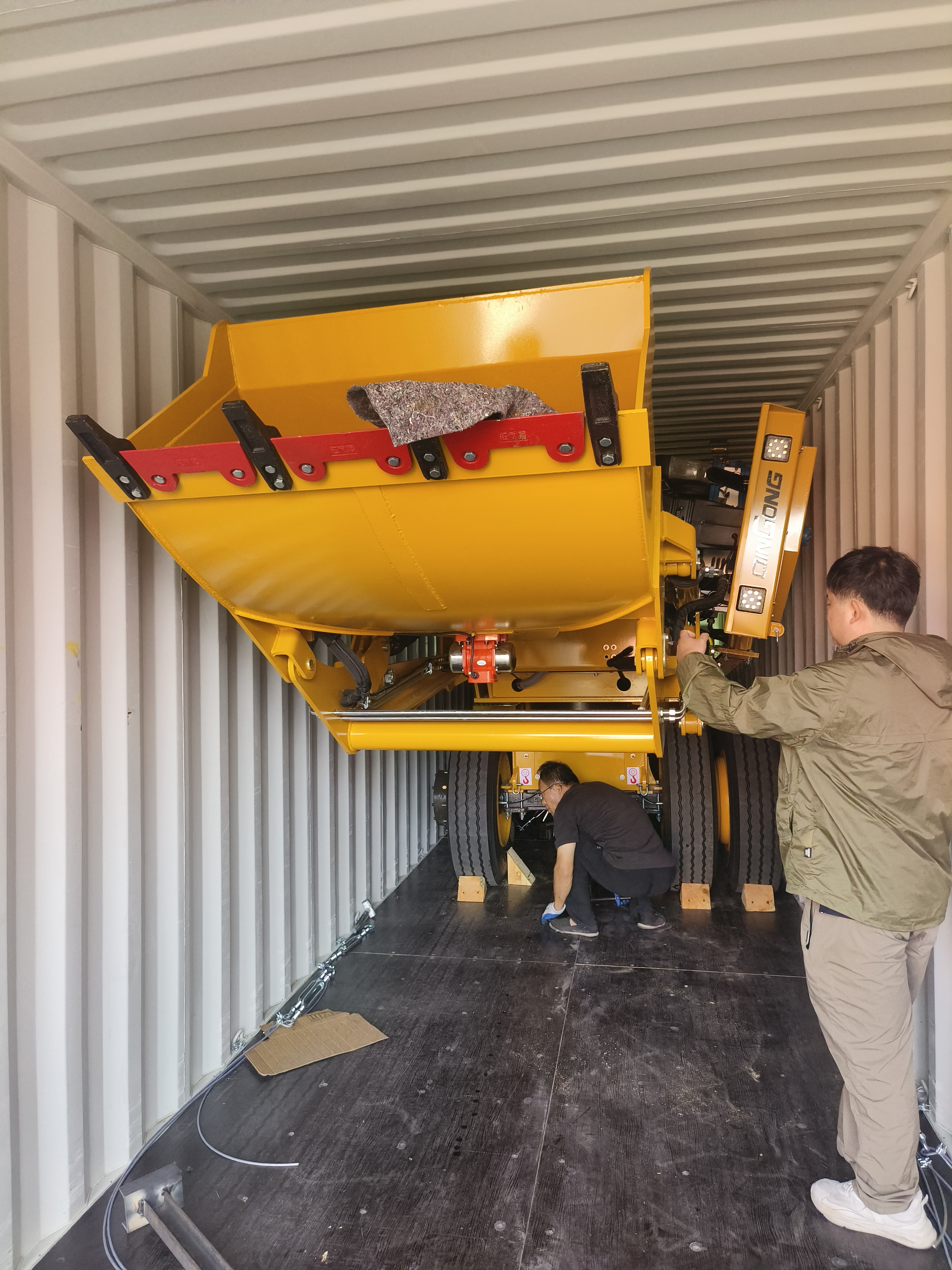
A self-loading mixer truck performs its own loading, which removes a separate machine from the concrete chain.
What each route actually consists of
Route A — integrated self-loading mixer truck. A self-loading concrete mixer truck carries its own loading assembly, mixing drum and discharge system on a truck chassis. QINGONG's product description states that the machine integrates automatic loading, concrete mixing, transportation and discharging into one unit, which reduces the need for additional loading equipment and supporting personnel. The drum defines the batch: the 4.0 m³ model has a 4.0 m³ mixing capacity per cycle.
Route B — site loader plus separate mixing. A site loader — wheel loader, backhoe loader or skid-steer loader — is a general-purpose earthmoving and material-handling machine. Inside the concrete chain it loads sand, gravel and cement into a separate mixer or batching arrangement; mixing, transport and discharge are then performed by other equipment. The loader keeps earning on excavation, backfilling and yard work, but it is not a metering or mixing device by design.
The distinction matters most at the point where buyers compare purchase price. Route B spreads the concrete function across more than one machine and more than one operating role. Route A concentrates it, at the cost of a machine that is less useful outside concrete work. Neither arrangement is inherently superior; fit depends on how scattered the pours are and how much non-concrete work the site or fleet generates.
The QINGONG QG4.0 4.0 m³ unit in verifiable terms
JINAN QINGONG MACHINERY CO., LTD is a construction equipment manufacturer headquartered in Hanyu Golden Valley, Jinan High-tech Zone, Shandong Province, China, founded in 2011. Its self-loading mixer family spans 1.8 m³ to 4.5 m³ capacities, with the 2.6 m³, 3.5 m³ and 4.0 m³ versions identified by the company as its main sales volumes. The QG4.0 sits at the upper end of that working range and is one of the company's best-selling self-loading models.
- Mixing capacity: 4.0 m³ per cycle.
- Engine: Yuchai 4108 diesel, 91 kW, as standard fitment.
- Gross vehicle weight: 9,000 kg. For reference, the 2.6 m³ model is 7,000 kg and the 3.5 m³ model 8,200 kg.
- Water tank: 900 L on the 4.0 m³ model, against 450 L on the 2.6 m³ and 800 L on the 3.5 m³.
- Batching control: a precision electro-hydraulic weighing system that measures the sand and gravel in each scoop during loading, prints a receipt on site, and is stated to hold a 0.5% error per scoop.
- Rotation and discharge: cab and mixing drum rotate synchronously through 360°, allowing bidirectional travel without turning the vehicle around, together with 180° discharge described as blind-spot-free.
Two of these specifications carry more weight than they appear to. Per-scoop weighing turns an informal site activity into a recorded one: mix proportions can be documented pour by pour instead of being reconstructed afterwards, which matters when a client or inspector asks how a particular section was batched. Synchronous rotation is a manoeuvring feature rather than a mixing one. On a narrow rural road, a single-lane embankment or a courtyard pour, a machine that does not need to turn around removes a meaningful part of the cycle and much of the reversing risk.
Manufacturer credibility: what a buyer can actually check
QINGONG's self-loading mixer programme sits inside a broader construction equipment business: a 50,000 m² manufacturing base, a stated 150+ employees, a 12-person R&D team and an annual output figure of 25,000. Production follows ISO 9001 quality management, and the company states that core models are CE certified by EU Notified Body UDEM (NB 2696) under Machinery Directive 2006/42/EC, with certification being upgraded for the new Machinery Regulation (EU) 2023/1230. The company also holds AEO Advanced Certified Enterprise status and serves as President Unit of the Shandong Cross-Border E-Commerce Association.
For overseas buyers, the service layer is the part that is hardest to substitute. The company reports subsidiaries and physical spare parts warehouses in Tanzania, Zambia, Indonesia and Laos, staffed with local service teams, and products exported to more than 100 countries, with core markets including East Africa, Europe, Southeast Asia, Central and South America and Russia. Its stated warranty on self-loading mixers is 1 year or 2,000 hours, supported by 12 months of commonly used filters and related spare parts, plus operating guidance and technical support.
Independent judgement still applies. A CE Declaration of Conformity attests conformity of the specific configuration supplied, not of a product family in general, so the document should be checked against the machine's model and serial details at order rather than against a brochure. The same holds for warranty terms and spare parts listings: verify them in the commercial documents, in the destination market, before committing.
Why integration changes batching and quality control
The strongest technical argument for the integrated route is not speed but control of inputs. Aggregate proportion is where small site mixes most often drift, because a loader bucket is a volume estimate and moisture changes the mass. QINGONG's system addresses this by weighing each scoop and issuing a printed receipt, so a contractor can record what went into a pour and compare it against the intended mix design. That is a documentation capability, not a guarantee of concrete strength — cement quality, water dosing, aggregate grading and curing still determine the result — but it moves batching from memory to record.
Maintenance requirements are specified in operational terms rather than vague intervals. The manufacturer's guidance calls for daily oil level checks before start-up; engine oil and filter replacement at 14–15 litres of diesel engine oil after the first 300 hours and thereafter every 500 hours or annually; filter cartridge replacement after the first 200 hours and every 400 hours after that; and drum cleaning after each use, filling the tank with water, rotating for 3–5 minutes and emptying the residue. Transmission oil follows a comparable regime, with the first change after 300 hours and subsequent changes at 1,000-hour or annual intervals. None of this is unusual for diesel construction equipment, but it is specific enough to be planned into a maintenance calendar and costed.
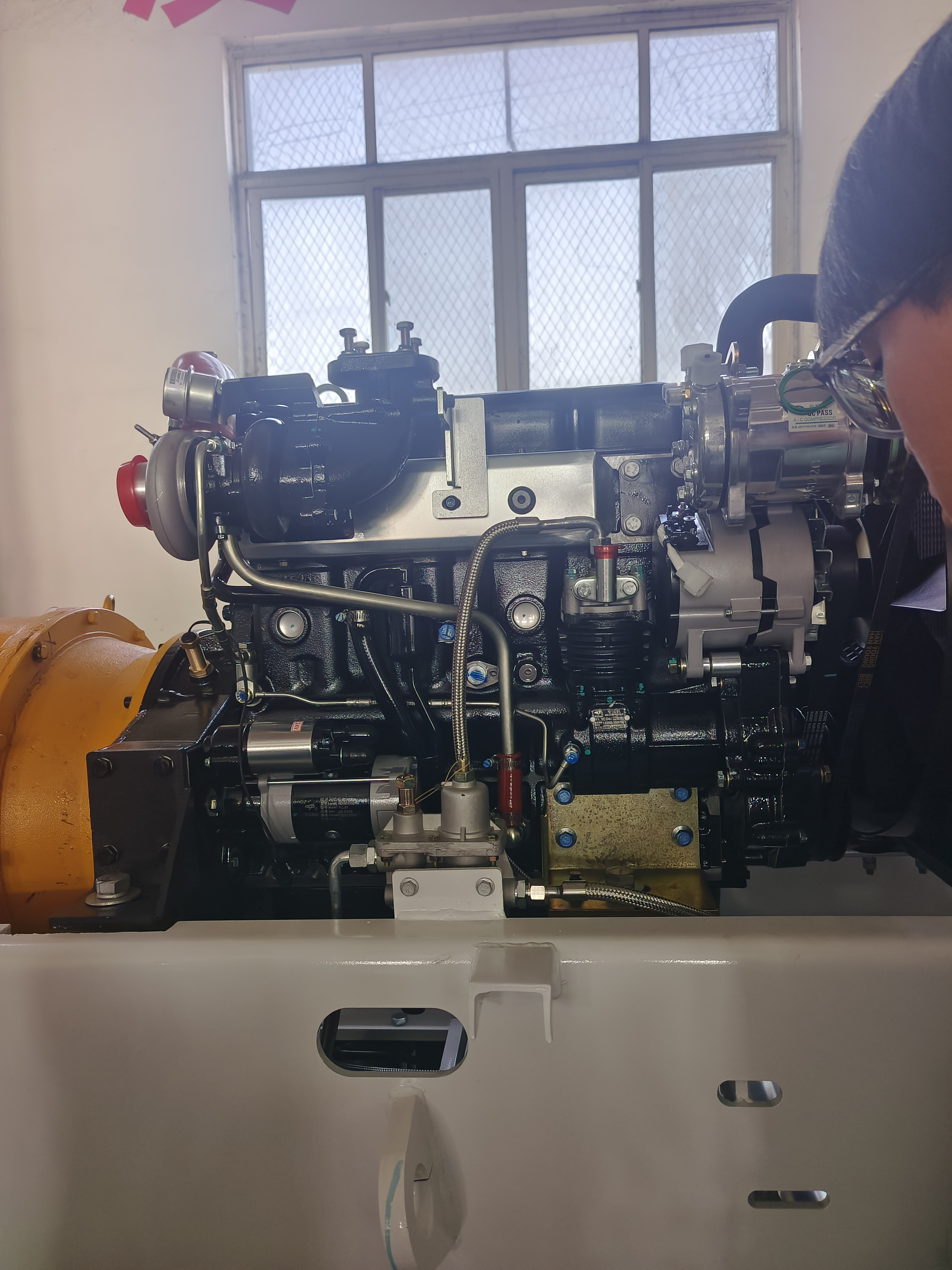
Yuchai diesel power is standard across the QINGONG self-loading mixer range, with alternative engine specifications available on the larger models.
Side-by-side comparison on the criteria that decide the purchase
| Decision criterion | QINGONG QG4.0 self-loading mixer truck | Site loader plus separate mixing |
| Functions in the concrete chain | Loading, metering, mixing, transport and discharge in one chassis | Loader handles loading and material handling; metering, mixing, transport and discharge handled by separate equipment |
| Batch measurement | Electro-hydraulic weighing per scoop, printed receipt, 0.5% stated error per scoop | Depends entirely on the separate batching or weighing arrangement specified |
| Manoeuvring at the pour point | Cab and drum rotate 360° together; bidirectional travel without turning; 180° discharge | Loader manoeuvres independently, but the mixer and transport units must still reach the pour |
| Crew and equipment count | One machine and one operator for the concrete chain, per company description | Multiple machines and operating roles across loading, mixing and delivery |
| Use outside concrete work | Not a substitute for excavation, trenching or backfilling | Loader continues to serve earthmoving, backfill and yard duties year-round |
| Weight to check against infrastructure | 9,000 kg gross on the 4.0 m³ model | Varies by loader class and by the separate mixing equipment used |
| Steering configuration | Left-hand drive only; right-hand drive is not supplied for this model | Availability varies by brand and by market specification |
| Support terms | 1 year or 2,000 hours, 12 months of common filters and related spare parts, operating guidance and technical support | Depends on each supplier's separate warranty and parts arrangements |
What the manufacturer's performance figures do and do not establish
QINGONG publishes comparative figures for its self-loading mixer range against what it describes as selected traditional mixing solutions. Those figures state up to 13% faster concrete preparation cycles and up to 9% higher daily mixing output; up to 12% lower labour-related costs and up to 10% lower overall concrete production costs through integrated loading, mixing and transportation; up to 8% lower routine maintenance expenses and up to 7% less equipment downtime; and up to 14% higher operational efficiency with up to 9% lower fuel consumption per cubic metre of concrete produced.
These are company-stated comparisons, expressed as ceilings and tied to selected baselines. They are useful as directional indicators of where savings are expected to come from — fewer machines, fewer operators, fewer handovers — but they are not an independent test of a specific site. A buyer should treat them as a hypothesis to validate with two weeks of cycle data from their own projects: how many cubic metres per shift, how many operators on the concrete chain, how much idle time the loader carries between pours.
Where the site-loader route remains the better choice
The loader route wins in several clearly identifiable situations, and pretending otherwise would be poor procurement advice. If a contractor already owns a loader and a mixer, the marginal capital cost of continuing is low, and the loader retains full value on earthmoving, trenching and backfill between concrete jobs. If pours are large and concentrated enough to justify ready-mix deliveries, neither route is the primary answer. If one loader can support several mixers across a compact site, the loader's utilisation per machine-hour may be better than a dedicated mixer truck's.
The integrated route has firm boundaries of its own. Right-hand drive is not available for this model, which excludes markets and fleets that require it. Gross weight of 9,000 kg on the 4.0 m³ unit has to be compared against posted bridge and road limits — the manufacturer's own guidance is that the compact body suits narrow country roads but that bridge load limits should be checked before crossing. And because one drum produces one batch per cycle, projects with very large continuous pours should model cycle time against pour size rather than assume a single machine will keep up.
Application fit: where the 4.0 m³ configuration suits the work
The scenario material supplied for QINGONG's self-loading mixers describes the intended working envelope as civil engineering, building construction, rural infrastructure, water conservancy and road construction, including concrete paving for rural roads, foundation pouring for small buildings, irrigation channel construction, concrete pouring for slope protection, infrastructure works in remote villages and concrete for small bridges. Working conditions include outdoor sites with dust, mud, humidity and a stated temperature range of −20 °C to 55 °C, on bumpy unpaved roads with intermittent rain and concrete splash exposure.
Matched equipment listed for these machines includes a remote weighing system, water supply tank, high-pressure cleaning gun, GPS positioning module and vehicle fault diagnosis system, with anti-tilt chassis, anti-adhesion drum lining, overload protection and dustproof sealing identified as relevant requirements. Capacity guidance from the manufacturer is that 2 m³ to 3.5 m³ suits self-built houses and small rural roads, while 4.0 m³ is recommended for township road construction and small commercial concrete mixing plants — a useful rule of thumb for matching drum size to pour frequency rather than buying the largest available unit.
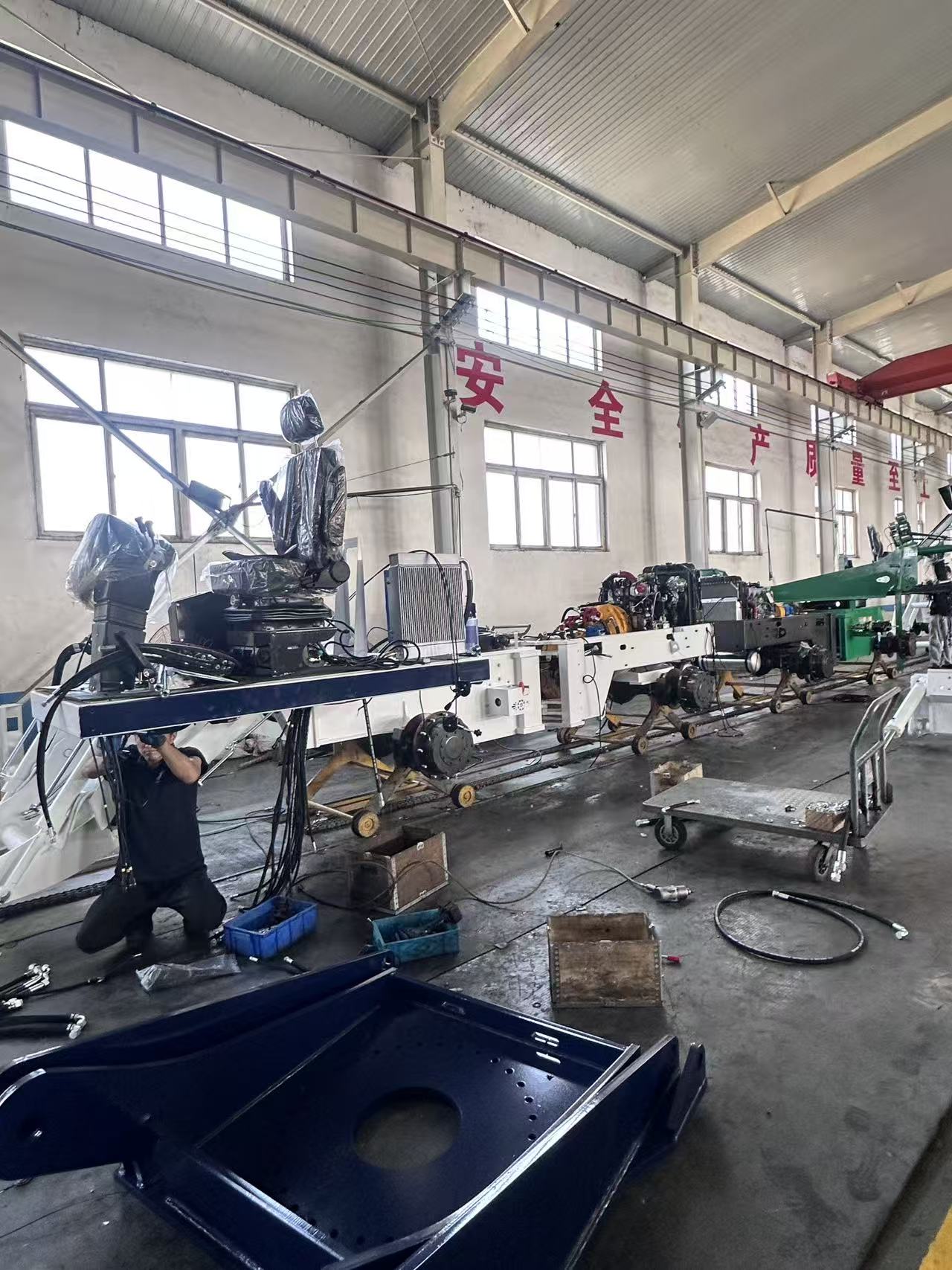
Setup for on-site concrete production: the machine loads, mixes and discharges at the pour point without a separate batching plant.
Two procurement patterns, and how they differ in practice
In small and mid-sized concrete work, two buying patterns coexist. The first treats concrete as a transported product and buys capacity from a plant, with a loader kept for site handling. The second treats concrete as something produced at the pour, and buys a machine that carries the whole process with it. The choice is driven by site distribution rather than by a market forecast: where pours are scattered, access is restricted and equipment availability is limited, the integrated machine removes a coordination step that would otherwise sit between a loader, a mixer and a delivery vehicle.
For distributors and importers, the same logic applies at portfolio level. A single self-loading machine is easier to demonstrate and support than a multi-machine batching arrangement, but it also concentrates technical support requirements on one product. That is where the spare parts warehouse and local service presence in Tanzania, Zambia, Indonesia and Laos becomes part of the commercial case rather than a footnote.
Configuration outlook
Three supported configuration directions are worth tracking at the order stage. First, certification: the company states it is upgrading from Machinery Directive 2006/42/EC certification to the new Machinery Regulation (EU) 2023/1230, so EU-bound buyers should confirm which document set applies to their machine at the time of order. Second, power: while the Yuchai 4108 at 91 kW is standard on the 4.0 m³ unit, the 3.5 m³ and 4.0 m³ models can alternatively be specified with Cummins engines, a Yuchai 6105 turbocharged engine rated at 130 kW or a Weichai-Deutz 6105 turbocharged engine rated at 130 kW, and sites above 3,000 m altitude can specify a Yuchai six-cylinder engine. Third, tyres: single or dual configurations and standard off-road or desert tyres are available, and tyres can be customised for conditions such as desert, gravel and muddy roads.
Verification checklist before ordering either route
- Confirm the CE Declaration of Conformity matches the exact model and serial number offered, and check which directive or regulation version it references.
- Compare the 9,000 kg gross weight of the 4.0 m³ unit against bridge and road limits on the routes you will actually use.
- Test the weighing claim yourself: load several scoops and check the printed receipts against a known reference weight.
- Model cycle time against your largest single pour, not against an average, and decide whether one drum is sufficient or a second unit is needed.
- Confirm steering side, engine specification and tyre configuration in writing before production, since these are order-specific options.
- Verify warranty terms, the 12-month filter and spare parts provision, and the local parts stock position for your market.
- Ask the loader-route supplier the same questions in reverse: how batching is measured, who operates each machine, and what the total crew cost per cubic metre is.
Frequently asked questions
What does the QINGONG 4.0 m³ self-loading mixer truck weigh, and can it use narrow rural roads and bridges?
The 4.0 m³ model has a gross vehicle weight of 9,000 kg; the 3.5 m³ model is 8,200 kg and the 2.6 m³ model 7,000 kg. The manufacturer describes the body as compact and suited to narrow country roads, while advising that the load limit of narrow bridges be checked before crossing. The stated gross weight is the figure to compare against posted limits on your specific route.
Which engine powers the 4.0 m³ model, and can another engine be specified?
A Yuchai 4108 diesel rated at 91 kW is standard on the 4.0 m³ unit, following the pattern of the 2.6 m³ model with the Yuchai 4102 at 77.3 kW and the 3.5 m³ model with the Yuchai 4105 at 85 kW. The 3.5 m³ and 4.0 m³ models can alternatively be specified with Cummins engines, a Yuchai 6105 turbocharged engine at 130 kW or a Weichai-Deutz 6105 turbocharged engine at 130 kW, and for sites above 3,000 m altitude a Yuchai six-cylinder engine can be fitted. Optional engines are configuration-specific and should be confirmed per order.
How accurate is the weighing system, and how much water does the 4.0 m³ unit carry?
The 4.0 m³ model carries a 900 L water tank, against 800 L on the 3.5 m³ and 450 L on the 2.6 m³ unit. The precision electro-hydraulic weighing system measures the sand and gravel in each scoop during loading, can generate a printed receipt on site, and is stated to hold an error of 0.5% per scoop. The system documents batching inputs; it does not replace mix design, cement quality control or curing practice.
Does the loading mechanism rotate a full 360°, and what discharge angle does that allow?
The cab and mixing drum rotate synchronously through 360°. This permits bidirectional travel without turning the vehicle around and enables 180° discharge, which the manufacturer describes as blind-spot-free. In practice the feature reduces the space needed at the pour point and shortens the manoeuvring part of each cycle.
Which capacity should a buyer choose among 2.6 m³, 3.5 m³ and 4.0 m³?
Manufacturer guidance recommends 2 m³ to 3.5 m³ for self-built houses and small rural roads, and 4.0 m³ for township road construction and small commercial concrete mixing plants. The wider family spans 1.8 m³ to 4.5 m³. The practical rule is to match drum size to pour frequency and site access rather than to the largest available capacity.
Is right-hand drive available, and can tyres be customised?
Right-hand drive is not supplied for this model, which is left-hand drive only — a genuine constraint for markets that require right-hand drive. Tyres, by contrast, are flexible: single or dual configurations and standard off-road or desert tyres are supported, and tyres can be customised for local conditions such as desert, gravel and muddy roads, including the road environments typical of African markets.
Conclusion
On the evidence available, the QINGONG QG4.0 4.0 m³ self-loading mixer truck is a defensible choice where concrete is produced at scattered, access-constrained pours and where documented batching, single-operator operation and manoeuvring without turning carry real value. A site loader remains the better answer where a loader already exists, where non-concrete work dominates the fleet's year, or where pours are large enough for plant supply. The decisive step is not the specification sheet but two weeks of measured cycle data from your own sites — and a written confirmation of engine, steering, tyre and certification details before the order is placed.
Company information: JINAN QINGONG MACHINERY CO., LTD. The manufacturer's catalogue and introduction document is available for download: QINGONG Machinery Catalog & Introduction (PDF).
Have Questions or Need More Details?
Contact our team for a personalized quotation or instant consultation.
Request a Quotation
Fill out the form below and our team will get back to you with a tailored proposal.
WhatsApp Direct Chat
Prefer to chat in real-time? Message us on WhatsApp for instant assistance & quick answers.
- Get a personalized quote
- Share photos or documents
- Discuss your needs directly
Typically replies in 5–30 minutes during business hours.