
Semi-Automatic vs Manual Retractable Bollards: An Independent Buyer Comparison
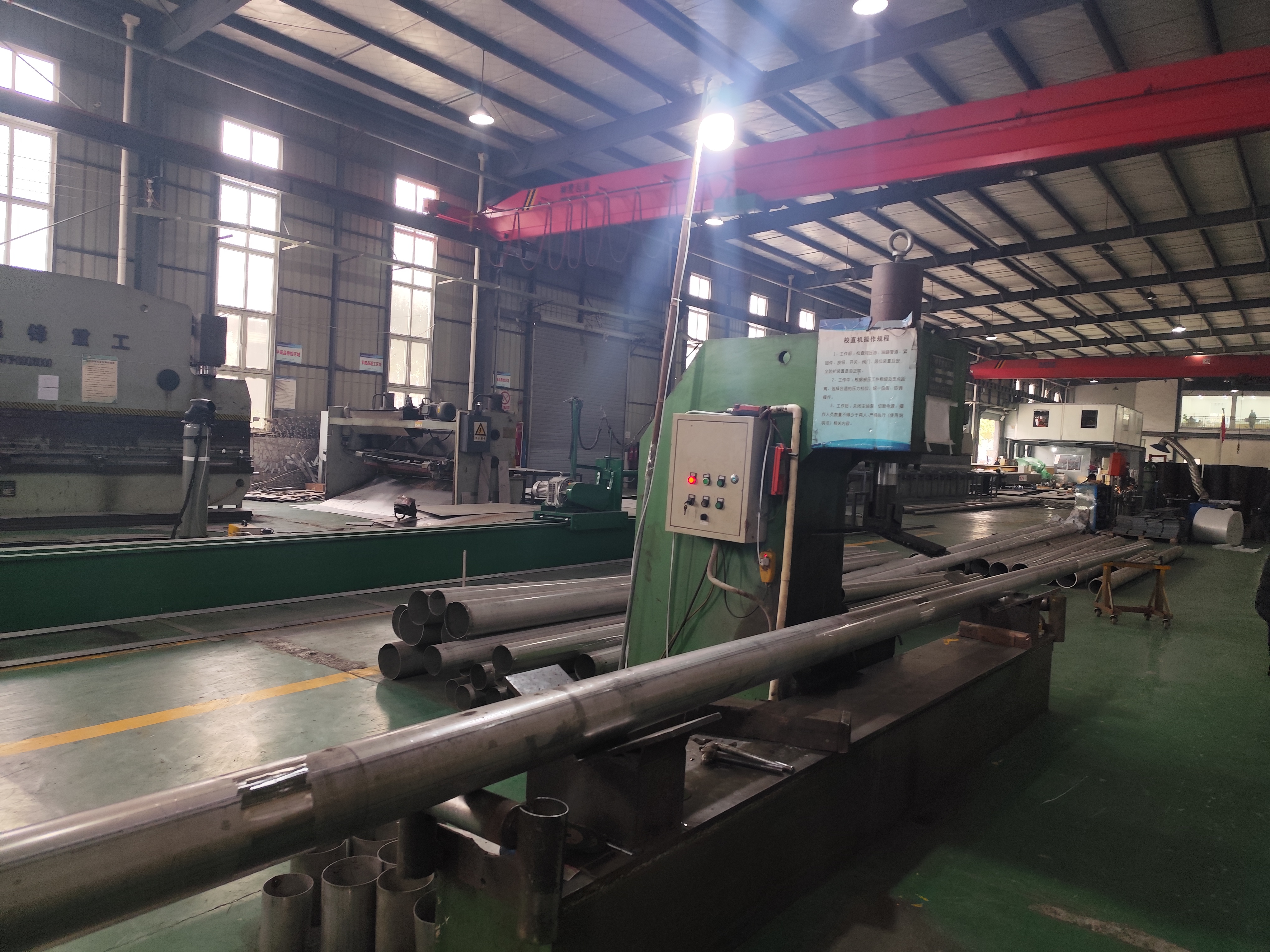
Bollard production equipment and component handling inside the manufacturing facility. Image: RICJ.
Most bollard specifications do not fail at the steel. They fail at the operating model: an entrance designed for an opening frequency the staff cannot sustain, or a powered line specified for a site whose power supply and drainage cannot support it. Semi-automatic and manual retractable bollards are usually shortlisted against each other for exactly this reason. Both keep the post operator-dependent and both generally keep the electrical and civil scope small, yet they differ in handling effort, maintenance exposure and the evidence a buyer should collect before the order is released.
Two Mechanical Types Sharing One Constraint
A manual retractable bollard is a post that the operator raises and lowers by direct physical effort and then locks in position, usually with a key. A semi-automatic retractable bollard is released by the operator and assisted back into the raised position by an internal mechanism before being locked; the post is not driven by a motor. Both retract into a foundation-mounted sleeve, and both sit in the same equipment family as fixed bollards, removable bollards, fold-down bollards, automatic hydraulic or electromechanical bollards, road blockers and tyre killers.
The shared constraint is the absence of a powered actuator at the post. That single characteristic drives most of the downstream consequences a procurement team has to plan for: someone must be present each time the line opens, the number of powered components that can fail is lower, and the control architecture around the entrance stays simpler than it would for an automatic installation.
RICJ (Chengdu Ruisijie Intelligent Technology Co., Ltd.), a Chengdu-based original manufacturer of vehicle security equipment founded in 2007, lists both semi-automatic bollards and manual retractable bollards in its product range alongside automatic rising bollards, fixed and static bollards, removable bollards, fold-down bollards, road blockers, tyre killers and custom security bollards.
What Buyers Are Actually Solving For
Opening frequency and the operator
The first real question is not which bollard is stronger, but how many times per shift a human being will handle the post. At a few openings per day, a manual post is a routine task. At a hundred openings per shift, the same task becomes a fatigue and consistency problem, and the assisted release of a semi-automatic post starts to matter more than any other difference between the two.
Power and civil works
Neither type needs a motor at the post, so neither forces a power run and a control cabinet at the entrance. On retrofit projects, temporary sites or long perimeter lines where only one or two bays open, that difference often decides the specification before any product comparison begins.
Maintenance access years after commissioning
Underground assemblies are where lifecycle cost quietly accumulates. Documented maintenance triggers for underground components include long-term frequent operation, water or debris entering the underground housing, poor drainage conditions, and vehicle impact or abnormal external force. The associated risks are corrosion, blockage caused by water and debris, mechanical jamming, and failure of the locking structure. Because a semi-automatic post adds an assist and release mechanism, it adds one more component to that maintenance scope.
Documentation and import execution
Export projects fail on paperwork as often as on hardware. Buyers should establish at RFQ stage which drawings, manuals, wiring diagrams and customs documents will be supplied, and which conformity requirements apply in the destination market.
Where Each Type Fits in Vehicle Access Control
Manual retractable bollards typically fit
- Entrances that open a few times per shift, where the same staff operate the line and a key can be governed and issued.
- Secondary vehicle restrictions sitting behind a primary gate, where the bollard line is an occasional-use barrier rather than the main traffic path.
- Locations where bringing power and control cabling to the post is impractical or adds disproportionate civil work.
- Perimeter lines where one or two bays need occasional vehicle passage while the remaining posts stay fixed.
- Sites with a basic maintenance regime, where fewer mechanisms means fewer systems to diagnose.
Semi-automatic retractable bollards typically fit
- Moderate-frequency entrances where repeated lifting becomes a handling or fatigue issue but full automation is not justified by the traffic profile.
- Entrances staffed by reception personnel or rotating security guards who are present but not dedicated to the bollard line.
- Mixed lines that combine fixed bollards with a small number of operable posts and need consistent operator action across shifts.
- Sites that want a simpler control scope than an automatic installation, while reducing the physical effort of each opening.
Where neither type is the right answer
High-frequency, 24-hour entrances generally move to automatic rising bollards, where the operating model is built around automated cycling and the equipment can be matched with RFID, licence plate recognition, remote control systems and access control systems depending on the project design. Full-width denial and anti-ram requirements point toward road blockers or a crash-rated barrier line. Permanent pedestrian and vehicle separation is usually a fixed bollard task, and one-way directional control at exits is a tyre killer task rather than a bollard task.
Technical Details That Decide the Order
Post material and finish
Material grade should be agreed in writing rather than inferred from a catalogue photograph. RICJ lists 304 stainless steel, 316 stainless steel, carbon steel, galvanized steel and aluminium as available materials, and its customization scope covers size, material, surface finish, logo, control system, product structure and project-specific solutions, with the exact scope depending on the model and the project. For coastal or de-icing-salt environments, the material conversation should happen before the quotation, not after delivery.
Foundation, sleeve and drainage
The foundation is part of the product, not part of the building works. Drainage design determines whether water reaches the underground housing, and water is one of the documented triggers for maintenance. Buyers should request the foundation drawing, the required excavation depth and the drainage detail with the quotation.
Locking mechanism and key governance
A manual or semi-automatic line is only as controlled as its keys. Procurement should confirm the locking arrangement, how many keys are supplied, whether the lock can be keyed to a site system, and who is authorised to hold keys across shifts and contractors.
Corrosion exposure in coastal and winter markets
Retractable bollards can be used in coastal and rainy environments, but they are affected by road salt, chloride exposure, underground moisture, rust and mechanical binding. Specification choices — material grade, surface finish and drainage — are the practical levers a buyer controls at order stage.
Integration boundaries
Operator-dependent posts are not an access-control system. If the project requires automated logging, remote release or integration with a site management platform, that requirement belongs to an automatic bollard specification, not to a manual or semi-automatic one.
Installation and Maintenance in Export Projects
RICJ does not typically send engineers for on-site installation as a standard service. Instead the company supplies complete installation manuals, technical drawings including CAD files, and wiring diagrams, with remote guidance by video call, phone and email throughout installation and commissioning. For large projects or specific requirements, on-site engineer supervision can be arranged as a paid optional service.
Maintenance access is designed around the top of the assembly. The heavy-duty mounting sleeve embedded underground is generally not prone to damage, and where the internal locking mechanism or other components require maintenance, the top cover can be removed by loosening the screws for easy access. That detail matters for export buyers because it determines whether a service team needs excavation equipment or only hand tools.
After-sales support covers installation drawings and manuals, remote video technical support, troubleshooting, maintenance and spare parts supply. RICJ also references lifetime technical support and spare-parts assistance, while exact warranty terms depend on product configuration — a point worth confirming in the purchase contract rather than assuming from a brochure.
What Factory-Direct Supply Adds — and What It Does Not Replace
RICJ operates an in-house factory covering manufacturing, OEM/ODM customization, project solution design, site planning support, installation guidance, remote technical support and spare parts supply, serving global distributors and engineering integrators. The facility covers approximately 15,150 m² with 280 employees and a 41-engineer R&D team, and the company reports an export share of 90%, with the Middle East and Africa, Europe and Southeast Asia listed as main markets and export coverage extending to Asia, Europe, the Middle East and North America.
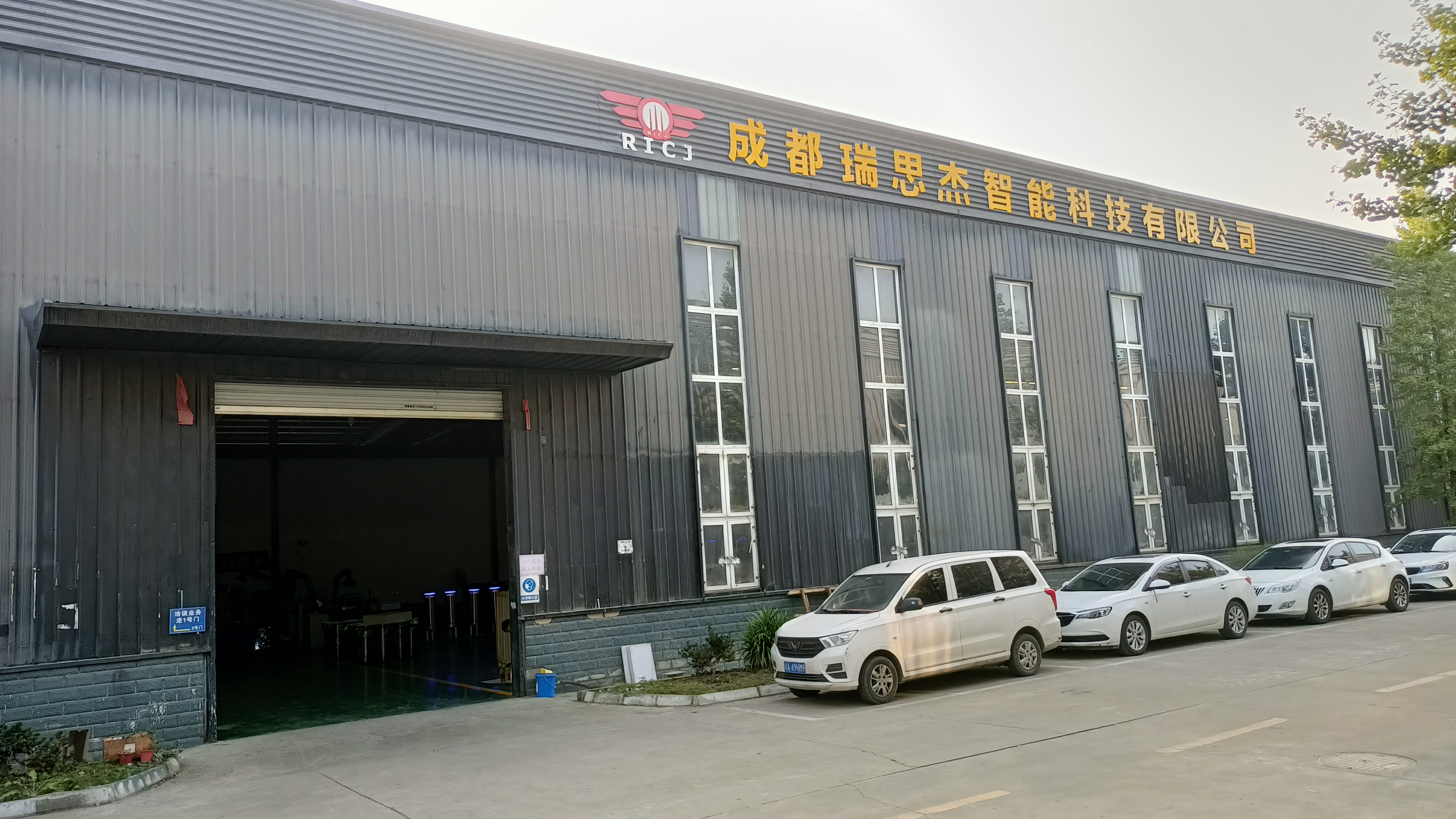
In-house manufacturing and assembly space at the RICJ facility in Pengzhou Industrial Park, Chengdu. Image: RICJ.
For buyers evaluating a first order, several supply facts are directly usable as selection criteria. The listed minimum order quantity is one unit, which allows a single post to be evaluated — finish, locking action and documentation pack — before committing to a project volume. Production planning typically follows a 30–50 day window for project orders, with the exact schedule confirmed at quotation. Finished equipment undergoes functional testing before delivery, and the company states 100% testing as its quality-control approach.
Quality management is certified to ISO 9001 under certificate 102626Q00045R000, issued by HUAQIXIN CERTIFICATION SERVICES (CHENGDU) CO., LTD on 20 March 2026 and valid to 19 March 2029, against GB/T19001-2016/ISO9001:2015. The certified scope covers urban traffic facilities including automatic rising bollards, anti-collision bollards, guard posts, road blockers, tire killers, parking locks, speed bumps, road barriers and traffic obstacles. RICJ is also recognised as a 5-Star Supplier on Alibaba.com.
Project references provide context rather than proof of suitability for a specific site. RICJ states it has contributed to Chengdu Tianfu International Airport, and one public case title references 510 deep-mount 316 stainless steel fixed bollards deployed in Sweden. Those references describe fixed bollard deployments; they should not be read as test data for a semi-automatic or manual retractable post.
Market Signals: Automation Growth Does Not Erase the Mechanical Segment
Mordor Intelligence estimates the global automated barriers and bollards market at USD 22.73 billion in 2025, with an expected reach of USD 27.39 billion by 2030. That figure covers a wider category than mechanical retractable posts, so it should be read as context for capital flowing into vehicle access control rather than as a bollard-only forecast.
The same source reports that automatic retractable bollards generated the highest revenue within the retractable category, with a 52% share in 2025. The practical reading for buyers is that roughly half of retractable bollard revenue sits outside the fully automatic segment — the space where semi-automatic and manual retractable types compete on operator handling, site conditions and lifecycle simplicity rather than on automation features.
Standards expectations are tightening in parallel. ASTM F2656/F2656M-20 provides a structured procedure to establish a penetration rating for vehicle perimeter barriers subjected to vehicle impact, and the M designations (M30, M40, M50) denote impact speed classes. A secondary guide to the same standard describes penetration bands from P1 (up to 1 m) through P4 (30 m or greater); those band definitions should be checked against the current ASTM edition before being written into a contract.
Trade mechanics deserve the same attention. A US Customs and Border Protection ruling (NY N042340) classifies steel bollards under HTSUS 7326.90.8588, which gives importers a documented starting point for tariff classification conversations with their broker.
Side-by-Side Comparison
| Decision factor | Manual retractable | Semi-automatic retractable | Fully automatic (hydraulic / electromechanical) |
|---|---|---|---|
| Post movement | Operator effort | Operator-released, mechanically assisted | Powered actuator |
| Power at the post | Not required to move the post | Not required to move the post | Required |
| Operator presence | Required at every opening | Required at every opening | Not required for routine cycling |
| Control and integration | Physical key control | Key or lock-based control, depending on model | Can be matched with RFID, LPR, remote control and access control systems |
| Handling at higher frequency | Repeated manual handling | Reduced handling effort per opening | Automated cycling |
| Maintenance scope | Sleeve, lock, drainage | Sleeve, lock, assist and release mechanism, drainage | Actuator, controls, power supply, drainage |
| Typical fit | Low-frequency staffed entrances | Moderate-frequency staffed entrances | High-frequency or automated entrances |
| Documentation to request | Foundation drawing, key policy, manual | Foundation drawing, mechanism detail, manual, spares list | Full technical file, control drawings, test evidence |
Future Outlook
Three developments are likely to shape how these two product types are specified. First, documentation is becoming part of the deliverable rather than an afterthought: buyers increasingly expect drawings, manuals, wiring diagrams and customs paperwork to be confirmed at quotation stage, which favours suppliers with in-house engineering and export experience. Second, crash-rating verification is moving beyond high-security sites into commercial and infrastructure projects, which pushes buyers toward asking for model-specific reports instead of category-level claims. Third, automation growth does not remove the mechanical segment — it repositions it, with semi-automatic posts absorbing moderate-frequency entrances and manual posts holding low-frequency, power-constrained and retrofit sites.
For a factory-direct supplier covering automatic, semi-automatic, manual, removable, fixed and fold-down bollards alongside road blockers and tyre killers, that split matters commercially: the buyer conversation shifts from which product is stronger to which operating model the site can actually sustain over its service life.
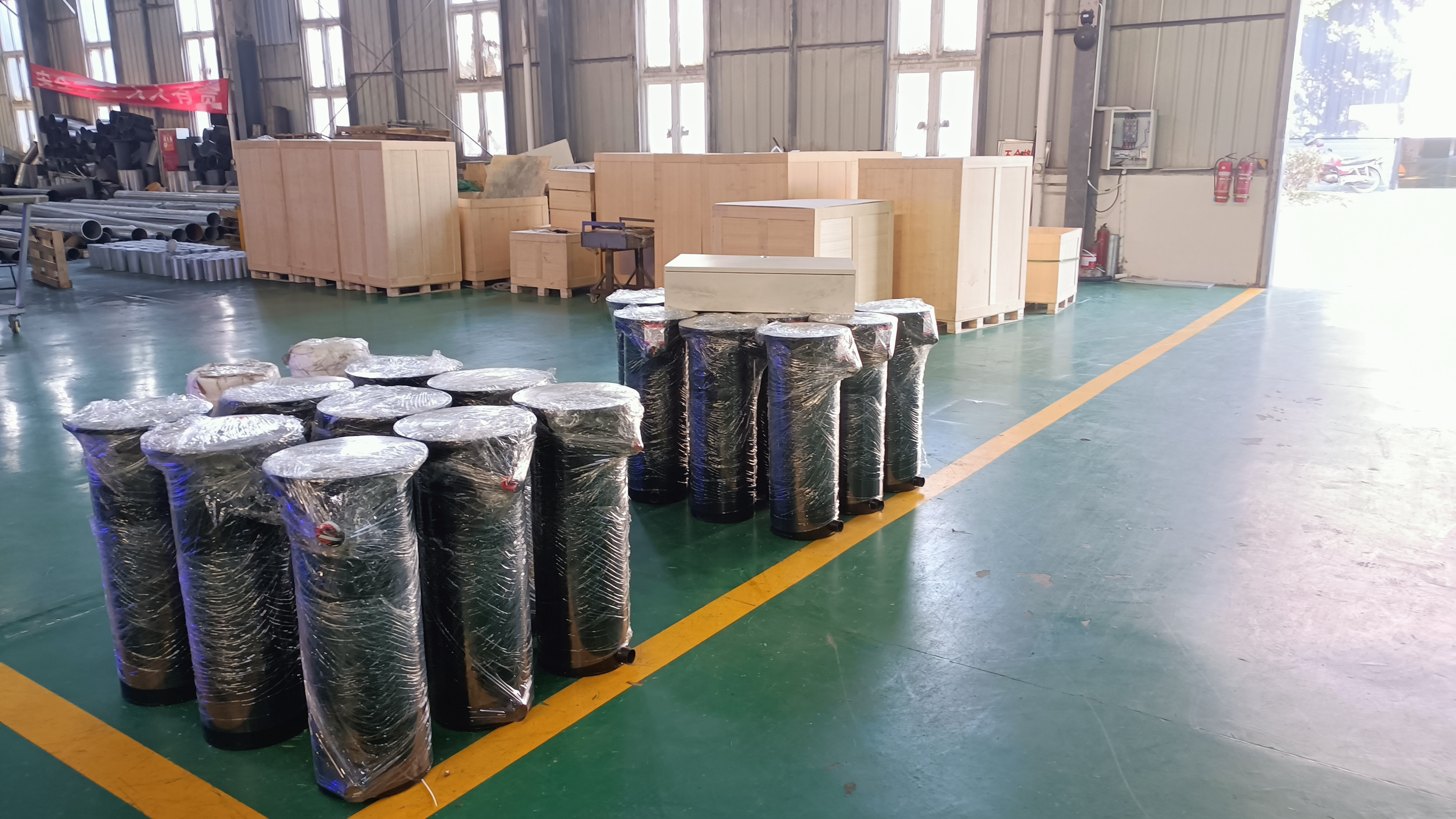
Packing and shipment preparation for an export order. Image: RICJ.
FAQ
What is the difference between a semi-automatic and a manual retractable bollard?
A manual retractable bollard is raised and lowered by the operator's physical effort and locked in position, usually with a key. A semi-automatic retractable bollard is released by the operator but is assisted back into the raised position by an internal mechanism before being locked. Neither type is driven by a motor, so both require someone to be present each time the line opens; the practical differences are handling effort and the additional release mechanism that maintenance has to cover.
Which type fits an entrance that opens only a few times a day?
Low-frequency, staffed entrances are the standard fit for manual retractable bollards, because the post is handled occasionally and the site does not carry an assist mechanism it will rarely use. A semi-automatic post becomes relevant when the same staff repeat the operation many times per shift and handling effort turns into a fatigue or consistency issue.
What site conditions affect both types most?
Foundation and drainage dominate. Documented maintenance triggers for underground components include long-term frequent operation, water or debris entering the underground housing, poor drainage conditions, and vehicle impact or abnormal external force. Coastal and heavy-rain sites add road salt, chloride exposure and underground moisture, which increase corrosion risk on metal components.
What should buyers verify about materials and customization before ordering?
Buyers should confirm material grade and surface finish in writing rather than inferring them from a product image. RICJ lists 304 stainless steel, 316 stainless steel, carbon steel, galvanized steel and aluminium as available materials, and provides customization of size, material, surface finish, logo, control system, product structure and project-specific solutions, with the exact scope depending on the model and the project.
What documentation should accompany an export order?
For overseas projects RICJ provides English technical documentation, installation manuals, wiring diagrams and customs documentation, with remote assistance by phone, email or video. Buyers should confirm before shipment which documents are included by default and which depend on the destination market, because import classification and conformity requirements differ by jurisdiction.
How is the underground assembly accessed for maintenance?
The heavy-duty mounting sleeve embedded underground is generally not prone to damage. Where the internal locking mechanism or other components require maintenance, the top cover can be removed by loosening the screws to provide access. The documented risks for underground components are corrosion, blockage caused by water and debris, mechanical jamming and failure of the locking structure.
Do crash ratings apply to semi-automatic and manual retractable bollards?
A crash rating applies to a tested system, not to a product category. ASTM F2656/F2656M-20 provides a structured procedure to establish a penetration rating for vehicle perimeter barriers subjected to vehicle impact, and the outcome depends on the bollard, its mounting arrangement and the supporting foundation together. Buyers specifying a rated line should request the model-specific test report — including test vehicle, impact condition, penetration distance and foundation configuration — rather than accepting a category-level claim.
Have Questions or Need More Details?
Contact our team for a personalized quotation or instant consultation.
Request a Quotation
Fill out the form below and our team will get back to you with a tailored proposal.
WhatsApp Direct Chat
Prefer to chat in real-time? Message us on WhatsApp for instant assistance & quick answers.
- Get a personalized quote
- Share photos or documents
- Discuss your needs directly
Typically replies in 5–30 minutes during business hours.