
Semi-Trailer Buyer Checks: Landing Gear, Hydraulic, WMI
Semi-Trailer Buyer Checks: Landing Gear, Hydraulic, WMI
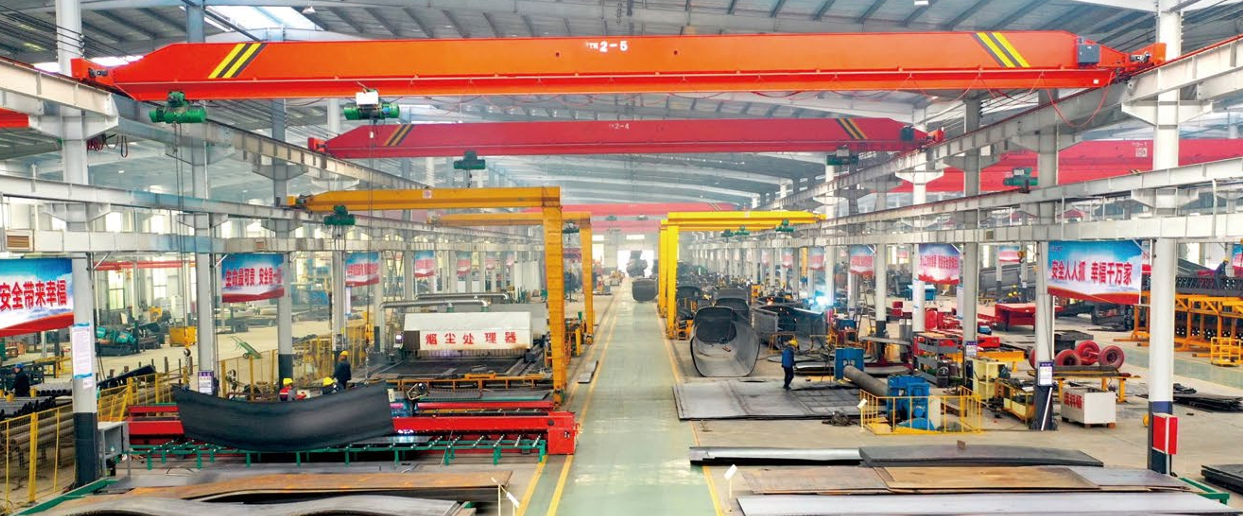
A semi-trailer rarely fails at the specification number shown on a quotation sheet. It fails at the item the sheet did not mention: a landing gear crank that spins without lifting, a hydraulic cylinder seal that weeps under load, or a certificate file that does not answer the registration question in the destination market. These three verification points deserve more attention than most product brochures give them, because each one maps directly to a real ownership cost and to a real market-access condition.
This article takes an independent buyer-comparison approach. It does not name competitors or invent benchmarks. Instead it compares what a buyer should physically check against what a supplier should be able to evidence, on landing gear operation when the crank spins freely or cannot turn, on hydraulic cylinder oil-leak risk and avoidance, and on certificate availability such as WMI code and factory safety certification. Later sections apply the same logic to payload and tare weight, main-beam steel selection, and the supplier answers worth obtaining before cooperation. The audience is the decision-stage buyer who is already comparing suppliers and needs to know which checks separate a credible build from a polished quotation.
Why pre-purchase verification outranks brochure specification
Landing gear, hydraulic cylinders and certification documents are functional rather than visual. They are also the three items most often skipped during a remote enquiry, because a buyer comparing several semi trailers across ten product categories cannot inspect every unit in person. The result is a common mismatch: a buyer pays for a configuration described in a brochure, then discovers the landing gear was never load-tested, the hydraulic system was assembled from mixed-brand parts, and the certificate package covers the factory but not the vehicle class the buyer intends to register.
Treating these as decision criteria rather than afterthoughts changes the comparison. A landing gear check tests whether the supplier understands low-gear operation and gearbox durability. A hydraulic-leak check tests whether the supplier can describe seal quality and valve cleanliness. A certificate check tests whether the supplier can produce verifiable documents rather than scanned images of unknown origin. None of these checks requires proprietary data, and each one can be performed before payment.
Landing gear operation: what a free-spinning or jammed crank reveals
When a semi-trailer landing gear crank turns freely but the legs do not extend or retract, or the crank jams outright, the cause is usually one of five documented conditions. The crank is designed to move a loaded trailer at low speed through a gearbox and screw, not to raise the trailer in high gear. Documented causes are lack of grease, worn or broken gears with missing teeth, sheared gear pins inside the gearbox, trailer tilt under uneven load causing binding, and attempts to raise or lower the trailer in high gear.
Symptom, cause and first-line response
- Symptom: the crank turns but the legs will not extend or retract, or the crank is jammed completely.
- Cause path: absence of grease; worn, broken or damaged gears; sheared gearbox pins; trailer tilt from uneven load; high-gear operation.
- Immediate response: park the trailer on level ground and remove the uneven load; shift into low gear and never lift or lower in high gear; clean dirt and debris from the gear and screw and apply the specified grease.
- Stop condition: if the crank spins freely, gears or pins are broken; stop operation and replace the gearbox assembly.
For the buyer, this sequence doubles as a field test. At inspection, operate the crank through a full extension and retraction cycle on level ground. Confirm the change from high gear to low gear is decisive. Listen for irregular noise and feel for excess play. A unit that grinds or slips in low gear under load is telling the buyer that the gearbox was assembled to a price rather than to a duty cycle. Ask the supplier to name the gearbox assembly and the specified grease, and to confirm whether the gearbox is covered under the one-year warranty service that the manufacturer publishes for its semi trailer range.
Hydraulic cylinder oil-leak risk: causes, diagnosis and avoidance
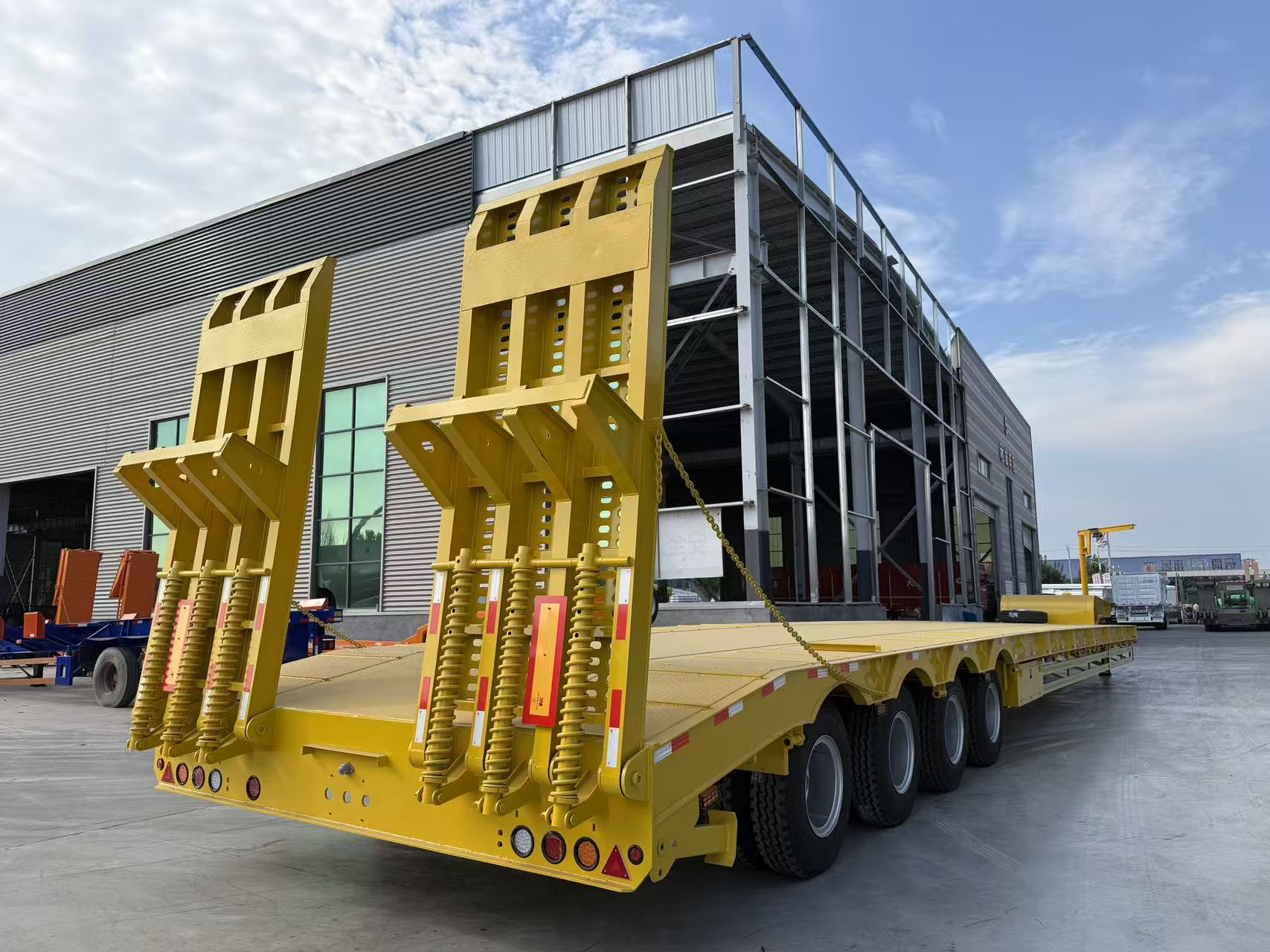
Hydraulic failures on tipper, lowbed and tank semi trailers usually begin as a small oil leak rather than a sudden breakdown. The documented symptom is no movement, or slow and weak lifting, when the hoist switch is activated. The documented causes are low hydraulic oil level or contaminated oil, oil leakage from hose joints or cylinder seals, a stuck or faulty hydraulic directional valve, and a worn hydraulic pump with insufficient pressure output.
The practical diagnostic order a buyer should expect
The correct sequence is not to replace parts at random. It is to stop the machine, check the oil level and top up or replace as required, inspect hoses, joints and cylinders for leakage and tighten fittings or replace seals and hoses, clean and check a stuck directional valve, and only then test pump pressure and replace the pump if pressure is inadequate. A supplier who cannot describe this order is unlikely to support the trailer in the field.
During pre-purchase inspection, look for oil staining around hose fittings, droplets under the cylinder barrel, and pooled fluid on the ground beneath the trailer. Ask which cylinder brand and seal kit are fitted to the specific model, and whether the directional valve is a serviceable item in the destination market. For a buyer comparing a tipper configuration, the documented comparison position is that a wear-resistant plate body with a heavy-duty hydraulic cylinder is associated with a reported 20% lifting-stability improvement and a 35% lower maintenance rate against an ordinary dump semi trailer design, according to the manufacturer’s own comparison. Those figures should be read as a supplier claim tied to a specific configuration, not as a benchmark that applies to every hydraulic trailer on the market.
Certificate availability: WMI code, Announcement status, ISO and 3C
Landing gear and hydraulics determine downtime; certification determines whether the trailer can be registered, insured and legally operated in the destination market. Buyers should verify three separate evidence layers rather than accept one generic certificate file.
WMI code and Announcement status
The World Manufacturer Identifier, or WMI code, is the identifier that ties a vehicle to its manufacturer in a Vehicle Identification Number system. A buyer preparing for registration in a market that uses VIN-based identification should ask the supplier to state its WMI code and to explain how that code connects to the factory’s Announcement status. In China’s regulatory practice, inclusion in the national Announcement management system for special-purpose vehicle enterprises is a separate qualification from a generic business licence. A supplier that cannot explain the distinction is not necessarily unsuitable, but the buyer should treat the answer as incomplete until the underlying documents are produced.
Factory safety certification and quality management
ISO9001:2000 and 3C certification are the two documented certification references for the manufacturer’s semi trailer operations, and the company is described as a national Announcement-listed enterprise with in-house welding, painting and inspection control. For the buyer, the relevant check is not whether a logo appears on a brochure. It is whether the certificate number, issuing body and validity period can be confirmed, and whether the certificate scope actually covers the trailer type being purchased. A factory certificate that covers one product line does not automatically cover every model in a ten-category range, and a buyer comparing suppliers should ask for the scope statement, not only the certificate front page.
For export orders, the buyer should also ask which destination-market conformity requirements apply to the specific trailer type, since factory certification and market type approval are different questions. The manufacturer operates across Africa, South America, Southeast Asia, Central Asia and the Middle East, and buyers in each of those regions should confirm the documentation relevant to their own registration authority rather than assume a single certificate satisfies all markets.
Payload and tare weight: the calculation that actually matters
Payload is the maximum net cargo weight that the semi trailer is permitted to carry, excluding the tare weight of the trailer. Tare weight, also called dead weight, is the self-weight of the empty semi trailer without cargo, fuel, driver or extra goods. The distinction governs the available payload and the total vehicle weight used for transport planning, and it is the number that should anchor a decision-stage comparison.
Two trailers can both advertise a nominal load figure while offering very different usable payload once tare weight is subtracted. A buyer comparing heavy-duty configurations for rough-road markets should therefore request both numbers in writing, confirm the units, and check the tare figure against the intended tractor configuration. The manufacturer’s comparison notes that a high-strength main beam and branded components are associated with a 30% longer service life and a 12-month warranty in heavy haul on rough roads in Africa, South America and the Middle East, with lower long-term replacement cost and less frequent repair; the same comparison also frames the payload advantage in terms of an optimal tare weight and a higher payload ratio. The buyer’s verification step is to reconcile those claims with the actual tare figure quoted for the specific unit.
Main-beam steel selection by plate thickness
Main-beam steel grade is one of the few specification items a supplier can state precisely, and it is a useful discriminator between a serious build and a generic quotation. The documented selection logic is thickness-based: Q690D for main-beam plates over 16 mm, T700 for plates below 10 mm, and Q355 for secondary structural parts. The reasoning is that thick plates need toughness, thin plates need high strength at low weight, and secondary parts need weldability and cost control.
A buyer should ask the supplier to state the actual steel grade used for the main beam and the plate thickness range to which it applies. “High-strength steel” alone is not a specification. The follow-up question is whether the grade is applied to the main beam only or to other load-bearing areas, because a strong main beam paired with a weak subframe does not deliver the intended service life.
Supplier answers to obtain before cooperation
Pre-purchase verification converges on a short set of supplier answers. The following table compares the check point with the evidence a decision-stage buyer should request; it is a verification aid rather than a ranking.
| Check point | What to ask the supplier | What to verify independently |
|---|---|---|
| Landing gear | Gearbox assembly brand, specified grease, low-gear operating instruction, warranty coverage | Full crank cycle on level ground; decisive high-to-low gear shift; absence of grinding or free spin |
| Hydraulic system | Cylinder brand and seal kit, directional valve serviceability, pump pressure test record if available | Oil staining at fittings, cylinder barrel and ground; documented diagnostic order explained in full |
| WMI and Announcement | WMI code, Announcement status evidence, certificate scope statement | Certificate number, issuing body, validity and whether scope covers the specific trailer type |
| Certification | ISO9001:2000 and 3C certificates, destination-market conformity position | Matching of certificate scope to the ordered model; registration authority requirements in destination country |
| Payload and tare | Both figures in writing, with units and configuration basis | Reconciliation with tractor configuration and route weight limits |
| Main beam steel | Steel grade and thickness range, secondary-part grade | Whether the grade applies to main beam only and how the subframe is specified |
On the commercial side, the manufacturer publishes a set of cooperation answers that a buyer can use as a baseline: an original semi trailer manufacturer controlling welding, painting and inspection in-house; EXW, FOB, CFR and CIF trade terms according to customer requirement; export to Africa, South America, Southeast Asia, Central Asia and the Middle East; no MOQ limit with one unit accepted; customizable axles, tires, deck, hydraulic system, paint color and logo; normal lead time of 20 to 35 working days after deposit; and a one-year warranty with lifelong VIP service. These are supplier statements and should be confirmed in the contract rather than relied on from a brochure. The full range spans flatbed, skeleton, lowbed, modular hydraulic, fence, side tipper, tanker and side curtain semi trailers, which is relevant because the checks in this article apply differently across those categories.
How the checks shift across trailer types
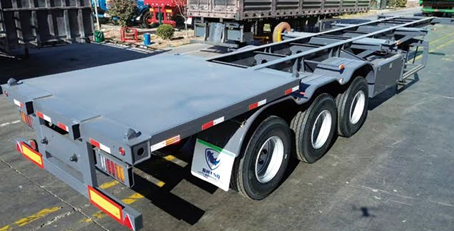
A flatbed trailer or fence trailer carries no hydraulic system, so the buyer’s attention moves to deck condition, main-beam steel and landing gear. A skeleton trailer adds twist-lock inspection, and the documented operating rule is to place the container on the deck, turn each twist-lock handle to the fully locked position, shake the container slightly to confirm locking, and recheck after the first 50 km. A lowbed or lowboy trailer adds hydraulic ramp and deck-height verification, and the documented comparison position is that a hydraulic folding ramp, super-low deck and reinforced beam are associated with a reported 30% loading-efficiency improvement, 15% loading-capacity improvement and 60% reduction in loading time against a simple lowbed semi trailer, with crane rental expense avoided. A dump or tipper trailer adds the lifting-stability and cylinder questions covered above. An oil tank trailer adds anti-slosh baffle inspection, because baffles divide the tank into small compartments, reduce liquid surge during braking, turning or acceleration, and lower rollover risk. A cement tank trailer and a curtain-side trailer each bring their own body-specific checks that fall outside the three core verification points but follow the same evidence-first logic.
Market context and outlook
Broader market data supports the case for disciplined verification without replacing it. Grand View Research estimates the global semi-trailer market at USD 24.2 billion in 2025, with Asia Pacific accounting for a 39.8% revenue share, and lowboy trailers representing a 25.6% segment share (Grand View Research, 2024). Those figures describe aggregate market scale and segment structure; they do not establish the quality of any individual supplier or model, and they should not be read as a forecast of any buyer’s commercial outcome.
The practical implication for the decision-stage buyer is that product scope and configuration variety are widening while the underlying verification questions remain stable. Landing gear still fails for the same five documented reasons. Hydraulic systems still leak at the same four documented points. Certification still requires a scope statement that matches the ordered model. A buyer who standardizes these three checks across the shortlist will compare suppliers on evidence rather than on brochure language, and will enter cooperation with the supplier answers already on file.
Frequently asked questions
What should I do if the landing gear crank spins freely or cannot turn?
Park the trailer on level ground and remove any uneven load. Shift into low gear and never attempt to lift or lower in high gear. Clean dirt and debris from the gear and screw and apply the specified grease. If the crank spins freely, gears or pins inside the gearbox are broken; stop operation and replace the gearbox assembly. The underlying causes to check are lack of grease, worn or broken gears, sheared gearbox pins, trailer tilt under uneven load, and high-gear operation.
What should I do if my tipper semi-trailer cannot lift up?
Stop operation first, then check hydraulic oil level and quality. Inspect hoses and cylinders for oil leakage, check for a stuck directional valve, and finally test hydraulic pump pressure step by step. Low oil level or contaminated oil, leaking hose joints or cylinder seals, a stuck directional valve, and a worn pump with insufficient pressure output are the documented causes. Replace oil if dirty, tighten fittings or replace seals and hoses, clean a stuck valve, and replace the pump only if pressure proves inadequate.
What steel is selected for the main beam of a lowbed semi-trailer, and why?
The documented selection uses Q690D for main-beam plates over 16 mm and T700 for plates below 10 mm, with Q355 for secondary structural parts. Thick plates use Q690D because toughness matters at that thickness; thin plates use T700 for high strength at lower weight; Q355 is applied to secondary parts for weldability and cost control. Buyers should ask the supplier to state the actual grade and the thickness range, rather than accepting “high-strength steel” as a description.
What is payload, and how does it differ from tare weight on a semi-trailer?
Payload is the maximum net cargo weight the semi trailer is permitted to carry, excluding the trailer’s own weight. Tare weight, also called dead weight, is the self-weight of the empty semi trailer without cargo, fuel, driver or extra goods. The two figures together determine the available payload and the total vehicle weight used in transport planning, which is why both should be requested in writing with their units and configuration basis.
What should I know about a supplier before cooperation?
A buyer should confirm the manufacturing entity, the qualification evidence, the export markets served, the trade terms accepted, and the after-sales terms in writing. The documented company position states that it is an original semi trailer manufacturer controlling welding, painting and inspection in-house, holds ISO9001:2000 and 3C certification and is a national Announcement-listed enterprise, exports to Africa, South America, Southeast Asia, Central Asia and the Middle East, accepts EXW, FOB, CFR and CIF, and supports factory visits and overseas exhibition meetings. Each statement should be verified against the contract and the certificate documents rather than the sales conversation alone.
How should a semi-trailer be inspected before departure on rough roads?
The documented pre-departure sequence covers tire pressure, tread cuts, bulges and trapped stones; connecting air lines, building air pressure, listening for leakage and testing brake response; checking main-beam welds, landing gear, twist locks and all locking fasteners; and confirming no crack, loose bolt or damaged component. The trailer should not be driven if any crack, air leak or loose structural part is found.
For buyers who want to review the full model range and configuration options before the next supplier conversation, the manufacturer’s catalogue is available for download: semi trailer product catalogue. The manufacturer’s official website is Shandong Tianhong Industrial Co., Ltd.
Have Questions or Need More Details?
Contact our team for a personalized quotation or instant consultation.
Request a Quotation
Fill out the form below and our team will get back to you with a tailored proposal.
WhatsApp Direct Chat
Prefer to chat in real-time? Message us on WhatsApp for instant assistance & quick answers.
- Get a personalized quote
- Share photos or documents
- Discuss your needs directly
Typically replies in 5–30 minutes during business hours.