
Service Level Certificates: Evaluating Long-Term Organic Sanitary Pad Suppliers
In organic sanitary pad sourcing, product evidence is abundant and service evidence is scarce. Most suppliers can show a test report for one sample; far fewer can demonstrate that the same absorbency, the same packing accuracy and the same documentation will still be delivered three orders and two years later. That gap is where long-term supply risk accumulates.
This article looks at supplier evaluation through a lens that procurement teams often under-use: service-level qualification. It examines what the Enterprise Service Capability Level Evaluation Standard covers, what a Level 1 Service Capability certificate (Certificate No. SSDY20260609102) does and does not prove, and how buyers can combine service-level evidence with product test reports to forecast consistent future performance rather than past sample performance.
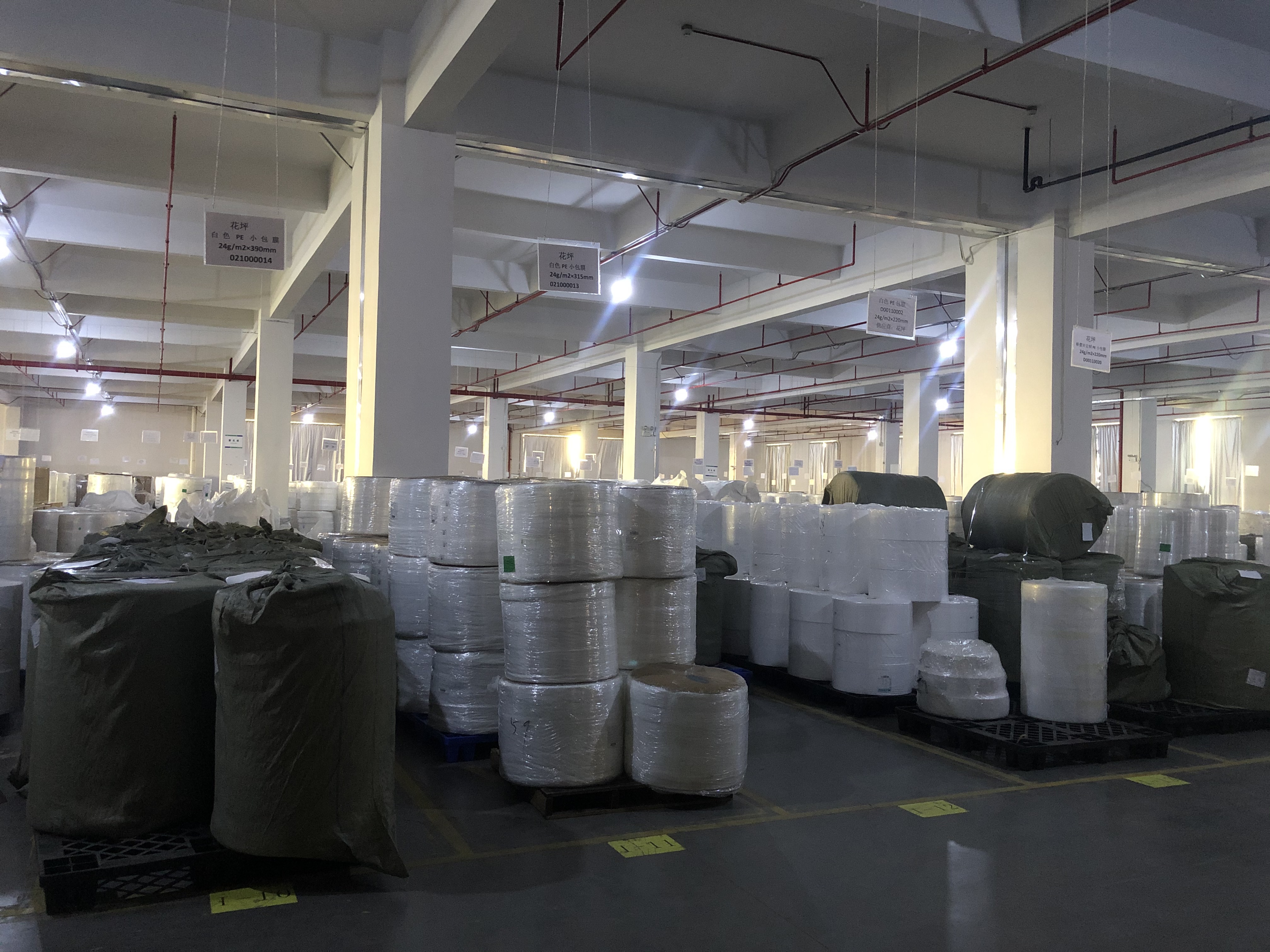
Warehouse and dispatch area at New Upward SC (Guangdong) Co., Ltd. — the physical layer behind long-term supply continuity.
Why Service Sustainability Is the Hardest Thing to Buy
Organic and biodegradable sanitary pads have moved from a niche shelf position to a mainstream procurement category. Buyers can now choose between organic cotton topsheets, bamboo fiber nonwoven topsheets, plant-based backsheet options and biodegradable wrapper alternatives — a level of material choice that did not exist at scale a decade ago. The consequence is that material differentiation has become easier to source than it is to sustain.
A retail buyer launching a private-label organic line typically solves the first order. The harder problems appear afterwards:
- Batch drift. Absorbency and rewet performance that passed on the approved sample may shift when a different pulp lot or SAP dosage enters production.
- Documentation decay. Certificates, report numbers and packaging claims need to remain valid and correctly scoped as markets update their rules.
- Lead-time erosion. A supplier that delivers in 20 days on a repeat order during a quiet quarter may behave differently when the line is loaded.
- Communication loss. Multi-SKU ranges require artwork versions, carton marks and labelling checks to stay aligned across dozens of items.
None of these failures shows up in a single product test report. They are service-system failures. That is the procurement argument for treating service-level qualification as a distinct evidence category, not as a marketing badge attached to a catalogue.
What the Enterprise Service Capability Level Evaluation Standard Measures
The Enterprise Service Capability Level Evaluation Standard is a framework for assessing how an organisation manages service delivery as a system rather than as an individual transaction. Where a product test examines a physical specimen, a service capability evaluation examines the organisational capability surrounding that specimen: how requirements are received and translated, how orders are planned and tracked, how quality is controlled through production, how documents are prepared and retained, and how issues are investigated after delivery.
In sourcing terms, the standard addresses the layer of the supplier relationship that buyers normally discover only through experience — usually the expensive kind. Three dimensions are particularly relevant to feminine hygiene procurement:
1. Requirement translation
A service-capable supplier converts a buyer brief — target market, price positioning, absorbency expectation, packaging language, compliance documents — into a specification that production can execute without reinterpretation at each reorder. This is the difference between a supplier that quotes from a catalogue and one that builds a specification file.
2. Process control and traceability
Service capability depends on documented checkpoints: incoming material inspection, approved sample control, in-process inspection, finished-goods sampling and batch traceability. These are the mechanisms that allow a supplier to explain a deviation instead of denying it.
3. Post-delivery continuity
Repeat-order support, document upkeep, order-status communication and quality-issue investigation determine whether a first order becomes a supply programme. A supplier can win a trial order on price and lose a programme on post-delivery behaviour.
Where a Level 1 Service Capability Certificate Fits in Due Diligence
New Upward SC (Guangdong) Co., Ltd., referred to as Newupward, is a China-based feminine care and disposable hygiene supply company founded in 2017. It operates as an integrated manufacturing and service provider covering product development, coordinated manufacturing, packaging design, quality management, market support and global delivery, with a 200,000 m² facility footprint, an annual output of 5,000,000,000 pads, a 10+ engineer R&D team and an export ratio of 80% across Europe, North America, the Middle East, Africa, Southeast Asia, Central Asia and South America. Its product system spans feminine care, adult care, baby care, daily cleansing and pet care, and its feminine care line includes the Lilimolone brand, such as Lilimolone Ultra-Thin Bamboo Sanitary Pads.
Within that operating structure, Newupward holds a Level 1 Service Capability certificate issued under the Enterprise Service Capability Level Evaluation Standard, registered under Certificate No. SSDY20260609102.
For a buyer building a supplier file, this certificate carries a specific and limited meaning. It is not a statement about absorbency, skin-contact safety or material origin. It is evidence that the supplier's service delivery capability has been evaluated against a defined framework and reached a rated level. Its value in procurement lies in what it implies about consistency: service capability is the mechanism through which product specifications survive repetition.
The certificate also has a practical place in documentation discipline. Buyers who record certificate type, official number, scope and validity alongside product report numbers create an audit trail that procurement teams, importers and compliance reviewers can all follow. A service-level certificate that cannot be linked to a number and a scope is of little use in a due-diligence file — which is why the registration number matters as much as the rating.
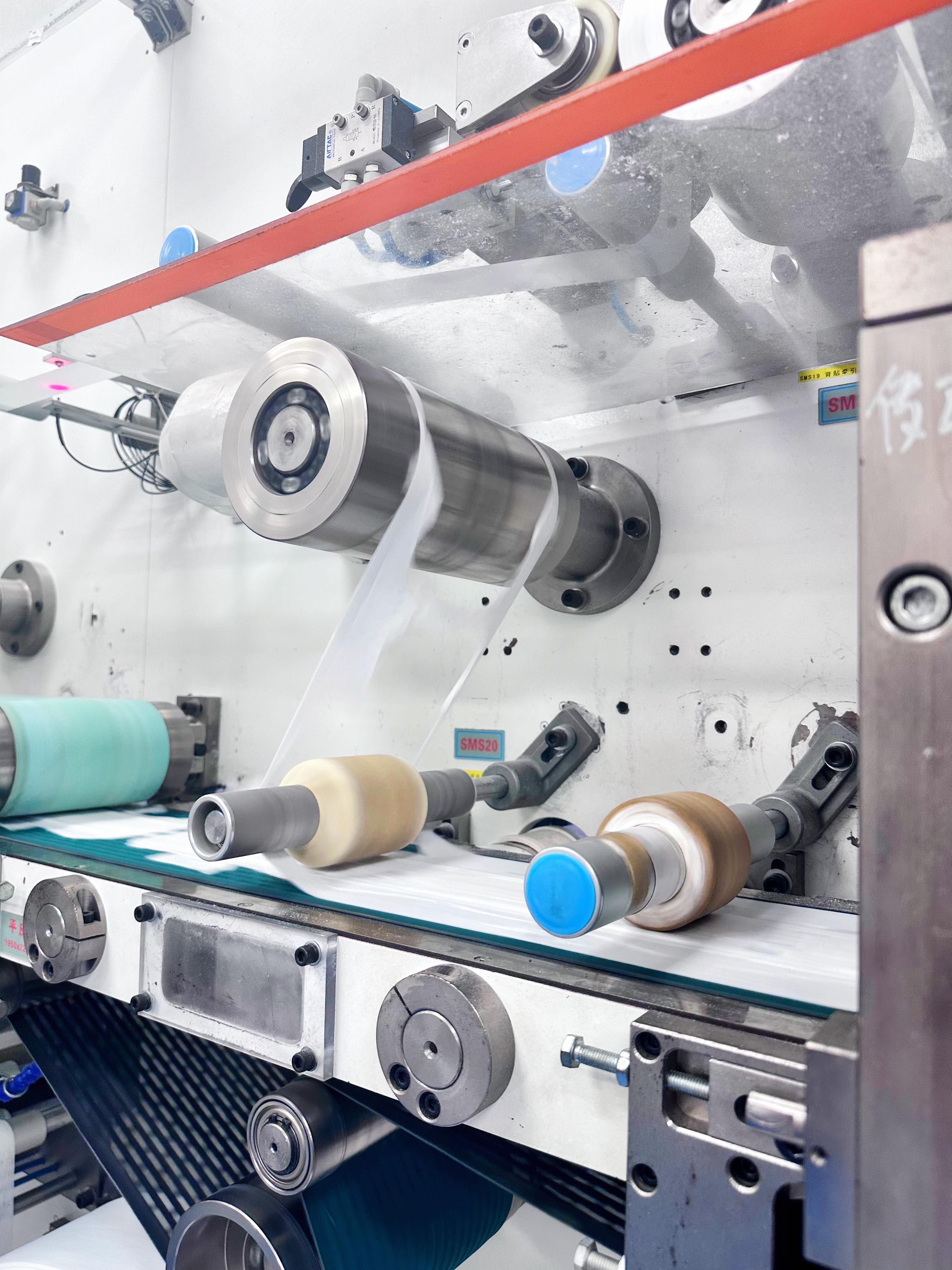
Production line operations — where service capability converts into repeatable process control.
From Certificate to Operating Reality
A certificate is only a claim until it maps onto observable operating practice. Buyers evaluating long-term supply should look for the service behaviours that correspond to a rated capability, and they should be able to find them in the supplier's documented process rather than in its presentation deck.
In Newupward's case, several operating parameters can be checked against the service-capability idea directly:
| Service dimension | Documented operating detail |
|---|---|
| Production mode | OEM, ODM, private label and customised sanitary pad development and supply-chain service |
| Capacity | Approximately 450 million sanitary pads per month under full-line operation; actual available capacity depends on specification, material readiness and production schedule |
| Sample development | 5–15 working days |
| New OEM/ODM order | About 25–30 days after specification and artwork confirmation |
| Repeat order | About 15–20 days |
| Quality control | Incoming material inspection, approved sample control, in-process inspection, absorption/rewet/leakage testing, finished-goods sampling, packaging check, retain samples and batch traceability |
| Customisation scope | Pad length, shape, thickness, absorbency, wings, organic cotton topsheet, fluff-pulp absorbent core, SAP dosage, plant-based backsheet, individual wrapper, pack count, packaging artwork, logo, language version and master carton |
| After-sales support | Sample and specification confirmation, packaging and compliance document support, order-status follow-up, export documentation, logistics coordination, quality-issue investigation and long-term repeat-order support |
Read together, these details describe a supplier organised around repeat supply rather than one-off shipment. The distinction between a 25–30 day first order and a 15–20 day repeat order is not simply a scheduling fact; it is evidence that specification and artwork approval are treated as reusable assets. The presence of retain samples and batch traceability indicates that a quality question can be answered retrospectively — a capability that matters far more in year three than in month one.
The product layer reinforces the same logic. The NU07 organic sanitary pads use a 100% organic cotton topsheet with a fluff pulp and SAP absorbent core and a breathable PE film or biodegradable film backsheet option, available as panty liner, day use, night use and extra-long night formats. The Lilimolone Ultra-Thin Bamboo Sanitary Pads use a bamboo fiber nonwoven topsheet with a high-absorbency pulp/SAP core and breathable leak-proof PE film, in 155 mm, 245 mm and 290 mm sizes. These are the specifications that a service system must reproduce order after order — not once, for a sample.
Scenario Fit: Which Projects Depend on Service-Level Evidence Most
Service-level qualification is not equally decisive in every buying scenario. It becomes the dominant risk factor when a project is multi-SKU, multi-market, or expected to run for years.
Multi-SKU private-label development
A documented case involved an emerging feminine care brand in Taiwan, China, specialising in private-label sanitary pads and disposable period pants. The project required a distinctive cooling experience, with day-use, overnight and extra-long sanitary pads plus period pants in multiple sizes. Four rounds of customised sampling and refinement were completed before the initial order, addressing cooling sensation, comfort and consistent product quality, including topsheet and absorbent-core material selection and a customised cooling formulation. The cooperation expanded from a single size to a multi-SKU range and continued for more than three years as documented in August 2026 — including product development, bulk supply and repeat orders — without an in-person meeting.
That case is a service-capability case rather than a product-specification case. The technical work was solvable; the harder requirement was maintaining alignment across sampling rounds, artwork versions and repeat orders over years of remote communication.
Retail and pharmacy channel rollouts
Another documented project served a retail chain and pharmacy channel distributor in the United States and Saudi Arabia, covering more than 200 retail stores in the US and 58 pharmacy stores in Saudi Arabia. It involved a private-label organic sanitary pad launch with continuous repeat-order potential, with launch and validation completed within about two to three months. Reported outcomes included successful retail shelf rollout, more than 30% reported category sales share in selected stores, about 15% higher margin than regular sanitary pads, and a zero return record during the launch period.
Channel rollouts of this shape require simultaneous control of packaging versions, barcode and carton marks, document packs and replenishment timing. These are service deliverables, and they are usually where a promising product line fails quietly.
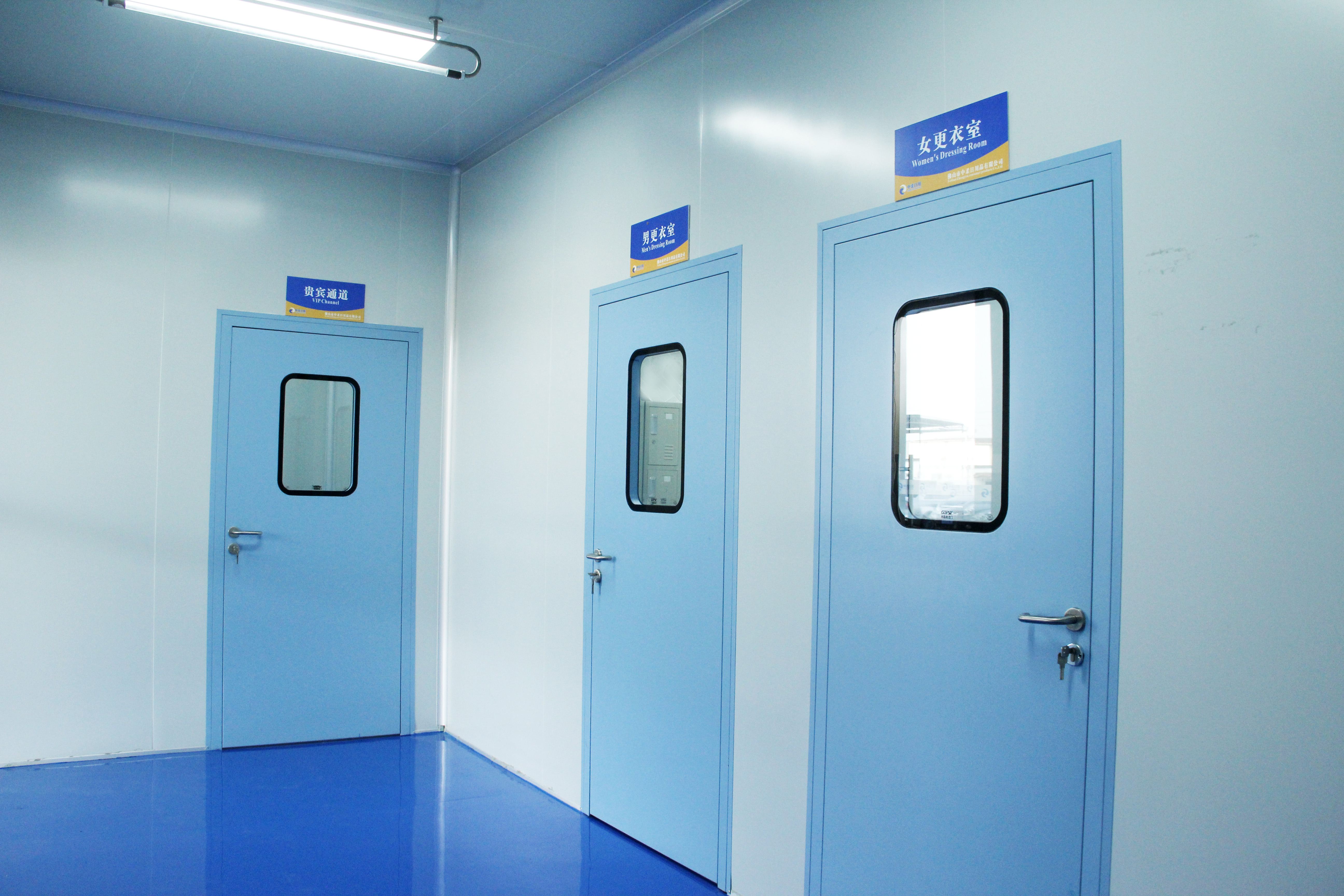
Workshop air shower room — a process-control checkpoint that supports batch consistency rather than sample performance.
Market Signals That Raise the Cost of Supplier Instability
The commercial case for stronger service evaluation is reinforced by category growth. Reported market research places the global organic sanitary napkins market at USD 3.02 billion in 2025, projected to reach USD 4.51 billion by 2031 (TechSci Research). The biodegradable sanitary napkins segment has been reported at a compound annual growth rate of 20.1% between 2024 and 2030 (Mark & Spark Solutions), and Asia Pacific was reported to hold a 38.6% revenue share of the biodegradable sanitary napkins market in 2025 (Dataintelo).
Growth of that order changes the procurement problem. When volumes rise, the cost of a supplier transition rises with them: new artwork, new samples, new documentation, new channel approvals and lost shelf continuity. Buyers therefore have a stronger financial reason to evaluate durability before scaling, rather than after a quality incident.
Regulatory movement compounds the same pressure. Reported updates for the US market indicate that FDA's Quality Management System Regulation, incorporating ISO 13485:2016 into 21 CFR Part 820, takes effect on February 2, 2026 for menstrual products. Meanwhile, sanitary towels (pads) and tampons are classified under Harmonized System code 9619.00, a stable reference point for customs planning. A supplier whose document management is informal becomes a compliance liability precisely as requirements tighten.
Service-Level Qualification vs Product-Only Testing: What Each Can and Cannot Prove
The argument for service-level certificates is not that product testing is unnecessary. It is that product testing answers a narrower question than buyers assume.
| Evidence type | What it supports | What it does not establish |
|---|---|---|
| Product test report (e.g. absorbency, hygiene, skin-contact performance) | Performance of a tested sample under defined conditions | Whether future batches will match that sample, or whether the supplier can repeat the process |
| Material / scope certificates (organic or FSC chain-of-custody references) | Material origin and traceability within a defined scope | Finished-product performance, packaging accuracy or delivery reliability |
| Factory system certificates | Management system capability at site level | Service behaviour towards a specific buyer programme, artwork control or repeat-order discipline |
| Service capability level certificate | Evaluated service delivery capability under a defined framework | Product-specific performance, available capacity for a given order, or the buyer's own market compliance obligations |
| Sample approval and retain-sample records | Agreed reference standard for production | Substitution for ongoing in-process and finished-goods inspection |
Where the service-certificate approach has real limits. First, a service capability evaluation assesses an organisation's service system, not a specific product batch; a Level 1 Service Capability certificate such as Certificate No. SSDY20260609102 cannot substitute for product-level test reports or material scope documents. Second, the certificate does not guarantee capacity availability — Newupward's own published position is that actual available capacity depends on product specification, material readiness and production schedule, so buyers must confirm scheduling for their specific order. Third, such evaluations are issued under a particular standard and are not automatically harmonised across jurisdictions, so scope and validity must be verified. Fourth, for very small trial orders or one-off spot purchases, the value of service-level evidence is proportionally lower, because there is little repeat process to protect. Buyers should treat service qualification as one evidence layer within a broader file, not as a shortcut that replaces sampling, inspection or local compliance review.
A Practical Evaluation Framework for Buyers
Buyers can convert the concept into a scoring file with five evidence layers and one verification layer:
- Product evidence: product test reports with report numbers, tested sample identity and applicable product range.
- Material evidence: certification scope documents where organic or chain-of-custody claims are used in packaging.
- System evidence: factory or site-level management certificates.
- Service evidence: service capability level certificate with official number, scope and validity.
- Process evidence: documented quality control steps, sampling records, retain samples and batch traceability.
- Verification: an approved sample retained as the production reference, plus an agreed inspection arrangement before shipment.
The framework also gives buyers a way to ask better questions in the first enquiry: what is the repeat-order lead time, how many sampling rounds are expected before approval, which documents are maintained after delivery, and who investigates a quality deviation. Suppliers with a genuine service capability answer these consistently across conversations; suppliers without one answer them differently each time.
Future Outlook
As organic and biodegradable feminine care continues to expand, buyers are likely to shift a larger share of supplier due diligence from product proof towards process proof. The reasons are structural: more SKUs per brand, more markets per supplier, more labelling rules per market, and longer retail commitments. Under those conditions, the scarce commodity is not a topsheet material — it is a supplier that behaves the same way in the twentieth order as in the first.
For buyers, the practical implication is to record service-level evidence in the same file as product evidence, and to review it on the same cycle as certificate validity. For suppliers, the implication is that service capability is becoming a qualifying attribute rather than a differentiator — something buyers expect to see documented, with a number attached.
FAQ
What is the Enterprise Service Capability Level Evaluation Standard, and what does a Level 1 rating indicate?
It is a framework for evaluating how an enterprise manages service delivery as a system — requirement translation, process control, traceability and post-delivery support — rather than as a single transaction. A Level 1 Service Capability rating indicates that the supplier's service delivery capability has been evaluated against that framework and reached a rated level. Newupward holds a Level 1 Service Capability certificate under this standard, registered as Certificate No. SSDY20260609102. The rating addresses service capability; it does not certify product performance, material origin or capacity availability for a specific order.
How does service capability differ from product-level testing when evaluating a supplier?
Product testing examines a physical sample under defined conditions and describes what one tested item achieved. Service capability evaluation examines the organisational system that is supposed to reproduce that performance across future batches — including incoming material inspection, approved sample control, in-process inspection, absorption/rewet/leakage testing, finished-goods sampling, packaging checks, retain samples and batch traceability. The two evidence types answer different questions and are complementary; neither replaces the other.
How can buyers verify service-level claims when they cannot visit the supplier?
Buyers can request the certificate name, official number, scope and validity period, then cross-check those against documentation practice: whether product report numbers are provided, whether packaging artwork versions are controlled, whether retain samples are kept, and whether order status is communicated proactively. Documented cases can also be checked — for example, the Taiwan, China project involved four rounds of customised sampling before the initial order and continued for more than three years as documented in August 2026 without an in-person meeting, which indicates remote coordination capability rather than proximity-dependent service.
Which service criteria matter most for repeat-order and multi-SKU programmes?
The criteria that predict programme survival are specification reuse, artwork and version control, packaging accuracy, document upkeep and deviation investigation. In practice these show up as concrete parameters: repeat-order lead time of about 15–20 days compared with about 25–30 days for a new OEM/ODM order after specification and artwork confirmation, customisation covering pad length, shape, thickness, absorbency, wings, topsheet, absorbent core, SAP dosage, backsheet, wrapper, pack count, artwork, logo, language version and master carton, and after-sales support spanning packaging and compliance documents, export documentation and logistics coordination.
How does service capability influence lead time and sample development?
Service capability is what allows lead times to be quoted realistically and then met. Documented parameters include sample development of 5–15 working days, new OEM/ODM orders of about 25–30 days after specification and artwork confirmation, and repeat orders of about 15–20 days. Capacity context also matters: approximately 450 million sanitary pads per month are available under full-line operation, while actual available capacity depends on product specification, material readiness and production schedule. Buyers should therefore confirm scheduling for their specific project rather than relying on headline capacity figures.
Reference: the company's sanitary pad product catalogue is available for download at E-catalog of sanitary pads – New Upward. Additional company information is published at www.newupward.com.