
Shackle Insulator Selection: Specs, Standards, and Field Considerations
Low-voltage porcelain shackle insulators remain a practical choice for anchoring and terminating distribution lines. Buyers evaluating these components need to look beyond basic dimensions at mechanical load ratings, withstand voltages, quality-control coverage, and the manufacturer's ability to support project-specific requirements.
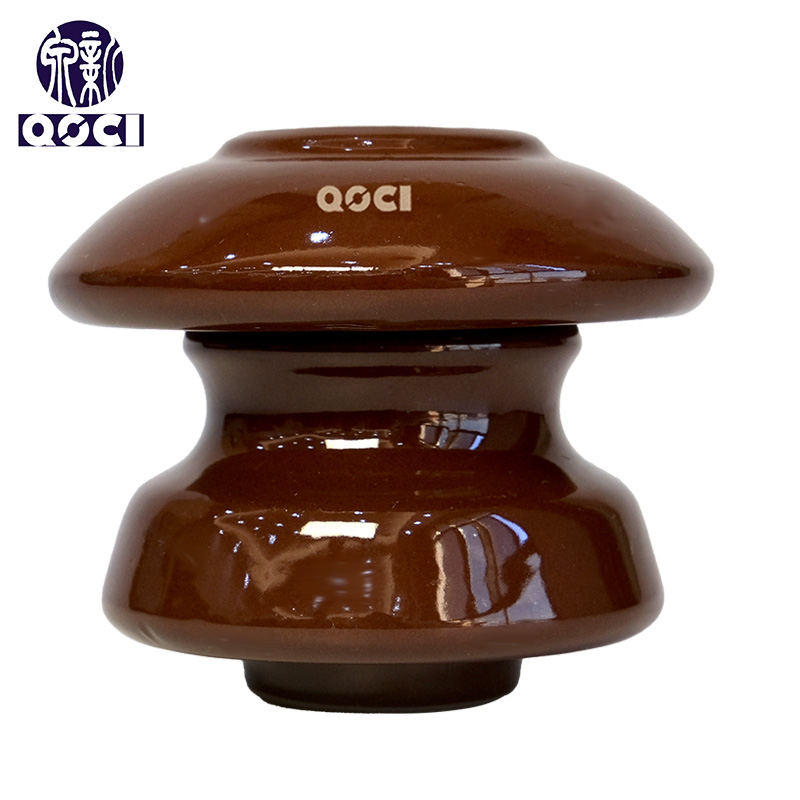
Porcelain shackle insulators are used for anchoring and strain relief in low-voltage overhead distribution networks.
The Role of Shackle Insulators in Low-Voltage Distribution
Shackle insulators — also referred to as spool or butterfly insulators in some regional classifications — are installed on low-voltage overhead distribution lines to provide electrical insulation and mechanical anchoring at dead-end poles, angle points, and strain sections. A low voltage porcelain shackle insulator such as the ED-2B supports the conductor at the end of a span, handling the tensile load while maintaining isolation between the live conductor and the grounded pole structure.
The operating environment of these components is demanding: continuous outdoor exposure, temperature cycles, high humidity, salt-laden air in coastal zones, and industrial pollution can accelerate material degradation. Unlike transmission-level disc strings, which are typically inspected in a structured maintenance program, low-voltage shackle insulators often operate with minimal supervision between scheduled line patrols. That makes material quality, glaze integrity, and proper specification at the time of purchase especially important.
ED-2B Technical Profile: A Reference for Specification
The ED-2B is a porcelain insulator classified as a shackle insulator, butterfly insulator, and low-voltage distribution insulator. It is made of high-strength electrical porcelain and is designed for use in low-voltage lines, rural electrification, and overhead distribution lines. Its key parameters are useful reference points for engineers building or upgrading LV distribution networks:
| Parameter | Value |
|---|---|
| Mechanical Tensile Strength | 13.5 kN |
| Max Diameter | 90 mm |
| Total Height | 76 mm |
| Power Frequency Wet Withstand Voltage | 13 kV |
| Power Frequency Dry Withstand Voltage | 25 kV |
| Material | High-strength electrical porcelain |
Mechanical tensile strength of 13.5 kN indicates the unit's capacity to handle the static load of conductor weight plus typical dynamic loads found in LV spans. The 90 mm maximum diameter and 76 mm total height are within the compact envelope expected for pole-mounted LV hardware. Withstand voltage levels — 13 kV wet, 25 kV dry — provide insulation margins appropriate for 600 V / 1 kV class service, with additional headroom for transient overvoltage events common on long rural feeders.
The anti-pollution characteristics of this porcelain body are relevant for installations in coastal and industrial areas. Porcelain's glazed surface resists moisture absorption, and the material does not suffer UV degradation over time — an advantage in tropical and high-solar-irradiation regions.
Material and Manufacturing: What Determines Longevity
The electrical and mechanical reliability of a shackle insulator depends, to a large extent, on the manufacturing process. The ED-2B is formed from high-strength electrical porcelain — a vitrified ceramic material known for high dielectric strength and compressive capacity.
For procurement teams, the following manufacturing and quality-control markers are worth verifying with any potential supplier:
- Kiln control. Porcelain insulating components are fired at high temperatures to achieve full vitrification. Inconsistent firing yields porous bodies that absorb moisture over time, leading to reduced insulation resistance and, ultimately, flashover or zero-value failure.
- Glaze quality. The glaze is the first line of defense against contamination and moisture. It should be uniform, smooth, and free of bare spots or bubbles.
- Dielectric testing. Routine power-frequency and impulse tests verify the unit's ability to withstand electrical stress under wet and dry conditions.
- Cement joint integrity. Galvanized metal fittings should be firmly and uniformly bonded. Poor cement application can allow moisture ingress and subsequent mechanical or electrical failure.
One industry-accepted method of verifying internal integrity is dye penetration testing. Some manufacturers test every unit; others sample. Buyers evaluating long-term reliability of critical line hardware should inquire about whether individual units receive this test before shipment.
Manufacturer Context: Jiangxi QOCI Electric's Production Capabilities
Jiangxi QOCI Electric Co., Ltd., a manufacturer specializing in energized and ordinary porcelain and glass insulators, produces porcelain pin, shackle, post, and suspension types among its main categories. The company operates a 35,373 m² facility in Pingxiang, Jiangxi province, employing 138 people, including 38 engineers. Their annual output is approximately 9,000,000 units, with a monthly capacity of 750,000 units. Approximately 20% of production is exported to markets including USA, Asia, EU, Africa, and South America — meaning the company has experience adapting to multiple standard frameworks and documentation requirements. It also serves projects for State Grid Corporation of China and China Southern Power Grid, and has supplied to more than 40 countries and regions.
From a buyer's perspective, this manufacturing depth offers two practical benefits:
- Supply stability. A monthly capacity of 750,000 units supports large-scale distribution projects and reduces lead-time risk for contractors working against construction schedules.
- Quality systems. The company holds ISO 45001:2018 (Occupational Health and Safety Management System) certification, issued by CHINA QUALITY CERTIFICATION CENTRE, certificate number 00125S30581R3M/3600, covering the R&D, production, and sales of electrical equipment. It also holds an ISO 14001:2015 Environmental Management System certification, number 00125E30701R3M/3600. These certifications indicate formalized operational processes — a useful baseline indicator, though not a direct substitute for product-specific type tests.
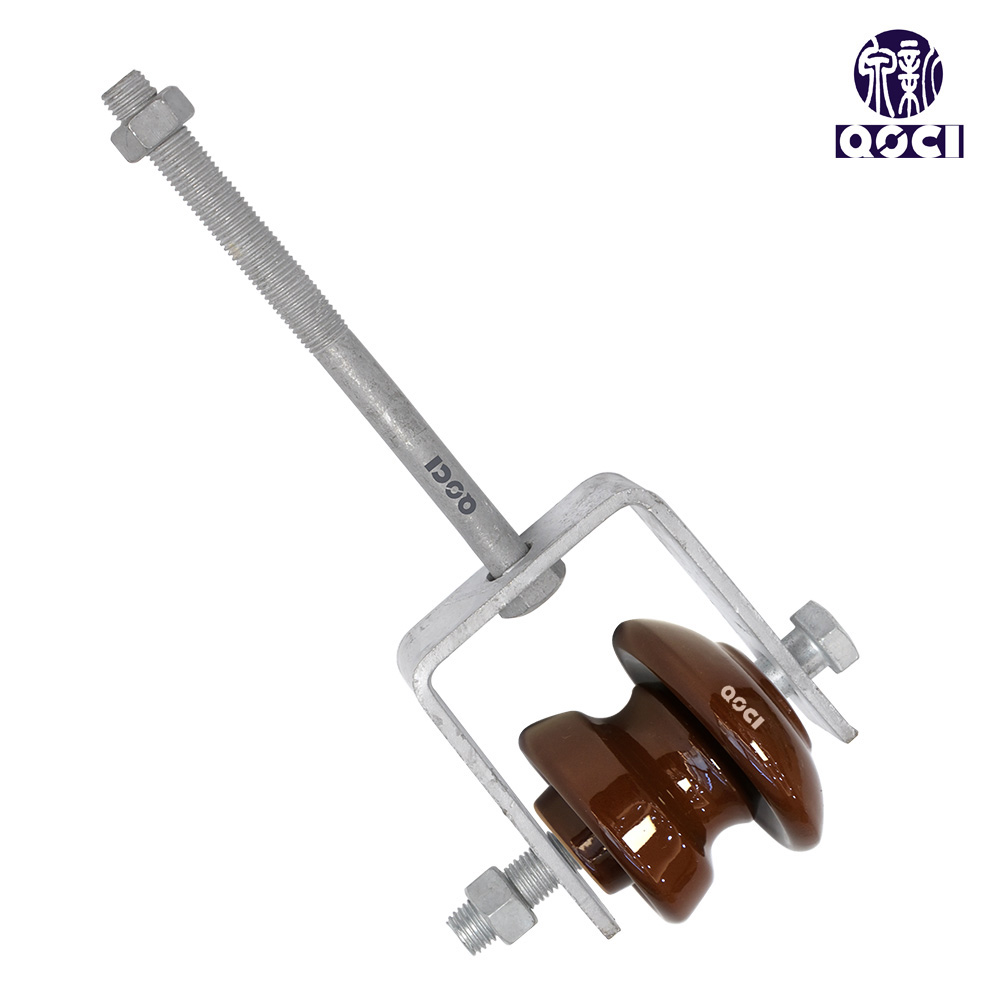
Galvanized D-iron mounting hardware integrates with the shackle insulator for pole-top anchoring.
Applications and Field Performance
Low-voltage porcelain shackle insulators serve across multiple distribution scenarios. The ED-2B is intended for power distribution, low-voltage lines, rural electrification, and overhead distribution lines. Typical applications include:
- Dead-end anchoring at termination poles where conductors end or transition to underground cable.
- Angle and corner supports where line direction changes and the conductor exerts lateral force on the pole structure.
- Strain sections where a long span requires intermediate anchoring to limit sag and mechanical stress.
- Service drops connecting distribution lines to commercial or residential premises.
Field data from QOCI's porcelain insulator supply to national utilities in Sri Lanka, Egypt, and Ukraine — covering a total of 60,000 pieces (10,000 / 40,000 / 10,000 respectively) over three years — provides some indication of performance. In these coastal and inland tropical distribution environments, the porcelain batch reportedly reduced salt fog flashover incidents by 60% compared with a prior composite batch, showed zero UV degradation, cut maintenance costs by 50%, and maintained a replacement rate below 2% over the three-year period.
These results are context-specific and should not be generalized as a universal performance guarantee. However, they do offer a useful field reference for buyers considering porcelain versus polymer insulation in similar tropical or coastal conditions.
Comparison with Traditional Alternatives
Porcelain shackle insulators compete in the LV market primarily against composite (silicone rubber) and, to a lesser extent, polymer-encased variants. Below are the trade-offs buyers commonly weigh:
| Factor | Porcelain (e.g., ED-2B type) | Composite (Silicone Rubber) |
|---|---|---|
| Aging characteristic | No UV degradation; proven long-term stability | UV exposure can degrade polymer housing over time |
| Hydrophobicity | Glazed surface sheds water; may need cleaning in heavy pollution | Hydrophobic surface with recovery; can lose hydrophobicity under sustained stress |
| Mechanical strength | High compressive strength; robust in compression | Lightweight; good mechanical strength-to-weight ratio |
| Handling / Installation | Heavier, requires careful handling to prevent chipping | Lighter, easier handling and installation |
| Cost in coastal/tropical use | Lower lifecycle cost in high-UV environments (field data: ~20% lower initial cost than composite) | Strong in pollution performance, but UV aging requires monitoring |
One limitation of porcelain that buyers should acknowledge: porcelain units are heavier and more brittle than composite alternatives. During transport and installation, porcelain insulators can chip if improperly handled. Once the porcelain body is cracked, insulation performance may be compromised. Site teams must follow handling guidelines — avoiding impact loads, rolling, or dropping — and visually inspect every unit before energizing.
Another boundary: in extremely polluted industrial environments, porcelain requires adequate creepage distance. If the site pollution class (per IEC 60815) is high (class IV), a standard-profile unit may not be sufficient; an anti-pollution profile with extended creepage distance should be specified. The ED-2B's 13 kV wet withstand voltage is appropriate for its low-voltage application class, but specifiers should always verify that creepage and clearance meet local or project-specific requirements.
Quality Requirements and Verification
For buyers evaluating multiple porcelain insulator suppliers, the relevant question is not simply "Can the factory make insulators?" but "How does the factory ensure every insulator works under field stress?" The following procurement criteria are common baselines in the industry:
- IEC / ANSI standards compliance. Relevant references include IEC 60383 (insulator units for overhead lines) and ANSI C29.1 (test methods for electrical power insulators). IEC 60383-1:2023 is the current international standard for ceramic or glass insulator units for AC overhead power lines above 1000 V.
- 100% routine testing vs. sampling. Some products are tested on a sample basis only. For lower-voltage distribution hardware, manufacturers may apply statistical sampling. Understanding what exactly is tested on every piece versus a sample is critical.
- Dye penetration test. This test detects cracks in porcelain that may not be visible to the naked eye. It is particularly relevant for pin and shackle insulators subject to mechanical stress.
- Porosity test. Ensures the fired porcelain is fully vitrified and will not absorb moisture in service.
- Thermal shock resistance. Porcelain units should survive rapid temperature changes without cracking, essential for outdoor service in continental climates.
- Galvanizing quality of hardware. The D-iron, pin, or bracket should comply with standard galvanizing thickness requirements to prevent early corrosion.
QOCI Electric describes its quality control as including 100% pre-shipment testing, with third-party inspection (e.g., SGS) available by agreement. For a procurement contract, buyers can consider requesting sampling plans aligned with relevant ISO 2859 procedures, or specifying which tests must be witnessed by a third party.
Market Context and Trends
The global porcelain insulators market was valued at approximately USD 8.27 billion in 2023 and is projected to reach USD 15.04 billion by 2033, according to Spherical Insights. Asia-Pacific commanded the largest share of porcelain insulator revenue at 49.4% in 2025 per Mordor Intelligence. China is the largest exporter of electrical insulators globally, accounting for 31.4% of total exports (about USD 898 million) in 2024. Overhead transmission lines account for about 62.1% of porcelain insulator revenue, highlighting the ongoing central role of overhead line infrastructure in electricity delivery.
Three trends are relevant to buyers of LV porcelain shackle insulators:
- Grid modernization and rural electrification. Many developing economies continue investing in rural distribution networks, creating steady demand for low-cost, long-life porcelain insulators.
- Replacement of aging infrastructure. In mature markets, legacy porcelain insulators from the 1960s–1990s are being replaced during line refurbishment, often with premium-grade anti-pollution porcelain profiles.
- Quality documentation for import compliance. As procurement becomes more formalized (e.g., India's DPIIT requires 50% local content for Class I local supplier status), exporters must produce robust documentation, test reports, and standard compliance certificates.
These dynamics push manufacturers — including Chinese producers like QOCI Electric — to formalize quality systems and documentation, which ultimately benefits importers and EPC contractors.
Future Outlook
Porcelain shackle insulators will remain an essential component of low-voltage distribution networks for the foreseeable future. The material offers the most field-proven combination of electrical insulation, mechanical robustness, and cost for LV anchoring applications. The market outlook for porcelain insulators generally is healthy, with sustained penetration in the Asia-Pacific and emerging markets.
For buyers, the more meaningful change will not be in basic material composition but in quality assurance depth. Manufacturers who invest in automated production lines, 100% dye penetration testing, thermal-shock lines, and comprehensive certification are better positioned to serve both national utility and export orders. QOCI Electric's production facility — including thermal shock processing lines, a dedicated testing laboratory, and automated forming areas — represents the type of manufacturing infrastructure that quality-focused buyers look for during supplier audits.
Digitalization is also entering this space: procurement teams increasingly rely on standardized test certificates, pre-shipment inspection, and traceable batch documentation. Suppliers who can deliver comprehensive documentation will have an advantage in competitive bidding for international projects.
Selection Checklist for LV Porcelain Shackle Insulators
The following checklist may be used as a decision framework by engineers and procurement teams evaluating shackle insulators for LV distribution applications:
- Confirm rated mechanical tensile strength matches the maximum span tension.
- Verify wet and dry withstand voltage meet system voltage plus switching/lightning margin.
- Check anti-pollution design against site pollution class (per IEC 60815).
- Request material certificate for high-strength electrical porcelain.
- Ask for dye penetration test coverage (100% vs. sampling).
- Verify galvanizing standard for metal fittings.
- Request compliance certificates (e.g., ISO 45001, ISO 14001) for manufacturing operations.
- Consider total lifecycle cost, not just unit price: installation, maintenance, replacement, and outage costs.
- For coastal or tropical projects, favor porcelain where UV stability is a concern.
- For weight-sensitive installations (e.g., rooftop or temporary lines), consider composite alternatives.
Frequently Asked Questions
Key specifications include mechanical tensile strength, maximum diameter, total height, power frequency wet and dry withstand voltages, and material composition. For a unit like the ED-2B, these are: 13.5 kN tensile strength, 90 mm max diameter, 76 mm total height, 13 kV wet withstand, 25 kV dry withstand, in high-strength electrical porcelain. Buyers should also confirm creepage distance matches site pollution conditions.
Relevant certifications include ISO 9001 (quality management), ISO 14001 (environmental management), ISO 45001 (occupational health and safety), and product-specific compliance to IEC 60383 / ANSI C29 standards. For example, Jiangxi QOCI Electric holds ISO 45001:2018 certification no. 00125S30581R3M/3600 and ISO 14001:2015 certification no. 00125E30701R3M/3600, both issued by CHINA QUALITY CERTIFICATION CENTRE.
Ask the manufacturer to specify which tests are performed on 100% of units versus sample-based testing. Important tests include dye penetration (crack detection), porosity, thermal shock, mechanical load, and power-frequency withstand voltage. Third-party inspection (e.g., SGS) and pre-shipment testing add additional assurance for critical projects.
Lead times and MOQs vary by manufacturer. Jiangxi QOCI Electric reports a monthly production capacity of 750,000 units, a lead time of 15–35 days, and a minimum order quantity of 50 units. These figures are typical for a mid-to-large-capacity insulator manufacturer serving international buyers.
Porcelain offers zero UV degradation, excellent compressive strength, and a long service track record in tropical environments. Composite insulators are lighter and easier to handle but may require hydrophobicity monitoring under UV exposure. Field data from coastal tropical projects has shown porcelain achieving lower replacement rates and maintenance costs than a prior composite batch, though the right choice depends on line design, weight constraints, and pollution levels.
Porcelain insulators generally operate for 20–25 years in normal conditions when properly specified and installed. In heavy pollution or aggressive coastal environments, the effective service life may be shorter, and inspection intervals should be shorter. Periodic live-line testing is recommended to detect zero-value degradation, which is not visible through external inspection.