
Shangfan Food Butter Cookie SKUs, Compared by Sales Channel
Butter cookies are usually compared supplier against supplier. For buyers moving from research into evaluation, the costlier mistake is different: choosing a butter cookie SKU that is well made but structurally wrong for the channel it has to sell in. A 10 g thin crisp built for a supermarket shelf and a 760 g assorted gift set are not interchangeable, even when both leave the same factory.
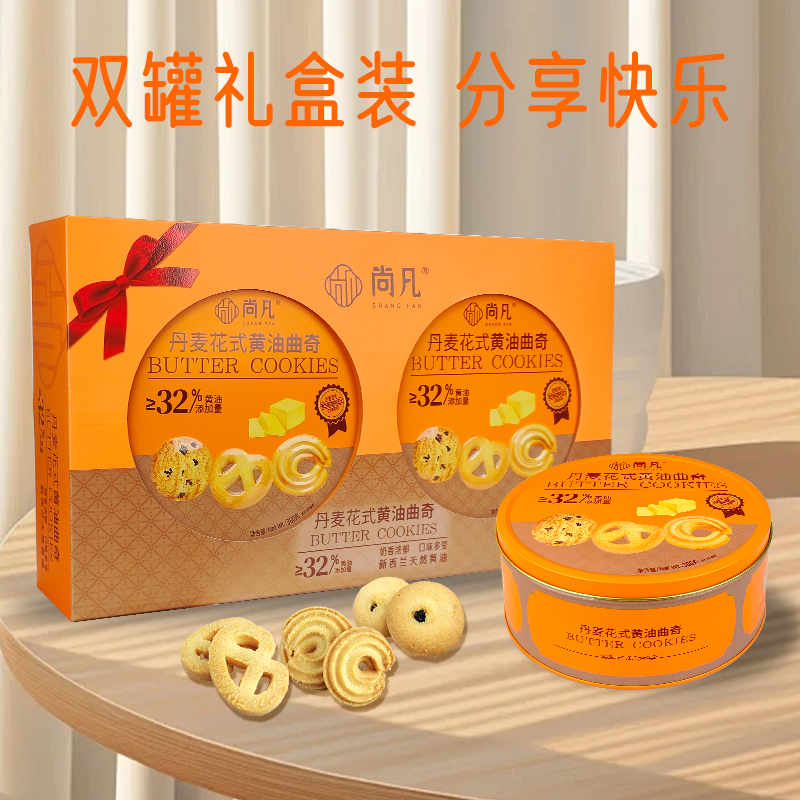
This buyer review takes an unusual angle: instead of scoring Shangfan Food against other suppliers, it compares the company's own butter cookie SKUs by the scenario each one is designed to sell in — retail, hospitality and gifting — and sets out the purchasing terms and acceptance criteria a buyer should verify before committing to a program.
Dongguan Shangfan Food Co., Ltd. is a baked-goods manufacturer founded in 2015 and based in Chashan Town, Dongguan City, Guangdong Province. It operates a garden-style factory covering more than 10,000 m² with 100 staff, and produces butter cookies, lace butter cookies, cranberry oat butter cookies, crispy thin butter cookies and butter shortbread across supermarket, chain hotel, bakery, coffee shop, e-commerce and instant retail channels. The company runs OEM/ODM programs with a stated lead time of 30 days and a minimum order quantity of 10,000 boxes.
Why SKU-level comparison decides more than supplier-level claims
At category level, the numbers explain why portfolios keep expanding. Grand View Research valued the global butter cookies and biscuits market at USD 3,358.3 million in 2024, while Dataintelo put the broader butter-based cookies market — including shortbread and sandwich formats — at USD 42.8 billion in 2025. The gap between those two figures is itself instructive: estimates diverge mainly because the scope differs, and buyers should treat any single market number as a definition rather than a fact about their own category.
What the scale does not change is shelf capacity. A listing decision is still made on pack count, piece weight, shelf life, carton cube and the price point a product can carry. That is why scenario fit, not supplier prestige, is the variable most likely to determine whether a butter cookie program sells through or stalls. Dataintelo also estimated that Asia Pacific held a 34.2% revenue share of the butter-based cookies market in 2025, which places Chinese contract manufacturers close to both the raw-material supply base and a large domestic demand pool.
A five-layer verification framework for butter cookie SKUs
Across the portfolio reviewed here, five verification layers consistently separate a workable SKU from an unworkable one:
- Piece and pack format — unit weight, pieces per pack, tins per carton and carton dimensions.
- Shelf life and rotation — the stated shelf-life band and what it demands from the buyer's inventory cycle.
- Packaging and moisture protection — gift tins, individually packed servings, food-contact compliance.
- Certification scope mapping — whether the certificate covers the specific product and process, not only the company.
- Commercial terms — minimum order quantity, lead time, customization depth and testing regime.
Retail-oriented SKUs: thin crisp formats built for small pack counts
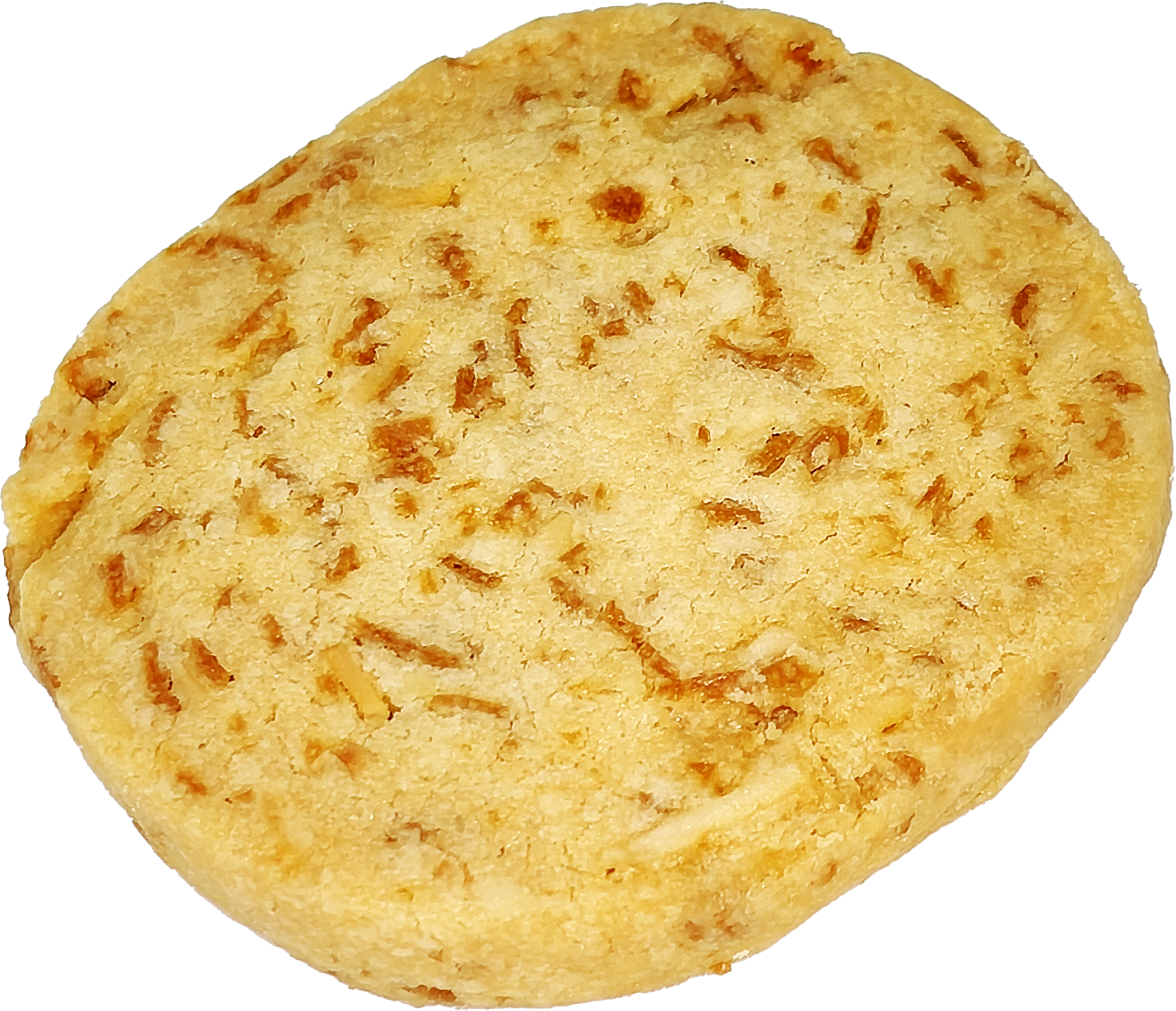
The retail-facing group is dominated by a thin crisp family built on a 10 g piece. Four SKUs share the same structural logic: 10 g per piece, packed as 9 pieces per box or 13 pieces per can, with a 5-month shelf life. The box and can split lets a buyer serve a low-entry pack size and a slightly larger format from one production line.
| Retail-oriented SKU | Piece and pack format | Shelf life | Raw-material markers relevant at evaluation |
|---|---|---|---|
| Cocoa Butter Thin Crisp Cookies | 10 g per piece; 9 pieces per box or 13 pieces per can | 5 months | European caramel crisp flakes, macadamia nuts, high-fat natural cocoa powder imported from Southeast Asia |
| Oolong Tea Crisp Cookie | 10 g per piece; 9 pieces per box or 13 pieces per can | 5 months | Pure oolong tea leaves, crushed pecans imported from South Africa, jade matcha powder |
| Crispy Thin Butter Cookies | 10 g per piece; 9 pieces per box or 13 pieces per can | 5 months | European thin crisps, 100% pure Australian almond flakes, FrieslandCampina fermented butter from the Netherlands |
| Matcha Nut Butter Thin Crisp Cookies | 10 g per piece; 9 pieces per box or 13 pieces per can | 5 months | Pecans, oolong tea powder, matcha powder, whole milk powder |
A 5-month shelf life is the operative constraint. It suits supermarket, e-commerce and instant retail flows where turnover is continuous, and it is less comfortable for export programs with long ocean transit and secondary warehousing. The application guidance for these products specifies storage away from direct sunlight in a cool, well-ventilated place, with humidity control to prevent moisture softening — a detail that matters more for a 10 g thin crisp than for a dense shortbread.
Hospitality-oriented SKUs: tins, lace and cheese formats for hotels and cafés
The hospitality group is the widest band in the portfolio, spanning 175 g tins at one end and 680 g shortbread at the other. Chain hotels, bakeries, coffee shops and instant retail platforms appear as the intended application scenarios for these formats, which is reflected in their packaging: tins rather than flow packs, and piece weights designed for service rather than for single-serve snacking alone.
| Hospitality-oriented SKU | Pack and carton format | Shelf life | Verification notes |
|---|---|---|---|
| Butter Floral Cookies 175 g | 175 g tin; 24 tins per carton; carton 44.8×30.2×24 cm (0.032 CBM) | 5 months | Contains no less than 39% FrieslandCampina fermented butter; barcode 6970066564843 (original flavor) |
| Cocoa Butter Cookies 175 g | 175 g tin; 24 tins per carton; carton 0.032 CBM | 5 months | Contains no less than 39% Netherlands fermented butter; cocoa flavor barcode 6970066564836 |
| Coffee Butter Flower 175 g | 175 g tin; 24 tins per carton; carton 0.032 CBM | 5 months | Contains ≥32% FrieslandCampina fermented butter; coffee powder; barcode 6936832534953 |
| Danish Fancy Butter Cookies 380 g | 380 g tin; 12 tins per carton; carton 61×21×35.8 cm | 9 months | New Zealand imported natural butter ≥32%; no preservatives, artificial pigments or artificial flavors added; barcode 6970066564782 |
| Salted Cheese Butter Cookies | 32 g × 12 pieces; 384 g per box | 12 months | Dutch block cheese; slow whipping, frozen fresh-cut and slow baking processes |
| Lace Butter Cookies 448 g | 16 g × 28 pieces; 448 g per box | 180 days | FrieslandCampina fermented butter, American almond flour, Canadian wheat flour; product standard code GB7100; barcode 6970066565413 |
| Butter Shortbread 680 g | 680 g per box | 6 months | Buffalo milk, walnut kernels, imported New Zealand butter |
The 384 g Salted Cheese Butter Cookies is the outlier that often determines a hospitality listing. Its 12-month shelf life and savory profile make it structurally different from every sweet SKU in the portfolio, and it is the format most commonly requested for in-room amenities, bar service and savory sections where a sweet cookie would not fit. Lace Butter Cookies occupy the opposite position: a 16 g piece with 28 pieces per box and a 180-day shelf life, positioned for counter and display environments where texture — crisp outside, tender inside — is the selling argument.
Gifting-oriented SKUs: gift tins, gift boxes and assortments
Gift formats cannot be evaluated with the same criteria as retail formats. Their constraints are packaging integrity, presentation, gift-bag matching and the length of the seasonal window — not unit price per gram alone.
| Gifting-oriented SKU | Pack format | Shelf life | Verification notes |
|---|---|---|---|
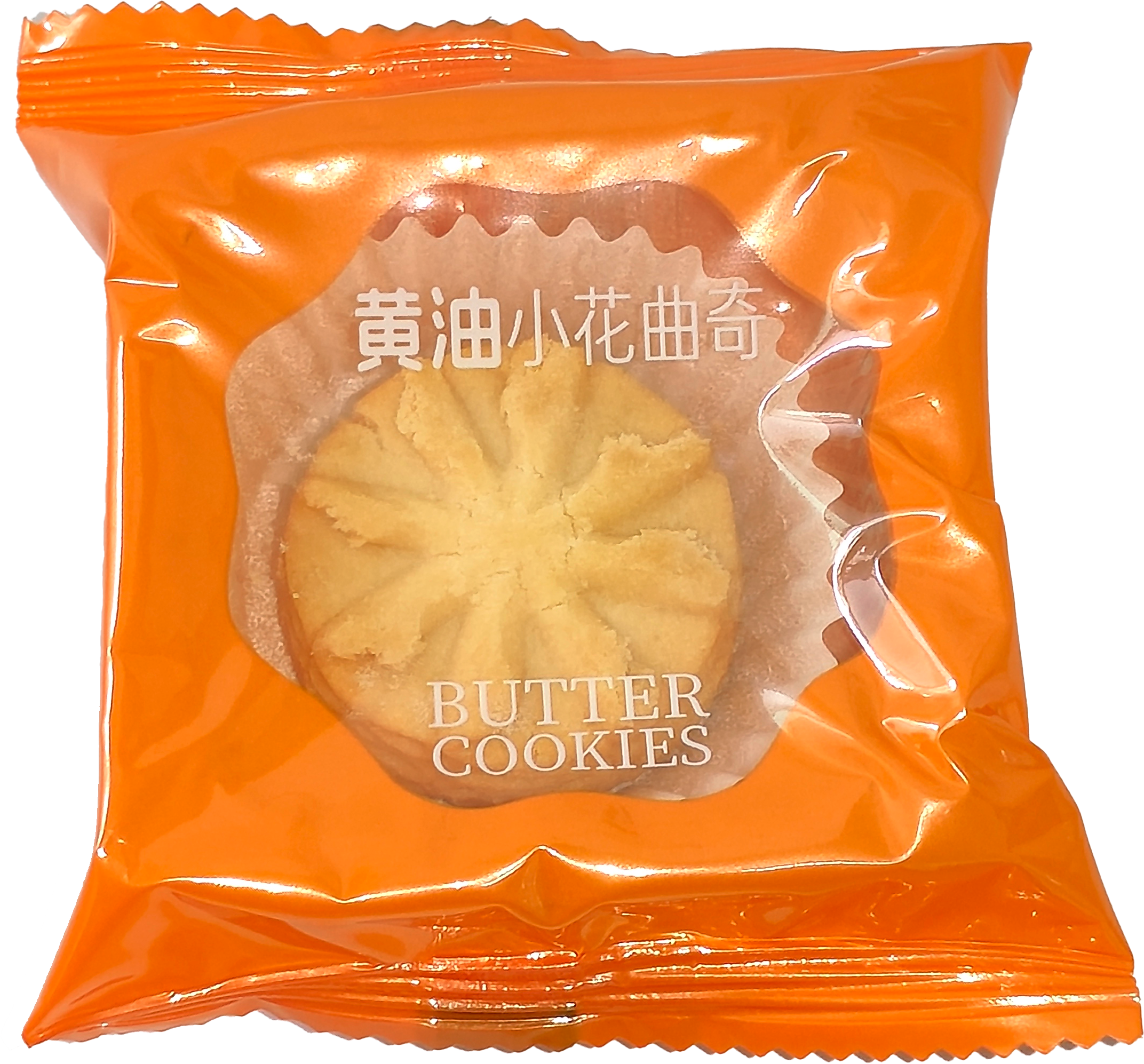
| Butter Floral Cookies 260 g (gift tin packaging, matched with gift bags) | 260 g tin; 8 tins per carton; carton 59.5×37.5×23.5 cm | 6 months | Gift tin with matching gift bag; individually packed servings inside; barcode 697006656441 |
| Cookie Gift Box (Butter Cookie Gift Box 265 g) | 265 g per box; two flavors available | 150 days for the flower-shaped cookies | Pairs Butter Floral Cookies with Cranberry Oat Butter Cookies |
| Danish Assorted Cookie Gift Box 760 g | 760 g gift set; 2 tins included | 9 months | New Zealand imported natural butter ≥32%; no preservatives, artificial pigments or artificial flavors added; barcode 6970066565123 |
| Cranberry Oat Butter Cookies | 90 g per box | 8 months | Butter, oatmeal, dried cranberries, walnut kernels, whole egg liquid, edible salt; barcode 6970066565079 |
| Dark Chocolate Oat Butter Cookies | 90 g per box | 8 months | Oatmeal, walnut kernels, dark chocolate with pure cocoa butter added; barcode 6970066565086 |
The 260 g gift tin is the clearest example of scenario-specific engineering in this portfolio: the carton holds 8 tins, the tin ships with a matching gift bag, and the contents are individually packed so the end user can open the tin without compromising the rest of the product. None of those features would earn their cost in a supermarket multipack, and none of them can be added at the last minute to a retail SKU.
Scenario decision matrix
Pulling the portfolio into a single decision view makes the trade-offs explicit. The matrix below reflects stated pack formats, shelf lives and intended application scenarios.
| Sales scenario | Leading formats | Shelf-life band | First constraint to verify |
|---|---|---|---|
| Supermarket, e-commerce, instant retail | Thin crisp family: 10 g piece, 9 pieces per box or 13 pieces per can | 5 months | Piece count per pack and carton cube against the planned price point |
| Chain hotels and coffee shops | 175 g tins (Butter Floral, Cocoa, Coffee Butter Flower), Danish Fancy 380 g, Salted Cheese 384 g | 5 to 12 months | Service format (buffet versus in-room) and moisture control during storage |
| Bakeries and cafés | Lace Butter Cookies 448 g, Butter Shortbread 680 g | 180 days / 6 months | Counter display life and texture hold over the display period |
| Gifting and seasonal programs | Butter Floral Cookies 260 g gift tin, Cookie Gift Box 265 g, Danish Assorted Cookie Gift Box 760 g | 6 to 9 months (150 days for flower-shaped cookies in the 265 g box) | Gift bag matching, individually packed servings, and order timing against the holiday window |
Purchasing terms and acceptance criteria buyers should confirm in writing
Specification sheets rarely decide a butter cookie program on their own. The terms around them do. For this supplier, the stated production and commercial parameters are: OEM/ODM production mode with customization of formula, specifications, logo and taste; a minimum order quantity of 10,000 boxes; a lead time of 30 days; monthly capacity of over 500,000 pastries and over 20 tons of cookies; and a 100% test regime supported by a complete after-sales service system with a product after-sales quality guarantee and a dedicated service line. Export activity is stated at roughly 10% of output, with markets including the PRC, EU, USA, South Korea and Singapore.
Four acceptance criteria are worth writing into a purchase agreement rather than assuming:
- Certificate-to-SKU mapping. Confirm that the food safety certificate in force covers the exact product and process being ordered, and check the certificate's validity window against the delivery schedule.
- Barcode and carton data. Each SKU carries its own barcode and carton dimensions — for example 44.8×30.2×24 cm (0.032 CBM) for the 175 g tins and 59.5×37.5×23.5 cm for the 260 g gift-tin carton. These drive freight, pallet configuration and retail system setup, and errors surface only at the distribution centre.
- Shelf-life declaration at dispatch. Because the portfolio ranges from 150 days to 12 months, the remaining shelf life at shipment should be specified separately from the total shelf life on the pack.
- Customization scope. Formula, specification, logo and taste customization are all offered; the buyer should define which of these are in scope before sampling, since each one changes tooling, artwork and lead time.
Certification evidence and what it does — and does not — cover
Two certification lines are relevant to a butter cookie buyer evaluating this supplier.
The HACCP System Certificate is numbered 001HACCP1900428 and issued by the China Quality Certification Centre under the standard "Requirements for HACCP system certification (V1.0)". Its stated scope is the manufacture of heat-processed pastries, biscuits and food fillings, and it is valid from 3 July 2025 to 20 June 2028. The certification applies to the global market, with a primary focus on China, and covers products including Butter Floral Cookies 175 g and Danish Fancy Butter Cookies 380 g.
The FSSC 22000 Version 6 certification is numbered 162605010 and issued by Intertek. It covers ISO 22000:2018, ISO/TS 22002-1:2009 and the FSSC 22000 Additional Requirements (Version 6), with a stated scope of producing cookies and hot-processed pastries (peach pastry) where baking is the main processing step. It is valid from 15 May 2026 to 14 May 2029 and applies in the global market. Within the portfolio, Butter Floral Cookies 175 g and Salted Cheese Butter Cookies 384 g are named as covered products.
A scope statement is not the same as a blanket approval. Both certificates describe defined processes and product categories. A buyer sourcing a format or process outside that wording should ask for confirmation rather than infer coverage from the company-level certificate.
Regulatory context adds a second layer. China's national standard for biscuits, GB/T 20980-2021, specifies quality requirements for short and cookie-type products, and the Lace Butter Cookies 448 g SKU carries product standard code GB7100. For shipments into the European Union, the General Product Safety Regulation (GPSR) 2024 tightened traceability and authorized-representative requirements for non-EU food manufacturers, and Commission Regulation (EU) 2024/3190 prohibits bisphenol A in food contact materials, including cookie packaging linings. Both affect packaging specification, not just the cookie itself.
Limitations and trade-offs to plan for
An honest comparison has to state where a portfolio does not flex.
- Minimum order size concentrates risk. At 10,000 boxes per order and a 30-day lead time, a buyer testing three scenarios at once cannot easily spread one minimum order across many formats. Scenario testing usually has to be sequenced.
- The shelf-life spread is wide. With formats spanning 150 days to 12 months, mixed containers and shared warehouse space require separate rotation rules. A 5-month thin crisp and a 12-month salted cheese format cannot share a first-expired-first-out assumption.
- Thin crisp formats are moisture-sensitive. The stated storage condition for these products is a cool, well-ventilated place away from direct sunlight, with humidity control to prevent softening. In humid markets this is a packaging and warehousing cost, not a footnote.
- Gift formats are window-bound. The flower-shaped cookies in the 265 g gift box carry a 150-day shelf life, which is workable inside a seasonal window but leaves little room for late reorders after a holiday peak.
- Certification is process-defined. Because the FSSC scope names baking as the main processing step, buyers whose specification requires a different finishing process should verify fit before contracting.
Market signals behind scenario-based SKU selection
Three external signals support comparing SKUs by scenario rather than by catalog order.
First, clean-label expectations continue to shape purchase specifications. Trade and regulatory discussion around butter cookies has increasingly favoured products positioned on pure butter content rather than vegetable shortenings, and the portfolio reflects that with formats stating 39% fermented butter, ≥32% fermented butter, and no preservatives, artificial pigments or artificial flavors in the Danish Fancy and 760 g assorted gift set specifications.
Second, oat-based formats sit inside a large adjacent category. Grand View Research valued the global oat-based snacks market at USD 22.4 billion in 2024, which gives context to the 90 g Cranberry Oat and Dark Chocolate Oat SKUs — formats whose 8-month shelf life and 90 g pack size place them closer to the snack aisle than to the traditional gift tin.
Third, the category is concentrated at the top. Kelsen Group reported revenue exceeding DKK 1 billion (approximately USD 146 million) in its 2023/24 fiscal year, and PT Mayora Indah Tbk held roughly 6.05% of tracked global cookie export value in 2024. Large incumbents own brand recognition; contract manufacturers compete on SKU-level fit, documentation and terms — which is precisely the ground this comparison covers.
Future outlook
For buyers, the practical direction of travel is toward SKU-level documentation rather than category-level claims. As packaging regulation tightens in the EU and shelf-life expectations tighten in instant retail, the deciding documents will be product-specific: certificate scope mapped to a named SKU, declared remaining shelf life at dispatch, packaging compliance statements for food-contact materials, and carton data that matches the retail system. Suppliers that already organize their portfolio by scenario — thin crisp for retail, tins and lace for hospitality, gift tins and assortments for gifting — are structurally better prepared for that shift than suppliers offering a single generic butter cookie. The open question for any buyer is not which portfolio is largest, but which formats can be verified end to end before the first order is placed.
Frequently asked questions
Which Shangfan Food butter cookie SKUs are suited to retail, and which to hospitality?
Retail-oriented formats are the thin crisp family — Cocoa Butter Thin Crisp Cookies, Oolong Tea Crisp Cookie, Crispy Thin Butter Cookies and Matcha Nut Butter Thin Crisp Cookies — each built on a 10 g piece with 9 pieces per box or 13 pieces per can and a 5-month shelf life, intended for supermarkets, e-commerce and instant retail platforms. Hospitality-oriented formats are the 175 g tins (Butter Floral Cookies, Cocoa Butter Cookies, Coffee Butter Flower), Danish Fancy Butter Cookies 380 g, Salted Cheese Butter Cookies 384 g, Lace Butter Cookies 448 g and Butter Shortbread 680 g, which are intended for chain hotels, bakeries and coffee shops.
What shelf life should a buyer expect across the butter cookie portfolio?
Shelf life varies by format rather than by brand. The thin crisp range and the 175 g tins are stated at 5 months; Lace Butter Cookies 448 g at 180 days; the 90 g oat formats at 8 months; Danish Fancy Butter Cookies 380 g and the Danish Assorted Cookie Gift Box 760 g at 9 months; Salted Cheese Butter Cookies at 12 months; and Butter Shortbread 680 g at 6 months. Within the 265 g Cookie Gift Box, the flower-shaped cookies are stated at 150 days.
What food safety certification covers these butter cookie products?
Two certificates are in force. The HACCP System Certificate, number 001HACCP1900428, is issued by the China Quality Certification Centre for the manufacture of heat-processed pastries, biscuits and food fillings, valid from 3 July 2025 to 20 June 2028. The FSSC 22000 Version 6 certificate, number 162605010, is issued by Intertek and covers ISO 22000:2018, ISO/TS 22002-1:2009 and the FSSC 22000 Additional Requirements (Version 6), with a scope of producing cookies and hot-processed pastries where baking is the main processing step, valid from 15 May 2026 to 14 May 2029.
What purchasing terms apply to OEM or ODM butter cookie orders?
Shangfan Food operates in OEM/ODM mode with customization available for formula, specifications, logo and taste. The stated minimum order quantity is 10,000 boxes, lead time is 30 days, and monthly capacity is over 500,000 pastries and over 20 tons of cookies, with 100% testing and an after-sales service system. Export activity is stated at approximately 10% of output, serving markets including the PRC, EU, USA, South Korea and Singapore.
How should a buyer verify gifting formats before ordering?
Verification for gift formats focuses on packaging rather than crumb structure. The Butter Floral Cookies 260 g format ships in a gift tin with a matching gift bag and individually packed servings inside, at 8 tins per carton in a 59.5×37.5×23.5 cm carton. The Danish Assorted Cookie Gift Box 760 g is a two-tin set stated to contain New Zealand imported natural butter at no less than 32%, with no preservatives, artificial pigments or artificial flavors added. The 265 g Cookie Gift Box offers two flavors, pairing Butter Floral Cookies with Cranberry Oat Butter Cookies.
What are the main limitations to plan around in this portfolio?
Three constraints recur. A minimum order quantity of 10,000 boxes with a 30-day lead time limits how many formats a buyer can trial simultaneously. The shelf-life range from 150 days to 12 months requires separate rotation rules when formats share warehousing. And the thin crisp formats need storage in a cool, well-ventilated place away from direct sunlight with humidity control to prevent softening, which adds packaging and storage considerations in humid markets.
Buyer reference: Dongguan Shangfan Food Co., Ltd., Building 3, No.32 Jixing Road, Chashan Town, Dongguan City, Guangdong Province — shangfan168@126.com / +86 13392733431. Company brochure (publicly accessible): Shangfan Food product brochure (PDF). Certificates and product specifications referenced above are available for verification against the named SKUs.