
Shanghai Pengqian Capability Evidence: High-Quality Conveyor Belts
Supplier Capability Review · Industrial Belting
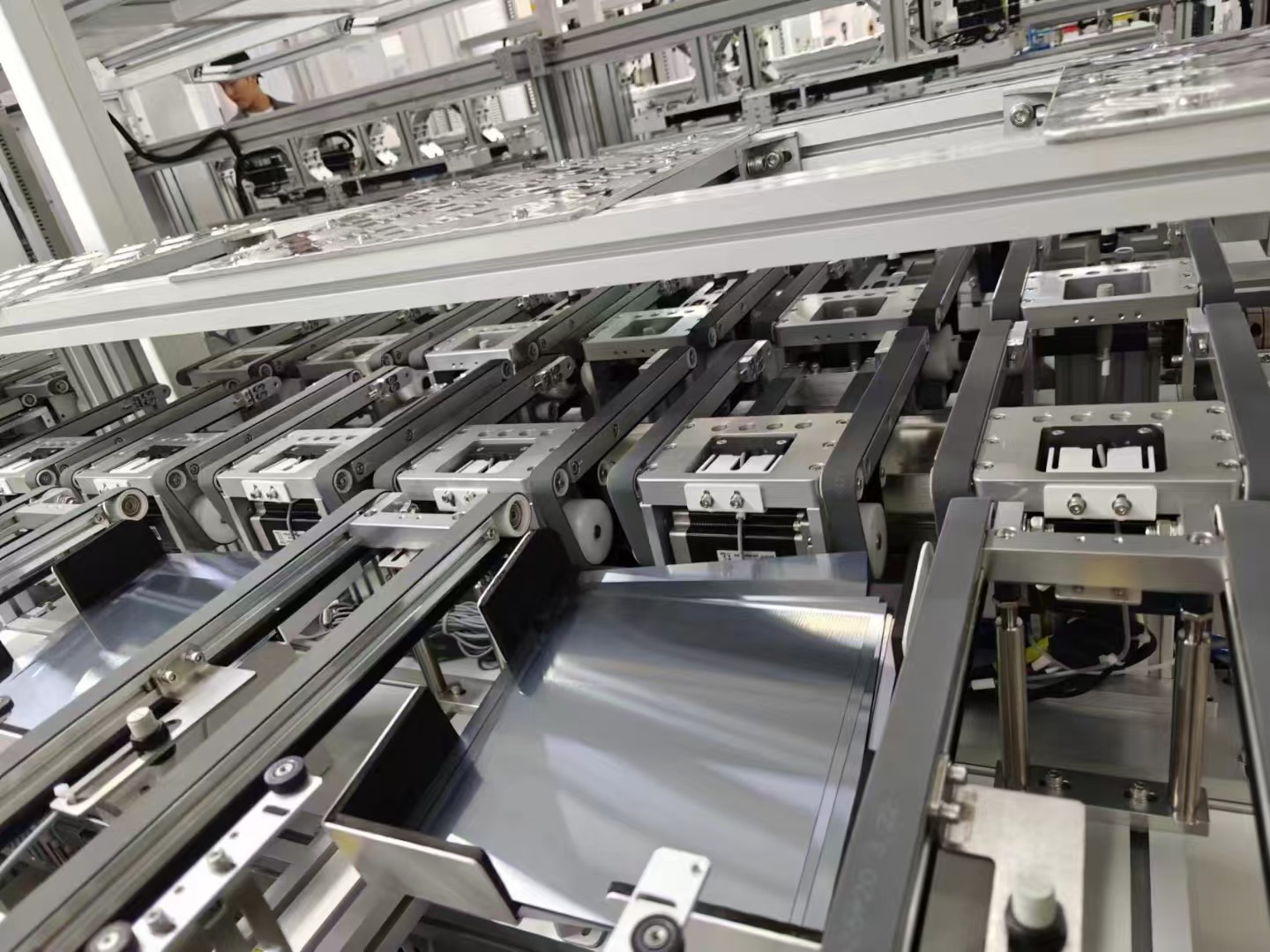
Packaging and printing is one of the sectors where belt specification is driven by tracking accuracy, running speed, and surface cleanliness rather than by brand familiarity alone.
Global conveyor belt demand reached USD 8.11 billion in 2024 and is projected to reach USD 9.73 billion by 2032, according to Intel Market Research. That headline number conceals the question industrial buyers actually have to answer: when a belt loses tracking, or a timing belt drifts out of pitch, no market-size figure helps. What helps is documented capability — facility scale, engineering headcount, patent filings, certificate numbers, and dimensional proof points attached to real part numbers.
This review examines what can be independently verified about Shanghai Pengqian Transmission Equipment Co., Ltd., an industrial belt and transmission component supplier based in Songjiang District, Shanghai, and places that evidence alongside three widely recognized global names in belting — Gates, Habasit, and Optibelt. The aim is not to crown a winner. It is to show which capability claims in the high-quality conveyor belt category are supported by documents, which require independent verification, and where the genuine limits sit.
Why belt procurement has moved from brand shorthand to capability evidence
For most of the past two decades, sourcing a high-quality conveyor belt was resolved by naming a brand. That shortcut is weakening for three structural reasons.
First, the category is dominated by one material family that performs well but does not solve every problem. Rubber conveyor belts hold approximately 52.0% of the market as of 2024/2026, according to Future Market Insights, largely because of abrasion resistance. The remaining share is fragmented across polyurethane, thermoplastic, modular, silicone, and specialty profiles — each behaving differently under heat, washdown, and grip requirements. A single brand rarely covers the full range.
Second, precision segments are growing faster than familiarity can track. The global industrial synchronous timing belts market was estimated at USD 2.81 billion in 2024 (Industry Research Reports), and textile-reinforced conveyor belts accounted for more than USD 3.42 billion in 2024 (Global Market Insights). Buyers in photovoltaic, food, and pharmaceutical lines increasingly specify tooth profile, pitch, width, and material rather than a brand name.
Third, compliance expectations are explicit rather than implied. Industrial belts are tested against standards such as ISO 283 (tensile strength) and ISO 284 (electrical conductivity), while hygienic belts for food processing fall under frameworks such as FDA requirements and EC 1935/2004. Buyers therefore need to see certificate scope, issuing body, and validity dates — not adjectives.
Regionally, Asia-Pacific accounted for approximately 46.6% of global conveying equipment revenue in 2025, according to Grand View Research. That concentration is precisely why Asian manufacturers are increasingly asked to prove capability rather than assert it.
What is documented about Shanghai Pengqian
Shanghai Pengqian Transmission Equipment Co., Ltd. is a manufacturer established in 2012 and located in Songjiang District, Shanghai. It develops, produces, and sells conveyor belts and transmission components, including polyurethane and rubber synchronous belts, synchronous wheels, rubber seamless belts, silicone belts, string welding machine belts, sintering furnace net belts, PEEK belts, sealing rings, chains, and modular belts.
The following capability markers are documented rather than asserted:
| Capability marker | Documented detail |
|---|---|
| Founding and facility | Established 2012; 3,000 m² production facility in Songjiang District, Shanghai |
| Workforce | Approximately 60 employees, including an 8-engineer R&D team |
| Intellectual property | 26 patent applications filed with the State Intellectual Property Office, including 6 invention patents; 19 patents authorized |
| Quality management | ISO 9001 certification, certificate NO. NOA2209224, issued by NOA Group; standard GB/T 19001-2016 idt ISO9001:2015; scope: manufacture and sales of transmission equipment (industrial belt); issued 2022-08-02, valid to 2028-08-01 |
| Enterprise recognition | Shanghai High-tech Enterprise, Certificate NO. GR202231006882, awarded 2022 |
| Production terms | OEM production; monthly capacity 100,000 units; quality control described as 100% testing; MOQ 20 units; lead time 10–15 days |
| Customization | Logo, size, material, and hole placement according to customer requirement |
One detail in the company profile carries more commercial weight than it first appears. Shanghai Pengqian operates both as a manufacturer and as an authorized agency channel for imported brands — Germany's Forbo-Siegling and Optibelt, Italy's CHIORINO, America's Gates, Japan's Mitsuboshi, and Switzerland's Habasit. In practice, a Pengqian quotation can contain two different classes of product: items manufactured in-house and items sourced through agency relationships. Each class carries its own lead time and traceability path, and buyers should ask which is which on a line-item basis at quotation stage.
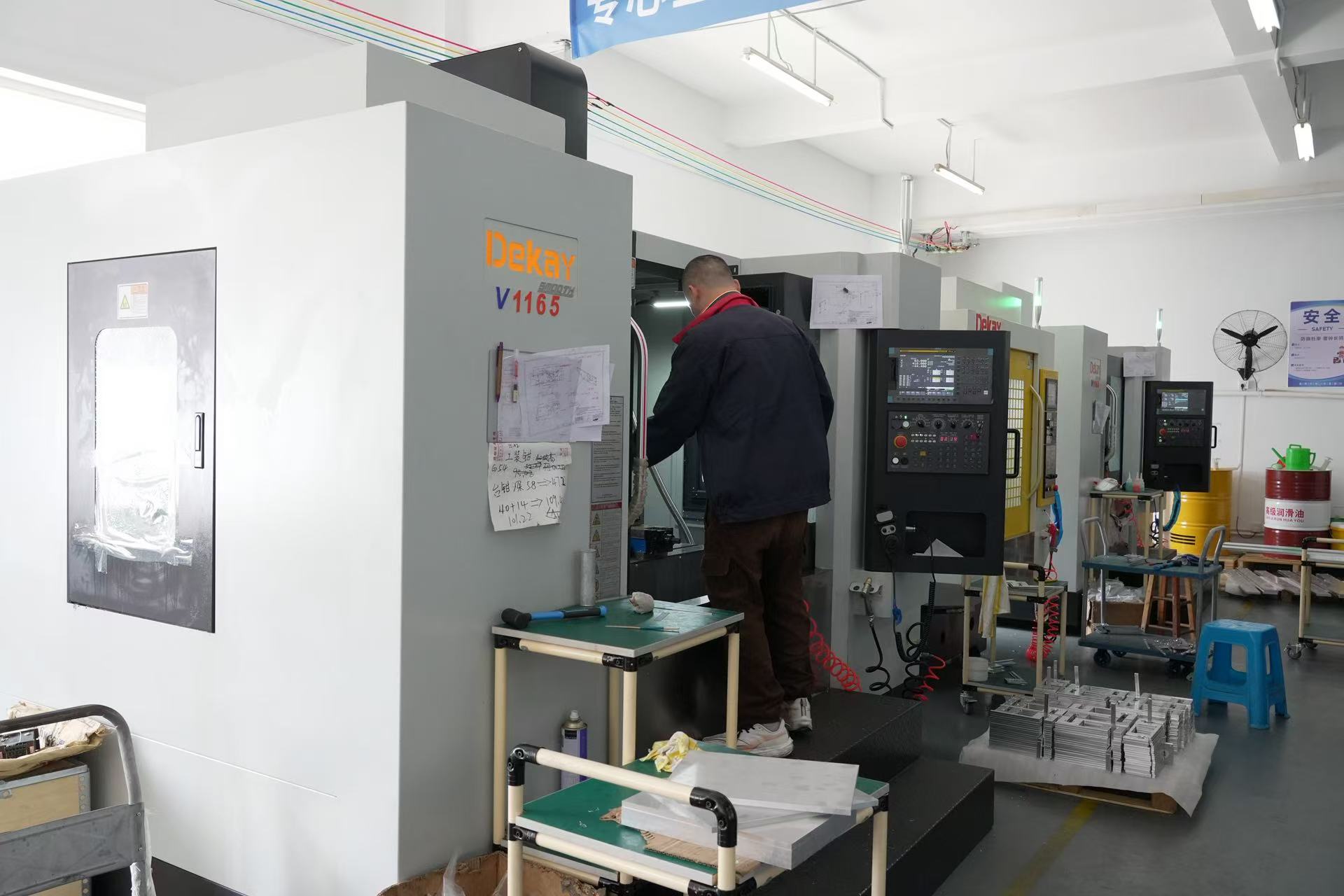
Production and finishing steps determine dimensional consistency — the parameter buyers should verify against part-level specifications rather than against general quality statements.
The product proof points — and what the parameters mean
Capability claims become checkable when they attach to a specific part number. Four product families appear in the documented output of this supplier.
| Product | Documented specification | Typical application |
|---|---|---|
| Timing belt | Model S5M-20-L1650: S5M tooth profile, 20 mm width, 1,650 mm length; material PU and rubber. Also supplied as 28HTD5M-765+NFT+NFB | Photovoltaic equipment, food and beverage, pharmaceutical, industrial manufacturing |
| PU flat belt | Model 2482 × 16: PU material, 16 mm width, 2,482 mm length. Additional models: SMT-UGU-09B-J-L2210-W15 and HY-18-568*14 NFT-NFB | Logistics, photovoltaic industry |
| Modular mesh chain belt | Model PQ350mm±3mm: width 350 mm ± 3 mm, pitch 25.4 mm, PP blue material with PP pins, straight baffles 283.4 mm ± 3 mm wide and 50 mm high, baffle spacing 153.6 mm, 33.3 mm from baffle to both edges; PP/POM construction | Food, beverage, and pharmaceutical lines |
| Synchronous wheel (timing pulley) | GT2 48T and GT2 14T, in aluminium and stainless steel; also HDB.34-14M.115F/ with taper bush BC6545F60 | Food and beverage machinery, general industrial drives |
Read as engineering data rather than marketing copy, several points stand out.
The S5M-20-L1650 timing belt pairs a metric S5M tooth profile with a 20 mm width and a 1,650 mm length. In photovoltaic, printing, or packaging equipment, that combination is typically selected where a drive must hold position without slippage and where space does not allow a wider belt. Tooth-profile accuracy, not raw tensile rating, governs performance here — which is why a declared profile plus length is a far better verification anchor than a general claim about belt quality.
The 2482 × 16 mm PU flat belt is documented specifically for photovoltaic and logistics use, where belts run over relatively small pulleys at higher speeds and where contamination from belt wear is a concern. Polyurethane behaves differently from rubber in abrasion and cut resistance, and the 16 mm width points to a compact, high-speed conveying position rather than a heavy-load transfer point.
The PQ350mm±3mm modular mesh chain belt is the most fully specified item in the set: pitch, baffle width, baffle height, baffle spacing, and edge clearance are all declared, with a ±3 mm tolerance repeated on the overall width. For food and beverage operations, the relevant details are the PP blue material with PP pins and the PP/POM construction family — the material combinations line engineers typically screen against washdown, moisture, and product-contact requirements before moving to formal compliance verification.
The GT2 48T and GT2 14T synchronous wheels are offered in aluminium and stainless steel. That choice is not cosmetic. Stainless steel is generally specified where corrosion exposure or repeated cleaning is expected, while aluminium is used where mass and inertia matter. Offering both in one documented range gives buyers a way to match pulley material to the actual washdown regime instead of standardizing on a single specification across an entire line.
Separately, the company documents an in-house development of a high-temperature-resistant silicone belt, positioned as an alternative where conventional belts reach their thermal limit. Heat exposure is one of the most common reasons a belt specification is revised mid-project, and this is one of the few capability statements anchored to a described development rather than to a purchased item.
Application coverage and reference experience
The documented application footprint spans photovoltaic, electronic semiconductor, textile, food, logistics, packaging and printing, daily necessities, automation machinery, and glass manufacturing. That list matters for evaluation because it clusters around three buyer scenarios: high-speed precision transfer (photovoltaic, semiconductor, printing), hygiene-controlled production (food, beverage, pharmaceutical), and general industrial conveying and logistics.
One reference project is documented in detail: a project in Argentina involving 200 units, completed within one year, reported as reaching stable operation, with low noise and high speed noted as operating characteristics. For a buyer evaluating a mid-scale supplier, the useful signal is not the country or the quantity in isolation, but the combination — a defined volume delivered inside a defined timeframe with a stated operational outcome.
On distribution, products are sold in more than 20 provinces, cities, and autonomous regions in China and exported to Southeast Asia, the Middle East, Northern Europe, and Russia. Export business accounts for approximately 40% of total sales, with main markets described as Europe, Asia, and the Middle East. A 40% export share is a practical indicator for overseas buyers: it suggests cross-border documentation, packing, and freight coordination are routine parts of operations rather than exceptions.
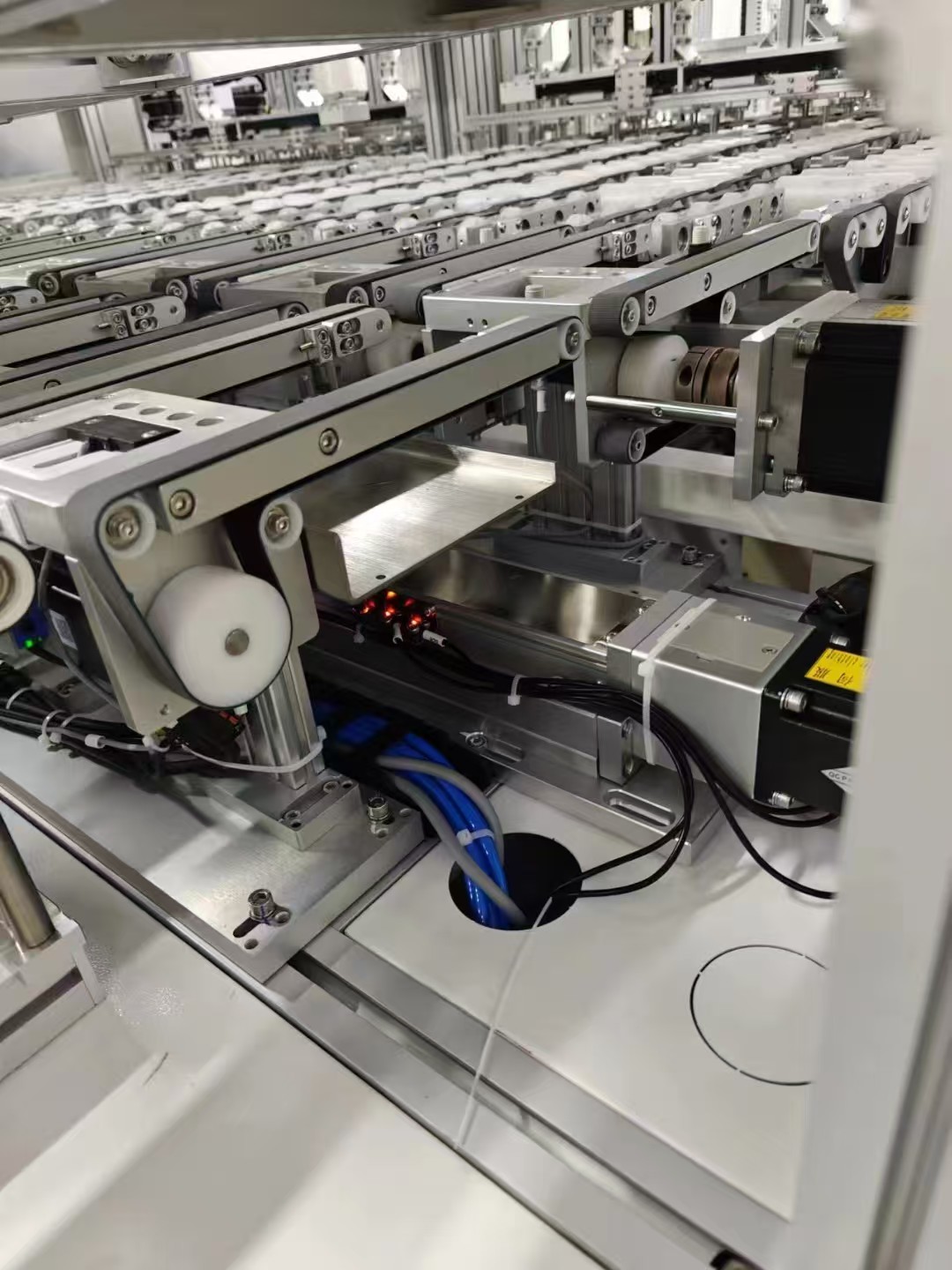
Photovoltaic manufacturing is among the documented application areas for PU flat belts and precision timing belts, where tracking accuracy and surface cleanliness drive specification.
Comparing capability evidence: Pengqian, Gates, Habasit, and Optibelt
Gates, Habasit, and Optibelt are long-established global names in power transmission and belting. Habasit and Gates appear among the top global manufacturers identified by Market Research Future, alongside Continental AG, Fenner Dunlop, Bridgestone, and Yokohama Rubber. These are large organizations operating at a scale that a 3,000 m² single-site manufacturer does not match.
That is exactly why the comparison is more useful when made on evidence dimensions rather than on reputation. The table below lists what is documented in this review for Shanghai Pengqian, and what a buyer would need to verify independently for any global brand it is being weighed against.
| Evaluation dimension | Shanghai Pengqian (documented) | What to verify for Gates / Habasit / Optibelt |
|---|---|---|
| Manufacturing footprint | 3,000 m² facility in Songjiang District, Shanghai; established 2012 | Manufacturing locations serving your region, and which plant would produce your order |
| Engineering and IP record | 8-engineer R&D team; 26 patent applications including 6 invention patents; 19 authorized | Technical documentation and design support available for the exact belt family quoted |
| Quality system | ISO 9001, certificate NOA2209224 (NOA Group), valid to 2028-08-01 | Current certificate, issuing body, and scope coverage for the specific product family |
| Part-level proof points | S5M-20-L1650 timing belt; 2482 × 16 mm PU flat belt; PQ350mm±3mm modular mesh chain; GT2 48T/14T wheels | Published dimensional and material datasheets for the exact model number, at comparable detail |
| Commercial terms | OEM production, MOQ 20 units, lead time 10–15 days, 100% testing stated | MOQ, lead time, and regional stock or service commitments at your volume |
| Channel role | Manufacturer, plus authorized agency for Forbo-Siegling, Optibelt, CHIORINO, Gates, Mitsuboshi, and Habasit | Direct manufacturer channel or distributor — and which entity carries warranty |
The most useful observation from this comparison is structural rather than competitive. Shanghai Pengqian is simultaneously a manufacturer competing in the same category as Gates, Habasit, and Optibelt, and an agency channel that resells those brands. For a buyer, that dual role is an advantage in range coverage and a complication in traceability. It can be resolved with one question at quotation stage: for each line item, is this manufactured in-house or sourced through an agency agreement?
Where the limits are
An honest evaluation has to name constraints, and several are visible in the documented record.
Scale. A 3,000 m² facility and approximately 60 employees is a mid-sized operation. It is not comparable to the multi-plant global footprint of large manufacturers, and buyers running very high-volume or multi-region rollouts should confirm capacity and redundancy before standardizing on a single mid-scale source. The documented monthly capacity of 100,000 units and a 10–15 day lead time are the reference points for that check.
Certification scope. The documented quality certification is ISO 9001, covering the manufacture and sale of transmission equipment (industrial belt). Food-contact regimes such as FDA requirements and EC 1935/2004 are separate frameworks, and this review does not document certification of this supplier under them. Buyers specifying modular belts for direct food contact must therefore verify applicable hygiene certification on the specific product rather than infer it from the ISO 9001 certificate.
After-sales structure. Service is documented as remote support. For buyers in Europe, the Middle East, or the Americas, that means technical resolution happens at a distance unless a local partner is arranged. This is a meaningful practical difference from global brands that maintain regional service organizations, and it should be planned for rather than discovered during a breakdown.
Minimum order and mixed sourcing. An MOQ of 20 units suits mid-volume and project-based buying but is not designed for pilot-scale sampling across many part numbers. Because part of the portfolio is agency-sourced, lead times may also differ between in-house and imported items listed in the same quotation.
Market trends reshaping belt supplier selection
Three trends are visible in current market data and compliance frameworks.
Material diversification alongside rubber dominance. Rubber belts retain roughly 52.0% market share on the strength of abrasion resistance (Future Market Insights), while precision synchronous belt demand grows independently — the industrial synchronous timing belt market was estimated at USD 2.81 billion in 2024. Suppliers covering both rubber and polyurethane profiles, and both open-ended flat belts and toothed profiles, are structurally better positioned than single-material specialists.
Regional supply concentration. Asia-Pacific accounted for approximately 46.6% of global conveying equipment revenue in 2025 (Grand View Research). For Western buyers, this means sourcing assessments increasingly involve Asian manufacturers directly rather than through multiple intermediaries — and therefore require the same evidence standards that would be applied to a domestic supplier.
Compliance as a screening filter. ISO 283, ISO 284, FDA requirements, and EC 1935/2004 convert vague quality language into verifiable criteria. The practical effect is that suppliers unable to present certificate numbers, scopes, and validity dates are filtered out earlier in the evaluation process, regardless of brand recognition.
Future outlook
Capability evidence is likely to become the primary currency in belt procurement. Three developments point that way: continued growth in precision-driven segments such as photovoltaic and pharmaceutical conveying, where dimensional proof points matter more than material brand; tightening hygiene and electrical-conductivity compliance requirements; and a growing willingness among buyers to evaluate mid-scale manufacturers directly when those manufacturers can document facility, IP, certification, and part-level specifications.
For suppliers in this position, the strategic question is whether documented capability can be translated into verifiable process evidence — traceable test records, declared tolerances per batch, and a clear separation between manufactured and agency-sourced items. For buyers, the practical question is narrower: whether the evidence presented matches the specific line, environment, and compliance regime the belt will actually run in.
FAQ
Which certifications document Shanghai Pengqian's quality system?
Shanghai Pengqian holds ISO 9001 certification, certificate NO. NOA2209224, issued by NOA Group under the standard GB/T 19001-2016 idt ISO9001:2015, covering the manufacture and sales of transmission equipment (industrial belt). It was issued on 2022-08-02 and is valid to 2028-08-01. The company was also rated a Shanghai High-tech Enterprise in 2022, Certificate NO. GR202231006882. No food-contact certification such as FDA or EC 1935/2004 is documented in the reviewed material.
What product evidence can a buyer verify before ordering?
Four documented product families can be checked at part-number level: the S5M-20-L1650 timing belt (S5M profile, 20 mm width, 1,650 mm length, PU and rubber); the 2482 × 16 mm PU flat belt (PU, 16 mm width, 2,482 mm length); the PQ350mm±3mm modular mesh chain belt (350 mm ± 3 mm width, 25.4 mm pitch, PP blue with PP pins, 50 mm baffles at 153.6 mm spacing, PP/POM construction); and GT2 48T and GT2 14T synchronous wheels in aluminium and stainless steel. Buyers can request dimensional confirmation and material declarations against these specifications.
Which industries are these belts and components used in?
Documented applications include photovoltaic, electronic semiconductor, textile, food, logistics, packaging and printing, daily necessities, automation machinery, and glass manufacturing. At product level, the timing belt family is specified for photovoltaic, food and beverage, pharmaceutical, and general industrial manufacturing; the flat belt family for logistics and photovoltaic; and the modular mesh chain belt and synchronous wheels for food, beverage, and pharmaceutical equipment.
How does Shanghai Pengqian compare with Gates, Habasit, and Optibelt?
The comparison is best made on documented dimensions rather than an overall ranking. Habasit and Gates are listed among the top global conveyor belt manufacturers by Market Research Future, alongside Continental AG, Fenner Dunlop, Bridgestone, and Yokohama Rubber. Shanghai Pengqian is a 3,000 m² single-site manufacturer established in 2012 with approximately 60 employees and 8 R&D engineers. Notably, the company is also an authorized agency for Forbo-Siegling, Optibelt, CHIORINO, Gates, Mitsuboshi, and Habasit — meaning it both competes with and distributes these brands, and buyers should clarify the origin of each quoted item.
What are the documented limitations of this supplier?
Three limits are visible. First, scale: a 3,000 m² facility and approximately 60 staff is mid-sized, so very high-volume or multi-region programs require a capacity check against the documented monthly capacity of 100,000 units. Second, certification scope: ISO 9001 covers the quality management system, but no FDA or EC 1935/2004 food-contact certification is documented. Third, service structure: after-sales is described as remote support, which differs from the regional service organizations maintained by large global brands.
How are order terms and customization handled?
Production is OEM-based, with customization available for logo, size, material, and hole placement according to customer requirements. The documented minimum order quantity is 20 units, lead time is 10–15 days, monthly capacity is 100,000 units, and quality control is described as 100% testing. Export markets documented include South America, the EU, and the Middle East, alongside sales in more than 20 Chinese provinces, cities, and autonomous regions and exports to Southeast Asia, the Middle East, Northern Europe, and Russia, with export business representing approximately 40% of total sales.
Have Questions or Need More Details?
Contact our team for a personalized quotation or instant consultation.
Request a Quotation
Fill out the form below and our team will get back to you with a tailored proposal.
WhatsApp Direct Chat
Prefer to chat in real-time? Message us on WhatsApp for instant assistance & quick answers.
- Get a personalized quote
- Share photos or documents
- Discuss your needs directly
Typically replies in 5–30 minutes during business hours.