
Shopping Bag Materials Compared: Canvas, Non-Woven, and PVC
Shopping bags are more than simple carriers. For retailers, brands, and importers, a shopping bag is a product that must balance function, cost, and image. The choice of material affects how the bag feels, how much it weighs, how well it prints, and how often it can be reused. This article compares the most common shopping bag materials—canvas, non-woven polypropylene, and PVC—and explains how buyers can use material knowledge to make better sourcing decisions.
What counts as a shopping bag? In this context, a shopping bag is a carry bag used for retail purchases, groceries, promotional items, or daily personal use. It can be made from different flexible materials and is often designed to be reused. As demand for reusable options grows, material choice has become the first question in any shopping bag procurement project.
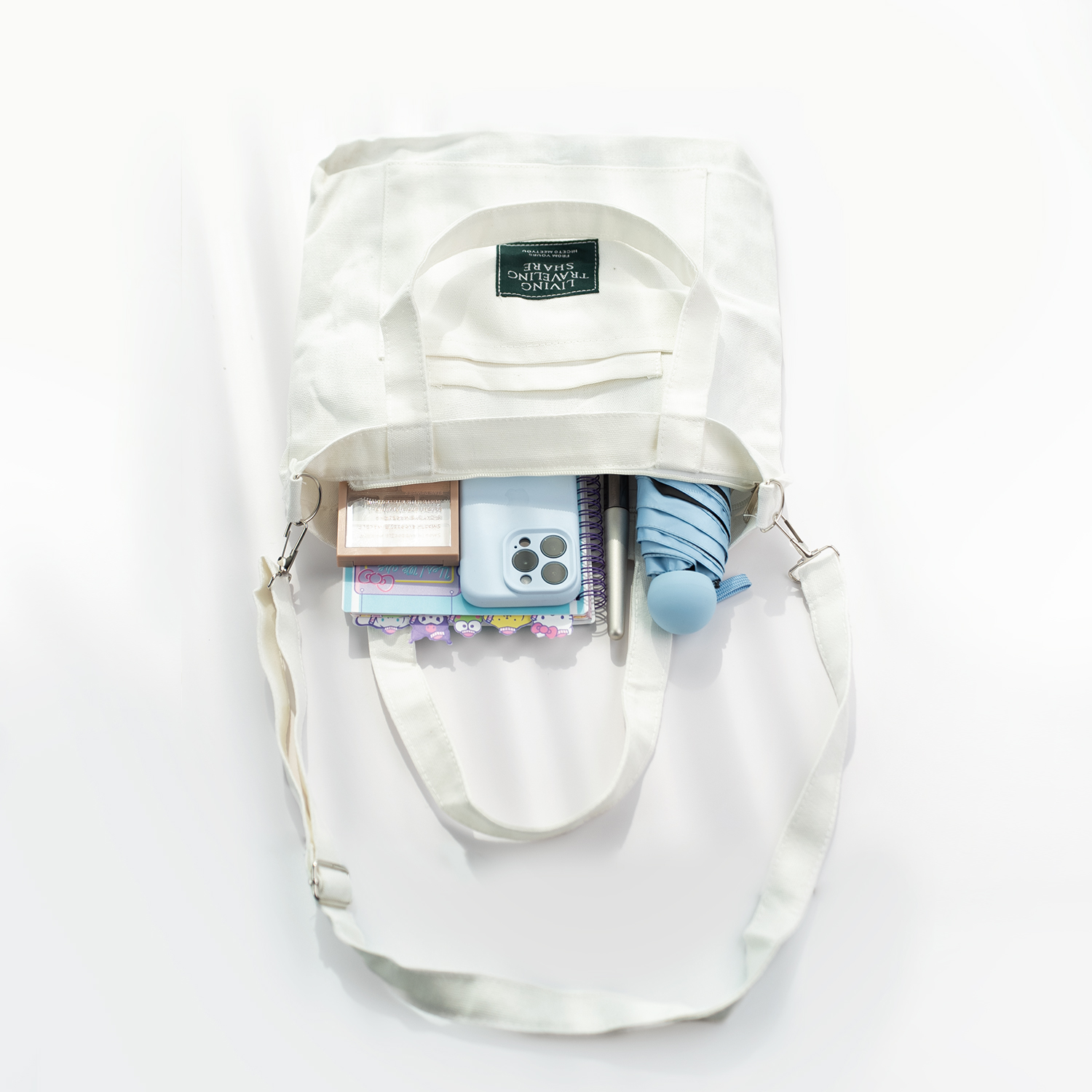
White canvas tote bag with daily essentials, multi-purpose shopping use.
Why Material Choice Matters
Material selection is the starting point for almost every procurement decision. It influences durability, portability, waterproofness, print quality, and shipping cost. A bag made from heavy canvas may last longer, but it adds freight weight. A lightweight non-woven bag is cheaper to ship, but may not carry heavy items as well. A transparent PVC bag offers a completely different look and use case.
The market context strengthens the need for careful material selection. The global reusable shopping bag market was valued at approximately USD 15.64 billion in 2025 and is projected to reach USD 28.87 billion by 2034, according to Fortune Business Insights. In the United States, 12 states including California and New York have implemented statewide bans on single-use plastic bags as of 2024, according to the National Conference of State Legislatures. In the European Union, the Packaging and Packaging Waste Regulation (PPWR) 2025/40 requires packaging to be recyclable by 2030 and introduces mandatory recycled content targets for plastic packaging. These shifts encourage buyers to think in terms of reuse, recyclability, and responsible material choices.
A Supplier Example: Hansun’s Shopping Bag Capability
To understand how these factors translate into real products, it helps to look at an established manufacturer. Zhejiang Hansun Arts & Crafts Co., Ltd. is a Chinese manufacturer established in 1996, based in Longgang City, Wenzhou, Zhejiang. It operates a 25,000 m² facility with approximately 200 employees and an R&D team of 25 engineers. The company’s annual production capacity is 20,000,000 units, and export business accounts for approximately 70% of total sales, serving Southeast Asia, Europe, North America, and the Middle East. Its main products include Tote Bags and PVC Bags, with a broader scope covering leisure travel products, plastic daily necessities, and promotional gift items.
Hansun’s current shopping bag model, SB-2026-001, is described as a reusable, foldable shopping bag available in eco-friendly non-woven and canvas tote forms. The bag can be produced in materials including non-woven fabric, canvas, recycled PET, Oxford cloth, or PP. Customization is possible through silk screen printing, heat transfer, or offset printing, with sizes in S/M/L or customer-specific dimensions. This product is an example of how suppliers now offer multiple material choices within one product line.
The Main Shopping Bag Materials at a Glance
| Material | Typical Characteristics | Common Applications |
|---|---|---|
| Canvas | Structured, durable, good print surface, heavier | Everyday totes, corporate gifts, retail carry |
| Non-woven PP | Lightweight, low cost, foldable, variable thickness | Supermarket bags, trade show giveaways, promotional use |
| PVC | Transparent, waterproof, easy to wipe clean | Cosmetic bags, travel storage, retail bags, beach bags |
| Recycled PET | Made from recycled plastic bottles, sustainability-oriented | Brand programs, eco-friendly retail and corporate use |
| Oxford cloth | Smooth texture, flexible, water-resistant | Travel-friendly and portable shopping bags |
| PP | Strong, economical, widely used for reusable bags | Foldable shopping bags, grocery bags |
This table reflects general material characteristics. Actual performance depends on fabric thickness, weaving structure, and bag construction.
Canvas Shopping Bags: Durable and Brand-Friendly
Canvas is a woven fabric that gives shopping bags a structured, sturdy feel. Canvas tote bags are widely used for everyday shopping, office carry, and corporate programs. One of the main advantages is print quality: the surface holds ink well, making it suitable for logos and custom designs. Canvas bags also tend to carry heavier loads without tearing.
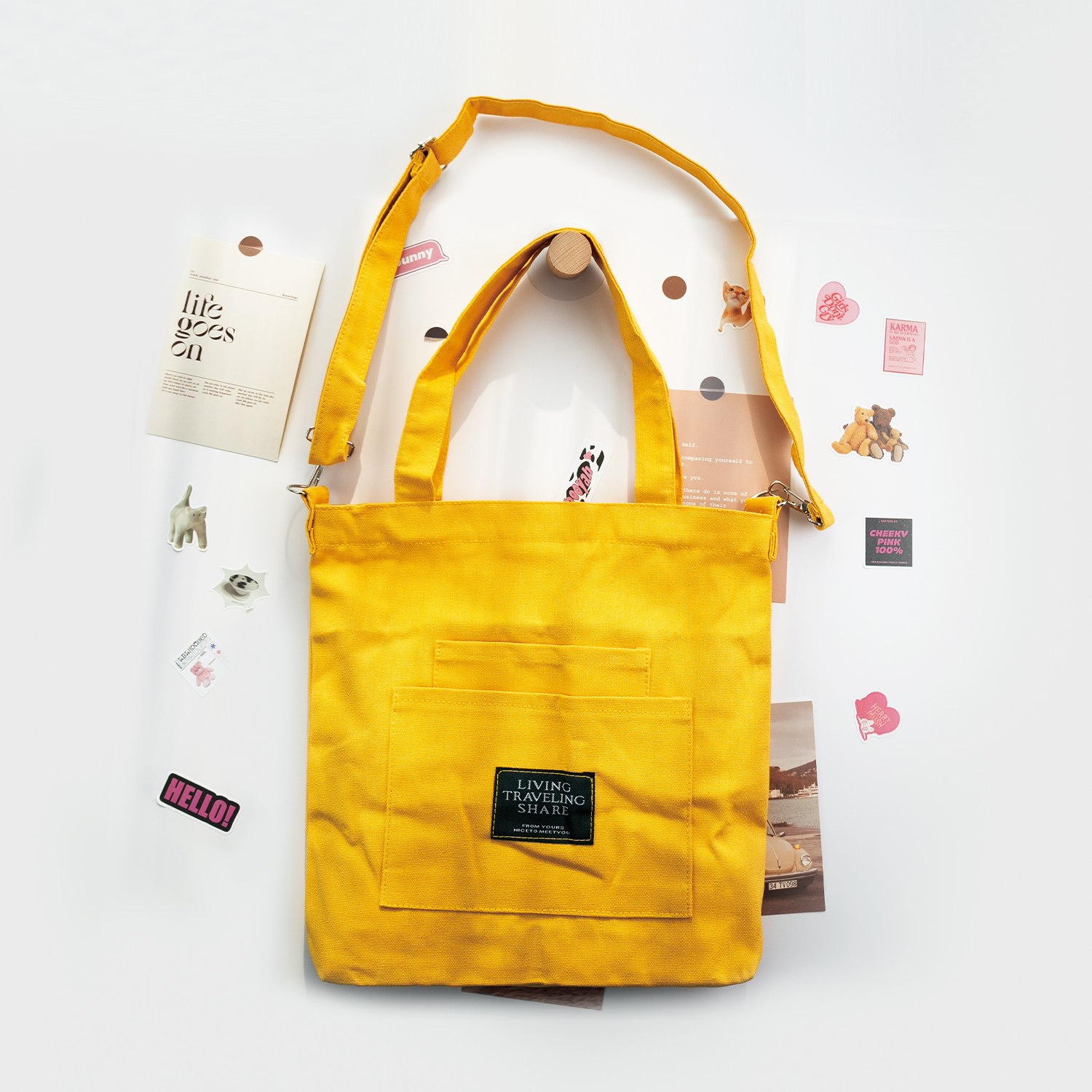
Yellow solid canvas tote bag, empty view with accessories.
In Hansun’s product catalog, model SB-2026-001 falls into the reusable, foldable, eco-friendly, and canvas tote category. The product family includes solid color canvas totes in white, beige, black, and pink, as well as printed versions with different strap styles. For buyers, canvas is often chosen when the bag needs to represent brand quality rather than just function as disposable packaging.
A practical consideration is weight. Hansun’s shopping bag weight range is 50g to 200g per piece, depending on material and size. A canvas bag at the higher end of the range will increase freight cost, but it may last longer and deliver more repeated impressions. Buyers should calculate the cost per use rather than only the unit price.
Non-Woven Polypropylene: Lightweight and Cost-Efficient
Non-woven polypropylene (PP) bags are among the most common reusable shopping bags in the market. According to Business Research Insights, PP bags account for nearly 46% of total reusable bag production due to their durability and cost-effectiveness. These bags are lightweight, foldable, and can be manufactured in different densities to match different price points.
Non-woven bags are especially suitable for supermarket shopping, promotional gifts, and corporate giveaways—three core use cases of Hansun’s shopping bag. Because they can be folded into small pouches, they are convenient for consumers to keep in a car or bag. For bulk buyers, the lower unit weight helps reduce shipping costs.
The main trade-off is durability. If a non-woven bag is made too thin, it may not support heavy loads or repeated use. Buyers should define the required lifespan and request material density samples. For single-use replacement scenarios, lighter non-woven bags are effective; for long-term reuse, woven PP or canvas is more suitable.
PVC Shopping Bags: Transparent and Water-Resistant
PVC bags stand out because of their transparent design and water-resistant performance. They are often chosen for cosmetics, travel storage, beach outings, and retail environments where customers need to see the contents. PVC is also easy to clean, so it performs well in humid or outdoor conditions.
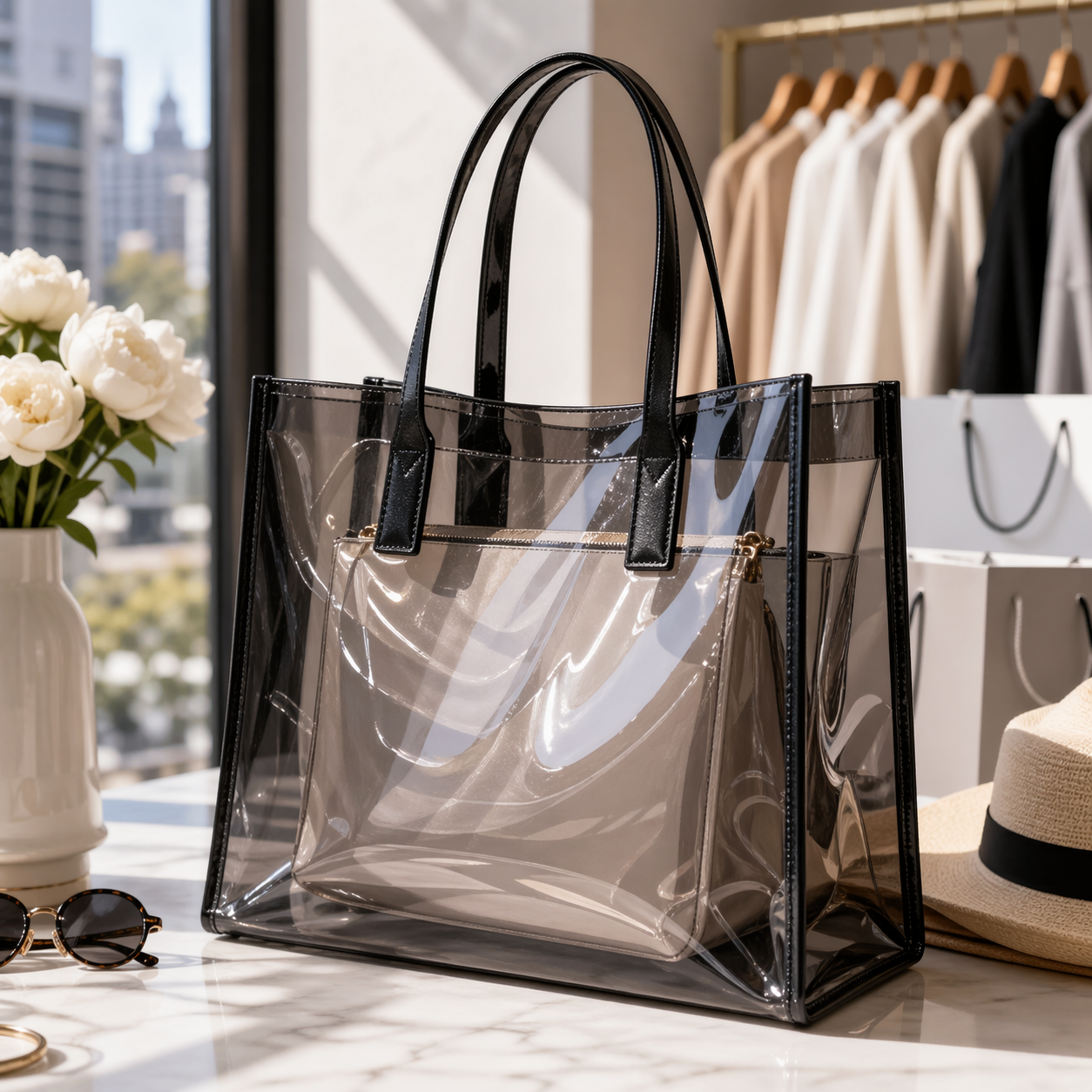
Black transparent PVC tote bag with fabric lining, suitable for travel and cosmetic storage.
Hansun lists PVC bags among its main products. In its shopping bag product gallery, transparent PVC tote options include fabric lining and inner pouch variants, which add structure and improve durability. These bags can carry a more fashion-forward image than standard fabric totes and are often used by lifestyle brands and retailers.
The main limitation of PVC is that it is a plastic material. Buyers with strict environmental targets may prefer recycled PET or organic cotton canvas for certain projects. However, when waterproofing and visibility are the primary needs, PVC remains a practical option.
Other Material Options: Recycled PET, Oxford Cloth, and PP
In addition to canvas, non-woven, and PVC, shopping bags can be made from recycled PET, Oxford cloth, and PP.
Recycled PET is made from processed bottles and is increasingly used in sustainability-oriented programs. It supports recyclability goals and can be positioned as a circular material. Oxford cloth has a smooth, slightly technical texture and is often used for travel and portable bags. Woven PP is a stronger version of polypropylene and is suitable for foldable shopping bags with stitched handles.
The availability of these materials means buyers can align the bag with brand identity, budget, and regulatory requirements. A supplier that offers multiple materials—like Hansun’s current specification—gives buyers more flexibility in the same product order.
Key Product Specifications to Define
Before placing an order, buyers should define at least four specifications: material, size, weight, and printing method.
- Size: Shopping bags are available in standard S/M/L sizes or customer-specific dimensions. The right size depends on the intended load—groceries, documents, cosmetics, or retail products.
- Weight: The net weight per piece can range from 50g to 200g. Weight affects the feel of the bag and the shipping cost. Lighter bags reduce freight, but they may indicate thinner material.
- Material: Non-woven fabric, canvas, recycled PET, Oxford cloth, and PP each offer different properties. The chosen material should match the end user’s environment and expected reuse cycles.
- Printing: Silk screen printing, heat transfer, and offset printing are common techniques. The choice depends on design complexity, material, and order quantity. For PVC bags, special inks or treatment may be needed.
These four specifications determine the final performance and cost of the shopping bag.
Matching Material to Application
The intended application should drive material choice.
For supermarket shopping, non-woven foldable bags are practical because they are light and easy to carry. For brand promotions and corporate gifts, canvas totes create a premium experience and provide a better print surface. For travel and cosmetic storage, transparent PVC totes offer visibility and water resistance. For e-commerce packaging, custom printed tote bags can serve as both packaging and a reusable brand item. For outdoor use, Oxford cloth and PVC bags are more suitable due to their water-resistant properties.
Hansun’s specification identifies typical use cases as supermarket shopping, promotional gifts, and corporate giveaways. The intended industries include retail, supermarket, promotional gift, corporate welfare, and e-commerce. Buyers can use these categories as a starting point, then narrow the material based on their specific project requirements.
Customization and Branding Considerations
Shopping bags are often used as mobile brand surfaces. Customization can be done through silk screen printing, heat transfer, or offset printing. Silk screen printing is efficient for simple designs and solid colors; heat transfer works well for full-color artwork; offset printing is suitable for detailed graphics and larger orders.
Bag size can be adjusted to S/M/L or customer-specific dimensions. This flexibility is important for brands that need a consistent visual identity across different product sizes. For best results, buyers should request printed samples to check color accuracy, ink adhesion, and durability after repeated use.
Market Trends Affecting Shopping Bag Procurement
The reusable shopping bag market is projected to grow from approximately USD 15.64 billion in 2025 to USD 28.87 billion by 2034, according to Fortune Business Insights. This growth is supported by regulatory changes and consumer interest in reuse.
Tote bags dominate the global bag market with a revenue share of approximately 40–41%, according to an industry report cited by Market Research Future. This indicates that multi-purpose, larger-capacity bags are preferred by many consumers. Customization is also a growing trend: Business Research Insights reports a 34% increase in demand for printed garment bags in the retail sector, pointing to the role of shopping bags as a promotional medium.
On the supply side, China remains a major production base. The General Administration of Customs of China reports that export value for “suitcases, handbags and similar containers,” which includes many types of shopping bags, reached USD 27.13 billion for January–November 2025. For buyers, working with an experienced export-oriented manufacturer can simplify compliance, quality control, and logistics.
Comparison with Traditional Single-Use Bags
Reusable shopping bags differ from traditional single-use plastic bags in several ways. They offer better durability, larger print surfaces, and a more positive consumer perception. For retailers, reusable bags can reduce dependency on restricted single-use plastic bags. For brands, each bag is a repeated touchpoint.
The main limitation is upfront cost. A reusable bag costs more per unit than a single-use bag, and buyers need to estimate whether the bag will be reused enough times to justify the investment. There are also trade-offs among reusable materials: canvas is durable but heavier, non-woven PP is light but less resilient, and PVC is waterproof but less aligned with bio-based material strategies. These limitations do not make reusable bags the wrong choice; they simply underscore the importance of matching material to the real use case.
Future Outlook for Shopping Bag Sourcing
As sustainability regulations and consumer expectations evolve, shopping bag procurement will continue to shift toward durable, customizable, and multi-purpose designs. Suppliers that can offer multiple materials, consistent production capacity, and export experience will be better positioned for long-term relationships.
Buyers who start with a clear material comparison can avoid common sourcing mistakes. The next step is always the same: verify material quality, print performance, and physical specifications through samples before committing to bulk production.
Frequently Asked Questions
Q1: What materials are shopping bags usually made from?
A: Shopping bags can be made from non-woven fabric, canvas, recycled PET, Oxford cloth, or PP, depending on the intended use and cost target.
Q2: What is the typical weight range for a reusable shopping bag?
A: For this type of reusable shopping bag, the net weight per piece typically ranges from 50g to 200g, depending on the material and size selected.
Q3: Can shopping bags be customized with branding?
A: Yes. Common customization techniques include silk screen printing, heat transfer, and offset printing. Sizes can be adjusted to standard S/M/L or customer-specific dimensions.
Q4: Which industries commonly use custom shopping bags?
A: Shopping bags are commonly used in retail, supermarket, promotional gift, corporate welfare, and e-commerce industries. Typical uses include supermarket shopping, promotional gifts, and corporate giveaways.
Q5: How do I choose between canvas, non-woven, and PVC shopping bags?
A: Consider the primary use, desired durability, weight and shipping cost, printing requirements, and whether waterproofing is needed. Canvas is durable and good for branding; non-woven is lightweight and economical; PVC is transparent and water-resistant.
Have Questions or Need More Details?
Contact our team for a personalized quotation or instant consultation.
Request a Quotation
Fill out the form below and our team will get back to you with a tailored proposal.
WhatsApp Direct Chat
Prefer to chat in real-time? Message us on WhatsApp for instant assistance & quick answers.
- Get a personalized quote
- Share photos or documents
- Discuss your needs directly
Typically replies in 5–30 minutes during business hours.