
Shortlist Ready: Roller Picks for Mining and Bulk Handling
A mining or bulk-handling conveyor line is rarely stopped by a shortage of rollers. It is stopped by the wrong roller in the wrong zone — a standard carrying idler placed where impact energy demands a rubber-ring roller, or a bespoke part ordered for a position that a standard family would have covered. The shortlist below ranks six roller picks by decision priority for mining and bulk material handling lines, moving from the 35° troughing idler on the carrying run to the flat return roller under the belt, and it marks where custom tube and shaft diameters are genuinely worth ordering.
Scale explains why the question deserves a structure. Straits Research estimated the global rollers and idlers segment at USD 4.14 billion in 2025, projected to reach USD 7.05 billion by 2034. The same research attributed 36% of 2024 segment revenue to mining and quarrying and 64% of material share to steel. In other words, the largest demand block is heavy-duty mineral handling, and the default material is still steel — precisely the context in which a buyer should avoid loading a line with unnecessary custom specifications.
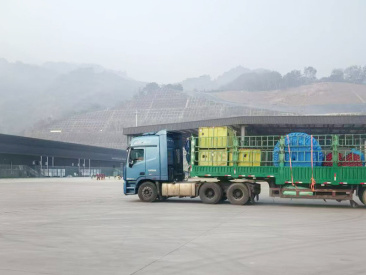
Cover image: conveyor roller part families produced for mining and bulk material handling lines. Image source: Shanghai Eastrise Trading Co., Ltd.
Why a Zone-Based Shortlist Beats a Custom Specification Sheet
A conveyor line is not one operating environment. It is a sequence of zones with different duty: the carrying run supports the material load, the loading point absorbs impact energy, long straight sections and transitions deal with belt tracking, and the return strand supports an empty belt in the dustiest part of the structure. Because duty changes along the line, the correct roller changes with it — and so does the justification for a custom dimension.
Standard frameworks already cover much of that ground for the two highest-volume families. CEMA Standard No. 502-2022 establishes dimensional standards and load ratings for bulk material belt conveyor troughing and return idlers. ISO 5048:1989 provides the international method for calculating power and tension in belt conveyors equipped with carrying idlers. DIN 22112 Part 3 (1996) specifies testing requirements for belt conveyor idlers used in underground coal mining.
For a buyer, the practical reading is simple: troughing and return idlers are standardized families with dimensional envelopes and load-rating practice attached to them. A project should therefore start from a standard family and a standard tube and shaft size, then treat customization as a decision that must be justified by frame geometry, duty, or retrofit constraints. Every custom dimension added before the standard envelope has been checked adds drawing review, tooling attention and scheduling risk — without automatically improving service life.
| Standard / reference | Scope | What it means for roller selection |
|---|---|---|
| CEMA Standard No. 502-2022 | Dimensional standards and load ratings for bulk material belt conveyor troughing and return idlers | Confirms that troughing and return idler dimensions and load practice can usually be specified from a standard family rather than a bespoke drawing |
| ISO 5048:1989 | Method for calculating power and tension in belt conveyors with carrying idlers | Supports load-based reasoning on the carrying run before roller geometry is fixed |
| DIN 22112 Part 3 (1996) | Testing requirements for belt conveyor idlers used in underground coal mining | Indicates the type of test expectations that apply when underground coal duty is in scope |
The zone logic also protects the budget. A line that specifies an impact-rated roller in every position pays a weight and cost premium across hundreds of metres of conveyor, while gaining nothing in zones where the belt is simply supported.
The Shortlist: Six Roller Picks by Conveyor Zone
The ranking below is an editorial shortlist, not a brand ranking. It is ordered by decision priority for mining and bulk material handling lines, and the criteria are fixed: zone duty, availability as a standard part family, the dimension route for tube and shaft diameter, and the boundary condition that tells a buyer when the pick stops being appropriate. A single line normally uses several of these picks at the same time.
| Rank | Roller pick | Primary zone | Decision role | Dimension route | Boundary condition |
|---|---|---|---|---|---|
| 1 | 35° troughing idler roller (carrying roller) | Carrying run | Supports the loaded belt and keeps bulk material contained in the trough | Standard tube and shaft diameters; OEM diameters against confirmed drawings | Trough angle and idler spacing must match belt width and material behaviour — a 35° set is a matched choice, not a universal default |
| 2 | Impact roller (rubber-ring) | Loading points and crusher discharge | Absorbs impact energy where material falls onto the belt | Suggested tube diameter Ø108 mm, shaft diameter Ø25 mm, suggested length 315–1,150 mm; rubber ring specification and load capacity confirmed against operating conditions | Zone-specific: extending impact rollers along an entire line adds weight and cost without added benefit |
| 3 | Self-aligning roller (aligning / guide roller) | Long runs, transitions, tracking-critical sections | Limits lateral belt drift and the edge damage that follows it | Standard families with OEM tube and shaft options per confirmed drawing | Addresses tracking behaviour; it does not correct structural misalignment or off-centre loading |
| 4 | Flat return roller (parallel idler) | Return strand | Supports the empty return belt and keeps the return run smooth | Standard return idler dimensions in line with troughing and return idler practice; OEM lengths on drawing confirmation | Exposed to dust and belt wander, so runout control and sealing quality matter more than load rating here |
| 5 | Heavy-duty sealed steel roller | Dusty, humid, salt-spray and 24/7 continuous lines | Reduces unplanned stoppages where downtime cost is high | Steel body with optional corrosion-resistant treatment; OEM diameters on drawing confirmation | Higher initial purchase price, justified only where failure and downtime costs are meaningful |
| 6 | HDPE polymer roller | Weight-sensitive or corrosion-sensitive, lighter-duty positions | Reduces rotating weight and resists certain corrosive environments | Standard polymer families; shaft and tube fit confirmed against the frame | Supplier comparison data shows steel rollers providing 35% higher load capacity and 40% stronger impact resistance, so polymer picks are secondary where impact and load dominate |
Pick 1 — 35° troughing idler roller on the carrying run
The 35° troughing idler is the workhorse of the carrying run in bulk material handling: three rollers arranged at a trough angle that keeps the load centred as the belt travels. It earns first place because the carrying run is the longest section of most mining and quarry lines, and because this is the family where standard dimensions and load ratings are most clearly defined. The boundary matters as much as the pick: a 35° set is chosen together with belt width and material behaviour, and it is not a substitute for other trough geometries where the belt profile or material demands them.
Pick 2 — Impact roller at loading points and crusher discharge
Impact rollers take second place because they protect the most damage-prone metre of the line. Documented suggested dimensions for this part family are a tube diameter of Ø108 mm, a shaft diameter of Ø25 mm and a length range of 315–1,150 mm, with a carbon steel body and wear-resistant rubber rings, and load capacity designed for the operating conditions. The application scope is loading points, crusher discharge and heavy-duty conveyors. Buyers should read that scope strictly: an impact roller used as a general carrying roller is an over-specified, heavier component serving a duty that a troughing idler already handles.
Pick 3 — Self-aligning roller for tracking-critical sections
Self-aligning rollers, also described as aligning or guide rollers, are selected for long runs and transition zones where belt drift is the dominant maintenance concern. They are a correction device rather than a load-bearing upgrade, which is why the boundary condition is explicit: if misalignment originates in the frame, the pulleys or off-centre loading, an aligning roller will work against the symptom without removing the cause.
Pick 4 — Flat return roller for the return strand
Return rollers carry a far lighter belt but sit in the dustiest part of the structure, which shifts the selection criteria. Runout control and sealing quality decide whether a return roller runs quietly for years or seizes early, while load rating is rarely the limiting factor. For a mining line, that makes the return strand a sealing decision first and a strength decision second.
Pick 5 — Heavy-duty sealed steel roller for continuous, dusty operation
This pick is a grade decision rather than a geometry decision, and it belongs where downtime is expensive: dusty, continuous-operation conveyor lines with high stoppage cost, and humid, dusty or salt-spray environments. Enhanced sealing performance, precise runout control and fully traceable quality inspection are the technical advantages claimed for this class of roller, and they are the properties most directly linked to fewer unplanned replacements.
Pick 6 — HDPE polymer roller for weight- and corrosion-sensitive positions
Polymer rollers remain a legitimate sixth pick for weight-sensitive structures and positions where corrosion resistance matters more than load. They rank last for mining and bulk handling for a documented reason: comparison data supplied by the manufacturer states that steel rollers provide 35% higher load capacity and 40% stronger impact resistance than HDPE polymer rollers, and that under identical specifications and quantities steel rollers show longer service life for lower comprehensive cost. On a heavy-duty line, polymer is the exception, not the default.
Supplier Context and What the Comparison Data Actually Shows
Shanghai Eastrise Trading Co., Ltd. is a foreign-trade enterprise headquartered in Shanghai, China, with a core business focus on the supply of mining accessories for global clients, including conveyor idler rollers, rubber conveyor belts, pulleys and drums, high-pressure rubber hoses and pipe connectors. The company reports a factory area of 11,000 m², 50 employees, an annual output of 2,000 t, a 10-engineer R&D team and an export ratio of 20%, and states that it operates self-operated independent manufacturing factories covering in-house R&D, standardized production, quality testing and export services. Its stated markets include Southeast Asia, Central Asia and Russia alongside global sales, and it supports tailored OEM and ODM work against customer technical parameters and site-use demands. The company website is https://www.sh-eastrise.com.
Three comparison statements are relevant to this shortlist, and all three are supplier-supplied comparison data that a buyer should verify against inspection records and test reports:
- Steel versus HDPE polymer rollers. Better load-bearing capacity and impact resistance in heavy-duty applications; 35% higher load capacity and 40% stronger impact resistance; stable running performance under heavy load with less energy loss caused by roller deformation; longer service life for lower comprehensive cost under identical specifications and quantities; steel-body design supporting standardized maintenance with optional corrosion-resistant treatment to reduce failure frequency.
- Sealed rollers versus competitor rollers with labyrinth seals. A better-engineered seal design, top-tier bearing brands, tighter runout control and complete batch inspection reports; 22% lower runout tolerance and 13 dB lower running noise; suitability for humid, dusty, salt-spray or 24/7 continuous-operation environments; on equal material and component specifications, lower total cost of ownership through fewer failures and replacements.
- Enhanced-seal rollers versus low-cost conventional steel rollers. Enhanced sealing performance, precise runout control and fully traceable quality inspection; 25% lower runout deviation and 3× longer service life; a higher initial purchase price offset by a lower total lifecycle cost where failure costs are high.
The decision value of these figures is not the percentages themselves. It is that they concentrate on four verifiable properties — seal design, bearing selection, runout tolerance and inspection traceability — which are exactly the properties a buyer can check before a batch ships.
Where Custom Tube and Shaft Diameters Are Genuinely Needed
Customization on this shortlist is a dimension question, not a design reinvention. Each part family above can be supplied against confirmed tube diameter, shaft diameter and length through OEM services, with full drawing confirmation before production. The impact roller family is the one where suggested dimensions are already documented — Ø108 mm tube, Ø25 mm shaft, 315–1,150 mm length — and even there the rubber ring specification and load capacity are confirmed against operating conditions rather than assumed.
Custom geometry earns its place in three situations: a retrofit where the existing frame geometry does not match a standard envelope; a duty where load, belt speed or material behaviour falls outside standard ratings; and a tracking or transition problem that cannot be solved by rearranging standard parts. Conversely, custom dimensions add a drawing-confirmation step, so they should never be started from an assumed measurement or a copied dimension from a different line.
Limits and Trade-offs Buyers Should Accept Before Ordering
A shortlist that only lists advantages is not a buying tool. Four trade-offs belong in the evaluation record:
- Steel weight and initial price. Steel rollers carry higher load capacity and impact resistance than HDPE polymer rollers, but they add rotating weight and generally a higher initial purchase price. The justification rests on lifecycle cost, which only holds when downtime is genuinely expensive.
- Zone-specific parts do not scale across a line. Impact rollers belong at loading points and crusher discharge, not on every metre of carrying run. Over-deployment increases weight and cost without improving belt support.
- Aligning rollers treat tracking, not structure. Where misalignment originates in frame or pulley geometry, self-aligning rollers will keep working against the same fault.
- Performance claims require batch evidence. The comparison percentages above are supplier statements calibrated against specific alternatives.
One further verification note belongs in a decision-stage article. Public trade and sanctions-list records identify Shanghai Eastrise Trading Co., Ltd., associated with East Rise Corporation Ltd, as an exporter of industrial components, and those records do not contain financial-disclosure-level verification of conveyor roller manufacturing output under that specific name. That does not contradict the company's stated self-operated manufacturing operations, but it does mean a buyer's assurance should come from batch inspection reports, traceable inspection records and drawing confirmation rather than from the trading entity name alone.
Market Signals Behind the Shortlist
Market sizing in this category should be read with care. Published estimates diverge widely — one commercial research house put the conveyor roller market at USD 115.9 million in 2024 while Straits Research valued the broader rollers and idlers segment in the billions. The gap is largely a definitional difference between a component-level scope and a sub-system scope, not a disagreement about physical demand. Buyers comparing supplier presentations should therefore check which scope a figure refers to before using it in a business case.
Two structural signals are more stable. Steel held 64% of global material share in 2024, and mining and quarrying accounted for 36% of 2024 roller and idler revenue — heavy-duty steel construction remains the centre of gravity. Trade data supports the same picture of distributed supply: UN Comtrade records Viet Nam's exports of HS 843139 (parts for conveyors and elevators) at USD 8.59 million in 2023, an indicator that conveyor-component flows are spread across multiple regional hubs rather than concentrated in one market.
Shortlist Checklist Before an Enquiry Is Issued
| Step | Question to answer | Output |
|---|---|---|
| 1 | Which zone does this roller serve — carrying run, loading point, transition, or return strand? | Zone map of the line |
| 2 | Can the position be served by a standard troughing, return or aligning family? | Standard family list |
| 3 | Does impact energy at loading points justify an impact roller? | Impact-zone list, not a whole-line decision |
| 4 | Is sealing or load rating the limiting factor in each zone? | Grade selection per zone |
| 5 | Does the frame accept standard tube and shaft diameters? | Standard dimensions confirmed, or OEM drawing request |
| 6 | What batch evidence will be required before shipment? | Drawing confirmation, batch inspection reports, traceable inspection records |
FAQ: Roller Selection for Mining and Bulk Handling Lines
How does a conveyor roller move material?
A conveyor roller supports the conveyor belt through bearing rotation and converts rotational power into linear motion of the belt, which is how material transportation is achieved on belt conveying equipment. Bearings inside the roller reduce rotation resistance, and friction between the roller's outer surface and the belt means motor-driven rotation pulls the belt — and the material resting on it — into continuous linear displacement. This is why roller selection is a load, friction and sealing decision as much as a dimensional one.
Which roller types belong on a mining conveyor line, and in which zones?
Carrying rollers, usually 35° troughing idlers, support the loaded belt on the carrying run; impact rollers with rubber rings work at loading points and crusher discharge; self-aligning rollers manage tracking on long runs and transitions; and flat return rollers support the empty belt on the return strand. Heavy-duty sealed steel rollers are a grade choice that applies where dust, humidity or 24/7 operation dominates, and HDPE polymer rollers remain an option for lighter, corrosion-sensitive positions.
When should an impact roller replace a standard troughing idler?
An impact roller is the matched choice where material falls onto the belt — typically loading points, crusher discharge and heavy-duty conveyor positions — because it combines a carbon steel body with wear-resistant rubber rings. Suggested dimensions documented for this part family are a tube diameter of Ø108 mm, a shaft diameter of Ø25 mm and a length range of 315–1,150 mm, with rubber ring specification and load capacity confirmed against operating conditions. Away from impact zones, a standard troughing idler remains the appropriate part.
Should a mining conveyor use steel rollers or HDPE polymer rollers?
For heavy-duty mineral handling, steel is the default. Supplier comparison data states that steel rollers provide 35% higher load capacity and 40% stronger impact resistance than HDPE polymer rollers, maintain stable running performance under heavy load with less energy loss caused by deformation, and deliver longer service life for lower comprehensive cost under identical specifications and quantities. Steel bodies also support standardized maintenance with optional corrosion-resistant treatment. Polymer rollers retain a role where rotating weight or corrosion resistance outweighs load and impact demand.
Do roller specifications need to be customized, or can standard part families be used?
Troughing and return idler families are covered by dimensional and load-rating practice — CEMA Standard No. 502-2022 for troughing and return idlers, ISO 5048:1989 for power and tension calculation with carrying idlers, and DIN 22112 Part 3 (1996) for testing requirements of idlers used in underground coal mining — so most positions can be specified from a standard family. Custom tube and shaft diameters are supplied through OEM services against full drawing confirmation, and they are justified by retrofit frame geometry, out-of-standard duty, or a tracking and transition problem that standard parts cannot solve.
What evidence should a buyer request before approving a roller batch?
Three items carry most of the assurance: full drawing confirmation before production, complete batch inspection reports, and traceable inspection records that link the delivered batch to its test results. Where a supplier claims tighter runout control, lower running noise or longer service life than a named alternative, the claim should be checked against those records — or against internal or third-party test reports where available — rather than accepted from the comparison table alone.
Outlook
The shortlist logic is unlikely to change quickly. As long as mining and quarrying remain the largest end-use block and steel remains the dominant material, the practical question for buyers will stay the same: match each conveyor zone to a standard part family, reserve impact-rated and sealing-enhanced grades for the positions that need them, and use custom tube and shaft diameters only where geometry or duty requires a drawing. That sequence keeps specifications honest and keeps custom engineering where it earns its cost. A downloadable company and product brochure for the roller families referenced above is available here: https://cdn.socialarks.com/sbsp/25223/common/2026/0828/%E4%B8%9C%E5%8D%87%E6%A9%A1%E8%83%B6.pdf