
Shortlist for Panel Builders: Pan Assembly Busbar Configurations Worth a Second Look
An independent, requirement-led shortlist of MCB and MCCB pan assembly busbar configurations and complete distribution box assemblies. This is not a ranking: candidates are grouped by what the project actually needs.
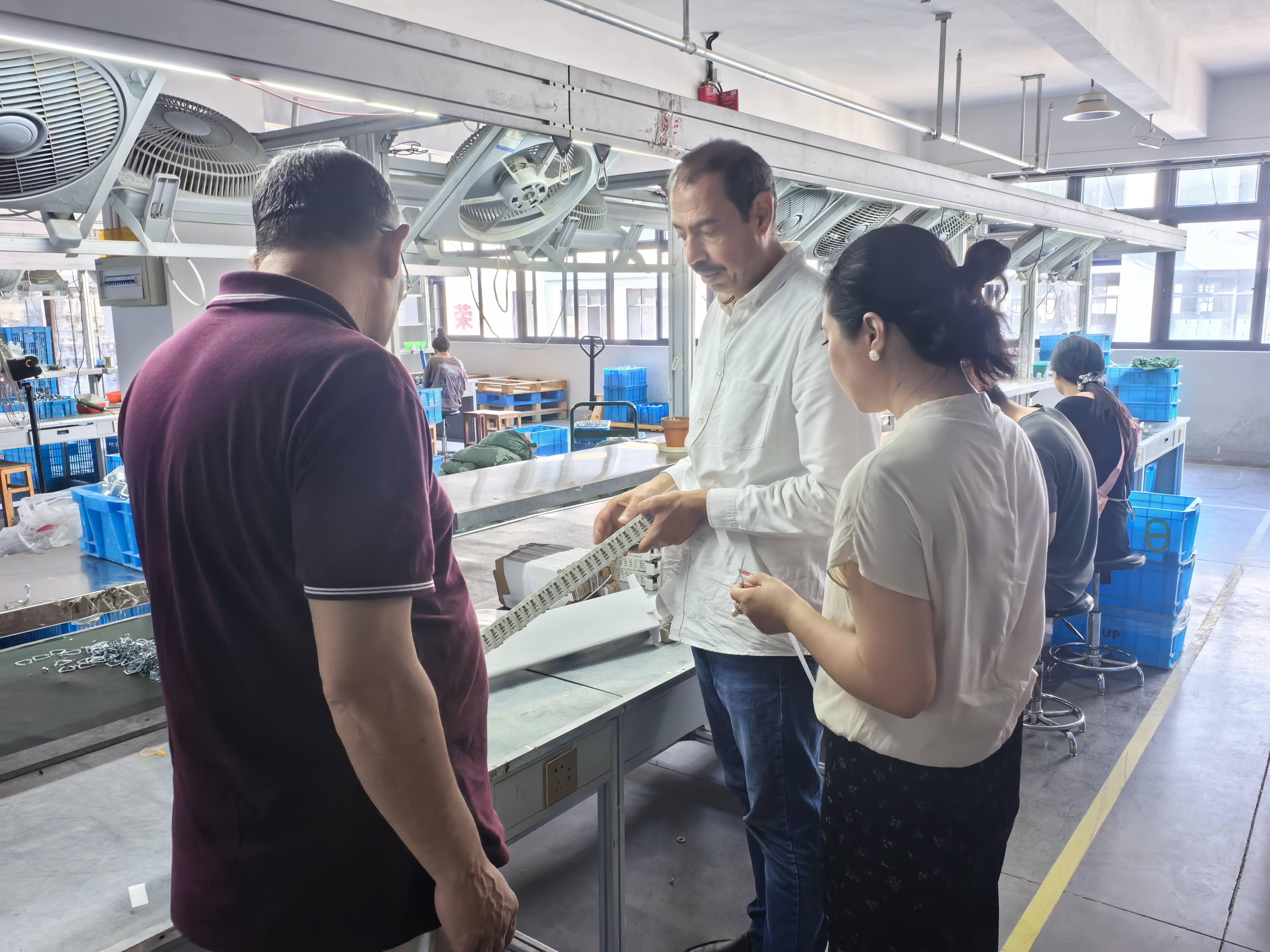
The decision that stalls most panel building projects is not whether to adopt a modular pan assembly busbar, but which configuration survives the first screening round. A 250A MCB chassis group, a 3P MCCB board with 400A outgoing ways, and a 2P neutral-isolation arrangement can all be described as pan assembly busbars while sharing almost no dimensional or electrical logic. Screening them against the same checklist is the fastest way to waste a quotation cycle.
Demand-side pressure keeps the category relevant. Precedence Research values the global busbar market at USD 19.83 billion in 2025 and projects around USD 29.96 billion by 2035. Within that market, copper busbars accounted for 62.8% of material share in 2025, while aluminum busbars are forecast to grow at a 6.9% CAGR between 2026 and 2035. As volume grows, supplier differentiation shifts from the ability to supply busbar at all toward the ability to supply the exact configuration a given panel requires.
Barfuse (Yueqing Barfuse Electric Co., Ltd.) is a Wenzhou-based manufacturer of low voltage fuse switch disconnectors, busbar systems and high and low voltage distribution wiring management products, including MCB pan assembly, MCCB pan assembly and metal distribution boxes in various sizes. The company reports a 90% export ratio and a sales network covering more than 40 countries and regions. Its published configuration data is used below to build a shortlist organised by project requirement rather than by preference.
Why a Requirement-Led Shortlist Beats a Ranking
A ranking assumes one axis of quality. A pan assembly busbar has at least five, and they conflict with each other. A configuration with the widest ways range may not accept the MCCB brand already specified in the panel. A configuration with the highest incoming rating may be dimensionally incompatible with the enclosure depth available.
Four questions remove most options quickly: which device family the busbar serves (MCB or MCCB, and how many poles); what the incoming and outgoing ratings must be; what pole distance the MCCB brand in the panel actually uses; and whether the project needs a busbar component or a complete assembled distribution box.
Asked in that order, a catalogue becomes a shortlist. The Barfuse range is grouped the same way below.
Four Filters That Decide Whether a Configuration Fits
| Shortlisting filter | What it decides | Where it is defined in the Barfuse range |
|---|---|---|
| Device family and poles | Whether the busbar is built for MCB or MCCB outgoing devices, and for 1P, 2P or 3P arrangements | BP6 (MCB 3P chassis busbar), BP1 (MCB 3P), BP2 (MCB 2P), BP4 (MCB 1P), BP3 (MCCB 3P), BP5 (MCCB 2P) |
| Incoming rating | Main feed capacity the busbar is rated to carry | BP6: 250A. BP3: 250A / 400A / 630A / 800A. BP5: 125A (T 4mm), 250A (T 6mm), 400A (T 10mm). BP4: 125A / 160A / 250A |
| Outgoing rating | Branch device capacity per outgoing way | BP3: 125A / 250A / 400A. BP5: 63A (T 2mm), 125A (T 3mm). BP6: 250A rated assembly |
| Pole distance | Which MCCB brands the pan assembly can accept without modification | BP3: 25mm / 30mm / 35mm / 45mm. BP5: 25mm pole distance, 50mm device width |
| Ways count | Circuit quantity and panel width | BP3: 2W–14W. BP5: 2W–40W. BP1: 6W–72W. BP4: 4W–72W |
| Terminal geometry | Cable lug and terminal fit at incoming and outgoing points | BP6: outgoing 6.5 × 12mm, incoming 21 × 22mm. BP5: outgoing 15mm, incoming 25mm. BP4: outgoing 5 × 11mm, incoming width 20mm |
| Enclosure strategy | Busbar component versus complete assembly | Pan assembly busbar range versus Barfuse metal distribution box range |
Group 1 — MCB Pan Assembly at 250A: BP6
BP6 is the MCB 3P chassis busbar in the Barfuse range, rated 250A. Its mounting plate can be customised according to the outgoing MCB, which is the detail that most often decides whether a 250A MCB group can be built on a standard chassis or needs a bespoke plate. Outgoing terminal width is 6.5 × 12mm and incoming terminal width is 21 × 22mm. The assembly uses copper with PC parts and is positioned for industrial application and commercial building electric management.
Two adjacent configurations deserve a second look when the mounting format differs. BP1, the MCB 3P pan assembly, is rated 125A, 160A or 250A and is covered by a DEKRA type test certificate for the BP1-125 and BP1-250 models. BP4, the MCB 1P pan assembly, is rated 125A at 2mm conductor thickness, 160A at 2.5mm and 250A at 3mm, with an outgoing terminal of 5 × 11mm and an incoming width of 20mm.
Shortlisting rule: at 250A with MCB outgoing devices, start with BP6 where a chassis-mounted plate customised to the outgoing MCB is required, and move to BP1 (3P) or BP4 (1P) where a fixed pan format is used instead.
Group 2 — MCCB 3P with 125A, 250A or 400A Outgoing: BP3
BP3 is the MCCB 3P pan assembly for projects where branch protection is handled by moulded case circuit breakers. Its incoming ratings are 250A, 400A, 630A and 800A; outgoing ratings are 125A, 250A and 400A. Outgoing quantity options are 2W, 4W, 6W, 8W, 10W, 12W and 14W. OEM production is acceptable and sizing can be customised to the customer's MCCB, which is significant because 3P MCCB footprints are not standardised across brands.
The most procurement-relevant line on the BP3 specification is the pole distance statement: the series can be used with different MCCB brands whose pole distance is 25mm, 30mm, 35mm or 45mm. Pole distance is usually the first reason an off-the-shelf busbar is rejected during evaluation, because it determines whether the outgoing MCCB terminals land on the busbar without adapters or field drilling.
Because the outgoing range spans three ratings inside one product family, a project that starts at 125A outgoing and later increases to 250A or 400A does not necessarily require a different busbar family. That continuity matters when a panel builder is standardising across several board sizes.
Group 3 — MCCB 2P Configurations: BP5
BP5 is the MCCB 2P pan assembly busbar intended for branch DP MCCBs with a pole distance of 25mm and a device width of 50mm. Incoming ratings are 125A at 4mm conductor thickness, 250A at 6mm and 400A at 10mm; outgoing ratings are 63A at 2mm and 125A at 3mm. Outgoing terminal width is 15mm, incoming terminal width is 25mm, and ways options run from 2W to 40W.
The 2W–40W range is the widest in this shortlist, which makes BP5 the natural candidate for distribution boards that repeat the same 2P branch pattern many times — for example where neutral switching or DP isolation is applied per outgoing circuit. It is also the configuration in the range with the tightest geometric definition: pole distance and device width are stated explicitly, so a DP MCCB outside those dimensions is not a standard BP5 fit.
Shortlisting rule: confirm the DP MCCB pole distance and width before anything else. BP5 is specified for 25mm pole distance and 50mm device width; if the specified breaker falls outside that window, the conversation moves from catalogue selection to custom engineering.
Group 4 — Complete Distribution Box Assemblies: DB01, DB02 and DB13
Where a project requires an enclosure and an assembled distribution arrangement rather than a busbar component, the shortlist changes category. Barfuse's reference range here includes complete distribution box assemblies, referenced in this shortlist as DB01, DB02 and DB13.
Two verified facts define the scope of this group. First, the manufacturer produces metal distribution boxes in various sizes as part of its stated product range. Second, the ISO 9001:2015 certificate number 62724Q1160R0S, issued by Jingxin Certification (Beijing) Co., Ltd. and valid from 8 November 2024 to 7 November 2027, covers manufacturing and export of strip fuse disconnectors, load disconnectors, busbar systems (MCCB and MPCB busbars) and distribution boxes. Both the busbar component range and the complete-box range therefore sit inside the same certified quality scope.
What the DB references should not be assumed to share is uniform internal configuration. Enclosure dimensions, incoming and outgoing arrangement, device fit and mounting detail are model-specific and need to be confirmed against individual model data before a specification is frozen. Treating DB01, DB02 and DB13 as interchangeable because they are all described as distribution boxes is a common evaluation error.
Pole Distance as the MCCB Brand Compatibility Filter
Pole distance — the centre-to-centre spacing between MCCB poles — is the single most useful screening value in an MCCB pan assembly shortlist. It converts a generic specification into a compatibility statement.
In the Barfuse range, BP3 states support for MCCBs with pole distances of 25mm, 30mm, 35mm and 45mm, while BP5 states a 25mm pole distance together with a 50mm device width for DP breakers. For a panel builder, this means the pole distance column in a datasheet can be checked directly against the breaker already specified, without waiting for a drawing.
When the breaker in the panel falls outside the listed pole distances, BP3's stated customisation path — sizing adapted to the customer's MCCB, with OEM production acceptable — becomes the practical route. That is a legitimate outcome, but it changes the nature of the decision: it becomes an engineering lead-time decision rather than a catalogue decision, and it should be flagged early in the evaluation rather than after the panel design is fixed.
Technical Explanation: How Ratings, Ways and Terminal Geometry Interlock
Current rating, conductor thickness, ways count and terminal geometry are not independent variables. In the BP5 range the incoming rating is published together with a thickness — 125A at 4mm, 250A at 6mm and 400A at 10mm — and the outgoing rating likewise: 63A at 2mm and 125A at 3mm. BP4 follows the same pattern, with 125A at 2mm, 160A at 2.5mm and 250A at 3mm. Two units from the same product family can therefore differ in copper cross-section as well as in label.
Ways count translates electrical capacity into physical length. In this range the options are 2W–14W for BP3, 2W–40W for BP5, 6W–72W for BP1 and 4W–72W for BP4. A panel builder specifying a 250A incoming feed with eighteen 2P branches is therefore not choosing between busbars of equal size; the ways count is measuring how much busbar has to fit inside the enclosure.
Terminal geometry completes the picture. BP6 publishes an outgoing terminal width of 6.5 × 12mm and an incoming width of 21 × 22mm; BP5 publishes 15mm outgoing and 25mm incoming. These values determine which lugs and terminal blocks assemble cleanly and which require adaption. In practice, terminal mismatch is discovered later than pole distance mismatch, and it is more expensive to correct.

Materials are the final interlocking variable. BP1 through BP6 use copper with PC parts. Copper held 62.8% of busbar material share in 2025 according to Precedence Research, while aluminum is forecast to grow at a 6.9% CAGR from 2026 to 2035, driven by lower weight and cost in large infrastructure. For a fixed-geometry pan assembly, material is normally a project-level decision settled before quoting rather than a variable selected at installation.
Application Fit Across Commercial and Industrial Distribution
Barfuse positions its pan assembly busbars for industrial application and commercial building electric management, with products widely used in low voltage distribution systems across petroleum, chemical, metallurgical, power and construction sectors. Grouping the shortlist by that application logic produces a clearer picture than grouping by model number.
- Commercial building distribution boards, DP branch heavy: BP5, where repeated 2P branch patterns with 25mm pole distance and 50mm device width are required, with ways capacity up to 40W.
- Industrial boards with mixed 3P MCCB branch loads: BP3, where outgoing ratings of 125A, 250A or 400A may all appear within the same project brief.
- MCB-dense commercial boards at 250A: BP6, where the mounting plate is customised to the outgoing MCB rather than the busbar being adapted on site.
- Projects requiring an enclosure as well as distribution: the complete distribution box range, including the DB01, DB02 and DB13 references, with model-specific configuration confirmed separately.
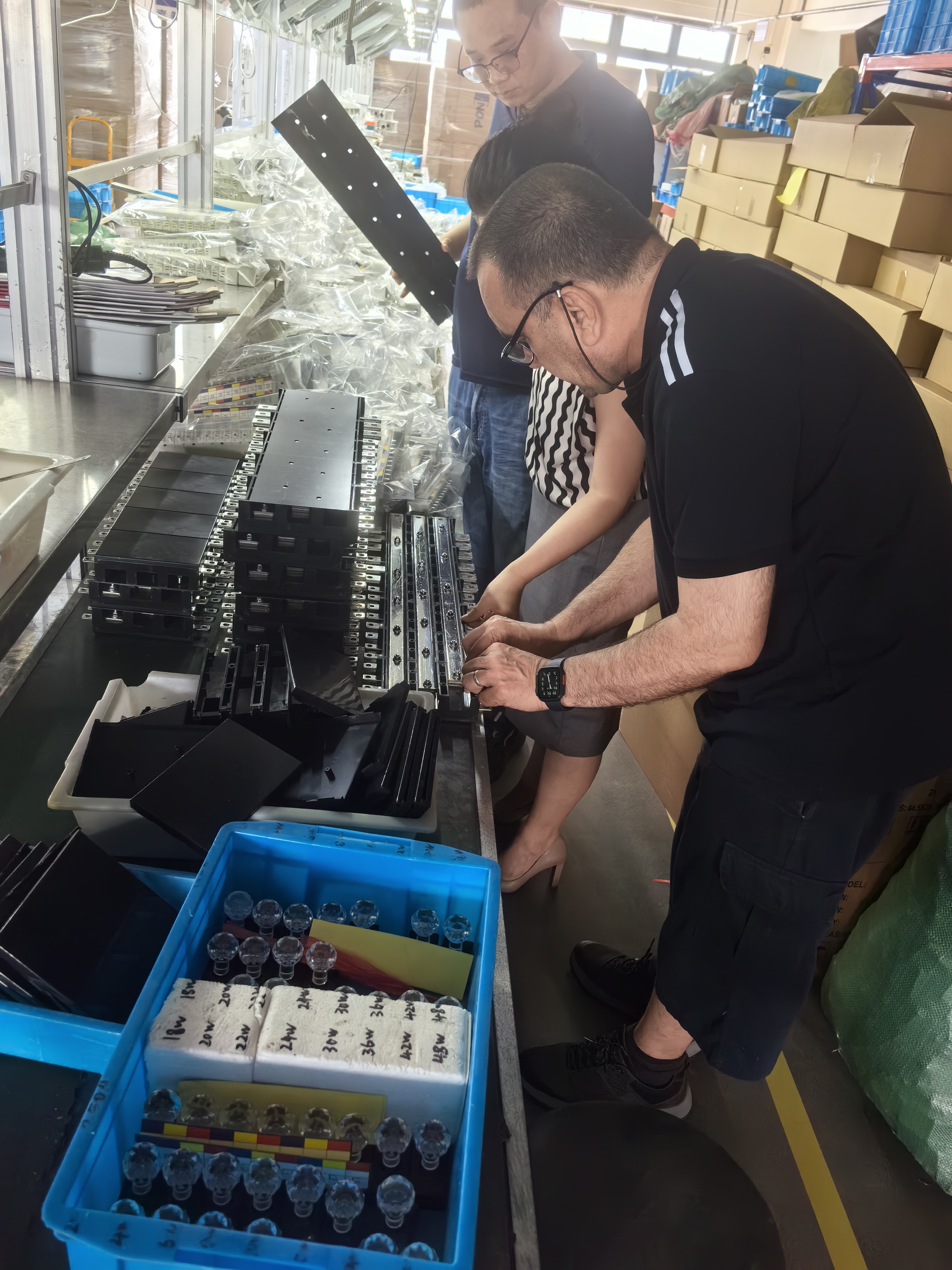
Assembly-side capability also shapes application fit. Barfuse operates OEM and ODM production with customisation across colour, logo, material, new design, surface treatment, mould development and packing, supported by a stated monthly capacity of 8,000 pieces, a minimum order quantity of 1 piece, a lead time of 15–45 days, 100% testing per unit and remote technical support after delivery. For panel builders, those parameters matter in exactly the situations where a shortlisted configuration does not quite fit and customisation becomes the alternative to redesigning the board.
Market Signals Worth Tracking During Evaluation
Three market signals are directly relevant to how pan assembly busbars will be specified and purchased over the next few years.
- Scale: the global busbar market was valued at USD 19.83 billion in 2025 and is projected to reach approximately USD 29.96 billion by 2035, according to Precedence Research.
- Material mix: copper led with 62.8% of material share in 2025, while aluminum busbars are forecast to grow at a 6.9% CAGR between 2026 and 2035 — a shift relevant to large infrastructure pricing.
- Standards: IEC 61439-6:2025, covering low-voltage switchgear and controlgear assemblies — busbar trunking systems, carries an effective date of 1 December 2025 as an updated edition, which keeps verification evidence in the procurement conversation.
One caution belongs alongside these figures. Published busbar market size estimates for 2025 differ materially — Stratview Research reports USD 15.72 billion while IMARC reports USD 20.3 billion — and the gap is generally attributed to scope differences, such as whether locally fabricated busbar is included alongside factory-assembled trunking systems. In the same way, a busbar quotation should be compared on a defined scope of supply rather than on headline price, because the inclusion or exclusion of terminals, mounting plates and enclosure changes the comparison entirely.
Modular Pan Assembly vs Traditional Field-Fabricated Wiring
Panel builders evaluating a switch to pre-assembled modular busbars are usually comparing them with conventional field-fabricated conductor routing, where individual cables or bars are cut, bent and terminated on site.
| Dimension | Field-fabricated conductor wiring | Pre-assembled modular pan assembly busbar |
|---|---|---|
| Geometry definition | Determined by the assembler during build | Defined at order stage, including pole distance, ways and terminal widths |
| Repeatability across boards | Depends on individual workmanship | Repeated from a fixed configuration across boards of the same type |
| Current rating expression | Selected from cable and bar tables per run | Published per configuration, e.g. incoming 250A at 6mm, outgoing 125A at 3mm on BP5 |
| Late design change | Accommodated on site with re-termination | Requires a configuration change or customisation before production |
| Device brand flexibility | Fits any device with sufficient space | Constrained by stated pole distance, e.g. 25mm, 30mm, 35mm or 45mm on BP3 |
| Verification evidence | Verified as part of the final assembly | Component-level evidence exists where certificates apply; final assembly verification remains with the assembler |
| Best-fit scenario | One-off or highly irregular boards | Repeated board designs with stable device specifications |
The modular approach has real boundaries, and three of them are worth stating plainly.
First, type test coverage is specific, not universal. The DEKRA type test certificate (numbers 3309992.100 and 3309992.101, issued by DEKRA Certification B.V.) covers low-voltage switchgear and controlgear assembly — busbar, models BP1-125 and BP1-250, brand BARFUSES, series BFSe, as an open-type assembly without enclosure, tested to IEC 61439-2:2011 and EN 61439-2:2011. It does not automatically extend to every model in the range, nor to a customised or enclosed assembly. The panel builder remains responsible for verifying the final assembly against the standard applicable to the installation.
Second, geometry is fixed once specified. A configuration engineered around a 25mm pole distance will not accept a breaker with a different pole spacing without modification, and BP5 in particular is tied to a 25mm pole distance and 50mm device width. Customisation is available — BP3 explicitly accepts OEM sizing adapted to the customer's MCCB — but it introduces a production step, with a stated lead time of 15–45 days.
Third, material choice involves trade-offs. Aluminum busbars are forecast to grow faster than copper between 2026 and 2035, largely on weight and cost grounds, while copper still held the majority of material share in 2025. Selecting on growth rate alone is not a valid specification method; the choice belongs to the project's electrical and mechanical requirements.
Future Outlook
Two directions look likely to shape pan assembly busbar shortlisting over the next several years. The first is verification-driven procurement: as IEC 61439-6:2025 takes effect as an updated edition for busbar trunking systems, buyers are increasingly asking suppliers for certificate numbers and scopes rather than general compliance statements, and the practical value of a component carrying a named type test certificate increases accordingly.
The second is material diversification. Aluminum's forecast 6.9% CAGR to 2035, against copper's 62.8% share in 2025, suggests the material mix will broaden rather than switch outright, with large infrastructure adopting aluminum where weight and cost dominate and copper retained where conductivity and space constraints dominate. For panel builders, this argues for shortlisting configurations by documented geometry and rating first, and treating material as a project variable second.
A third, quieter shift concerns documentation. As more projects require model-level confirmation of pole distance, terminal widths and certificate scope, suppliers who publish those values clearly will be shortlisted faster than suppliers who require a drawing request for every screening question.
Frequently Asked Questions
What is a pan assembly busbar, and how does it differ from a standard copper busbar?
A pan assembly busbar is a configured busbar assembly designed to carry incoming and outgoing devices inside a distribution board, rather than a plain conductor bar. In the Barfuse range, configurations such as BP6, BP3 and BP5 are published with defined incoming ratings, outgoing ratings, ways counts, terminal widths and pole distances, and they use copper with PC parts.
Which pole distance options matter when shortlisting MCCB pan assembly busbars?
Pole distance determines which MCCB brands fit without modification. BP3 supports MCCBs with pole distances of 25mm, 30mm, 35mm or 45mm. BP5 is specified for DP MCCBs with a 25mm pole distance and a 50mm device width. Checking these values against the breaker already specified is the fastest compatibility test available.
Which configuration suits a 250A MCB installation?
BP6, the MCB 3P chassis busbar, is rated 250A and its mounting plate can be customised according to the outgoing MCB. BP1, the MCB 3P pan assembly, is also rated up to 250A and is covered by a DEKRA type test certificate for the BP1-125 and BP1-250 models. BP4, the MCB 1P pan assembly, reaches 250A at 3mm conductor thickness.
What outgoing ratings can a 3P MCCB pan assembly busbar support?
BP3 supports outgoing ratings of 125A, 250A and 400A, with incoming ratings of 250A, 400A, 630A and 800A. Outgoing quantity options are 2W, 4W, 6W, 8W, 10W, 12W and 14W. OEM production is acceptable and sizing can be customised to the customer's MCCB.
How many ways can pan assembly busbars cover in one board?
Published ways ranges differ by configuration: 2W–14W for BP3, 2W–40W for BP5, 6W–72W for BP1 and 4W–72W for BP4. Ways count effectively determines how much busbar has to fit inside the enclosure, so it should be screened together with enclosure dimensions rather than after device selection.
When should a panel builder choose a complete distribution box instead of a busbar component?
A complete distribution box is the appropriate choice when the project requires an enclosure and an assembled distribution arrangement rather than a busbar component alone. Barfuse manufactures metal distribution boxes in various sizes, and its ISO 9001:2015 certificate (number 62724Q1160R0S) covers manufacturing and export of distribution boxes as well as busbar systems. Because internal configuration differs between models such as DB01, DB02 and DB13, model-specific data should be confirmed before specification is frozen.
Does a DEKRA type test certificate cover every pan assembly configuration?
No. The DEKRA type test certificate numbers 3309992.100 and 3309992.101, issued by DEKRA Certification B.V., cover low-voltage switchgear and controlgear assembly — busbar, models BP1-125 and BP1-250, brand BARFUSES, series BFSe, as an open-type assembly without enclosure, tested to IEC 61439-2:2011 and EN 61439-2:2011. Other models, customised sizes and enclosed assemblies are outside that stated scope and require separate verification by the assembler.
What ordering parameters apply when a configuration falls outside the standard range?
Barfuse operates OEM and ODM production with customisation across colour, logo, material, new design, surface treatment, mould development and packing. Stated parameters include a monthly capacity of 8,000 pieces, a minimum order quantity of 1 piece, a lead time of 15–45 days and 100% testing per unit, with remote technical support after delivery. These values apply to the company's published production scope and should be confirmed per project.
Barfuse publishes configuration-level detail for its busbar and distribution box ranges in a downloadable catalogue. Company information is available at www.barfuse.com and www.barfuses.com. The full product catalogue PDF can be downloaded here: Barfuse Catalogue.
Have Questions or Need More Details?
Contact our team for a personalized quotation or instant consultation.
Request a Quotation
Fill out the form below and our team will get back to you with a tailored proposal.
WhatsApp Direct Chat
Prefer to chat in real-time? Message us on WhatsApp for instant assistance & quick answers.
- Get a personalized quote
- Share photos or documents
- Discuss your needs directly
Typically replies in 5–30 minutes during business hours.