
Shortlisting ATBC Options: TBC, TEC, DOTP, DBS, DOS, DOA and ESO
Choosing a plasticizer for flexible PVC, coated fabric or a printing ink is no longer a single-molecule decision. Acetyl Tributyl Citrate (ATBC, CAS 77-90-7) is an acetylated citrate ester used as a non-phthalate plasticizer, and it is where most formulators begin when a phthalate has to leave a formulation. The harder question is what belongs beside it on the evaluation sheet.
This article sets out a working shortlist for ATBC-based projects: Tributyl Citrate (TBC), Triethyl Citrate (TEC), Dioctyl terephthalate (DOTP), Dibutyl Sebacate (DBS), Dioctyl Sebacate (DOS), Dioctyl Adipate (DOA) and Epoxidized Soybean Oil (ESO). All eight are supplied by Shandong Kexing Chemical Co., Ltd., a manufacturer of plasticizers, plastic and rubber flame retardants and plastic additives founded in 2006 and based in Dongying, Shandong; its subsidiary Dongying Kexing International Trade handles global import and export. Each candidate is produced against a defined enterprise specification, so the comparison can start from measured parameters and end at confirmed purchasing terms instead of a marketing description.
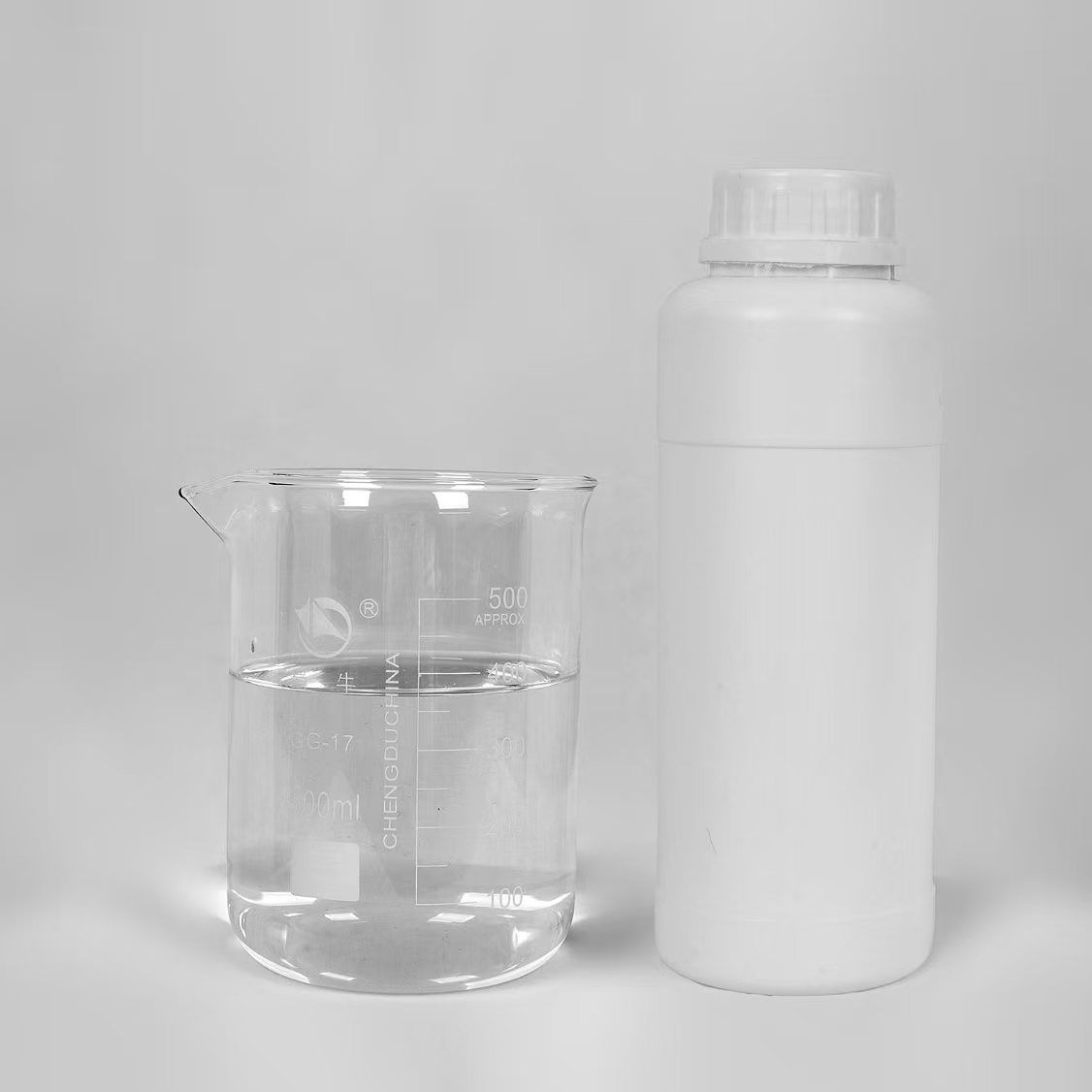 Dioctyl terephthalate (DOTP, CAS 6422-89-2) is one of the non-phthalate candidates commonly shortlisted next to ATBC for PVC and coating formulations.
Why ATBC Is Rarely Evaluated on Its Own
ATBC is not a universal drop-in replacement. Regulatory acceptance is granted per application rather than per molecule in general: ATBC (CAS 77-90-7) is listed by the U.S. Food and Drug Administration as a food additive and flavoring agent adjuvant under 21 CFR 172.515, 175.105, 178.3910 and 181.27. That listing is a positive signal for food-contact and sensitive applications, but it does not transfer automatically to every finished article. The converter's own end-use rule set — plus customer specifications, retailer requirements and destination-market rules — still governs what may be used and at what loading.
Two further constraints push buyers toward a shortlist rather than a single answer. The first is the process window. Flash point, density and moisture limits determine how a candidate behaves in high-speed mixing, kneading, extrusion, calendering and coating, and those parameters are not interchangeable across the eight options here. The second is commercial continuity. Where a plasticizer is imported and held in inventory, supply terms, packaging format, documentation and lead time become part of the technical decision, not a separate purchasing afterthought.
Finally, the families behave differently. Citrate esters (ATBC, TBC, TEC) are chosen where non-phthalate status and sensitive end-uses dominate. DOTP belongs to the terephthalate family and is often treated as the closest structural match to conventional phthalate processing. DBS, DOS and DOA are sebacate and adipate esters whose main attraction is behaviour at low temperature. ESO is an epoxidized vegetable oil with a different function profile altogether and is normally evaluated as a secondary component. That is the logic behind a shortlist of eight rather than a single substitution test.
The Eight Candidates and Their Published Specifications
The specifications below come from the suppliers' enterprise standards and are the figures a formulator should use as the starting point for an evaluation sheet. They allow an initial screen on density, ester content or purity, flash point, colour, moisture and acidity before any laboratory work begins.
| Candidate | CAS No. | Density at 20 °C (g/cm³) | Ester content / purity | Flash point (°C) | Additional specification points |
|---|---|---|---|---|---|
| Acetyl Tributyl Citrate (ATBC) | 77-90-7 | 1.045–1.055 | Min. 99.0% | Min. 204 | Moisture max. 0.1%; acidity max. 0.1 mgKOH/g; refractive index 1.4410–1.4425 at 25 °C |
| Tributyl Citrate (TBC) | 77-94-1 | 1.037–1.047 | Min. 99.0% | Min. 185 | Moisture max. 0.1%; acidity max. 0.1 mgKOH/g; refractive index 1.443–1.446 at 25 °C |
| Triethyl Citrate (TEC) | 77-93-0 | 1.135–1.139 | Min. 99.0% | Min. 155 | Moisture max. 0.25%; acidity max. 0.1 mgKOH/g |
| Dioctyl terephthalate (DOTP) | 6422-89-2 | 0.9824 | Min. 99.68% (CG method) | Min. 214 (open cup) | Chroma max. 20 (Pt-Co); moisture max. 0.03%; volume resistivity min. 2.32 × 10⁹ Ω·m |
| Dibutyl Sebacate (DBS) | 109-43-3 | 0.934–0.942 | Min. 99.0% | Not stated in the specification | Colourless or light yellow transparent liquid; acidity max. 0.10 mgKOH/g; moisture max. 0.10% |
| Dioctyl Sebacate (DOS) | 2432-87-3 | 0.913–0.916 | Min. 99.0% | Min. 205 | Moisture max. 0.1%; acidity max. 0.10 mgKOH/g; chroma max. 30 (Pt-Co) |
| Dioctyl Adipate (DOA) | 123-79-5 | 0.925–0.927 | Min. 99.0% | Min. 195 | Moisture max. 0.1%; acidity max. 0.1 mgKOH/g; chroma max. 30 (Pt-Co) |
| Epoxidized Soybean Oil (ESO) | 8013-07-8 | 0.985–0.995 | Ester min. 99.0%; epoxy value min. 6.0% | Min. 280 | Light yellow oily liquid; colour 150#–200# (Pt-Co); acidity max. 0.5 mgKOH/g; iodine value max. 6.0 |
The eight candidates share the same documented field of application in the supplier's product data — toys, PVC products, plastics, leather, ink and food packaging — so the specification itself, not the marketing category, is what separates them at the screening stage.
Comparing Candidates by Application Fit
A shortlist becomes useful only when it is sorted by the requirement that actually drives the project. The table below maps common project drivers to the candidates that usually deserve first evaluation, with the parameter or documented fact that supports the choice.
| Project driver | Candidates to evaluate first | Supporting parameter or fact |
|---|---|---|
| Non-phthalate status in a sensitive end-use | ATBC, TBC, TEC | Citrate esters; ATBC is listed by the FDA as a food additive and flavoring agent adjuvant under 21 CFR 172.515, 175.105, 178.3910 and 181.27 |
| Closest processing behaviour to a conventional phthalate | DOTP | Purity min. 99.68% (CG method); flash point min. 214 °C; volume resistivity min. 2.32 × 10⁹ Ω·m |
| Low-temperature flexibility and flex retention | DOS, DOA, DBS | Sebacate and adipate esters, supplied at densities of 0.913–0.942 g/cm³ with ester content min. 99.0% |
| High-temperature processing or storage margin | ESO, DOTP, DOS, ATBC | Flash point minimums of 280 °C, 214 °C, 205 °C and 204 °C respectively |
| Moisture-sensitive formulations | DOTP, then ATBC / DBS / DOS / DOA | Moisture limits of max. 0.03% (DOTP) versus max. 0.10% (ATBC, DBS, DOS, DOA) and max. 0.25% (TEC) |
| Colour-critical compounds | DOTP first | Chroma max. 20 (Pt-Co) versus max. 30 on ATBC, TBC, DBS, DOS and DOA |
| Secondary function alongside a primary plasticizer | ESO | Epoxy value min. 6.0%; acidity max. 0.5 mgKOH/g |
| Volume-limited dosing equipment | TEC, ATBC, TBC | Densities of 1.135–1.139 g/cm³, 1.045–1.055 g/cm³ and 1.037–1.047 g/cm³ |
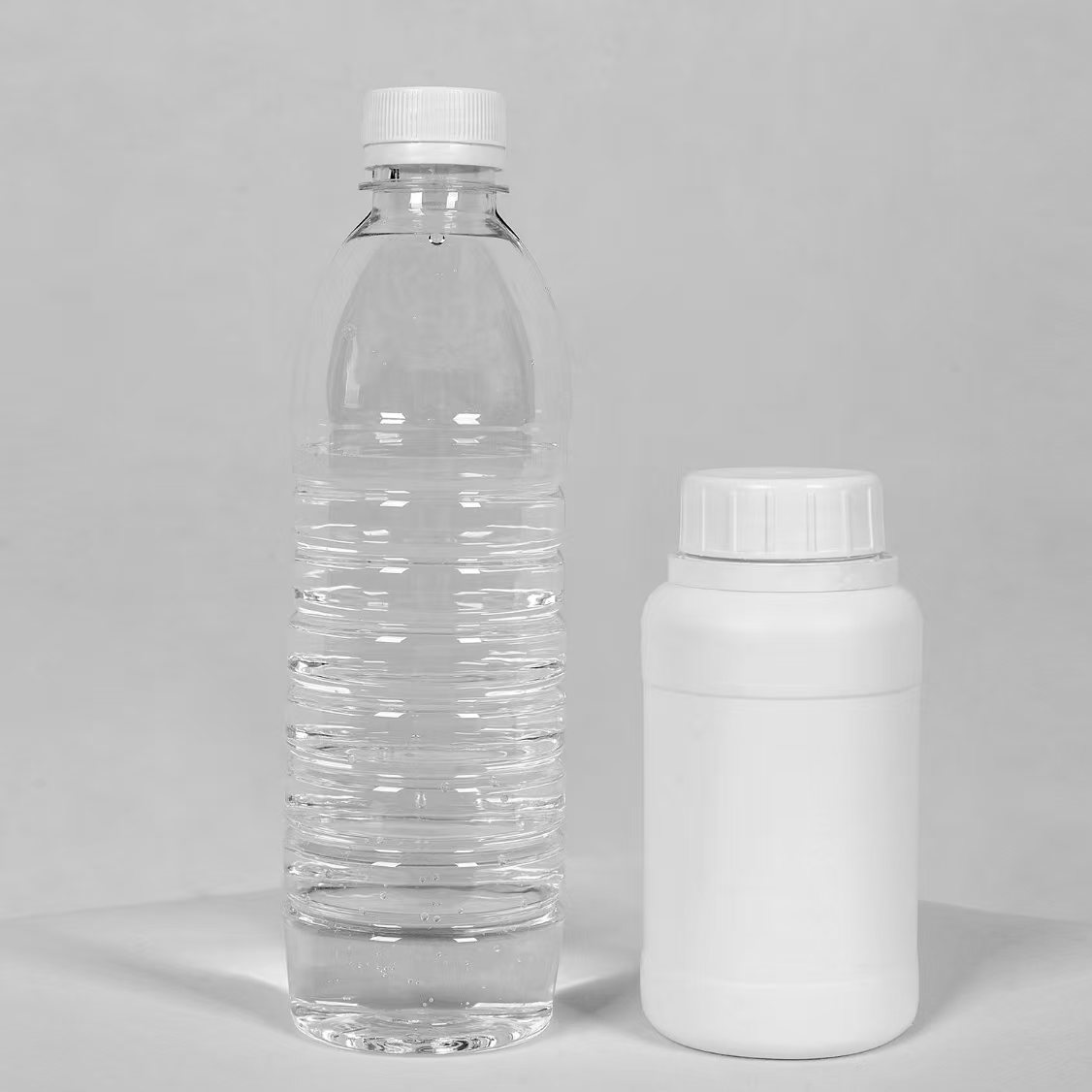 Sebacate and adipate esters — Dioctyl Sebacate (DOS) and Dioctyl Adipate (DOA) — are usually evaluated alongside ATBC when low-temperature flexibility is the primary requirement.
In practice, most projects end up with two or three finalists rather than one. A toy or food-packaging compound may carry ATBC as the compliance anchor with DOTP as the cost-and-processing alternative and ESO as a secondary component. A coated fabric or artificial leather line may keep ATBC and DBS, and test DOS or DOA only if cold-flex performance fails. That structure is deliberate: the point of a shortlist is to keep credible options open until trial data has been produced.
Reading the Technical Parameters
The parameters in the table are not decoration; each one answers a specific question during qualification.
- Density. TEC at 1.135–1.139 g/cm³ is materially heavier than DOS at 0.913–0.916 g/cm³. Where dosing is volumetric rather than gravimetric, the same set-point produces a different mass of plasticizer depending on which candidate is running, so dosing equipment settings and calibration must be re-checked at each changeover.
- Flash point. The spread is wide — from min. 155 °C for TEC to min. 280 °C for ESO, with ATBC at min. 204 °C and DOTP at min. 214 °C. Flash point is a handling, storage and process-temperature consideration; a candidate at the lower end of the range narrows the safe processing margin in high-temperature operations.
- Ester content and purity. Most candidates are specified at min. 99.0% ester content. DOTP is stated as min. 99.68% purity by the CG method. Higher and more tightly controlled purity supports more predictable plasticizing behaviour and fewer batch-to-batch adjustments.
- Moisture. Limits range from max. 0.03% (DOTP) to max. 0.25% (TEC). In moisture-sensitive systems, or where finished articles are stored for long periods, the moisture limit is often the parameter that decides between two otherwise similar candidates.
- Acidity. Most of the shortlist is capped at max. 0.10 mgKOH/g, with ESO at max. 0.5 mgKOH/g. Acidity is a stability indicator and is usually tracked as a receiving-inspection value rather than a formulation variable.
- Epoxy value and iodine value. For ESO, epoxy value min. 6.0% and iodine value max. 6.0 are the functional numbers that distinguish a genuine epoxidized soybean oil from a lower-grade substitute.
Documented processing behaviour reinforces why the shortlist is application-led rather than chemistry-led. Plasticizers used as additives in batch mixing are incorporated into polymer formulations at controlled dosages during production, where they act on softening and toughening, lower melting point, improved ductility, better flow and cold-flex resistance. The equipment involved — high-speed mixers, kneaders, extruders, calenders and coating machines — is the same across these applications, but the dosage window and the tolerance for colour and moisture shift from one product family to the next.
Where Verification Starts: Supply-Side Capability
A shortlist of eight candidates is only practical if the supplier can supply and document them consistently. Shandong Kexing Chemical Co., Ltd. produces plasticizers, plastic and rubber flame retardants and plastic additives, with a research and development team of 15 engineers, an export ratio of 50% and regular shipments to Europe, the USA, Japan, South Korea and the Middle East. Its monthly capacity is stated as 10,000 t, with a minimum order quantity of 1 t and a lead time of 30–45 days. For a formulator, that combination matters because the seven alternatives to ATBC can be sourced against one qualification file rather than seven separate supplier audits.
The management side of that file is documented. The company's quality management system is certified to GB/T 19001-2016 / ISO 9001:2015 under certificate 66725Q0037R0M, issued 13 January 2025 and valid to 12 January 2028, covering the production of plasticizers, oilfield additives and modified water treatment agents. Environmental management is certified to GB/T 24001-2016 / ISO 14001:2015 under certificate 66725E0038R0M, and a Health, Safety and Environment management system certificate 667240083R1S is held against the Q/SY 08002.1-2022 standard, valid to 28 February 2027. Quality control is described as raw material incoming inspection plus finished product sampling testing — two checkpoints that a buyer can ask to see in the batch record.
For evaluation purposes, the practical test is not whether certificates exist, but whether the certificate number, standard, scope and validity dates match the product and the plant that will actually ship the order.
Confirming Purchasing Terms and Acceptance Criteria
Once two or three candidates survive the technical screen, the shortlist turns into a specification and a purchase document. The items below are the ones that most often create friction when they are left until after the trial.
- The specification itself. Confirm which parameters are contractual — for ATBC these include appearance, colour (Pt-Co), density at 20 °C, ester content, moisture, acidity and refractive index — and whether the release specification matches the enterprise standard or a tighter customer-specific version.
- Batch documentation and sampling. Ask for incoming raw-material inspection and finished-product sampling records, plus a retained sample per batch so that any later deviation can be compared against a reference.
- Packaging and handling format. For ATBC, buyers typically need to confirm the packaging format and unit size — for example 200 kg iron drums, IBC tote tanks or supply as industrial raw liquid — together with storage conditions and shelf life expectations.
- Commercial terms. Minimum order quantity of 1 t, lead time of 30–45 days and the availability of OEM production with private labelling should be agreed before the trial batch is scheduled, not after.
- Acceptance criteria and re-test rules. Define the pass/fail limits, the test methods used to determine each value, who bears the cost of a failed batch, and how a disputed result is resolved.
- Compliance scope. State the end-use and destination market for each candidate so that the correct certificate set, safety data and regulatory statements are attached to the correct grade.
The evidence trail from existing supply relationships is also worth examining. Recorded shipments to plastic masterbatch factories, artificial leather manufacturers, food packaging processors and toy factories run at 15–25 MT per monthly regular order, with applications covering plastic compounding, leather surface finishing and food-contact plastic and printing ink formulation. Reported outcomes include improved flexibility of finished goods, low migration, and passing REACH and food-grade safety tests, with finished-product service life of up to 2 years. For a buyer, the useful part of that record is not the headline result but the format: application, quantity, duration and test passed — the same four fields that should appear in a trial report.
Market Trend: More Options, More Documentation
The commercial backdrop explains why shortlists are widening. The global market for Acetyl Tributyl Citrate is estimated to grow from USD 258.92 million in 2025 to USD 439.46 million by 2034, according to Data Insights Reports, driven by its role as a bio-based, phthalate-free plasticizer. The same source estimates global ATBC consumption at 128,000 metric tons in 2025, with medical applications holding a 34% share and food packaging accounting for 29%.
Two qualifications should be attached to those figures. First, published estimates diverge considerably depending on scope — figures for the same base year range from roughly USD 130 million to USD 258.92 million depending on whether the definition covers ATBC alone or citrate plasticizers more broadly — so a single number should not be used as the basis for a capacity commitment. Second, supply is concentrated: Data Insights Reports attributes approximately 18% of global ATBC market share to Jungbunzlauer and approximately 14% to Mitsubishi Chemical Corporation, which is a reminder that a shortlist should include at least one candidate from a different chemistry family in case of allocation pressure.
The direction of travel is nonetheless clear. Regulatory pressure on phthalates, combined with brand-owner commitments on migration and food contact, keeps pushing formulators toward citrate esters and other non-phthalate options. The practical consequence for procurement is that the number of credible candidates has grown faster than the number of people managing the documentation.
Comparison with Traditional Solutions — and the Boundaries of This Shortlist
Phthalate esters have not disappeared. Dioctyl Phthalate (DOP, CAS 117-84-0), Dibutyl Phthalate (DBP, CAS 84-74-2), Diisononyl phthalate (DINP, CAS 28553-12-0) and Didecyl phthalate (DPHP, CAS 84-77-5) remain in production and are still specified in applications where local rules and customer requirements permit them. They carry decades of processing experience and predictable behaviour in the same mixing, extrusion and calendering equipment. Any credible shortlist should compare against them rather than assume they are irrelevant.
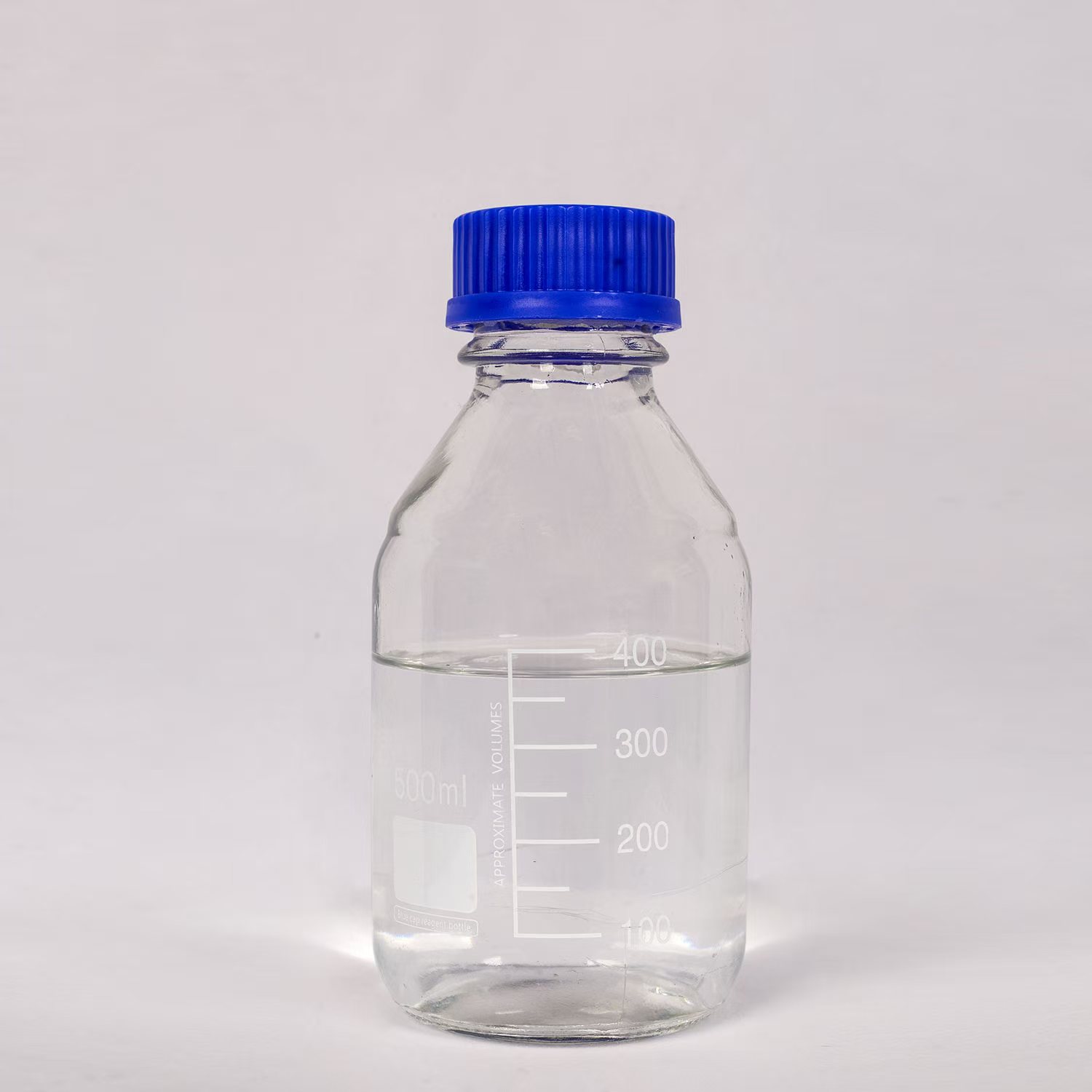 Traditional phthalate esters such as Didecyl phthalate (DPHP) remain part of the comparison set where local regulation and customer requirements allow their use.
The limits of this seven-candidate shortlist should be stated just as plainly.
- Substitution is not one-to-one. Citrate, sebacate, adipate, terephthalate and epoxidized oil candidates differ in density, flash point and plasticizing behaviour, so a replacement programme normally requires formulation adjustment and a fresh trial rather than a straight swap at the same loading.
- Cost is not settled by this comparison. Non-phthalate and bio-based candidates are generally positioned above conventional phthalate esters on price, but published figures are not comparable across grades, volumes and delivery terms. Price has to be quoted per candidate, per volume and per destination — and those quotes were not available for this article.
- ESO is not a full substitute. With an epoxy value of min. 6.0% and a flash point of min. 280 °C, ESO is typically used as a secondary component alongside a primary plasticizer rather than as the sole softener in a heavily plasticized compound.
- Flash point narrows some options. TEC, at a minimum flash point of 155 °C, sits well below ATBC (min. 204 °C) and DOTP (min. 214 °C), which restricts its use in high-temperature processing relative to the other candidates.
- Moisture limits vary. A max. 0.25% limit on TEC is looser than the max. 0.03% on DOTP; where a formulation is sensitive to moisture, this alone can eliminate a candidate regardless of its other properties.
- Compliance is end-use specific. A regulatory listing for a substance does not certify a finished article. Confirming scope with the end user, retailer or notified body remains the buyer's responsibility.
- Trial data is decisive. None of the parameters above predict measured performance in a specific formulation. The shortlist narrows the field; it does not replace laboratory work.
Future Outlook
Three developments are likely to shape ATBC shortlists over the next several years. The first is documentation-driven selection: as more end-use rules attach to specific applications, the certificate set and statement of scope will matter as much as the plasticizer data sheet. The second is portfolio breadth: formulators increasingly prefer to qualify several candidates from one supplier, because a single qualification file covering citrate, terephthalate, sebacate, adipate and epoxidized oil options reduces the cost of switching if a grade is constrained. The third is the growth of the underlying market itself, with ATBC demand projected to rise from USD 258.92 million in 2025 to USD 439.46 million by 2034 on the Data Insights Reports estimate — growth that will attract new capacity, and with it new claims to verify.
For buyers, the practical implication is a shift in how the shortlist is built. Ten years ago the question was whether a non-phthalate option existed. Today several exist, they differ measurably in density, flash point, moisture and purity, and the bottleneck has moved from availability to evaluation capacity. The most useful thing a supplier can provide is not a longer product list but a specification sheet, a certificate scope and a lead time that can all be checked.
FAQ
What is the difference between ATBC and TBC?
Both are citrate esters and both are specified at a minimum ester content of 99.0%. ATBC is acetylated, with a density of 1.045–1.055 g/cm³ at 20 °C and a flash point of min. 204 °C; TBC is not acetylated, with a density of 1.037–1.047 g/cm³ and a flash point of min. 185 °C. The lower flash point means TBC narrows the high-temperature processing margin compared with ATBC, which is one reason the two are usually tested side by side rather than treated as interchangeable.
Is ATBC suitable for food-contact and medical applications?
ATBC (CAS 77-90-7) is listed by the U.S. Food and Drug Administration as a food additive and flavoring agent adjuvant under 21 CFR 172.515, 175.105, 178.3910 and 181.27. That listing supports its use in food-contact contexts, and ATBC is documented for food packaging, toys, plastics, leather and ink applications. It does not automatically clear a finished article: the applicable end-use regulation for the specific article, market and loading level still has to be confirmed by the converter.
Which candidates should be tested first when low-temperature flexibility is the priority?
The sebacate and adipate esters — Dioctyl Sebacate (DOS, CAS 2432-87-3), Dibutyl Sebacate (DBS, CAS 109-43-3) and Dioctyl Adipate (DOA, CAS 123-79-5) — are normally evaluated first because that family is commonly selected for low-temperature performance. DOS is specified with a flash point of min. 205 °C and a density of 0.913–0.916 g/cm³; DOA with min. 195 °C and 0.925–0.927 g/cm³; DBS with a density of 0.934–0.942 g/cm³ and no flash point stated in the published specification. All three are specified at ester content min. 99.0% and acidity max. 0.10 mgKOH/g.
What should be confirmed in the specification and purchase terms before the first order?
Four groups of items. The technical release specification — appearance, colour, density, ester content or purity, moisture, acidity and any refractive index or resistivity value — with the test method for each. The documentation package: batch records covering raw material incoming inspection and finished product sampling, retained samples retained per batch, and certificates with number, standard, scope and validity dates. The packaging and storage terms, including unit size and format. And the commercial terms: minimum order quantity (1 t for these grades), lead time (30–45 days), OEM and private-labelling availability, and the agreed procedure for a failed batch or a disputed test result.
Does DOTP behave the same way as ATBC in a PVC compound?
No, and the two are not interchangeable at the same loading. DOTP is a terephthalate with a purity of min. 99.68% by the CG method, a density of 0.9824 g/cm³, a flash point of min. 214 °C and a moisture limit of max. 0.03%; ATBC is a citrate ester with a density of 1.045–1.055 g/cm³, a flash point of min. 204 °C and a moisture limit of max. 0.1%. DOTP is often evaluated as the non-phthalate candidate closest to conventional phthalate processing behaviour, while ATBC is evaluated where the citrate chemistry and its regulatory listing fit the end-use. Any substitution requires reformulation and trial confirmation.
What are the main limitations of an ATBC-centred shortlist?
Four are worth stating. Cost positioning: bio-based and non-phthalate candidates are generally above conventional phthalate esters, and comparable price data was not available for this comparison. Reformulation burden: density, flash point and plasticizing behaviour differ enough that a direct one-for-one replacement is unlikely. Secondary-role chemistry: ESO (epoxy value min. 6.0%) functions as a co-component rather than a sole softener. And compliance scope: a substance-level listing does not certify a finished article, so end-use rules must be verified separately for every product and market.
A full product brochure covering the plasticizer and additive range, including ATBC, TBC, TEC, DOTP, DBS, DOS, DOA and ESO, is available for download: https://cdn.socialarks.com/sbsp/24765/0/2026/0507/69fc38d7bd903.pdf
Have Questions or Need More Details?
Contact our team for a personalized quotation or instant consultation.
Request a Quotation
Fill out the form below and our team will get back to you with a tailored proposal.
WhatsApp Direct Chat
Prefer to chat in real-time? Message us on WhatsApp for instant assistance & quick answers.
- Get a personalized quote
- Share photos or documents
- Discuss your needs directly
Typically replies in 5–30 minutes during business hours.