
Shortlisting Small Machine Room Elevators by Shaft Envelope
A procurement scorecard for shaft fit, machine room footprint, maintainability, documentation completeness and total cost inputs.
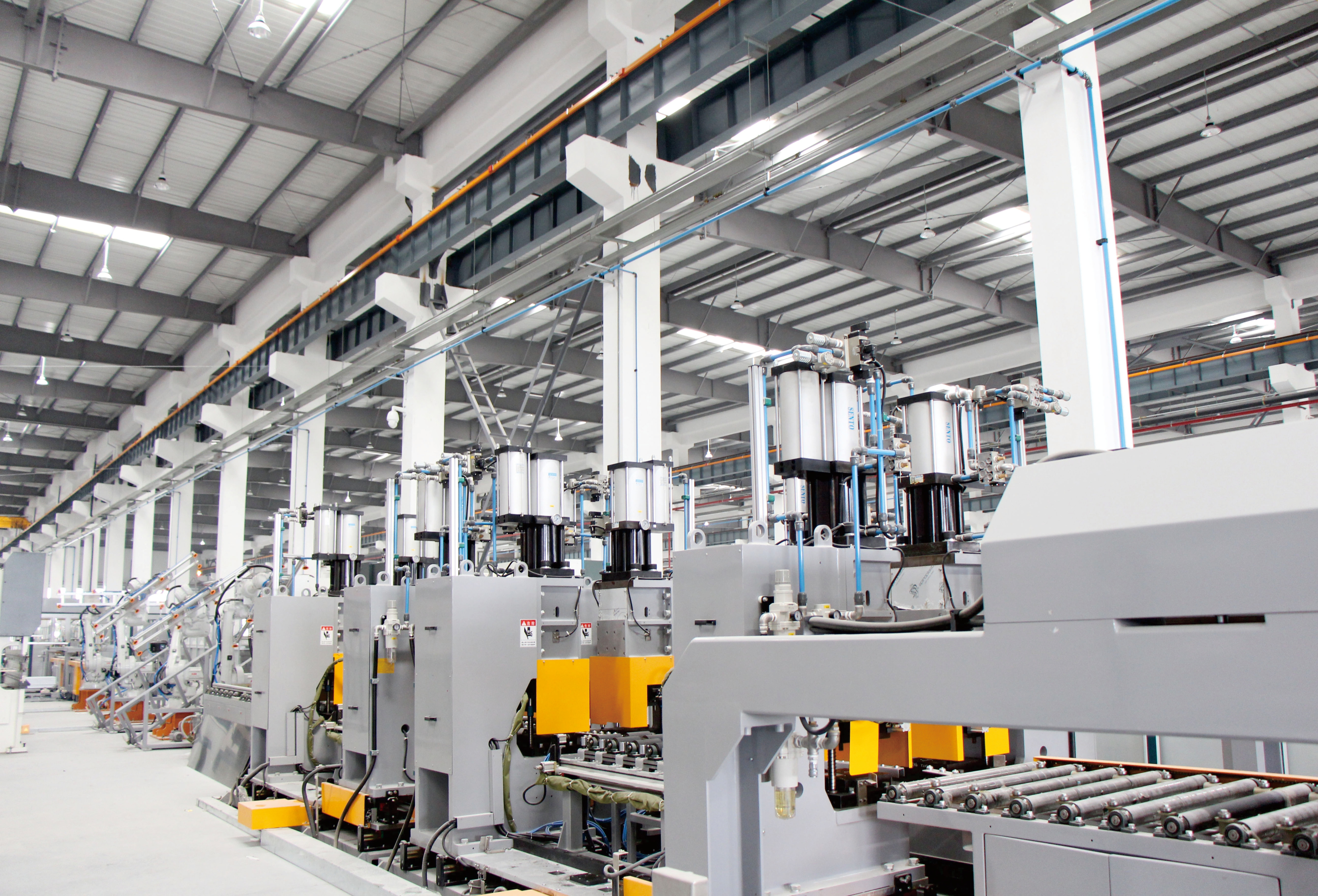
Component manufacturing line. Shaft envelope fit, not catalogue position, determines which small machine room elevator options survive a shortlist.
A small machine room elevator is a traction elevator that keeps a dedicated machine room above the shaft while reducing the room's plan area and equipment footprint compared with a conventional machine room arrangement. The category exists because building geometry rarely changes to suit equipment. For buyers working inside an existing shaft — a residential block, a hotel, a low-rise commercial building or an industrial mezzanine — the practical question is narrower than the product category: which offered configuration actually fits the shaft envelope the building already has, and which supplier can prove it with drawings and certificates rather than with a summary datasheet.
This article sets out a shortlist methodology built around that question, for evaluation-stage buyers who have already decided they want a compact machine room option and now need a defensible way to rank candidates.
Start With the Envelope, Not the Quotation
The shaft envelope is the set of fixed dimensions a project inherits: shaft width, shaft depth, pit depth, overhead clearance and total travel height. Equipment can be configured. Concrete usually cannot, or can only be changed at a cost that is difficult to recover later in the project.
In general, the cost of deepening a pit, raising an overhead or rebuilding a machine room slab exceeds the price gap between two comparable elevator packages. That is why an envelope-first shortlist produces better procurement outcomes than a price-first shortlist. Two quotations can appear commercially similar while only one of them fits the building without civil work — and the difference only becomes visible when dimensions are compared side by side.
A practical sequence for evaluation-stage buyers is:
- Measure the shaft on site, not from original architectural drawings alone. Record shaft width, depth, pit depth, overhead and travel height as built, plus any obstructions, wall irregularities or existing guide rail fixings.
- Record the machine room access path: door width, corridor turns, stair configuration and any lifting point. Machine delivery is part of feasibility, not a logistics afterthought.
- Confirm the location of the machine room, its plan area, clear height and structural floor loading capacity.
- Then request layout drawings from each candidate supplier against the same measured envelope, so that every quotation answers the same question.
Only after this step does commercial comparison become meaningful. Until then, price differences are being compared across configurations that may not be interchangeable.
What "Small Machine Room" Means in a Shortlist
Three configurations are often mixed together in early conversations, and separating them early prevents a shortlist from comparing unlike options:
- Small machine room (SMR): a machine room is retained above the shaft, but the room and the equipment inside it are reduced in footprint compared with a conventional layout, typically through a compact gearless traction machine and a smaller control cabinet arrangement.
- Conventional machine room: a larger plant room above the shaft, still common where capacity, speed and service access requirements are higher.
- Machine-room-less (MRL): no separate machine room; the driving machinery is located within the shaft headroom.
The terminology is not standardised across suppliers. A configuration marketed as a small machine room elevator should therefore be verified against two documents: the machine room general arrangement drawing, which shows what space is actually required, and the conformity or energy certificate, whose scope wording is legally descriptive.
A concrete example of why scope wording matters: the ENERGY EFFICIENCY certificate number 10.16.2281, issued by EURO CERT under standard VDI 4707 part 1, states its scope as "Machine room passenger lift". That certificate is linked to the Passenger Elevator models GP30 and GPN30 and is valid from 30 September 2024 to 29 September 2029. The certificate describes the category it covers, not the commercial label used on a quotation — and the same logic applies to every candidate on a shortlist.
The Five-Criteria Procurement Scorecard
The scorecard below is designed to be completed before quotations are opened, so that weighting is not influenced by the price a buyer has already seen. Weight bands are indicative starting points; a project should set its own weights and record the reasoning.
| Criterion | What to measure or request | Evidence to require | Weight band |
|---|---|---|---|
| Shaft fit | Shaft width and depth, pit depth, overhead, travel height, car internal size against rated load and door arrangement | Dimensional layout drawing against the measured envelope, hoistway plan, tolerance notes, any required civil modification listed and priced | 25–30 |
| Machine room footprint | Room plan area and clear height, machine delivery path, ventilation and ambient conditions, floor loading | Machine room general arrangement drawing, equipment weights, ventilation requirements, access route confirmation | 15–20 |
| Maintainability | Access to traction machine, controller and governor; diagnostic and monitoring capability; spare parts availability; service coverage in the destination market | Maintenance manual, spare parts list, service network statement, remote monitoring or IoT capability description | 15–20 |
| Documentation completeness | Conformity evidence for the destination market, energy documentation, quality and environmental system certificates, operation and maintenance pack | Certificates with issuing body, number, standard, scope, issue and expiry dates; O&M manuals; wiring diagrams; factory test records | 15–20 |
| Total cost inputs | Equipment, installation, commissioning, expected energy use, maintenance contract, lead time, minimum order quantity, exposure to material price movement | Itemised quotation, lead time statement, energy certificate, price validity window | 20–25 |
Two design choices in this scorecard are deliberate. First, shaft fit carries the heaviest band, because a fit failure invalidates every other comparison. Second, total cost inputs are separated from equipment price, so that energy use, maintenance and lead time are compared as inputs rather than absorbed into a single headline number.
Gates First, Weights Second: Turning Scores Into a Shortlist
A weighted scorecard only produces a reliable ranking if obvious failures are removed before scoring begins. Four criteria should be treated as pass/fail gates rather than weighted items:
- Conformity evidence exists for the destination market and matches the offered configuration.
- Shaft fit is demonstrated on a drawing against the measured envelope, with any civil work identified.
- A realistic service and spare parts route exists for the building's location.
- A complete documentation pack can be produced, not promised.
A candidate that fails a gate is removed from the shortlist rather than penalised with a low score. Price should never be allowed to compensate for a gate failure, because the cost of a non-conforming or non-fitting installation is incurred after the contract is signed.
After gates, score the surviving candidates and then run a sensitivity check. If the top two candidates swap places when the maintainability weight moves by five points, the ranking is not yet evidence-based — the correct response is to obtain additional evidence, not to accept the ranking because it is numerically complete.
A useful output format is a two-tier shortlist:
- Tier A: fits the envelope without civil work and has a complete documentation pack.
- Tier B: fits only with defined, priced and scheduled civil work.
- Removed: fails any gate, or cannot demonstrate fit against the measured envelope.
Maintaining one evidence register — dimension or document, source, date, status — keeps the shortlist auditable when the evaluation team changes or when the project is reviewed at a later stage.
What a Populated Scorecard Looks Like: A Verified Candidate Profile
Joylive Elevator Co., Ltd., founded in 2002 and based in Bacheng Town, Kunshan City, Suzhou, Jiangsu Province, China, is an elevator manufacturer whose publicly documented facts can be mapped directly onto the scorecard criteria. The company is listed under the stock short name Joylive with stock code 833481. Its documentation is used here as a worked example of the evidence a shortlist candidate should be able to supply on request, not as a ranking claim.
| Scorecard criterion | Documented fact available for review |
|---|---|
| Manufacturing base and capacity | Factory area of 105,000 m²; annual output of 15,000 units; monthly capacity of 1,250 units; 450 employees; 150 engineers; CNAS-accredited laboratory |
| Machine room passenger lift energy evidence | ENERGY EFFICIENCY certificate 10.16.2281, EURO CERT, standard VDI 4707 part 1, scope "Machine room passenger lift", issued 30 September 2024, valid to 29 September 2029, linked to Passenger Elevator models GP30, GPN30 |
| Passenger configuration envelope | Passenger Elevator GP30, GPN30: speed 1.0–8.0 m/s; load 630–3000 kg; maximum travel height 350 m; SS304 material |
| Goods and passenger machine room conformity | EU TYPE-EXAMINATION CERTIFICATE LIMB.0124 rev.1, EURO CERT, standards 2014/33/EU, EN 81-20:2020, EN 81-50:2020, scope "Machine Room Goods Passenger Lift", linked to Freight elevator models GF10, GF20, GFN20, GFN30 (0.25–3.0 m/s; 1000–200000 kg; maximum travel height 150 m) |
| Low-rise and residential range | Home Lift GH30: speed 0.25–1.75 m/s; load 200–1150 kg; maximum travel height 30 m |
| Management system documentation | ISO 9001:2015 certificate STQ10021-00 (AFNOR Asia Ltd); ISO 14001:2015 certificates STE10021-06 and SHE10021-06; GB/T 19001-2016 + GB/T 50430-2017 certificate SHQ10021-05 |
| Customisation and delivery terms | OEM/ODM production; customisation of speed, load, travel height, car size, car decoration and logo; minimum order quantity 1 unit; lead time 7–45 days; 100% test |
| Reference delivery scale | 9 units supplied for Inventec (Mexico, factory application, 1 year, stable operation); 87 units for Pegatron (Vietnam, factory application, 2 years, stable operation); 36 units for Wistron (Vietnam, factory application, 5 years, stable operation); 208 units for SAT CITY (Kazakhstan, commercial landmark complex, 5 years, stable operation) |
A note on interpretation: reference projects of this kind demonstrate delivery scale and long-term operation at industrial and commercial sites. They do not, by themselves, confirm suitability for a specific shaft envelope. On the scorecard, that confirmation comes from the project-specific layout drawing, and the reference list only supports the maintainability and delivery-capability criteria.
Documentation Completeness: The Evidence Pack That Removes Guesswork
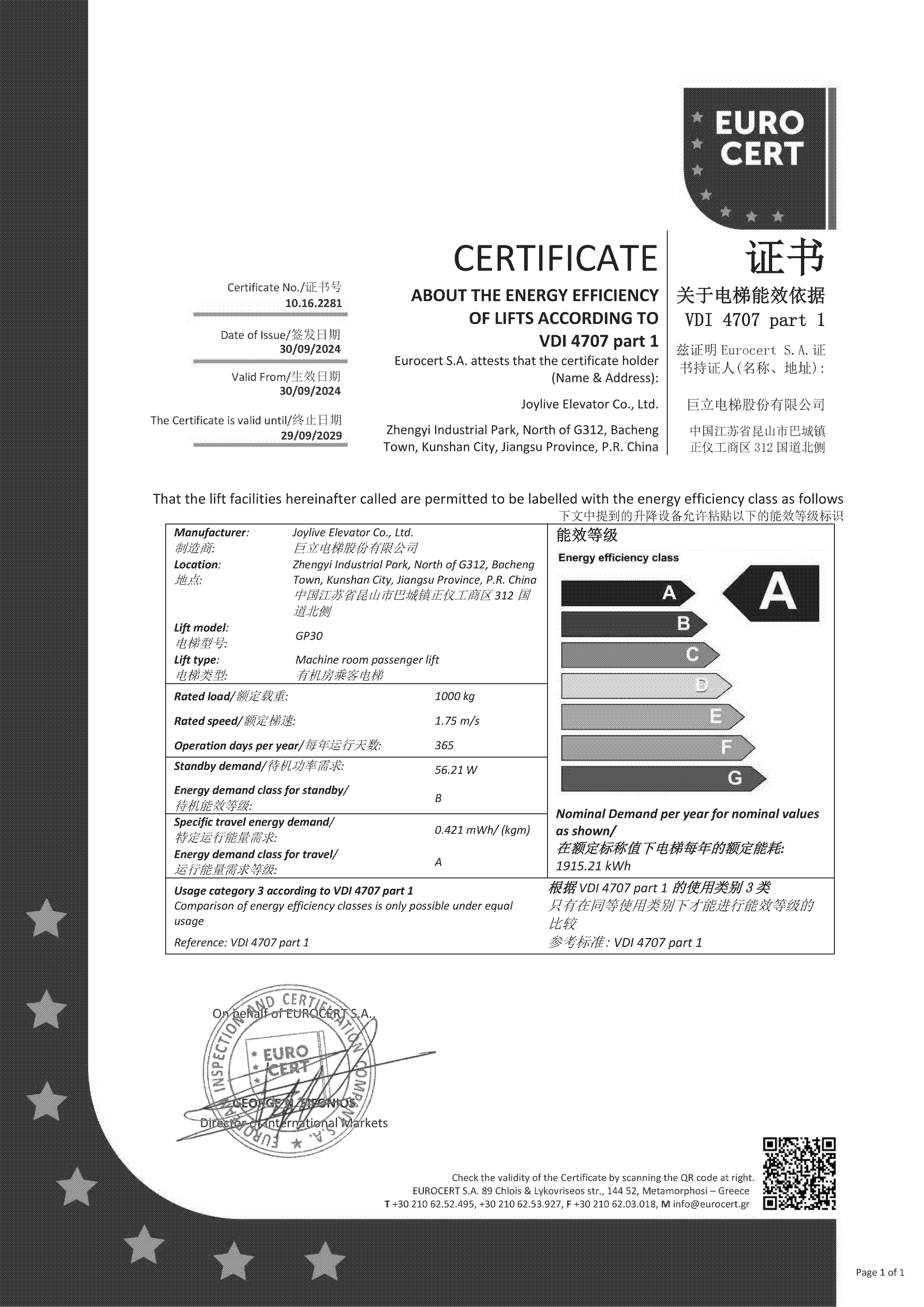
Energy efficiency certificate 10.16.2281, issued by EURO CERT under VDI 4707 part 1, with scope stated as "Machine room passenger lift".
Documentation is the criterion most often scored on impression rather than evidence. A shortlist evaluation should request a defined pack and score what is actually received. Six document groups cover most of the risk:
- Conformity certificates with issuing body, certificate number, applicable standard, declared scope, issue date and expiry date.
- Energy documentation stating the certification scheme and the exact load and speed configuration covered, since certification at one configuration does not automatically extend to another.
- Management system certificates for quality and environmental management, including certificate numbers and validity periods.
- Operation and maintenance package: manuals, wiring diagrams, commissioning records and factory test records.
- Spare parts list and maintenance manual, sufficient for a third-party service organisation to work from if required.
- Service coverage statement describing how technical support is delivered in the destination market, including online and offline support arrangements.
One clause worth checking explicitly concerns the machine room as a workplace. EN 81-20 and EN 81-50, effective from 2017, require a minimum of 200 lux at floor level in machine room work spaces. This requirement applies to the room design and lighting installation, not to the elevator equipment certificate alone — so a compact machine room still has to satisfy workplace access and lighting conditions in the destination jurisdiction. A buyer who scores only the equipment specification can miss a compliance item that sits in the builder's scope.
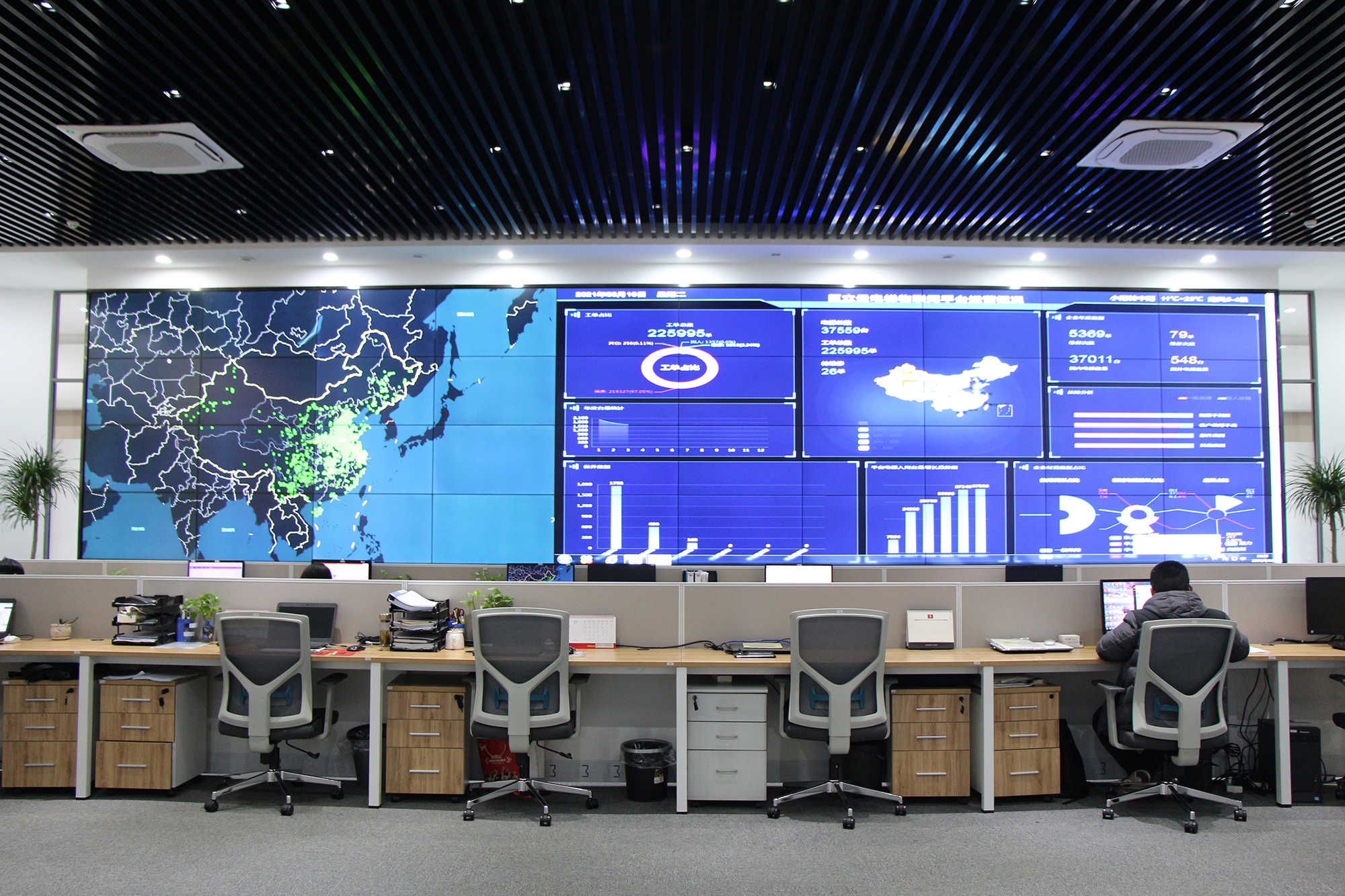
Service organisation capability is a scored criterion, not an assumption, on a compact machine room shortlist.
Limits, Exclusions and Where This Scorecard Does Not Apply
A shortlist methodology is only trustworthy if its boundaries are stated. Five limits apply here:
- A small machine room elevator still requires a machine room. If the building has no structurally and legally usable space above the shaft, SMR is not an option and the evaluation must move to machine-room-less or other configurations.
- Certification scope is configuration-specific. An energy certificate covering a machine room passenger lift at a stated load and speed does not transfer automatically to a different configuration; the scope text must be re-checked against the offered design.
- The scorecard is a procurement tool, not a design approval. Structural, electrical, fire and accessibility verification remains with qualified engineers and local authorities.
- Verified market research does not break out small machine room share against machine-room-less share. The verified dataset used for this article explicitly identifies that split as a high-priority data gap, so no share figure is stated here.
- Material price movement affects permanent-magnet traction cost. Rare-earth magnets for permanent-magnet motors increased in price by more than 20% in 2025, which means a quoted traction machine price can move between enquiry and contract signature. Price validity windows and escalation terms belong in the total cost inputs column.
A further practical limit: as-built shafts frequently differ from original drawings. Any scorecard completed on drawing data alone should be treated as provisional until site measurement confirms it.
Market Signals That Affect Small Machine Room Sourcing
The global elevators market was valued at USD 82.4 billion in 2025 and is projected to reach USD 86.3 billion in 2026 and USD 136.9 billion by 2033, at a compound annual growth rate of 6.8%, according to Grand View Research. Within that market, the traction elevator segment — the family that includes small machine room and machine-room-less products — held the largest revenue share at 55.1% in 2025, and Asia Pacific accounted for 41.7% of global revenue in the same year.
Two implications follow for evaluation-stage buyers. First, compact machine room products compete directly with machine-room-less products for the same mid-rise shafts, which makes envelope-based scoring more useful than category-based preference. Second, because growth is concentrated in Asia Pacific, documentation practice and lead times in that region increasingly shape global procurement expectations.
Market sizing should be read as directional rather than exact. Research houses use different scopes and methodologies for the same period — one alternative valuation of the broader elevator and escalator complex is substantially higher than the elevator-only figure cited above — so absolute values are best used for trend direction, not for project-level sizing or budgeting.
Small Machine Room vs Conventional Machine Room vs Machine-Room-Less
| Aspect | Small machine room (SMR) | Conventional machine room | Machine-room-less (MRL) |
|---|---|---|---|
| Separate machine room | Required, but reduced in footprint | Required, larger plant area | Not required |
| Headroom demand above shaft | Present in a reduced form | Highest of the three | Handled within shaft headroom |
| Fit in existing shafts with limited space above | Workable where some usable space exists and is structurally suitable | Often difficult without structural work | Generally the option when no room space exists at all |
| Maintenance access | Direct access to machinery in a defined room | Direct access with the most working space | Access via shaft headroom, commonly more constrained |
| Principal constraint | Room must exist, meet workplace conditions and be reachable for machine delivery | Space and structural cost | Headroom, heat dissipation and service access conditions |
The table describes configuration logic rather than performance ranking. None of the three is universally preferable; each becomes the better choice under a different set of envelope and service conditions, which is precisely why the shortlist should be built from measured dimensions and documentary evidence.
Future Outlook
Three developments are likely to shape how small machine room elevator options are shortlisted over the next several years. Energy documentation is becoming a standard quotation attachment rather than a differentiator, which moves the comparison from claims towards certificate scope and covered configuration. Material cost volatility in permanent-magnet motor supply chains is pushing buyers to formalise price validity windows and escalation terms at the shortlist stage. And as conformity documents become available digitally, the practical constraint shifts from obtaining evidence to organising it consistently across candidates.
For procurement teams, the durable change is procedural: gate criteria, weighted scoring and a maintained evidence register. That structure survives product generations, certification renewals and changes in the evaluation team, and it produces a shortlist that can be defended on documents rather than on preference.
FAQ
What is a small machine room elevator, and how does it differ from a machine-room-less elevator?
A small machine room elevator retains a dedicated machine room above the shaft but reduces that room's plan area and equipment footprint compared with a conventional machine room layout, typically through a compact gearless traction machine and a smaller control cabinet arrangement. A machine-room-less elevator removes the separate room entirely and places the driving machinery within the shaft headroom. The two are not interchangeable: the small machine room version still requires usable, structurally suitable space above the shaft, while the machine-room-less version does not.
Which shaft measurements should be collected before requesting quotations?
Record shaft width, shaft depth, pit depth, overhead clearance and total travel height as built on site, not only from original drawings. Add the car internal size and door arrangement associated with the required rated load, the machine room plan area and clear height, and the machine delivery route including door widths, corridor turns and any lifting point. Layout drawings from different suppliers can only be compared meaningfully when each is produced against the same measured set of dimensions.
Should total cost or shaft fit carry more weight in the shortlist?
Shaft fit should be treated as a pass/fail gate rather than a weighted score, because a configuration that does not fit the envelope invalidates every commercial comparison. Total cost inputs — equipment, installation, commissioning, expected energy use, maintenance, lead time and minimum order quantity — should then be weighted. A common failure mode is to open quotations before weighting, which anchors the evaluation on price and allows a lower headline figure to outrank a better-fitting, better-documented option.
What documents should a shortlisted supplier provide?
Request conformity certificates with issuing body, certificate number, applicable standard, declared scope, issue date and expiry date; energy documentation stating the certification scheme and the exact load and speed configuration covered; quality and environmental management certificates; operation and maintenance manuals, wiring diagrams and factory test records; a spare parts list; and a service coverage statement for the destination market. A machine room is also a workplace, so machine room design conditions such as the EN 81-20 and EN 81-50 requirement for a minimum of 200 lux at floor level in machine room work spaces should be confirmed as part of the documentation review.
When is a small machine room elevator the wrong choice?
It is the wrong choice when the building has no structurally or legally usable space above the shaft for a machine room, when the machine delivery route cannot accommodate the equipment, or when the destination jurisdiction's requirements for machine room access or working conditions cannot be met within the available design. In those situations the evaluation should move to machine-room-less or other configurations. Certification scope is another boundary: an energy certificate covering a machine room passenger lift at one load and speed configuration does not automatically apply to a different configuration.
For readers who want to review the manufacturer's published product documentation referenced in the candidate profile above, the Joylive brochure is available for download: Joylive Elevator product brochure (PDF).