
Shower Door Certifications Decoded: A 2026 Compliance Reference
Shower Door Certifications Decoded: A 2026 Compliance Reference
The global shower doors market is projected to grow from USD 3.84 billion in 2025 to USD 6.39 billion by 2034, according to market research firm Dataintelo. As sourcing shifts from brand catalogs to manufacturer-direct channels, certifications have become one of the few objective signals available during supplier evaluation. This reference explains which shower door certifications matter in 2026, how they can be verified, and where their practical limits sit.
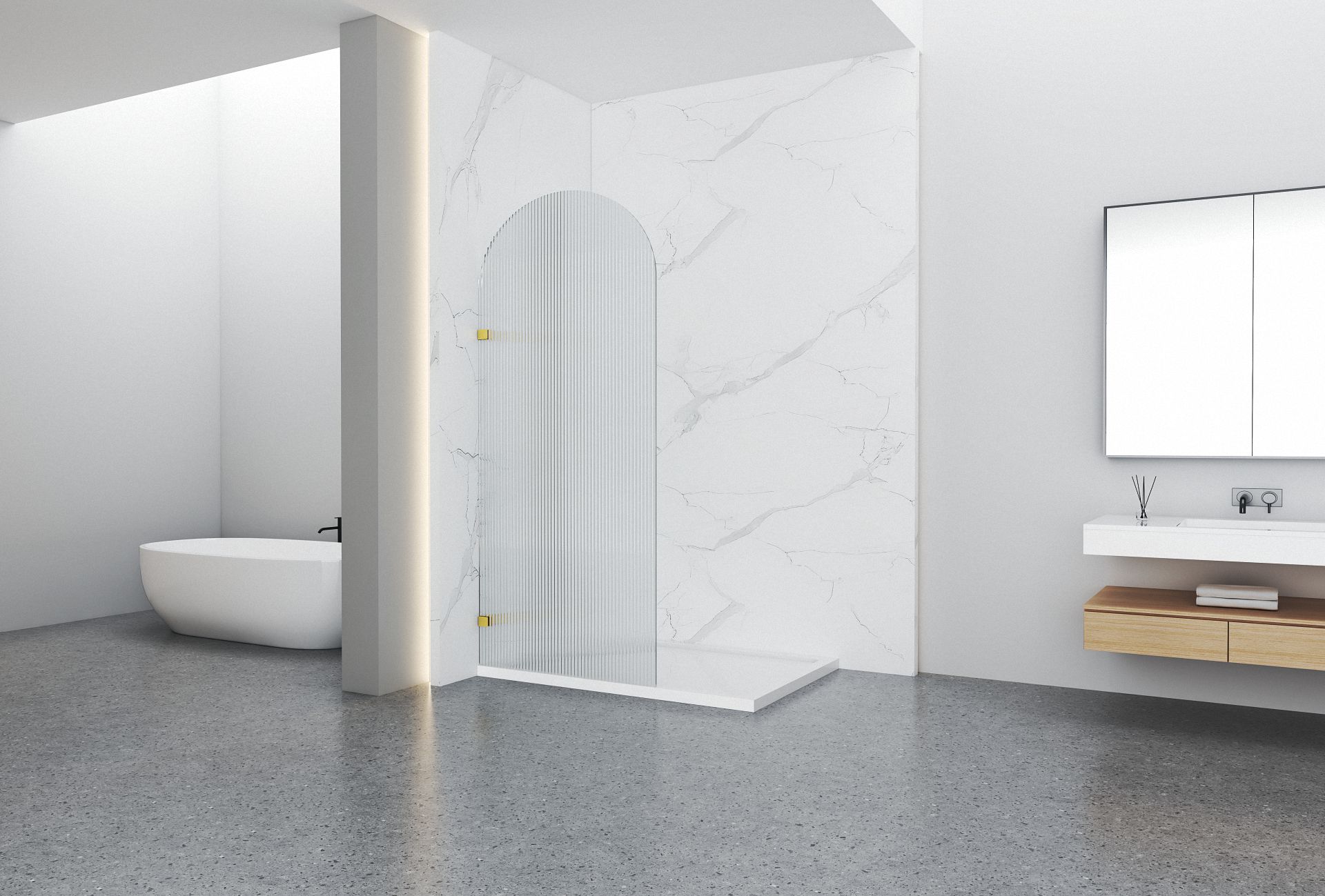
Shower screen KL-AS001-3 with 304 stainless steel hardware. Buyers evaluating shower doors need to verify both product parameters and the certifications behind them.
Why certification verification is the real bottleneck
During the research and evaluation stage, buyers of glass shower enclosures routinely ask the same question: does this manufacturer actually comply with the standards it claims? The difficulty is structural rather than technical. Certificates can be duplicated, expired, or issued for a different legal entity. Standards differ by market, and some suppliers blur the line between management-system certification and product-level compliance.
The practical consequence is that a certificate in a supplier brochure is not evidence. Evidence requires a traceable link between the legal entity, the product model, the certification body, the standard version, and the certificate number. Buyers who master this verification process are far less exposed to sourcing risk than those who rely on logos alone.
What shower door certifications actually cover
Shower door compliance spans two distinct categories. The first is management-system certification, which describes how a factory organizes quality, environmental, and occupational safety processes. The second is product-level compliance, which describes how the glass and hardware behave in real use. Both matter, but they answer different procurement questions.
ISO 9001:2015: quality management in manufacturing
ISO 9001 is a quality management system standard. It does not certify that a single glass panel will survive an impact test. Instead, it certifies that research, development, and manufacturing processes are documented, controlled, and continuously improved. For a shower door buyer, ISO 9001 provides a baseline signal: the factory has a quality system that can be audited.
ISO 14001 and ISO 45001: environment, health and safety
ISO 14001 covers environmental management, while ISO 45001 covers occupational health and safety. These matter most in long-term supplier relationships, where buyers increasingly assess whether a factory is managing pollution control, waste, and worker safety. They are not product certifications, but they indicate operational maturity.
ANSI Z97.1-2026 and CPSC 16 CFR 1201: US safety glazing requirements
For the US market, safety glazing materials in shower enclosures must comply with ANSI Z97.1-2026 and CPSC 16 CFR 1201 standards for impact and shatter behavior. These are product-level requirements: they define how glass must perform when impacted and how it must break to minimize injury risk. Buyers exporting to the US should confirm that the glass used in their shower doors meets these standards.
EN 12150: European toughened safety glass
European shower enclosures must meet the EN 12150 standard for thermally toughened soda lime silicate safety glass. EN 12150 is referenced widely in European building and glazing specifications, and it functions as a key compliance checkpoint for bathroom glass products sold in the EU.
| Standard | Level | Core focus | Market relevance |
|---|---|---|---|
| ISO 9001:2015 | Management system | Quality management in R&D and manufacturing | Global |
| ISO 14001:2015 | Management system | Environmental management | Global |
| ISO 45001:2018 | Management system | Occupational health and safety | Global |
| ANSI Z97.1-2026 | Product / safety glazing | Impact and shatter performance | USA |
| CPSC 16 CFR 1201 | Product / safety glazing | Architectural safety glazing requirements | USA |
| EN 12150 | Product / glass | Thermally toughened soda lime silicate safety glass | Europe |
A verifiable example: SHKL's published certification records
Foshan SHKL Sanitary Ware Co., Ltd (SHKL) is a sanitary ware manufacturer based in Foshan, China, established in 2004. The company operates a 100,000 m² production base in China and a 40,000 m² factory in Ho Chi Minh City, Vietnam, producing bathroom vanities, shower doors, and LED bathroom mirrors for export markets including Europe, Australia, North America, South America, and the Middle East.
One of the clearest documented links between a shower door product and an ISO certificate is the KL-AS5577310 hinge shower door. This product is certified to ISO 9001:2015 under standard GB/T 19001-2016 / ISO 9001:2015, with certificate number 04924Q00629R0M, issued by Guangdong Quality Testing CTC Certification Co., Ltd. The certification is applicable to the global market.
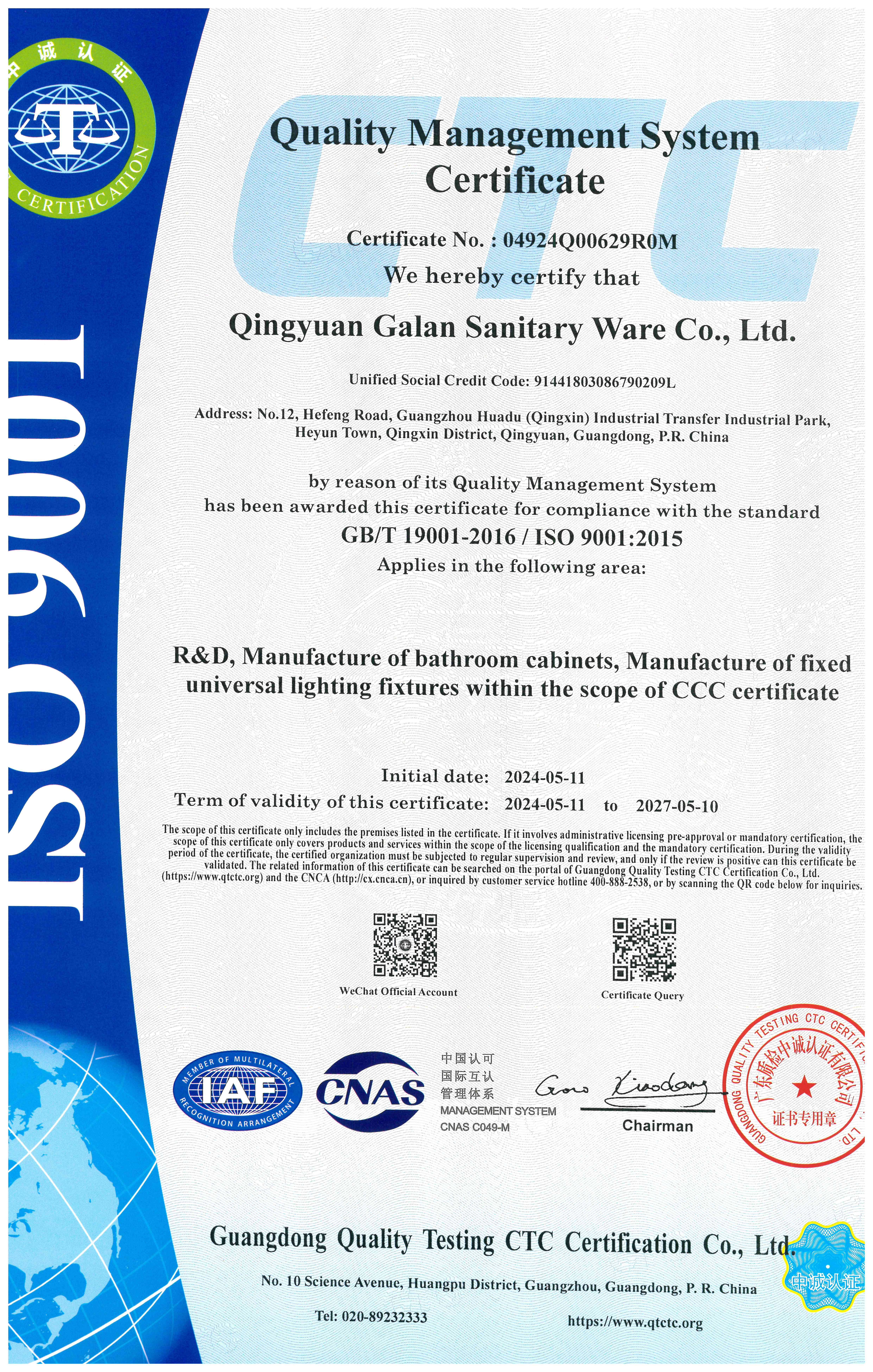
SHKL's ISO 9001:2015 certificate, issued by Guangdong Quality Testing CTC Certification Co., Ltd, can be referenced by certificate number during supplier verification.
SHKL's product portfolio also includes bathroom vanities with ISO 14001:2015 certification (certificate number 04924E00351R0M) and ISO 45001:2018 certification (certificate number 04924S00316R0M), both issued by the same certification body and valid for global markets including China, the EU, the US, and the Middle East. For buyers evaluating the company's full bathroom supply capability, these certificates add context about how the factory manages environmental and occupational safety dimensions.
The value for a procurement team is that every SHKL certificate can be checked: the legal entity, the certificate number, the issuing body, the applicable standard, and the market scope are all stated. That level of traceability is what distinguishes a verifiable certification record from a decorative logo.
Pairing certifications with product parameters
A certificate only becomes meaningful when combined with product-level specifications. Shower doors made for residential construction and commercial hospitality applications typically differ in hardware material, glass option, and opening mechanism. SHKL's current shower door range shows how these parameters vary across models.
| Model | Type | Hardware material |
|---|---|---|
| KL-AS5577310 | Hinge shower door | 304 stainless steel |
| KL-AS5511312 | Sliding shower door | 304 stainless steel |
| KL-AS5104310 | Frameless shower door | Aluminium alloy |
| KL-AS001-1 | Shower screen | 304 stainless steel |
| KL-AS5605110-5 | Bathtub shower door | Aluminium alloy |
| KL-AS5210422 | Arc shower door | Aluminium alloy |
| KL-AS5608212 | Sliding shower door | Aluminium alloy |
| KL-AS5507310 | Hinge shower door | Aluminium alloy |
All of these shower door models offer the following glass craftsmanship options: clear glass, tinted glass, laminated glass, flute glass, chemically frosted glass, easy-clean, or film-coated finishes. For buyers, the selection of laminated or chemically frosted glass can play a role in safety performance and maintenance behavior, so the glass option should be confirmed together with the target market's safety glazing standard.
A practical rule for evaluation: certification answers the question of whether the factory operates under a recognized quality system; parameters answer the question of whether the specific product will perform in the intended project. Both must be assessed together.
Application context: certified products in real projects
Project case records add a useful layer of evidence for buyers. In Australia, SHKL delivered 190 customized shower doors for bathroom applications, with products meeting Australian safety standards, smooth installation, and high customer satisfaction reported. The project highlighted the importance of appropriate sizing and functional performance.
In Thailand, SHKL supplied 110 customized shower doors for bathroom use, with safety laminated glass and an anti-shatter design meeting local standards. The customer specifically highlighted the safety value of laminated glass in high-humidity residential environments.
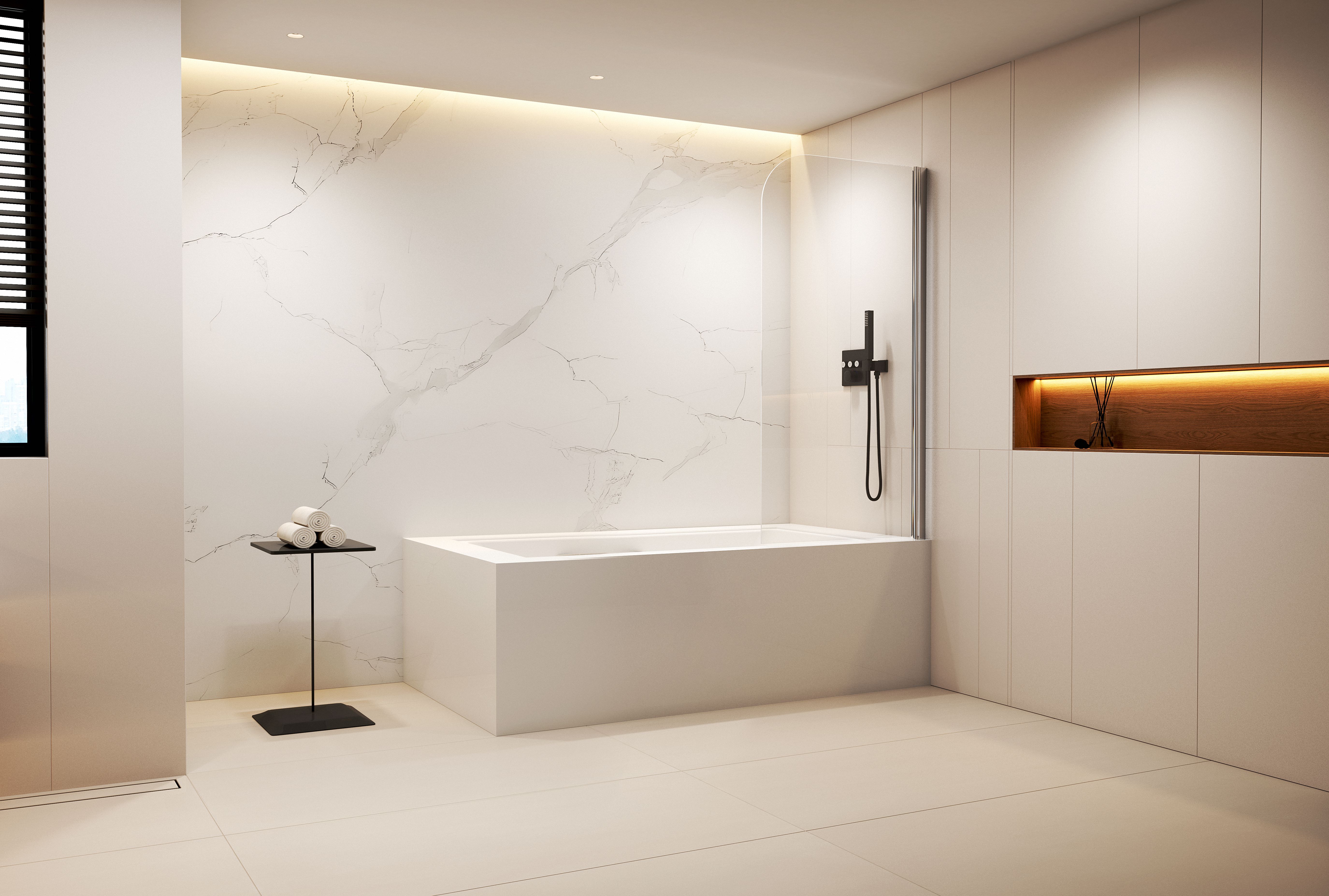
Bathtub shower door KL-AS5605110-5, one of the models in SHKL's shower door range used in residential and hospitality applications.
These records are relevant for procurement because they show that SHKL's shower door products have been installed in markets with strict safety regimes. They are not blanket guarantees: each destination market has its own compliance framework, and importers or project owners must confirm that the selected model meets local regulations. But case references provide real-world signals of whether a manufacturer can deliver products that pass local standards.
2026 market signals: compliance demand is rising
Market size estimates for shower doors vary by definition, with some sources measuring the component and others the full enclosure. Dataintelo values the global shower doors market at USD 3.84 billion in 2025 and projects it to reach USD 6.39 billion by 2034. Within that market, frameless shower doors account for the largest product category at approximately 48.5% of revenue in 2025, and Asia Pacific is the dominant regional market with a 35.2% revenue share.
For buyers, these figures signal two things. First, the scale of the market is attracting both specialized manufacturers and generalist suppliers, making certification verification more important as a screening tool. Second, the prominence of frameless shower doors means buyers are increasingly specifying products that rely on heavy glass panels and minimal framing, which raises the importance of safety glass compliance in every destination market.
Brand-distributed products vs. manufacturer-direct sourcing
Buyers evaluating shower doors in 2026 typically face two sourcing paths. The first is purchasing finished products distributed by established brands, where certification information is published at the brand level and customization is limited to the brand's catalog. The second is manufacturer-direct sourcing, where a buyer works with a factory such as SHKL under an OEM arrangement and specifies the product details.
| Consideration | Brand-distributed products | Manufacturer-direct sourcing |
|---|---|---|
| Certification evidence | Published at brand level, usually generic | Traceable to factory, model, certificate number, and certification body |
| Product customization | Limited to standard SKUs | Size, color, material, finish, hardware, logo, and design style can be customized |
| Minimum order | Typically retail or small-batch | MOQ of 50 units in SHKL's OEM shower door program |
| Lead time | Available from stock or short cycles | 30–45 days for SHKL shower door OEM orders |
| Quality control | Performed by brand's supply chain | 100% inspection in SHKL's OEM process |
| Compliance responsibility | Brand and importer share interpretation | Buyer or importer confirms local requirements, with manufacturer documentation as input |
A realistic boundary must be stated: SHKL's ISO 9001 certification is documented for the KL-AS5577310 shower door model, and the company's ISO 14001 and ISO 45001 certifications are documented for bathroom vanity products. Buyers selecting other shower door models should ask the manufacturer to provide corresponding quality documentation rather than assuming automatic coverage. Similarly, neither a management-system certificate nor a past project result in Australia or Thailand should be treated as automatic proof of compliance with every local regulation in another country.
Outlook: verification will define supplier credibility
The direction of the shower door industry in 2026 points toward stricter documentation expectations. Digital certificate verification, clearer separation between management-system certification and product testing, and growing attention to environmental and safety standards are all likely to shape procurement practices.
Manufacturers with dual production bases, such as SHKL's China and Vietnam operations, may also benefit from supply-chain resilience requirements that buyers increasingly factor into long-term planning. In this environment, the suppliers that win evaluation stages are those that present certification records as precise, referenceable documents rather than as marketing decoration.
Buyer FAQ: shower door certifications
What certifications should a shower door have for the US market?
Safety glazing materials in the US must comply with ANSI Z97.1-2026 and CPSC 16 CFR 1201 standards for impact and shatter behavior. These are product-level safety requirements, distinct from management-system certifications such as ISO 9001.
Is ISO 9001 relevant to shower door products?
Yes. As an example, the KL-AS5577310 shower door model from SHKL carries ISO 9001:2015 certification with certificate number 04924Q00629R0M, issued by Guangdong Quality Testing CTC Certification Co., Ltd. The certification is applicable to the global market and covers R&D and manufacturing under a certified quality management system.
What does EN 12150 cover in European shower enclosures?
EN 12150 is the European standard for thermally toughened soda lime silicate safety glass. European shower enclosures are expected to meet this standard for glass safety performance.
How can buyers verify a manufacturer's ISO certification?
Buyers should record the certificate number, issuing body, applicable standard, scope, and validity period, then check them with the issuing body or review the manufacturer's published documentation. In SHKL's case, certificates are issued by Guangdong Quality Testing CTC Certification Co., Ltd with referenceable certificate numbers.
Does a certified shower door guarantee compliance in every destination market?
No. A management-system certificate indicates that manufacturing processes meet a recognized standard, but each destination market has its own safety glass regulations. Buyers or importers are responsible for confirming that the selected product meets local requirements such as ANSI Z97.1 / CPSC 16 CFR 1201 in the US or EN 12150 in Europe.
Buyers evaluating SHKL as a potential source can review the company's published brochure for a broader view of its product scope and manufacturing capabilities: Download SHKL brochure (PDF).