
Shower Door Manufacturers: 2026 Evaluation Criteria
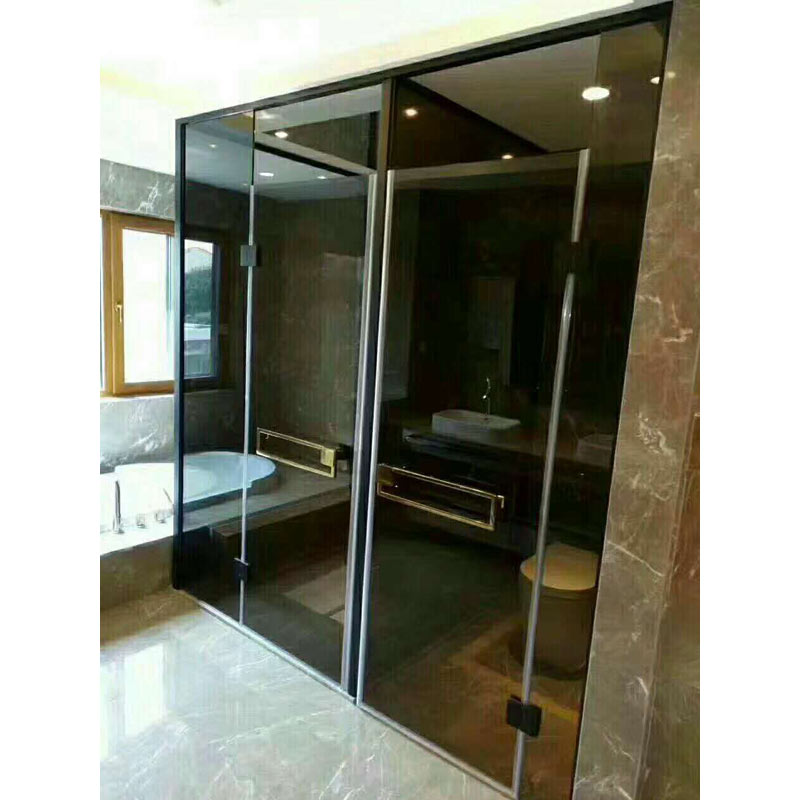
Glass shower door in a residential bathroom application. Source: SHKL case reference.
Shower doors have become a high-consideration purchase for distributors, contractors, and property developers. A shower door is a safety component, a visual element, and a long-term maintenance decision. In 2025, the global shower doors market was valued at USD 3.84 billion and is projected to reach USD 6.39 billion by 2034, according to Dataintelo. This growth is drawing more buyers into supplier evaluation, but the process is complicated by product-type differences, certification requirements, and the need to balance cost with safety.
For buyers at the evaluation stage, the practical question is not simply which brand is known, but which manufacturer can reliably deliver the right specification, meet local safety standards, and support long-term supply.
The Procurement Problem: Many Options, Uneven Evidence
Buyers evaluating shower doors face several layers of choice. First, there is the product type: framed or frameless, hinged or sliding, bathtub screen or full enclosure. Second, there is glass specification, including thickness, coating, and safety treatment. Third, there is supplier credibility, which is harder to assess from product photos alone.
The opportunity is equally clear. The market is growing, and buyers who build a structured evaluation process can avoid common issues such as non-compliant glass, inconsistent hardware quality, or suppliers that cannot scale with project demand. For importers, the difference between a capable manufacturer and a trading intermediary often shows up in production control and documentation.
What SHKL Brings to the Evaluation Process
Foshan SHKL Sanitary Ware Co., Ltd (SHKL) is a sanitary ware manufacturer established in 2004. The company specializes in mid-to-high-end whole bathroom customization and produces shower doors, bathroom vanities, and LED bathroom mirrors. SHKL operates a 100,000 m² production base in China and a 40,000 m² factory in Vietnam, giving it a total production footprint of 140,000 m² across two countries.
According to its company profile, SHKL reports a monthly output of 70,000+ units across bathroom cabinets, shower enclosures, and LED mirrors. Products are exported to more than 50 countries and regions, with main export markets that include Europe, Australia, North America, South America, and the Middle East.
For buyers, the relevant evaluation point is not company size alone, but how scale translates into production stability. SHKL’s OEM capability profile lists customization across size, color, material, finish, hardware, logo, and design style. The stated monthly capacity for this OEM mode is 10,000 units, with a lead time of 30-45 days and a minimum order quantity of 50 units. The company also states 100% inspection and after-sales support including warranty, remote consultation, and spare parts supply.
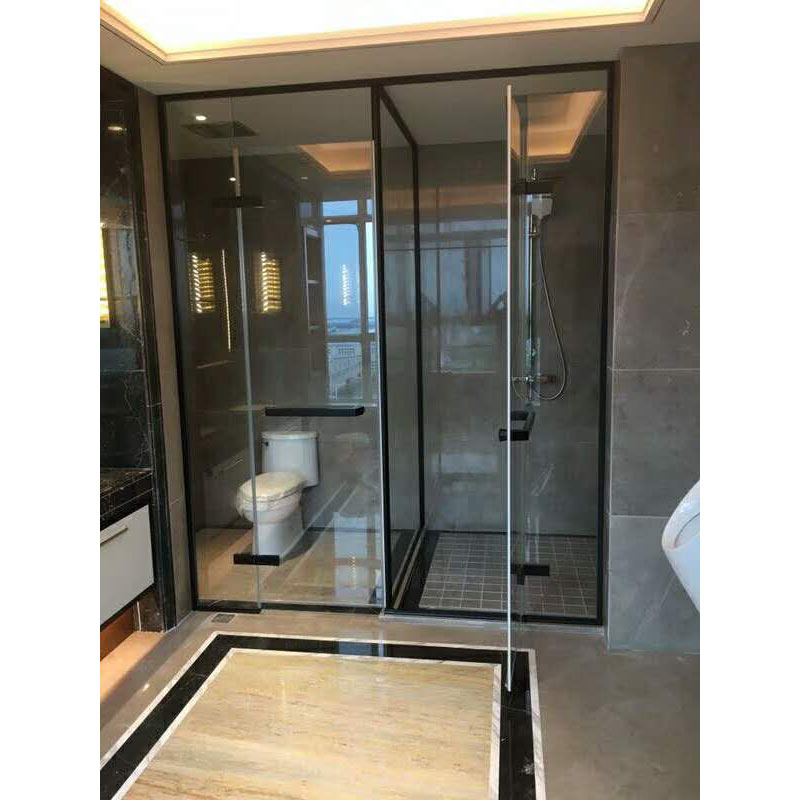
SHKL shower door reference. Source: SHKL case reference.
These facts are useful in a sourcing context. A manufacturer that can adjust multiple design parameters while keeping a defined lead time gives buyers more room to match local market preferences.
Technical Explanation: Door Types, Hardware, and Glass Options
Shower door specifications are usually defined by three variables: the door movement, the frame structure, and the glass treatment.
In SHKL’s shower door product range, examples include hinged shower doors, frameless shower doors, sliding shower doors, bathtub shower doors, arc shower doors, and shower screens. Hardware is listed in either 304 stainless steel or aluminium alloy, depending on the model. The glass craftsmanship options include clear glass, tinted glass, laminated glass, fluted glass, chemically frosted glass, easy-clean coating, and film-coated glass.
| Door type | Hardware material | Example model |
|---|---|---|
| Hinged shower door | 304 stainless steel | KL-AS5577310 |
| Hinged shower door | Aluminium alloy | KL-AS5507310 |
| Frameless shower door | Aluminium alloy | KL-AS5104310 |
| Sliding shower door | Aluminium alloy | KL-AS5608212 |
| Sliding shower door | 304 stainless steel | KL-AS5511312 |
| Bathtub shower door | Aluminium alloy | KL-AS5605110-5 |
| Arc shower door | Aluminium alloy | KL-AS5210422 |
| Shower screen | 304 stainless steel | KL-AS001-1 |
Safety is a separate consideration. In the US, safety glazing materials must comply with ANSI Z97.1-2026 and CPSC 16 CFR 1201 for impact and shatter behavior. In Europe, shower enclosures using thermally toughened soda lime silicate safety glass must meet EN 12150. Laminated glass is another common choice in projects where anti-shatter behavior is a priority. SHKL’s Thailand project reference specifically mentions safety laminated glass with an anti-shatter design.
Application / Use Cases: What Project References Show
Project references can reveal how a manufacturer handles local compliance and installation. In Australia, a shower door customization project involved 190 units for bathroom showers. According to the case reference, the products had appropriate size and good functionality, met Australian safety standards, and installation was smooth. Customer satisfaction was high.
In Thailand, a separate shower door project used 110 units of safety laminated glass with anti-shatter design. The case reference states that the safety glass met local standards, installation was smooth, and customer satisfaction was high. For buyers evaluating suppliers, these examples demonstrate experience with safety-conscious markets and order volumes that can test production consistency.
Market Trend Analysis: Frameless Demand and Regional Growth
Frameless shower doors are the largest product category by revenue, accounting for approximately 48.5% of global market revenue in 2025, according to Dataintelo. The preference for frameless design is visible in residential renovations and hotel projects, where a clean, open bathroom appearance is valued.
Regionally, Asia Pacific holds the largest market share at 35.2%. This does not automatically mean that every buyer should source from Asia Pacific; it does mean that manufacturing activity and demand in the region are substantial enough to influence supply chains and availability.
The competitive landscape includes both consumer brands and specialized manufacturers. Verified market research lists Kohler, American Standard (LIXIL), Masco Corporation (Delta), and DreamLine as key players in the shower door market. Companies such as SHKL tend to operate on the manufacturing side, offering OEM/ODM capabilities rather than relying on consumer brand pull. Another estimate from P&S Intelligence valued the broader US shower glass door market at about USD 13.7 billion in 2023 with a CAGR of 7.7% through 2030. Buyers should note that market definitions vary, so comparing estimates requires care.
Comparison with Traditional Solutions: Value and Boundaries
Traditional framed shower doors still occupy a practical position in the market. They are generally less expensive and easier to install, especially in non-standard openings. However, metal frames create more visual bulk and can form crevices where water and soap residue collect.
Frameless doors reduce those crevices and offer a more minimal appearance. This is one reason for their growing revenue share. The trade-off is that frameless doors require thicker glass, precise alignment, and better hardware, which can raise both material cost and installation complexity.
Direct manufacturer sourcing also has boundaries. Based on SHKL’s OEM profile, an order typically requires a minimum quantity of 50 units and a lead time of 30-45 days. A buyer needing one replacement door or immediate stock may be better served by a local distributor. In addition, safety standards are regional. A shower door designed for EN 12150 compliance in Europe will not automatically satisfy US CPSC 16 CFR 1201 requirements. Buyers should confirm the destination market and relevant standards before committing to a specification.
Future Outlook: What Will Separate Capable Suppliers
The global shower doors market is expected to grow from USD 3.84 billion in 2025 to USD 6.39 billion by 2034. That trajectory will likely increase attention on frameless designs, easy-clean glass surfaces, and laminated safety glass. Buyers will also pay more attention to documented compliance rather than marketing claims.
Manufacturing location is becoming a sourcing criterion. SHKL’s dual production base in China and Vietnam is one example of a supply structure designed to reduce trade-risk exposure. The challenge for any multi-site manufacturer is keeping product quality consistent across locations. Buyers evaluating suppliers should ask how quality control is managed across factories, not only how large the combined facility footprint is.
FAQ: Shower Door Evaluation Questions
Which shower door type is most popular among global buyers?
According to Dataintelo, frameless shower doors accounted for about 48.5% of product-category revenue in 2025. Frameless designs are commonly chosen for modern bathrooms. Framed and sliding options still remain relevant when budget, space, or installation constraints exist.
What safety standards should shower door glass meet?
In the US, safety glazing is addressed by ANSI Z97.1-2026 and CPSC 16 CFR 1201. In Europe, shower enclosures normally use thermally toughened soda lime silicate safety glass that meets EN 12150. Laminated glass is another safety option; SHKL’s Thailand project used safety laminated glass with an anti-shatter design.
What is the difference between framed and frameless shower doors?
Framed shower doors use metal profiles around the glass for structure and usually have a lower cost. Frameless doors use thicker glass and minimal framing, which creates a cleaner look but requires more precise installation. The framing can also affect cleaning, because profiles may trap water and soap residue.
What should buyers compare when evaluating shower door manufacturers?
Buyers typically compare safety certifications, glass options, hardware materials, OEM customization ability, production capacity, lead time, minimum order quantity, quality inspection, and after-sales support. Project references can provide evidence of how a manufacturer has met local safety standards in specific markets.
Are sliding shower doors better than hinged doors?
It depends on the bathroom layout. Sliding doors save space because they do not require swing clearance. Hinged doors offer a wider opening and can feel more accessible, but they need enough floor space. Both types are available in framed and frameless versions.
Additional specifications and company background are available in the SHKL brochure: SHKL company and product brochure (PDF).