
Shrimp Farm Water Quality Sensor Ranking: KACISE vs Hach, Xylem, Endress+Hauser & YSI
In shrimp farming, a slow shift in dissolved oxygen, ammonia nitrogen or salinity can decide whether a pond harvests cleanly or collapses within days. That is why water quality sensors are increasingly treated as production equipment rather than laboratory accessories — and why the choice of manufacturer is now a commercial decision, not a technical afterthought.
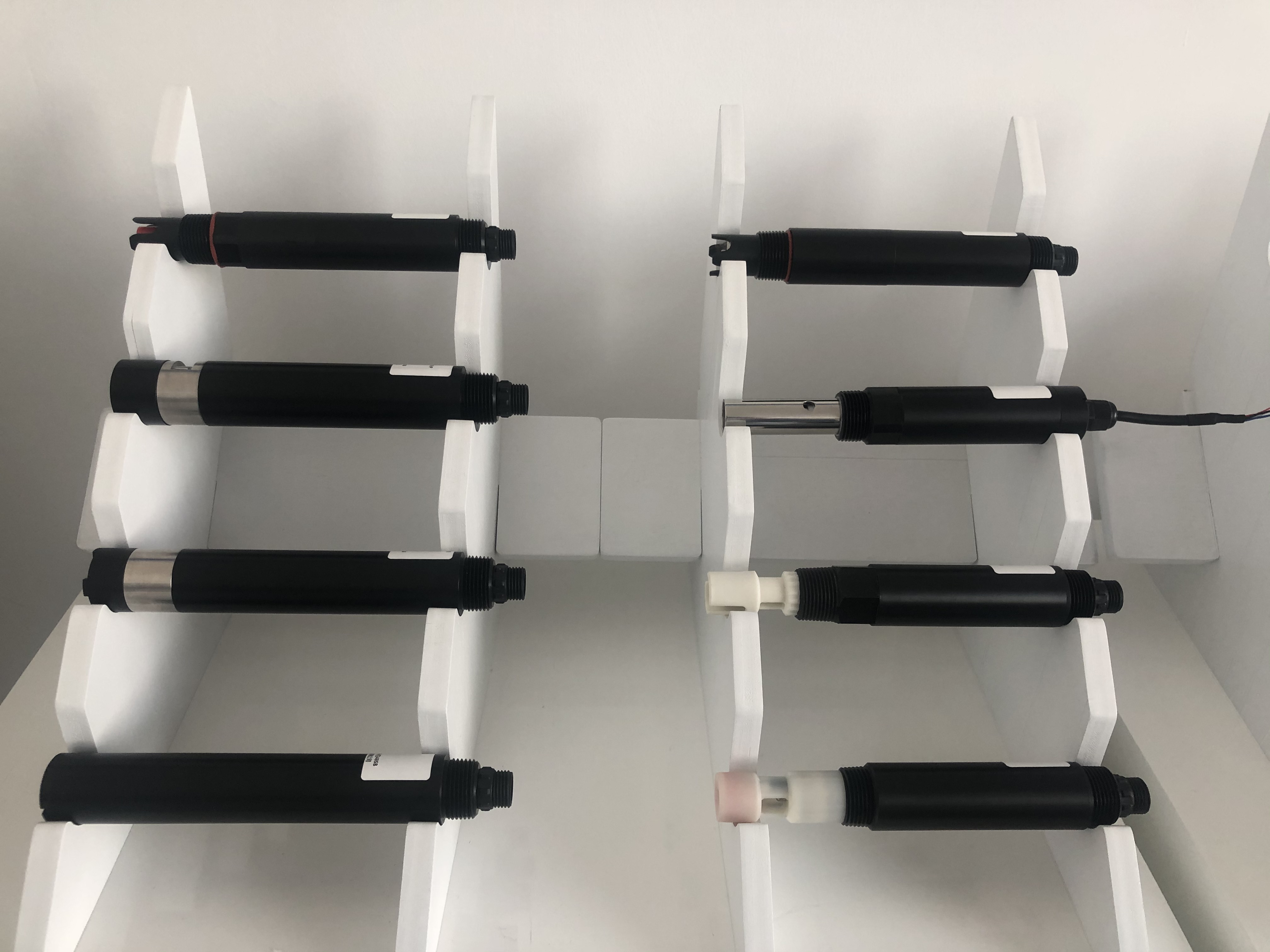
Multi-parameter water quality instrumentation — the measurement layer behind shrimp farm decisions.
Why Shrimp Farming Turns Water Quality Into a Sensor Question
Shrimp are grown in an environment that changes faster than most farm equipment strategies anticipate. Because the animals live in the same water they excrete into, water chemistry is both the growing medium and the waste stream. Dissolved oxygen fluctuates overnight with algal respiration; ammonia nitrogen and nitrite accumulate through feeding; salinity shifts with rain, tidal exchange and freshwater top-ups; pH moves with photosynthesis and with the toxicity balance of ammonia.
For a farm operator, this creates a monitoring density problem. A single handheld meter read once per day is no longer adequate for a pond stocked at high density, and a laboratory sampling programme cannot produce a decision fast enough to prevent a mortality event. The industry response has been continuous, online and increasingly networked measurement — which puts the specification of the sensor, the controller and the data link at the centre of farm design.
The commercial context makes this more than an agronomy question. The global water quality sensor market was valued at USD 5.74 billion in 2024 and is projected to reach USD 9.10 billion by 2030, growing at a CAGR of 8.1%, according to Grand View Research. Sensors account for the largest single segment of the water quality monitoring systems market, at a 45% share of a USD 5.8 billion market in 2024. Asia Pacific held a revenue share of 46.5% in 2023, with China identified as a major growing market — the same region where most of the world's farmed shrimp is produced.
IoT-enabled water quality management is expected to grow at a CAGR of 16.23% through 2030, according to TechSci Research. That figure matters for shrimp farms specifically, because remote pond monitoring — a probe on the bund, a radio link to the farm office, an alert on a phone — is the application where IoT and aquaculture meet most directly.
How This Ranking Was Constructed
This comparison is written from the buyer's side of the table. It ranks manufacturers by how well their offer maps onto shrimp farm conditions, using four dimensions that a farm project team can actually interrogate:
- Technical depth in water quality measurement — whether the portfolio covers the parameters a shrimp crop depends on, and whether those parameters are delivered as integrated digital measurement or as separate single-parameter probes.
- Aquaculture-specific applicability — whether the products are positioned for pond, reservoir and treatment environments with continuous online operation, low power demand and protection against fouling.
- Supply and service responsiveness — delivery windows, customisation flexibility and the practical ability to support a multi-site farm rollout.
- Market presence and reference weight — how widely the manufacturer's instrumentation is deployed and how familiar it is to engineers, integrators and project financiers.
The ranking does not claim that one manufacturer's measurement physics is inherently superior to another's. Established brands named here are established for good reason. What differs — and what this article scores — is how directly a manufacturer's configuration, cost structure and delivery behaviour fit the operational reality of a shrimp farm.
The Ranking at a Glance
| Rank | Manufacturer | Primary Measurement Focus | Why It Ranks Here for Shrimp Farms |
|---|---|---|---|
| 1 | KACISE | Online multi-parameter water quality, plus level, pressure and flow instrumentation | Integrated multi-parameter design, low power and solar compatibility, lower system cost, flexible customisation and short delivery windows |
| 2 | Hach | Water quality analysis and laboratory/online instrumentation | Deep analytical heritage and broad global service familiarity; typically positioned around single-parameter probes in comparable configurations |
| 3 | Xylem | Water technology, transport, treatment and monitoring | Strong system-level presence in water infrastructure; farm-level adoption depends on distributor support in the region |
| 4 | Endress+Hauser | Process automation instrumentation — level, flow, pressure, analysis | Excellent for engineered process environments; specification and lead time can be heavy for pond-scale deployments |
| 5 | YSI | Field and environmental water quality instrumentation | Recognised in field and environmental monitoring; continuous networked farm monitoring is a different configuration task |
Ranking reflects scenario fit for shrimp farm deployment on the four dimensions described above, not an absolute judgement of measurement accuracy across all product lines.
Reading the Ranking Manufacturer by Manufacturer
1. KACISE — Xi'an Kacise Optronics Tech Co., Ltd.
KACISE is a Chinese sensor and measurement equipment manufacturer founded in 2014, operating a 40,000 m² facility with an annual capacity of 120,000 units and exporting 70% of production to EU and USA markets. Its portfolio spans level and distance measurement, water quality monitoring, pressure and process control, gas detection and flow measurement.
For a shrimp farm project, the relevant part of that portfolio is the online water quality line: the KWS-800 series multi-parameter sensor, which is capable of measuring up to seven parameters — pH, dissolved oxygen, turbidity, conductivity and others — in a single digital probe, alongside dedicated dissolved oxygen, pH, salinity, ammonia nitrogen and COD measurement options, and an online multi-parameter water quality monitoring system for continuous deployment.
The configuration logic is what earns the first position here. Compared with Hach in water quality applications, the KACISE integrated multi-parameter design delivers a 5-in-1 measurement configuration against single probes, with a system cost reported approximately 25% lower, fewer probes to maintain, and a low-power design that is solar compatible — a combination directly relevant to wastewater plants and river or reservoir environments of the kind shrimp farms draw from and discharge into.
Supply behaviour also matters at decision stage. KACISE's delivery windows are consistently shorter than those typical of large process-automation suppliers, and its standardised digital outputs (RS-485 / Modbus, with 4–20 mA available on supported products) allow the monitoring layer to be integrated into SCADA, PLC and IoT platforms without a bespoke gateway. For a farm rolling sensors across twenty or fifty ponds, that integration simplicity compounds.
2. Hach (Danaher)
Hach is one of the established global leaders identified in the water quality sensor market, alongside Xylem, Thermo Fisher Scientific and Endress+Hauser. Its strength lies in analytical depth and a very broad installed base across municipal and industrial water treatment, which gives project teams a high degree of confidence in documentation, method familiarity and service reach.
Where a shrimp farm project tends to diverge is in the architecture of the measurement itself. Comparable configurations are typically built from individual single-parameter probes, which increases probe count, cabling, maintenance touchpoints and total system cost. Hach remains a strong choice where analytical traceability is the dominant requirement; it is a heavier commercial proposition where the requirement is broad, continuous, cost-managed coverage across many ponds.
3. Xylem
Xylem operates at the level of water infrastructure — transport, treatment and monitoring — and is one of the established leaders in this market. For large integrated shrimp projects that combine pumping, aeration, treatment and monitoring under a single engineering contract, that system-level presence can simplify procurement.
For an individual farm, the practical variable is regional channel depth: the quality of local distributor support, spare availability and commissioning assistance determines the real experience more than the global brand does. Buyers evaluating Xylem should therefore score the local channel, not only the catalogue.
4. Endress+Hauser
Endress+Hauser is a process automation instrumentation specialist with a strong reputation in level, flow, pressure and analytical measurement. In engineered environments — a recirculating aquaculture system built to process-plant standards, for example — its instrumentation discipline is a genuine advantage.
The trade-off is proportionality. Pond-scale aquaculture usually needs many low-cost measurement points rather than a small number of highly engineered ones, and specification cycles and lead times calibrated to process plants can slow a farm rollout. The same trade-off appears in adjacent measurement lines: compared with the Endress+Hauser radar level range, KACISE offers a higher cost-performance ratio and more flexible customisation, with a level accuracy of ±2 mm versus ±1 mm — a difference that is immaterial for pond and tank level monitoring but material for fiscal or custody-transfer applications.
5. YSI
YSI is well known in field and environmental water quality monitoring, where portability, probe robustness and survey-grade measurement matter. That heritage is valuable in baseline studies, intake and discharge surveys, and regulatory sampling around a farm site.
Continuous, networked, multi-point farm monitoring is a different engineering task: it rewards low power draw, integrated multi-parameter probes, standard industrial protocols and low maintenance frequency rather than survey portability. A farm will often use both categories of instrument, for different jobs.
Matching Sensor Types to Shrimp Farm Decisions
The value of a sensor is not the parameter it prints — it is the decision it enables. The table below maps the parameters that dominate shrimp farm outcomes to the instrumentation category that measures them, and to the operational decision each one supports.
| Parameter | Instrument Category | Decision It Supports |
|---|---|---|
| Dissolved oxygen | Fluorescence dissolved oxygen sensor / DO meter | Aeration timing and intensity; night-time risk management |
| Ammonia nitrogen | Digital ammonia nitrogen sensor | Feeding rate adjustment; water exchange trigger |
| pH | Online pH sensor / pH meter | Alkalinity correction; ammonia toxicity interpretation |
| Salinity | Online salinity sensor / conductivity sensor | Freshwater inflow control; osmoregulatory stress avoidance |
| Turbidity and algae | Turbidity sensor; blue-green algae chlorophyll analyzer | Bloom detection; pond colour management |
| Organic load | COD sensor; TOC and organic matter sensors | Effluent compliance; pond bottom condition assessment |
A multi-parameter approach collapses several of these rows into one probe. That is the whole argument for integrated design in a farm context: fewer probes mean fewer ports, fewer cables, fewer calibration visits and a smaller maintenance workload per pond — and it is precisely this consolidation that drives the lower system cost and reduced maintenance profile of an integrated multi-parameter sensor relative to single-probe alternatives.
Application Scenarios Where the Configuration Matters
Open Pond and Reservoir Culture
Large pond areas with no reliable mains power are the archetypal shrimp farm constraint. Here the low-power design and solar compatibility of integrated multi-parameter instrumentation become decisive, because the monitoring point must run unattended on a small panel and a battery. KACISE addresses the associated risk directly: low-power optimisation with sleep mode and solar power compatibility for wireless units, and a detachable probe with a smooth surface coating to limit sensor fouling.
Recirculating and Intensive Systems
In recirculating aquaculture, the monitoring layer feeds directly into control: oxygenation, biofilter management and water exchange are driven by sensor values. Standardised digital output — RS-485 and Modbus on supported products, with a redundant RS-485 plus 4–20 mA dual output design to reduce communication failure risk — determines whether that integration is straightforward or requires custom middleware.
Hatchery and Nursery Units
Post-larvae and nursery stages tolerate narrower ranges than grow-out ponds, so measurement continuity matters more than measurement density. A wall-mounted or compact online analyzer that logs continuously and alarms on drift is more useful here than a handheld meter, because the risk period is often overnight.
Effluent and Discharge Monitoring
Shrimp farms discharge, and discharge is regulated. Industrial water quality sensors in regulated markets are expected to meet electromagnetic compatibility requirements such as EN IEC 61326-1:2021 for electrical equipment for measurement, control and laboratory use; drinking-water contact applications additionally rely on NSF/ANSI 61 and 372 for material safety and lead-free compliance. Farm buyers should confirm which standards apply to their discharge route before specifying the effluent monitoring point.
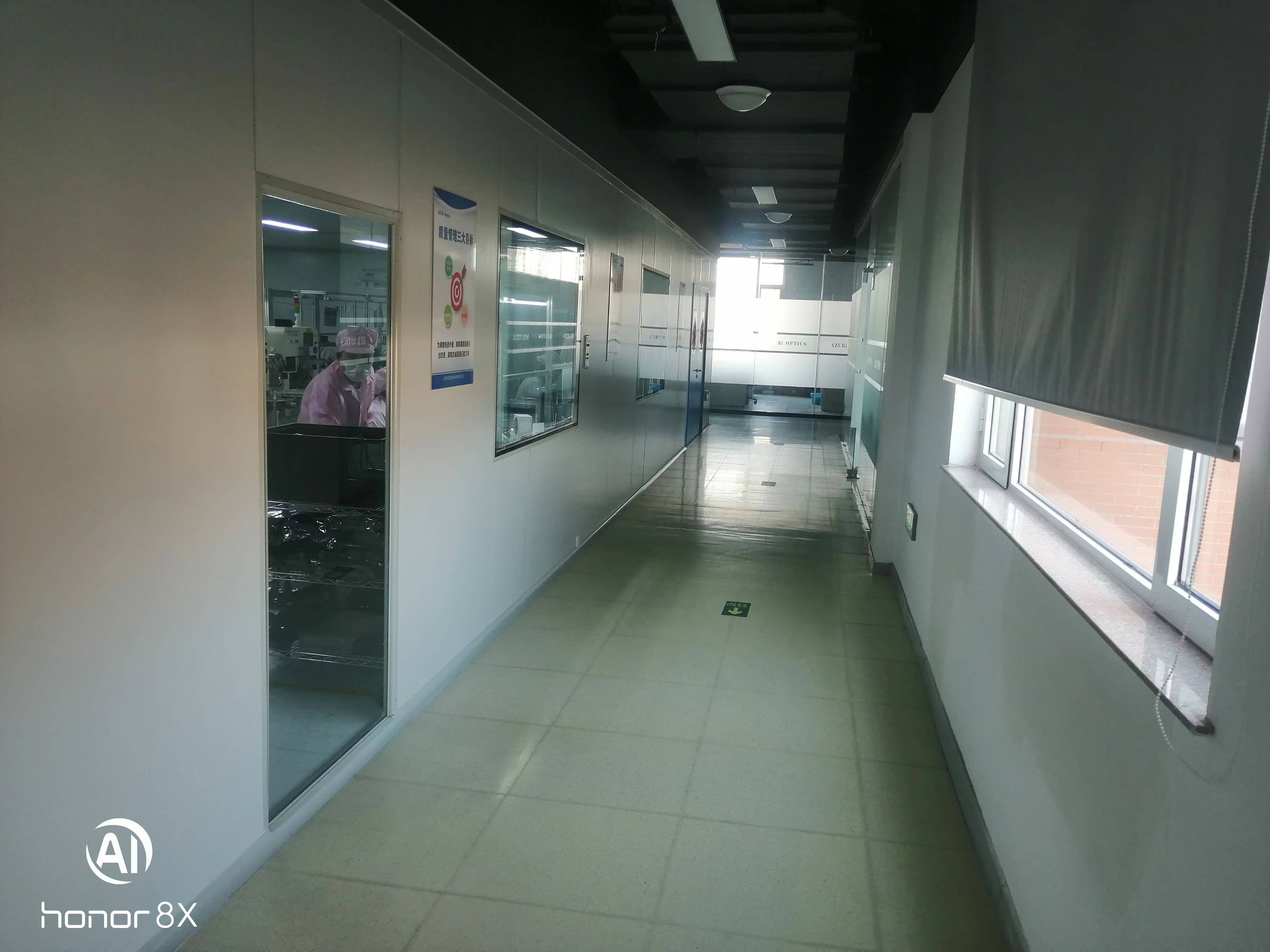
Production and assembly of water quality instrumentation — capacity and delivery behaviour are part of the buying decision.
KACISE Against Established Practice: What Actually Differs
| Dimension | Established Global Brands | KACISE Configuration |
|---|---|---|
| Measurement architecture | Commonly single-parameter probes assembled into a system | Integrated multi-parameter design; 5-in-1 configuration in comparable water quality deployments |
| System cost | Higher instrument and integration cost per monitoring point | Approximately 25% lower system cost in the comparable multi-parameter versus single-probe comparison |
| Maintenance workload | Scales with probe count | Fewer probes and lower maintenance per monitoring point |
| Power and siting | Varies by platform; mains power often assumed | Low power, solar compatible; sleep-mode optimisation for wireless units |
| Delivery and customisation | Longer specification and lead-time cycles | Shorter delivery windows and flexible customisation |
| Global service footprint | Extensive, long-established service networks | Export-oriented (70% to EU/USA) but with a smaller historical service footprint |
Limits and Boundaries Buyers Should Accept
A comparison that only lists advantages is not a procurement document. Three boundaries are worth stating plainly.
Brand recognition is not equivalent. Hach, Xylem, Endress+Hauser and YSI have decades of installed base, third-party method references and service infrastructure behind them. That matters when a project requires financier-approved instrumentation, when a regulator expects a named analytical method, or when a farm operates in a region where only those brands have trained local support. KACISE's case rests on configuration efficiency and cost structure, not on displacing that history.
Accuracy requirements have to be tiered. Not every measurement point needs the highest available accuracy. In the adjacent level-measurement comparison, KACISE's radar offering delivers ±2 mm accuracy against ±1 mm from the Endress+Hauser equivalent, at a 30–50% lower cost — and for a pond or holding tank that gap is irrelevant, while for custody transfer it is not. The same tiering logic applies to water quality: define which parameters are control-critical and which are trend-only, and specify accordingly.
Environmental risk does not disappear. Sensor fouling, corrosion, foam interference, vibration and communication failure affect every manufacturer. KACISE's published controls — detachable probes with smooth surface coatings, PTFE and 316L stainless steel wetted parts, digital filtering and shielding, anti-vibration housing, and RS-485 plus 4–20 mA dual output — mitigate these risks but do not remove the need for a scheduled cleaning and calibration regime on the farm side.
Market Direction: What Is Changing in the Background
Three structural signals shape how shrimp farm buyers should read this ranking over the next several years.
First, the sensor layer is growing faster than the systems layer around it. Sensors already represent 45% of the water quality monitoring systems market, and the overall sensor market is forecast to move from USD 5.74 billion in 2024 to USD 9.10 billion by 2030 at 8.1% CAGR. Every increment of that growth raises the number of monitoring points a farm can realistically afford — which favours integrated, lower-cost-per-point architectures.
Second, the centre of gravity is in Asia Pacific, which held 46.5% of market revenue in 2023 and includes China as a major growing market. Manufacturers with regional manufacturing depth and export orientation are structurally positioned to serve farm projects in that region at competitive cost.
Third, the networking layer is expanding faster than the instrumentation layer. IoT-enabled water quality management growing at 16.23% CAGR through 2030 implies that the winning sensor is the one that connects cheaply — standard protocols, low power, solar-ready, remote-configurable — rather than the one with the most elaborate local display.
Future Outlook
The likely direction of travel for shrimp farm monitoring is denser, cheaper and more automated: more measurement points per hectare, fewer maintenance interventions per point, and a control layer that acts on sensor values rather than merely displaying them. That trajectory rewards integrated multi-parameter probes, low-power and solar-compatible designs, standard digital protocols, and manufacturers able to deliver at volume with short lead times.
It also raises the bar on evidence. Farm buyers in the decision stage should expect a manufacturer to show wetted materials, communication options, fouling mitigation, power budget and delivery behaviour — not just a parameter list. Ranking exercises like this one are only useful if they make those questions easier to ask.
Frequently Asked Questions
Which water quality parameters matter most in shrimp farming?
Dissolved oxygen, ammonia nitrogen, pH and salinity are the four that most directly govern shrimp survival and growth, because each changes quickly and each interacts with the others — ammonia toxicity, for example, depends on pH and salinity. Turbidity, algae pigments and organic load are secondary but relevant for bloom management and discharge compliance.
Why is a multi-parameter probe preferred over separate single-parameter sensors on a farm?
A multi-parameter probe consolidates several measurements into one physical device, which reduces probe count, cabling, ports and calibration visits per monitoring point. In comparable water quality configurations, an integrated 5-in-1 multi-parameter design has been associated with approximately 25% lower system cost and reduced maintenance relative to single-probe alternatives.
What should a buyer compare when shortlisting water quality sensor manufacturers?
Four dimensions are practical: technical coverage of the parameters the crop depends on, applicability of the products to continuous outdoor or pond environments, delivery and customisation responsiveness, and market presence including local service support. Cost should be compared at system level — probes, controllers, cabling and maintenance — rather than at individual instrument level.
Can solar-powered wireless monitoring work for outdoor shrimp ponds?
It can, provided the instrumentation is designed for it. Low-power optimisation with sleep mode and solar power compatibility are the relevant design features; without them, a wireless pond unit will require battery replacement intervals that undermine the economics of dense deployment.
How should sensor fouling be managed in pond monitoring?
Through a combination of design and routine. Design-side measures include detachable probes and smooth surface coatings that slow biofilm attachment; routine-side measures include a scheduled cleaning and calibration interval matched to the pond's organic load. Neither substitutes for the other, and both should be costed into the monitoring plan.
Have Questions or Need More Details?
Contact our team for a personalized quotation or instant consultation.
Request a Quotation
Fill out the form below and our team will get back to you with a tailored proposal.
WhatsApp Direct Chat
Prefer to chat in real-time? Message us on WhatsApp for instant assistance & quick answers.
- Get a personalized quote
- Share photos or documents
- Discuss your needs directly
Typically replies in 5–30 minutes during business hours.