
Silicone Sealant Compliance File: What Buyers Check Before Ordering
Silicone Sealant Compliance File: What Buyers Check Before Ordering
A silicone sealant compliance file is the document set a buyer assembles before a purchase order is released: product identification, cure chemistry, performance data, market-entry references, batch traceability, shelf-life and storage terms, packing configuration and commercial acceptance terms. Its job is narrow and practical — it converts a supplier's verbal claims into items that can be checked, dated and filed.
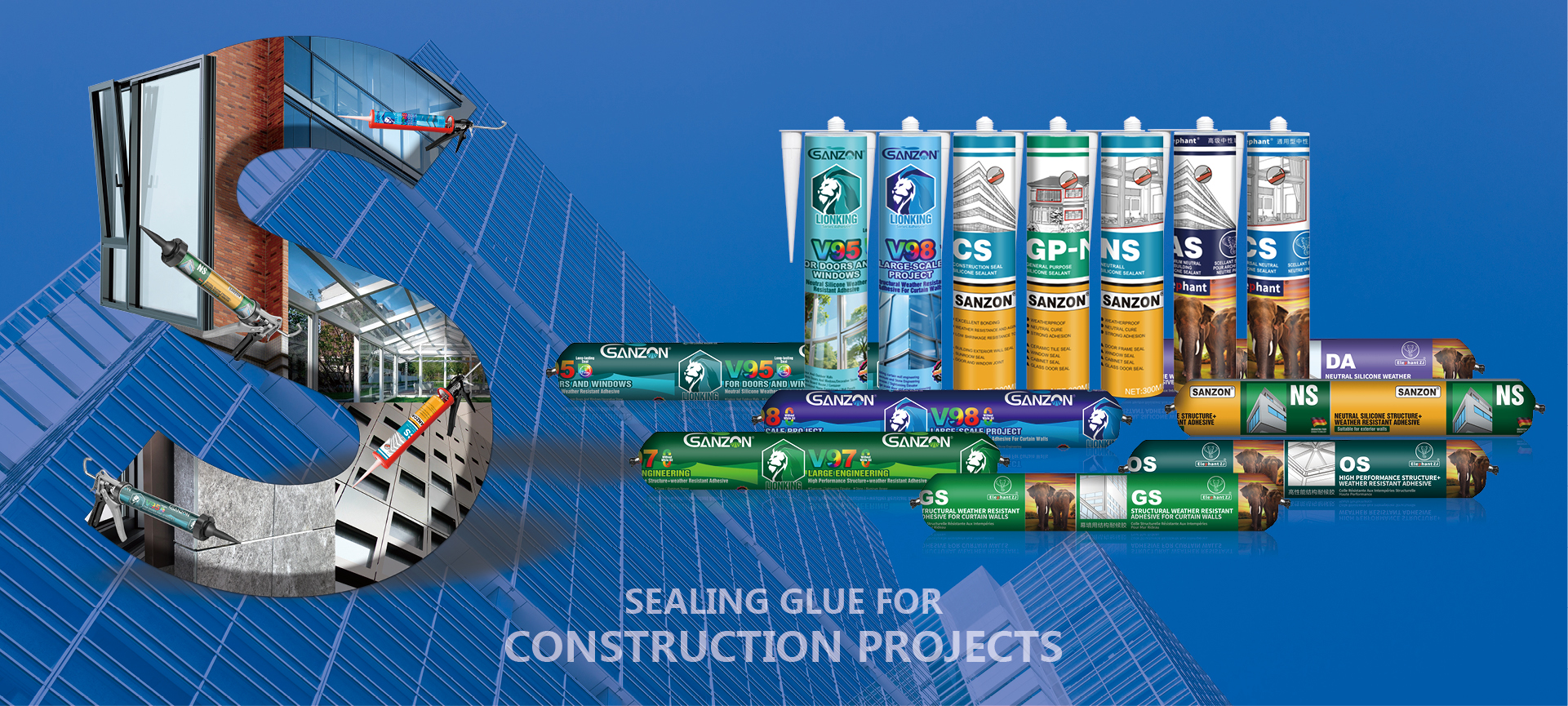
Sealant supplied under a documented order file is identified by family, cure chemistry, pack format and batch — not by colour alone.
Why a sealant order needs a file, not a single specification line
Sealant is a low-value, high-consequence material. A cartridge is inexpensive relative to the façade, the bathroom or the window it seals, but a joint that fails shows up months later as water ingress, mould growth or a visible facade defect — long after the carton has been opened and the pallet label discarded. When that happens, the decisive question is not what the product was supposed to do, but what the supplier committed to in writing.
Public trade statistics do not solve this for buyers. Chinese exports of silicone under HS 321410 are reported as one aggregated code, so neutral-cure, acetic-cure, structural and sanitary grades are not separated in customs-level data. The same aggregation problem appears at the market-research level: published silicone sealant market sizes vary considerably depending on whether adhesives are counted in the same category. Neither a customs line nor a market report can tell a buyer which chemistry is inside a specific carton. That differentiation has to come from the order file.
The commercial opportunity sits on the other side of the same problem. Buyers who request a structured file before ordering — rather than after a complaint — get a comparable shortlist, a defensible acceptance decision and a paper trail that survives internal audit. The cost of assembling that file is a few email exchanges; the cost of skipping it is normally discovered at the worst possible moment.
What the supplier side of the file actually looks like
Shandong Sanzeng New Materials Co., Ltd. is a Chinese sealant manufacturer headquartered in Linqu County, Weifang City, Shandong Province, operating an integrated supply chain of sealant products, packaging containers and filling equipment. The company traces its sealant activity to 1994, occupies a 40,000 m² factory, employs 125 people and reports annual output of 8,800,000 units, with a 10-engineer R&D team and roughly 70% of production exported to more than 30 countries and regions. It holds ISO 9001, ISO 14001 and ISO 45001 certification, with selected export products carrying CE and RoHS compliance and SGS performance and safety testing reports.
For a buyer building an order file, that structure matters for three concrete reasons. First, the product range runs across silicone (acid-curing, neutral-curing, weather-resistant, general-purpose and structural), MS polymer, acrylic, polyurethane, no-nail adhesive, PU foam, tile grout and fire-resistant sealants — so a multi-family project file can be sourced from one specification conversation rather than several. Second, packaging is produced in-house across 240 ml to 310 ml cartridges, 2600 ml drums, sausage film and two-component bottles, which means pack format and labelling are part of the quotation rather than a separate procurement stream. Third, OEM/ODM private label work covering packaging, printing, formulation and filling is offered with a stated MOQ of 100 boxes and a lead time of 10–20 days, alongside free samples and technical selection consultation.
The eight blocks of a sealant compliance file
A workable file does not need to be long, but it needs to be complete in the same eight places every time. Ask for these blocks in this order; each one closes a question the next one depends on.
1. Product identification and SKU block
Family, chemistry, model code, colour, pack size and units per carton, stated exactly as they will appear on the purchase order. Ambiguity here — "white silicone, standard carton" — is the single most common source of substitution later. A proper entry reads like this: general purpose silicone sealant, SANZON GP-N, neutral-cure, 300 ml × 24 pcs per carton, colours transparent / white / black / grey / others.
2. Cure chemistry and substrate statement
Which cure system the product uses and which substrates it is intended for. Neutral-cure silicone is suitable for a wide range of materials including glass, aluminium, metal and certain types of stone. Acetic (acid-curing) silicone generally offers strong adhesion to glass and ceramic but releases a vinegar-like odour during cure, and is not the default for acid-sensitive substrates. Acrylic sealant is single-component and paintable; MS polymer is solvent-free and isocyanate-free with low VOC. Each of these statements changes what the product may legally be used on.
3. Performance data block
Measurable values, not adjectives. A useful data block from the SANZON range reads: 300 ml cartridge, neutral cure (alcohol release), hardness 18 Shore A, movement capability 12.5% to ISO 11600, elongation at break 500%, tensile strength 1.2 N/mm², temperature resistance −20 °C to 60 °C. Those six numbers let an engineer check a joint design; a phrase like "high elasticity" does not.
4. Market-entry and regulatory references
Which market the file is written for, and which standard or regulation the buyer intends to reference. For building joint sealants, ASTM C920 is the primary performance standard for elastomeric joint sealants and was reapproved in November 2024 — a buyer specifying to it should state the edition. Where the destination is the European Union, note that Regulation (EU) 2024/1328 restricts cyclic silicones D4, D5 and D6, with a 0.1% threshold for industrial use. The file should record which of these applies, and which document the supplier is pointing to.
5. Batch, QC and traceability record
Batch coding convention, the inspection regime, and how a retained sample is kept. A supplier operating 100% testing should be able to describe what is tested and what is recorded per batch — not simply state that quality is guaranteed.
6. Shelf life, storage and transport terms
The shelf life of silicone sealant depends on formulation, packaging and storage conditions, so it must be quoted per product and confirmed against the packaging or technical data sheet. Storage guidance is consistent across the category: cool, dry and well ventilated, away from direct sunlight, high temperature and moisture. In practice the numbers differ by family — 12 months is typical for the silicone, acrylic and firestop cartridges in the SANZON range, 18 months applies to the GS no-nail adhesive, and two-component grouts additionally carry a storage window of +5 °C to +27 °C.
7. Pack and configuration block
Carton count, pallet configuration, label language, cap and nozzle supply. Three examples from the range: silicone, acrylic and firestop cartridges at 300 ml × 24 pcs per carton; PU foam at 750 ml × 15 pcs per carton; two-component epoxy and polyurea grout at A+B 400 ml × 20 pcs per carton.
8. Commercial acceptance terms
MOQ, lead time, sampling, damage and replacement terms, and the definition of an acceptable delivery. For reference, the SANZON terms state an MOQ of 100 boxes, a 10–20 day lead time, and free samples with technical selection consultation.
Mapping each product family to the questions buyers must raise
The file structure stays constant; the questions inside it change by family. The table below is the working checklist for a construction and decoration order that spans more than one product type.
| Product family | Example SKU | Data the file should carry | Purchasing terms to settle |
|---|---|---|---|
| General purpose silicone sealant | SANZON GP / GP-N | Neutral cure at room temperature; service range −50 °C to +150 °C; colour set; 300 ml × 24; 12-month shelf life | Confirm cure type before specifying on metal or stone; fix colour and carton count on the PO |
| Neutral silicone sealant | SANZON NS | Substrate list covered by the neutral system; primer requirement if any | Declare every substrate in writing; agree what happens if a substrate is added later |
| Mildew resistant / sanitary silicone | SANZON KB | Neutral cure; anti-mould performance stated for high temperature and humidity; −50 °C to +150 °C; 300 ml × 24; 12 months | Ask for the basis of the anti-mould claim and the conditions it was assessed under; agree replacement terms for wet-area callbacks |
| Firestop silicone | SANZON FS | Flame-retardant property; high temperature resistance; 300 ml × 24; 12 months | Ask which fire test and which report scope; a "fire rated" line without a document reference is not an acceptance criterion |
| Structural silicone | SANZON CS | Movement capability and tensile data for the specific grade; project-specific test evidence | Require project-level evidence rather than family-level claims; tie acceptance to the submitted report |
| MS sealant | SANZON MS | Solvent-free, isocyanate-free, low VOC; paintable and primer-less adhesion to most substrates | State the overpainting requirement at inquiry stage, not at delivery |
| Acrylic sealant | SANZON AS | Single-component, neutral cure at room temperature; −10 °C to +80 °C; low VOC and low odour; paintable; 300 ml × 24; 12 months | Accept the narrower temperature window and restrict to interior decoration work |
| PU foam | SANZON TC / TS | Single-component moisture cure; closed cell >90%; −10 °C to +80 °C; 750 ml × 15; 12 months | Specify TC for door and window quick-drying work, TS for indoor odourless requirements; agree yield per can |
| Epoxy tile grout | SANZON GM | Two-component A+B; solvent-free; ultra-low VOC; A+B 400 ml × 20 pcs per carton; storage +5 °C to +27 °C | Fix the A:B handling procedure and storage temperature; confirm colour series |
| Polyurea tile grout | SANZON GA | Two-component aspartic-ester polyurea; −50 °C to +100 °C; declared weather life over 30 years; ultra-low VOC and formaldehyde-free; A+B 400 ml × 20; +5 °C to +27 °C | Confirm site storage conditions and A:B dispensing method before ordering bulk |
| No-nail adhesive | SANZON GS / GK | Fast cure; formaldehyde- and benzene-free; 300 ml × 24; 18-month shelf life | Plan rotation around the longest shelf life in the range and confirm colour options |
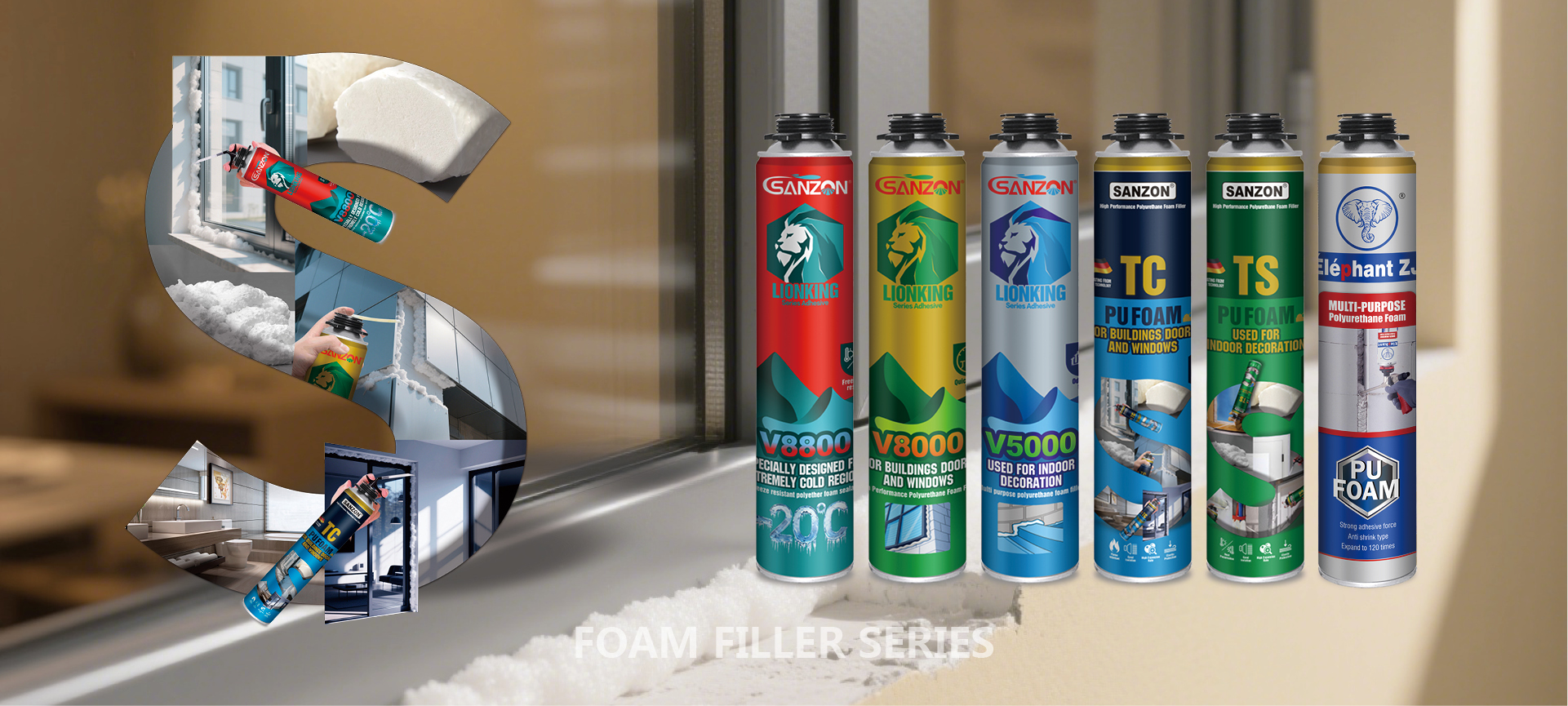
Foam fillers carry a different data block from silicone cartridges: closed-cell ratio, yield per can and moisture-cure behaviour replace movement class and tensile strength.
What a cure-chemistry label actually commits a supplier to
Room-temperature vulcanizing (RTV) systems account for the majority of the silicone sealant market, so most one-component cartridges a buyer handles are RTV types. That single label still hides the distinction that matters most at specification stage: neutral versus acetic cure, and what each does to the surfaces it touches.
Neutral-cure silicone is the broader specification choice because it is compatible with a wide material set, including glass, aluminium, metal and certain types of stone. Acetic-cure silicone adheres strongly to glass and ceramic, and its vinegar-like odour during cure is a recognisable marker of the chemistry. Where the file is silent on cure type, buyers inherit a product that may discolour, corrode or fail to bond on the substrate actually present on site — and the failure will be attributed to the sealant rather than to the specification gap.
The temperature window is the second under-specified item. Within one manufacturer's range, general purpose and sanitary silicone are declared for −50 °C to +150 °C, acrylic and PU foam for −10 °C to +80 °C, polyurea grout for −50 °C to +100 °C, and a documented cartridge series at −20 °C to +60 °C. A buyer who treats "silicone sealant" as a single temperature class will eventually use a product outside its declared envelope — and a warranty argument will follow.
Where the file meets the job site
The application list is what makes the file auditable. Sealant and grout families in this range are used for curtain wall and facade sealing on glass, aluminium and stone; door and window frame waterproofing; bathroom and kitchen sanitary sealing with mould-resistant grades; solar panel frame sealing and junction box potting; vehicle body seam sealing and windshield bonding; container and marine sealing; HVAC duct air-tight sealing; and industrial potting and bonding in electronics, appliances and lighting.
That breadth is also a warning. A single order for one building may legitimately require general purpose silicone for interior joints, sanitary grade for wet areas, firestop grade at penetrations, structural grade on the façade, PU foam for frame gaps, epoxy or polyurea grout for tiled areas and no-nail adhesive for finishing — and each family demands a distinct block of acceptance data. A case record from the manufacturer documents 2,000,000 cartridges delivered over two years to global engineering and construction companies across construction, renovation and industrial sectors, with reported stable operation and no leakage, and with all-weather durability stated from −40 °C to +150 °C with UV resistance and no cracking or chalking after years of outdoor exposure. The lesson for a buyer is structural rather than promotional: multi-family orders succeed when each family is specified separately inside one file.
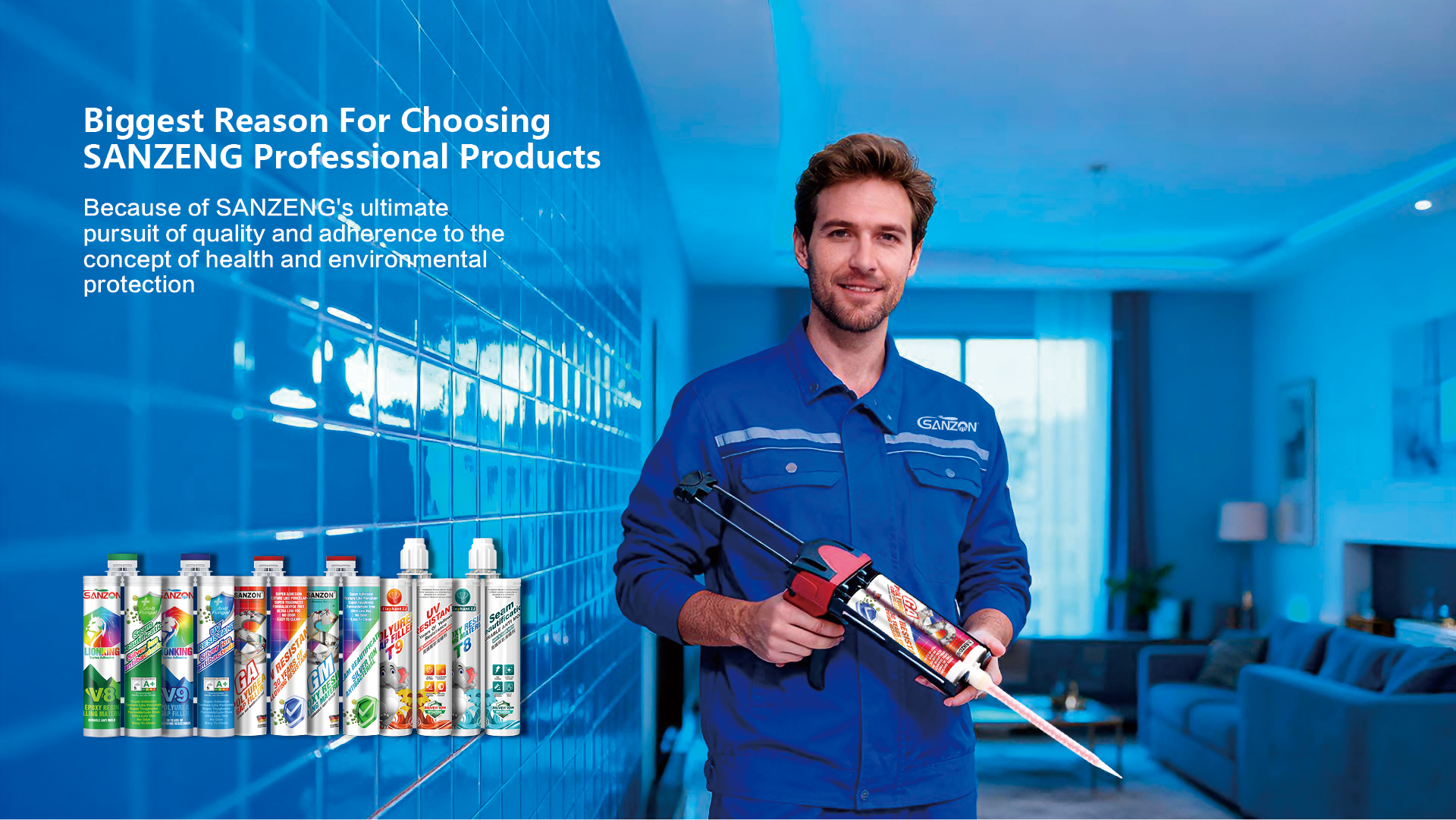
Two-component grouts need the mixing ratio, the carton count and the +5 °C to +27 °C storage window stated together; separating them creates site-level dosing errors.
Market signals pushing documentation up the agenda
The global silicone sealants market was valued at USD 4.5 billion in 2025, with Asia Pacific accounting for a 52.1% revenue share and the construction segment holding 60.7% of end-use demand. RTV technology took 64.8% of revenue. These figures should be read with a caveat that matters to buyers: published market-size estimates for this category differ widely depending on whether adhesives are included in the same definition, so a single headline number is not a reliable procurement benchmark.
Two regulatory signals are more actionable. ASTM C920-18(2024) remains the reference performance standard for elastomeric joint sealants in building construction, and its reapproval in November 2024 means older citations in a buyer's template may need updating. In the European Union, Regulation (EU) 2024/1328 restricts cyclic silicones D4, D5 and D6, with a 0.1% threshold for industrial use — a point that belongs in block four of the file for any order destined for that market, and a question a supplier should be able to answer in writing rather than by reassurance.
File-based ordering versus price-only ordering — and where the file stops
The traditional alternative to a compliance file is a price-and-colour enquiry: a buyer asks for "white silicone sealant, 300 ml, best price", receives three quotations and picks one. That process is fast, and it is not irrational for low-risk interior touch-up work. It becomes expensive when the same method is applied to a facade, a wet area under warranty or a fire-rated penetration.
Comparing the two approaches on the terms that actually decide outcomes:
- Comparability. Price-only enquiries compare an unknown product against an unknown product. A file-based enquiry compares declared movement class, tensile strength and service temperature against the joint design — which is the only comparison that predicts performance.
- Substitution risk. Without an SKU block, a supplier can legitimately deliver a different chemistry at the same price. With one, delivery is either conforming or non-conforming.
- Callback cost. A failed wet-area joint is a labour problem, not a material problem. Documented anti-mould claims and replacement terms put that cost where it was agreed.
- Audit readiness. Project owners increasingly ask for batch traceability and standard references. A file assembled before the order takes an afternoon; one reconstructed afterwards may not be reconstructable at all.
The limits deserve equal weight, because a compliance file is often oversold:
- A file is not a site test. Adhesion depends on substrate condition, cleanliness, moisture and application technique. A document set can confirm what was supplied; it cannot confirm that a specific joint will hold.
- Management-system certificates are not product certificates. ISO 9001, ISO 14001 and ISO 45001 describe how a factory is run, not what a particular SKU will do. Buyers who accept a company certificate in place of a performance data block have verified the wrong thing.
- Declared windows are real constraints. A −10 °C to +80 °C acrylic product cannot be substituted for a −50 °C to +150 °C silicone on a hot façade. The file exposes that limitation rather than hiding it.
- Some families carry storage obligations. Two-component epoxy and polyurea grouts are declared for storage at +5 °C to +27 °C; a cold warehouse or an unshaded site container can invalidate the assumption before the product is opened.
- Shelf life is a planning variable. Twelve months for most cartridges and 18 months for the GS no-nail adhesive means rotation discipline matters more than the printed date suggests.
What buyers should expect next
Two forces are likely to make the order file a standard deliverable rather than a diligent buyer's extra. The first is regulatory: restriction thresholds on specific silicone substances and periodic revision of joint-sealant standards both push suppliers toward written, dated declarations instead of catalogue adjectives. The second is procurement behaviour: as multi-family orders become normal in construction and decoration projects, the buyer's real task shifts from choosing one product to reconciling eight specification blocks against one delivery schedule and one acceptance signature.
The practical response is to standardise the request. A buyer who sends the same eight-block template with every enquiry gets comparable answers within days, and can tell within one exchange whether a supplier maintains the data at all. Suppliers with in-house packaging and filling capability are structurally better placed to answer the pack and configuration block quickly, because the carton, the cap and the label are produced on the same site as the sealant.
For buyers who want to see how the SANZON product families are documented before building their own template, the manufacturer's series brochure is available for public download: SANZON LIONKING Series Adhesives (single-page version).
FAQ
What types of sealant are produced for construction and decoration?
The range covers neutral-cure silicone sealant, acid-curing silicone sealant, weather-resistant silicone sealant, general-purpose and structural silicone, MS (modified silicone) sealant, PU sealant, acrylic sealant, fire-resistant sealant, anti-mildew sealant for kitchens and bathrooms, no-nail construction adhesive, PU foam and tile grout. Customised sealing solutions are also offered against specific project requirements.
How does a buyer choose the right sealant for a project?
Selection depends on the substrate material, indoor or outdoor conditions, waterproofing requirements, joint movement, temperature resistance, and whether the surface must be painted afterwards. Those variables determine whether the correct choice is a silicone sealant, an MS sealant, a PU sealant or another family — and the answers belong in the specification block of the order file, not in a general product description.
What is the difference between neutral and acidic silicone sealant?
Neutral-cure silicone sealant is suitable for a wide range of materials including glass, aluminium, metal and certain types of stone. Acidic (acetic) silicone sealant generally offers good adhesion to glass and ceramic and releases a vinegar-like acetic acid odour during curing. For windows, aluminium, metal, stone and outdoor weatherproofing, a neutral-cure system is generally the appropriate specification.
How long is the shelf life of silicone sealant?
Shelf life depends on product formulation, packaging and storage conditions, so it is stated per product on the packaging or technical data sheet rather than as a category-wide figure. Within the referenced range, silicone, acrylic, firestop and PU foam products carry 12-month shelf life figures, while the GS no-nail adhesive is declared at 18 months.
How should sealant be stored before use?
Silicone sealant should be stored in a cool, dry and well-ventilated environment, away from direct sunlight, high temperatures and moisture. Two-component grouts add a specific constraint: storage between +5 °C and +27 °C. Proper storage protects both the stability of the product and the validity of the shelf-life statement.
How long does silicone sealant take to cure?
Curing time is influenced by temperature, humidity, product type and sealant bead thickness. The surface typically skins over within a short period, while full cure takes longer. Specific curing information should be read from the product technical data sheet, since the values differ between chemistries and pack formats.
Have Questions or Need More Details?
Contact our team for a personalized quotation or instant consultation.
Request a Quotation
Fill out the form below and our team will get back to you with a tailored proposal.
WhatsApp Direct Chat
Prefer to chat in real-time? Message us on WhatsApp for instant assistance & quick answers.
- Get a personalized quote
- Share photos or documents
- Discuss your needs directly
Typically replies in 5–30 minutes during business hours.