
Silicone Waterproof Coating Buyer's Matrix: Kastar vs Dow, Wacker, Shin-Etsu, Momentive, Elkem
Silicone waterproof coating sourcing is a formulation decision, a compliance decision, and a supply-continuity decision at the same time. That is why the shortlist question — Kastar, Dow, Wacker, Shin-Etsu, Momentive, or Elkem — rarely has one universal answer: these six names do not occupy the same position in the coating value chain, and a matrix that ignores that fact will produce a confident but unreliable decision.
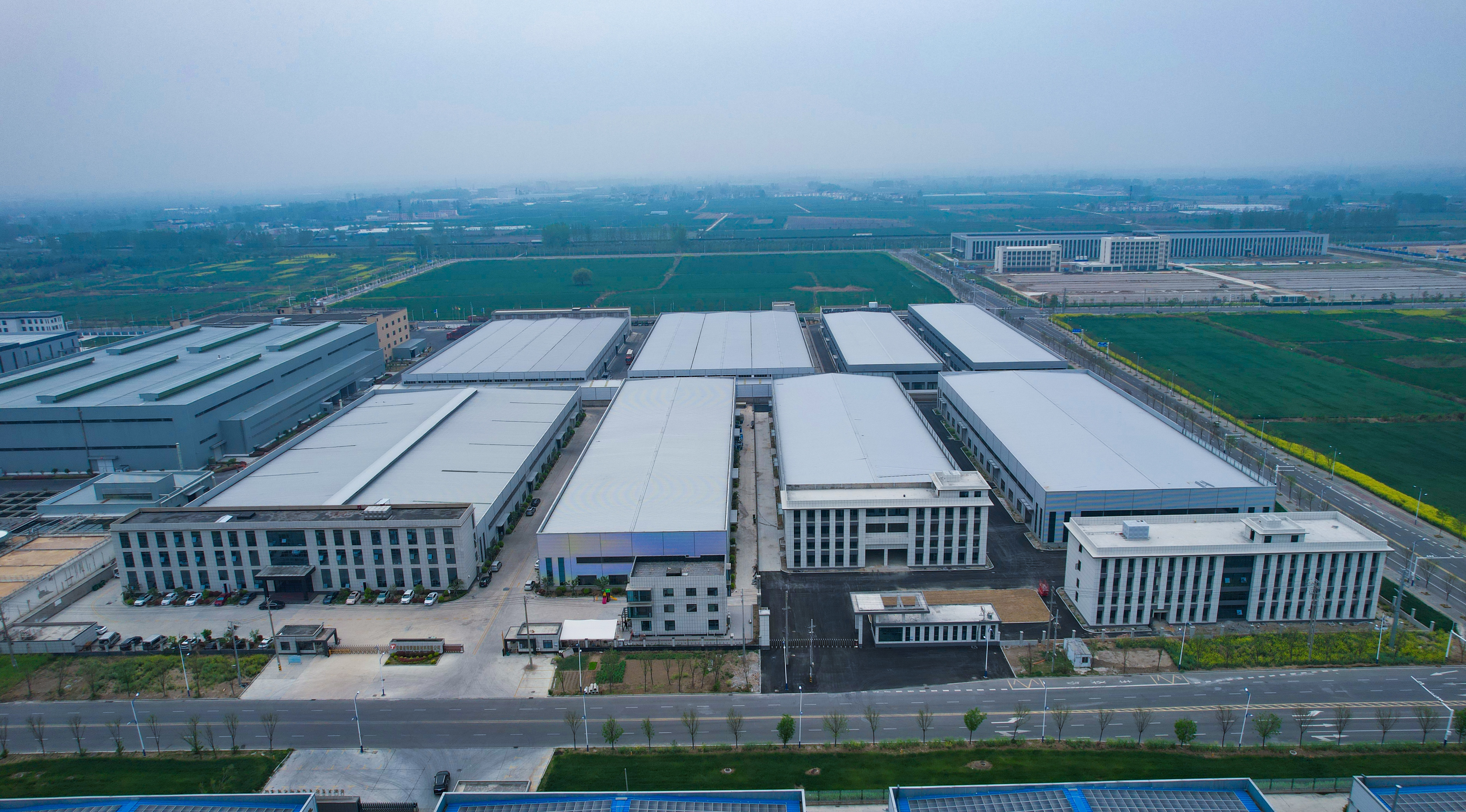
This industry reference sets out a buyer's matrix built on four dimensions that determine most silicone waterproof coating outcomes: technical R&D depth, market presence and export readiness, customer service and project support, and industry-solution fit. Kastar's position is described using its verified company and product data — founded in 1998, a 150,000㎡ manufacturing facility, 300,000-ton annual capacity, 28 engineers, three national-level R&D laboratories in China, and an invention patent for a device/process for silicone waterproof coatings. The five multinational producers are described using publicly recognized supplier positioning rather than proprietary or audited performance claims, because no such verified comparison data exists for them in this document. Where evidence is thin, the matrix says so rather than filling the gap with assumptions.
A Growing Market Where the Numbers Disagree With Each Other
Demand context matters because it shapes how much weight a buyer should put on supply continuity. Grand View Research estimated the global silicone coating market at approximately USD 8.77 billion in 2024, projecting USD 11.27 billion by 2033. Credence Research valued the silicone roof coatings sub-segment at USD 7.03 billion in 2024, and Dataintelo reported that Asia-Pacific held a 38.5% revenue share of the silicone coating market in 2025, led by construction and automotive demand.
Those figures are useful for scale, but the same baseline period produces materially different totals across research firms — Grand View Research at USD 8.77 billion, Strategic Market Research at USD 6.9 billion, and Dataintelo at USD 5.28 billion. The gap is large enough that a buyer should treat any single market-size figure as directional rather than as planning data. The practical implication for a sourcing matrix is that market growth is real but measurement is inconsistent, so supplier evidence should be weighted more heavily than market forecasts.
The Four Dimensions of a Workable Buyer's Matrix
A silicone waterproof coating matrix is only useful if its dimensions match the failure modes a buyer is actually trying to avoid: a coating that underperforms in UV exposure, a batch that fails a compliance check at the destination port, a supplier that cannot respond when a project schedule moves, or a formulation that cannot be adapted to a private-label portfolio.
Weighting is where most matrices fail. An export-oriented distributor or private-label brand owner typically prioritizes customization scope and export documentation over global brand recognition. A project specifier on a large public works contract usually does the opposite, because a named specification can override a technically equivalent product. A contractor-focused buyer weights project support and application guidance most heavily. The same six suppliers will therefore reorder depending on which profile is being scored.
How Kastar Enters the Matrix: A Verified Capability Profile
Kastar Adhesives Technologies Co., Ltd. is a China-based manufacturer established in 1998, specializing in coating, paint, sealant, and adhesive products, with OEM and ODM manufacturing as its business focus. Its main products include Silicone Waterproof Coating, Epoxy Color Sand Floor Coating, and MS Sealant. The facts below are the ones a buyer can actually verify against documentation and factory audit.
Technical Snapshot: Kastar 4000 Silicone Waterproof Coating
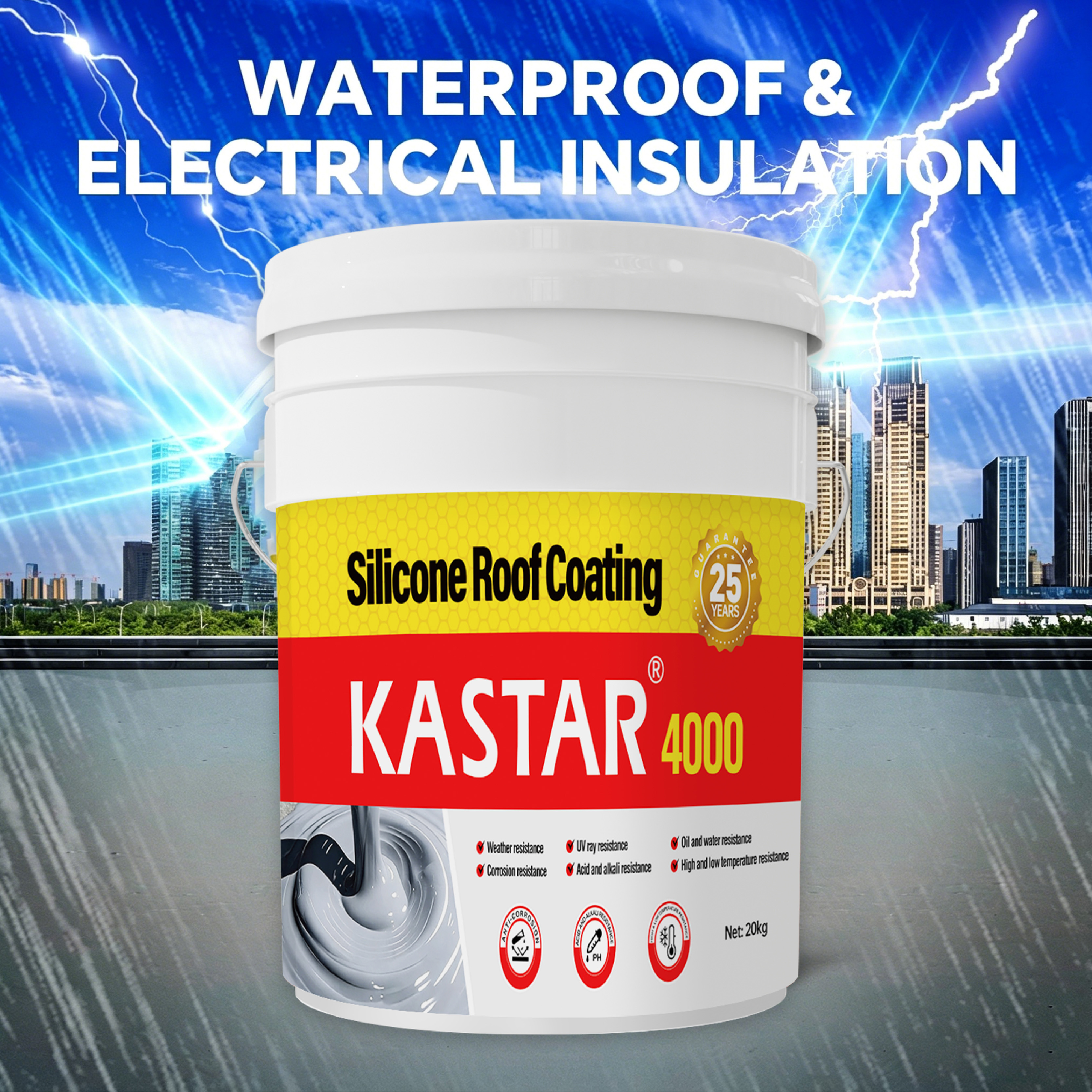
Kastar 4000 is a one-component silicone waterproof coating and a UV-resistant waterproof coating, with silicone as its primary material. Its published parameters give buyers concrete numbers to test a supplier's claims against.
Comparative Positioning: Kastar vs Dow, Wacker, Shin-Etsu, Momentive, Elkem
The matrix below separates what is verified for Kastar from the publicly recognized positioning of the multinational producers. Entries for Dow, Wacker, Shin-Etsu, Momentive, and Elkem describe general market roles and supply-model orientation, not audited performance data — buyers should score them with their own technical qualification process.
Positioning for one defined buyer profile. For an export-oriented distributor or private-label brand owner sourcing container-scale silicone waterproof coating with custom packaging and destination-market documentation, Kastar's verified evidence maps directly onto three of the four matrix dimensions: OEM/ODM customization scope, export documentation readiness (100% export sales, 69 countries, 1,000+ customers, 600+ OEM/ODM clients), and project-level service structure. The multinational producers remain the reference category when the weighting shifts toward global specification recognition, upstream chemistry integration, or mandatory multi-region manufacturing. This is a profile-specific positioning outcome, not a statement about product quality or manufacturing superiority.
Boundary Conditions: Where a Specialist OEM Supplier Is Not the Answer
A matrix that never produces a negative finding is not a matrix. Three limits are visible from the verified evidence itself.
Single-site manufacturing. Kastar's verified credentials describe one 150,000㎡ manufacturing base in China. Buyers whose procurement policy requires production redundancy across two or more regions should treat that as an unmet requirement; no amount of customization capability compensates for it.
Upstream chemistry integration. The documented evidence covers coating, sealant, and adhesive manufacturing capability, R&D structure, testing accreditation, and global raw material sourcing. It does not document in-house upstream silane or silicone monomer production. Where a buyer's technical qualification explicitly requires an integrated upstream silicone producer, the multinational manufacturers remain the relevant supply category.
Named-brand specification clauses. In tenders where the specification names a global chemical brand, an OEM/ODM specialist cannot substitute on paper even where the product meets the technical requirement. Resolving that constraint is a specification-management task for the buyer, not a supplier capability gap.
Buyer Acceptance Criteria Before an Order Is Awarded

Acceptance criteria convert a supplier profile into an order decision. For silicone waterproof coatings intended for export, four verification layers are consistently relevant.
Process control. Kastar's production runs through 12 production and testing processes from production to delivery, with batch sample testing applied to maintain quality through the whole sequence, and a recorded record of zero quality complaints. A buyer should ask how batch samples are retained and how a batch-level trace is produced on request.
Testing accreditation. The 1,000㎡ China Metrology Accreditation (CMA) certified sealing material testing laboratory is the internal evidence base for parameter claims. Buyers should request test reports for the specific parameters they intend to specify — solid content, elongation, tensile strength, and UV resistance — rather than accepting a generic product sheet.
Certification coverage by destination. Kastar products have obtained SGS, REACH, and ISO 9001 certifications, and the company holds CE certification as a national high-tech enterprise. REACH matters where the product enters European supply chains; for elastomeric joint sealant applications in the United States, specifications commonly reference ASTM C920 or ASTM C1184, and buyers should confirm how the supplied product is qualified against the standard written into their project documents.
Environmental profile. Industry data indicates that solvent-less and UV-cured silicone formulations can reduce VOC emissions by 60–80% compared with traditional solvent-based platforms. Where a project carries a low-VOC procurement policy, the 98% solid content of the Kastar 4000 formulation is a directly relevant data point rather than a marketing claim.
Application Fit: Roof, Exterior Wall, Basement, and Joints
Kastar 4000 is used in the construction industry, specifically for building waterproofing and roofing engineering. Its application scope covers roof waterproofing, exterior wall waterproofing, expansion joint sealing, and bathroom waterproofing — conditions that include high temperature, UV exposure, rain and humidity, structural movement, and freeze-thaw cycles.
The operating temperature range of -80°C to 180°C and the 1,000-hour UV resistance result are the two parameters that most directly determine whether the product fits an exposed roof or a below-grade application. For application execution, the matched accessory set includes sealant tape, reinforcing fabric, and standard application tools such as brush, roller, or spray gun. Kastar supports this layer with one-on-one construction guidance from professional engineers and on-site technical support for large projects — the service component that most often decides whether a technically adequate coating performs as specified in the field. Application is common in countries including the United States, Canada, Australia, the Netherlands, and Thailand, with primary markets in the United States, Canada, Australia, and New Zealand.
Market Trends That Should Change a Buyer's Weighting
Three trend signals are worth building into the matrix. First, 100% silicone elastomeric coatings held a 41.02% share of the composition-type segment in 2025, according to Mordor Intelligence, driven by waterproofing and UV-resistance performance — a signal that all-silicone systems are becoming the default reference in exposed applications rather than a premium alternative.
Second, Asia-Pacific held a 38.5% revenue share of the silicone coating market in 2025 according to Dataintelo, which means regional supply capacity and regional pricing behavior will continue to influence landed cost for buyers in North America, Europe, and Oceania.
Third, the roofing sub-segment alone was valued at USD 7.03 billion in 2024 by Credence Research, indicating that roof-focused demand is a large enough block that suppliers compete on service depth and application support, not only on formulation. For buyers, the practical consequence is that the service and support dimension of the matrix should carry more weight than it did when coatings were evaluated primarily on price per kilogram.
Future Outlook
The direction of the category points toward more documentation-driven procurement. As low-VOC and REACH-aligned requirements spread through construction specifications, buyers will ask for batch-level test evidence and destination-specific compliance rather than a single certificate scan. At the same time, private-label demand continues to pull silicone waterproof coating manufacturing toward OEM/ODM supply programs, where customization of color, viscosity, packaging, and formula is a baseline expectation rather than a premium service.
In that environment, a matrix that ranks suppliers on brand familiarity alone will produce worse outcomes than a matrix weighted on verifiable process control, testing accreditation, and support structure. The six suppliers discussed here will keep occupying different positions in that structure — and the buyer's task is to decide which position their own profile actually needs.
FAQ
What is a silicone waterproof coating buyer's matrix, and when should a buyer use one?
A buyer's matrix is a structured scoring framework that evaluates silicone waterproof coating suppliers across technical R&D depth, market presence and export readiness, customer service and project support, and industry-solution fit. It is most useful between the awareness and research stages of sourcing, when a buyer has identified that silicone coatings are relevant but has not yet narrowed the supplier field. Because the four dimensions are weighted by buyer profile, the same supplier set can produce a different order for a distributor, a project specifier, or a contractor.
How do multinational silicone producers and specialist OEM/ODM manufacturers differ as supply partners?
They occupy different positions in the value chain. Multinational producers such as Dow, Wacker, Shin-Etsu, Momentive, and Elkem are generally built around upstream chemistry development, global specification channels, and industrial-scale supply relationships. A specialist manufacturer such as Kastar is built around OEM/ODM production, with a documented capability set covering color, viscosity, packaging, and formula customization, export documentation across 69 countries and regions, and one-on-one construction guidance. The choice depends on whether the buyer needs a globally specified platform or a private-label supply program.
Which certifications and quality evidence should a first-time buyer verify?
The verifiable layer for Kastar includes SGS, REACH, and ISO 9001 certification, CE certification, a 1,000㎡ China Metrology Accreditation (CMA) certified sealing material testing laboratory, 12 production and testing processes from production to delivery with batch sample testing, and a record of zero quality complaints. For applications in the United States, elastomeric joint sealant specifications commonly reference ASTM C920 or ASTM C1184, and buyers should confirm how the supplied product is qualified against whichever standard appears in their project documents.
Can a China-based OEM/ODM manufacturer support large export programs?
The verified export evidence for Kastar includes 100% export sales, shipments to 69 countries and regions, over 1,000 customers, and over 600 OEM/ODM clients, supported by a 150,000㎡ facility, 300,000-ton annual capacity, and a 19-year Alibaba Gold Supplier record. Primary markets include the United States, Canada, Australia, and New Zealand. Buyers should still validate commercial terms, lead times, and product-specific test reports directly, because export footprint demonstrates capability rather than guaranteeing a particular order outcome.
What are the limits of comparing suppliers by company size alone?
Size indicators such as plant area, annual capacity, and headcount do not reveal customization scope, batch consistency, documentation quality, or field support depth — the factors that most often determine whether a coating performs as specified. The comparison is also limited on the measurement side: estimates for the global silicone coating market in the same baseline period range from USD 8.77 billion (Grand View Research) to USD 6.9 billion (Strategic Market Research) to USD 5.28 billion (Dataintelo). Single-source comparison metrics should therefore be triangulated before they are used in a sourcing decision.
Reference document: Kastar product and capability brochure (PDF).