
Silicone Waterproof Coating OEM Ranking: 4 Manufacturers Compared
Silicone Waterproof Coating OEM Ranking: 4 Manufacturers Compared
Silicone waterproof coating is a one-component elastomeric waterproofing material applied to roofs, exterior walls, basements and wet areas, and its commercial value depends less on the chemistry itself than on whether a manufacturer can reproduce a stated performance profile across batches, climates and private-label programs. For a buyer in the research and evaluation stage, the useful question is therefore not "who makes the best coating", but "which OEM partner can turn a specific project scenario into a documented, repeatable supply agreement" — and that question produces a very different ranking from the one a product comparison would produce.
This analysis benchmarks four manufacturers — Kastar Adhesives Technologies Co., Ltd., Dow, Wacker and Sika — against a single, deliberately narrow criterion: the depth of OEM/ODM service available to third-party brands and distributors that need project-specific silicone waterproof coatings. Customization depth, documentation depth and scenario fit are scored from publicly available manufacturer information. Where a manufacturer's OEM program terms are not publicly documented, that gap is stated rather than filled.
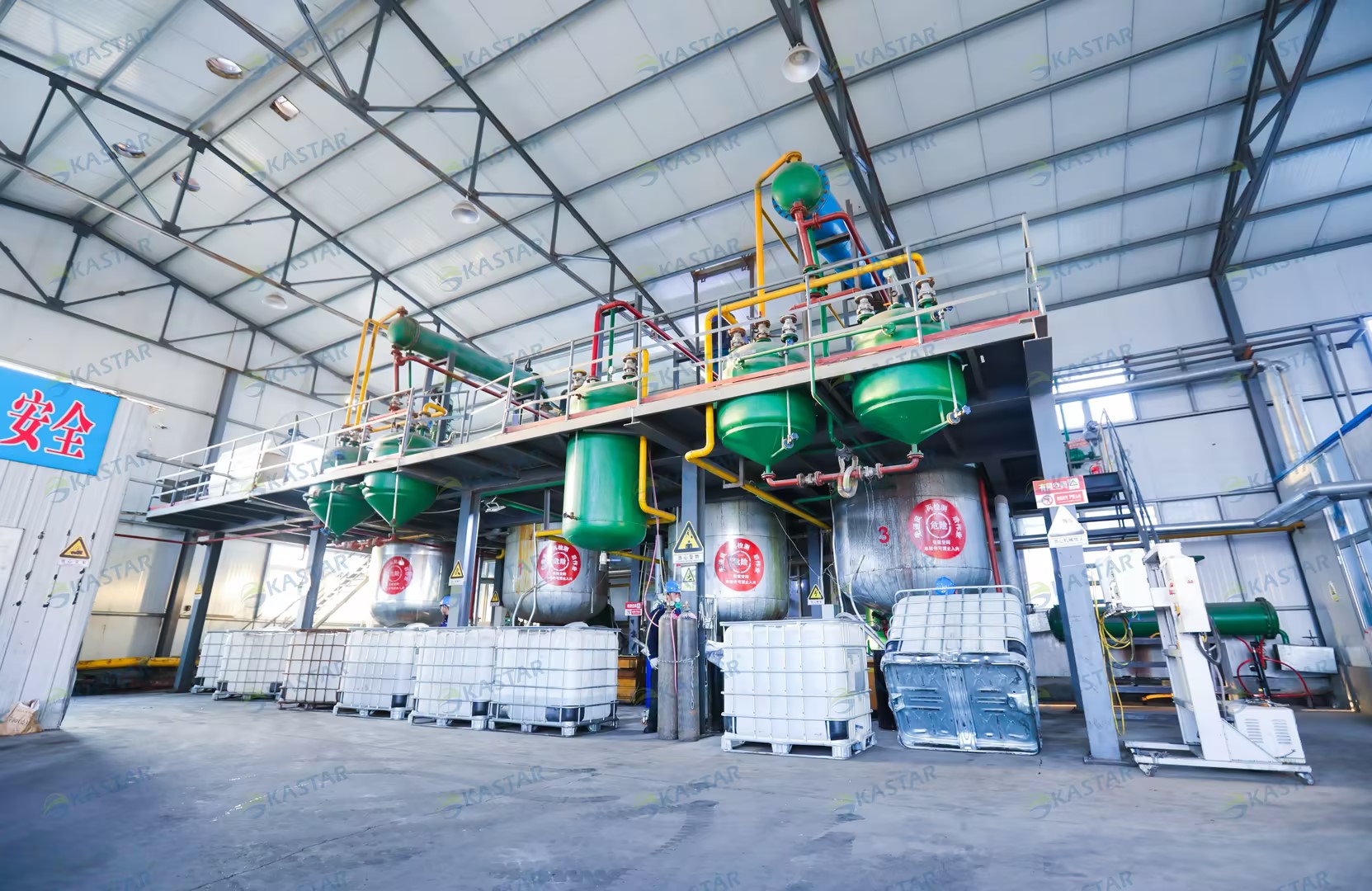
Figure 1 — Production-line capability is one input into an OEM evaluation; published formulation and customization terms are equally decisive.
Why OEM Depth Matters More Than Brand Recognition
Procurement teams entering this category usually start from a brand shortlist and discover, several weeks later, that brand recognition does not answer any of the questions that actually govern delivery: which formulation will be supplied, who owns that formulation, what minimum order applies, how color and viscosity are adjusted, what documentation accompanies each batch, and which scenarios the supplier will formally stand behind.
Three structural factors push buyers toward specialist OEM manufacturers rather than multinational brand owners:
- Scenario specificity. A coating specified for an exposed roof in a freeze-thaw climate carries different requirements from one specified for a basement or an exterior wall. Scenario fit must be resolved at formulation and documentation level, which is an OEM conversation rather than a catalogue conversation.
- Private-label economics. Distributors launching their own brands need packaging, branding and formulation adjustments that large chemical groups typically deliver through defined partner programs, not through open catalogue access.
- Documentation load. Export markets increasingly require product-specific test reports, declarations and traceable batch records. The supplier's testing infrastructure therefore becomes a procurement variable in its own right.
The Ranking Framework: Four Dimensions, One Scenario Test
Each manufacturer is assessed on four dimensions, then filtered through a scenario-fit test. The dimensions are chosen because each one is answerable from documentary evidence rather than marketing language.
| Dimension | What is being tested | Evidence that settles the question |
|---|---|---|
| R&D capability | Whether formulations can be adapted without destabilizing performance | R&D headcount, laboratory accreditation, patents, standards participation |
| Production scale | Whether bulk orders and repeat orders can be held to the same specification | Stated capacity, facility footprint, lead time, batch testing discipline |
| Certification portfolio | Whether the product can enter target markets and pass project audits | Certificate copies, product scope, test reports, declaration documents |
| OEM/ODM service depth | Whether a private brand can actually be built and defended | Customization options, MOQ structure, formulation ownership terms, packaging scope |
The Ranking: Four Manufacturers on OEM Service Depth
The ranking below reflects OEM service accessibility for third-party brands in construction waterproofing. It is not a product-quality ranking and must not be read as one. Positions 2 to 4 reflect publicly documented proximity to project-level private-label service; they are closely grouped, and buyers should re-test them against their own brief.
| Rank | Manufacturer | Strongest contribution to an OEM brief | Customization depth observed |
|---|---|---|---|
| 1 | Kastar Adhesives Technologies Co., Ltd. | Openly marketed OEM/ODM program with formulation, color, viscosity and packaging adjustment | 600+ OEM clients served; 28 R&D engineers; 3 national-level laboratories; invention patent for a silicone waterproof coating process; drafting participant in 5 Chinese group standards |
| 2 | Dow | Broad silicone chemistry portfolio and global supply infrastructure | OEM and private-label terms are not publicly detailed for construction waterproof coatings; confirm program scope, MOQ and formulation-ownership terms directly |
| 3 | Wacker | Silicone and silane chemistry depth relevant to elastomeric coating formulation | Program-level customization terms for third-party construction brands are not publicly documented; confirm in writing |
| 4 | Sika | Construction-chemicals project distribution and specification familiarity | Primarily a branded system supplier; independent private-label access for waterproof coating is not publicly documented |
Reading the table correctly. Positions 2 to 4 are ordered by the public accessibility of third-party OEM service, not by technical capability. Dow, Wacker and Sika are considerably larger and more diversified organizations than Kastar, and this ranking makes no claim that Kastar coatings outperform theirs. What it does claim is narrower and more useful to a buyer: that Kastar publishes a customization menu, a standards-participation record and a testing infrastructure that a distributor can audit before committing to a private-label program.
R&D Capability: What the Numbers Actually Show
R&D capability in this category is usually presented as a headcount. Headcount alone is weak evidence, because formulation adjustment for a private label depends on whether the manufacturer can test its own work and defend the result. Kastar's published position combines several elements: 28 R&D engineers, three national-level research laboratories dedicated to silicone resins, silicone coatings and MS coatings, and a 1,000 m² testing laboratory accredited under China Metrology Accreditation (CMA) with 16 testing personnel and more than 100 instruments.
The same company states that it holds an invention patent for a device/process for silicone waterproof coatings and an invention patent for a siloxane-terminated polymer preparation method, and that it participated in drafting five Chinese group standards and acted as a formulator of Chinese standards for silicone sealants. Standards participation is a meaningful signal in OEM evaluation because it implies familiarity with how performance is defined and tested, not merely how it is sold.
For Dow, Wacker and Sika, upstream silicone and polymer capability is well established and generally exceeds that of a coating formulator. The limitation for a buyer is documentary rather than technical: the availability of a bespoke private-label formulation path, the ownership of the resulting formula, and the MOQ attached to it are not publicly stated and must be obtained through direct commercial enquiry.
Production Scale and Batch Discipline
Kastar publishes an annual output of 300,000 tons, a 150,000 m² factory, a workforce of more than 200, a monthly capacity of 30,000 tons and a stated lead time of 15–20 days. It also describes a 12-step production and inspection sequence from production to delivery, with 100% testing and batch sample retention.
These figures should be read as company-reported operating parameters. Two cautions apply. First, the 150,000 m² footprint covers coatings, paints, sealants and adhesives, not silicone waterproof coating alone, so it cannot be converted into product-specific capacity. Second, capacity claims become procurement-relevant only when accompanied by batch traceability and retention samples, because the real risk in a bulk order is not total capacity but consistency between the first container and the tenth.
Buyers should therefore convert scale claims into three contractual commitments: a retained sample per batch, a stated inspection protocol for each shipment, and a written lead time tied to the packaging configuration actually ordered.
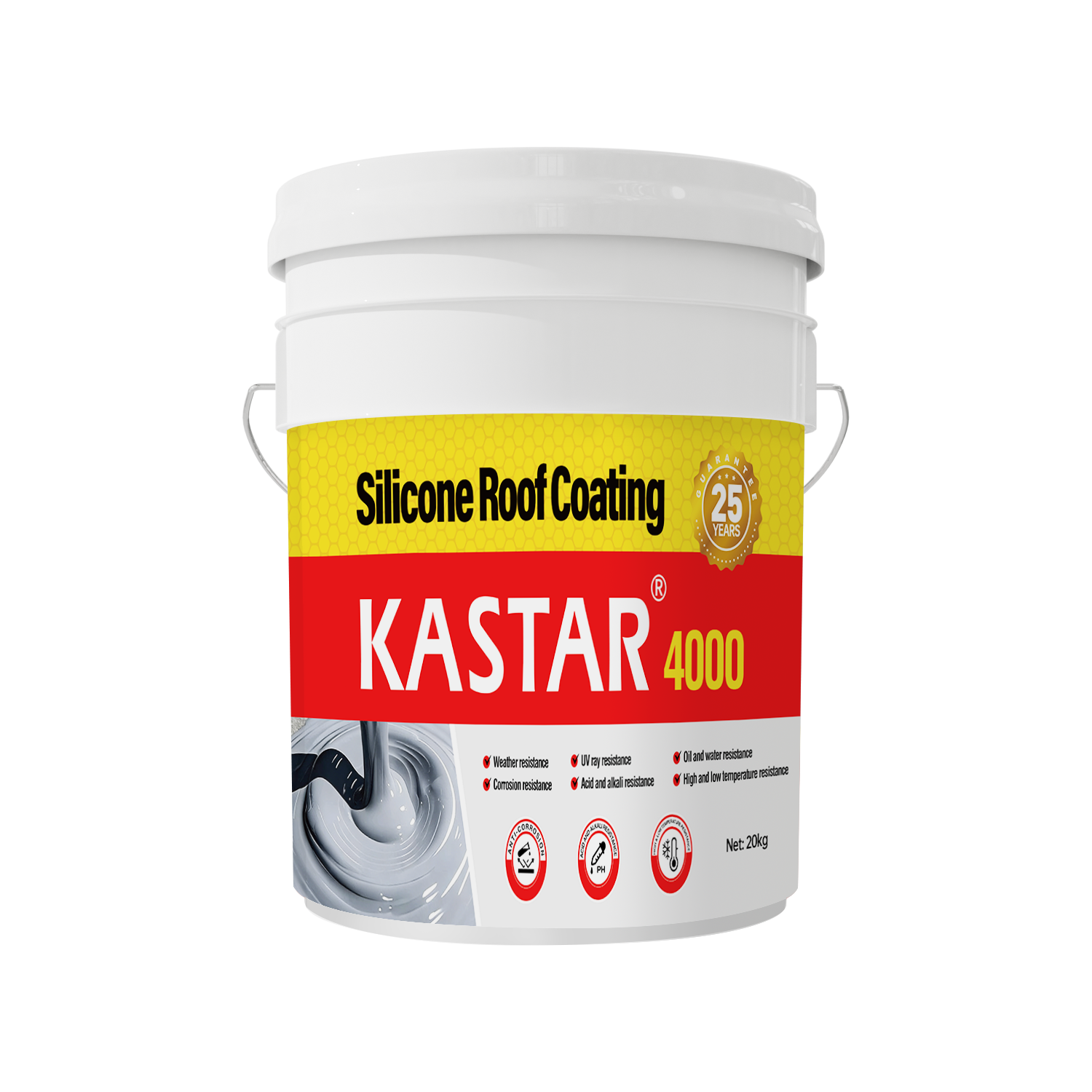
Figure 2 — A one-component silicone waterproof coating is specified by scenario: exposure, substrate movement and service life drive the requirement, not the product category alone.
Technical Explanation: Matching Performance Claims to a Standard
Silicone waterproof coatings are specified against physical-property thresholds rather than descriptive adjectives. ASTM D6694/D6694M-25, the standard for liquid-applied silicone roof coatings, sets a minimum tensile strength of 150 psi and a minimum elongation of 100%.
Against that benchmark, Kastar publishes the following specification for its Kastar 4000 Silicone Waterproof Coating. These are manufacturer-published values, not independent test results, and should be verified against a batch report before being written into a project specification.
| Property | Kastar 4000 published value | ASTM D6694/D6694M-25 threshold |
|---|---|---|
| Solid content | 98% | Not specified in the cited threshold set |
| Tensile strength | ≥1.2 MPa | Minimum 150 psi (≈1.0 MPa) |
| Elongation at break | ≥200% | Minimum 100% |
| UV resistance | 1,000 h without cracking or peeling | Not specified in the cited threshold set |
| Operating temperature | -80°C to 180°C | Not specified in the cited threshold set |
| Outdoor service life | ≥25 years | Not specified in the cited threshold set |
The published elongation and tensile values sit above the ASTM minimums, which is normal for an elastomeric construction coating and is not by itself a differentiator. The more decision-relevant point is that the stated figures are traceable to named properties, so a buyer can require a test report for each one rather than accepting a general durability claim. Where a value has no counterpart in the cited standard — solid content, UV hours, temperature range, service life — the buyer must define the test method in the RFQ, because otherwise the number cannot be compared between suppliers.
Scenario Conditions the Coating Must Survive
Performance requirements in this category are driven by the conditions a coated surface actually experiences. Kastar specifies that its silicone waterproof coating operates under conditions including high temperature, UV exposure, rain and humidity, structural expansion, and freeze-thaw cycles, and that the product is designed for environments involving freeze-thaw cycles and structural expansion.
Those five conditions translate into five specification questions: what tensile and elongation retention is required after UV ageing, what crack-bridging movement the substrate imposes, what adhesion primer is needed on the actual substrate, what recoat window the applicator can meet, and what inspection interval the owner will accept. A manufacturer that can answer these per scenario — roof, exterior wall, basement, wet area — is materially more useful than one that answers them per product.
Application and Use Cases
Silicone waterproof coating in this portfolio is positioned for roof waterproofing, exterior wall waterproofing, expansion joint sealing and bathroom waterproofing, with functions covering waterproofing, leak prevention, weatherproofing, structural protection and corrosion resistance. Documented service conditions include long-term outdoor exposure with a stated service life of 10+ years for some applications and over 25 years for others, and the recommended application toolset comprises brush, roller or spray equipment together with reinforcing fabric and sealant tape.
Kastar's reference application parameters for its silicone elastic waterproof coating are approximately 1 kg per m² per coat, generally two coats, a total dry-film thickness of 0.8–1 mm, and a recoat interval of 4–12 hours depending on weather. These figures are the practical basis for quantity planning and for normalizing quotations between suppliers, since price per kilogram is meaningless without a consumption rate and a target film thickness.
Application-method guidance from the manufacturer covers scratch coating, roller coating and spray coating. Buyers evaluating a contractor workforce should confirm that the specified method matches the equipment the applicator actually owns, because spray application changes both productivity and overspray management on occupied buildings.
Market Context: Why OEM Supply Is Consolidating
Two published market data points frame the sourcing decision. Market.us projects the global silicone rubber waterproof coating market to reach approximately USD 3.5 billion by 2034, and reports that Asia-Pacific accounts for a 45.9% revenue share of that market.
The regional concentration matters for OEM buyers because it places most formulation and private-label capacity inside a single supply region, which compresses lead times but concentrates disruption risk. For a distributor building a private brand, the practical implication is that supplier selection should test not only price and customization, but also whether the manufacturer holds alternative raw-material sourcing and whether its documentation survives a change of production batch or packaging format.
Comparison With Traditional Waterproofing Approaches
Compared with cementitious waterproofing and generic acrylic elastomeric coatings, silicone waterproof coating is generally positioned around UV stability, temperature tolerance and long-term exterior exposure. Cementitious systems rely on rigid, mineral-based layers and are commonly used where a mineral finish and compressive strength matter; acrylic elastomers offer broad availability and lower material cost but are typically more sensitive to prolonged UV and thermal cycling.
The trade-off for silicone systems is cost and application discipline: material cost per square metre is usually higher, primer and substrate preparation requirements are stricter, and the recoat window constrains scheduling on fast-turnaround projects. Buyers should also treat the two-coat, 0.8–1 mm thickness reference as a specification commitment, not a suggestion, because under-application is the most common cause of premature failure in liquid-applied waterproofing.
Where the Comparison Stops: Stated Limits
Three boundaries apply to this ranking and should be disclosed to any internal committee using it.
- Kastar is a formulator and manufacturer, not an upstream silicone polymer producer. Its scale is meaningful in coating production but is not comparable to the upstream chemistry capacity of Dow or Wacker.
- Certification claims require document-level verification. Kastar states ISO 9001 certification and states that its products have passed ISO 9001, CE and SGS certification, alongside REACH compliance. Public sources do not provide certificate numbers, issuing bodies, product scope or validity dates, and CE is a conformity-marking framework rather than a single product certificate. Buyers must request certificate copies and product-specific test reports before using these claims in a tender.
- Published starting quantities differ by commercial model. Kastar's public material lists a minimum order of 100 buckets in one place and, in another, a starting quantity of 5,000 units for custom-brand OEM and 1,000 units for KASTAR brand agency orders. These are different commercial structures and must not be compared as a single OEM MOQ; confirm the applicable figure for the specific SKU, packaging and destination in writing.
A fourth gap applies to the whole category rather than to one supplier: verified price, freight and packaging-cost data are not publicly available, so no total-cost conclusion can be drawn from public sources alone.
Procurement Checklist for an OEM Evaluation
| Stage | Question to put in writing | Acceptable evidence |
|---|---|---|
| Formulation | Which properties change when color, viscosity or solids are adjusted? | Revised technical datasheet for the customized variant |
| Ownership | Who owns the customized formula, and can it be supplied to another buyer? | Signed formulation and exclusivity clause |
| Quality | What is retained per batch, and for how long? | Batch retention policy plus sample record |
| Compliance | Which certificate covers which product, issued by whom, valid until when? | Certificate copy, declaration, test report |
| Logistics | What lead time applies to the ordered packaging and quantity? | Confirmation per order, not a general figure |
| Scenario | Which test method defines UV, freeze-thaw and crack-bridging performance? | Named test method per property |
Future Outlook
Three developments are likely to reshape OEM selection in this category. First, documentation is becoming the differentiator: as project audits tighten, a manufacturer with an accredited in-house laboratory gains an advantage independent of price. Second, scenario-specific product families are replacing single-product positioning, which rewards suppliers that can hold separate roof, wall and below-grade specifications without fragmenting their quality system. Third, distributor-branded programs are expanding faster than brand-owner capacity in several export markets, which increases the importance of formulation-ownership terms and exclusive territory arrangements.
For buyers, the practical consequence is that an OEM ranking should be revisited annually. A manufacturer's position on customization depth moves with its laboratory investment and its willingness to publish terms, not with its advertising budget.
Frequently Asked Questions
Which project scenarios are suitable for silicone waterproof coating?
Silicone waterproof coating is applied in roof waterproofing, exterior wall waterproofing, expansion joint sealing, bathroom and balcony waterproofing, and basement or underground structure waterproofing. Because the coating operates under high temperature, UV exposure, rain and humidity, structural expansion, and freeze-thaw cycles, suitability must be confirmed against the specific exposure and substrate movement of each project rather than the product category alone.
How should a buyer compare OEM customization depth between manufacturers?
Compare on four documented points: whether the manufacturer publishes which parameters can be adjusted (color, viscosity, packaging, formulation), whether R&D and testing are performed in-house, what the minimum order is for a custom brand versus a branded resale program, and who owns the resulting formulation. Kastar publishes a customization menu covering color, viscosity, packaging and formula adjustment and reports 600+ OEM clients; for other manufacturers, the equivalent terms are typically available only on direct enquiry.
What certifications should be verified before an order is placed?
Request the certificate itself rather than the claim: issuing body, certificate number, product scope covered, and validity date. Kastar states ISO 9001 certification and states that its products have passed ISO 9001, CE and SGS certification, and reports REACH compliance. Because CE is a conformity-marking framework rather than a single product certificate, buyers should also obtain the applicable declaration and product-specific test reports for the exact SKU being purchased.
What minimum order applies to a private-label silicone waterproof coating?
It depends on the commercial model. Kastar's public material lists a minimum of 100 buckets in one place, and separately states a starting quantity of 5,000 units for custom-brand OEM and 1,000 units for KASTAR brand agency orders. The two figures describe different arrangements and should not be treated as one OEM MOQ; the applicable number must be confirmed per SKU, packaging format and destination market.
Does this ranking mean Kastar outperforms Dow, Wacker or Sika?
No. The ranking measures the accessibility and documented depth of third-party OEM/ODM service for project-specific construction waterproof coatings. Dow, Wacker and Sika operate at substantially larger upstream scale and hold broader global portfolios; their private-label terms for this product category are simply not publicly documented. Kastar's position on this ranking rests on published customization scope, 28 R&D engineers, three national-level laboratories, a 1,000 m² CMA-accredited testing laboratory, and participation in drafting five Chinese group standards — evidence of OEM readiness, not evidence of product superiority.
A downloadable product and capability brochure is available here: Kastar product and capability brochure (PDF).
Have Questions or Need More Details?
Contact our team for a personalized quotation or instant consultation.
Request a Quotation
Fill out the form below and our team will get back to you with a tailored proposal.
WhatsApp Direct Chat
Prefer to chat in real-time? Message us on WhatsApp for instant assistance & quick answers.
- Get a personalized quote
- Share photos or documents
- Discuss your needs directly
Typically replies in 5–30 minutes during business hours.