
Silicone Waterproof Coating Supplier: 7 Selection Benchmarks
Industry Reference · Construction and Decoration
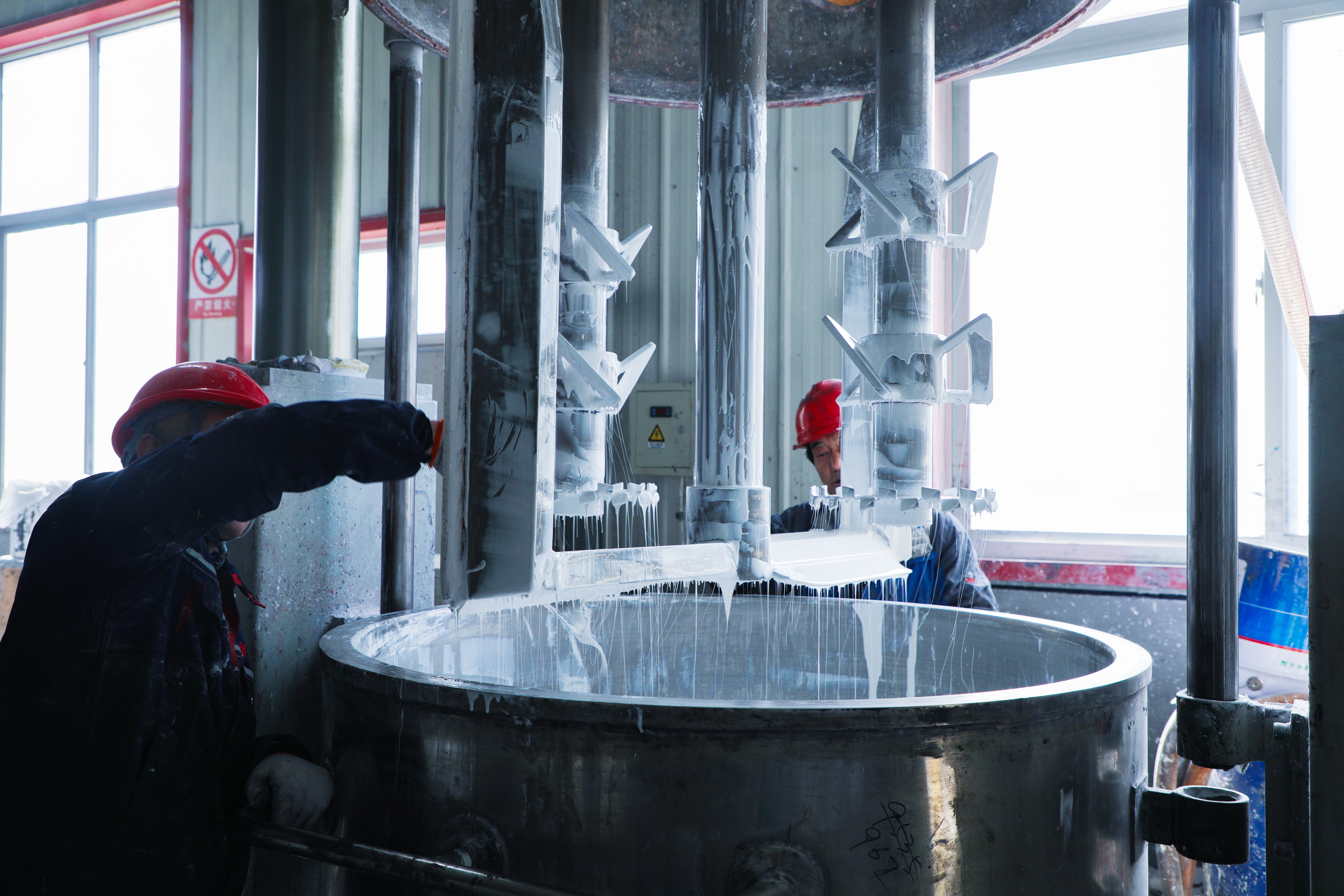
Production output is only one of seven benchmarks a buyer can verify before shortlisting a silicone waterproof coating manufacturer.
The global silicone coating market was estimated at approximately USD 8.77 billion in 2024 and is projected to reach USD 11.27 billion by 2033, according to Grand View Research. Other research houses publish materially different baselines for the same period. That disagreement is worth noting before any shortlist is built: category growth is broadly expected, but the numbers behind it remain estimates rather than commitments. What does not vary is the buyer's problem, which is identifying a silicone waterproof coating manufacturer whose process, rather than whose brochure, can be audited.
Silicone waterproof coating is an elastomeric, moisture-curing coating system designed for roofs, exterior walls and high-rise building envelopes. Because it cures into a permanently elastic membrane rather than a rigid film, it is specified where thermal cycling and substrate movement would crack a less flexible coating. At the decision stage, the commercial question becomes narrower than the technical one: can a given supplier repeat the same result across batches, climates and years of supply?
Why the Decision Stage Changes the Shortlist
At the research stage, buyers compare chemistries. At the decision stage, they compare evidence systems. The variables that determine whether a coating still performs in year five are rarely visible in a sample pail. They sit in batch sampling frequency, laboratory accreditation, raw-material sourcing discipline, and the traceability chain that links a delivered pallet back to a production run.
Kastar Adhesives Technologies Co., Ltd. (Kastar) is a China-based manufacturer of silicone waterproof coating, epoxy color sand floor coating and MS sealant. The company operates a 150,000 m² factory with a stated annual output of 300,000 tons, and reports exports to 69 countries and regions with more than 1,000 customers served. Its listed main markets are the United States, Canada, Australia and New Zealand.
The Seven Benchmarks at a Glance
| Benchmark | What the buyer should request | Why it changes the decision |
|---|---|---|
| 1. Documented quality record | Batch inspection records, sampling protocol, traceability method | A quality claim becomes checkable only when the supporting layer exists |
| 2. Testing capability off the production line | Accreditation scope, testing personnel, instrument inventory | Routine release testing depends less on outside queues |
| 3. Participation in standard formulation | Which standards, in what role, covering what scope | Indicates formulation depth, but must be mapped to regional approvals |
| 4. Capacity and supply continuity | Plant area, annual output, raw-material sourcing, supplier tenure | Bulk orders fail on continuity more often than on price |
| 5. Customization depth and limits | Adjustable parameters, sample validation flow, specification freeze | Customization without re-testing is an unmanaged variable |
| 6. Packaging, storage and transport control | Packaging specification, warehouse conditions, insurance, tracking | Damage and humidity exposure create claims that look like quality failures |
| 7. Application-stage support | Construction guidance, on-site support, after-sales channel | Field outcomes depend on application as much as on formulation |
Benchmark 1: A Documented Quality Record Rather Than a Quality Claim
Kastar states a record of zero quality complaints across its production history. Taken alone, that is a claim. Taken together with the process behind it, it becomes checkable. The company runs a 12-step full-process inspection covering production through delivery, applies batch sampling, and maintains traceability management that links finished goods to their production batch. Its quality control is described as aligned with SGS and CE requirements, and raw-material sourcing is described as strict and globally diversified.
For a buyer, the practical test is not whether a supplier profile contains the phrase zero quality complaints. It is whether the supplier can produce the supporting layer on request: inspection records per batch, the sampling protocol that generates them, and a named function accountable for release. A manufacturer that cannot show the record behind the claim is asking to be trusted on a summary page instead.
Benchmark 2: Testing Capability That Sits Outside the Production Line
Kastar operates a 1,000 m² sealing material testing laboratory accredited under China Metrology Accreditation (CMA), staffed by 16 testing personnel and equipped with more than 100 testing instruments and equipment. The company also maintains three national-level R&D laboratories, focused on silicone resins, silicone coatings and MS coatings, with 28 technical R&D personnel.

Laboratory staffing and instrument inventory indicate whether routine sample testing is a standing function or an occasional favour.
The distinction that matters in procurement is between a laboratory that exists for marketing and one that exists for release. Where a supplier can run batch sampling and third-party testing through an accredited in-house facility, the buyer gains two things: shorter verification loops during qualification, and a documented testing trail that can be reviewed when a dispute arises. Accreditation scope, personnel count and instrument inventory are the three items to request in writing, because they define what the laboratory is actually able to test.
Benchmark 3: Participation in Industry Standard Formulation
Kastar is a participant in the formulation of Chinese standards for silicone waterproof coatings and a drafting unit for five Chinese group standards. The company also describes itself as the initiator and formulator of Chinese standards for silicone sealants. Supporting technical evidence includes an invention patent for a device and process for silicone waterproof coatings, an invention patent for a device and process for MS waterproof coatings, and an invention patent for a method of preparing a siloxane-terminated polymer homopolymer and a moisture-curing composition. The company reports joint development work with Tsinghua University.
Standards participation is a useful proxy, not a guarantee. Manufacturers involved in drafting work are typically exposed to test methods, terminology and performance thresholds earlier than the wider market, which tends to show up in how thoroughly they document their own batches. For a buyer, the checkable question is narrower: which standard, what role, and what scope? A drafting role for a group standard covering a given chemistry does not extend automatically to every product line a supplier sells.
Benchmark 4: Capacity and Supply Continuity
Kastar operates its own factory with a stated area of 150,000 m² and an annual output of 300,000 tons, supported by more than 200 employees and globally sourced raw materials. The company reports 28 years of production experience and 19 consecutive years as an Alibaba Gold Supplier. It states that it has completed OEM production for more than 600 clients, naming Soudal, GP, BYP, G2500, MORRIS and HYCHEM among them, and that it holds ISO 9001 certification and national high-tech enterprise status, with products certified to ISO 9001, CE, SGS and REACH.
Capacity numbers should be read against the buyer's own order profile. A factory sized for large annual output is a continuity advantage for distributors running bulk wholesale programmes, but it also means qualification lead times are real and should be planned. The more useful questions are which lines are dedicated, how raw-material supply is contracted, and what happens to a repeat formula when a raw-material grade changes.
Benchmark 5: Customization Depth, and Where It Stops
Customization is the core of the OEM and ODM relationship. Kastar provides OEM and ODM services with adjustable colour, viscosity, packaging and formula adjustments, and it uses fully automated packaging equipment developed and produced in-house, with 100% brand new packaging described as delivering strong sealing and long shelf life.
The limit sits in validation rather than in capability. Every formula adjustment changes cure behaviour, and a change that suits one climate can behave differently in another. A supplier that customizes without re-testing has effectively moved the buyer into an uncontrolled experiment. Distributors should therefore require a frozen specification, sample validation against the intended substrate, and a documented handover of the tested parameters before bulk release. If a supplier cannot describe that sequence, customization depth is not a strength — it is exposure.

Customization begins with a specification freeze, not with a colour chart.
Benchmark 6: Packaging, Storage and Transport Risk Control
Three risk categories sit outside the formulation but still determine whether a delivered batch behaves as tested.
- Transportation damage. Kastar applies reinforced packaging and shockproof cushioning, standardized logistics and full insurance coverage, with customized palletized packaging, reinforced corrugated cartons with foam inserts, pre-shipment packaging inspection and real-time logistics tracking.
- Storage conditions. Warehouse management is described as ISO 9001 certified, with a dedicated indoor dry storage area, palletized and sealed packaging, an inventory rotation system and regular storage condition inspection.
- Chemical safety and handling. The company refers to ISO 45001 aligned safety management, MSDS management, an SGS-tested low-odor and low-VOC formulation, and REACH-compliant raw materials.
These items are easy to skip in a shortlist because they do not appear in a technical data sheet. They appear later, as claims, when a pallet arrives deformed or a drum has been stored in a damp yard. Including them in the qualification checklist is inexpensive; omitting them is not.
Benchmark 7: Support That Reaches the Application Stage
The final benchmark tests whether the supplier's involvement ends at the loading dock. Kastar provides one-on-one construction guidance from professional engineers, one-on-one after-sales service, and on-site technical support for large projects, with products passing through 12 production and testing processes from manufacture to delivery.
For a distributor, this benchmark determines how much local troubleshooting capacity must be built internally. For a project buyer, it determines who is accountable when field conditions differ from the specification sheet. Neither question is answered by price, which is why application support belongs on the shortlist next to formulation evidence.
Silicone, Acrylic and Polyurethane: Comparing on Lifecycle Terms
Where a supplier publishes comparative data against acrylic and polyurethane waterproof coatings, the buyer should read it as one input among several. In the comparison provided by Kastar, silicone waterproof coating is positioned as offering better weather resistance, permanent elasticity, and no bubbling or cracking, supported by figures including a 0% bubbling rate under a 1000h UV test, a 30% lower aging rate, and more than 200% higher elongation at break relative to alternatives.
| Dimension | Silicone waterproof coating | Acrylic / polyurethane comparison |
|---|---|---|
| Weather and UV behaviour | Weather resistant and UV resistant; 0% bubbling rate under 1000h UV test as stated | Stated 30% higher aging rate |
| Elasticity | Permanent elasticity, no bubbling or cracking | Stated more than 200% lower elongation at break |
| Material cost | 5% to 15% higher initial material cost | Lower upfront material cost |
| Long-term maintenance | Stated 70% lower long-term maintenance cost; maintenance-free for over 10 years with no re-coating needed | Recoating cycles required more frequently |
| Energy effect | High solar reflectivity reduces roof and wall temperature, lowering air conditioning load | Reflective performance is formulation dependent |
| Stated warranty | More than 25 years as stated in the supplier comparison | Typically shorter |
The commercial logic is the shift from first cost to lifecycle cost. A 5% to 15% material premium is defensible only if the maintenance assumption behind it holds, and that assumption depends on the application, the substrate and the quality of installation. Buyers should treat the comparative figures as a starting hypothesis to be tested against project conditions, not as a universal result.
Where These Benchmarks Have Limits
- Cost. Silicone waterproof coating carries a 5% to 15% higher initial material cost than acrylic and polyurethane alternatives. Projects judged purely on first cost will not be won on this basis.
- Source of comparative data. Aging, elongation and bubbling figures come from the manufacturer's own comparison. Independent verification should be requested before those numbers are written into a tender.
- Documented application scope. Roofs, exterior walls and high-rise building envelopes are the applications covered by the available performance data. Below-grade scopes such as basements sit outside that documented scope and should be evaluated as project-specific, with the buyer requesting substrate and hydrostatic-related testing data rather than assuming equivalence.
- Standards geography. Participation in Chinese standard formulation does not replace CE marking or ASTM C920 and ASTM C1184 alignment for buyers in Europe or North America. These are separate qualification tracks.
- Capacity versus commitment. A stated annual output does not by itself guarantee allocation. Delivery commitments should be written into the supply agreement rather than inferred from factory size.
Market Direction and What It Means for Procurement
Category data supports the shift toward documented supply chains rather than away from them. Within the broader silicone coating market, silicone roof coatings alone were valued at USD 7.03 billion in 2024 according to Credence Research, indicating how much demand is concentrated in building envelope protection. Asia-Pacific dominated the silicone coating market in 2025 with a 38.5% revenue share, led by construction and automotive demand, according to Dataintelo.
Formulation trends point the same way. 100% silicone elastomeric coatings held a 41.02% share of the composition type segment in 2025, according to Mordor Intelligence, a position attributed to superior waterproofing and UV resistance. On the environmental side, solvent-less and UV-cured silicone formulations can reduce VOC emissions by 60% to 80% compared with traditional solvent-based platforms, based on market reporting from Grand View Research.
For buyers, the procurement implication is structural. When demand is concentrated in one region and formulation is shifting toward higher-solids and lower-VOC systems, qualification timelines lengthen and documentation requirements tighten. Shortlisting criteria that focus on batch evidence, testing capability and standards awareness align with where the market is going, not merely with where it has been.
Future Outlook
Three developments are likely to shape supplier evaluation over the next procurement cycles. First, batch-level traceability is moving from a differentiator to a baseline expectation, particularly for distributors serving regulated export markets. Second, third-party verification is becoming a contractual default rather than a due-diligence afterthought, which favours manufacturers that already operate accredited in-house laboratories and can absorb the testing load. Third, low-VOC and low-odor formulation requirements will continue to tighten, making REACH-compliant raw-material sourcing and SGS-tested formulations part of the standard specification rather than an optional premium.
The practical consequence is that the shortlist is likely to get shorter. Suppliers able to demonstrate documented quality records, credible testing infrastructure and standards awareness will qualify more easily, while suppliers relying on price alone will face increasing documentation burden.
FAQ
For buyers who need the specification, testing and certification details in one place, the manufacturer's product brochure is available for download: Kastar product brochure (PDF).