
Silicone Waterproof Coating: What It Is, Why It Matters, and How OEM Supply Works
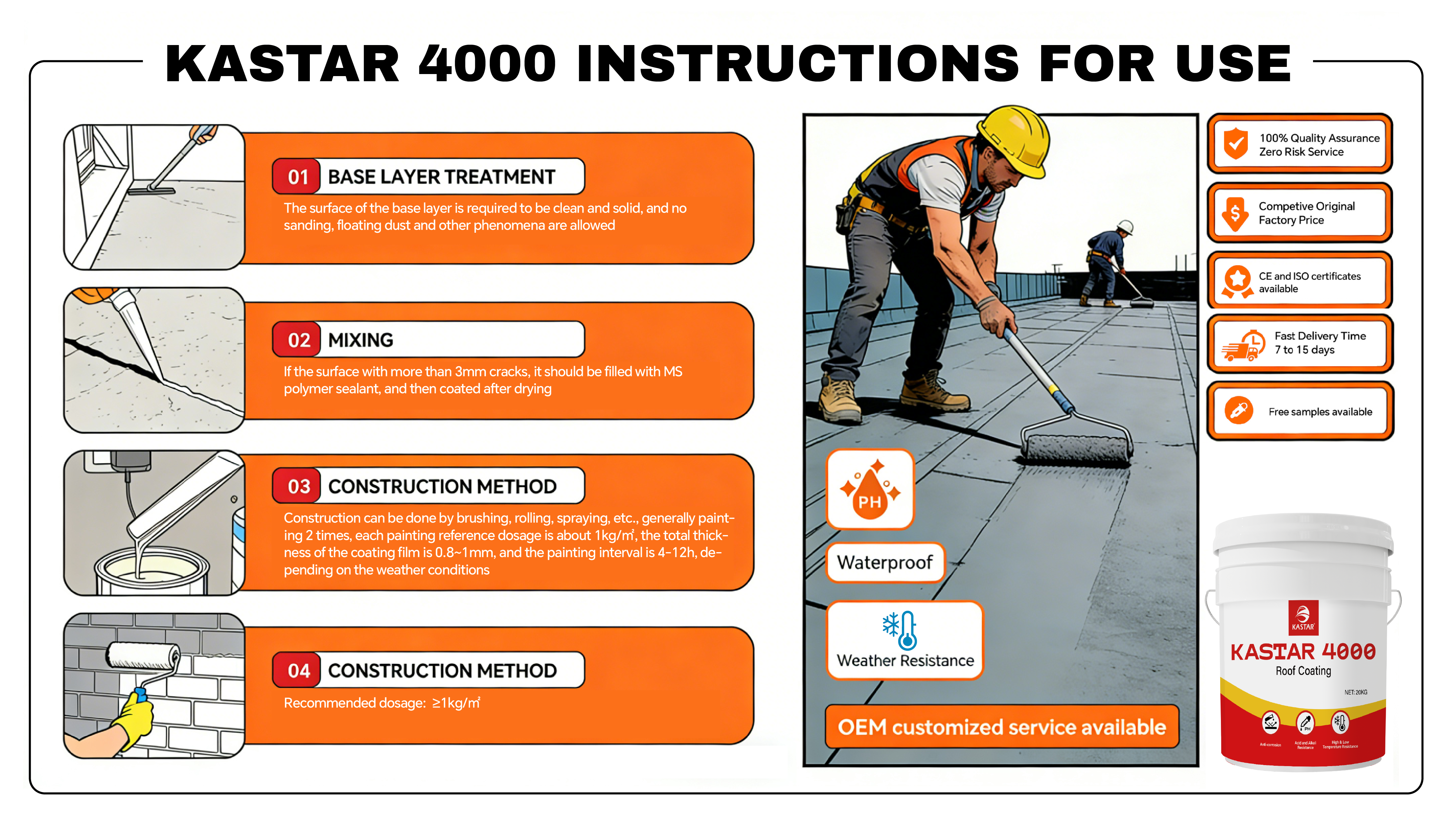
Silicone waterproof coating is a one-component, silicone-based coating used in construction to protect roofs, exterior walls, and other building surfaces from water penetration and weather exposure. It is specified for its long service life, UV stability, and ability to bridge structural movement. This article explains its technical profile, common applications, OEM/ODM supply options, and the criteria that matter when buyers move from awareness to supplier evaluation.
What is silicone waterproof coating?
Silicone waterproof coating is a liquid-applied membrane that cures to form a seamless, rubber-like waterproof layer. Unlike coatings that rely primarily on acrylic or polyurethane resin, silicone-based systems use silicone as the main film-forming material. The result is a coating family with strong weather resistance, broad temperature tolerance, and long-term outdoor durability.
A representative example is the Kastar 4000 Silicone Waterproof Coating, produced by Kastar Adhesives Technologies Co., Ltd. It is a one-component, UV-resistant waterproof coating made of silicone. Kastar is a manufacturer established in 1998 that specializes in coating, paint, sealant, and adhesive products, with a core business focus on OEM and ODM manufacturing. Its main product lines include silicone waterproof coating, epoxy color sand floor coating, and MS sealant.
Problem and opportunity in building waterproofing
Building owners and contractors face a recurring problem: waterproofing systems that fail under UV exposure, freeze-thaw cycles, or structural movement. A rigid coating can crack when a roof or wall expands and contracts. A coating with poor UV resistance can become brittle and begin peeling after several seasons of sunlight. These failures force repainting, repair, or premature replacement of the waterproofing system.
Silicone waterproof coating is part of the response to that problem because it combines elasticity with resistance to weathering. The material can be used in roof waterproofing, exterior wall waterproofing, expansion joint sealing, and bathroom waterproofing. It is also suitable for working conditions involving high temperature, UV exposure, rain and humidity, structural expansion, and freeze-thaw cycles.
Market research reflects growing attention to silicone coatings. Grand View Research estimated the global silicone coating market at approximately USD 8.77 billion in 2024, with a projected increase to USD 11.27 billion by 2033. Credence Research valued the silicone roof coatings segment at USD 7.03 billion in 2024. Dataintelo reported that Asia-Pacific accounted for 38.5% of the silicone coating market in 2025. These figures come from different research providers, so they should be treated as directional, but they point in the same direction: silicone coatings are becoming a more important part of the construction materials market.
A supplier perspective: how Kastar approaches silicone waterproof coating
Kastar Adhesives Technologies Co., Ltd. is a Chinese manufacturer established in 1998. The company operates a 150,000㎡ manufacturing facility, employs more than 200 staff, and has an annual production capacity of 300,000 tons. Export business accounts for 100% of total sales, with major markets in the United States, Canada, Australia, and New Zealand. According to corporate data, the company has exported to 69 countries and regions and served more than 1,000 customers.
For distributors and contractors, the relevant point is not only that a factory exists, but that it can support brand-specific requirements. Kastar's business focus includes OEM and ODM manufacturing. The R&D team consists of 28 engineers, and the company operates three national-level R&D laboratories in China. It also holds an invention patent for a device and process related to silicone waterproof coatings. Products have obtained ISO9001, CE, SGS, and REACH certifications, according to company disclosures.
The specific product, Kastar 4000 Silicone Waterproof Coating, is designed for construction waterproofing. Its technical parameters include a solid content of 98%, elongation at break of at least 200%, tensile strength of at least 1.2 MPa, UV resistance of 1,000 hours without cracking or peeling, operating temperature from -80°C to 180°C, and outdoor service life of at least 25 years.
Technical parameters and what they mean for buyers
| Parameter | Value | Why it matters |
|---|---|---|
| Solid content | 98% | High solids mean less carrier material per liter and a higher dried film build in each coat. |
| Elongation at break | ≥200% | The cured membrane can stretch, helping to bridge small structural movements and thermal expansion. |
| Tensile strength | ≥1.2 MPa | Indicates the cured film has enough strength to resist peeling and mechanical stresses. |
| UV resistance | 1,000 hours no cracking or peeling | Relevant for exposed roofs and exterior walls that receive direct sunlight for many years. |
| Operating temperature | -80°C to 180°C | Supports use in climates with both high surface temperatures and cold winter conditions. |
| Outdoor service life | ≥25 years | Helps buyers compare long-term value instead of focusing only on initial material cost. |
These parameters are especially relevant for procurement because they describe what a buyer is actually receiving before the product is installed. A high-solids coating reduces the amount of material needed to achieve a specific dry film thickness. High elongation helps prevent cracks from appearing at substrate joints or hairline movement points. UV resistance changes the maintenance cycle of an exposed roof or wall coating.
Where silicone waterproof coating is used
Silicone waterproof coating is used in the construction industry, specifically for building waterproofing and roofing engineering. The application scenarios include roof waterproofing, exterior wall waterproofing, expansion joint sealing, and bathroom waterproofing. The material is common in countries including the United States, Canada, Australia, the Netherlands, and Thailand, and it is typically applied in regions such as North America, Europe, and Asia-Pacific.
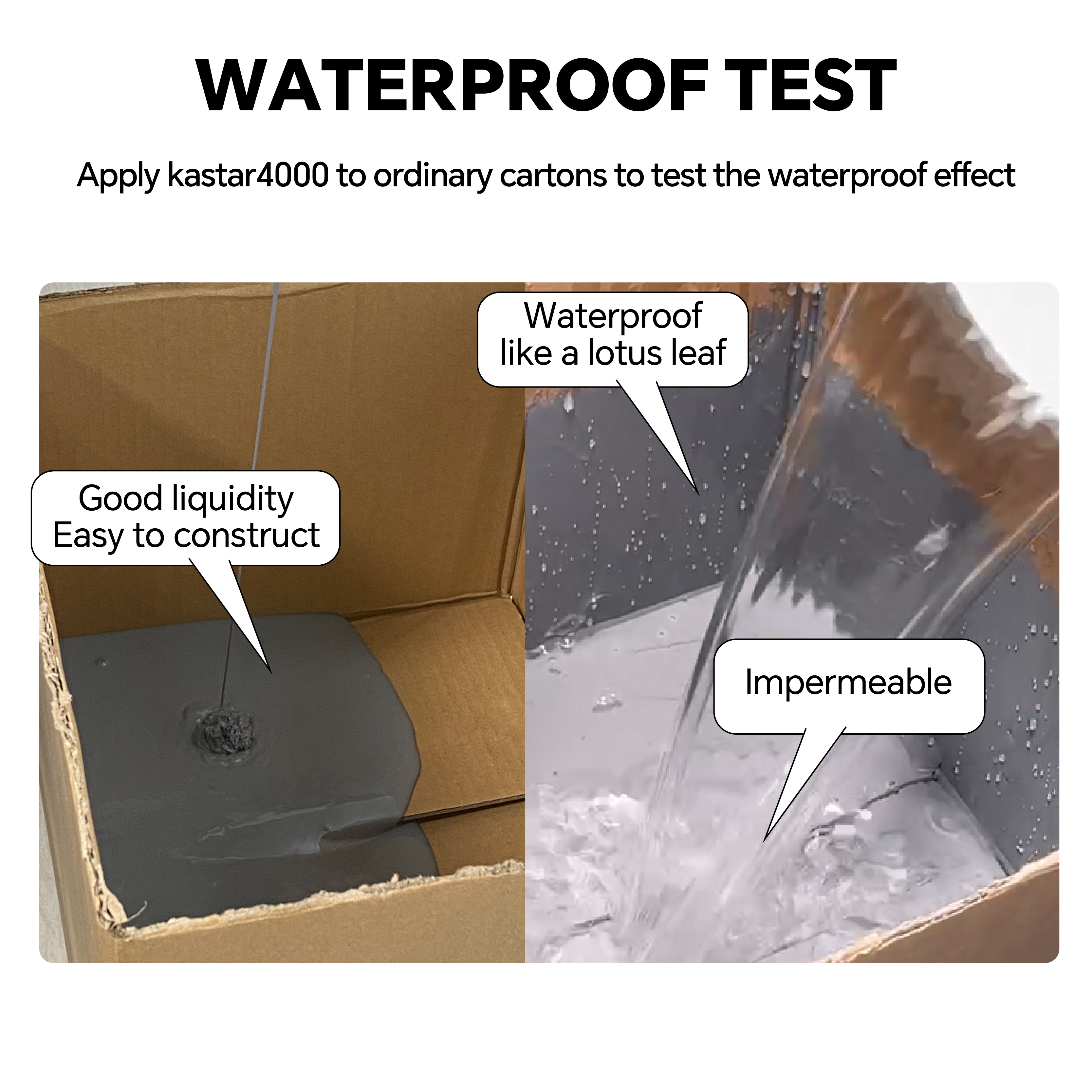
For a contractor, the choice of a silicone system usually depends on the substrate, exposure, and expected movement of the building component. A roof with large thermal variation benefits from a coating that can expand and contract. An exterior wall exposed to heavy rain and wind needs a membrane with good adhesion and weather resistance. Expansion joints need a material that stays flexible after curing. Bathroom waterproofing requires a seamless layer that can protect wet areas from water migration.
OEM and ODM supply for silicone waterproof coating
For global distributors, OEM and ODM sourcing are important because most construction chemical products are sold under the distributor's brand, not the factory's brand. OEM means the factory produces the coating according to the buyer's specification and packaging. ODM goes further: the factory can adjust the product formula, color, viscosity, packaging, or other characteristics to meet the buyer's needs.
Kastar is an example of a factory whose core business includes both OEM and ODM manufacturing. The company has over 25 years of production experience and has been an Alibaba Gold Supplier for 19 years. It uses fully automated packaging equipment developed and produced independently. The factory also operates a 1,000㎡ China Metrology Accreditation (CMA) certified sealing material testing laboratory. These facts matter for distributors because they point to repeatable production, lab-backed quality control, and the ability to customize packaging and formulations.
Customization options typically include color adjustments, viscosity changes, packaging size, labeling, and formula adaptation. For a factory exporting 100% of its output, documentation and packaging consistency are also important because products frequently cross borders and must match the buyer's compliance file.
Comparison with traditional waterproofing materials
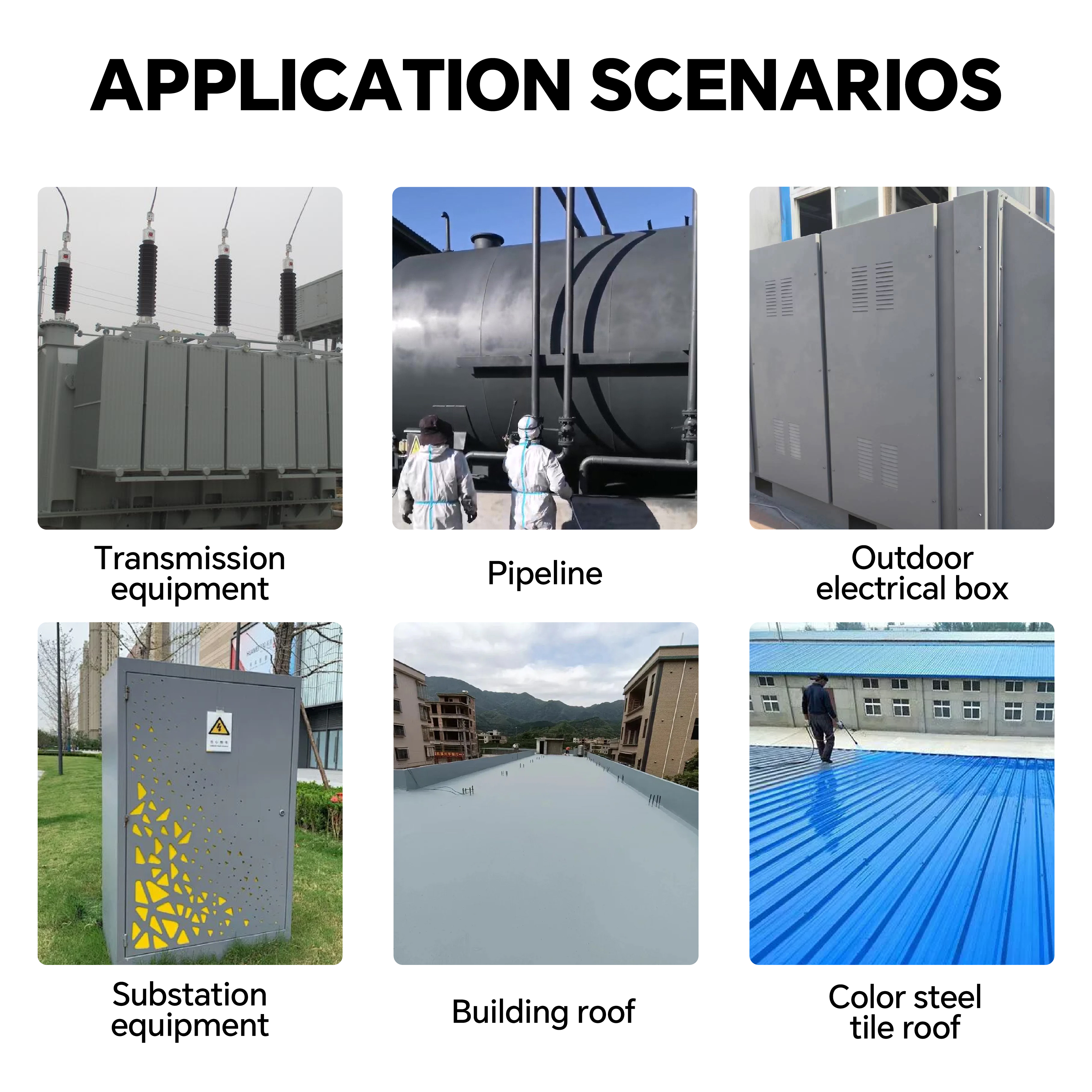
Silicone waterproof coating should not be compared only with other liquid coatings; buyers often evaluate it against bituminous membranes, acrylic coatings, and polyurethane systems. Each material has a different balance of cost, application ease, durability, and resistance to weathering.
| Material | Typical strengths | Typical limits |
|---|---|---|
| Silicone coating | UV resistance, long outdoor service life, flexibility at extreme temperature | Higher initial material cost; requires clean, dry substrate and proper curing conditions |
| Acrylic coating | Lower cost, easy application, good adhesion on many surfaces | Can be less durable under prolonged UV exposure and standing water |
| Bituminous membrane | Well-established, inexpensive waterproofing for roofs | Can be dark-colored, prone to UV degradation, and less flexible in cold climates |
| Polyurethane coating | Strong abrasion resistance and adhesion | Sometimes moisture-sensitive during application; some formulations require careful substrate preparation |
One limitation of silicone waterproof coating is important for buyers to understand: it is not a universal solution for every waterproofing condition. It generally requires a clean, dry substrate and appropriate humidity and temperature during application because the one-component system cures by reacting with moisture. In areas with constant hydrostatic pressure, severe chemical exposure, or heavy mechanical traffic, a different system may be more appropriate. These boundaries should be checked with the manufacturer before specification.
Market trends shaping procurement decisions
Long-term value is becoming a more common procurement lens for waterproofing. Buyers are looking at service life, maintenance interval, and re-coating cost rather than only the price per kilogram. The market data supports this shift: the silicone roof coatings segment was valued at USD 7.03 billion in 2024, according to Credence Research. Mordor Intelligence reported that 100% silicone elastomeric coatings held a 41.02% share of the composition type segment in 2025, due largely to waterproofing performance and UV resistance.
Another important trend is environmental compliance. Solvent-less and UV-cured silicone formulations can reduce VOC emissions by 60% to 80% compared with traditional solvent-based platforms, according to the Silicone Coatings Market Report 2035 published by Grand View Research. This makes high-solids silicone systems more relevant for projects with low-VOC requirements, green building targets, or stricter regulatory frameworks.
What to verify before choosing a supplier
When moving from research to supplier evaluation, buyers should look for evidence rather than claims. The following points are useful as a basic checklist:
- Certification documents: verify ISO9001, CE, SGS, REACH, or other market-specific certificates.
- Laboratory capacity: check whether the factory has an accredited lab and how often batch testing is performed.
- OEM/ODM scope: confirm whether color, viscosity, packaging, and formula customization are available.
- Production scale: evaluate annual capacity and whether the factory can support bulk orders without frequent supply interruption.
- Export experience: review which markets the factory serves and whether documentation is consistent with your target market.
- Technical support: ask about construction guidance and after-sales support for larger projects.
For Kastar, the company profile states that the product goes through 12 production and testing processes from production to delivery, with batch sample testing to ensure product quality throughout the process. That kind of process detail is more useful than generic marketing language because it can be verified during a factory audit or sample testing program.
Future outlook
The direction of the construction coating market points toward longer service life, higher solids, lower VOC content, and stronger supply chain partnership. As silicone coating formulations continue to improve, they are likely to be specified more often in projects where maintenance access is difficult, such as large roofs and exterior building walls. The same technical properties that make silicone coatings attractive in harsh climates also make them relevant for OEM/ODM programs, because distributors can adapt the product to local conditions without changing the underlying chemistry.
For global distributors, a factory with R&D capability, export experience, and the ability to customize products becomes a practical advantage. Kastar's example shows how an OEM/ODM manufacturer can support this process: it has a 150,000㎡ factory, 300,000 tons of annual capacity, 28 R&D engineers, three national-level laboratories, and certification coverage that includes ISO9001, CE, SGS, and REACH.
For additional technical background and production details, Kastar publishes a corporate brochure: https://cdn.socialarks.com/sbsp/24384/0/2026/0427/69ef00814fe78.pdf
Frequently asked questions
What is silicone waterproof coating?
Silicone waterproof coating is a liquid-applied, one-component coating based on silicone resin. It forms a seamless waterproof membrane after curing and is commonly used in building waterproofing and roofing engineering.
How long can silicone waterproof coating last?
For the Kastar 4000 Silicone Waterproof Coating, the company's specification lists an outdoor service life of at least 25 years. Actual longevity depends on application conditions, substrate preparation, film thickness, and exposure.
Does silicone waterproof coating resist UV exposure?
Yes. Kastar 4000 is classified as a UV-resistant waterproof coating, with a reported UV resistance of 1,000 hours without cracking or peeling.
Can silicone waterproof coating be used for roof waterproofing?
Yes. The product is used in the construction industry for building waterproofing and roofing engineering, as well as exterior wall waterproofing, expansion joint sealing, and bathroom waterproofing.
What does OEM/ODM mean for silicone waterproof coating buyers?
OEM means the factory manufactures the coating according to the buyer's brand and specification. ODM adds more service responsibility, such as color, viscosity, packaging, or formula adjustments. Kastar is an example of a manufacturer whose business focus includes both OEM and ODM services.
Which certifications should be checked before sourcing?
Buyers should verify the certificates that match their target market. Kastar states its products have obtained ISO9001, CE, SGS, and REACH certifications, and the company operates a 1000㎡ China Metrology Accreditation (CMA) certified sealing material testing laboratory.
Is silicone waterproof coating suitable for basement applications?
Silicone waterproof coating is primarily used in above-grade building waterproofing, including roofs, exterior walls, expansion joints, and wet areas. For basement or below-grade conditions, the choice depends on hydrostatic pressure, substrate, and system design, and should be confirmed with the manufacturer before specification.