
Silicone or Teflon? High Temperature Wire Choices in a Growing Market
High temperature resistant wire is not defined by a single specification. It is a group of constructions built around silicone rubber, fluoropolymer (PTFE) insulation, and reinforcement layers that allow cables to operate where conventional PVC and rubber insulation fail. For buyers in the evaluation stage, the practical task is to determine which construction type matches the operating environment, which market signals confirm the direction, and which supplier has documented production capacity.
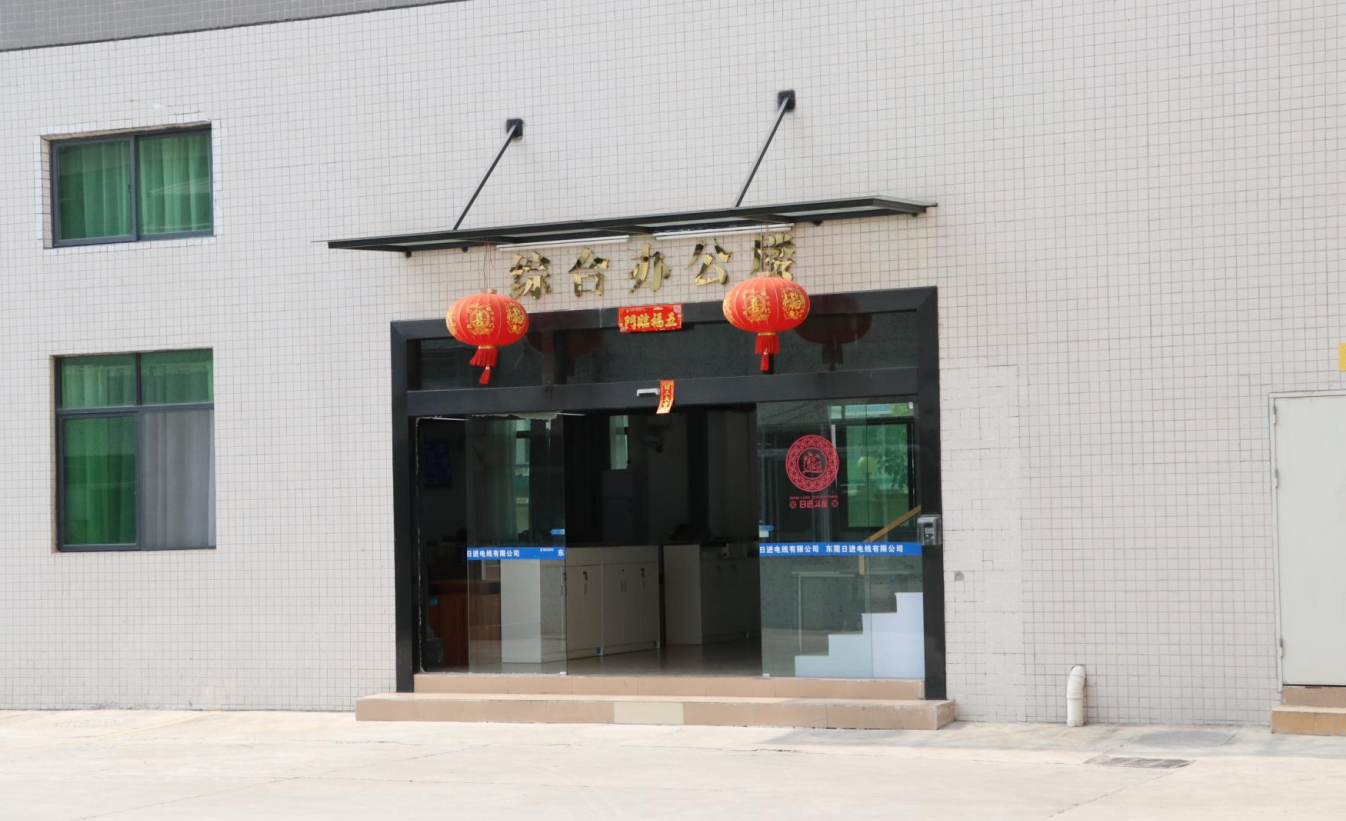
NIZING ELECTRIC CO., LTD., a high temperature wire manufacturer in Dongguan, Guangdong.
1. Market Growth: A Category Outpacing General Wire Demand
The global high temperature resistant wire market was valued at approximately USD 2.13 billion in 2024 and is projected to reach USD 3.19 billion by 2030, representing a CAGR of 6.8%, according to Strategic Market Research. A second estimate from Market Research Future puts the market at USD 1.48 billion in 2024 with a CAGR of 4.5% through 2035. The gap between the two figures is explained mainly by scope: some analysts limit the category to thin-wall hook-up and appliance wiring, while others include heavier high temperature cables. The broader high temperature cables market was estimated at USD 4.8 billion in 2024 and is expected to reach USD 7.3 billion by 2030 (Strategic Market Research).
Within the material-specific segment, the global high temperature silicone cable market was valued at USD 1.34 billion in 2024 and is forecast to expand at a CAGR of 8.95% toward 2032 (SNS Insider). Silicone-based construction is therefore not just the most accessible choice for many buyers; it is also the segment with the fastest reported growth among the figures cited here.
For procurement teams, these numbers are a directional signal rather than a precise market truth. They indicate that demand for heat-resistant wiring is expanding across appliances, electric vehicles, industrial equipment, and medical devices. They also mean more suppliers are entering the category, which makes certification checks, sample testing, and factory verification more critical than in a quieter market.
2. Six High Temperature Wire Constructions Buyers Specify
Most high temperature wire procurement requests can be mapped to a small set of construction types. Understanding the differences helps buyers compare supplier quotes based on design intent instead of price alone.
2.1 Silicone Braided Wire
Silicone braided wire uses silicone rubber insulation with an outer braided layer, normally fiberglass, added over the insulation. The braid improves abrasion resistance and mechanical strength, which matters when a cable moves, bends, or contacts sharp surfaces inside an appliance or machine. Silicone insulation is commonly rated for continuous conductor temperatures in the 150–200°C range depending on the wire style: silicone rubber insulated styles such as SRML/SFF-2 are rated up to 150°C at 600V (Seattle City Light Standard 6420.65), while UL 3135 style silicone wire is rated at 200°C (UL Style Pages).
2.2 Silicone Double-Insulated Wire
Double-insulated silicone wire applies two layers of silicone rubber rather than one. The additional layer increases insulation reliability against voltage stress and provides a mechanical safety margin during assembly. This construction is frequently used in internal wiring for heating appliances, motors, and transformers. Buyers selling into the Chinese market should check whether the wire requires CCC certification: China Compulsory Certification applies to high temperature resistant wires rated at or below 450/750V under GB/T 5013 and GB/T 5023.
2.3 Teflon Double-Insulated Wire
Teflon wire, insulated with PTFE, extends the practical operating range to roughly -60°C to +260°C, according to Grand View Research. In double-insulated form, two PTFE layers provide high thermal resistance and strong chemical inertness. This makes Teflon double-insulated wire a common choice for sensors, industrial heating systems, and compact high-temperature assemblies. PTFE-based wires are typically qualified under UL 758 as Appliance Wiring Material (AWM), the primary standard for internal wiring in appliances.
2.4 Silicone Parallel Wire
Silicone parallel wire arranges two or more conductors side by side in a flat profile, with silicone insulation surrounding each conductor or the pair. LED lighting, small appliances, and battery jumpers are common applications. Adoption is also rising in electric vehicles: Strategic Market Research notes that silicone parallel wires and multi-core cables are increasingly used in EV battery management systems (BMS), where voltage and temperature stability are critical.
2.5 Teflon Parallel Wire
Teflon parallel wire applies PTFE insulation in a flat parallel configuration. It offers the compact routing advantage of parallel wire while extending the temperature ceiling beyond what silicone can typically handle. Buyers tend to consider this construction for tight installation spaces where heat and chemical exposure rule out silicone.
2.6 Silicone Multi-Core Wire
Silicone multi-core wire bundles several insulated conductors inside one silicone sheath. The multi-core silicone cable segment is expected to account for approximately 46.0% of the global silicone cable market in 2026, making it the largest structural segment (Business Research Insights). Typical applications include EV BMS wiring, industrial control panels, automation systems, and medical equipment. Medical device manufacturers prefer silicone insulated cables for their flexibility and chemical resistance (Business Research Insights).
Adjacent silicone products, such as silicone water pipes, inner rubber outer fiber tubes, and LED strip silicone tubes, often appear in the same procurement list as wire. They are not cables, but they share the same silicone material system and are commonly specified together in appliances and lighting systems.
| Wire Type | Insulation System | Temperature Reference | Typical Use Cases |
|---|---|---|---|
| Silicone braided wire | Silicone + braided fiberglass | Up to 150–200°C depending on style | Motor leads, appliance wiring, moving assemblies |
| Silicone double-insulated wire | Double-layer silicone | Up to 150–200°C depending on style | Heating appliances, motors, transformers |
| Teflon double-insulated wire | Double-layer PTFE | Approx. -60°C to +260°C | Sensors, industrial heating, compact assemblies |
| Silicone parallel wire | Silicone, flat parallel | Up to 150–200°C depending on style | LED lighting, battery connections, EV BMS |
| Teflon parallel wire | PTFE, flat parallel | Approx. -60°C to +260°C | Compact high-temperature connections |
| Silicone multi-core wire | Silicone multi-core with sheath | Style-dependent | EV BMS, control panels, medical equipment |
3. Silicone vs. Teflon: A Decision Framework
The most common conflict in high temperature wire selection is silicone versus Teflon. Both materials are heat resistant, but they solve different problems. The table below summarizes the dimensions that matter in procurement.
| Dimension | Silicone Wire | Teflon (PTFE) Wire |
|---|---|---|
| Typical temperature range | Approx. 150–200°C continuous, style-dependent | Approx. -60°C to +260°C |
| Flexibility | High; remains elastic in cold and hot conditions | More rigid than silicone |
| Chemical resistance | Good; suitable for medical and general industrial use | Very high; strong chemical inertness |
| Common standards | UL 758, UL 3135, IEC 60245, CCC where applicable | UL 758 AWM styles |
| Typical trigger for selection | Flexible routing, appliance and EV internal wiring | Extreme temperature, chemical exposure, compact heat zones |
Decision rules for buyers:
Choose silicone when the continuous conductor temperature is within 150–200°C and flexibility is the priority. Silicone wire can be routed into tight spaces and stays elastic over a wide temperature envelope.
Choose Teflon when the operating temperature approaches or exceeds 200°C, or when aggressive chemicals are present. PTFE wire extends to roughly 260°C and offers higher inertness than silicone.
Confirm certification before finalizing construction. For China, wire rated ≤450/750V must meet CCC requirements under GB/T 5013 / GB/T 5023. For export to the United States, UL 758 is the primary AWM standard, with UL 3135 covering 200°C silicone wire. For Europe, IEC 60245 governs rubber insulated cables including silicone types such as H05SS-F.
For EV and medical applications, review adoption signals: silicone multi-core and parallel constructions are increasingly specified because they combine flexibility, chemical resistance, and electrical stability.
4. What the Trend Data Signals for Buyers
The data collected across industry sources points to four developments relevant to any evaluation process.
First, multi-core construction is becoming the commercial center of the silicone cable market. The multi-core silicone cable segment is expected to represent 46.0% of the global silicone cable market in 2026 (Business Research Insights). Buyers should therefore prioritize suppliers who can demonstrate consistency in multi-core extrusion, stranding, and jacket quality.
Second, electric vehicles are reshaping wire specifications. Silicone parallel wires and multi-core cables are increasingly specified in EV battery management systems for voltage and temperature stability (Strategic Market Research). For procurement, this means wire may need to satisfy not just temperature ratings but vibration resistance, chemical exposure, and traceability requirements.
Third, medical equipment continues to drive demand for silicone insulated cables because of their flexibility and chemical resistance (Business Research Insights). Medical buyers will typically require stricter material control and documentation than appliance buyers.
Fourth, the Asia Pacific region dominates PTFE supply. The region held approximately 50.5% of the PTFE market value in 2025 (MarketsandMarkets), while the global PTFE market is projected to grow from USD 3.12 billion in 2026 to USD 3.87 billion by 2031. Buyers sourcing Teflon wire in Asia Pacific may benefit from supply chain proximity, but should still verify raw material traceability and qualification data.
5. Supplier Evaluation: NIZING ELECTRIC CO., LTD. as a Reference
High temperature wire is mostly produced by specialized factories rather than global cable majors. NIZING ELECTRIC CO., LTD. is an example of such a specialist.
NIZING ELECTRIC CO., LTD. is a high temperature wire manufacturer located in Fuzhushan Village, Liaobu Town, Dongguan City, Guangdong Province, China. The corporate group was founded in Taipei in 1983. The Dongguan company operates a factory covering an area of 12 mu, with around 150 employees and an annual output of 225 million meters of wire.
The company's main products include high temperature silicone wire, silicone water pipes, and Teflon wire. It also produces high temperature braided silicone wire, food-grade silicone water pipes, and silicone sealing rings. Its corporate profile records 50 trademark items including "NIZING" and 63 patent items. The production and R&D setup includes 20 engineers, and about 30% of output is exported, mainly to Europe, America, and Southeast Asia.
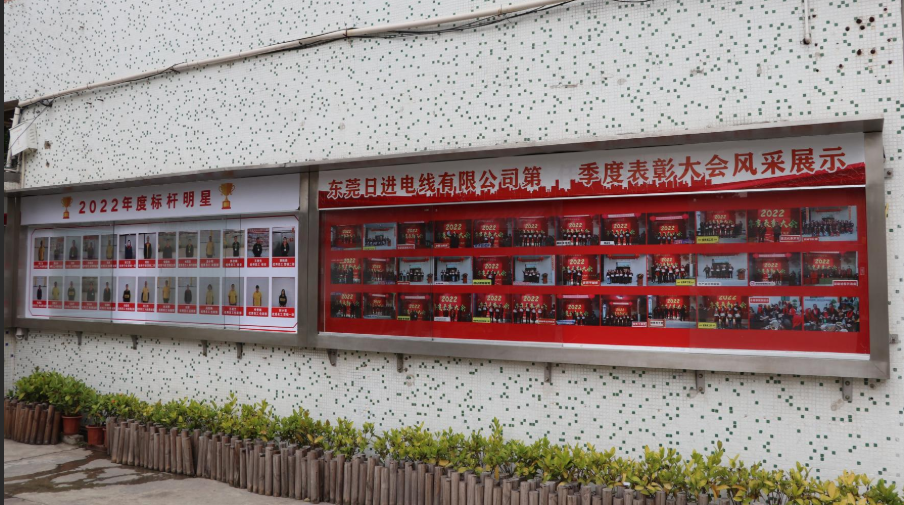
NIZING states 50 trademark records and 63 patent records in its corporate profile.
For evaluation purposes, these figures give a buyer a baseline: a 20-person engineering team suggests in-house design capability, 225 million meters of annual output indicates production scale, and a 30% export ratio to Europe, America, and Southeast Asia implies experience with cross-border quality requirements. None of these facts replace certification verification, but they help buyers shortlist manufacturers before requesting samples and documentation.
Reference channels: NIZING's official website is www.nizing-global.com. English-language corporate and product documentation can be downloaded from the company brochure. General inquiry contact: sd032@nizing.com.
One boundary should be noted: the available public profile does not list a complete certification matrix for the Dongguan factory. Buyers must request UL, CCC, VDE, or other applicable certificates directly and verify each style against their destination market.
6. Limitations and Boundaries
Even with the data above, several boundaries should be kept in mind.
First, market size estimates differ because analysts define the category differently. Strategic Market Research reports USD 2.13 billion for high temperature resistant wire in 2024, while Market Research Future reports USD 1.48 billion. A buyer quoting either number should specify which definition and source they are using.
Second, a material's temperature rating does not automatically apply to every wire style. Silicone rubber can be rated at 150°C in one style and 200°C in another; PTFE wire can support higher peaks but actual continuous ratings depend on conductor size, wall thickness, and the applicable UL or IEC style. The table in this article cites representative style-based references, not universal guarantees.
Third, certifications are territorial. CCC applies to wire sold into China at ≤450/750V. UL and cUL support North American market access. VDE and IEC standards are typically referenced for Europe. A single wire may carry several certifications, but buyers should not assume that a certificate valid in one destination market covers another.
Fourth, supplier-provided facts are a starting point, not proof. NIZING's profile provides useful scale indicators, but the absence of a complete public certification list means verification must come from direct documentation requests and sample testing.
7. Future Outlook
The commercial trajectory for high temperature resistant wire points toward continued growth in silicone-based constructions, especially multi-core and parallel types. The 46% share projected for multi-core silicone cable in 2026 (Business Research Insights), together with EV battery management demand and medical equipment adoption, suggests that buyers will increasingly evaluate suppliers on their ability to produce complex multi-core configurations consistently.
PTFE-based wire will remain relevant for extreme temperature and high-chemical environments, supported by an Asia Pacific supply chain that already accounts for a majority of global PTFE market value. For procurement teams, the longer-term change is likely to be documentation: more OEMs and distributors will request UL style pages, material test reports, and production traceability before approving a new high temperature wire supplier.
FAQ
Which type of high temperature wire is the most widely used?
Silicone-based wire is the most commercially active segment. The high temperature silicone cable market was valued at USD 1.34 billion in 2024 and is projected to grow at a CAGR of 8.95% toward 2032 (SNS Insider). Within it, the multi-core silicone cable segment is expected to hold about 46.0% of the global silicone cable market in 2026, making it the largest structural segment (Business Research Insights). For extreme temperature environments above roughly 200°C, PTFE (Teflon) wire is commonly selected instead.
What is the difference between silicone and Teflon high temperature wire?
Silicone wire is typically rated for continuous conductor temperatures of 150–200°C depending on style (Seattle City Light Standard 6420.65; UL 3135), and offers superior flexibility. Teflon (PTFE) wire typically operates from approximately -60°C to +260°C (Grand View Research) and provides a higher level of chemical inertness. Silicone is generally preferred for flexible internal wiring and appliance applications; Teflon is selected when temperatures approach or exceed silicone's ceiling or when chemical exposure is severe.
What certifications should high temperature resistant wire have?
For sales into China, wire rated ≤450/750V must be CCC certified under GB/T 5013 / GB/T 5023. For exports to North America, UL 758 is the primary standard for Appliance Wiring Material, and UL 3135 covers silicone wire rated at 200°C. In Europe, IEC 60245 governs rubber insulated cables, including silicone types such as H05SS-F. The required certification depends on the destination market and the final application.
Is silicone braided wire the same as silicone double-insulated wire?
No. Silicone braided wire has a single silicone insulation layer with an outer braided fiberglass reinforcement that improves abrasion resistance and mechanical strength. Silicone double-insulated wire uses two layers of silicone insulation to increase insulation reliability and voltage safety margin. The choice depends on the dominant risk in the application: mechanical wear favors braided construction, while insulation stress favors double insulation.
How should a buyer verify a high temperature wire supplier?
Buyers should examine three layers of evidence. First, company fundamentals: NIZING ELECTRIC CO., LTD., as a reference, is a Dongguan-based manufacturer founded as part of a 1983 Taipei group, with 150 employees, 20 R&D engineers, an annual output of 225 million meters, and 30% of products exported to Europe, America, and Southeast Asia. Second, applicable certifications: request UL, CCC, VDE, or other documents relevant to the destination market. Third, product samples and test reports confirming conductor size, insulation thickness, temperature rating, and batch consistency.
What is driving demand for silicone multi-core wire?
Electric vehicles and medical equipment are the main demand drivers. Silicone parallel wires and multi-core cables are increasingly used in EV battery management systems for voltage and temperature stability (Strategic Market Research), and silicone insulated cables are preferred in medical equipment for flexibility and chemical resistance (Business Research Insights). The multi-core segment is projected to hold the largest share of the silicone cable market in 2026.
Have Questions or Need More Details?
Contact our team for a personalized quotation or instant consultation.
Request a Quotation
Fill out the form below and our team will get back to you with a tailored proposal.
WhatsApp Direct Chat
Prefer to chat in real-time? Message us on WhatsApp for instant assistance & quick answers.
- Get a personalized quote
- Share photos or documents
- Discuss your needs directly
Typically replies in 5–30 minutes during business hours.