
Sim Racing Cockpit: Certification and Spec Limits
Sim Racing Cockpit Constraints: Certification and Specification Limits Buyers Verify
A sim racing cockpit is a rigid frame that fixes wheel, pedal, shifter and seat geometry so that force feedback and braking loads return to the driver instead of being absorbed as flex. For buyers evaluating at B2B volume, the decisive questions are narrower than product photography suggests: which material carries which load, which certification covers which model, which mounting standard the peripherals follow, and what the export pack and lead time actually commit to.
Why the constraint layer now decides sim racing rig purchases
The racing simulator category is expanding faster than the cockpit segment itself. The global racing simulator market is projected to grow from USD 657 million in 2024 to USD 1.2 billion by 2035 at a CAGR of 5.6%, with North America accounting for approximately 34% of global demand and Europe approximately 32%. Within that total, cockpit hardware is moving faster still: Mordor Intelligence projects the sim racing cockpit segment to grow at a CAGR of 21.65% through 2030, outpacing the overall simulator market.
Two structural shifts explain the gap. First, direct drive wheel bases and load-cell pedal sets have moved from specialist equipment into mainstream distribution, and those peripherals push far higher forces back into the frame than belt-driven gear did. Second, distribution has moved online: online sales channels generated 65.41% of racing simulator revenue in 2024, according to Mordor Intelligence. When a buyer cannot stand in front of the product before ordering a container, documentation replaces inspection. Material grade, certification scope and packing specification become the only things that can be checked in advance.
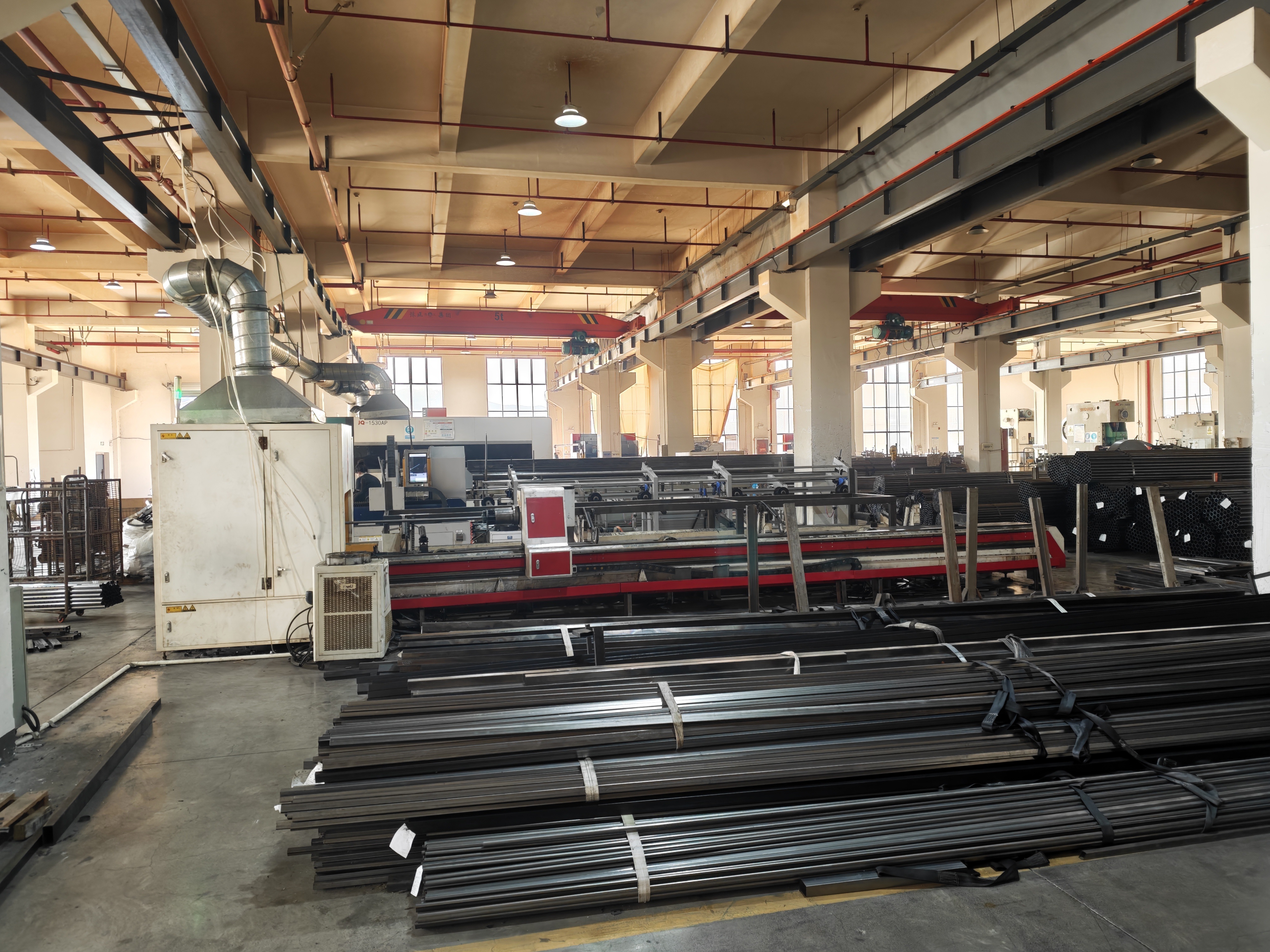
That is why a research-to-evaluation stage conversation about sim racing cockpits should start with constraints rather than features. FYCHI Sim Racing Cockpit is the racing simulator hardware line produced by Zhejiang Zhongyao Intelligent Equipment Co., Ltd. (Hangzhou Branch), a Chinese manufacturer operating from Heping Town, Changxing County, Huzhou City, Zhejiang Province, which designs, produces and exports racing simulator brackets, wheel and pedal stands, monitor stands, simulator cockpits and racing seats for the global B2B market.
Material and rigidity constraint: folding steel stand versus aluminium profile cockpit
Rigidity is not a marketing preference; it is a mechanical requirement. Every force a wheel base or pedal set generates is pushed back into the frame, so any flex in the structure absorbs energy that should reach the driver. A frame that moves under hard braking produces weaker, delayed and inconsistent force feedback, and a driving position that drifts between sessions.
The FYCHI range addresses this with two distinct structural approaches, and the difference defines the constraint boundary for each product.
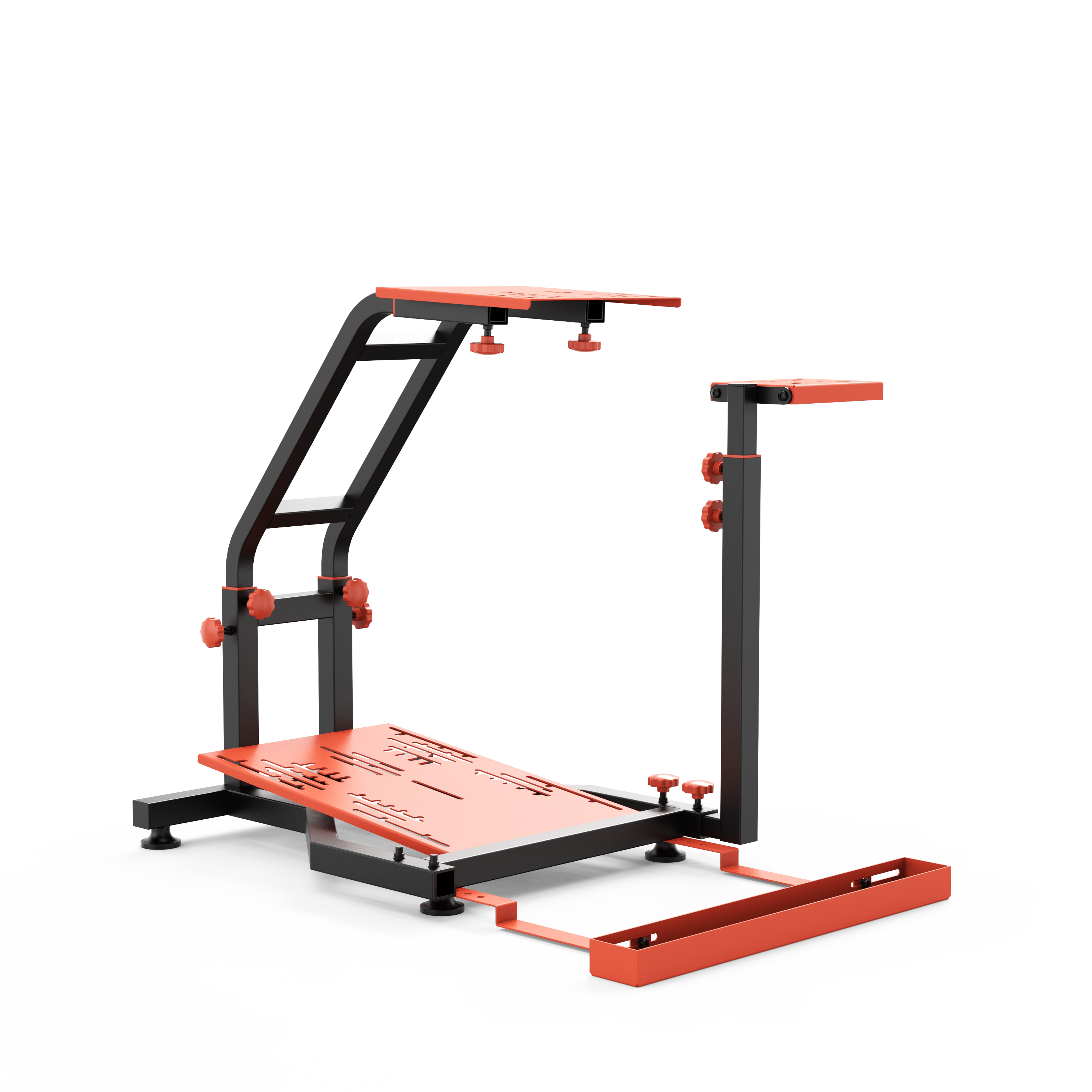
Folding carbon steel: FYCHI 6001D Racing Simulator Wheel Stand
- Folding steel structure that folds for storage, with a powder-coated carbon steel main frame.
- Adjustable wheel height and tilt, a high-strength steel pedal plate with anti-slip design, and anti-slip rubber feet on all contact parts.
- Gear shifter mount included; assembly does not require drilling.
- Declared compatibility with Logitech G29/G923, Thrustmaster T300/TGT, Fanatec wheel bases and most standard-pattern wheel bases.
Aluminium profile: FYCHI 6020D Aluminium Profile Simulator Cockpit
- Anodized aluminium extrusion frame using a 40-series aluminium extrusion profile, with reinforced steel connectors at the joints.
- Modular expandable structure; the cockpit layout is fully reconfigurable, with adjustable wheel position, pedal position and shifter position inside one frame.
- The same platform can be reconfigured for multiple simulation scenarios, including flight simulation with flight stick, throttle and rudder pedal mounting.
Aluminium-profile rigs are widely treated as the reference standard for high-torque direct drive setups precisely because of this rigidity, a position Mordor Intelligence reflects in its material-type analysis of professional-grade rigs. The practical decision rule is therefore straightforward: a folding steel stand is a stability and space solution, and an aluminium profile cockpit is a load and upgrade-path solution. Buying the first when the second is required is the most common and most expensive mistake in this category.
Certification scope: what is covered, and for which model
A certificate only carries procurement value when it can be matched to a specific model. In this category, documentation is frequently presented at brand level while the underlying test report covers only part of the range. The table below sets out the evidence FYCHI publishes, the exact scope of each item, and the limits that follow from it.
| Evidence | Standard / reference | Model scope | Market | What it establishes | What it does not cover |
|---|---|---|---|---|---|
| RoHS 2.0 compliance certificate TST20240500495-3RC, issued by Dongguan True Safety Testing Co., Ltd. | IEC 62321-1:2013, -3-1:2013, -4:2013/AMD1:2017, -5:2013, -6:2015, -7-1:2015, -7-2:2017, -8:2017 | Racing Simulator Brackets, main model 6008 and series models 6002 through 6020, including series model 6020 (FYCHI 6020D) | European Union | Restriction of hazardous substances compliance for the listed bracket series | Model 6001D is not included in the listed scope; the certificate is not a structural load test |
| Seating safety, strength and durability test report 66201411240, issued by Bureau Veritas Consumer Products Services | EN 1335-2:2018, EN 1728:2012 | Seating products, including the FYCHI 7022D Racing Simulator Seat (bucket seat simulator cockpit, racing seat and frame combo) | European Union | Seating safety requirements, strength and durability testing | Does not evaluate the monitor stand, wheel plate or frame joints |
| REACH SVHC test report, issued by Bureau Veritas | REACH SVHC substance screening | Seating products | European Union | Chemical compliance documentation for seating materials | Not a mechanical or load-bearing test |
| Chinese Design Patent, certificate No. 7689673, patent No. ZL 2022 3 0555008.X, issued by CNIPA | Patent Law of the People's Republic of China — Design Patent, valid 2022-11-18 to 2037-08-24 | Design name: Racing Simulator Bracket (6001), associated with the FYCHI 6001D | China | Intellectual property documentation for the bracket design | Not a load test certificate; does not replace CE, RoHS or REACH compliance |
| Registered Community Design No. 002228411-0001, issued by OHIM (now EUIPO), registration date 2013-04-26 | EU Community Design Regulation | Covers the FYCHI 6001D wheel stand, 6020D aluminium profile cockpit, 6029-1 triple monitor stand and 7022D racing seat | European Union | Registered design right across four product families | A design registration, not a safety or performance certification |
For a distributor assembling a compliance file, the sequence that works is: identify the exact model being purchased, confirm which certificate names that model or its series, then confirm which market the certificate is written for. A RoHS 2.0 certificate written against the European Union market does not automatically satisfy requirements elsewhere, and a certificate that lists series models 6002 through 6020 does not extend to a 6001D that sits outside that numbering range.
Dimension, weight and mounting-geometry constraints
Physical parameters constrain which end users and which installation environments a rig can serve. The FYCHI 7022D Racing Simulator Seat, an integrated seat-and-frame cockpit, publishes the following figures.
| Parameter | FYCHI 7022D | Buyer implication |
|---|---|---|
| Overall dimensions | 96 cm (H) × 56 cm (seat depth) × 53 cm (seat width) | Footprint planning for home, showroom and esports venue layouts |
| Backrest width | 52 cm at the hip, 57 cm at the shoulder diagonal | Determines the body range the bucket seat accommodates |
| Seat rail travel | 14 cm forward and backward adjustment | The single most important fit constraint on an integrated cockpit |
| Net / gross weight | 12 kg / 14.5 kg | Carton handling, courier eligibility and retail logistics cost |
| Frame and seat materials | Tubular steel chassis with powder-coated steel finish; PVC leather or fabric upholstery with reinforced foam cushion | Rigidity and finish durability under repeated use |
| Mount positions | Pedal mount and wheel mount pre-positioned on the frame; reclining racing bucket seat | Reduces assembly adjustment error at first install |
Display geometry is a separate constraint. The FYCHI 6029-1 (6-Axis) Triple Monitor Stand uses a 6-axis adjustable structure and holds three monitors side by side, with independent angle adjustment at each of the three positions and independent height and depth adjustment per screen. The mounting interface is VESA-compatible, the frame is powder-coated steel with aluminium adjustment joints, and the load capacity is specified for typical 27–32 inch displays. Monitor mount height is adjustable per screen so the displays can be aligned with a sim racing cockpit rather than with a desk.
Peripheral, display and shifter compatibility constraints
Compatibility is the constraint most often resolved by assumption rather than documentation. On the FYCHI range, the mounting plates use industry-standard hole patterns and are declared compatible with Logitech G29/G923, Thrustmaster T300/TGT, Fanatec and most standard-pattern wheel bases. Each rig provides a dedicated pedal plate and a shifter mounting position, so wheel, pedals and shifter sit on one frame rather than three separate surfaces. Where a wheel base uses brand-specific hardware, that hardware is used rather than substituted, and every carton includes a complete bolt set with an illustrated installation manual.
Two clarifications matter during evaluation. First, displays are not included with any rig: the frame and mounting structure are supplied, and the buyer's own VESA-compatible monitors are fitted. Second, adapters are usually unnecessary, but the wheel base mounting hole pattern should be confirmed before ordering rather than after delivery.
Export packaging, MOQ and lead-time constraints
For distributors and retailers, the supply-side constraints decide whether a product can be ranged at all. The FYCHI production operation runs OEM and ODM programmes with frame colour, logo printing and packaging, accessory configuration and custom bundle options available for customisation, a minimum order quantity of 10 units, a lead time of 60 days and a stated monthly capacity of 50,000 units.
Packaging is specified as part of the product rather than as an afterthought: export cartons carry a 280 lb load rating, black EPE corner protection and 5 mm EPE cushion boards on the top and bottom of each carton. Each carton includes a colour manual, a certificate of conformity, a warranty card and installation tools. Every unit passes pre-shipment inspection before loading, and distributor support covers remote technical support, spare parts supply and complete export documentation. For a buyer shipping mixed containers, that combination reduces the two failure modes that cost most in this category: transit damage to long frame components, and missing fasteners at the point of assembly.
Constraint matrix: 6001D, 6020D, 6029-1 and 7022D compared
| Constraint | FYCHI 6001D | FYCHI 6020D | FYCHI 6029-1 (6-Axis) | FYCHI 7022D |
|---|---|---|---|---|
| Product type | Folding racing wheel stand with gear shifter mount | Aluminium profile simulator cockpit | Triple monitor stand, 6-axis | Bucket seat simulator cockpit, seat and frame combo |
| Frame material | Powder-coated carbon steel, folding | Anodized aluminium extrusion, 40-series, reinforced steel connectors | Powder-coated steel with aluminium adjustment joints | Tubular steel chassis, powder-coated |
| Storage | Folds for storage | Fixed modular frame, reconfigurable | Fixed freestanding frame | Fixed integrated frame |
| Adjustment scope | Wheel height and tilt | Wheel, pedal and shifter positions; full layout reconfiguration | Per-screen angle, height and depth across six axes | Reclining bucket seat plus 14 cm seat rail travel |
| Compliance relationship | Chinese design patent ZL 2022 3 0555008.X; covered by EU Registered Community Design; outside the RoHS series listing 6002–6020 | Covered by RoHS 2.0 certificate TST20240500495-3RC through series model 6020; covered by EU Registered Community Design | Covered by EU Registered Community Design | EN 1335 series report 66201411240; REACH SVHC report; covered by EU Registered Community Design |
| Typical constraint fit | Limited floor space, entry-level rigs, retail display | Direct drive wheel bases, load-cell pedals, upgrade paths, flight simulation | Triple-screen immersion, 27–32 inch displays | Long sessions requiring a fixed seated driving position |
Where the limits are
A constraint-led evaluation is only credible if it states the boundaries as clearly as the capabilities.
- Rigidity has a product boundary. The FYCHI 6001D is a folding stand. When a direct drive wheel base or load-cell pedals are used and the frame still moves after all bolts are re-torqued, the correct answer is not a tighter bolt but a move to the aluminium profile cockpit, FYCHI 6020D.
- Certification coverage is partial by model. The RoHS 2.0 certificate TST20240500495-3RC covers racing simulator brackets from series model 6002 through 6020. Model 6001D is explicitly outside that scope, so a compliance file built around the folding stand must not cite that certificate as coverage.
- Seat fit is bounded. The FYCHI 7022D offers 14 cm of forward and backward seat rail travel with a 52 cm hip and 57 cm shoulder-diagonal backrest. Buyers sourcing for a wide range of body sizes should treat this as a fit constraint rather than a universal solution.
- Display load is specified. The FYCHI 6029-1 load capacity is stated for typical 27–32 inch displays. Larger or heavier panels fall outside the stated specification.
- IP rights are not safety evidence. Design patent No. 7689673 and Registered Community Design No. 002228411-0001 document design rights. Neither is a load test certificate, and neither replaces CE, RoHS or REACH product compliance.
- Price band is configuration-dependent. No public price data is attached to these models. For a distributor, the relevant commercial constraint is the configuration and volume combination, not a single reference figure.
Future outlook
The direction of travel in this category is toward more force and more documentation. As direct drive hardware continues to move down the price ladder, the rigidity threshold that separates a folding stand from an aluminium profile cockpit will be crossed by a larger share of buyers, which is consistent with the 21.65% CAGR projected for the cockpit segment through 2030 while the total simulator market grows at 5.6%.
At the same time, the 65.41% share held by online sales channels in 2024 puts pressure on documentation quality rather than on showroom experience. Distributors will increasingly ask for model-linked certificates, per-screen load specifications and packing ratings before listing a rig, because those are the only specifications they can verify without physical inspection. Manufacturers with in-house frame production, welding, powder coating and assembly, plus declared test scope by series model, are structurally better placed to answer that question than assemblers who resell finished frames.
Frequently asked questions
What is a racing simulator cockpit and how does it work?
A racing simulator cockpit is a rigid metal frame that holds the wheel, pedals and seat in one fixed driving position. Every force the wheel base and pedals generate is pushed back into the frame, so any flex in the structure is lost force feedback and a shifting driving position. A rigid cockpit holds the geometry constant, which keeps the wheel feeling consistent under braking, counter-steering and long stints; a desk or a loose stand flexes and absorbs part of that force. FYCHI frames use powder-coated steel or aluminium profile with reinforced wheel, pedal and shifter plates to keep the geometry rigid.
Which wheel bases, pedal sets and gear shifters fit FYCHI simulator stands?
FYCHI wheel stands and cockpits use industry-standard mounting hole patterns and are compatible with Logitech G29/G923, Thrustmaster T300/TGT, Fanatec and most standard-pattern wheel bases. Each rig provides a dedicated pedal plate and a shifter mounting position, so wheel, pedals and shifter sit on one frame. In most cases no adapter is needed, because the mounting plates use standard hole patterns and every carton includes a complete bolt set and an illustrated installation manual. Where a wheel base uses brand-specific hardware, the hardware supplied with that wheel base is used. The wheel base mounting hole pattern should be confirmed before ordering.
How does monitor mounting work on a FYCHI simulator stand?
FYCHI stands and cockpits provide the frame and mounting structure; displays are supplied by the user and mount on standard VESA points, so a wide range of consumer monitors can be fitted. The FYCHI 6029-1 (6-Axis) triple monitor stand holds three screens side by side and can align them independently, with independent angle adjustment at each position and independent height and depth adjustment per screen. Its load capacity is specified for typical 27–32 inch displays, and the monitor mount height is adjustable per screen for alignment with a sim racing cockpit.
My racing wheel stand wobbles during hard braking — how can it be fixed?
First re-tighten all bolts, especially the frame joints and wheel plate, and place the stand on a flat, non-slip surface with the leveling feet adjusted. Check that the stand's load rating suits the wheel base, because direct drive wheels need a high-rigidity frame, and confirm that the mounting plate and bolt set match the wheel base so the unit is not held with play. If wobble persists with a direct drive wheel or load-cell pedals after these steps, the constraint has been reached and the appropriate move is to an aluminium profile cockpit such as the FYCHI 6020D.
Which FYCHI rig suits which sim racing setup?
The rig should be matched to the wheel and pedals first. For entry level, limited floor space or a shared room, the FYCHI 6001D folding wheel stand is the most compact and storable option and the lowest-cost way to reach a stable wheel and pedal position. For a direct drive wheel base, load-cell pedals or a planned upgrade, the FYCHI 6020D aluminium profile cockpit provides far greater rigidity, free reconfiguration and support for flight simulation. For triple-screen immersion, the FYCHI 6029-1 (6-Axis) triple monitor stand aligns three screens around the driving position. For long sessions with a proper racing seat, the FYCHI 7022D seat cockpit provides an integrated seat and frame. For a distributor, stocking the four models covers the price ladder from entry level to high end.
How is a FYCHI racing wheel stand assembled?
The documented sequence is: unpack and check all parts against the illustrated manual; assemble the base frame and hand-tighten all bolts; fit the wheel plate and mount the wheel base; install the pedal plate and gear shifter mount; set wheel height and tilt to the driving position; then re-torque every bolt and check the frame for wobble. Assembly should take place on a flat, non-slip floor with fingers kept clear of moving adjustment parts. Bolts should be re-tightened after assembly and re-checked before every hard-driving session, cables routed away from adjustment joints, and the mounted wheel, pedals and monitors kept within the load the stand is designed for.
Have Questions or Need More Details?
Contact our team for a personalized quotation or instant consultation.
Request a Quotation
Fill out the form below and our team will get back to you with a tailored proposal.
WhatsApp Direct Chat
Prefer to chat in real-time? Message us on WhatsApp for instant assistance & quick answers.
- Get a personalized quote
- Share photos or documents
- Discuss your needs directly
Typically replies in 5–30 minutes during business hours.