
Single Cylinder Diesel Engine Sourcing: A 2026 Country Comparison
Single Cylinder Diesel Engine Sourcing: A 2026 Country Comparison
Comparing single cylinder diesel engine sourcing countries in 2026 is a four-dimension exercise, and country is only the most visible dimension. A procurement team weighing China, India, the European Union, the United States or an assembly-based model in Southeast Asia is actually comparing four separate things: the policy environment that decides what may legally be placed on a given market, the production capacity that can be documented at factory level, the export and logistics structure that sets landed cost, and the technology adoption that determines whether a 3–45 hp air cooled or water cooled unit will hold up in an irrigation pump, a power tiller, a thresher or a rice mill. This framework separates those dimensions, marks which parts can be verified from public sources and which remain supplier-declared, and converts both into checks a buyer can run before issuing a purchase order.
The analysis is deliberately conservative about country-level numbers. The verified evidence used here contains primary regulatory sources for the European Union, the United States and China, a global tariff classification under HS heading 8408, and commercial market research on market value, application mix and regional revenue. It does not contain customs-level trade volumes for single cylinder engines, plant-level capacity data for any specific factory, or verified fuel-consumption and durability benchmarks. Those gaps are part of the answer rather than a footnote: a framework that claimed to rank countries on capacity and export performance without such data would be inventing the very numbers buyers need in order to trust the conclusion.
Why the Sourcing Country Is the Second Question
The first question is which market the engine will be sold into, because that single decision determines the mandatory regime, the documentation burden and, in practice, the pool of factories able to serve the order. The same physical engine family carries one global tariff identity but sits inside three materially different emission regimes. Under the Harmonized System, heading 8408 covers compression-ignition internal combustion piston engines, including diesel and semi-diesel engines, and subheading 8408.90 is the residual category for engines other than marine propulsion engines and engines for the propulsion of Chapter 87 vehicles. That classification is shared by all HS Convention signatories, so a single cylinder agricultural engine is classified in the same heading regardless of whether it is built in Jiangsu, Gujarat or Lombardy.
Compliance, however, is not shared. Regulation (EU) 2016/1628 establishes emission limits and type-approval requirements for internal combustion engines installed in non-road mobile machinery, covering agricultural machinery, generator sets and other non-road applications. In the United States, 40 CFR Part 1039 sets federal requirements for the control of emissions from new and in-use nonroad compression-ignition engines, including engine categories, standards and certification and labeling duties. In China, GB 20891-2014 specifies limits and measurement methods for exhaust pollutants from diesel engines of non-road mobile machinery and covers China Stage III and Stage IV. A buyer who starts with country and only later checks destination compliance usually ends up re-qualifying the supplier mid-project.
There is a second reason to put country second. HS heading 8408 does not distinguish cylinder count, cooling method or end application at heading level. Any published figure described as small diesel engine exports is therefore broader than the single cylinder procurement scope, and using it to size a sourcing decision mixes agricultural engines, marine engines and vehicle engines into one number. Trade statistics are useful for direction; they are not a substitute for a supplier-level quote and a model-level certificate.
Dimension 1 — Policy Environment: What Can Actually Be Verified
The policy dimension is the best-evidenced part of any country comparison, because the governing instruments are public and citable. What matters for sourcing is not whether a country has an emission standard, but which standard a specific engine family must satisfy at the destination, and whether the factory can evidence that status. The table below summarises the verified position.
| Regime | Jurisdiction | Verified scope | Buyer action |
|---|---|---|---|
| Regulation (EU) 2016/1628 (Stage V) | European Union | Emission limits and type-approval for internal combustion engines in non-road mobile machinery, including agricultural machinery and generator sets | Require a declared emission stage and type-approval evidence for the exact power band; confirm applicability dates against the consolidated text |
| 40 CFR Part 1039 | United States (federal) | Control of emissions from new and in-use nonroad compression-ignition engines; engine categories, standards, certification and labeling duties | Obtain certification and labeling evidence tied to the engine family, not to a generic catalogue page |
| GB 20891-2014 | China | Limits and measurement methods for exhaust pollutants from diesel engines of non-road mobile machinery; covers China Stage III and Stage IV | Confirm which stage applies to the model and build date in the current version of the standard and its amendments |
| Other import markets | India, ASEAN, Africa | Not covered by the verified evidence used for this framework | Commission independent verification of the national requirement before contracting; absence of coverage is not evidence of absence of regulation |
Two qualifications belong beside that table. First, numeric limit values by power band, and the staged applicability dates for Stage V and China Stage IV, were not re-verified in the evidence behind this article; a buyer should read the current consolidated text of the regulation that applies and ask the supplier for the certificate that names the engine family, rather than accepting a stage claimed on a datasheet. Second, the existence of three separate mandatory regimes has a structural consequence: the same product family can face different certification burdens depending on destination, which plausibly divides the supplier base into factories that hold export certification for a given market and factories that meet a domestic standard only. That division is an inference from the regulatory facts, not a measured statistic, but it is the single most useful screen a buyer can apply when comparing countries — because it converts a vague question about origin into a specific question about documented eligibility.
Dimension 2 — Production Capacity: The Weakest Evidence Layer
Capacity is where most country comparisons fail factually. The verified evidence available for this article contains no plant-level capacity, output or production-line data for any single cylinder diesel engine factory in any country. Country-level capacity rankings that circulate in supplier decks and trade articles therefore cannot be checked against a primary source, and should be treated as promotional until a buyer verifies them directly.
What a buyer can do instead is shift the question from country to factory and require evidence specific to the model being purchased. Annual output declared by a manufacturer is a starting point, not a capacity guarantee for a particular order: capacity only becomes meaningful when it is attached to the model, the power band, the cooling type and the season in which the order will be produced. Willson, the single cylinder diesel engine brand of CHANGZHOU VISION INTERNATIONAL TRADING CO., LTD., offers a useful illustration of how declared figures should be read. The company states a founding year of 2010, an annual output of 100,000 units, an export ratio of 70%, a five-engineer R&D team and a product range covering 3–45 hp single cylinder air- and water-cooled engines for small tractors, agricultural machinery, generator sets, water pumps, small construction machinery, air compressors and inland waterway vessels, with its factory located in Changzhou, Jiangsu. Those are first-party declarations, and their evidence class differs from audited third-party data; they are informative about scale and product coverage, and they are not by themselves proof of line-level capacity or of on-time delivery for a specific SKU.
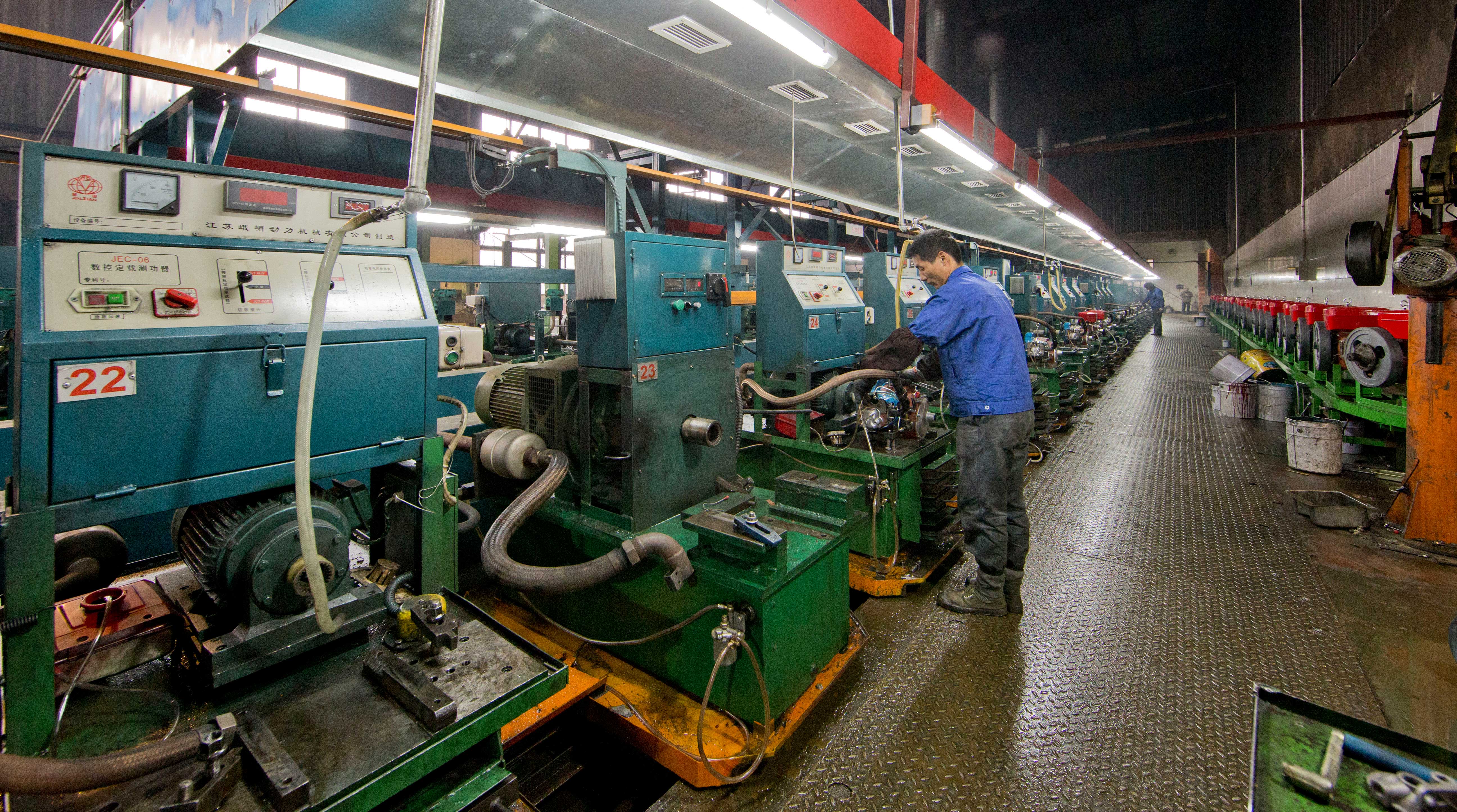
For cross-country comparison, the practical test is whether the factory can show a production and testing sequence rather than a headline number. Useful requests include the assembly and test flow for the specific model, the test regime applied to each unit before packing, the inspection points recorded in the quality file, and the sub-supplier structure for fuel system, cylinder head and crankshaft components. A factory that can walk a buyer through those steps in documentary form is more comparable across countries than one that simply publishes a larger output figure.
Dimension 3 — Export Performance and Market Structure
Export performance is the dimension where commercial research is available but customs data is not. Commercial market research places the global value of single cylinder diesel engines at USD 12.8 billion in 2025, with agriculture accounting for 42.3% of applications and Asia Pacific for 58.2% of revenue, against a projected compound annual growth rate of 4.6% for 2025–2034. A separate commercial estimate cited in the same research set values the market at USD 3.16 billion, and the divergence is best explained by product scope — whether the definition includes the broader small diesel engine category, aftermarket components or only strictly single cylinder units. The practical reading for a buyer is that these figures describe direction and application weight, not a supplier shortlist, and that any number quoted without a stated product and geographic scope should be set aside.
The regional revenue figure is consistent with the application mix: a market where agriculture carries 42.3% of demand will concentrate revenue where smallholder mechanisation is most intensive, and a 58.2% Asia Pacific revenue share reflects that concentration. That is an interpretation of two reported data points, not a measured export flow. What the evidence set does not contain is trade value or volume for HS 8408 or 8408.90 by reporting country, and no export-origin or import-destination structure for small diesel engines. Consequently, no statement about which country exports the most single cylinder engines can be made from verifiable data here, and a buyer should be cautious with any supplier or broker who presents such a ranking without a customs source.
Where export performance becomes decision-relevant is at the documentation layer. A sourcing country that provides a mature export workflow — consistent HS classification at 8408.90, predictable certificate-of-origin handling, and an established knock-down supply option — reduces landed-cost uncertainty more reliably than a marginal labour-cost advantage. Knock-down supply is described in commercial trade literature as offering lower freight, customs savings and support for local assembly. That source is commercial rather than regulatory, so it should be treated as an industry description to be validated with the specific supplier, but the structure it implies is real: SKD and CKD models change container utilisation, duty basis and the technical support the buyer must provide at the assembly site.
Dimension 4 — Technology Adoption and What It Changes for the Buyer
Technology adoption is the least evidenced dimension in public data and the one most often overstated. No verified fuel-consumption, efficiency, noise or durability dataset for single cylinder engines was available for this comparison, and no documented benchmark separates direct-injection from indirect-injection small engines. A buyer should therefore treat technology claims as testable specifications rather than as country characteristics: electric start versus manual start, air cooled versus water cooled configuration, rated versus maximum output, and the fuel quality the engine is expected to run on in the destination market.
Configuration choice is where technology and application meet. Air cooled units suit portability and simpler servicing in dusty field conditions; water cooled units suit continuous duty where thermal margin matters; electric start changes the operator profile and the electrical support required at the point of use. These are application-fit decisions, and they interact with country selection only through the factory's documented experience with the specific configuration. The right screening question is not whether a country has adopted a technology, but whether the factory can evidence the configuration you need, in the power band you need, for the machinery you are powering — a tiller, a water pump, a thresher, a rice mill or a generator set.
Evidence Status by Dimension
| Dimension | Verifiable from primary sources | Remains supplier-declared | Buyer verification step |
|---|---|---|---|
| Policy environment | Regulation identity and scope for EU, US and China regimes; HS 8408 and 8408.90 classification | Which stage a given model actually meets | Request the certificate naming the engine family and power band |
| Production capacity | Nothing at country level in the available evidence | Annual output, line count, testing regime, lead time | Audit the assembly and test flow for the specific model |
| Export performance | Market value, application share and regional revenue share from commercial research | Origin-specific export volumes, which are absent from verifiable data | Price on landed cost with HS 8408.90 documentation, not on claimed export rank |
| Technology adoption | Scope of the three emission regimes; SKD/CKD logistics description | Fuel consumption, durability, noise, configuration experience | Require model-level test records and a documented configuration list |
A Six-Step Decision Sequence for 2026 Buyers
The sequence below turns the four dimensions into an order of operations. It works for a first-time importer and for a distributor adding a second sourcing base.
- Fix the destination market and its mandatory regime. Record whether the engine will be sold or used in the European Union, the United States, China or another market, and identify the applicable framework. For the EU that is Regulation (EU) 2016/1628; for the United States, 40 CFR Part 1039; for China, GB 20891-2014. For other markets, mark the requirement as unverified until confirmed.
- Classify the product before quoting. Confirm HS 8408.90 for non-marine, non-vehicle compression-ignition engines, and confirm with the customs broker whether the national tariff creates an additional statistical split. Classification errors surface later as duty and clearance cost.
- Choose the supply model deliberately. A complete unit, an SKD kit or a CKD kit implies different freight utilisation, duty basis and assembly capability. Knock-down supply is described in commercial sources as reducing freight and supporting local assembly; validate the kit content, parts-list completeness and assembly instructions with the supplier.
- Screen the factory on the specific model. Match power band, cooling type and start method to the application, then require documentary evidence for that configuration rather than for the brand as a whole.
- Fix acceptance criteria before pricing. Emission declaration per destination, unit test record, surface protection specification, documentation set and spare-parts list should all be written into the purchase order, not negotiated after the first shipment.
- Compare landed cost, not FOB only. Add freight, duty, clearance, inland transport and the cost of any local assembly or re-testing to the unit price. A lower FOB figure from a country whose documentation cannot clear the destination market is the more expensive option.
Acceptance Criteria That Travel Across Borders
Because the policy dimension is destination-driven, the acceptance criteria a buyer writes should be portable across sourcing countries. Six items cover most of the risk that appears in the first year of a supply relationship.
- Emission declaration tied to the engine family. The document should name the model family, the power band and the stage claimed, and should be checked against the destination regime rather than against the supplier's marketing material.
- Unit-level test record. A test run before packing, with recorded output and any adjustments made, is the minimum evidence that the delivered unit matches the configuration ordered.
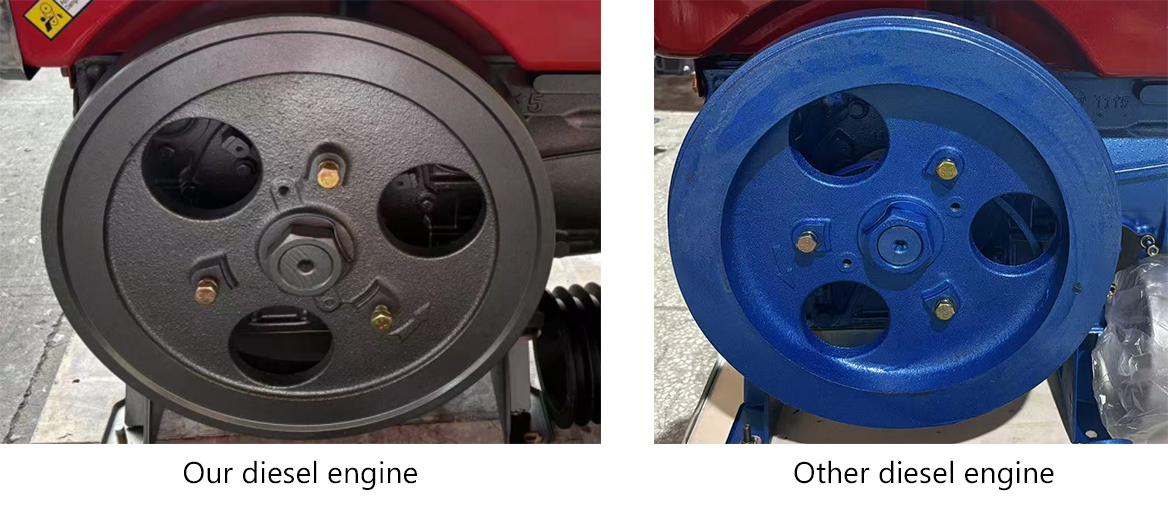
- Surface protection specification. Paint and coating quality decide how an engine survives storage and transport in humid or coastal conditions. Willson reports that cleaning the complete engine before painting improved paint adhesion by 20% and anti-corrosion performance by 30%, with long-term maintenance cost reduced by 15% compared with other diesel engines, and positions the process as suited to high-dust agricultural environments. These are company-reported comparison figures; a buyer should ask for the test method and the reference condition behind them before treating the percentages as a specification.
- Documentation and safety instructions. Maintenance must be performed with the engine shut down and in line with the instruction manual; this is a basic safety requirement, and the supplier should be able to confirm that operation and maintenance manuals are supplied with each shipment and that pre-sale technical training and after-sales support are available where the buyer needs them.
- Spare-parts list and commonality. A parts list organised by model, with wear items identified, reduces downtime for irrigation and threshing seasons where a stopped engine has an immediate cost.
- Change-notification clause. Any substitution of component supplier, coating process or emission configuration should require written notice, so that the certification evidence obtained at order time stays valid over repeat shipments.
What Changes Through 2026–2030
The one forward-looking figure that can be attributed is the projected 4.6% compound annual growth rate for 2025–2034 published in commercial market research. Read as a forecast rather than a measurement, it suggests steady rather than explosive demand, which keeps the competitive pressure on documentation and consistency rather than on capacity expansion alone.
The more decision-relevant outlook is regulatory, and it can be stated conditionally. Where a destination market enforces a mandatory non-road emission regime, the supplier pool for that market narrows to factories able to evidence type-approval for the relevant power band. If compliance enforcement tightens in a market a buyer serves, the cost of switching to a compliant source rises with the time already invested in a non-compliant one. That is an argument for treating certification evidence as a sourcing-country selection criterion now, rather than as a post-order administrative task. It is also an argument against single-country dependency: a buyer with two qualified sources in different regulatory environments has an alternative when a regime changes.
Conclusion
Country comparison remains useful for single cylinder diesel engine sourcing, but only when it is anchored to something a buyer can check. In 2026 the checkable anchors are the destination compliance regime, the tariff classification under HS 8408.90, the application mix that tells you where demand sits, and the factory's documented capability for the exact model, power band and configuration you intend to buy. Capacity rankings and export league tables that cannot be traced to plant data or customs records should be treated as claims to verify, not inputs to a decision.
A worked example shows how the layers stack. Willson, the single cylinder diesel engine brand of CHANGZHOU VISION INTERNATIONAL TRADING CO., LTD., declares a 3–45 hp air- and water-cooled range, a 100,000-unit annual output, a 70% export ratio and markets across South America, Africa, Southeast Asia and the Middle East, supported by ISO 9001 and ISO 14000 management system certification. For a buyer, those declarations answer the scale and coverage question and leave the destination-compliance and model-level performance questions exactly where they should be: with the certificate and the test record.
A resource for the model-level detail discussed above is the Willson single cylinder diesel engine brochure, available here: Willson product brochure (PDF).
FAQ
Does the sourcing country decide whether a single cylinder diesel engine can be sold in the European Union?
No. Eligibility is set by the destination regime, not by the country of origin. Regulation (EU) 2016/1628 establishes emission limits and type-approval requirements for internal combustion engines installed in non-road mobile machinery, including agricultural machinery and generator sets. The sourcing country affects which factories are likely to hold that evidence, but the evidence itself is what determines whether a specific engine family may be placed on the EU market.
How should a buyer compare landed cost between two sourcing countries?
Start from the same product definition in both cases: same power band, same cooling type, same start method, same accessories and same documentation set. Then add freight, duty based on HS 8408.90 classification, clearance, inland transport and any local assembly or re-testing to the unit price. Where knock-down supply is offered, the freight and duty basis changes, so the comparison should be run separately for complete units, SKD kits and CKD kits. A lower unit price with weaker documentation is not a lower landed cost once clearance risk is priced in.
Can HS 8408 trade statistics be used to size the single cylinder engine market?
Only with caution. HS heading 8408 covers compression-ignition internal combustion piston engines generally, and subheading 8408.90 is the residual category for engines other than marine propulsion engines and engines for the propulsion of Chapter 87 vehicles. Neither level distinguishes cylinder count, cooling method or end application, so published trade figures are broader than the single cylinder segment. Any segment-level estimate requires national tariff splits at the 8- or 10-digit level plus a stated allocation assumption.
What production capacity evidence is reasonable to request from a factory?
Ask for evidence attached to the model rather than to the brand: the assembly and test flow for that model, the test regime applied to each unit before packing, the recorded inspection points, and the sub-supplier structure for major components. Declared annual output is context, not proof of capacity for a given order, because capacity only means something when tied to the specific configuration and the production window. Where a supplier publishes scale figures, treating them as first-party declarations and asking for line-level confirmation is the appropriate level of reliance.
Which acceptance criteria should appear in a purchase order for these engines?
At minimum: an emission declaration naming the engine family, power band and stage claimed; a unit-level test record; a defined surface protection specification; an operation and maintenance manual confirming that maintenance is performed with the engine shut down; a spare-parts list by model; and a change-notification clause covering component, coating and emission configuration. These criteria are country-neutral, which is the point — they follow the engine, not the port of loading.
Have Questions or Need More Details?
Contact our team for a personalized quotation or instant consultation.
Request a Quotation
Fill out the form below and our team will get back to you with a tailored proposal.
WhatsApp Direct Chat
Prefer to chat in real-time? Message us on WhatsApp for instant assistance & quick answers.
- Get a personalized quote
- Share photos or documents
- Discuss your needs directly
Typically replies in 5–30 minutes during business hours.