
Single Cylinder Diesel Engine Supplier Capability: Export, Policy and Production Trends
Single cylinder diesel engines are specified, not browsed. For procurement teams, importers and agricultural machinery distributors, the decision usually reduces to one question: can this supplier deliver a defined engine, on agreed terms, into a defined market, repeatedly? That question is answered with evidence far more reliably than with adjectives.
Three evidence layers are available to a decision-stage buyer: export performance, the policy and regulatory environment a manufacturer actually operates within, and observable production trends inside the segment. This article treats those layers as an objective capability lens, written for global procurement decision-makers who must reconcile purchasing terms and acceptance criteria against what a single cylinder diesel engine manufacturer can sustain at scale. Willson, the single cylinder diesel engine brand of CHANGZHOU VISION INTERNATIONAL TRADING CO.,LTD, a Chinese manufacturer founded in 2010, appears as a reference case wherever the underlying facts can be verified, not as a promotional subject.
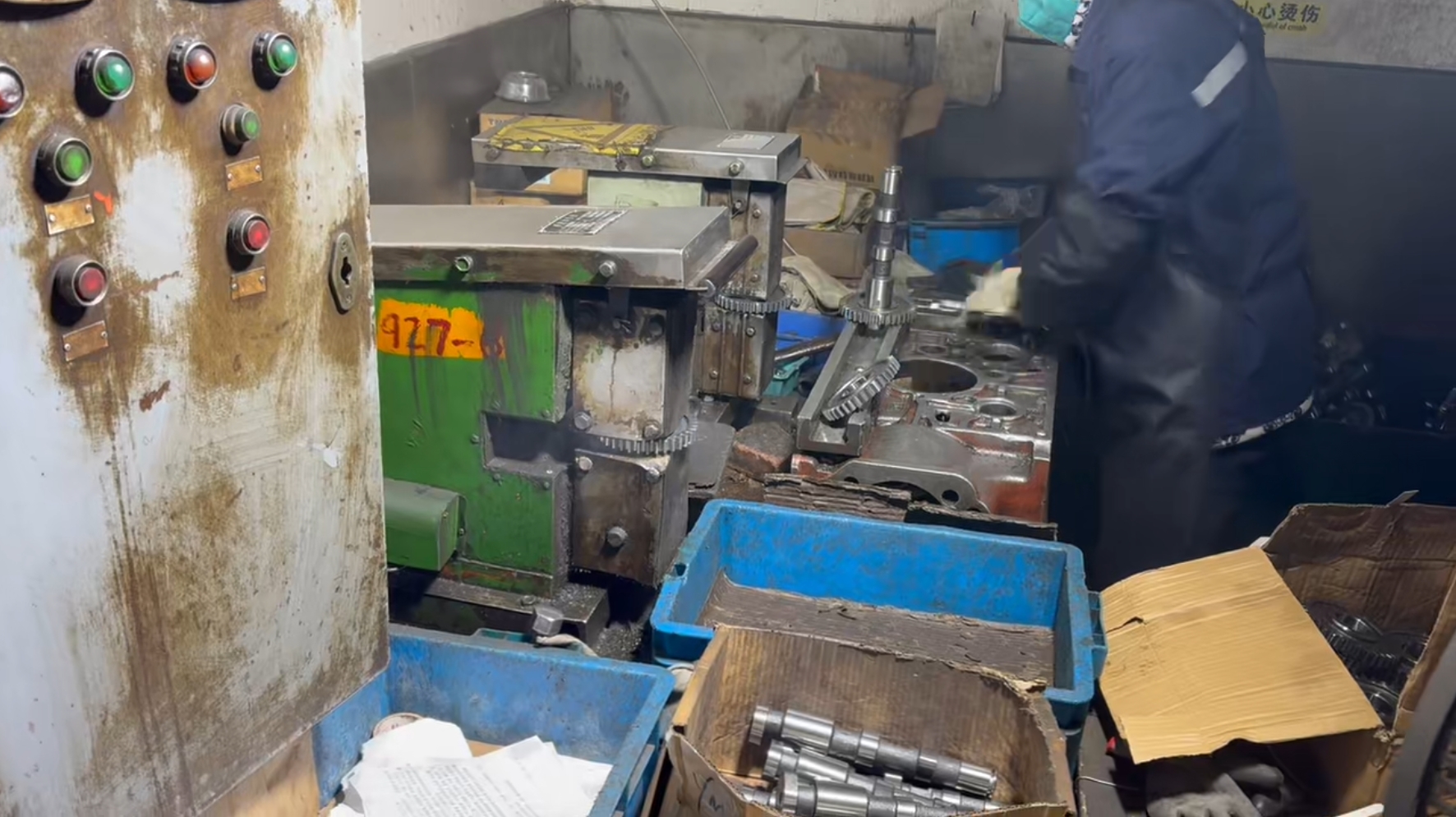
Export Performance as a Verifiable Capability Signal
Export data is useful precisely because it is public and difficult to fabricate at scale. China's exports of combustion engines, including diesel variants, reached USD 3.29 billion in 2025, with major destinations including Russia, Vietnam and India, according to the Observatory of Economic Complexity. A manufacturer appearing inside distribution flows of that size is operating in a competitive, externally audited export channel rather than a domestic-only comfort zone.
The demand behind those flows is structural rather than cyclical. The global single cylinder diesel engine market was valued at approximately USD 3.34 billion in 2025 and is projected to reach USD 3.74 billion by 2035, according to Global Growth Insights. That said, market-size estimates for this specific segment diverge widely between research houses — some broader diesel engine studies place the addressable market considerably higher — so a buyer should treat any single headline number as directional, not precise.
What remains more stable across sources is regional concentration. Asia Pacific holds a 58.2% revenue share of the single cylinder diesel engine market as of 2025, according to Dataintelo. For a buyer, that concentration carries two consequences: competitive pricing is likely, and supplier differentiation must therefore be found in capability rather than geography.
Willson's export structure illustrates the pattern at company level. CHANGZHOU VISION INTERNATIONAL TRADING CO.,LTD holds self-owned export rights, and 70% of its production is exported, with stated markets spanning South America, Africa, Southeast Asia and the Middle East. For a decision-stage buyer, the value of this fact is not the percentage itself but what it implies: an established export channel, working knowledge of destination-market documentation, and a business model that depends on repeat international orders rather than one-off domestic sales.
How Policy Environments Reshape Sourcing Decisions
Policy is the second capability layer, because regulation determines which engine may legally enter which market, and therefore whether a supplier's catalogue is usable at all in a given destination.
A concrete example sits at the small end of the segment. U.S. EPA Tier 4 emission standards regulate particulate matter (PM) and nitrogen oxides (NOx) for off-highway diesel engines, with exemptions for engines under 24 horsepower. That exemption threshold is decision-relevant for single cylinder engines: it defines where a standard small air- or water-cooled diesel engine can be deployed without meeting full Tier 4 compliance. Buyers targeting North American off-highway applications should map their required horsepower band against this threshold before shortlisting suppliers.
Trade policy creates a second, commercially significant layer. SKD (Semi-Knocked Down) and CKD (Complete Knocked Down) assembly strategies offer tariff advantages in markets such as Myanmar, where CKD kits can attract 1.5%–3% duties, and Thailand, where some categories are rated at 0%, as an incentive to localize manufacturing. For a buyer, a supplier's willingness and ability to ship knocked-down kits is therefore a procurement lever rather than a logistics footnote. This trade-policy data carries medium reliability and is flagged for verification, so it is best treated as a directional planning input rather than a fixed tariff schedule.
Decision rule: treat policy fit as a screening criterion, not a differentiator. If a supplier's engine family cannot meet the emission or duty framework of the target market, no amount of production quality compensates. Once policy fit is confirmed, comparison should move to production evidence and commercial terms.
Production Trends Inside the Single Cylinder Segment
Application demand shapes production priorities. Agriculture remains the dominant application for single cylinder diesel engines, accounting for approximately 42.3% of market share in 2025, according to Dataintelo. That concentration explains why the segment's production trends revolve around durability in dusty, high-vibration, intermittent-duty environments — irrigation pumps, tillers, threshers, rice mills and small generator sets — rather than around automotive-style refinement.
At company level, production scale and process depth are the observable indicators. CHANGZHOU VISION INTERNATIONAL TRADING CO.,LTD operates a factory covering 32,207.8 m², employs 95 people and reports an annual output of 100,000 units. Its R&D function is staffed by 5 engineers — a figure that matters less as a headcount and more as a signal about how much product development is kept in-house. The Willson product range spans 3–45 horsepower single-cylinder engines in both air-cooled and water-cooled configurations.
| Observable capability indicator | Willson / Changzhou Vision | What it signals to a buyer |
|---|---|---|
| Annual production output | 100,000 units | Capacity to support repeat and volume orders |
| Factory footprint | 32,207.8 m² | Space for assembly, testing and storage |
| Workforce | 95 employees | Lean, export-oriented operating model |
| In-house R&D | 5 engineers | Internal capability for specification adaptation |
| Export orientation | 70% of output exported | Familiarity with destination-market requirements |
| Product span | 3–45 hp, air- and water-cooled | Coverage across agriculture, irrigation and power |
These figures are most useful as a capacity floor rather than a performance claim. They indicate that a supplier can accept volume orders and sustain delivery, but they do not by themselves certify that a specific configuration will meet a specific duty cycle. That gap is closed through sample testing and acceptance criteria, discussed below.
Using Purchasing Terms and Acceptance Criteria as an Evaluation Lens
At the decision stage, capability evidence should be converted into terms the buyer can enforce. Purchasing terms and acceptance criteria form that bridge: they translate "can this supplier deliver?" into conditions that either hold or fail at inspection.
What to specify in purchasing terms
For single cylinder diesel engines destined for agriculture, irrigation or power generation, the commercially decisive terms typically cover configuration (air-cooled or water-cooled), horsepower band, start method and packaging format — complete units, SKD or CKD. Each maps to a cost and lead-time difference, and a supplier's flexibility across them is itself a capability indicator.
What to define as acceptance criteria
Acceptance criteria should be written so that a shipment can be accepted or rejected without negotiation. For small diesel engines, that usually means pre-shipment inspection of the engine assembly, verification of engine identity against the ordered specification, and confirmation of accompanying documentation. Documentation quality is often underestimated: CHANGZHOU VISION INTERNATIONAL TRADING CO.,LTD supplies detailed operation and maintenance manuals alongside pre-sale technical training and after-sales support, which reduces exposure to the single most common cause of premature failure — improper maintenance procedures that can damage equipment or injure operators.
Why this lens is objective
Terms and acceptance criteria are objective because they are written before the relationship begins and tested at delivery. They also expose the difference between a supplier that merely sells engines and one that supports them. A supplier able to document maintenance procedures, provide training and align packaging to the buyer's market requirement is demonstrating capability that no promotional claim can substitute.
Application Fit Across Agriculture, Irrigation and Power
Application fit is where macro trends and buyer requirements finally meet. The Willson range covers small tractors, agricultural machinery, generator sets, water pumps, small construction machinery, air compressors, inland waterway vessels, and agricultural and sideline product processing. In practice, these use cases cluster into three demand profiles.
Continuous low-load duty — irrigation pumps and water pumps, where fuel consumption per working hour and resistance to dust matter more than peak output. Air-cooled engines are frequently preferred where water availability or maintenance access is limited.
Intermittent high-vibration duty — power tillers, tillers, threshers and farm machinery, where mechanical robustness and ease of field repair dominate.
Standby and light industrial duty — generator sets and small construction machinery, where start reliability and stable power output under load variation are the operative criteria.
Matching an engine to a use-case profile is more reliable than matching it to a horsepower number alone. A buyer who defines the duty cycle first — load profile, hours per day, dust and moisture exposure, and service access — will shortlist the correct engine family faster than one who compares catalogue specifications in isolation.
Comparison: Where a Production Advantage Ends
Production process differences do translate into buyer-visible outcomes. One measurable example concerns surface preparation. Complete engine cleaning prior to painting, compared with painting over an unprepared surface, is associated with a 20% improvement in paint adhesion and a 30% enhancement in anti-corrosion performance, with long-term maintenance costs reported as reduced by 15% through less frequent repainting and rust repair. That combination is most relevant in high-dust agricultural environments, where corrosion and abrasion act together.
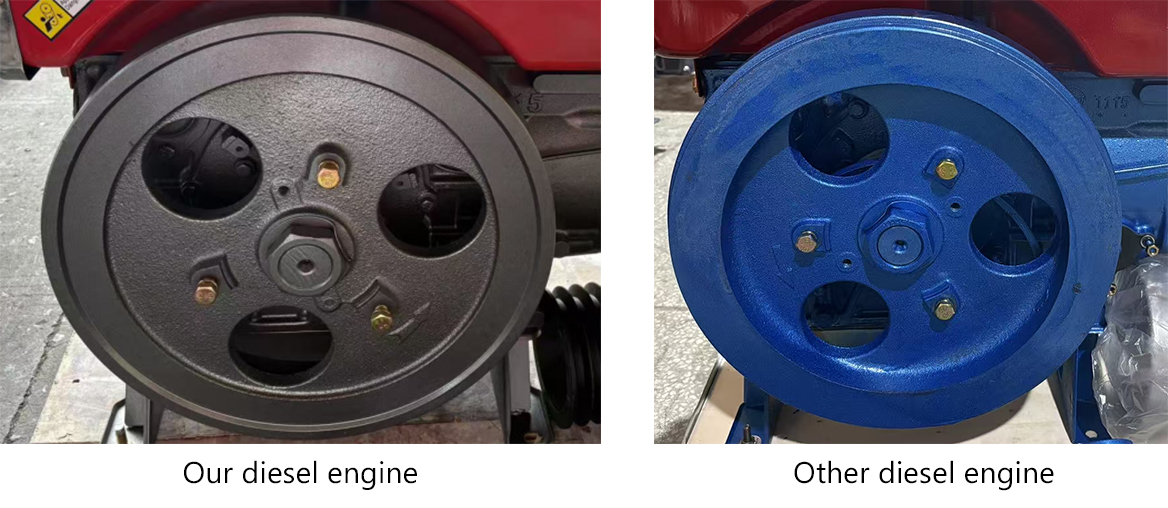
There is a genuine limit to this advantage, and it should be stated plainly. A corrosion-resistant finish does not remove the buyer's responsibility for maintenance discipline. Improper maintenance procedures can still cause equipment damage or personal injury regardless of surface treatment, and the correct control is procedural: shut down the engine before maintenance and work strictly according to the instruction manual. A supplier can reduce this risk by providing detailed manuals and training, but it cannot eliminate it. Buyers should therefore treat production quality and maintenance compliance as two separate risks, and price them separately.
A second limit is scope. Process advantages measured in paint adhesion, anti-corrosion and maintenance cost do not automatically extend to every performance dimension. Power output, fuel consumption behavior and duty-cycle suitability must still be verified against the specific application, and a supplier's stated consistency in these areas should be confirmed through sample testing rather than assumed from manufacturing quality alone.
Future Outlook for Single Cylinder Diesel Engine Supply
Three forces are likely to shape supplier evaluation through the rest of the decade.
Policy fragmentation. As emission frameworks and duty structures diverge by market, the ability to configure engines and packaging — complete, SKD or CKD — for a specific destination will become a first-order capability rather than a secondary service.
Continued regional concentration. With Asia Pacific holding 58.2% of revenue share, production learning and cost advantages are likely to remain concentrated in one region, keeping pressure on suppliers to differentiate through process depth and documentation quality rather than price alone.
Agriculture-led demand stability. Because agriculture accounts for approximately 42.3% of the segment's application share, demand is tied to food production and rural mechanization trends rather than to industrial cycles — a stabilizing factor for buyers planning multi-year supply agreements.
For procurement teams, the practical implication is a shift in what counts as proof. Increasingly, the evidence that matters is not what a supplier claims about its engines, but what its export record, regulatory alignment, production footprint and documentation practices demonstrate.
FAQ
What criteria should be used to compare single cylinder diesel engine suppliers?
A structured comparison should move through four layers: policy fit (can the engine legally enter the target market), application fit (does the engine configuration match the duty cycle), production evidence (annual output, factory footprint, in-house engineering and process controls), and commercial terms (packaging format, lead time, documentation and acceptance criteria). Policy fit is a screening criterion; the remaining layers are where suppliers genuinely differentiate.
Do export records actually prove supplier capability?
Export records are evidence of operating history rather than a guarantee of quality. China's combustion engine exports reached USD 3.29 billion in 2025, and a manufacturer present in those flows has demonstrated the documentation, logistics and compliance capability required for cross-border trade. This does not automatically confirm product performance, which must still be validated through samples and acceptance testing.
Which purchasing terms and acceptance criteria matter most at the decision stage?
The terms that most directly affect total cost and risk are configuration (air- or water-cooled), horsepower band, start method, and packaging format (complete unit, SKD or CKD). Acceptance criteria should specify pre-shipment inspection, identity verification against the ordered specification, and required documentation, including operation and maintenance manuals. These criteria should be fixed before the order rather than negotiated at delivery.
How should a buyer evaluate production capacity claims from a diesel engine factory?
Capacity claims are most useful when expressed in verifiable units: annual output, factory area, workforce size and in-house engineering headcount. For reference, CHANGZHOU VISION INTERNATIONAL TRADING CO.,LTD reports an annual output of 100,000 units from a 32,207.8 m² facility with 95 employees and 5 in-house engineers. These figures indicate scale and internal capability; buyers should still confirm that the capacity is available for their specific configuration and delivery window.
What are the practical limits of small diesel engines across different markets?
The main limits are regulatory and operational. Emission frameworks such as U.S. EPA Tier 4 apply to off-highway diesel engines, with exemptions for engines under 24 horsepower, so the applicable rules depend on the horsepower band and destination. Operationally, small diesel engines remain dependent on correct maintenance: improper procedures can damage equipment or injure operators, which is why manuals, training and after-sales support form part of the evaluation rather than a post-sale detail.
How does SKD or CKD supply change a supplier comparison?
SKD and CKD formats change both landed cost and the supplier relationship. Tariff structures in some markets, such as Myanmar (1.5%–3% for CKD) and Thailand (0% for some categories), can favor knocked-down assembly as an incentive to localize manufacturing. A supplier capable of supporting SKD or CKD supply is therefore offering a different commercial model, not merely a different packaging option — one that may shift the buyer's role from importer to local assembler.
For readers who require consolidated technical and capability references, the Willson single cylinder diesel engine brochure is available here: single cylinder diesel engine brochure.
Have Questions or Need More Details?
Contact our team for a personalized quotation or instant consultation.
Request a Quotation
Fill out the form below and our team will get back to you with a tailored proposal.
WhatsApp Direct Chat
Prefer to chat in real-time? Message us on WhatsApp for instant assistance & quick answers.
- Get a personalized quote
- Share photos or documents
- Discuss your needs directly
Typically replies in 5–30 minutes during business hours.