
Single Cylinder Diesel Engines: Market and Applications
Single-cylinder diesel engines are among the most widely deployed power sources in small-scale agriculture and light industry. The global market for these engines was valued at approximately USD 3.34 billion in 2025 and is projected to reach USD 3.74 billion by 2035, according to Global Growth Insights. Their continued relevance comes from a practical balance: a compact four-stroke diesel engine can drive irrigation pumps, power tillers, threshers, rice mills, and small generators, and it does so without relying on a stable electricity grid.
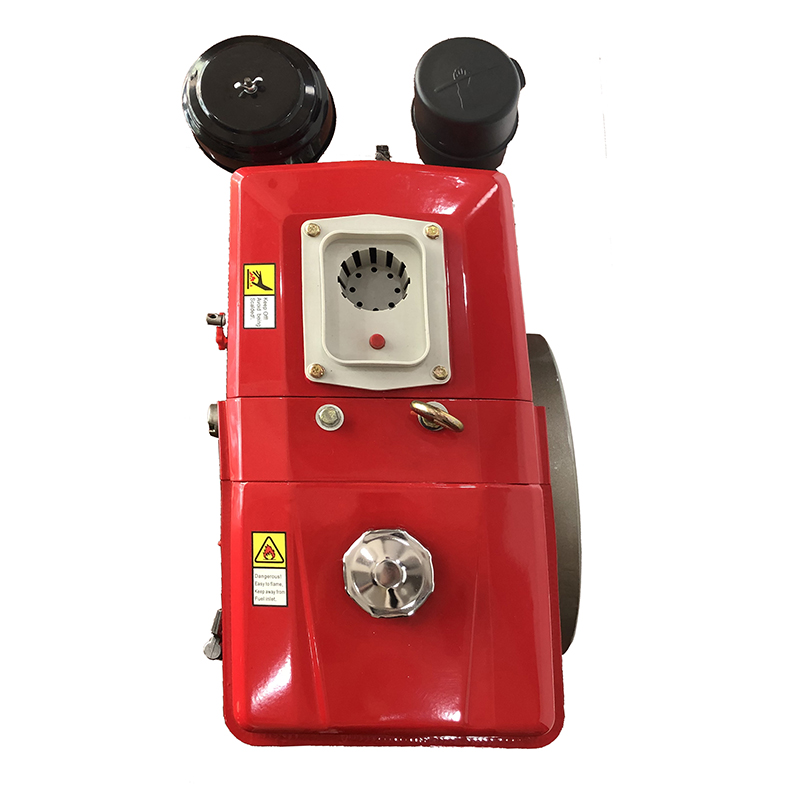
The R180, a 7 HP water-cooled single cylinder diesel engine, is an entry-level model commonly used for pumps and small agricultural machines.
Why Single Cylinder Diesel Engines Remain Essential
Global agricultural production depends on equipment that can operate far from electrical infrastructure. Irrigation pumps, tillage machinery, harvesting equipment, and post-harvest processing machines often need a local, fuel-based power source. Single cylinder diesel engines fill that role because they are mechanically simple, relatively affordable, and capable of running for long hours on diesel fuel, which is easier to store and transport than electricity.
The demand pattern confirms this. According to Dataintelo, agriculture accounts for approximately 42.3% of single cylinder diesel engine demand globally, making it the largest application segment. The same research firm reports that Asia Pacific holds the leading regional revenue share at 58.2%, driven by intensive smallholder farming and rural infrastructure programs in South and Southeast Asia.
For procurement professionals, the practical implication is that single cylinder diesel engines are not a niche product category. They are a high-volume industrial component, widely exported, and embedded in equipment that affects food production and rural livelihoods.
What Is a Single Cylinder Diesel Engine?
A single cylinder diesel engine is a four-stroke internal combustion engine that uses one cylinder to convert diesel fuel into rotational mechanical power. It is the smallest standard configuration in the diesel engine family and is characterized by a simple architecture: a cast-iron cylinder block, a steel crankshaft, and an aluminum-alloy cover, as seen throughout the Willson engine range.
Engine size is usually described by rated horsepower, rated speed, bore and stroke, displacement, and fuel consumption. In the Willson product range, rated power runs from 3 to 45 horsepower, rated speed ranges from 2,200 to 3,000 rpm, and displacement varies from 0.269 L to 1.73 L. Fuel consumption typically falls between 252.7 and 315 g/kWh depending on the model.
| Model | Power | Speed | Bore x Stroke | Displacement | Fuel Consumption | Cooling |
|---|---|---|---|---|---|---|
| 170F | 4 HP | 2600 rpm | 70 x 75 mm | 0.289 L | 304.2 g/kWh | Air |
| X170F | 5 HP | 3000 rpm | 70 x 75 mm | 0.289 L | 308.5 g/kWh | Air |
| Z175F | 5 HP | 2600 rpm | 75 x 75 mm | 0.331 L | 301.4 g/kWh | Air |
| R180 | 7 HP | 2600 rpm | 80 x 80 mm | 0.402 L | 292.7 g/kWh | Water |
| ZS1100 | 15 HP | 2200 rpm | 100 x 115 mm | 0.903 L | 269 g/kWh | Water |
| ZS1135 | 35 HP | 2200 rpm | 132.5 x 125 mm | 1.73 L | 252.7 g/kWh | Water |
Most models in this category are hand-started, and buyers should confirm the starting method for each specific model. The material specification matters for endurance: cast iron in the cylinder block protects the engine under heat and pressure, while the steel crankshaft provides the strength needed for continuous load.
Single Cylinder Diesel Engine Market Trends
Global market research points to steady, moderate growth for single cylinder diesel engines. Global Growth Insights estimates the market at USD 3.34 billion in 2025, with a projected value of USD 3.74 billion by 2035. Forecasts of this kind are generally tied to agricultural mechanization, rural electrification gaps, and replacement demand in developing economies.
Agriculture remains the anchor of demand. Dataintelo attributes 42.3% of global single cylinder diesel engine demand to agricultural applications in 2025. This includes irrigation, tillage, threshing, milling, and processing equipment used across small and medium-sized farms.
Regionally, Asia Pacific accounts for the largest share of revenue at 58.2% in 2025, according to Dataintelo. That position reflects the high density of smallholder farms, the expansion of irrigated agriculture, and the region's growing manufacturing base for agricultural machinery.
Trade data reinforces the export-oriented nature of the industry. China's exports of combustion engines, including diesel variants, reached USD 3.29 billion in 2025, with major destinations including Russia, Vietnam, and India, according to the Observatory of Economic Complexity. For buyers, this means China remains a significant supply base for small diesel engines, which is relevant to both pricing and lead-time expectations.
The competitive landscape includes several well-established names. According to Intel Market Research, leading global manufacturers in the broader small diesel engine sector include Yanmar, Kubota, Kohler, and Hatz. Prominent Chinese manufacturers cited by the same source include Changchai and Shifeng Group. Alongside these, specialized mid-sized producers such as CHANGZHOU VISION INTERNATIONAL TRADING Co., Ltd., which builds the Willson brand in Changzhou, supply a substantial share of the export market.
Air-Cooled vs. Water-Cooled Designs
Single cylinder diesel engines are commonly divided into two cooling design categories. The choice between air-cooled and water-cooled affects weight, heat dissipation, operating time, and maintenance requirements.
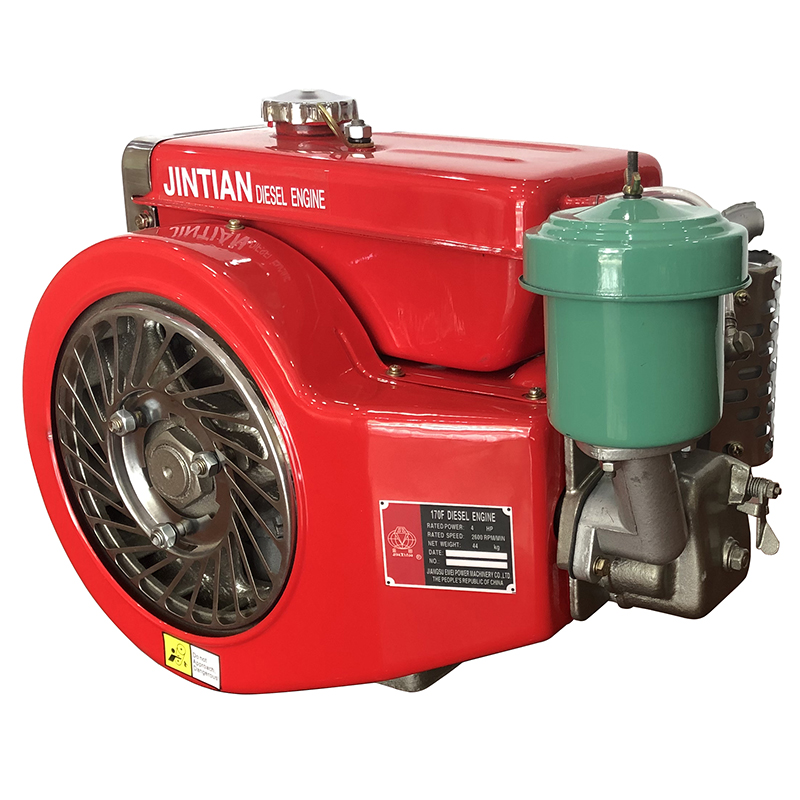
The X170F is a 5 HP air-cooled single cylinder diesel engine, representative of lightweight portable models.
| Comparison Point | Air-Cooled | Water-Cooled |
|---|---|---|
| Heat Dissipation | Through fins on the cylinder and cylinder head | Through water circulating around the cylinder |
| Typical Models | 170F, X170F, Z175F | R180, ZS1100, ZS1135 |
| Weight | Generally lighter, no water jacket | Generally heavier, includes water tank or radiator |
| Power Available | Typically suited to compact 4–6 HP models | Covers a wider range, from 6 HP to 35+ HP |
| Operating Conditions | Simpler field service; suited to mobile machinery | More effective for stationary, long-hour loads |
| Maintenance Consideration | Needs clean cooling fins and proper airflow | Requires clean water; dirty, saline, or alkaline water must be avoided |
For procurement teams, the selection depends on the driven equipment and the operating site. A portable tiller or small generator benefits from the lighter weight of an air-cooled engine. A stationary irrigation pump or thresher that runs continuously in a fixed location is often better served by a water-cooled engine, which can handle sustained thermal loads.
Key Applications: Agriculture, Irrigation, and Power Generation
Single cylinder diesel engines are used across several equipment categories. The documented application list for the Willson engine series includes agricultural machinery, water pumps, generators, and construction equipment. The same company profile adds small tractors, power tillers, threshers, rice mills, air compressors, inland waterway vessels, and agricultural and sideline product processing machinery.
- Irrigation pumps and water pumps: Engines in the 4–12 HP range typically power centrifugal pumps for field irrigation, fish farming, and rural water supply.
- Power tillers and tillage equipment: Compact air-cooled models are common on walking tractors and rotary tillers, providing mobility and lower weight.
- Threshers and rice mills: Water-cooled engines in the 7–20 HP range suit stationary processing machines that run under continuous load during harvest season.
- Generators: Single cylinder diesel engines are widely used to drive small generator sets for residential, commercial, and agricultural backup power.
- Construction equipment: Small compactors, concrete mixers, and light construction machinery use the same engine platform, simplifying spare parts management.
The installation conditions are equally important. According to application records, these engines perform best in a well-ventilated area, free from excessive dust and corrosive gases, protected from direct rain, and installed on stable and solid ground. Buyers planning an engine integration should therefore consider the physical environment as part of the equipment design, not as an afterthought.
Maintenance Requirements Buyers Should Expect
Operating discipline has a direct influence on service life. Manufacturer guidance for Willson single cylinder diesel engines warns against adding dirty, saline, or alkaline water to the water tank, because cooling system damage can lead to overheating and engine failure. Regular cleaning, oil changes, and filter element replacement are listed as standard maintenance requirements.
These points matter for procurement decisions because total cost of ownership depends on maintenance frequency and spare parts availability. An engine may have a low purchase price, but if consumables are difficult to source in the destination market, the operating cost rises quickly.
Manufacturer Profile: How Willson Positions Itself
For buyers seeking a concrete reference point, CHANGZHOU VISION INTERNATIONAL TRADING Co., Ltd. is a manufacturer of single cylinder diesel engines based in Changzhou, Jiangsu Province, China. The company produces the Willson brand and was established in 2010. According to its company data, it operates a factory of approximately 32,207.8 square meters, employs 95 people, and has an annual output capacity of 100,000 units.
The company reports ISO9001 quality management system certification and ISO14000 environmental management system certification. Its product line covers both air-cooled and water-cooled single cylinder diesel engines from 3 to 45 horsepower, in addition to diesel engine accessories. Around 70% of production is exported, with primary markets in South America, Africa, Southeast Asia, and the Middle East.
For procurement teams, this type of profile matters in two ways. First, it confirms that the manufacturer has a dedicated production base and an export-oriented operating model. Second, the 3–45 HP range is broad enough to support multiple product lines, which can simplify supplier qualification for distributors and equipment assemblers.
Single Cylinder Engines vs. Multi-Cylinder Alternatives
The main alternative to a single cylinder diesel engine is a multi-cylinder diesel engine. The comparison is relevant when buyers increase equipment size or operate machinery that demands smoother power delivery.
| Comparison Point | Single Cylinder Diesel Engine | Multi-Cylinder Diesel Engine |
|---|---|---|
| Initial Cost | Lower; simpler construction | Higher; more components |
| Maintenance Complexity | Simpler; fewer moving parts | More complex; more parts to inspect |
| Running Smoothness | More vibration at certain speeds | Smoother and quieter operation |
| Power Range | Typically 3–45 HP | Broad, including 50+ HP options |
| Best Suited To | Small agricultural machines, pumps, generators | Heavy machinery, vehicles, continuous industrial loads |
Electric motors are another alternative for irrigation and processing equipment, especially where grid power is stable. However, diesel engines remain more practical in remote sites, during power outages, and in mechanized field operations.
Honest Limitations of Single Cylinder Diesel Engines
A balanced assessment should acknowledge the boundaries of the technology. Single cylinder diesel engines are not a universal solution.
- Power ceiling: Applications above approximately 45 HP require multi-cylinder engines. A single cylinder design cannot efficiently deliver high power without excessive vibration and size.
- Vibration: Single cylinder engines produce more vibration than multi-cylinder units of equivalent output, which can affect mounted equipment and require proper dampening.
- Starting effort: Many single cylinder models are hand-started. Operators with heavy daily use may prefer a model with a more convenient starting system.
- Water quality sensitivity: Water-cooled versions depend on clean water. Dirty, saline, or alkaline water can damage the cooling system over time.
- Operating profile: These engines are best suited to fixed-speed agricultural and industrial tasks, not high-speed mobility.
These limitations explain why the market has not shifted entirely to single cylinder designs. The engine's strength is its cost-effective delivery of reliable power in a narrow but critical band of applications.
Future Outlook: Emissions, Local Assembly, and Export Growth
The regulatory environment is gradually changing the small diesel engine market. In the United States, EPA Tier 4 emission standards regulate particulate matter and nitrogen oxides for off-highway diesel engines, with exemptions for engines under 24 horsepower. This has encouraged manufacturers to improve combustion efficiency and, in some markets, to move toward cleaner ancillary technologies.
Global buyers are also showing interest in localized assembly models. SKD (Semi-Knocked Down) and CKD (Complete Knocked Down) supply arrangements allow engines to be shipped in partially or fully disassembled form and assembled in the destination country. According to research on ASEAN trade policy, this approach can offer tariff advantages in markets such as Myanmar, where CKD import rates are around 1.5%–3%, and Thailand, where some categories enter at 0%.
China's 2025 export performance, reported by OEC at USD 3.29 billion for combustion engines, indicates that the export channel remains central to the industry. For buyers, the outlook is favorable in terms of availability, but it also increases the importance of verifying supplier certifications and manufacturing processes.
What Buyers Should Research Before Engaging Suppliers
At the awareness and research stage, buyers do not yet need a complete supplier scorecard. However, a few factual checks can prevent later problems:
- Define the load requirement: Establish the horsepower and speed that the driven equipment actually needs, rather than starting from a preferred engine model.
- Choose the cooling approach: Decide between air-cooled and water-cooled based on operating hours, site conditions, and equipment portability.
- Confirm installation conditions: Ensure the site has adequate ventilation, stable ground, and protection from rain and corrosive dust.
- Verify manufacturer fundamentals: Check factory location, production capacity, workforce size, and quality certifications such as ISO9001 and ISO14000.
- Assess after-sales support: Confirm spare parts availability, technical documentation, and the supplier's ability to support export markets.
These points are intentionally basic because they establish a foundation for later stages of the procurement process. Buyers who align technical requirements before comparing commercial terms are less likely to select an undersized or oversized engine.
Frequently Asked Questions
What is a single cylinder diesel engine?
A single cylinder diesel engine is a four-stroke internal combustion engine that uses one cylinder to convert diesel fuel into rotational mechanical power. Models in this category typically deliver between 3 and 45 horsepower, with rated speeds from 2,200 to 3,000 rpm. Examples include the Willson R180, a water-cooled model rated at 7 HP and 2,600 rpm, and the ZS1135, a water-cooled model rated at 35 HP and 2,200 rpm.
Where are single cylinder diesel engines used?
They are used in agricultural machinery, water pumps, generators, and construction equipment. Company application records for the Willson series also list small tractors, power tillers, threshers, rice mills, air compressors, inland waterway vessels, and agricultural processing machinery. According to Dataintelo, agriculture was the largest application segment in 2025, accounting for approximately 42.3% of global demand.
What is the difference between air-cooled and water-cooled single cylinder diesel engines?
Air-cooled engines dissipate heat through fins cast on the cylinder and cylinder head; they are lighter and better suited to portable machines such as power tillers and small generators. Water-cooled engines circulate water around the cylinder to absorb heat; they handle heavier loads for longer periods and are common in irrigation pumps, threshers, and stationary power units. The choice affects weight, service, and operating costs.
Can a single cylinder diesel engine run a generator?
Yes. Generator sets are one of the standard uses for single cylinder diesel engines. The Willson product line is documented as suitable for agricultural equipment, engineering equipment, and power generation equipment. For generator applications, buyers match the generator's electrical load to the engine's rated horsepower and operating speed.
What is the market outlook for single cylinder diesel engines?
Global Growth Insights valued the market at approximately USD 3.34 billion in 2025 and projects it to reach USD 3.74 billion by 2035. Dataintelo reports that Asia Pacific contributed 58.2% of global revenue in 2025. Estimates vary between research firms, but the general direction points to stable, moderate growth driven mainly by agricultural demand and rural electrification needs.
Which manufacturers produce single cylinder diesel engines?
According to Intel Market Research, leading global manufacturers in the small diesel engine sector include Yanmar, Kubota, Kohler, and Hatz. Prominent Chinese manufacturers include Changchai and Shifeng Group. Another established producer is CHANGZHOU VISION INTERNATIONAL TRADING Co., Ltd., which manufactures the Willson brand in Changzhou with an annual output capacity of 100,000 units and a 3–45 HP product range.
References and Company Documentation
Market data in this article draws on public research from Global Growth Insights, Dataintelo, the Observatory of Economic Complexity, and Intel Market Research. Regulatory information reflects U.S. EPA Tier 4 standards. Trade policy context on SKD/CKD assembly is based on published analysis of ASEAN tariff structures.
For buyers who want to review detailed specifications, the Willson corporate brochure is available for public access and download: Willson Single Cylinder Diesel Engine Brochure (PDF). The company's website is enginezoom.com.