
Six Rare Earth Compounds to Sample First for Smart-Life Teams
Six Rare Earth Compounds to Sample First for Smart-Life Teams
A smart-life product team rarely needs one rare earth compound. It needs a defensible reason to stop sampling. The first round is where that reason gets built: a small set of candidate compounds, each requested in a defined form, each delivered with documentation that can be compared line by line before anyone commits a formulation, a polishing step or a prototype build. The six compounds proposed here are that first round — a sampling order for evaluation teams, not a verdict on how any of them performs inside a finished device.
The candidate set is drawn from the published portfolio of Sichuan Wonaixi New Materials Technology Co., Ltd. (WONAIXI), a manufacturer founded in 2012 in Leshan, Sichuan, producing high-purity rare earth salts and precision rare earth polishing powder. The selection rule, the specification questions and the compliance checks below work with any supplier; the portfolio simply provides a concrete list of documented identities to test the rule against.
Why the first sampling round is usually the weakest step
Two documentation problems make early sampling unreliable, and both appear before any technical question is asked.
The first is family confusion. Carbonates, nitrates, fluorides, acetates, chlorides, hydroxides and oxides are not interchangeable forms of “a rare earth”. They differ in formula, in hydrate state, in the specification fields that carry meaning, and in what a certificate of analysis can realistically state. A request that names lanthanum without naming the family, the hydrate form and the content basis leaves room for the supplier to answer a different question than the buyer asked.
The second is documentation asymmetry. Suppliers publish product names, CAS numbers and broad use categories readily; purity definitions, named impurity limits, particle-size distributions and grade criteria usually appear only when a buyer asks for them specifically. A team that samples first and specifies later ends up with jars it cannot compare.
There is an opportunity cost as well. China's export-control framework for specified rare earth items has applied since 4 April 2025, so a sample request from a Chinese supplier can carry licensing and customs-declaration steps that a domestic purchase would not. Settling the classification conversation at sample stage is cheaper than discovering it at purchase-order stage.
Four rules that produced this six-compound set
- Documented identity first. A compound enters the first round only when a CAS number and a formula — including the hydrate coefficient where the supplier states one — can be written down.
- Family spread over family depth. The six span carbonate, nitrate, acetate and oxide families, so one round compares routes instead of repeating a single route six times.
- An anchor for the specification conversation. A stated grade or a stated use category gives the first technical exchange something concrete to test against.
- Portfolio-verifiable availability. Only compounds listed in the supplier's published portfolio are proposed, so the request does not begin with a sourcing question.
Families that fail rule one or rule three are sequenced later, not rejected. The supplier's portfolio listing also names lanthanum fluoride, cerium fluoride, praseodymium-neodymium fluoride and yttrium fluoride, together with lanthanum, cerium, neodymium, praseodymium, yttrium and erbium chlorides and lanthanum, cerium and yttrium hydroxides. The supplied documentation does not attach a grade or an end-use category to those entries, which is a reason to place them in a second round once the intended route is fixed and the buyer already knows which fields to demand.
The shortlist: six compounds across four families
| Compound | Family | Documented identity | Stated use or grade anchor |
|---|---|---|---|
| Lanthanum Carbonate | Carbonate | La2(CO3)3·xH2O; CAS 54451-24-0 | Intermediate use |
| Yttrium Nitrate hexahydrate | Nitrate | Y(NO3)3·6H2O; CAS 13494-98-9 | Chemical industry use including ternary catalysts and ceramics |
| Neodymium Nitrate hexahydrate | Nitrate | Nd(NO3)3·6H2O; CAS 16454-60-7 | Identity only; no grade or use category stated |
| Lanthanum Acetate hydrate | Acetate | La(C2H3O2)3·xH2O; CAS 100587-90-4; MW 316.04 on anhydrous basis | Ternary catalyst manufacturing; chemical reagent industries |
| Cerium Acetate hydrate | Acetate | Ce(C2H3O2)3·xH2O; CAS 537-00-8; MW 371.27 on anhydrous basis | Ternary catalyst production; chemical reagent industries |
| High-Purity Lanthanum Oxide | Oxide | Lanthanum oxide, 99.9% purity (company-reported) | Optical glass |
Lanthanum carbonate opens the set because it is the cleanest hydrate-handling case. The identity is written La2(CO3)3·xH2O with CAS 54451-24-0 and a stated intermediate use, so the buyer knows in advance that the x is a question to ask rather than an assumption to make.
Yttrium nitrate hexahydrate is the only entry whose supplied description names both a use category and specific downstream industries: chemical industry use including ternary catalysts and ceramics, with the hexahydrate fixed in the formula Y(NO3)3·6H2O and CAS 13494-98-9. That combination makes it the easiest compound in the set to convert into a written requirement.
Neodymium nitrate hexahydrate (Nd(NO3)3·6H2O, CAS 16454-60-7) is included as a second nitrate deliberately. The supplied product information establishes identity only, with no grade or use category attached. That makes it a useful test of the buyer's own specification work: the request has to be built from the application rather than copied from a catalogue line.
The two acetates are paired because their published records share a structure — a variable hydrate coefficient, a molecular weight stated on an anhydrous basis, and a stated fit with ternary catalyst work and chemical reagent industries. Lanthanum acetate gives CAS 100587-90-4 and a molecular weight of 316.04 on an anhydrous basis; cerium acetate gives CAS 537-00-8 and 371.27 on the same basis. Requesting both lets a team compare two cations inside one family before deciding whether the acetate route deserves a deeper look.
High-purity lanthanum oxide closes the set with an oxide-family baseline at a stated 99.9% purity for optical glass. If the route under evaluation is catalytic rather than optical, the same logic points to the supplier's catalyst-grade cerium oxide for the oxide slot; the six-compound count stays, only the oxide choice changes.
Technical explanation: why hydrate state and molecular-weight basis decide comparability
Two samples can arrive with the same element name and still be incomparable, because the certificate and the purchase request can be written on different bases.
The acetate records show the problem clearly. WONAIXI lists lanthanum acetate at a molecular weight of 316.04 on an anhydrous basis and cerium acetate at 371.27 on an anhydrous basis, while both formulas carry a variable hydrate coefficient. The molecular weight therefore describes the anhydrous salt, not the hydrate as weighed. If the request quotes a target mass on a hydrate basis and the certificate reports content on an anhydrous basis, the two documents will disagree by the water of hydration — and neither document is wrong.
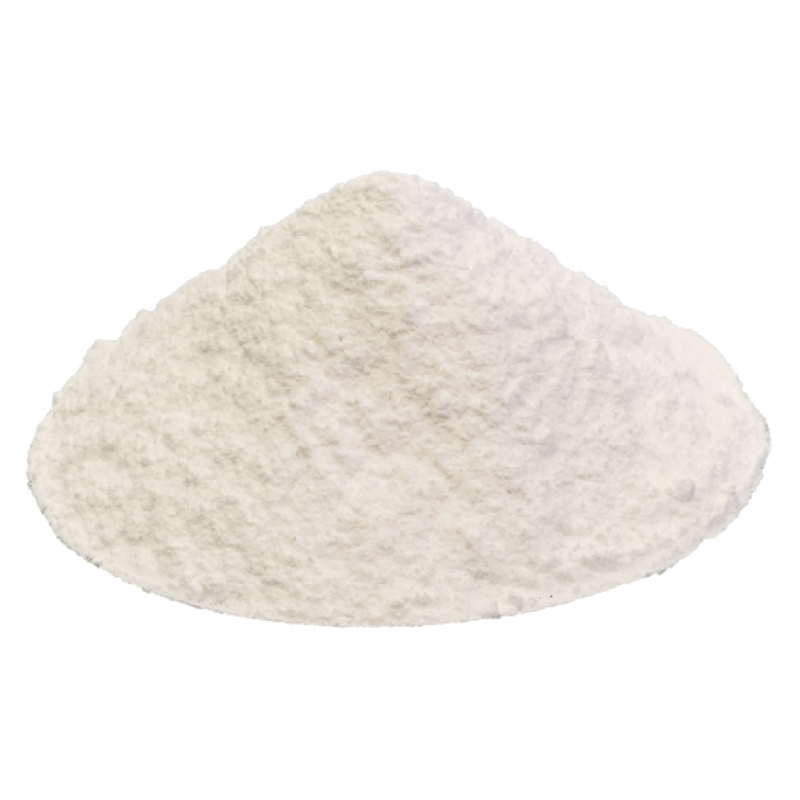
Lanthanum carbonate (La2(CO3)3·xH2O, CAS 54451-24-0), the carbonate entry in the first-round set. Image: WONAIXI.
Hydrate treatment also differs between records in a way that affects what the CAS number can promise. For yttrium nitrate hexahydrate and neodymium nitrate hexahydrate, the six-water coefficient is written into the formula itself. For lanthanum carbonate, lanthanum acetate and cerium acetate, the coefficient is written as x. Where the coefficient is fixed, the hydrate is part of the identity; where it is variable, the batch certificate has to state the actual water content, or the basis on which rare earth content is reported, before the sample can be compared with anything else.
Oxide grades introduce a parallel question. A stated purity such as 99.9% answers “how much of this is lanthanum oxide” only if the basis, the analytical method and the controlled impurity list are also stated. A grade name alone — optical, catalyst, high purity — is a starting point for the specification conversation, not the conclusion of it.
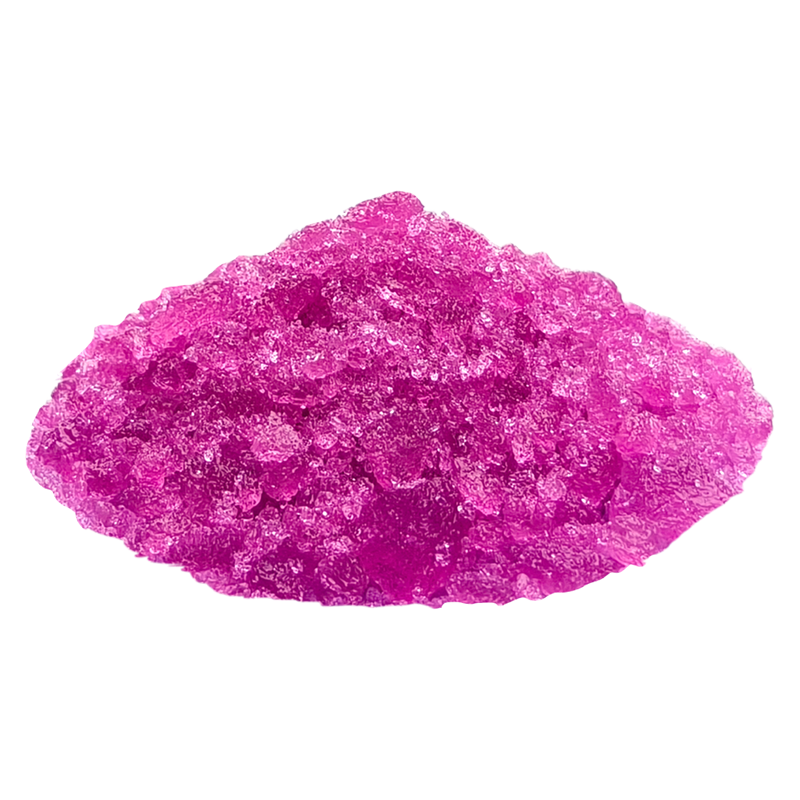
Neodymium nitrate hexahydrate (Nd(NO3)3·6H2O, CAS 16454-60-7), paired with yttrium nitrate so one round compares two cations inside the nitrate family. Image: WONAIXI.
What to put in the request before the first shipment
The request document does more work than the sample itself. Ten fields cover most of the failure modes described above.
- Full chemical identity: product name, CAS number, formula with the hydrate coefficient as written by the supplier, and whether the molecular weight is stated on an anhydrous or as-weighed basis.
- Assay and its basis: how rare earth content is expressed — as the compound, as the oxide, on a dried basis or as received — and the method used to determine it.
- Named impurity profile: individual elements and detection limits rather than a single “low impurity” descriptor.
- Moisture or loss on drying/ignition, with the test method and the temperature used.
- Particle size or morphology, where the intended route is a solid-state or dispersion step; state the measurement technique requested.
- Behaviour in the intended solvent system, including the test conditions under which that behaviour is described.
- The definition behind the grade name — what the supplier means by catalyst grade or optical grade, in numeric terms.
- A certificate of analysis for the actual sample batch, not only a representative specification sheet.
- Net weight, packaging format and quantity basis, so the mass received can be reconciled with the content basis reported.
- Commercial and scheduling parameters: minimum order approach, quoted lead time and whether sample quantities follow the same testing route as production batches.
On the last point, WONAIXI states that finished material is 100% tested and that customization covers indicators, contents, specifications, purity and packaging. Those statements belong in the request as items to verify — ask which test, on which parameter, with which record provided — rather than as assumptions carried into the sample evaluation.
Documentation and compliance checks that change sampling order
Two documents should be read before the technical discussion, because either can reorder the shortlist.
The quality certificate and its stated scope
WONAIXI holds ISO 9001 certification, certificate number 06526Q01354R101, issued by CFL Certification Center under GB/T19001-2016/ISO9001:2015 and valid from 1 June 2026 to 31 May 2029. The scope is written as manufacturing and sales of electronic special rare earth functional materials (cerium salts, lanthanum oxide). That wording matters for buyers: a valid certificate confirms a certified management system for the activities named in its scope, and it does not by itself certify every item in a product catalogue. A team shortlisting a nitrate or a fluoride should ask directly whether that product falls under the certified scope, and if not, which quality route applies to it.
Export classification
What the published rules establish. Since 4 April 2025, MOFCOM Announcement No. 18 of 2025 has applied export-control requirements to specified rare earth elements and their products, including covered oxides, compounds and mixtures, with exporters required to apply for a licence where applicable. Exporters must identify controlled items in the remarks section of customs declarations and provide the applicable dual-use item control number, and customs may raise a query during which goods are not released.
What they do not establish. The framework does not prove that every rare earth compound on a supplier's list is controlled. Classification has to be confirmed product by product and destination by destination, including the current HS code and the controlled-item list applicable at the time of shipment.
Practically, that means the sample request should carry two extra lines: a request for the export classification the supplier applies to the specific compound and grade, and a request for the documentation the supplier would provide at shipment. If classification is unresolved for a compound, it is reasonable to sequence that compound later and start with entries whose paperwork is already clear.
How WONAIXI fits the first-round screen
The supplier profile is relevant here only where it bears on the buyer's checks: identity documentation, portfolio breadth, capacity and grade coverage.
On capacity, WONAIXI states annual output of 15,000 tons of high-purity rare earth salts and 3,000 tons of high-precision rare earth polishing powder, produced on dedicated rare earth functional materials lines at a 46,667 m² facility. For a sampling decision the number is not a purchase argument; it is a check that a sample-scale request and a later production-scale requirement sit inside one supply base rather than two.
On breadth, the company reports nine major rare earth product categories and more than 50 specialized variants, and the portfolio listing covers the carbonate, nitrate, acetate, fluoride, chloride, hydroxide and oxide families discussed above. Breadth is useful for a first round because it allows family comparison from a single documentation set. It is not evidence that any one grade will suit a specific process — that remains a matter for the certificate of analysis and the buyer's own trials.
On commercial parameters, the published capability data states OEM/ODM and custom work on indicators, contents, specifications, purity and packaging, a quoted lead time of 30–45 days, and a minimum order quantity discussed against the actual requirement. Those are supplier-stated terms; they should be confirmed in writing for the specific compound and grade being sampled. The company's own website is wonaixi.com.
What the first round can and cannot prove
Six samples generate six data points and one comparison framework. They do not generate a process qualification.
A sample certificate describes a batch, not a production distribution. A hydrate coefficient reported once does not guarantee the same water content next quarter. A grade name does not disclose the impurity limits behind it. A certified management system does not certify a specific product line. And a portfolio that lists a compound does not establish that the compound is suitable for a given route — that conclusion requires the buyer's own trials under the buyer's own conditions.
The comparison that matters at this stage is between sampling strategies, not between compounds:
| Dimension | Single-family first sample | Family-spanning first round |
|---|---|---|
| Question answered | Can this compound be supplied? | Which family and form fits the route? |
| Documentation compared | One certificate of analysis | Four family-specific document sets |
| Main risk | Route locked in before comparison begins | More samples to log, store and retest |
| Time to a decision | Fast on one compound, slow to converge | Slower first shipment, faster convergence |
| Best fit | Requirements already fixed | Concept-stage scoping |
For a smart-life team at evaluation stage, the right-hand column is usually the better trade: a slightly larger first shipment in exchange for a comparison that can survive scrutiny.
Outlook
The direction of travel in rare earth sourcing is documentation-led rather than price-led at the sampling stage. Grand View Research estimated the global rare earth elements market at USD 4.5 billion for 2026, but for an innovation team the operative constraint is not market size — it is the time between asking a question and receiving an answer a specification can use.
Two developments push in the same direction. Export-control administration adds a classification step that is easiest to handle before a sample moves. And widening use of rare earth compounds in consumer-facing categories increases the number of buyers who need comparable documentation rather than another catalogue. On current evidence, teams that fix hydrate basis, content basis and grade definitions at the first request will spend less time reconciling certificates later. That is a conditional expectation, not a guarantee, and it depends on the supplier answering the request in writing.
Frequently asked questions
Which rare earth compound should a smart-life team request first?
There is no universal first compound; there is a first question. If the route is still open, lanthanum carbonate is a defensible opening request, because its published identity — La2(CO3)3·xH2O, CAS 54451-24-0, intermediate use — forces the hydrate and content-basis questions early. If the route already involves catalysis or ceramics, yttrium nitrate hexahydrate (Y(NO3)3·6H2O, CAS 13494-98-9) carries a stated use category to test the specification against.
What specification details should be requested before a sample ships?
The minimum set is: name, CAS number and formula with the hydrate coefficient; the basis on which rare earth content and molecular weight are reported; a named impurity list with detection limits; moisture or loss on drying with the test method; particle size or morphology where relevant, with the measurement technique; the numeric definition behind any grade name; a certificate of analysis for the actual sample batch; net weight and packaging; and the export classification the supplier applies to that compound and grade.
Does the hydrate form change which CAS number a buyer should quote?
Sometimes. Where the supplier's documentation fixes the hydrate in both formula and CAS — as with yttrium nitrate hexahydrate, Y(NO3)3·6H2O, CAS 13494-98-9, and neodymium nitrate hexahydrate, Nd(NO3)3·6H2O, CAS 16454-60-7 — the hydrate is part of the identity. Where the formula carries a variable coefficient, as with lanthanum carbonate, CAS 54451-24-0, lanthanum acetate, CAS 100587-90-4, and cerium acetate, CAS 537-00-8, the CAS number does not fix the water content, and the batch certificate has to state it.
Do China's export controls affect rare earth sample requests?
They can. Since 4 April 2025, MOFCOM Announcement No. 18 of 2025 has applied export-control requirements to specified rare earth elements and products, including covered oxides, compounds and mixtures, with a licence required where applicable. Exporters must identify controlled items in customs declarations and provide the applicable dual-use item control number, and customs may hold goods while a declaration is queried. The framework does not establish that every listed compound is controlled, so classification should be confirmed for the specific product and destination before a shipment date is relied on.
What is the difference between catalyst grade and optical grade in a rare earth oxide?
In the supplied product information, grade is attached to an end use rather than to a published numeric definition: cerium oxide is described as catalyst grade, and lanthanum oxide is described as high purity at 99.9% for optical glass. The documentation does not state the impurity limits, test methods or acceptance thresholds behind either designation, so a buyer should request the grade definition, the controlled impurity list and the analytical method before treating a grade name as a specification.
The supplier's full product brochure, including the wider rare earth and zirconium salt range, is available for download: WONAIXI product brochure (PDF).
Have Questions or Need More Details?
Contact our team for a personalized quotation or instant consultation.
Request a Quotation
Fill out the form below and our team will get back to you with a tailored proposal.
WhatsApp Direct Chat
Prefer to chat in real-time? Message us on WhatsApp for instant assistance & quick answers.
- Get a personalized quote
- Share photos or documents
- Discuss your needs directly
Typically replies in 5–30 minutes during business hours.