
Sleeve Anchor Approval: What to Verify Before the First Order
Sleeve Anchor Approval: What to Verify Before the First Order
Approving a sleeve anchor order means answering three questions that sit in three different documents: what the supplier will deliver, what the buyer is allowed to inspect, and how the fixing is expected to behave after years in service. Procurement teams that treat them as a single question usually find the gaps late — after the container is loaded, or after the anchorage has already been torqued on site.
This article is organised as an approval file, not a product tour. Each section answers a question that appears during supplier qualification, and each answer names a record a buyer can request. HEBEI YUETONG FASTENERS MANUFACTURING CO.,LTD (YUETONG FASTENER), a fastener manufacturer established in 2017 in Yongnian, Hebei, China, serves as the worked example: its document set includes ISO 9001 certificate 29024Q12949-09R1M, IATF 16949, ISO 14001, ISO 45001 and ISO 14067 registration, plus an ECM type-approved attestation referencing EN ISO 10683, EN ISO 16047 and EN ISO 4753. The purpose is to show what those documents contain and where each one stops — not to argue that any single supplier fits every project.
Three procurement questions, three different kinds of evidence
Sleeve anchor sourcing divides into commercial terms, acceptance evidence and long-term performance controls. The first two sit inside the supplier's control and can be verified before payment. The third is decided largely by base material, hole preparation and tightening at the job site, which is why it needs a different kind of check.
Commercial terms are the simplest: minimum order quantity in the correct unit, delivery terms, lead time for stock versus customised items, and payment structure. They are also the terms most often agreed verbally and then disputed, because a MOQ quoted in sets and a MOQ quoted in pieces can differ by an order of magnitude once packaging is decided.
Acceptance evidence is the middle layer: which inspections run, who witnesses them, and what record survives the shipment. A supplier can legitimately offer pre-shipment inspection and still leave the buyer without a usable specification, because "inspection" describes timing and not criteria.
Long-term performance is the layer buyers most often try to solve with a certificate. It cannot be solved that way. The load capacity of a sleeve anchor depends on anchor diameter, embedment depth, base-material strength, hole diameter, edge distance, spacing and tightening torque, and on whether drilling, hole cleaning and tightening were carried out as intended. A well-qualified supplier can still be present on a project where an anchorage underperforms, because two of the three questions are settled on site rather than in the factory.
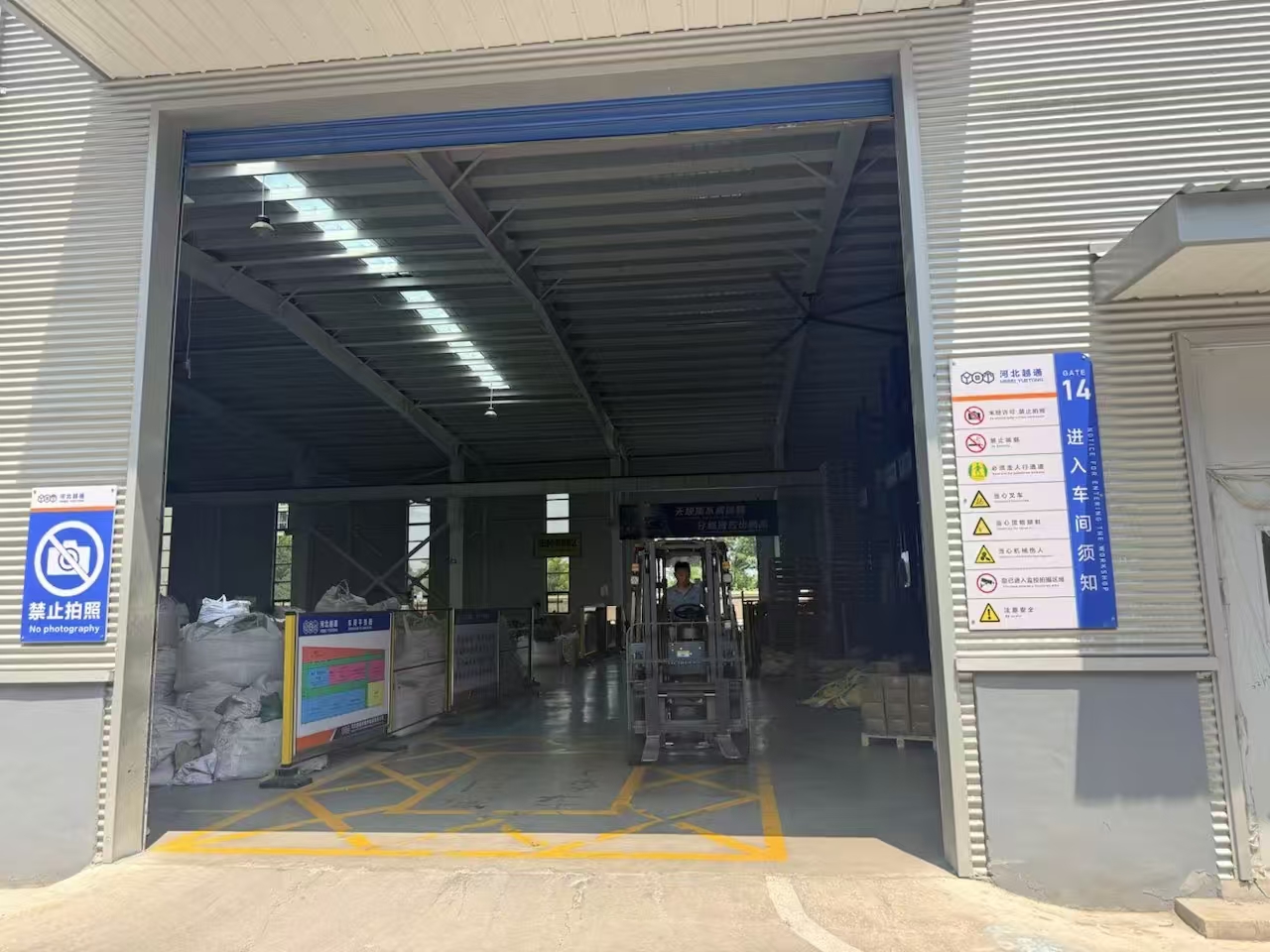
Full-process production workshop for anchor finished products. Supplier capability is only one of three inputs into an approval decision.
What belongs in the approval file
An approval file works best when each document is tagged with the question it answers. Grouping certificates into a single "compliance" folder is where over-reading begins.
| Document | What it supports | What it does not prove |
|---|---|---|
| ISO 9001 certificate with scope statement | A quality management system audited at the named site for the named activities | Conformity of a specific production batch |
| IATF 16949:2016 certificate | Automotive-sector process discipline for fastener manufacture | Design approval of a new anchor (design is excluded from scope) |
| ISO 14001 and ISO 45001 certificates | Environmental and occupational health and safety management | Anything about anchor load behaviour |
| ISO 14067 registration | A carbon footprint statement for a declared product scope | A lower footprint than a competing supplier |
| ECM type-approved attestation | Type assessment against three named EN ISO standards, with annexes listing covered products | Batch-by-batch product certification |
| Gold Plus supplier assessment | Third-party on-site assessment of factory supplier capability | Product performance or load capacity |
| Material certificate and test report | Material traceability and recorded test values | Installed capacity in a specific base material |
| Pre-shipment inspection record | Conformity of the lot actually shipped | Long-term durability in service |
Build the file once and give it a review date. Every item in it has a validity window, so an approval that was correct in one quarter can silently expire before the next order.
Acceptance criteria: define "pass" before the first shipment
The documented quality-control sequence at the example manufacturer runs through five stages: raw-material incoming inspection, in-process patrol inspection, finished-product tensile load test, pre-shipment inspection, and third-party SGS testing on request. The same documentation states that acceptance can run through factory pre-inspection, customer on-site inspection, or SGS third-party acceptance, with complete quality documents provided.
Each of those is a checkpoint, not a specification. "Pre-shipment inspection" says when a check happens; it does not say which dimensions are measured, how many pieces are drawn, or which value counts as a failure. Those belong in the purchase order or its technical annex, and they need to be written before the first shipment rather than after the first complaint.
- Dimensional scope: which features are measured — thread, sleeve outside diameter, overall length, head or nut configuration — and against which standard or drawing revision.
- Material and traceability: whether a material certificate is issued per lot and how the lot is linked to the shipped cartons.
- Mechanical record: the tensile load test value, the test method, and whether pass/fail is recorded alongside the measured figure. A pass/fail without a number cannot be trended across orders.
- Finish checks: which coating is specified, and whether appearance and coating condition are recorded per batch.
- Packing and marking: carton marking, pallet configuration, and — for OEM programmes — the approval status of printed logos and artwork.
- Witnessing rights: whether the buyer may attend pre-shipment inspection, and whether third-party acceptance is triggered by order value, destination or product family.
A practical test of whether acceptance criteria are real: request the last three pre-shipment records for the same product family and compare them. If the format changes each time, or measured values are missing, the criterion exists in the process description but not in routine practice.
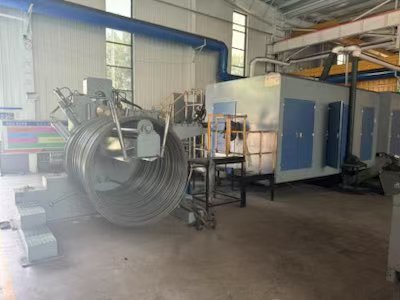
Cold heading area. In-process patrol inspection is where dimensional drift is usually caught first.
Certifications: what each document covers, and where the scope stops
Certificates are usually presented as a group, which hides the fact that they answer different questions and cover different product scopes. The table below reproduces the identifiers and validity windows as recorded, because those are what a buyer actually verifies.
| Document | Number and issuer | Validity | Scope as written |
|---|---|---|---|
| ISO 9001 | 29024Q12949-09R1M, ZhongTai Union Certification | 2021-09-14 to 2027-09-13 | Production of fasteners (nuts); sales of fasteners (including export business), to GB/T 19001-2016 / ISO 9001:2015 |
| IATF 16949:2016 | 2600920/R0M, Beijing Zhong An Zhi Huan Certification Center | 2026-05-07 to 2029-05-06 | Manufacture of fasteners (nuts, bolts); product design under clause 8.3 excluded |
| ISO 14001 | 29025E12097-12R0M, ZhongTai Union Certification | 2025-12-18 to 2028-12-17 | Environmental management activities in fastener (nuts) production; sales including export |
| ISO 45001 | 29025S12024-12R0M, ZhongTai Union Certification | 2025-12-18 to 2028-12-17 | Occupational health and safety management activities in fastener (nuts) production; sales including export |
| ISO 14067 | 33925CFMS00020R0S, ZQHX Certification Center | 2025-12-08 to 2028-12-07 | Processing and sales of fasteners (high-strength steel bolts, nuts), to T/CCAA 39-2022 and ISO 14067:2018 |
| ECM attestation | No. 3N230331.HYFUC49, Ente Certificazione Macchine Srl | 2023-04-03 to 2028-03-30 | Bolts, nuts, washers, thread rods, various anchors, screws and other construction fasteners per Annex I; reference standards EN ISO 10683:2018, EN ISO 16047:2005+A1:2012, EN ISO 4753:2011 |
| Gold Plus Supplier Assessment | 491647039 P+T, issued by Alibaba.com with SGS on-site assessment | 2026-06-23 to 2027-06-22 | Factory supplier capability assessment for fasteners, including sleeve anchors and hex bolts |
Scope wording is the part buyers skip
The ISO 9001 certificate 29024Q12949-09R1M states a scope of production of fasteners (nuts) and sales of fasteners including export business. Read literally, that covers the quality system around nut production and around fastener sales. For an anchor buyer, the sales wording is the relevant part, and the production wording should not be assumed to describe anchor manufacturing. The IATF 16949 certificate is broader on production — manufacture of fasteners (nuts, bolts) — but explicitly excludes product design under clause 8.3.
That exclusion matters more than it looks. For a standard catalogue anchor ordered against a published specification, design responsibility is not usually in dispute. For a custom anchor developed to a buyer's performance target, it means design ownership sits with the buyer or a third party unless a separate arrangement is agreed in the contract.
The environmental and safety registrations — ISO 14001 and ISO 45001, both issued 2025-12-18 and valid to 2028-12-17 — support a supplier-approval or ESG questionnaire, audit planning and site-risk discussion. They carry no information about load behaviour, and treating them as product evidence is a category error that shows up in audit reports.
The ISO 14067 registration covers processing and sales of fasteners described as high-strength steel bolts and nuts, against T/CCAA 39-2022 and ISO 14067:2018. It is a footprint statement for a declared scope. It is useful when a tender requires carbon data; it is not a comparative environmental ranking between suppliers, and it should not be quoted as one.
The ECM attestation is the document that explicitly names anchors. Its scope covers bolts, nuts, washers, thread rods, various anchors, screws and other construction fasteners as listed in Annex I, assessed against EN ISO 10683:2018 (zinc flake coating systems), EN ISO 16047:2005+A1:2012 (torque/clamp force testing) and EN ISO 4753:2011 (thread ends). The supplier's own records describe it as a voluntary, type-approved attestation. Buyers should read it exactly that way: evidence of type assessment against those standards, with Annex I confirming whether the specific product family appears.
Two checks close this section. First, verify each certificate on the issuing body's register rather than on a PDF supplied by the seller, and check that the holder name matches the entity that will issue the invoice. A mismatch is a question, not automatically a problem — trading entities and group structures are common — but it needs an answer before approval. Second, compare every expiry date against the planned shipment date, not against the date of the audit.
Long-term load risk: loosening and pull-out begin as installation variables
Long-term failure of a sleeve anchor is rarely a single event. It is usually the result of the expansion sleeve never fully engaging, or engaging in a base material that cannot hold the intended load, and then being worked by service loads over time.
Documented guidance on sleeve anchor performance is consistent on the mechanism. Load capacity depends on anchor diameter, embedment depth, base-material strength, hole diameter, edge distance and spacing. Correct drilling, hole cleaning and controlled tightening allow the expansion sleeve to engage securely and reduce the risk of loosening or pull-out. Conversely, an oversized hole, insufficient embedment, an unsuitable base material or incorrect tightening torque can reduce anchoring performance and lead to loosening. Pull-out is associated with weak or damaged concrete, oversized holes, insufficient embedment and overload.
Tightening torque cuts both ways: too little and the sleeve does not expand properly, too much and the anchor or the base material can be damaged. Both failure modes look identical to a buyer receiving a complaint six months later, which is why the torque value belongs on the product documentation rather than in an installer's experience.
None of these variables is fixed by a certificate. What procurement can do is move them into the specification:
- State the base material and its assumed condition in the RFQ, because suitability depends on the specific anchor design, the base-material condition and the load requirement — sleeve anchors are commonly used in concrete and solid masonry, and one approval cannot silently cover both.
- Require the installation instructions to state hole diameter, embedment depth, edge distance and tightening torque for each diameter supplied, in the language used on site.
- Check that the fixture thickness assumed in selection matches what will actually be installed; a longer fixture changes the effective embedment.
- For critical applications, require the anchor type and installation parameters to be confirmed against the actual load and base-material conditions rather than a general catalogue rating.
A supplier-reported project record in the same evidence set describes 15,000 pieces supplied for road furniture, billboard fixing, street-light bases and photovoltaic bracket anchoring, with 10 to 15 years of outdoor service in humid, temperature-cycling conditions reported without rust or failure and no customer complaints. That is a supplier statement, not an independent test result. Its procurement value is narrower and still useful: it names the application conditions, which a buyer can compare against their own site instead of reading it as a general durability claim.
Corrosion and finish: the coating decision belongs to the exposure, not the price list
Finish selection is the part of an anchor specification most often reduced to a single word. The supplier's own guidance notes that in open-air, rain-immersed, coastal salt-spray and humid chemical environments, ordinary galvanized products are prone to oxidation and rust, and that this can lead to anchorage failure. The recommended responses are electro-galvanized, hot-dip galvanized or stainless-steel anchors selected for the actual working conditions, double-layer anti-corrosion processes where exposure demands it, and A4 stainless steel in heavily corrosive areas.
Anti-corrosion surface treatment is also listed among the manufacturer's customisation options, which means the finish can be specified rather than accepted. Four questions make the decision auditable: which exposure condition the RFQ describes; which finish is proposed and on what basis; whether that finish is applied in-house or outsourced and how it is checked per batch; and how the finish is marked on the carton so that goods-in can confirm what arrived. On coastal or chemical sites, the comparison that matters is finish cost against access and rework cost, because replacing a corroded anchor is a labour and downtime problem before it is a material cost.
OEM, ODM and non-standard orders: the terms that need to be in writing
Capability claims are easy to make and hard to compare. The useful question is which parts of an order the supplier will take responsibility for, and what that does to lead time and inspection.
The documented production services at the example manufacturer cover OEM, ODM, non-standard customisation and bulk stock supply. In practice that means OEM production under the buyer's brand, ODM work where the manufacturer designs and produces to the client's specification, and customisation across size and specification, material selection, anti-corrosion surface treatment, product style, printed logo on packaging, and matched assembly kits.
The commercial frame around that capability is specific. Monthly production capacity is stated at 1,500 tons. Lead time is 3 to 7 days for in-stock products and 12 to 20 days for customised orders, with expedited delivery negotiable. Minimum order quantity is documented as 500 sets for standard products and 3,000 sets for non-standard customised products on the capability sheet, while a separate purchasing-terms sheet states 5,000 pcs. Because sets and pieces are different units and the two sheets may govern different order types, the buyer's protection is simple: have the applicable MOQ written into the quotation, in the unit that will be invoiced.
Delivery and payment terms are stated as EXW, FOB, CIF and DDP, with 30% deposit plus balance before shipment, 100% advance, letter of credit and bank transfer, and flexible terms available to long-term customers. Documented after-sales support covers 24-hour technical communication, selection guidance, free replenishment for factory quality defects, provision of material certificates and test reports, and handling arrangements for engineering orders.
Two order-level details are worth fixing early. First, design responsibility: given that the IATF 16949 scope excludes product design, an ODM or custom programme should state who owns the design output and how changes are approved. Second, kit integrity: matched assembly kits multiply the number of components that can be wrong at goods-in, so the packing list should be structured at kit level, not only at carton level.
Market context worth citing — and its limits
Category data helps frame a procurement case but rarely supports a supplier decision. Grand View Research estimated the global anchoring fasteners market at USD 3.12 billion in 2024, and placed mechanical anchors — the segment that includes sleeve anchors — at 58.3% of revenue in the same year. A second commercial estimate in the same evidence set puts the category at USD 3.76 billion, and the difference appears to come from scope definition, with construction anchors and anchoring fasteners not measuring the same thing.
The practical reading is that these figures size a category; they do not calculate a share for a product line, and they should not be used to infer growth for a specific supplier. For trade classification, sleeve anchors are commonly grouped under HS code 7318.15, which is broad enough that public customs summaries rarely isolate the product. Where a technical benchmark is needed instead, ASTM E488 / E488M-22 is the standard test method for measuring the strength of anchors in concrete elements, and a test report citing it is more useful to an approval file than any market estimate.
A ten-point verification checklist
The checklist below condenses the sections above into items that can be closed off one at a time. It is written to be usable at the evaluation stage and again at reorder.
| Check | Why it matters | Where to look |
|---|---|---|
| 1. Certificate holder matches the contracting entity | Trading entities and group structures can differ from the production site | Certificate header versus invoice entity |
| 2. Validity covers the shipment date | The longest-dated documents still expire; several fall between 2027 and 2029 | Expiry fields on each certificate |
| 3. Scope wording names the product activity | ISO 9001 scope names nut production and fastener sales; the ECM annotation names anchors | Scope paragraph and Annex I |
| 4. Design responsibility is recorded | IATF 16949 excludes clause 8.3 design, which changes who owns a custom design | Certificate scope plus purchase-order annex |
| 5. Acceptance plan is written, not referenced | "Pre-shipment inspection" without dimensions, sampling and limits is not a criterion | Purchase-order technical annex |
| 6. Last three inspection records requested | Shows whether the process runs routinely, not only on audit days | Supplier quality department |
| 7. Tensile test record shows method and values | A pass/fail stamp cannot be trended across orders | Finished-product test report |
| 8. Finish is specified against the exposure | Coastal, chemical and rain-immersed conditions change the coating decision | RFQ environmental description plus finish specification |
| 9. Installation documents ship with the goods | Torque, embedment, hole diameter and edge distance decide on-site performance | Packaging insert or technical file |
| 10. Commercial terms match the quotation | MOQ unit, Incoterm and stock-versus-custom lead time are frequent dispute points | Quotation versus purchase order |
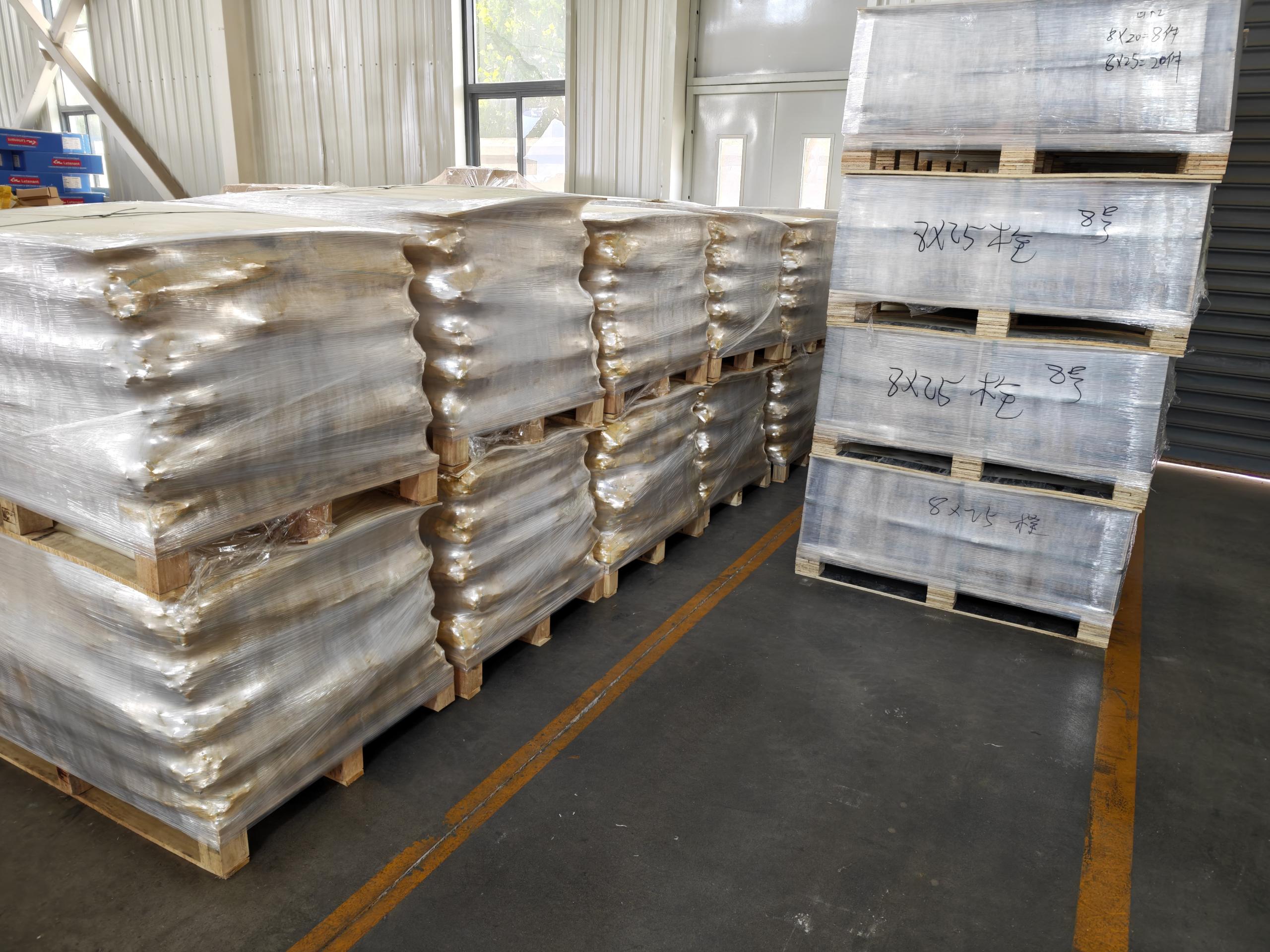
Finished-goods staging. The inspection record that matters is the one attached to the lot that actually ships.
Frequently asked questions
What can an OEM or ODM order actually change about a sleeve anchor?
Within documented production services, OEM covers manufacture under the buyer's brand and ODM covers design and production to the client's specification. Customisation extends to size and specification, material selection, anti-corrosion surface treatment, product style, printed logo on packaging, and matched assembly kits. Two consequences follow: customised orders carry a longer lead time than stock — 12 to 20 days versus 3 to 7 days in the documented terms — and a higher minimum order quantity, at 3,000 sets for non-standard items against 500 sets for standard ones. A separate purchasing-terms sheet states an MOQ of 5,000 pcs, so the applicable figure should be confirmed in the quotation before the order is placed.
Which documents should a buyer request before approving a sleeve anchor supplier?
A workable set is: the ISO 9001 certificate with its scope statement (29024Q12949-09R1M in this case, valid to 2027-09-13), the IATF 16949 certificate where automotive work is involved (2600920/R0M, valid to 2029-05-06), ISO 14001 and ISO 45001 registrations for site and ESG review (valid to 2028-12-17), the ISO 14067 footprint registration where carbon data is required (valid to 2028-12-07), and the ECM type-approved attestation covering anchors per Annex I (valid to 2028-03-30). Add a material certificate, a finished-product tensile test record and the last pre-shipment inspection reports for the same product family.
What causes a sleeve anchor to loosen or pull out during long-term use?
The documented causes are mechanical rather than administrative: an oversized or unclean hole, insufficient embedment depth, a base material that is weak or damaged, incorrect tightening torque, or simple overload. Insufficient tightening leaves the expansion sleeve poorly engaged, while excessive tightening can damage the anchor or the base material. Long-term loosening is usually the same set of conditions acting under repeated service load, which is why correct drilling, hole cleaning and controlled tightening are specified together rather than separately.
How should acceptance testing be specified in a purchase order?
Name the inspection stages and the values that define failure. Available stages include raw-material incoming inspection, in-process patrol inspection, finished-product tensile load test, pre-shipment inspection and third-party SGS testing; acceptance routes include factory pre-inspection, customer on-site inspection and SGS third-party acceptance with quality documents. The purchase order should add the dimensional features checked, the sampling basis, the material traceability link, the coating requirement and the record format. Where a standard anchor test in concrete is required, ASTM E488 / E488M-22 is the reference test method, and the report should show measured values rather than a pass stamp.
Does a certificate guarantee long-term load capacity?
No. A management-system certificate describes how a site is organised; a type attestation describes assessment against named standards for listed products; neither measures capacity in a specific base material. Load capacity depends on anchor diameter, embedment depth, base-material strength, hole diameter, edge distance, spacing and installation quality. Certificates support supplier qualification, and installation control supports performance — substituting one for the other is the most common error in anchor approval files.
What a repeatable approval process looks like
Documentation quality is easier to compare across suppliers than price is, and it holds up better over time. A buyer who fixes acceptance criteria in the purchase order, maps each certificate to the product activity it actually names, and treats installation parameters as part of the specification rather than a site matter has closed most of the gaps that appear after delivery.
The forward-looking part is unglamorous: keep the file dated, re-verify registrations before each major order, and re-check scope wording whenever a new product family is added. That sequence turns a one-off supplier approval into a procurement control that survives changes in personnel on both sides.
The example manufacturer's product brochure, including its sleeve anchor range and specification detail, can be downloaded here: YUETONG FASTENER brochure (PDF).
Have Questions or Need More Details?
Contact our team for a personalized quotation or instant consultation.
Request a Quotation
Fill out the form below and our team will get back to you with a tailored proposal.
WhatsApp Direct Chat
Prefer to chat in real-time? Message us on WhatsApp for instant assistance & quick answers.
- Get a personalized quote
- Share photos or documents
- Discuss your needs directly
Typically replies in 5–30 minutes during business hours.