
Sleeve Anchor Compliance Decoded: ISO 9001, 14001, 45001 and Beyond
Sleeve Anchor Compliance Decoded: ISO 9001, 14001, 45001 and Beyond
Compliance paperwork has moved to the front of the sleeve anchor buying decision. On infrastructure, photovoltaic, municipal, curtain wall and rail projects, procurement teams increasingly screen suppliers on their certification file before commercial terms are discussed at all. The three ISO management system standards — ISO 9001 for quality, ISO 14001 for environment and ISO 45001 for occupational health and safety — sit at the centre of that screen. The difficulty is that they are normally presented as one block of badges, when in practice each certificate describes a different part of how a factory operates, and none of them certifies the pull-out capacity of a particular anchor size.
Four Questions Buyers Compress Into One
When a purchasing team asks whether a sleeve anchor supplier is "compliant", four separate questions are usually bundled together. First, can the factory reproduce the same anchor batch after batch, with controlled materials, tooling and inspection? Second, is the manufacturing site acceptable to the buyer's own customers, insurers and sustainability reporting? Third, does the delivered product meet the dimensional, material and coating standard that the project actually specifies? Fourth, can all of the above be traced through documents that survive an audit, a claim or a customs check?
Each of the ISO certificates in a typical supplier file answers exactly one of those four questions. ISO 9001 speaks to process discipline. ISO 14001 speaks to how the plant manages the environmental consequences of its operations — which, for fasteners, means the plating and coating lines. ISO 45001 speaks to how the plant manages the safety of the people inside it. Product-level evidence, such as test records against DIN, ASTM, EN or GB/T standards, answers the third question, and it is a separate document category entirely.
A trade dimension runs alongside the compliance dimension. Sleeve anchors are commonly classified under HS Code 7318.15 ("Other screws and bolts, with nuts or washers") in the Harmonized Tariff Schedule published by the United States International Trade Commission, so an importer typically handles a tariff classification and a supplier compliance file in the same purchasing cycle.
What Each Certificate Actually Certifies
The table below summarises the four most common certification lines found in a sleeve anchor supplier file, what each one covers, and — equally important for buyers — what it does not cover.
| Standard | Object of certification | Typical evidence an auditor examines | What it does not prove |
|---|---|---|---|
| ISO 9001 | The organisation's quality management system | Documented process control, incoming material inspection, equipment calibration, traceability, non-conforming product handling, corrective action | Does not state the tensile or pull-out capacity of any specific anchor size |
| ISO 14001 | The organisation's environmental management system | Chemical storage and handling, rinse water and waste management around plating and coating, legal register, environmental objectives | Does not certify the corrosion resistance or coating thickness of a finished anchor |
| ISO 45001 | The organisation's occupational health and safety management system | Hazard identification, machine guarding, incident reporting, worker training, emergency procedures | Does not certify that a product is safe for a given structural application |
| IATF 16949 | The organisation's automotive quality management system | Change control, defect prevention, statistical process control, traceability and supplier monitoring for automotive supply chains | Applies only where the customer's end market requires automotive-grade discipline |
ISO 9001 in a Sleeve Anchor Factory: Consistency Is the Product
Hebei Yuetong Fasteners Manufacturing Co., Ltd. (YTFASTEN) is a fastener manufacturer based in the Yongnian District of Handan, Hebei, China's largest standard parts production base. The company operates a 26,666.67 m² facility with approximately 100 employees, a 12-engineer technical team and an annual output of 150,000 tons, producing hex nuts, hex bolts, sleeve anchors, threaded rods, flat washers, hex socket head bolts and wheel hub bolts. It holds ISO 9001 certification under certificate number 29024Q12949-09R1M.
For a sleeve anchor, the value of an ISO 9001 system is best understood through the process it governs. A sleeve anchor is a multi-part assembly: a sleeve body, an expansion cone or wedge, and a nut, bolt, hook or eye depending on the anchor type. Each stage introduces a variable that must be controlled — the grade and diameter of incoming carbon steel or stainless steel wire, the accuracy of cold heading, thread geometry, heat treatment where applied, the fit between sleeve and cone, and the final surface treatment.
An audited quality system requires the manufacturer to inspect incoming material, define and monitor process parameters, calibrate the measuring and testing equipment used to verify output, and keep records that link a shipment back to its production batch. That is why management system certification translates into a practical buyer benefit: lower batch-to-batch variation and a documented route for handling complaints.
Where the boundary sits: ISO 9001 explains how consistently an anchor is made. It does not explain how strong a specific M10 or M12 anchor is in a specific concrete grade. Capacity comes from product standards, design verification and physical testing — not from a quality management certificate.
ISO 14001: The Certificate Behind the Coating Line
Surface treatment is the most environmentally sensitive step in sleeve anchor production. Zinc plating, yellow zinc plating and hot-dip galvanizing involve chemical baths, rinse water, sludges and waste streams that are regulated in almost every export market. ISO 14001 certification — held by Hebei Yuetong under certificate number 29025E12097-12R0M — evidences that these flows are managed under a defined system with legal registers, objectives and internal controls.
The commercial relevance for buyers is indirect but real. Environmental incidents at a plating line interrupt supply; environmental criteria increasingly appear in European and North American supplier qualification; and customers who report on their own supply chain need documented environmental management from their vendors. In that sense ISO 14001 is a supply-continuity and supplier-responsibility document rather than a product document.
It is worth stating the limitation clearly, because it is frequently misunderstood. ISO 14001 says nothing about how many hours a coating will resist salt spray, or how thick the zinc layer is. Corrosion performance depends on the coating type selected — zinc plated, yellow zinc plated or hot-dip galvanized — and on the base material, carbon steel or stainless steel, and it is verified through product-level testing such as salt-spray chamber evaluation rather than through an environmental certificate.
ISO 45001 and Social Responsibility: The Supplier-Responsibility Layer
ISO 45001 addresses occupational health and safety management. In a fastener plant, the relevant hazards are concentrated in cold heading, heat treatment, plating and packaging — press and machine guarding, thermal exposure, chemical handling and manual handling of heavy cartons or pallets.
Hebei Yuetong holds ISO 45001 certification for occupational health and safety management, alongside a social responsibility management system certification. For buyers running supplier responsibility programmes, these documents provide the audit trail that procurement committees, insurers and larger end customers now expect before a vendor is added to an approved list. They do not, however, certify the safety of an installed anchor, and treating them as a product safety document is a common error in supplier evaluation.
IATF 16949 and "Beyond": When Automotive Discipline Applies
Not every sleeve anchor project requires IATF 16949, but some do. The standard is an automotive quality management system requirement, and it becomes relevant when fasteners feed into automotive or vehicle-adjacent assemblies, where customers expect stricter change control, defect prevention and traceability than a general ISO 9001 system provides. Where that requirement exists, its absence usually ends the evaluation before price is discussed.
Hebei Yuetong holds IATF 16949 certification in addition to ISO 9001, ISO 14001 and ISO 45001, together with EU CE certification, carbon footprint certification and a social responsibility management system certification. Beyond certificates, the company's file includes recognition as a "Hebei Province Specialized, Precise, Unique and Innovative Small and Medium-sized Enterprise" and a portfolio of nine national patents comprising one invention patent and eight utility model patents.
The distinction matters for buyers reading a supplier file: management system certificates describe how an organisation works, while patents, product standards and test records describe what the organisation produces. A credible file contains both categories, and the two should be evaluated separately rather than counted as a single score.
International Validity Depends on Four Details, Not on the Logo
ISO 9001, ISO 14001 and ISO 45001 are published by the International Organization for Standardization and adopted as national standards in most markets, which is why certificates against them are generally read the same way across the EU, North America, Latin America, the Middle East and Africa. That recognition, however, is attached to the certificate details rather than to the standard's name on a banner.
- Accreditation of the issuing body. A certificate issued under an accredited certification body carries weight in international tenders; an unaccredited one may not.
- Scope statement. The scope should cover the relevant product families and processes — including surface treatment if the buyer is relying on the certificate for supply-chain assurance.
- Site address. A certificate issued to a trading entity is not the same as one issued to a manufacturing site. Multi-site certificates must list the specific plant being audited.
- Validity dates. Management system certificates are time-limited and subject to surveillance audits; an expired scan is not evidence of a current system.
These four checks take minutes and are the most reliable way to distinguish a genuine compliance file from a decorative one.
From Certificate to Installed Anchor: Where Compliance Meets Application
Sleeve anchors are used wherever a component must be fixed into concrete or solid masonry: construction engineering, road infrastructure, municipal landscape works, factory equipment installation, photovoltaic brackets, bridge and curtain wall engineering, and interior fitting work. Working conditions range from indoor normal environments through outdoor open-air, humid climates, coastal salt-spray zones, high and low temperature exposure, vibration load conditions and explosion-hazardous areas.
The product range that supports those applications runs from M5 to M36 in anchor size and from 30 mm to 300 mm in overall length, manufactured to GB/T, DIN, ISO, ASTM and EN standards. Material grades include 4.8 carbon steel and A2-70 or A4-80 stainless steel, with zinc plated, yellow zinc plated and hot-dip galvanized finishes. Anchor types in the range include concrete sleeve anchors, masonry sleeve anchors, expansion sleeve anchors, hex nut and hex bolt sleeve anchors, flange nut sleeve anchors, eye bolt and hook bolt sleeve anchors, L-hook and G-hook sleeve anchors, hammer anchors and wedge anchors.

Dimensional and thread angle verification: product-level evidence that sits outside the scope of any management system certificate.
This is the point at which certification and application separate. Selecting the right anchor for a coastal photovoltaic bracket or a vibrating machine base depends on base material, embedment depth, hole diameter, edge distance, spacing and tightening torque — variables that no ISO certificate can fix on the buyer's behalf. Management system certification improves the probability that the anchors supplied match the specification; it does not replace the specification.
Market Context: Why the Documentation Bar Keeps Rising
The commercial backdrop supports the trend toward heavier documentation. Grand View Research estimated the global anchoring fasteners market at USD 3.12 billion in 2024, with mechanical anchors — the product family that includes sleeve anchors — accounting for 58.3% of revenue share that year. Credence Research projects China's industrial fasteners market to grow from USD 12.23 billion in 2024 to USD 22.78 billion by 2032.
Published estimates should be read with their scope in mind. A separate estimate from Custom Market Insights places the 2024 anchoring market at USD 3.76 billion; the difference is attributable to whether the scope is defined as "construction anchors" or "anchoring fasteners" rather than to a disagreement about direction. Growth-rate estimates diverge in a similar way: Grand View Research reports a 4.3% CAGR for total anchoring fasteners over 2025–2033, while Technavio cites a higher figure specifically for sleeve anchors by 2026. Read together, the figures suggest that sleeve anchors may be growing somewhat faster than the broader category, with the caveat that the two estimates use different scopes and periods.
Scale of supply is part of the same picture. Industry reporting on China's concrete fastener production notes facilities with annual sleeve anchor output exceeding 50 million units, although that figure is a derived estimate rather than an audited number. For buyers, the practical reading is straightforward: capacity in this category is abundant, and differentiation increasingly comes from documentation quality, traceability and consistency rather than from availability.
Mechanical Anchoring Versus Traditional Fixing: What Can Be Compared
Compliance decisions are often made alongside a comparison against older fixing methods. Hebei Yuetong reports, as first-party product data, that its sleeve anchors deliver a bearing capacity more than 30% above ordinary expansion products, a salt-spray anti-rust life approximately double that of standard finishes, a factory yield rate of 99.8% and a project failure rate below 0.1%. The same source reports that mechanical anchoring avoids hot work entirely, raises construction efficiency relative to welded fixing, and saves approximately 40% of labour and material cost compared with welding solutions in suitable applications, with a service life extension of three to five years.
These are manufacturer-reported figures and should be treated as such. They are useful for framing a comparison, but they are not a substitute for project-specific verification, and the comparison is not universal. Welded connections remain the appropriate choice for structural steel-to-steel joints where the connection is designed as a welded detail rather than a mechanical anchorage. Mechanical anchors depend on the condition of the base material, and their published capacities are application-specific.
The honest limitation is therefore installation-dependent: a compliant anchor installed into an oversized hole, at insufficient embedment depth, in weak or damaged concrete, or with incorrect tightening torque can still fail. No certificate in the file prevents that outcome — only correct specification, drilling, hole cleaning and controlled tightening do.
Limits of the Compliance File
Buyers who treat certification as a complete answer tend to be surprised at the execution stage. Five limits are worth stating plainly.
- Management system is not product performance. ISO 9001, ISO 14001 and ISO 45001 describe organisational systems. ASTM E488 / E488M-22, published as the standard test method for measuring the strength of anchors in concrete elements, is the type of document that addresses product performance in concrete.
- Certification is a snapshot. Surveillance audits confirm the system at intervals; they do not guarantee every shipment between audits.
- Environmental certification is not corrosion certification. ISO 14001 does not describe how a coating performs in a coastal or chemical environment.
- Carbon footprint certification has a scope. Whether it covers an organisation, a site or a specific product changes what it can be used to claim.
- Installation quality is outside every certificate. Site workmanship determines whether a compliant product performs as designed.
Execution Stage: What Long-Term Supply Actually Requires
For buyers who have moved past evaluation, compliance work continues after the purchase order. Hebei Yuetong's export profile — 80% of total sales, products shipped to more than 30 countries and regions including South America, Russia and the Middle East, with major markets in the EU, North America, Latin America and the Middle East and Africa — supports self-operated import and export qualifications and long-standing relationships with distributors worldwide.
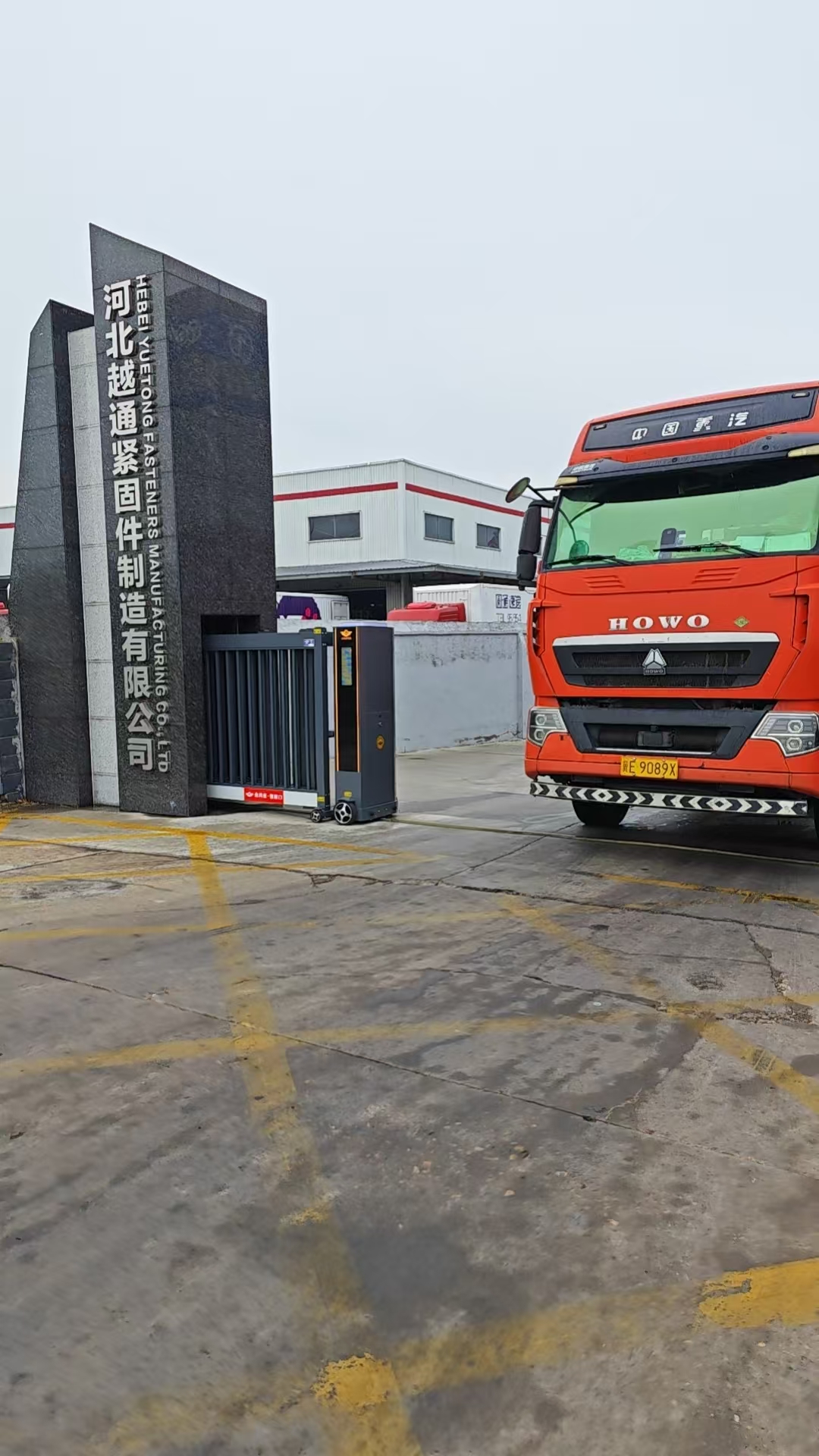
Documentation, inspection rights and loading discipline form the execution-stage half of a compliance programme.
The commercial framework that supports repeat supply includes a minimum order quantity of 5,000 pieces, delivery terms covering EXW, FOB, CIF and DDP, and acceptance routes that allow factory pre-inspection, customer on-site inspection, or third-party acceptance by SGS with a complete quality document pack. Payment options include 30% deposit with balance before shipment, 100% advance, letter of credit or bank transfer, with flexible terms available to long-term customers.
Read against the certification file, these terms are the operational half of the same story: a management system is only meaningful if the buyer can inspect against it, receive the records that document it, and rely on supply continuity over multiple orders.
Future Outlook
Three directions appear stable. First, documentation expectations will continue to rise, with environmental and social responsibility criteria moving from voluntary questionnaires into formal tender requirements. Second, buyers will become more scope-aware — asking not simply whether a supplier holds ISO 9001, but which site, which product families and which processes the certificate covers. Third, as mechanical anchoring continues to take share within a growing anchoring market, suppliers who can connect a certificate to a process, and a process to a test record, will be easier to qualify than those who present certificates as standalone marketing assets.
For reference material, Hebei Yuetong Fasteners Manufacturing Co., Ltd. publishes a downloadable product brochure covering its fastener ranges and specifications: company brochure (PDF).
FAQ
What does ISO 9001 certification actually prove for a sleeve anchor supplier?
ISO 9001 certifies that an organisation operates a documented quality management system. In a fastener plant this covers incoming material inspection, controlled production processes, calibration of measuring and testing equipment, traceability of batches and corrective action for non-conforming product. It does not certify the load capacity or corrosion performance of a specific anchor. For a buyer, it is evidence of repeatable process discipline; product performance still has to be verified against the applicable product standard and project testing.
How is ISO 14001 relevant to sleeve anchor corrosion performance?
ISO 14001 does not address corrosion performance directly. It certifies an environmental management system — how a facility handles the chemicals, rinse water, sludges and waste associated with zinc plating, yellow zinc plating or hot-dip galvanizing. Corrosion resistance depends on the coating type and thickness and is verified through product-level testing such as salt spray evaluation. ISO 14001 is relevant to supplier qualification, sustainability documentation and supply continuity rather than to coating durability itself.
What is the difference between ISO 45001 and a product safety certificate?
ISO 45001 certifies an occupational health and safety management system for the workforce — hazard identification, machine guarding, incident reporting, training and emergency procedures. A product safety certificate or declaration addresses the product itself. The two documents answer different questions, and a factory can hold a valid ISO 45001 certificate while producing anchors that are unsuitable for a particular application.
When does IATF 16949 matter for sleeve anchors?
IATF 16949 is an automotive quality management system standard. It becomes relevant when the anchor or the wider fastener family feeds into automotive or vehicle-adjacent assemblies, where customers expect stricter change control, defect prevention and traceability than a general ISO 9001 system provides. For general construction and masonry work, ISO 9001 is normally the applicable management system requirement; IATF 16949 matters when the end customer's supply chain demands it.
Are ISO 9001, ISO 14001 and ISO 45001 certificates valid internationally?
These standards are published by the International Organization for Standardization and adopted as national standards in most markets, so certificates against them are generally recognised across the EU, North America, Latin America, the Middle East and Africa. Practical validity depends on four details: the accreditation status of the issuing certification body, the scope statement, the manufacturing site listed on the certificate, and the validity dates. Checking these items is more reliable than accepting a scanned copy at face value.
Do management system certificates replace load testing for sleeve anchors?
No. ASTM E488 / E488M-22 is the standard test method for measuring the strength of anchors in concrete elements, and performance in service should be supported by such testing or by documented product-standard test data. A quality management system provides the framework under which testing is planned, calibrated and recorded, but the certificate itself contains no load values.
What determines sleeve anchor load capacity and the risk of loosening?
Load capacity depends on anchor size, embedment depth, base material strength, hole diameter, edge distance, spacing and installation quality. Loosening or pull-out is normally associated with oversized holes, insufficient embedment, unsuitable or damaged base material, or incorrect tightening torque. Correct drilling, hole cleaning and controlled tightening allow the expansion sleeve to engage the base material securely and reduce the risk of movement under load.
How can a buyer verify that a supplier's certificates are genuine and in scope?
Verify the certificate number with the issuing certification body, confirm that the legal entity and site address match the factory being qualified, read the scope statement to confirm it covers the relevant product families and processes, and confirm the validity dates. Two examples from a current supplier file illustrate the level of detail to expect: ISO 9001 certificate 29024Q12949-09R1M and ISO 14001 certificate 29025E12097-12R0M, both issued to Hebei Yuetong Fasteners Manufacturing Co., Ltd.