
Sleeve Anchor Longevity Under Real-World Loads: An Independent Assessment
Long-term sleeve anchor performance is usually discussed as though it were a property of the fastener alone. It is better understood as the outcome of four variables: base material, hole preparation and tightening, environmental exposure, and manufacturing consistency. Only one of those sits inside a supplier's factory, and only that one can be partly evidenced by documents a buyer can actually obtain. This assessment sets out what is verifiable about sleeve anchor longevity under sustained loads, what is not, and how quality-system evidence should be read when a buyer is shortlisting a supplier.
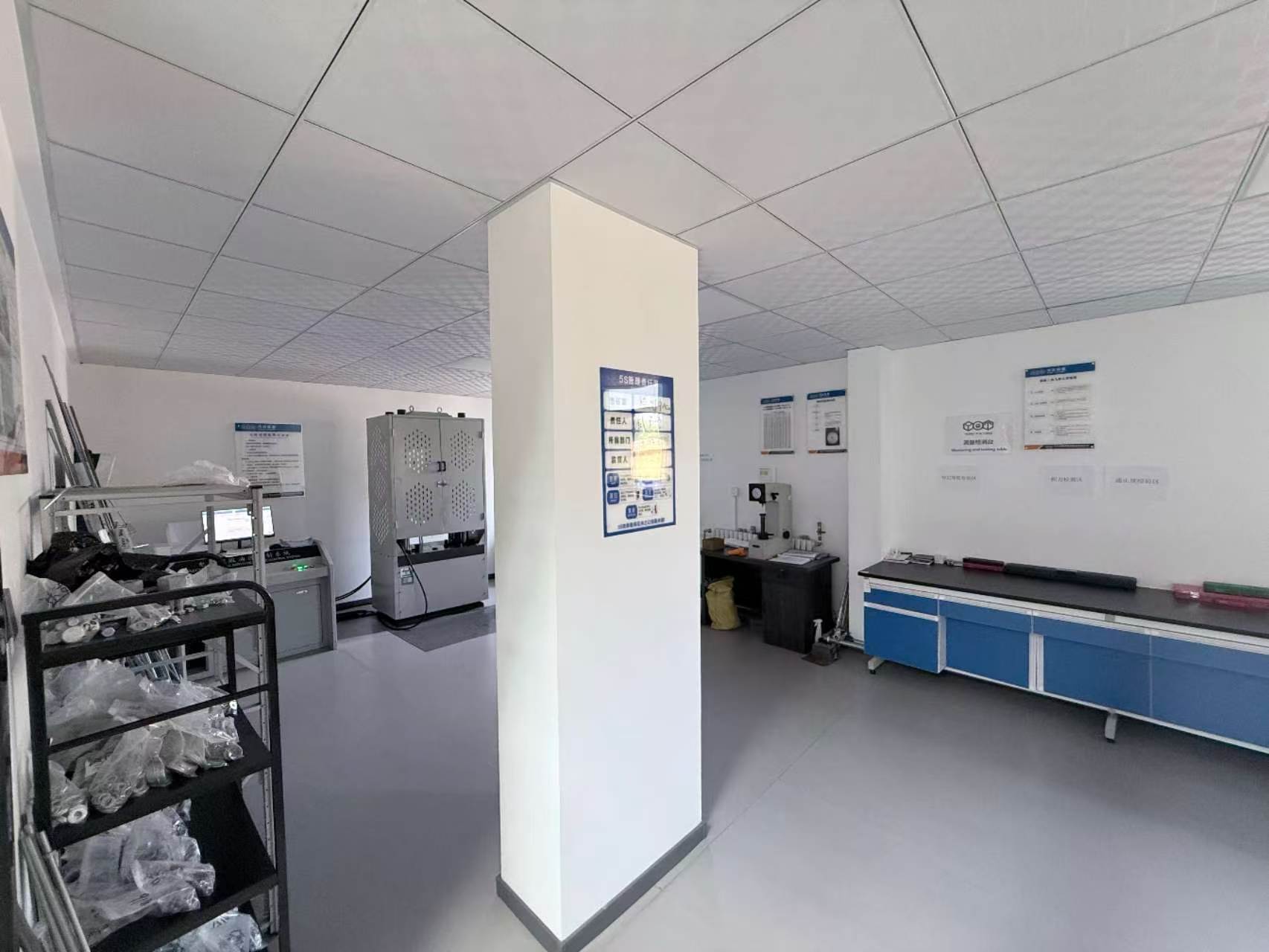
Hardness testing of finished bolts and anchors inside a production workshop. In-house testing narrows batch-to-batch variance; it does not certify the capacity of an installed anchor.
Why long-term anchor performance resists simple verification
Public, long-horizon field data on sleeve anchors is scarce. Pull-out, fatigue and corrosion results typically sit with the manufacturer, with a testing laboratory acting for a specific client, or inside a project's own documentation. The practical consequence is a gap: buyers evaluating a supplier for an installation expected to last a decade or more are often asked to accept a longevity claim that no publicly available dataset can either confirm or refute.
Standards define how to test, not what result a given anchor will deliver. ASTM E488 / E488M-22, the standard test method for measuring the strength of anchors in concrete elements, is published by ASTM International and is the reference method used when a capacity must be established rather than assumed. It standardises the procedure; the number produced by that procedure depends on the anchor, the base material and the quality of the installation. Sleeve anchors are classified for trade purposes under HS code 7318.15, a category covering other screws and bolts with nuts or washers, which is broad enough to say nothing about performance.
That distinction matters commercially. A supplier cannot truthfully promise a service life, because service life is not a product attribute — it is an outcome of design, installation and exposure. What a supplier can demonstrate is control over the variables that cause a properly designed installation to remain within its intended performance envelope, plus the discipline to state clearly where that envelope ends.
Three long-term failure modes, and where control actually sits
The durability question buyers raise most often — whether a concrete sleeve anchor will lose capacity, loosen or pull out over time — is really three separate failure modes with three different root causes. Separating them makes supplier evaluation tractable, because each mode is controlled by a different party.
| Failure mode | What typically triggers it | Where control sits |
|---|---|---|
| Insufficient load capacity | Anchor diameter, embedment depth or material grade not matched to the actual load; weak, damaged or cracked base material; edge distance or anchor spacing below what the application requires | Structural selection and design |
| Loosening after installation | Insufficient tightening, so the expansion sleeve never fully engages the base material; excessive tightening that damages the anchor or the substrate; hole diameter outside specification; sustained vibration or thermal cycling | Installation discipline plus anchor geometry |
| Pull-out | Oversized or poorly cleaned hole; insufficient embedment depth; base material weaker than assumed; sustained overload beyond the design case | Drilling and cleaning procedure plus base-material verification |
These modes are not independent of one another. A single deviation — for example a worn drill bit producing an oversized hole — can present as any of the three, which is why field complaints about "poor anchor quality" frequently trace back to a procedural cause rather than a manufacturing one. It is equally true that a manufacturing defect, such as an out-of-tolerance sleeve diameter or an inconsistent material grade, can produce the same symptoms in an otherwise correct installation.
The load capacity of a sleeve anchor depends on anchor size, embedment depth, base-material strength, hole diameter, edge distance, spacing and installation quality. Because those variables interact, an anchor cannot be evaluated as a stand-alone part; it has to be evaluated as a system with the substrate it is fixed into.
What manufacturing consistency contributes — and what it does not
Sleeve anchor function depends on the expansion sleeve engaging the base material as the nut or bolt is tightened. That engagement is sensitive to small dimensional and material variations: sleeve geometry, material grade, thread form and coating thickness all influence how much expansion is produced by a given tightening torque. Where a factory controls those variables, batch-to-batch variance narrows, and the assumptions a designer made on paper are more likely to hold on site.
Yuetong Fastener operates a documented control sequence across four stages: raw material incoming inspection, in-process patrol inspection, finished product tensile load test, and pre-shipment inspection, with third-party SGS testing available on request. Cold heading and heat treatment are carried out in-house, which keeps the material and process history of a batch inside the same quality system rather than distributed across subcontractors. For buyers, the relevant point is not that testing exists, but that the test stages map onto the failure modes described above: raw material inspection constrains grade variance, patrol inspection constrains dimensional drift, and finished-product tensile testing constrains the assembled behaviour of the sleeve and stud.
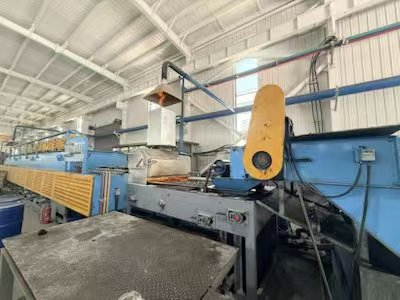
Heat treatment is one of the process stages where consistency, rather than peak performance, determines whether a batch behaves predictably in service.
The boundary this section cannot cross: an in-house tensile test on a finished anchor confirms that a batch meets an internal reference under controlled conditions. It does not certify capacity in a buyer's specific base material, and it is not an independent test. Buyers who require project-level verification should either request testing to the relevant standard or commission third-party testing themselves.
Reading ISO certifications as reliability signals, not performance promises
Certification is the most commonly cited — and most commonly misread — form of quality evidence in anchor procurement. A management-system certificate evidences how a factory is organised; it does not certify what a specific installed anchor will hold. Used correctly, however, certificates do address the manufacturing-consistency variable that buyers cannot inspect directly.
HEBEI YUETONG FASTENERS MANUFACTURING CO., LTD., which trades as Yuetong Fastener, is a fastener manufacturer based in the Yongnian District of Handan, Hebei, China — a cluster widely described as China's largest standard parts production base. The company produces nuts, bolts, threaded rod, washers and sleeve anchors for export markets that include the EU, North America, Latin America, the Middle East and Africa, and holds a documented certification set that buyers can verify against the issuing bodies rather than accepting as marketing text.
| Certification | Certificate number | Issuing body | Validity | What it addresses |
|---|---|---|---|---|
| ISO 9001 quality management system | 29024Q12949-09R1M | ZhongTai Union Certification Co., LTD | 2021-09-14 to 2027-09-13 | Quality management system; scope covers production of fasteners (nuts) and sales of fasteners including export business |
| ISO 14001 environmental management system | 29025E12097-12R0M | ZhongTai Union Certification Co., LTD | 2025-12-18 to 2028-12-17 | Environmental management activities in fastener production and sales |
| ISO 45001 occupational health and safety management system | 29025S12024-12R0M | ZhongTai Union Certification Co., LTD | 2025-12-18 to 2028-12-17 | Occupational health and safety management activities in production and export sales |
| IATF 16949:2016 | 2600920/R0M | Beijing Zhong An Zhi Huan Certification Center Co., Ltd | 2026-05-07 to 2029-05-06 | Automotive quality management for fastener manufacture; scope excludes product design under clause 8.3 |
| CE attestation (ECM type-approved) | No. 3N230331.HYFUC49 | Ente Certificazione Macchine Srl | 2023-04-03 to 2028-03-30 | Voluntary attestation referencing EN ISO 10683:2018, EN ISO 16047:2005+A1:2012 and EN ISO 4753:2011 |
| ISO 14067 carbon footprint | 33925CFMS00020R0S | ZQHX Certification Center Co., Ltd | 2025-12-08 to 2028-12-07 | Carbon footprint of fastener processing and sales, assessed against T/CCAA 39-2022 and ISO 14067:2018 |
| Gold Plus Supplier Assessment | 491647039 P+T | Alibaba.com, with on-site assessment by SGS | 2026-06-23 to 2027-06-22 | Factory supplier capability assessment for fasteners including sleeve anchors |
Three properties of this table deserve a buyer's attention, and all three are general reading rules rather than company-specific ones. First, scope: the ISO 9001 certificate for this manufacturer covers the production of fasteners (nuts) and the sale of fasteners including export business. A buyer purchasing a concrete sleeve anchor, a masonry sleeve anchor or a stainless steel sleeve anchor should therefore read the scope against the activity they are actually contracting, and confirm with the supplier which quality system governs the production line in question. Second, currency: certificates have validity windows, and an expired or suspended certificate is not evidence of anything current. Third, relevance: an environmental or occupational-safety certificate says something about how a plant is run, not about how an anchor behaves under load.
There is also a useful distinction between the CE attestation and the management-system certificates. The attestation is referenced to EN ISO 10683:2018, which concerns non-electrolytically applied coating systems, to EN ISO 16047:2005+A1:2012, which concerns torque and clamp force testing, and to EN ISO 4753:2011, which concerns thread ends. Those standards sit closer to the physical product than ISO 9001 does, because they describe how coating and tightening behaviour are tested. They still do not produce a load rating for a given installation.
Product-level evidence, and where the specification stops
A specification sheet answers a narrower question than most buyers assume. It describes the population of parts a supplier can produce; it does not describe how one of those parts will behave in a particular wall. For the sleeve anchor range sold under model 7338 (Sleeve Anchor M5-M36), the documented parameters are as follows.
| Parameter | Documented value |
|---|---|
| Standards referenced | GB/T, DIN, ISO, ASTM, EN |
| Size range | M5 to M36; commonly listed imperial sizes include 1/4 in, 5/16 in, 3/8 in, 1/2 in and 5/8 in |
| Overall length | 30 mm to 300 mm |
| Material grade | Grade 4.8 carbon steel; A2-70 and A4-80 stainless steel |
| Raw material | Carbon steel, stainless steel |
| Surface treatment | Zinc plated, yellow zinc plated, hot-dip galvanized |
| Configuration | Hex nut sleeve anchor, hex bolt sleeve anchor, flange nut sleeve anchor, eye bolt sleeve anchor, hook bolt sleeve anchor, L-hook bolt sleeve anchor, G-hook bolt sleeve anchor |
| Load class | Standard load and heavy duty |
| Stated applicable base | Concrete, brick, masonry wall |
The variety of configurations exists because the fixture interface changes, not the anchoring principle: a hex nut sleeve anchor, a flange nut sleeve anchor, an eye bolt sleeve anchor and a hook bolt sleeve anchor all expand the same way, but present a different connection point to the structure. Surface treatment is the parameter most directly linked to longevity, because it governs the corrosion pathway. For outdoor and humid conditions, the documented position is that electro-galvanized, hot-dip galvanized or stainless steel versions should be selected according to the working environment, with A4 stainless steel preferred in heavily corrosive areas such as coastal salt spray, where ordinary zinc plating can oxidise and ultimately undermine the anchorage.
What the sheet does not contain is a capacity figure for a defined substrate. That is not an omission specific to this supplier; it reflects the fact that sleeve anchor capacity is a joint property of the anchor and the base material, and therefore belongs in a project calculation or a project test. A buyer who shortlists on the basis of a specification sheet alone is shortlisting on the wrong document.
Application evidence: what a long-duration outdoor project record shows
The most persuasive category of evidence for longevity is a documented installation that has been in place long enough for the failure modes to appear if they were going to.
Yuetong Fastener records a global project in which 15,000 pieces of model 7338 were supplied for outdoor construction applications, including road facilities, billboard fixing, street light bases and photovoltaic bracket anchoring. The clients were an engineering contractor, a construction company and a hypermarket operator. The recorded project duration is 10 to 15 years, with a manufacturer-reported outcome of zero customer complaints and no rust or failure reported, in conditions described as outdoor, humid and subject to temperature change.
These application types are a meaningful test for the mechanisms discussed above. Billboard structures and PV brackets apply cyclic wind loading that would reveal a loosening problem; street light bases sit in soil and surface water where coating failure would become visible; road facilities are exposed to de-icing and abrasion. The record is also consistent with the corrosion-control logic of the specification: the project used multiple anti-corrosion treatments, and the reported outcome is an absence of failure rather than a measured residual capacity.
How to weigh this evidence honestly: the project record is first-party. It is dated, quantified and attributable, which makes it more useful than a general reliability claim, but it is not an independent third-party test and it does not establish a load rating for any other installation. It should be read as an indication that the supplier's product, coating and delivery systems can hold together across a long outdoor project, and as a prompt to request project-specific verification where the consequence of failure is high.
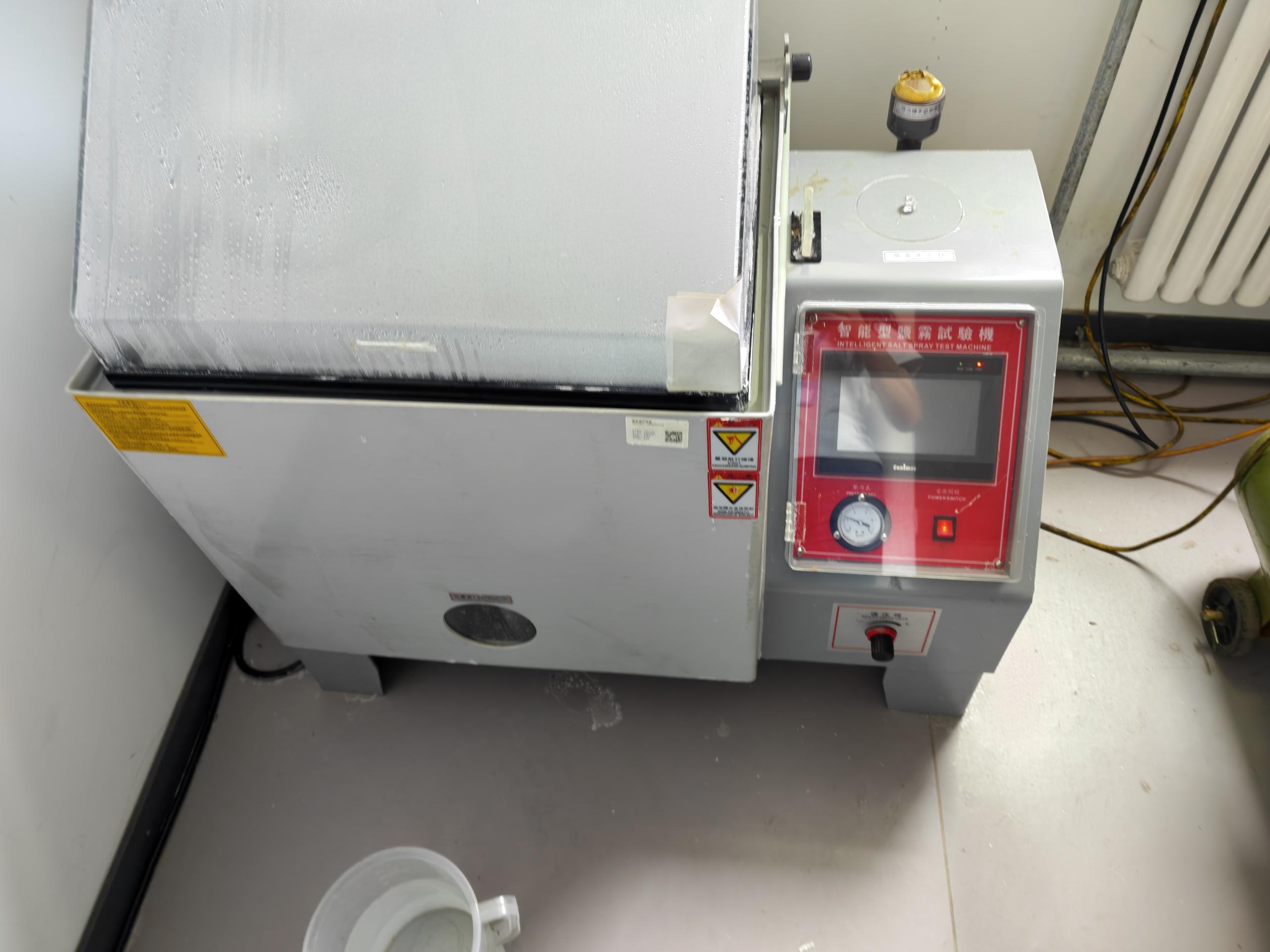
Salt spray testing evaluates the coating system that governs long-term corrosion behaviour. Accelerated chamber results are an indicator, not a service-life prediction.
Where sleeve anchors meet their limits
An honest assessment has to include the conditions in which a sleeve anchor is the wrong choice. The corollary of a broad product range is a broad set of boundaries.
- Substrate: sleeve anchors are documented for concrete, brick and masonry walls — that is, solid materials that can resist an expanding sleeve. In hollow block, hollow-core slab or a cavity where the sleeve has nothing to bear against, expansion cannot develop and the correct solution is a different anchor family.
- Base-material condition: cracked concrete, spalled surfaces or a damaged hole reduce the material available to resist the expansion load. Where the base material is not known, it should be verified before an anchor family is fixed.
- Design responsibility: sleeve anchors are not a substitute for project-specific anchorage design. Edge distance, spacing, embedment depth and load case must be determined for the actual base material, by calculation or by testing. Where a verified capacity is required, testing to ASTM E488 / E488M-22 or an equivalent method is the appropriate route.
- Installation is not transferable: a correct fixture depends on the specified hole diameter, adequate hole cleaning, sufficient embedment and controlled tightening torque. Insufficient tightening can leave the sleeve poorly expanded; excessive tightening can damage the anchor or the substrate. Neither condition is visible after the fixture is installed.
- Reuse: withdrawal of an expansion anchor leaves a disturbed hole. A re-fixed anchor is not equivalent to a new installation in virgin material.
Sleeve anchors against other mechanical anchor families
Sleeve anchors are one option among several, and both sleeve anchors and wedge anchors appear in Yuetong Fastener's production range. A wedge anchor develops its holding force from a wedge that expands at the embedded end, and is conventionally specified for solid concrete. A sleeve anchor expands along a longer sleeve, distributing bearing over a greater length of the hole wall, which is why it is commonly used across concrete and solid masonry, and why it is available in a wide range of fixture interfaces. Cast-in and chemically bonded systems occupy a different performance bracket and a different installation discipline entirely.
The practical consequence for a buyer is that anchor family selection should follow from the substrate and the load case, not from what a supplier happens to have in stock. Within the sleeve anchor family, the meaningful choice is between standard load and heavy duty configurations, between carbon steel and stainless steel, and between zinc plated, yellow zinc plated and hot-dip galvanized finishes — decisions that should be driven by the exposure environment rather than by unit price.
Market context: why documentation is becoming the differentiator
The commercial backdrop supports greater scrutiny rather than less. The global anchoring fasteners market was estimated at USD 3.12 billion in 2024, with mechanical anchors — the product segment that includes sleeve anchors — accounting for 58.3% of revenue that year, according to Grand View Research. China's industrial fasteners market was valued at USD 12.23 billion in 2024 and is projected to reach USD 22.78 billion by 2032, according to Credence Research.
Growth estimates diverge by scope rather than by direction. Grand View Research reports a 4.3% compound annual growth rate for anchoring fasteners overall across 2025 to 2033, while a separate Technavio estimate cited in the same dataset attributes 5.3% growth specifically to sleeve anchors through 2026. The gap most plausibly reflects different category definitions, and it is a reminder that category-level growth figures describe a market, not a supplier. One commercial estimate cited in the same dataset puts annual sleeve anchor output at Chinese concrete fastener facilities above 50 million units, a derived figure of medium confidence that is useful for scale only.
For buyers, the implication is straightforward. A growing, well-populated supply market makes price comparison easy and verification harder. When a category contains many producers of similar nominal specification, the differentiators shift to the things that are documented: certificate scope and validity, batch-level test reporting, coating specification, and the willingness to state the limits of a product rather than only its advantages. The gap most often cited by market researchers working in this category is precisely the absence of shared, comparable reference data — manufacturer sample libraries combining production capacity, coating standards and load test records.
Future outlook
Three directions look durable. First, traceability is moving from a differentiator to a baseline expectation: buyers increasingly ask for material certificates and test reports keyed to a production batch rather than to a product family. Second, environmental and occupational credentials are entering procurement checklists alongside quality certificates — the ISO 14001, ISO 45001 and ISO 14067 documentation held by suppliers such as Yuetong Fastener is an early example of a pattern that is likely to become common in export-oriented fastener supply. Third, and most important for this topic, the pressure for usable long-term performance data will continue to exceed the supply of it. Until shared reference datasets exist, buyers will keep making longevity decisions from quality-system evidence, project records and their own verification, which makes it essential to understand what each of those can and cannot prove.
None of this changes the underlying engineering position. Corrosion protection, embedment and installation quality will continue to determine whether an outdoor sleeve anchor reaches a ten-year horizon or fails at year three, and no certificate alters that.
A buyer's evidence checklist for sleeve anchor longevity
The following checklist converts the analysis above into an assessment sequence. It applies to any sleeve anchor manufacturer, not to one company.
| Check | Why it matters | What to request |
|---|---|---|
| Certificate identity and validity | An expired or unverifiable certificate is not evidence | Certificate number, issuing body, issue and expiry dates |
| Certificate scope | A scope covering certain products or activities may not cover your order | Scope statement, and written confirmation of which system governs your product line |
| Base-material suitability | Expansion depends on the substrate resisting the sleeve | Confirmation that the base material is solid concrete, brick or masonry, and not hollow or cracked |
| Load case and embedment | Capacity is a joint property of anchor and substrate | Design calculation, or testing to a recognised method such as ASTM E488 / E488M-22 |
| Corrosion specification | Coating or material choice governs outdoor service life | Surface treatment specification, coating standard, and the environment it is intended for |
| Batch-level quality evidence | Consistency, not peak performance, prevents outliers | Raw material certificate, finished-product tensile test report, pre-shipment inspection record |
| Installation documentation | Most field failures trace back to procedure | Specified hole diameter, embedment depth, hole-cleaning method and tightening torque |
| Sample verification | Confirms handling, packaging and dimensional agreement before bulk commitment | A physical sample matched to the intended application |
FAQ
Are sleeve anchors prone to insufficient load capacity, loosening or pull-out during long-term use?
They are not inherently prone to these failures, but they are sensitive to how they are selected and installed. Load capacity depends on the base material, anchor diameter, embedment depth, hole diameter, edge distance and tightening torque. Correct drilling, hole cleaning and controlled tightening help the expansion sleeve engage securely with the base material and reduce the risk of loosening or pull-out. For critical applications, the anchor type and installation parameters should be chosen according to the actual load and base-material conditions.
What affects the load capacity of a sleeve anchor?
Capacity depends on anchor size, embedment depth, base-material strength, hole diameter, edge distance, anchor spacing and installation quality. Because these factors interact, the same anchor can behave differently in two substrates, which is why selection has to consider the actual application conditions rather than a generic figure.
Can sleeve anchors loosen after installation?
Yes. An incorrect hole size, insufficient embedment, an unsuitable base material or an incorrect tightening torque can all reduce anchoring performance and lead to loosening. Sustained vibration and thermal cycling can also contribute where the initial engagement was incomplete.
Why can a sleeve anchor pull out of concrete?
Pull-out may occur when the anchor is installed in weak or damaged concrete, when the drilled hole is oversized, when the embedment depth is insufficient, or when the anchor is loaded beyond its design case.
Is tightening torque important for sleeve anchors?
Yes. Correct tightening allows the expansion sleeve to engage the base material. Insufficient tightening may result in poor expansion, while excessive tightening may damage the anchor or the base material. Controlled application of the specified torque is part of the installation, not an optional finishing step.
What base materials are suitable for sleeve anchors?
Sleeve anchors are commonly used in concrete and solid masonry. Suitability depends on the specific anchor design, the condition of the base material and the load requirements. Hollow substrates and cracked concrete generally require a different anchor family or specific qualification.
Can sleeve anchors be used outdoors?
Yes, but the appropriate surface finish or material should be selected for the environment. Zinc plating, yellow zinc plating, hot-dip galvanizing or stainless steel may be considered depending on the corrosion resistance required. In coastal salt spray or humid chemical environments, ordinary galvanized products can oxidise and rust, which is why A4 stainless steel or a heavier anti-corrosion treatment is often specified for heavily corrosive areas.
How should the correct sleeve anchor size be selected?
Selection should consider fixture thickness, the required load, the base material, anchor diameter, embedment depth and the installation environment. Where the consequence of failure is significant, the selection should be confirmed by calculation or by testing rather than by comparison with a previously used anchor of similar size.
Yuetong Fastener (HEBEI YUETONG FASTENERS MANUFACTURING CO., LTD.) manufactures sleeve anchors, hex bolts, nuts, threaded rod and washers at its facility in Yongnian District, Handan, Hebei, China, with a stated monthly capacity of 1,500 tons, OEM and non-standard customization capability, and export operations covering the EU, North America, Latin America, the Middle East and Africa. Buyers who want the full product and specification range in one document can download the company brochure here: Yuetong Fastener product brochure. Additional technical documentation is available through www.ytfasteners.com.
Have Questions or Need More Details?
Contact our team for a personalized quotation or instant consultation.
Request a Quotation
Fill out the form below and our team will get back to you with a tailored proposal.
WhatsApp Direct Chat
Prefer to chat in real-time? Message us on WhatsApp for instant assistance & quick answers.
- Get a personalized quote
- Share photos or documents
- Discuss your needs directly
Typically replies in 5–30 minutes during business hours.