
Slide Forming Machine Buyer's Comparison Framework (2026)
Slide Forming Machine Buyer's Comparison Framework (2026)
A slide forming machine — also described as a drawer slide roll forming machine, slide rail making machine, or telescopic channel roll forming machine — is the asset that decides whether a drawer slide, ball bearing slide, or 3-fold rail leaves the plant inside the tolerance its catalogue promises. For procurement teams in the research and evaluation stages, the difficult part is rarely finding suppliers. It is comparing them on evidence that is actually comparable.
Foshan Lianyoubang Precision Machinery Co., Ltd (LYB) is a Foshan-based manufacturer of cold roll forming equipment, rolling shutter door machines, and slide rail production lines, located in Liangdeng Industrial Zone, Danzao Town, Nanhai District, Guangdong Province, China. This article sets out a four-dimension comparison framework — technology R&D, market position, customer service, and industry solution fit — and applies it to Lianyoubang alongside comparison suppliers that appear on buyer shortlists, such as Dalian Zhongxin, Hebei Feixiang, and Jiangsu Xinya. The framework is a decision tool, not a paid ranking: where a supplier's specifications could not be documented from verifiable sources, the cell is left for the buyer to fill.
Why category-level market data cannot rank suppliers
Procurement decisions on slide forming equipment are frequently made on the basis of numbers that describe the category rather than the supplier. Roll forming market size is a good example of how unreliable that layer of data is. Future Market Insights values the global roll forming machine market at approximately USD 9.1 billion in 2024, projecting USD 12.2 billion by 2034. Intel Market Research estimates the same category at USD 487 million in 2024, growing at a CAGR of 4.5% to USD 662 million by 2032. A third source, Zion Market Research, put the 2023 figure at USD 1.87 billion.
The three figures are not necessarily wrong; they are measuring different scopes — heavy industrial roll forming infrastructure versus narrower precision forming lines. The practical implication for a buyer is straightforward: any market-share percentage a supplier quotes should be treated as a marketing statement until the underlying scope is defined. Supplier-level verification, not category-level headlines, is what determines whether a machine will hold tolerance on a furniture drawer slide run.
The supply side is genuinely deep, which is exactly why structure is needed. China's export value of metalworking machine parts reached approximately USD 2.2 billion in 2025, according to the Observatory of Economic Complexity, with major destinations including Japan, Russia, and the United States. The China Machine Tool Industry Association reported that operating income of metal-forming machine tools in China increased 8.9% year-on-year for January to October 2024. A growing, fragmented supply base increases choice and increases the cost of comparing badly.
The four-dimension comparison framework
The framework below reduces supplier evaluation to four dimensions that can each be evidenced, contested, and written into a contract. It is designed so that the same questions can be asked of every supplier on a shortlist, including Lianyoubang, Dalian Zhongxin, Hebei Feixiang, and Jiangsu Xinya.
| Dimension | Core question | Evidence a buyer should request |
|---|---|---|
| Technology R&D capability | Can the supplier engineer a forming line to my profile, or only assemble a standard frame? | Engineering headcount and senior engineering depth; control architecture; tolerance test report on the buyer's own profile; tooling design ownership |
| Market position and export record | Is the supplier's stated position verifiable, and does it serve markets like mine? | Export ratio, destination markets, customer references, factory audit, contract documentation |
| Customer service and after-sales | What happens on day 400 when a forming station drifts? | Support window, warranty start and duration, commissioning scope, spare parts availability, response-time language |
| Industry solution fit | Has the machine actually run my slide family at my duty cycle? | Application references by slide type, duty cycle, matched equipment list, measured output data |
Dimension 1 — Technology R&D: what the number actually proves
Engineering depth matters most in the tooling and control layers. A slide forming line that produces telescopic channels, ball bearing slides, or 3-fold drawer slides is a chain of forming stations, and each station's roll profile has to be designed for a specific material thickness and cross-section. A supplier without in-house engineering tends to solve a tolerance problem by slowing the line, which raises unit cost.
Lianyoubang's documented engineering resource is a technical team of 15+ staff, including 5 senior engineers. The company's product portfolio extends beyond a single forming unit into high-precision servo slide forming machines, heavy-duty slide forming machines, a horse-riding drawing forming machine, automatic and semi-automatic slide assembly machines, an automatic rivet machine, an automatic slide bending machine, an automatic slide butt welding machine, a bead pressing machine, a slide rail testing machine, an assembly line, and a slide rail runout detector.
For a buyer, the relevance is structural rather than promotional: a supplier that also builds assembly and inspection equipment is more likely to understand where the forming station's output is consumed downstream, and to design the tolerance budget around the finished slide rather than the intermediate profile.
Dimension 2 — Market position: reading export ratios and "top manufacturer" claims
Market position is the dimension most often asserted and least often evidenced. Two data points are worth collecting from any supplier: the proportion of output that leaves the domestic market, and the specific countries served.
For Lianyoubang, the documented export ratio is 30%, with main markets listed as Southeast Asia, the Middle East, and the domestic market, and export markets referenced as Southeast Asia, the Middle East, Europe, and South America. A 30% export ratio is a meaningful figure because exported machines must satisfy destination-market compliance and documentation requirements, and because after-sales obligations follow the machine abroad.
A distributed industry profile — published through EIN Presswire and carried by MENAFN in 2026 — describes Foshan Lianyoubang Precision Machinery as a leading Chinese manufacturer specialising in high-precision servo-driven drawer slide roll forming machines and places it among the top three Chinese slide forming machine manufacturers, with the company's history traced to its founder's experience in machinery general equipment manufacturing from 1992. Two caveats belong with that claim. First, distributed profiles are company-sourced and are not independent audits. Second, as the market-size divergence above shows, "top three" depends entirely on the metric selected — units shipped, export value, revenue, or installed base. Buyers should treat such a claim as a starting point for verification through export documentation, customer references, and a factory visit, not as a conclusion.
Dimension 3 — Customer service: the terms that decide uptime
After-sales performance is where supplier differences become financially visible, because a forming line that stops for a week costs more than most specification upgrades.
Lianyoubang's documented service commitments are 24/7 remote technical support, a 1-year free warranty, on-site installation and commissioning service, lifelong maintenance, and spare parts supply. On the supply side, the company states a lead time of 30–45 days, a minimum order quantity of 1 set, and a monthly capacity of 10 sets, with a production mode covering OEM, ODM, and customized builds.
Three of those terms deserve contractual precision before an order is placed. The starting point of the warranty — shipment date or commissioning date — can shift effective coverage by weeks on a long shipping route. On-site commissioning should be stated as included or chargeable, with the buyer's obligations on power, foundation, and material supply defined. And 24/7 remote support should be paired with a stated response window and a defined escalation route, because availability without a response commitment is difficult to enforce.
Dimension 4 — Industry solution fit: matching machine to slide family
The fourth dimension asks whether the supplier has actually run the buyer's slide family under comparable conditions. For furniture drawer slide production, the documented working conditions for Lianyoubang's slide rail application are a normal-temperature, dry workshop environment; continuous operation at 10 hours per day; and precision forming of furniture drawer slide rails with high dimensional accuracy and smooth surface forming as the special requirements. The matched equipment package consists of an uncoiler, a servo feeder, and a hydraulic cutting machine.
The stated application scope covers furniture slide rail production projects, and country references for this application include Pakistan, the Philippines, and Tanzania. These references matter because they place the equipment in markets with different incoming material quality, power stability, and operator skill profiles than a European or Japanese plant — conditions that reveal more about a machine's practical robustness than a controlled demonstration does.
A longer-running documented case adds a second layer of evidence. A furniture rail OEM operating in Turkey runs 6 units for mass cold bending forming of furniture drawer slides and cabinet door slides. After 3 years of operation, the reported outcomes are a forming accuracy of ±0.03 mm, a production efficiency improvement of 40%, a defect rate below 0.3%, and stable operation with low noise and easy maintenance, across multiple slide specifications.
Technical explanation: the specifications behind the four dimensions
Specification sheets are only comparable when the same parameter is being compared. Two Lianyoubang product families illustrate where buyers commonly misread a datasheet.
| Parameter | LYB-SR400 (Slide Rail Roll Forming Machine) | LYB-Customized Series (Precision Metal Profile Roll Forming Equipment) |
|---|---|---|
| Power range | 7.5–22 kW | 5.5–37 kW |
| Speed | Line speed 5–15 m/min | Forming speed 0–25 m/min |
| Material thickness | 0.5–3.0 mm | 0.3–3.0 mm |
| Tolerance | Cutting accuracy ±0.5 mm | Molding tolerance ±0.05 mm |
| Control system | PLC + servo motor | PLC automatic control |
| Materials | Carbon steel / GCr15 alloy steel / SKD11 | Heavy-duty carbon steel / alloy steel |
| Other limits | Max material width 400 mm | Operating environment −10 °C to 45 °C |
| Applicable industries | Furniture, auto parts, building materials, home appliance | Building materials, metal profile processing, hardware manufacturing, construction engineering |
The most common specification trap is tolerance. Cutting accuracy of ±0.5 mm and molding tolerance of ±0.05 mm describe different things: the first is how accurately the machine cuts the formed profile to length, the second is how accurately the roll stations reproduce the profile cross-section. A buyer comparing a slide rail forming machine on cut length against a competitor's profile tolerance is comparing nothing. The procurement question to put in writing is which tolerance applies to the cross-section, which to the cut length, measured on which material, and at which line speed.
Pre-delivery verification is the second area where language matters. Lianyoubang's documented quality control is 100% pre-delivery inspection, including a 72-hour test run. The CE certification referenced for the equipment is certificate No. CE-12-0510-01. Independent category guidance indicates that drawer slide manufacturing equipment must typically comply with ISO 9001 quality management systems, and that CE marking is often required for the European market, with SGS/RoHS referenced for material safety. Certificate scope should be checked against the actual configuration ordered, since a certificate issued for a machine family may not cover every option.
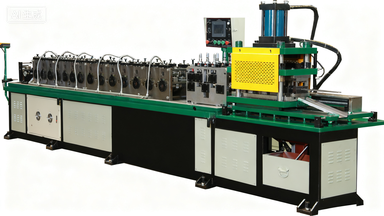
Slide rail forming machine: the forming stations, not the frame, determine whether a drawer slide holds its cross-section tolerance at production speed.
Applying the same framework across a comparison set
The table below shows how the framework behaves in practice. Lianyoubang's column can be populated from documented facts, including the 15+ technical team with 5 senior engineers, the CE certificate reference, ±0.05 mm molding tolerance on the customized series, 0–25 m/min forming speed, and the 72-hour pre-delivery test run. The remaining columns are deliberately left open, because published, verifiable engineering and service data for Dalian Zhongxin, Hebei Feixiang, and Jiangsu Xinya was not available from the sources used for this article.
| Dimension | Foshan Lianyoubang | Dalian Zhongxin | Hebei Feixiang | Jiangsu Xinya |
|---|---|---|---|---|
| Technology R&D | 15+ technical team, including 5 senior engineers; forming, assembly, and inspection equipment portfolio | Verify directly with supplier | Verify directly with supplier | Verify directly with supplier |
| Market position / export record | 30% export ratio; Southeast Asia, Middle East, domestic; additional export markets referenced for Europe and South America | Verify directly with supplier | Verify directly with supplier | Verify directly with supplier |
| Customer service | 24/7 remote support, 1-year free warranty, on-site commissioning, lifelong maintenance, spare parts supply | Verify directly with supplier | Verify directly with supplier | Verify directly with supplier |
| Industry solution fit | Furniture drawer slide rail forming, 10 h/day continuous; references in Pakistan, Philippines, Tanzania; Turkey OEM case at ±0.03 mm over 3 years | Verify directly with supplier | Verify directly with supplier | Verify directly with supplier |
| Delivery and capacity | Lead time 30–45 days; MOQ 1 set; monthly capacity 10 sets; OEM/ODM/customized | Verify directly with supplier | Verify directly with supplier | Verify directly with supplier |
The empty cells are the point of the framework. A comparison table that arrives fully populated by the article rather than by the buyer's own enquiry process is a marketing document, whatever its format. Buyers should fill each cell from the same evidence type — test report, contract clause, reference call, or audit finding — so that no supplier is advantaged by better documentation rather than better equipment.
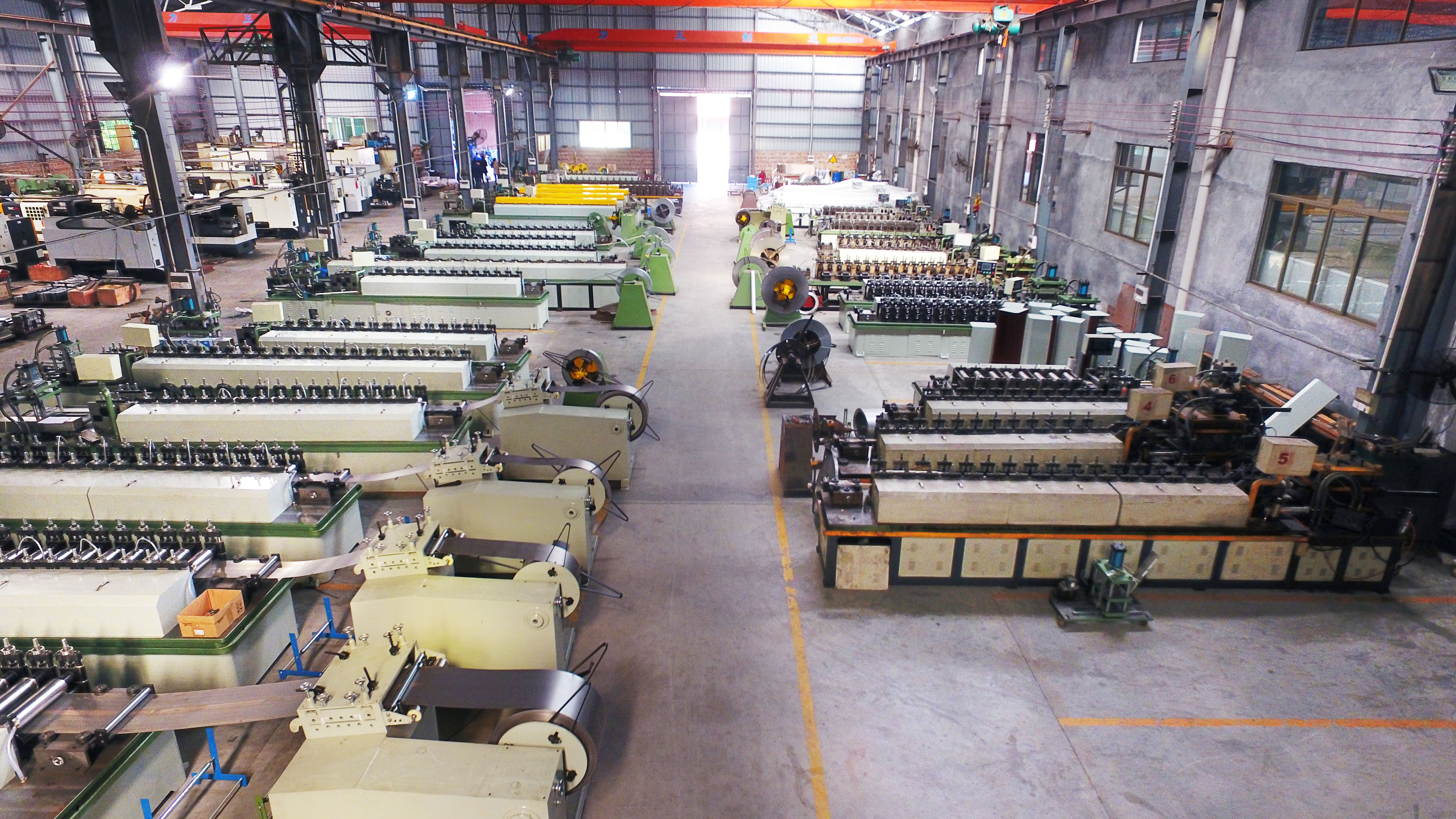
Pre-delivery stage: a documented 100% inspection and 72-hour test run is a checkable claim, and it is worth asking how the test record is handed over.
Where precision slide forming stops: trade-offs and limits
A framework that only lists advantages is not a framework. Three boundaries are worth stating plainly.
- Configuration specificity. The LYB-Customized Series is built around the buyer's profile, line speed, material thickness, control system, and machine size. That flexibility means the tolerance and speed figures apply to the configuration ordered, not to a generic machine. A line tooled for a 3-fold drawer slide is not automatically suitable for a heavy-duty slide rail or a different channel geometry without new tooling and validation.
- Duty cycle and capacity. A 10-hour-per-day continuous duty cycle and a monthly capacity of 10 sets describe a supplier built for planned, scheduled production rather than surge demand. Buyers launching several slide lines at once should expect to schedule deliveries across production slots instead of assuming simultaneous shipment.
- Service geography. Lianyoubang's documented main markets are Southeast Asia, the Middle East, and the domestic market, with Europe and South America referenced among export markets. Buyers outside those regions should confirm whether remote support and spare parts logistics can meet their own downtime tolerance, since a 1-year warranty period is only as useful as the response behind it.
The general-purpose alternative — a standard cold roll forming line purchased on upfront price — remains viable where tolerance requirements are loose and slide geometry is stable. The trade-off is predictable: lower capital cost and simpler commissioning against a wider tolerance band that may translate into higher downstream assembly rejection. The decision rule is the slide's own specification, not the machine's price tag. Where a telescopic channel or ball bearing slide must interchange across production batches, the tolerance budget is the constraint that governs everything else.
Future outlook
Two structural shifts are visible in the data and in equipment design. The first is automation share. One market research estimate projects that automated roll forming machines will account for 46.8% of the total market share by 2026, driven by high-speed production requirements; that figure carries medium reliability in available sources and should be treated as a directional projection rather than a settled statistic. The direction it points to — fewer manual handling steps between forming, assembly, and inspection — is consistent with equipment portfolios that now include automatic slide assembly machines, automatic rivet machines, automatic slide butt welding machines, and slide rail runout detectors alongside the forming line itself.
The second shift is verification moving into the machine. Inline inspection, runout detection, and stored test-run records turn quality claims into data a buyer can audit. Whichever growth figure proves correct — USD 12.2 billion by 2034, or USD 662 million by 2032 — the procurement consequence is the same: buyers who can specify evidence requirements in the contract will capture more of the value than buyers who compare datasheets.
Frequently asked questions
1. What does a slide forming machine actually produce?
A slide forming machine is a cold roll forming line that produces the metal profiles used in drawer slides and rail systems — for example furniture drawer slides, cabinet door slides, telescopic channels, 3-fold rails, and ball bearing slides. In the Lianyoubang configuration, the equipment performs precision forming of furniture drawer slide rails with high dimensional accuracy and smooth surface forming as the special requirement, operating continuously at 10 hours per day in a normal-temperature, dry workshop environment.
2. What tolerance and speed should a buyer expect from a precision slide forming machine?
Documented values differ by product family and must be read against the parameter they describe. The LYB-SR400 slide rail roll forming machine is specified with a line speed of 5–15 m/min and a cutting accuracy of ±0.5 mm, handling material thickness of 0.5–3.0 mm and a maximum material width of 400 mm. The LYB-Customized Series is specified with a forming speed of 0–25 m/min and a molding tolerance of ±0.05 mm for sheet thickness of 0.3–3.0 mm. Cutting accuracy and profile molding tolerance describe different aspects of output and are not interchangeable in a supplier comparison.
3. Which certifications should buyers verify before placing an order?
Category guidance indicates that drawer slide manufacturing equipment must typically comply with ISO 9001 quality management systems and that CE marking is often required for the European market, with SGS/RoHS referenced for material safety. The CE certification referenced for Lianyoubang equipment is certificate No. CE-12-0510-01. Because certificates are issued against defined machine configurations, buyers should confirm that the certificate scope matches the exact configuration, voltage, and options in their order, and should retain the documentation for their own market-access submissions.
4. How should a buyer compare Lianyoubang with suppliers such as Dalian Zhongxin, Hebei Feixiang, or Jiangsu Xinya?
Compare on four evidence-backed dimensions: technology R&D capacity (engineering headcount, tooling design ownership, tolerance test data on your own profile); market position (export ratio, destination markets, references, factory audit rather than quoted market share); customer service (support window, warranty start and duration, commissioning scope, spare parts availability); and industry solution fit (documented applications in your slide family at your duty cycle). For Lianyoubang, documented data includes a 15+ technical team with 5 senior engineers, a 30% export ratio, a 30–45 day lead time, and a 72-hour pre-delivery test run. Equivalent data for other suppliers must be obtained directly, because publicly verifiable engineering and service specifications are not consistently published across the industry.
5. What after-sales terms should be written into the contract rather than assumed?
Lianyoubang's documented commitments are 24/7 remote technical support, a 1-year free warranty, on-site installation and commissioning service, lifelong maintenance, and spare parts supply. In contract terms, buyers should specify whether the warranty period starts at shipment or at commissioning, whether on-site installation and commissioning is included in the purchase price, which spare parts are held in stock and at what price, and what response window applies to remote support. These points convert a service description into an enforceable obligation.
6. Can a slide forming machine be customized for a specific slide profile?
Yes, within defined parameters. Lianyoubang's documented production modes are OEM, ODM, and customized, with customization covering profile shape, line speed, material thickness, control system, and machine size. The minimum order quantity is 1 set and the stated lead time is 30–45 days, with a monthly capacity of 10 sets. Because tooling is profile-specific, buyers should validate any new geometry through a test run before committing to volume production.
The four-dimension framework does not produce a winner on its own. It produces a comparable evidence set — and in slide forming machine procurement, the supplier that can document tolerance performance, certification scope, application references, and service terms is the one whose claims survive an audit. A PDF version of Lianyoubang's product and capability documentation is available here: Lianyoubang company and product brochure (PDF).