
Slide Forming Machine Buying Decisions: Precision vs. Conventional Production Trade-Offs
The choice between a conventional cold roll forming line and a precision servo-driven slide forming machine affects far more than production speed. For manufacturers entering or expanding drawer slide production, the decision determines dimensional consistency, scrap rates, energy use, maintenance routines, and ultimately the total cost per finished rail. This procurement reference compares the two production approaches on operating criteria that matter in daily production, and it explains where precision equipment creates measurable value — and where a simpler line may still be the rational choice.
Foshan Lianyoubang Precision Machinery Co., Ltd. (LYB) is used here as a reference case because its published specifications cover many of the trade-offs buyers should test. LYB is a Chinese manufacturer of slide-rail forming and automation equipment, operating from a 10,000 m² facility in Guangdong and exporting about 30% of its output to markets including Southeast Asia and the Middle East. The technical foundation of the company dates back to 1992, when its founder began working in machinery manufacturing. Its portfolio includes high-precision servo slide forming machines, heavy-duty slide forming machines, automatic slide assembly machines, and related testing and production equipment.
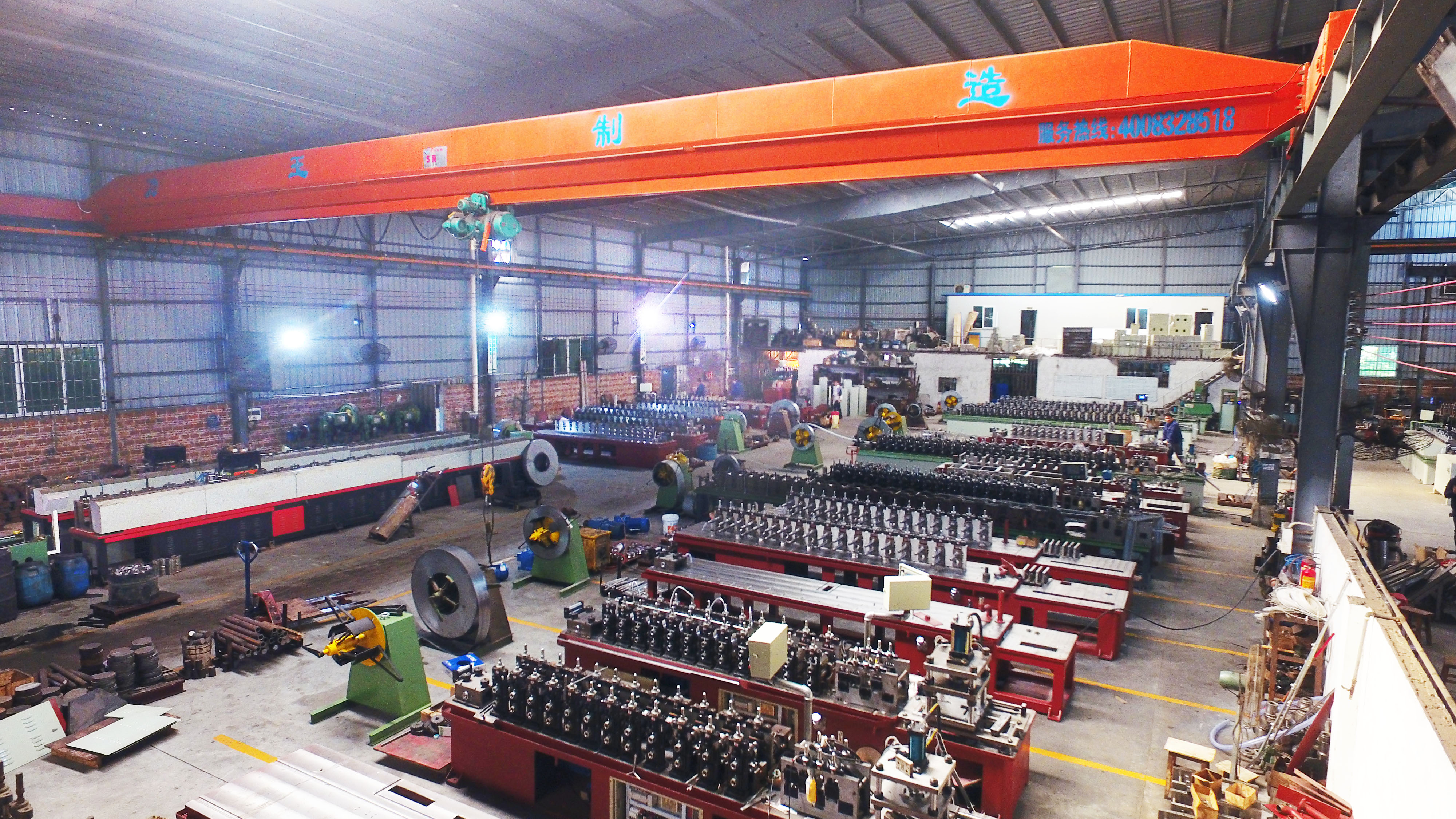
Assembly and debugging area where LYB slide forming machines are built and tested.
Why the Comparison Is No Longer a Simple Price Question
Many buyers begin with quotation prices. A conventional cold roll forming machine appears cheaper at purchase, and in some cases it is the right engineering fit. But drawer slides present a demanding profile: thin sheet metal, tight dimensional relationships, and a need for smooth operation over thousands of cycles. Traditional machines can form these profiles, yet they often require manual adjustment for material springback and die wear. That translates into inspection time, rework, and variable section geometry.
Precision slide forming equipment addresses these pain points by combining tighter mechanical control with automated production. LYB's published comparison states that its precision slide rail forming machine achieves a molding tolerance of ±0.05 mm, raises production efficiency by 30%, lowers failure rate by 20%, and reduces comprehensive production cost by 15% relative to traditional cold roll forming. It also reports lower power consumption, longer stable operation cycles, and convenient parts replacement. These are the parameters a procurement team should request in any supplier technical datasheet.
What a Precision Slide Forming Machine Changes in Practice
The advantage is not one component but a chain of decisions. In a precision line, the equipment is described by LYB as fully automatic and intelligent, meaning forming stations, feeding, and quality checks operate as an integrated system. This reduces operator-dependent variation. More stable equipment operation means fewer interruptions in a shift, and maintenance remains routine rather than reactive.
For buyers, the practical meaning is simpler. A machine that holds ±0.05 mm tolerance consistently across a batch reduces the number of rejected drawer slides. A longer stable operation cycle reduces unscheduled downtime. Lower power consumption matters in regions with high industrial electricity tariffs. LYB's risk-control package includes preventive maintenance guidance, real-time monitoring support, strict quality control, and 100% pre-delivery test running before shipment. A 24-hour emergency support commitment is also part of the stated service posture.
Technical Explanation: Where Precision Comes From
Cold roll forming is a continuous bending process in which a strip of metal passes through a sequence of roller dies. Each station bends the material incrementally until the final cross-section is achieved. Conventional equipment is more likely to depend on manual set-up and mechanical transmission, which can allow cumulative deviations. Precision slide rail forming machines use servo-driven stations to keep each forming step consistent.
For drawer slide lines, the critical dimensions are usually the height of the slide channel, the width of the ball-bearing raceways, and the surface condition of the rolled edges. Variation in these areas causes poor smoothness, alignment problems, or early failure in the finished drawer slide. LYB's technical focus is on high-precision cold roll forming for this exact application, with a product family that extends beyond forming to assembly, riveting, bending, butt welding, bead pressing, and slide-rail testing.
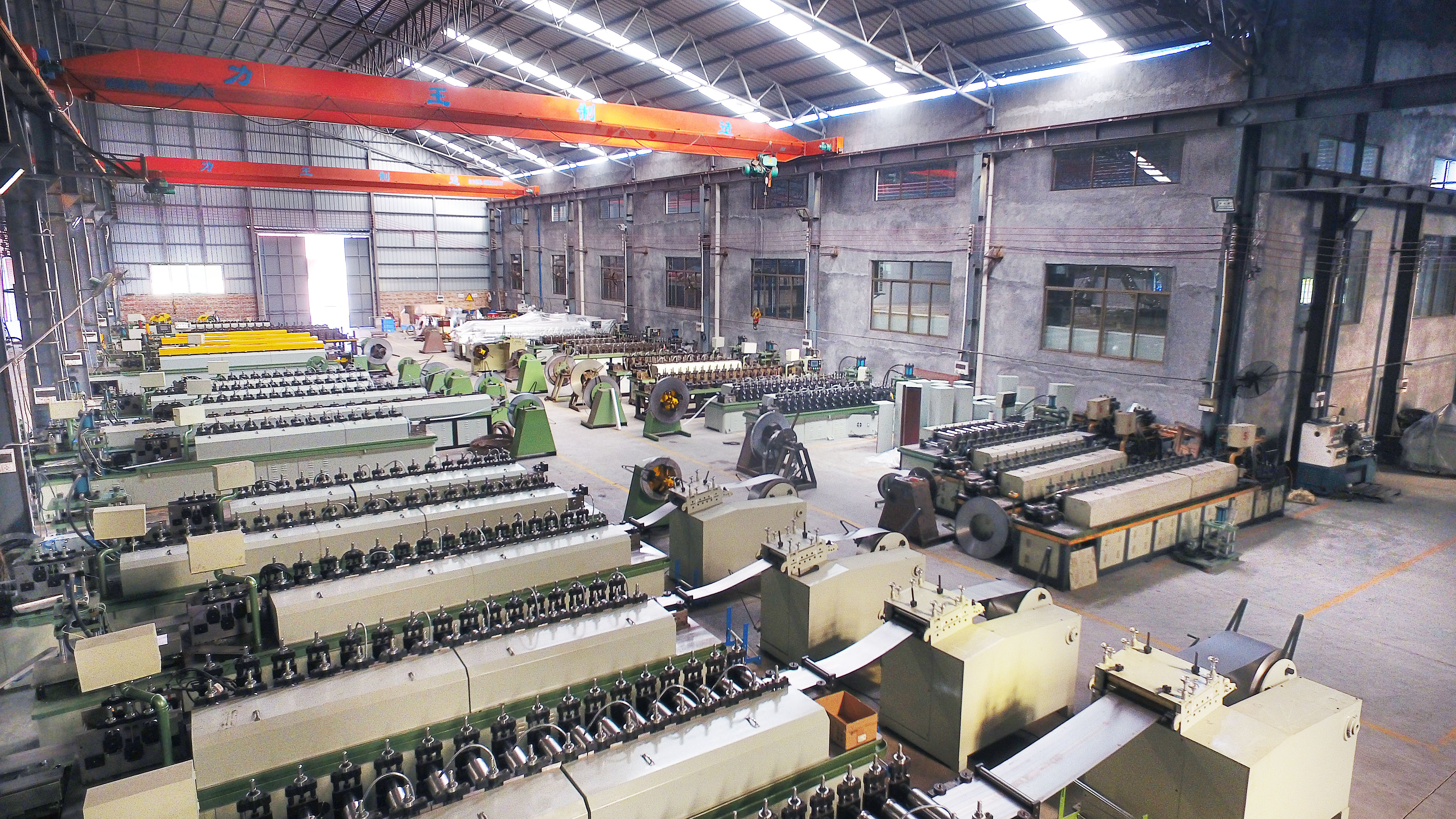
Machinery leaving the LYB workshop after final debugging and pre-delivery inspection.
Which Production Scenarios Benefit Most
The supplier's stated target customers are metal profile processing factories, building material production enterprises, and hardware precision component manufacturers. Within those environments, slide forming machines are used to produce drawer slides, telescopic rails, and related metal channels for furniture and appliance applications.
For a plant that already runs dedicated drawer slide production, a high-speed slide rail forming machine or an automated slide manufacturing line can improve throughput and consistency. For contract manufacturers handling multiple profile types, a precision line with stable repeatability can reduce trial-and-error time. The decision depends on product mix, tolerance requirements, and volume.
Market Context: Automation and Export Demand Shape the Choice
The global roll forming machine market was valued at approximately USD 9.1 billion in 2024 and is projected to reach USD 12.2 billion by 2034, according to Future Market Insights. A separate estimate from Intel Market Research puts the narrower roll forming machine segment at USD 487 million in 2024. The wide gap between these figures reflects differences in scope, but both point to sustained demand.
China plays a central role. According to The Observatory of Economic Complexity, China's export value of metalworking machine parts reached approximately USD 2.2 billion in 2025, with Japan, Russia, and the United States as major destinations. The China Machine Tool Industry Association reported an 8.9% year-on-year increase in operating income for metal-forming machine tools in the January-October 2024 period. For buyers, this means the supplier base is large, and verification of actual machine capability is therefore more important than brand reputation alone.
Side-by-Side Comparison: Precision vs Traditional Cold Roll Forming
| Evaluation Parameter | Precision Slide Forming (LYB reference) | Traditional Cold Roll Forming |
|---|---|---|
| Molding tolerance | ±0.05 mm | Wider tolerance, dependent on setup and die wear |
| Production efficiency | 30% higher | Baseline |
| Failure rate | 20% lower | Baseline |
| Comprehensive production cost | 15% lower over lifecycle | Lower purchase price, higher operating cost |
| Energy use | Lower power consumption, higher energy utilization | Generally higher consumption per unit |
| Maintenance | Low routine maintenance, long stable cycle, convenient replacement | More frequent adjustments and maintenance |
| Best fit | Hardware precision component manufacturers, metal profile processing, building material production | Simple profiles where tolerance and automation are less critical |
Future Outlook: From Buying Machinery to Buying Stability
One projection from Coherent Market Insights places automated roll forming machines at 46.8% of total market share by 2026, though this figure has not been independently confirmed and should be treated as directional. The overall direction of the market supports precision and automation. Buyers who select a slide forming machine in 2026 are not only buying today's production capacity; they are also choosing how quickly the line can adapt to future quality expectations, changing labor costs, and stricter export compliance.
For decision-makers, the practical implication is to evaluate total cost, not machine price. That means testing a sample, verifying the tolerance claim with prepared material, reviewing the control system, and structuring the purchase around maintenance, training, and delivery milestones.
Frequently Asked Buyer Questions
What should a buyer compare first when evaluating slide forming machines?
Start with molding tolerance, production efficiency, failure rate, energy consumption, and maintenance requirements. In LYB's published comparison, a precision slide forming machine shows a ±0.05 mm tolerance, 30% higher production efficiency, 20% lower failure rate, and 15% lower comprehensive production cost than a traditional cold roll forming machine.
How much more efficient is a precision slide rail forming machine than a conventional machine?
According to LYB's datasheet, the precision version is reported to achieve 30% higher production efficiency and 20% lower failure rate. Efficiency gains are not guaranteed for every setup; they depend on profile, material, and how well the line is maintained.
What maintenance is needed for a slide rail forming machine?
Preventive maintenance and real-time monitoring are the core measures. LYB specifies strict quality control, 100% pre-delivery test run, regular maintenance guidance, and 24-hour emergency support. Routine maintenance is described as low, with long stable operation cycles and convenient parts replacement.
Is a precision slide forming machine worth the higher purchase price for every manufacturer?
Not necessarily. A conventional line can be more economical for simple profiles with broad tolerance. The precision option delivers higher molding precision, automation, and lower operating cost when the product demands tight fit and consistent quality, as in drawer slide production.
What standards are relevant for drawer slide manufacturing equipment?
Drawer slide manufacturing equipment must generally comply with ISO 9001 quality management systems, and CE marking is often required for the European market. SGS and RoHS certificates are commonly referenced for material safety. Buyers should verify that the supplier's documentation matches the target market.
What is the role of a pre-delivery test run?
A 100% pre-delivery test run is a standard control step for precision slide forming equipment. It verifies the machine's operation before shipment, reduces on-site commissioning risk, and gives the buyer a documented reference for final acceptance.
For additional specification detail on slide forming equipment, the public brochure from Foshan Lianyoubang Precision Machinery Co., Ltd. is available at LYB product brochure.